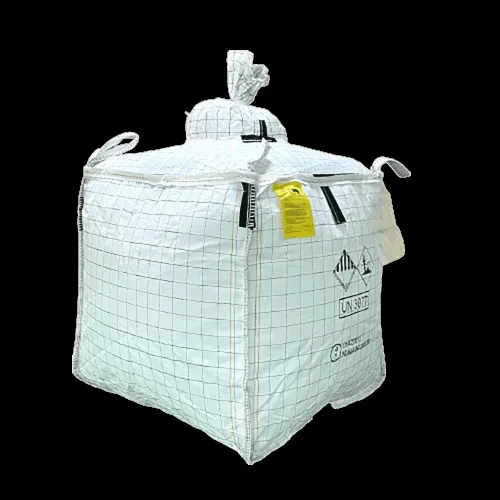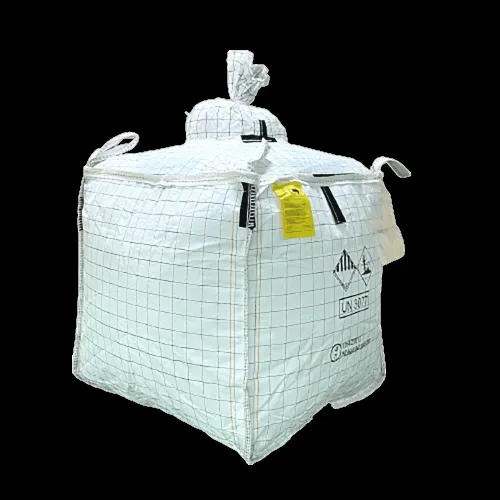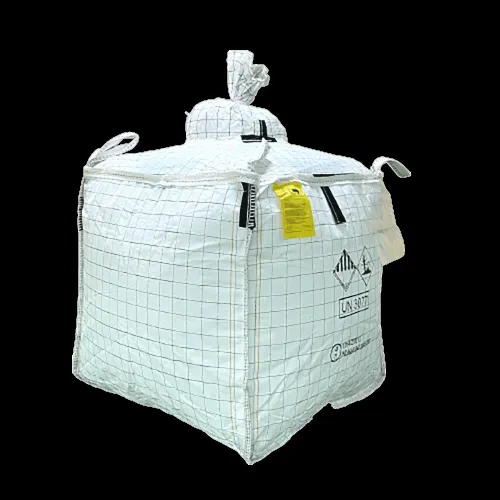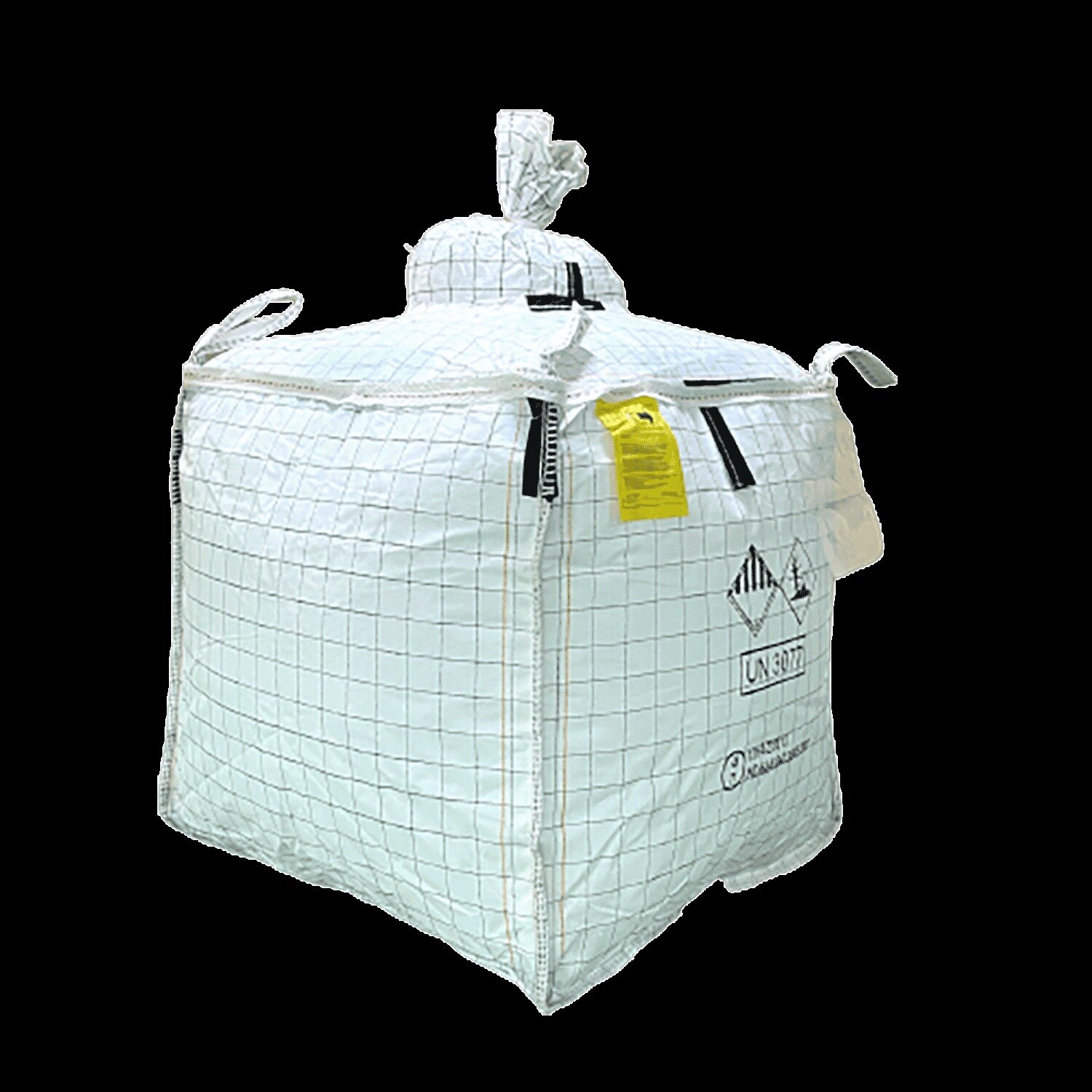
A chemical cannot be assigned an FIBC by appearance, colour, or the word “liner.” You need to match its UN classification, physical form, packing group, electrostatic risk, chemical compatibility, and transport mode to a tested bag design, then verify the markings and operating controls before filling.
Key takeaways
- Record the UN number, packing group and transport mode before choosing an FIBC.
- Use a UN-certified FIBC when the dangerous-goods packing instruction requires it.
- Match liner, fabric and discharge design to the chemical and handling conditions.
- Request test certificates, markings, specifications and traceability documents before purchase.
Which chemicals can be packed in an FIBC, and when is a UN bag required?
An FIBC is a starting option for solid bulk material, not a universal chemical container. Before selecting one, record the UN number, proper shipping name, physical form, hazard class and division, packing group, subsidiary risk, and transport mode.
| Material or classification | FIBC suitability | UN decision |
|---|---|---|
| Powders, granules, flakes and crystals | Suitable when the material, liner and handling system are compatible | Follow the assigned packing instruction |
| Classes 4.1, 4.2, 4.3, 5.1, 6.1, 8 and 9 | Certain dangerous solids can use an FIBC | Check the substance-specific instruction and packing group |
| Flammable liquids and gases | Not suitable for a standard flexible bulk container | Use packaging approved for that physical form |
Chemical powders in FIBC, including dangerous solids, require a check beyond the class label. A UN-marked FIBC is required when the dangerous-goods rule and packing instruction specify an approved flexible bulk container for that substance and packing group.
Compare the SDS transport entry with the UN Recommendations on the Transport of Dangerous Goods, Model Regulations, then apply the rule governing the journey: India’s road requirements, railway instructions, the IMDG Code for sea freight, or the IATA Dangerous Goods Regulations for air freight.
Use the SDS to segregate oxidizers from combustible materials, acids from alkalis, and moisture-reactive chemicals from water sources. Control combustible dusts away from ignition sources and incompatible chemicals; an outer liner or overpack does not remove those segregation duties.
How do you distinguish and verify a UN-certified FIBC?
An ordinary bulk bag’s stated safe working load only describes handling capacity; it does not prove suitability for dangerous goods. A UN FIBC has a tested design, defined packing group and permitted contents. Reject “UN approved” unless the mark and certificate identify all three.
| Code | Construction |
|---|---|
| 13H1 | Woven plastic, uncoated, without liner |
| 13H2 | Woven plastic, coated, without liner |
| 13H3 | Woven plastic, uncoated, with liner |
| 13H4 | Woven plastic, coated, with liner |
The approval covers the complete design: fabric, seams, lifting loops, closures and the specified liner configuration. Changing the liner, spout or coating can invalidate the approval.
Check the UN FIBC marking for:
- UN packaging symbol
- Full FIBC code, such as 13H3
- X Y Z packing group level
- Maximum gross mass in kilograms
- Solid-content designation, shown as S where used
- Manufacturing year
- Approval code
- Manufacturer identification
Test pressure can appear where the design requires pressure testing; it must match the certificate. Ask for the approval certificate and test report covering drop, topple, righting, tear, stacking and lifting tests.
Compare the marked code, maximum gross mass, packing group and construction with the bag supplied. Confirm the approved liner and closure arrangement too. The approval code and manufacturer identification must trace to the certificate, not merely to a supplier’s quotation.
How should you control static electricity during chemical handling?
Choose the FIBC electrostatic class before connecting filling or discharge equipment. Static electricity generated during powder flow can ignite solvent vapour or combustible dust, so the bag and connected plant must share one control plan.
| Type | Protection | Operating decision |
|---|---|---|
| Type A FIBC | No intentional static-control protection | Use only where no ignitable atmosphere or combustible dust hazard exists |
| Type B FIBC | Limits propagating brush-discharge energy | Do not use where an ignitable atmosphere can exist |
| Type C FIBC | Conductive construction requiring grounding and bonding | Bond and ground during filling and discharge |
| Type D FIBC | Dissipative fabric | Uses no grounding connection in the same manner as Type C |
For a Type C FIBC, verify resistance to ground below 1.0 × 10^8 ohms and check continuity before every use. Inspect grounding points for paint, corrosion and disconnection; any defect can break the discharge path.
Assess the complete system, not only the outer bag:
- polyethylene liner and its attachment
- powder-contact surface and conductive threads
- filling spout and discharge spout
- pump, hopper and mixer
- dust-extraction duct
Set safe flow rates for rapid filling, pneumatic conveying, sieving and discharge. Bond pumps, hoppers, mixers and ducts, and prevent combustible dust clouds or solvent vapours from reaching ignition sources.
Require a hazardous-area assessment if flammable vapour or combustible dust can occur. Do not call a liner antistatic because it was supplied with the bag; conventional polyethylene can interrupt dissipation.
How do you confirm chemical compatibility, containment and storage performance?
Confirm FIBC chemical compatibility from written evidence, not from product colour or the word “liner.” Polypropylene resists many dry and aqueous chemicals, but strong oxidizers, aggressive concentrates, some solvents and elevated temperatures can attack another component.
Request documentation that identifies:
- The fabric polymer, including woven polypropylene, and the polyethylene liner, coating and thread materials.
- The closure construction and barrier film, including whether the film is bonded, loose or laminated.
- Chemical concentration, temperature, particle size, contact duration and expected exposure cycles.
- A chemical resistance test report or compatibility chart for the complete assembly, not only the resin.
Match containment to the operation. Choose a spout for controlled filling or discharge, a duffle top for dust and rain protection, or a flap top where equipment and access require it; specify a sift-proof closure because ordinary stitched seams are not automatically sift-proof.
Keep the safe working load separate from the stacking limit: obtain the tested stacking limit and its test basis, then confirm pallet support, floor loading, filled shape, restraint and storage duration. Specify the permitted lifting method; lifting loops, the liner, top closure and discharge spout are not interchangeable lifting points.
For Bharuch-area staging, use covered storage, raised pallets, intact closures and a defined moisture limit. UV stabilization does not replace shade. Record every FIBC inspection and quarantine bags with cuts, abrasion, distorted seams, damaged loops, contamination, chemical staining or unreadable labels; retain batch traceability before reuse.
What should you specify and document when sourcing chemical FIBCs in Bharuch?
1. Put the complete chemical FIBC specification in the purchase enquiry. Include the SDS transport information: UN number, proper shipping name, class, packing group, subsidiary risk, particle form, concentration, temperature, transport mode, required gross mass, filling and discharge equipment, stacking arrangement and storage conditions. This prevents a supplier from quoting a generic bag.
2. For a UN FIBC, request a photograph of the complete mark, the UN certificate, construction details and the test report. Complete UN certificate verification by matching the marked code, gross mass, packing group, fabric, seams, liner and closure configuration to the certificate.
Ask the FIBC supplier Bharuch to quote against these documents, not bag colour, nominal capacity or price. Deccan Cans & Printers Pvt. Ltd. is one manufacturer you can ask to price against this written specification.
3. Add a static-control specification for static-sensitive material: Type A, B, C or D design, grounding method, resistance test record and hazardous-area controls. For Type C, state the required resistance to ground, grounding-point inspection and continuity check.
Specify loop lifting instructions and the approved forklift or traverse arrangement; never lift by a liner, discharge spout or closure.
4. Before dispatch, complete an FIBC receiving inspection plan covering closure operation, packaging cleanliness, label legibility and inspection records. At receipt, quarantine any bag whose marking, certificate, construction or condition differs from the approved specification. Record the bag batch, chemical used, inspection result and reuse decision for batch traceability.
Related products
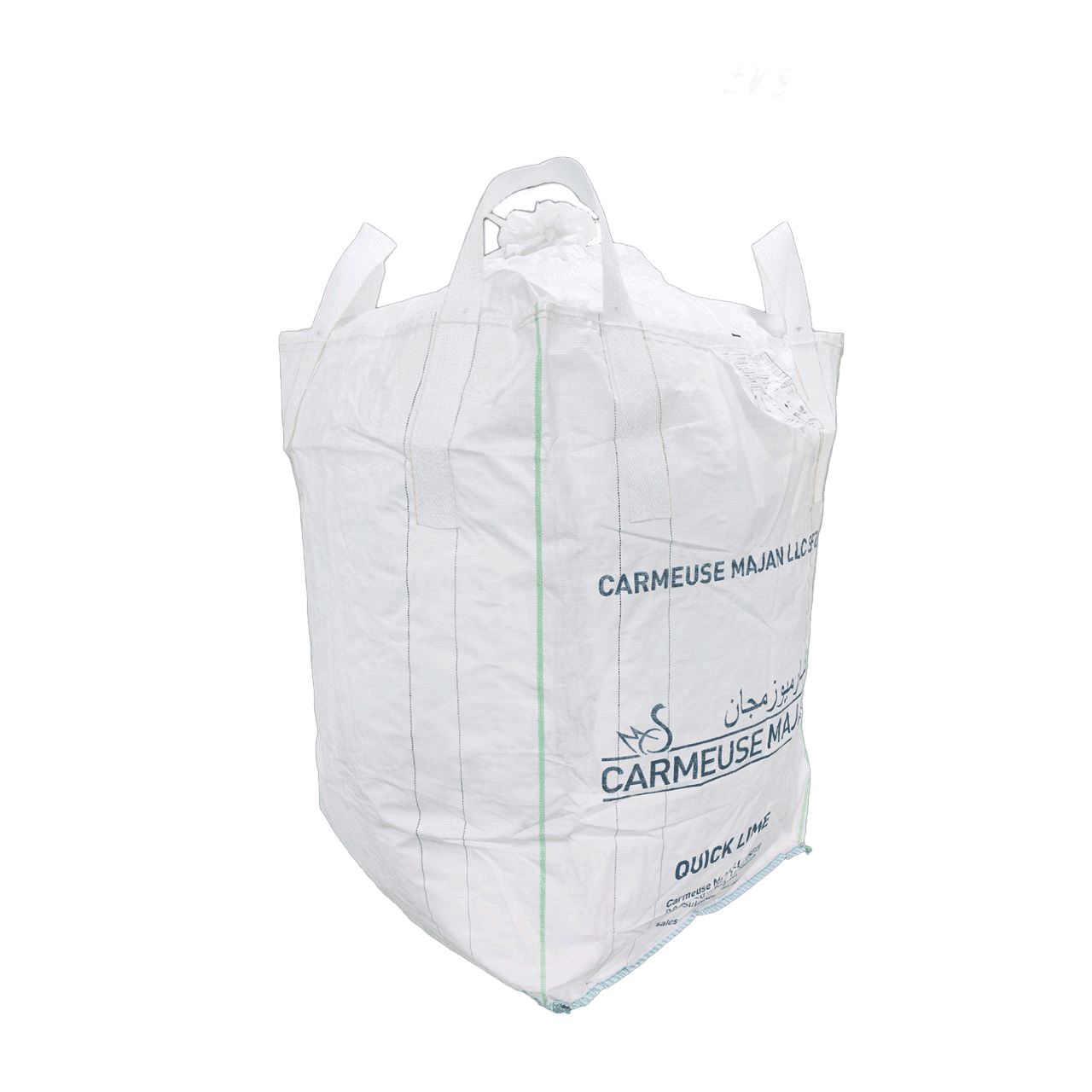 | FIBC Section Bags With Liners FIBC Liners – Bulk Bag Liners Deccan Cans & Printers Pvt. Ltd. |
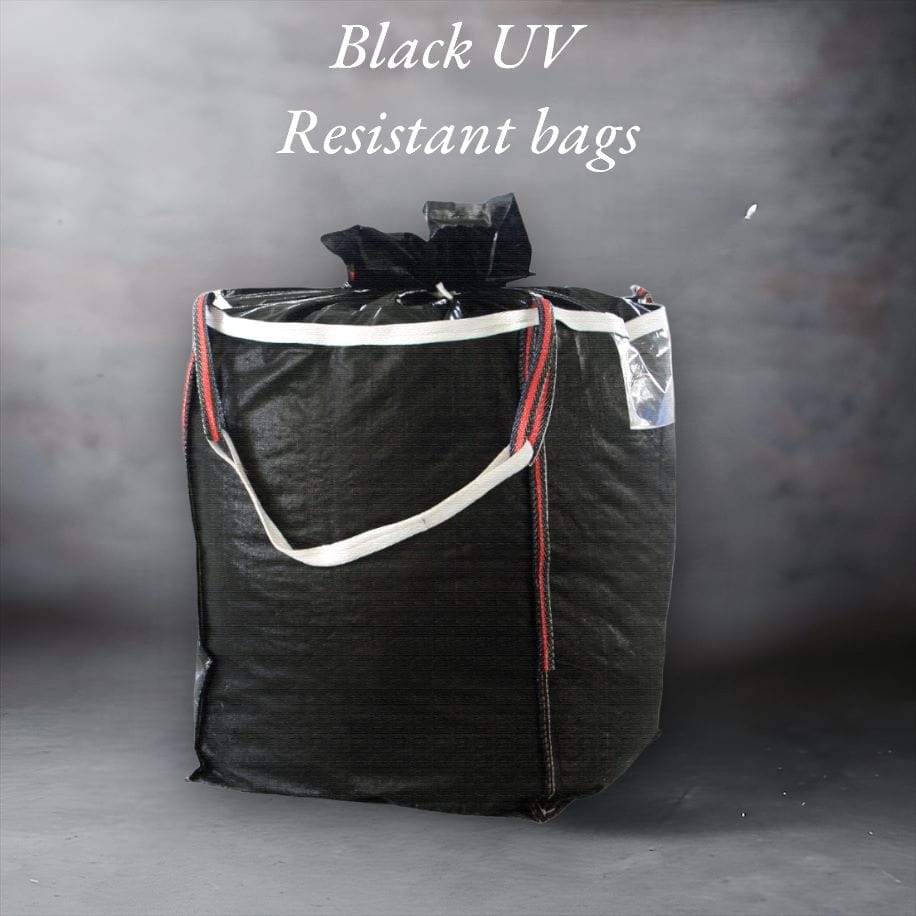 | FIBC Section Black Bags Black FIBC Bags – Enhanced UV Resistance & Extended Shelf Life UV exposure is one of the major challenges faced by the FIBC industry, as prolonged... |
Frequently asked questions
Which chemicals can be packed in an FIBC, and when is a UN bag required?
Use an FIBC for compatible dry, free-flowing solids when its construction and liner suit the material. A UN-certified FIBC is required when the applicable dangerous-goods regulations and packing instruction specify a UN performance-tested package for that substance, packing group and transport mode.
How do you distinguish and verify a UN-certified FIBC?
Look for the complete UN packaging mark, including packaging code, performance level, test pressure where applicable, maximum gross mass, manufacture year, approving authority and manufacturer or certification reference. Ask the supplier for the matching test report and certificate, then compare the mark with the bag specification.
How should you control static electricity during chemical handling?
Classify the material and site for electrostatic risk, then select Type C conductive FIBCs with a verified grounding path or Type D dissipative FIBCs where the risk assessment permits them. Ground the bag before filling or discharge, test continuity, control transfer speed and keep ignition sources away.
How do you confirm chemical compatibility, containment and storage performance?
Obtain compatibility data for the outer fabric, coating, liner, seams, closures and discharge spout at the intended concentration and temperature. Check sift resistance, leak performance, safe working load, stacking limits, moisture protection, UV exposure and the planned storage duration.
What should you specify and document when sourcing chemical FIBCs in Bharuch?
Specify the chemical name, UN number, packing group, hazard class, subsidiary risk, particle form, fill and discharge method, capacity, liner, static-control type, safe working load, stacking conditions and transport mode. Retain the purchase specification, drawings, batch traceability, inspection records, UN documents and delivery checks.
Related product
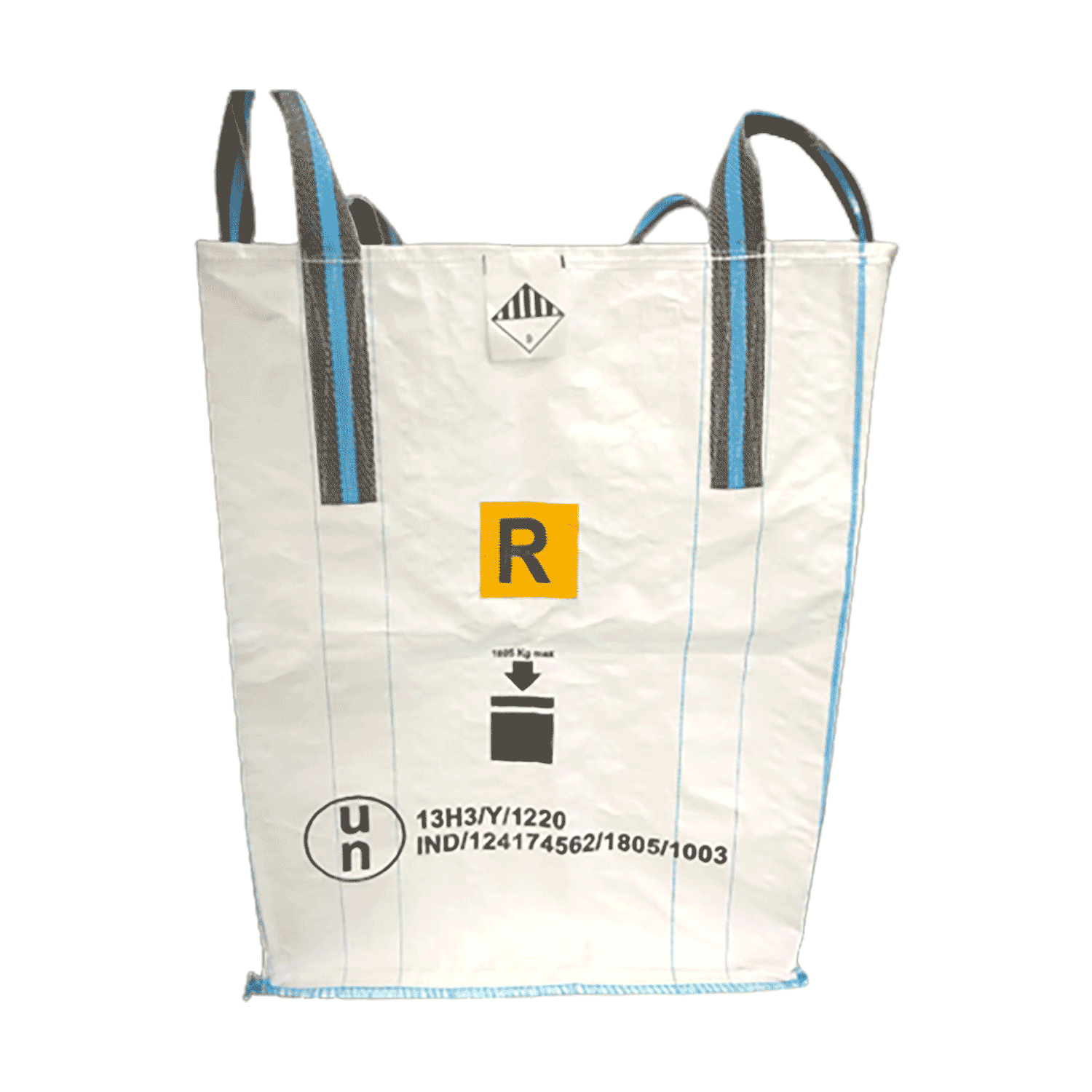 | FIBC Section Un Bags UN Certified Bulk Bags – Rigorous Performance Testing for Safety & Reliability Deccan UN Certified Bulk Bags are specially engineered for the safe... |