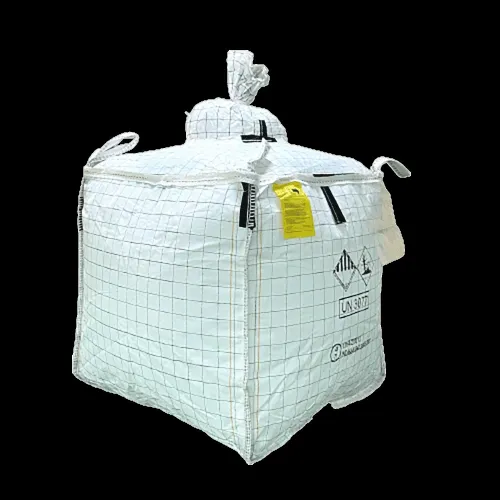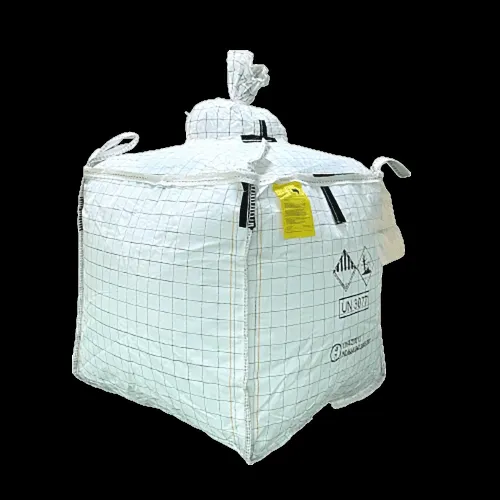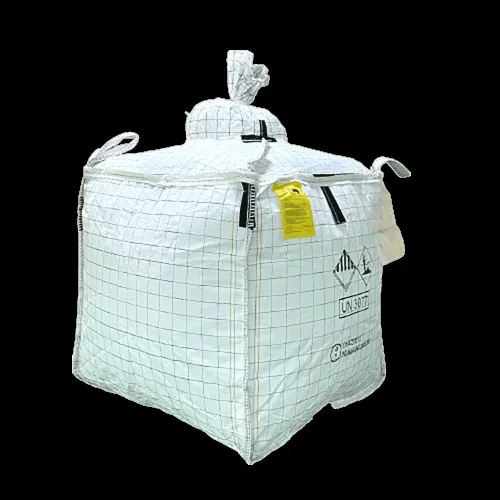

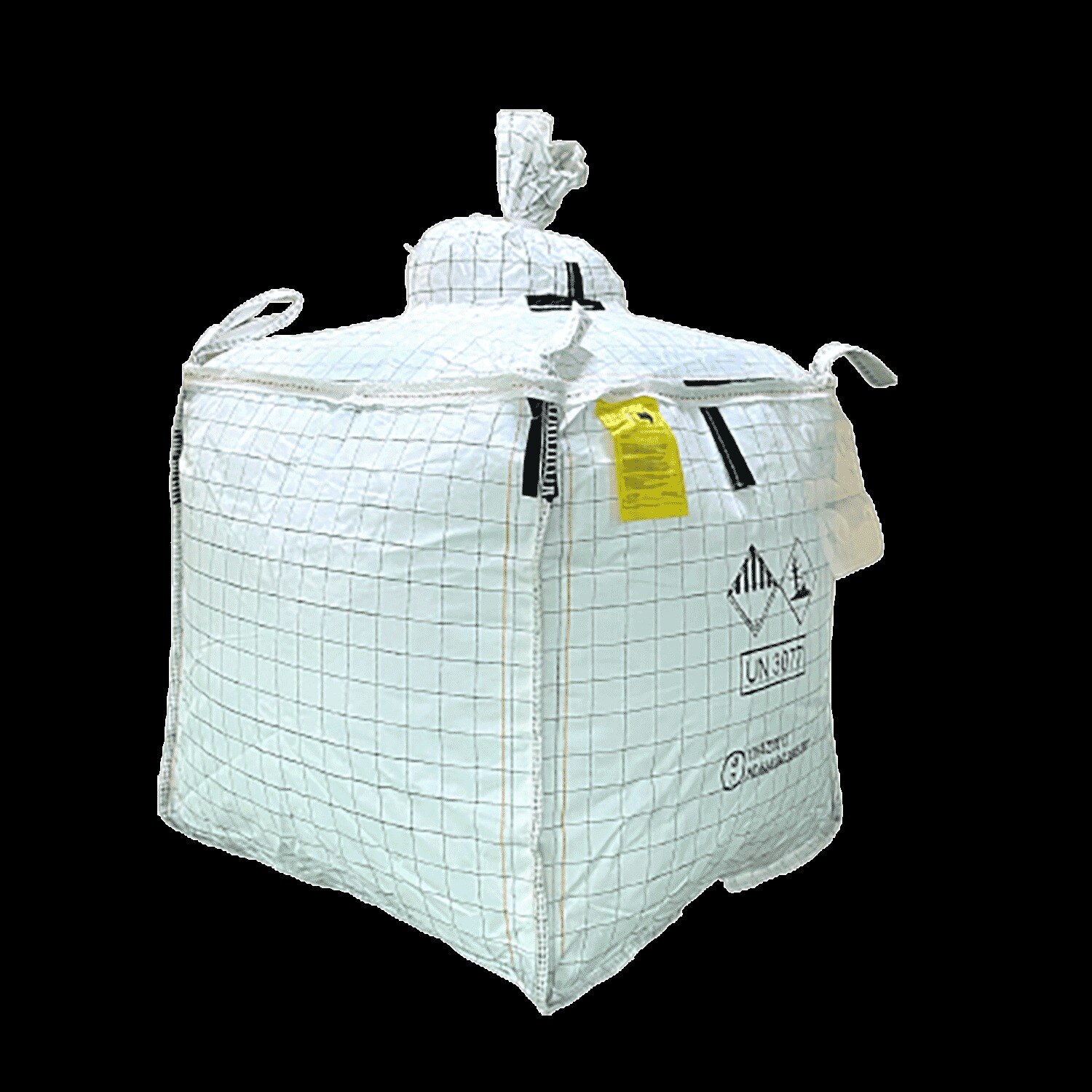
“Anti-static” is not a sufficient specification for a chemical FIBC. You need to match Type A, B, C, or D construction to the powder, vapour, filling process, and grounding system, then verify the finished bag’s test evidence and condition before use. By the end, you can write a procurement specification and identify when an FIBC is the wrong package.
Key takeaways
- Match Type A, B, C or D to the ignition hazard and operating method.
- Ground every Type C FIBC before filling, and verify continuity during use.
- Use Type D only within its tested humidity, product and process limits.
- Reject bags without traceability, test records, visual checks and discharge controls.
Which FIBC type matches your electrostatic hazard?
IEC 61340-4-4 distinguishes four FIBC classifications, and “anti-static” alone does not identify a safe design. Match the bag to the ignition hazard, product charging behaviour, and operating method.
| Type | Electrostatic behaviour | Operating limit |
|---|---|---|
| Type A FIBC | Provides no electrostatic control. | Do not use where combustible dust clouds or flammable vapour mixtures could ignite. |
| Type B FIBC | Limits surface-discharge risk but is not groundable. | Use only for low-charging product and process conditions after verifying the bag’s breakdown voltage. |
| Type C FIBC | Uses conductive yarns or a conductive grid to carry charge to earth. | The Type C FIBC grounding requirement is a continuous earth connection during filling, discharge, and relevant handling. |
| Type D FIBC | Uses specified dissipative fabric to control charge without a conventional earth connection. | Performance depends on the fabric, environment, product, and protection from contamination or damage. |
Type C FIBC and Type D FIBC are not interchangeable. Type C has a defined resistance-to-ground path; the often-quoted value below 1 × 10^8 ohms relates to Type C testing, not every FIBC type. Type B and Type D require different electrostatic performance evidence, including the relevant breakdown-voltage or dissipative performance tests.
A supplier reporting only “conductive” or “static dissipative” has not yet proved suitability.
How should you assess the chemical and filling process before choosing a bag?
Begin with the chemical’s SDS, then obtain product-specific testing when it lacks dust explosibility data. Request minimum ignition energy (MIE), Kst, Pmax, particle-size distribution, moisture content, electrical resistivity, and chargeability before selecting an FIBC for chemical packaging applications.
Screen the actual process, not only the material. Record pneumatic conveying velocity, product impact, free-fall distance, interrupted flow, filling rate, discharge rate, and every conductive probe, hose, sampling tool, metal fitting, and liner.
| Hazard | What to identify | Primary concern |
|---|---|---|
| Combustible dust cloud | Dust explosibility, MIE, Kst, Pmax, particle size, moisture | Static discharge hazard and dust ignition |
| Flammable vapour | Solvent vapour concentration and ignition sources | Spark or brush discharge in the vapour space |
| Flammable liquid | Liquid properties, splash, flow, and bonding points | Ignition during filling, transfer, or discharge |
Do not use Seoul humidity as a safeguard. Dry winter air, air-conditioned warehouses, heated process areas, and low-moisture powders can retain significant charge despite humid summers. Reduce conveying velocity, minimise free fall, bond conductive equipment, and prevent anyone from opening or disconnecting the bag until charge dissipates.
Choosing Type C or Type D requires a documented risk assessment covering the product and process, not a marketing label. Include liners and attachments in that assessment; a charged liner or ungrounded metal fitting can create an ignition source even when the outer bag is designed to dissipate charge.
What must operators do when filling and discharging a Type C or Type D FIBC?
A bonding and grounding FIBC procedure starts before product enters the bag. Treat the bag, liner, equipment, and earth path as one electrostatic system; a failure anywhere can produce a static discharge.
1. For Type C, inspect the conductive grid, grounding tab, seams, lifting loops, discharge spout, and every liner connection. Look for cut yarns, insulating powder, abrasion, loose clamps, and separated or broken earth paths.
2. Attach a suitable earthing clamp to the designated Type C grounding tab. Complete a grounding continuity check to facility earth before filling, and accept the bag only against a defined resistance-to-ground criterion recorded for that bag or lot.
3. Keep the clamp connected during filling, discharge, and charge-generating movement. Control the filling and discharge rate, reduce product impact and free fall, and do not disconnect equipment or open the bag before charge dissipation.
4. At any grounding failure, stop filling or discharge and isolate the bag. Prevent personnel from touching or opening it until the charge hazard is controlled, then investigate the cause.
Type D avoids the conventional grounding step, but it still requires its qualified fabric construction, clean surfaces, specified environment, and intact structure. A charged insulating liner, liner contamination, metallised layer, ungrounded metal fitting, filling hose, probe, or sampling tool can still create a brush or spark discharge. Include each item in the risk assessment.
What documents and inspections prove that an anti-static FIBC remains safe?
Approve an anti-static FIBC only when the evidence identifies the finished bag, not just its raw material. Request an anti-static FIBC test report stating the IEC 61340-4-4 test method, Type A–D classification, measured result, acceptance limit, production lot, and test date.
1. Reject a yarn manufacturer’s material data sheet as sole proof. Treat “conductive” and “static dissipative” as different claims until the finished-bag test report proves them. Request construction drawings showing conductive yarns, grounding tabs, seams, lifting loops, spouts, and liner interfaces.
2. Add ISO 21898 when its non-dangerous-goods scope applies. It does not replace electrostatic qualification. For regulated transport, request a UN packaging approval declaration of conformity separately: UN mechanical and transport tests do not establish Type A–D electrostatic performance.
3. Put Korean-language safety documentation, lot traceability, inspection records, the permitted cleaning regime, maximum service life, and re-test triggers into the purchase specification. A Seoul buyer asking Deccan Cans & Printers Pvt. Ltd. for these records should receive the finished-bag configuration, not a generic catalogue description.
4. Reinspect after flexing, abrasion, powder contamination, moisture exposure, repair, washing, solvent contact, liner replacement, or repeated use. Stop using the bag until re-test results confirm the specified acceptance limits.
When is an anti-static FIBC the wrong package or a poor substitute?
Choose Type C when you can install, check, and maintain a dependable earth path. Consider Type D only after a documented risk assessment confirms that its specified fabric, environment, product limits, and protection from contamination fit the process, especially when operators cannot reliably ground each bag.
| Option | Decision point | When it applies |
|---|---|---|
| Type C | Grounded conductive construction | A verified earth connection remains in place during filling, discharge, and handling |
| Type D | Dissipative construction without conventional grounding | The qualified design fits the product and environment, with intact, clean fabric |
| Type B | No grounding; verified breakdown-voltage performance | Only low-charging products and processes with supporting test evidence |
| Type A | No electrostatic control | Never where combustible dust or flammable-vapour ignition risk exists |
Compare an FIBC with metal container chemical packaging when you need a rigid, easily bonded enclosure, the chemical attacks fabric or liner, or the process cannot control free fall, conveying charge, or contamination.
A lined FIBC separate grounding system is not automatically safer: qualify the liner’s electrical properties, its connection to the bag, and all filling equipment.
Stop treating an FIBC as the default when:
- The chemical has very low MIE or the atmosphere is explosive.
- Bags will be repeatedly repaired, abraded, or contaminated.
- No dependable inspection or grounding procedure exists.
For transport and ignition hazards, specify both UN status and electrostatic class. UN approval covers transport performance; it does not prove Type A–D electrostatic suitability.
Frequently asked questions
Which FIBC type matches a chemical electrostatic hazard?
Type A provides no electrostatic control. Type B limits propagating brush discharges. Type C uses conductive fabric and must be grounded. Type D dissipates charge without a grounding connection when its specified conditions are maintained.
What should you assess before selecting an anti-static FIBC?
Identify the chemical’s flammability, minimum ignition energy, dust or vapour hazard, resistivity, moisture content and charging behaviour. Review filling speed, liner design, transfer equipment, humidity, grounding access and discharge conditions.
How do operators safely fill and discharge a Type C FIBC?
Connect the designated grounding lead to a verified earth point before filling. Keep the connection intact through filling, transport within the work area and discharge, then isolate the bag only after the hazardous material transfer ends.
What documents and inspections support anti-static FIBC safety?
Request the IEC 61340-4-4 classification, construction or test report, batch identification, supplier declaration and grounding specifications. Inspect fabric, seams, lifting loops, liner, discharge spout and grounding tabs before each use.
When is an anti-static FIBC the wrong package?
Choose another package when the chemical needs a sealed pressure-rated container, reacts with the fabric or liner, exceeds the bag’s mechanical rating, or presents an ignition hazard that the selected FIBC and procedure cannot control.