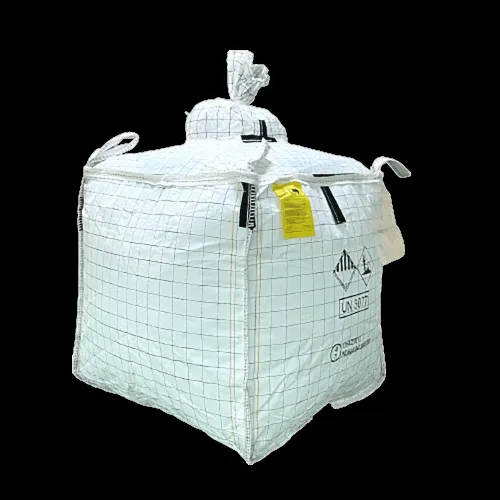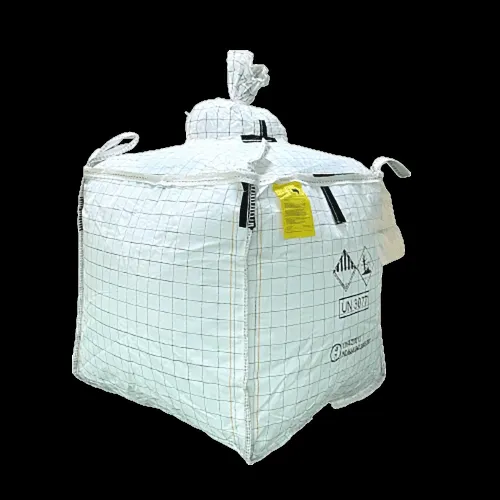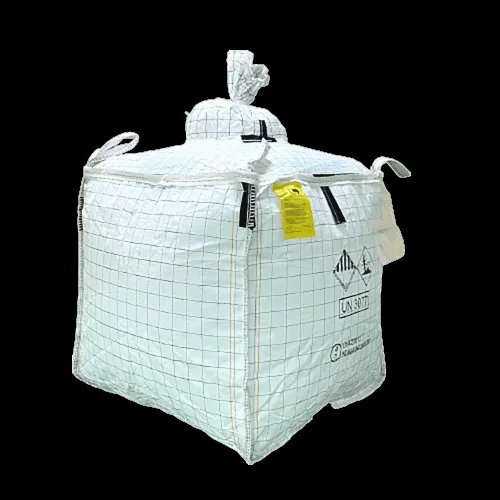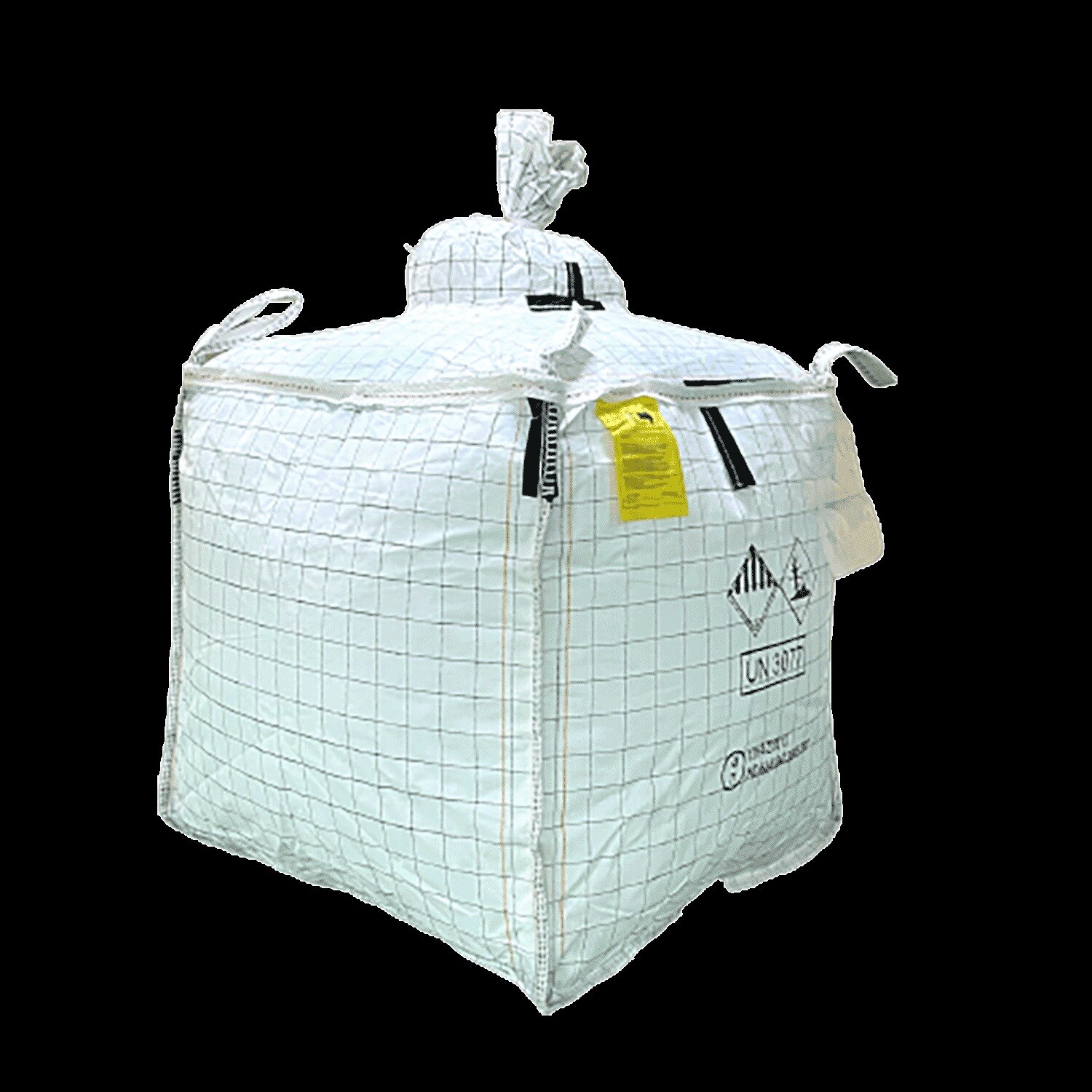
A 500 kg, 1,000 kg or 1,500 kg filling target does not by itself identify the right FIBC for fertilizer or agricultural goods. You need to match the bag to the product’s hazard classification, bulk density, filling and discharge equipment, electrostatic risk, storage conditions and handling route before approving a purchase.
Key takeaways
- Match the bag to product flow, density, moisture sensitivity and discharge method.
- Require SWL, dimensions, lifting-loop details and test documents before ordering.
- Use sift-proof seams, liners and grounding controls for dusty or moisture-sensitive products.
- Plan covered storage, inspection and handling around Duqm’s transport conditions.
Which fertilizers and agricultural products can go in an FIBC?
FIBCs suit dry, solid products when the bag matches their flow, dust, moisture and density characteristics. Free-flowing granules fill and discharge cleanly; dusty powders need sift-proof seams, controlled outlets and often a liner. Caking follows moisture uptake, condensation or pressure during stacking.
| Product | FIBC suitability | Main consideration |
|---|---|---|
| Urea and ammonium sulfate | Suitable for dry granules | Use urea FIBC bags with moisture control; prevent caking |
| NPK blends | Suitable for dry granules | NPK fertilizer bulk bags must limit segregation during handling |
| DAP and MAP | Suitable for dry granules | DAP and MAP FIBCs need dust control and moisture protection |
| Potash | Suitable for dry granules | Check abrasion, dust and bulk density |
| Lime and micronutrients | Suitable if dry and compatible | Powdered lime and fine micronutrients need sift-proof closure |
| Seed, grain and animal feed | Suitable for clean, dry products | Protect germination, contamination status and food or feed hygiene |
Different particle sizes and densities cause an NPK blend to separate during filling, transport or discharge. Control the filling rate, drop height and outlet geometry; specify anti-segregation or mass-flow performance when blend uniformity matters.
Ammonium nitrate fertilizer bags require a separate hazard review. The formulation, concentration, contamination status, SDS, transport classification and intended route determine whether dangerous-goods packaging and carriage rules apply. An ordinary fertilizer FIBC is not automatically suitable; confirm whether an approved UN design is required before ordering.
What standards, UN marks and test documents should you require?
Specify ISO 21898 FIBC standard compliance for non-dangerous goods. It covers construction, performance, design, testing and marking, but an ISO claim does not prove UN approval.
1. Confirm the product’s transport classification first. If a dangerous-goods product requires an IBC, request a UN-approved design for its assigned packing group. An ordinary fertilizer FIBC cannot replace that approval.
2. Inspect the UN packaging marks on the bag or its identification plate. Check the UN symbol, flexible-IBC design code such as 13H, approval or design-type information, manufacturer identification, manufacture date, maximum gross mass and packing-group limits FIBC requirements. Reject an illegible or incomplete mark.
3. Require the design approval or test certificate and the manufacturer’s declaration. The file should identify the exact fabric, liner, closures, SWL and design revision, not merely state “UN-certified FIBC fertilizer.”
4. Request evidence for the drop test, top-lift test, stacking test, tear resistance, seam performance and any cycle testing claimed for reuse. A 5:1 rating and a 6:1 rating describe different one-trip and multi-trip use classes; neither is a universal quality ranking.
5. Before shipment, obtain the batch number, production inspection record, dimensional and fabric checks, closure inspection, traceability from bags to raw materials, and retest or periodic-inspection records. Match those records to the approved design.
For ammonium nitrate, verify formulation, contamination status and transport classification before selecting the mark or packing group. The SDS alone does not make an ordinary bag suitable.
How should you choose SWL, dimensions and lifting-loop construction?
Specify the bag by load and handling conditions, not by “one-ton bag.” State the fertilizer’s bulk density, target fill weight, headspace, pallet or no-pallet arrangement, maximum stack height, and actual filling and lifting equipment. A purchase order might require FIBC SWL 500 kg, a 1,000 kg fertilizer bulk bag, or a 1,500 kg FIBC.
| Option | Handling comparison | Best fit |
|---|---|---|
| 1-loop | Fast filling and simple crane lifting; requires matching single-loop equipment | Dedicated lifting frames and controlled warehouse movement |
| 2-loop | Good forklift access with a compatible frame; faster than four-loop attachment | Regular forklift handling with limited lifting points |
| Four-loop | Stable on a forklift frame or lifting beam, but all four loops must engage | High-volume warehouse and pallet handling |
| Cross-corner-loop | Strong positional control and crane or beam compatibility; slower attachment | Repeated lifting where alignment matters |
State one-trip or reusable service, the safety factor, and test evidence. A 5:1 or 6:1 rating describes a use class, not a universal quality ranking; reusable service needs cycle-test evidence. Never lift fewer loops than specified, drag a filled bag, use damaged loops, or attach improvised hooks.
Match the inlet and outlet to the process. A standard filling spout or duffle top with a skirt supports rapid, contained loading; a discharge spout with a tie-off or iris closure enables controlled emptying. Verify the frame and beam ratings against the selected one-loop two-loop four-loop FIBC design.
How do you control dust, caking, moisture and electrostatic risk?
Choose a polyethylene or polypropylene liner when the product needs fertilizer dust and moisture control, but specify it with the bag’s electrostatic type, product compatibility, filling temperature and equipment friction.
| Liner option | Strength and fit | Specify when |
|---|---|---|
| Loose liner | Lowest fitting cost; can shift and wrinkle | The product needs basic moisture or sift control |
| Attached liner | Fixed to the fabric; faster handling | Dust leakage at the liner-to-spout interface must be limited |
| Form-fit liner | Follows the bag shape; fewer folds and dead pockets | Complete discharge and consistent filling matter |
State the liner thickness in micrometres, material, antistatic treatment, temperature limit, and resistance to the fertilizer. Use sift-proof seams and dust-tight spout ties; a moisture barrier does not replace covered storage.
Close the inlet and discharge ends, but do not seal humid air inside. Air entering during filling can condense against the product as it cools, causing caking. Reduce caking by controlling filling rate and drop height, limiting temperature swings, and keeping filled bags on dry pallets under cover.
Select the electrostatic type from the site hazard assessment:
- Type A is unsuitable where flammable vapour, gas or combustible dust may be present.
- Type B limits brush-discharge risk but does not safely dissipate charge.
- Type C conductive bulk bags require verified earthing during filling and discharge.
- Type D uses dissipative construction without a separate grounding connection.
For Type C, match the conductive liner, grounding point and continuity path. Check continuity before use, and keep the clamp clean; torn threads, a non-conductive replacement liner or paint can defeat the protection.
What should a Duqm procurement and handling plan include?
Write the purchase order as two handling plans: one for the port and one for the agricultural site. For FIBC bags in Duqm Oman, map every movement, because a bag suitable for a forklift frame may fail under a crane or during container stuffing.
1. Use this bulk bag handling checklist to state the loop interface, rated SWL, pallet or no-pallet requirement, maximum stack height, filling method and discharge method. Record whether the route includes transshipment or long dwell time.
2. At the port, prohibit dragging, improvised hooks and lifting by fewer loops than specified. Confirm that the crane, lifting beam, forklift frame and container-stuffing equipment match the bag’s loops and SWL.
3. At the agricultural site, specify one-trip or reuse status, pneumatic discharge requirements and outlet type. Obtain written confirmation that the discharge equipment matches that outlet; a nominal 1,000 kg capacity proves nothing by itself.
4. Require a UV-stabilized FIBC when outdoor staging is foreseeable, but keep filled bags under cover, clear of standing water and away from abrasion. State the covered-storage rule and maximum outdoor storage period; UV stabilization does not permit indefinite exposure.
5. Before fertilizer packaging procurement, request the drawing, fabric and liner specification, SDS review, UN approval where applicable, test reports, batch traceability and inspection records.
Deccan Cans & Printers Pvt. Ltd. can translate the fertilizer, route and handling equipment into a documented FIBC specification rather than selling on capacity alone.
Related products
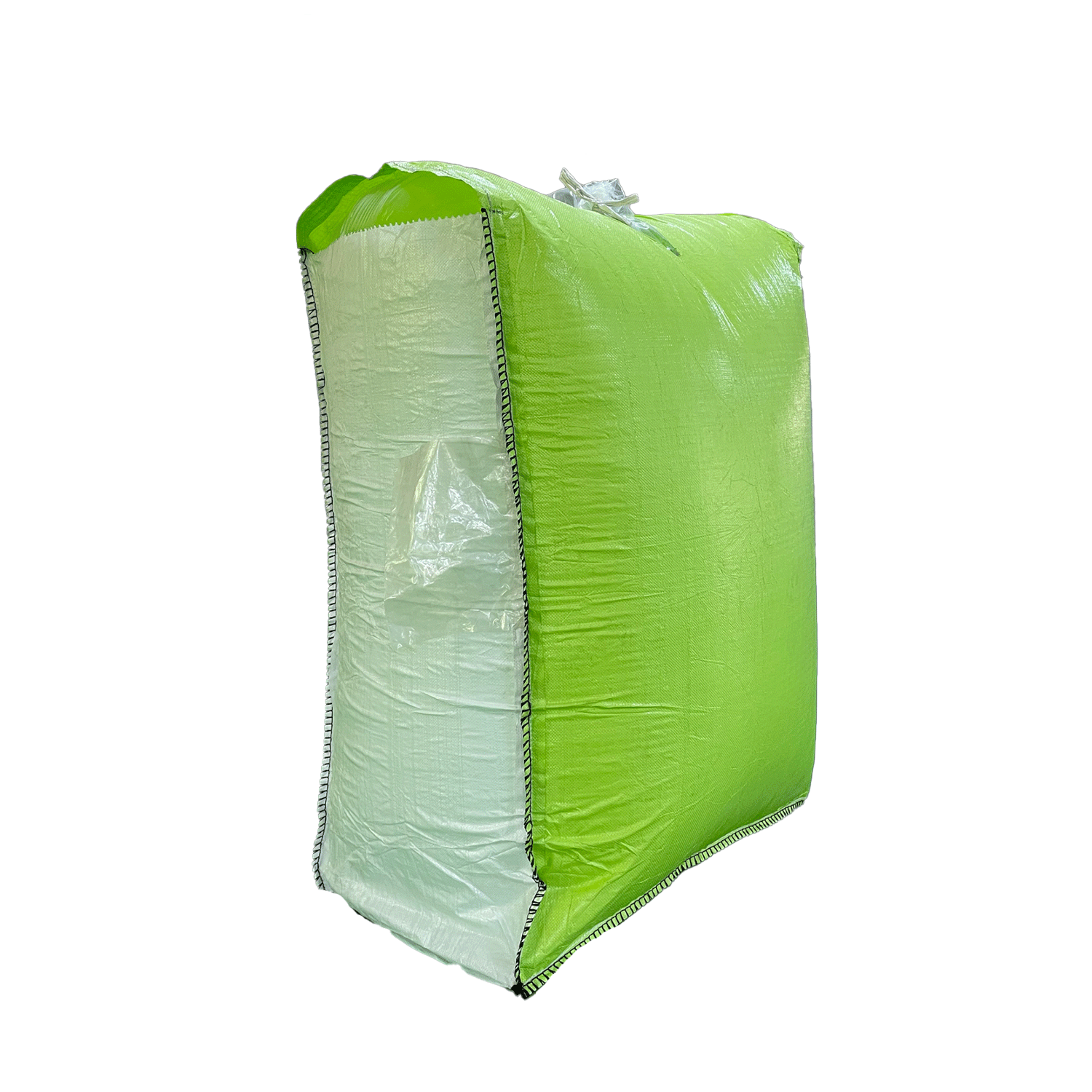 | FIBC Section Fertilizer Bag Range 1 & 2 Loop FIBC Bulk Bags Deccan Cans & Printers Pvt. Ltd. offers durable and cost-effective 1 & 2 Loop FIBC Bulk Bags, designed for the efficient... |
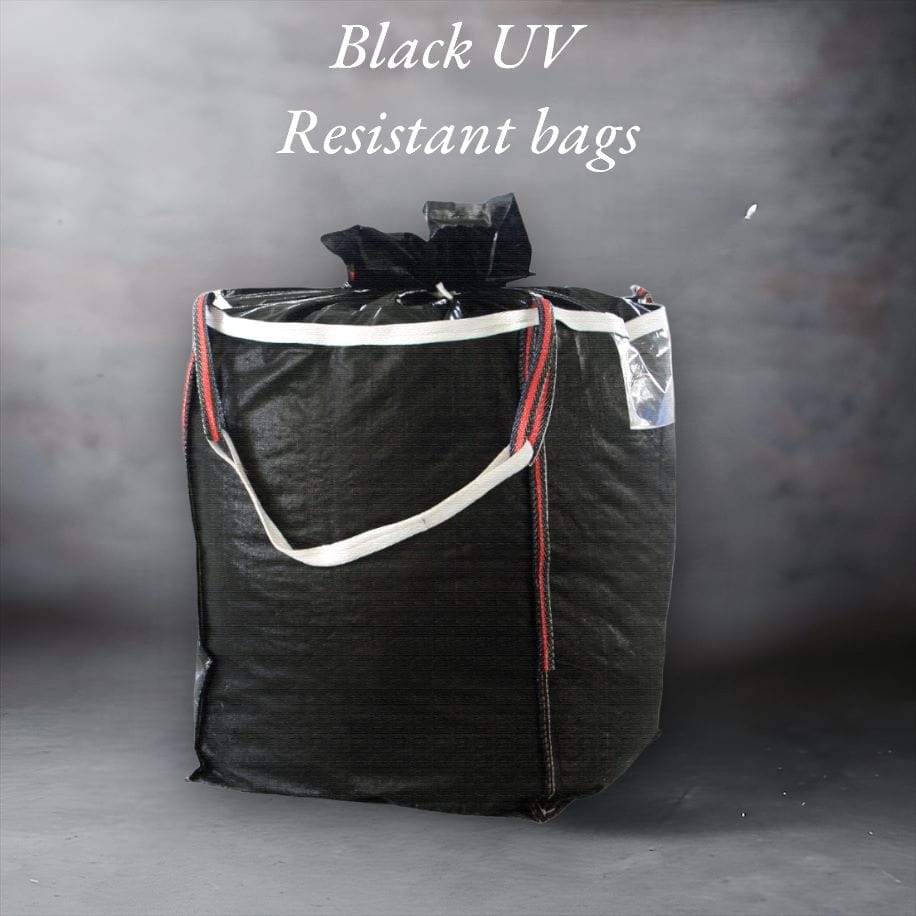 | FIBC Section Black Bags Black FIBC Bags – Enhanced UV Resistance & Extended Shelf Life UV exposure is one of the major challenges faced by the FIBC industry, as prolonged... |
Frequently asked questions
Which fertilizers and agricultural products can go in an FIBC?
Use FIBCs for dry, solid fertilizers and agricultural products after checking their particle size, flow, dust generation, moisture sensitivity and bulk density. Free-flowing granules fill and discharge more easily than cohesive powders.
What standards, UN marks and test documents should you require?
Ask for the bag specification, SWL, safety factor, construction details, production batch identification and test documentation. Require a UN mark and supporting UN packaging test records when the product’s dangerous-goods classification requires them.
How do you choose SWL, dimensions and lifting-loop construction?
Set SWL above the product’s filled weight, then confirm the bag dimensions fit your filling, palletising, storage and discharge equipment. Specify loop construction that matches your forklift, crane or frame attachment method.
How do you control dust, caking, moisture and electrostatic risk?
Specify sift-proof seams, a suitable liner and controlled filling and discharge for dusty products. Prevent caking by limiting moisture and condensation, and select grounding and electrostatic controls when the product and handling environment create ignition risk.
What should a Duqm procurement and handling plan include?
Document the product, bag design, test records, delivery route, covered storage, stacking limits, inspection steps, lifting equipment and discharge procedure. Protect bags from rain, standing water, sharp surfaces and uncontrolled handling during port and site movements.
Related products
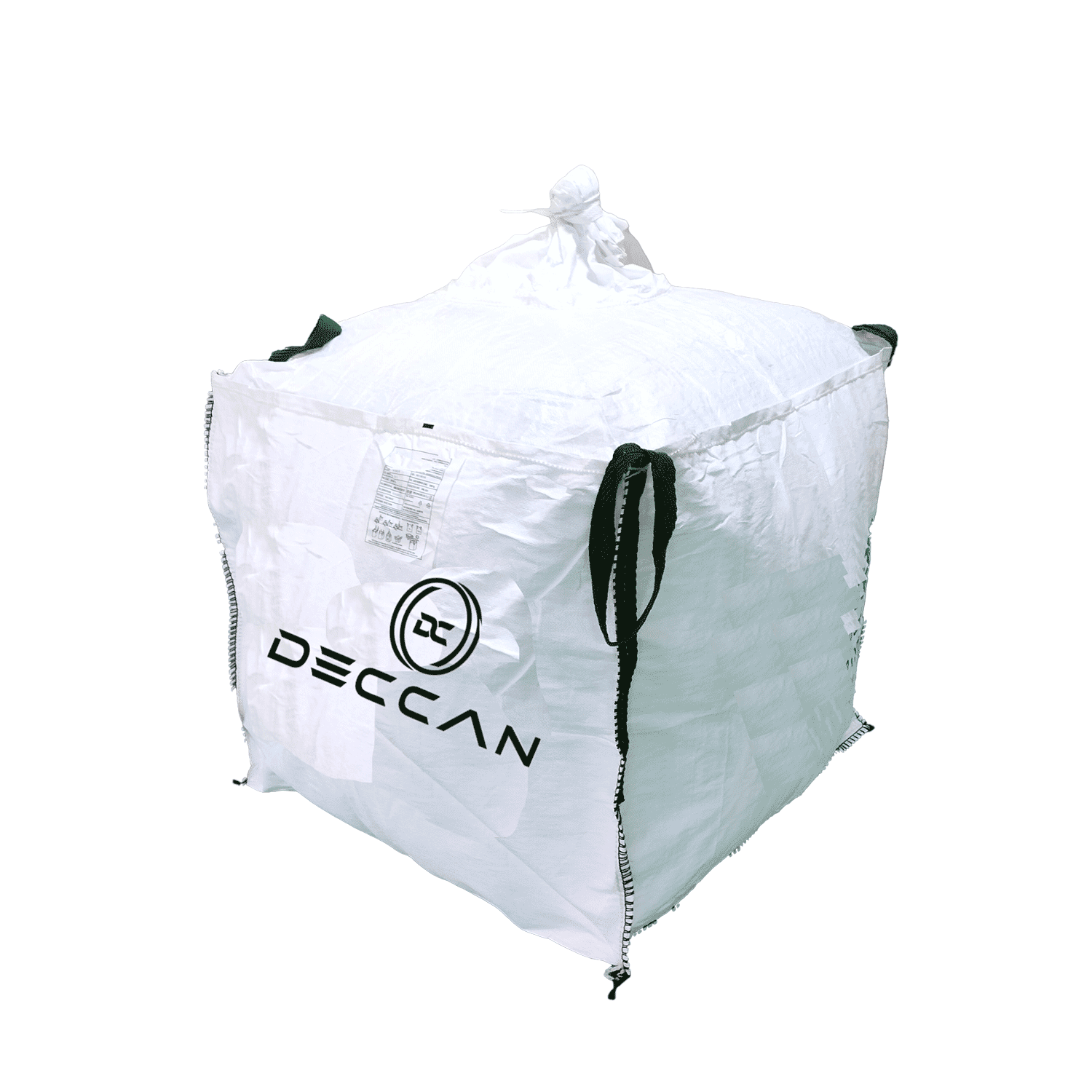 | FIBC Section Polyester Loop Bags/Multifilament Loops Polyester / Multifilament Loop FIBC Bags Deccan Cans & Printers Pvt. Ltd. |
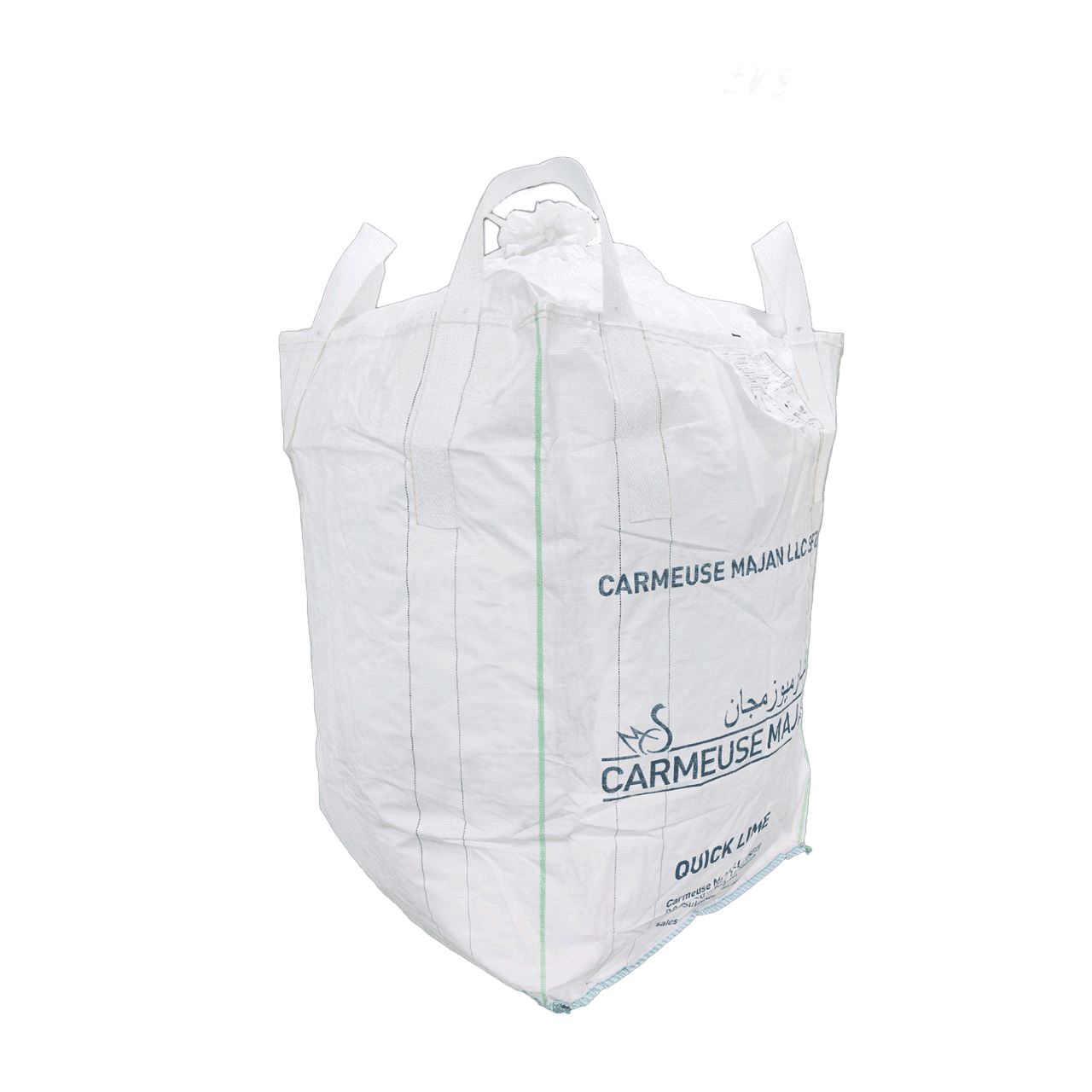 | FIBC Section Bags With Liners FIBC Liners – Bulk Bag Liners Deccan Cans & Printers Pvt. Ltd. |
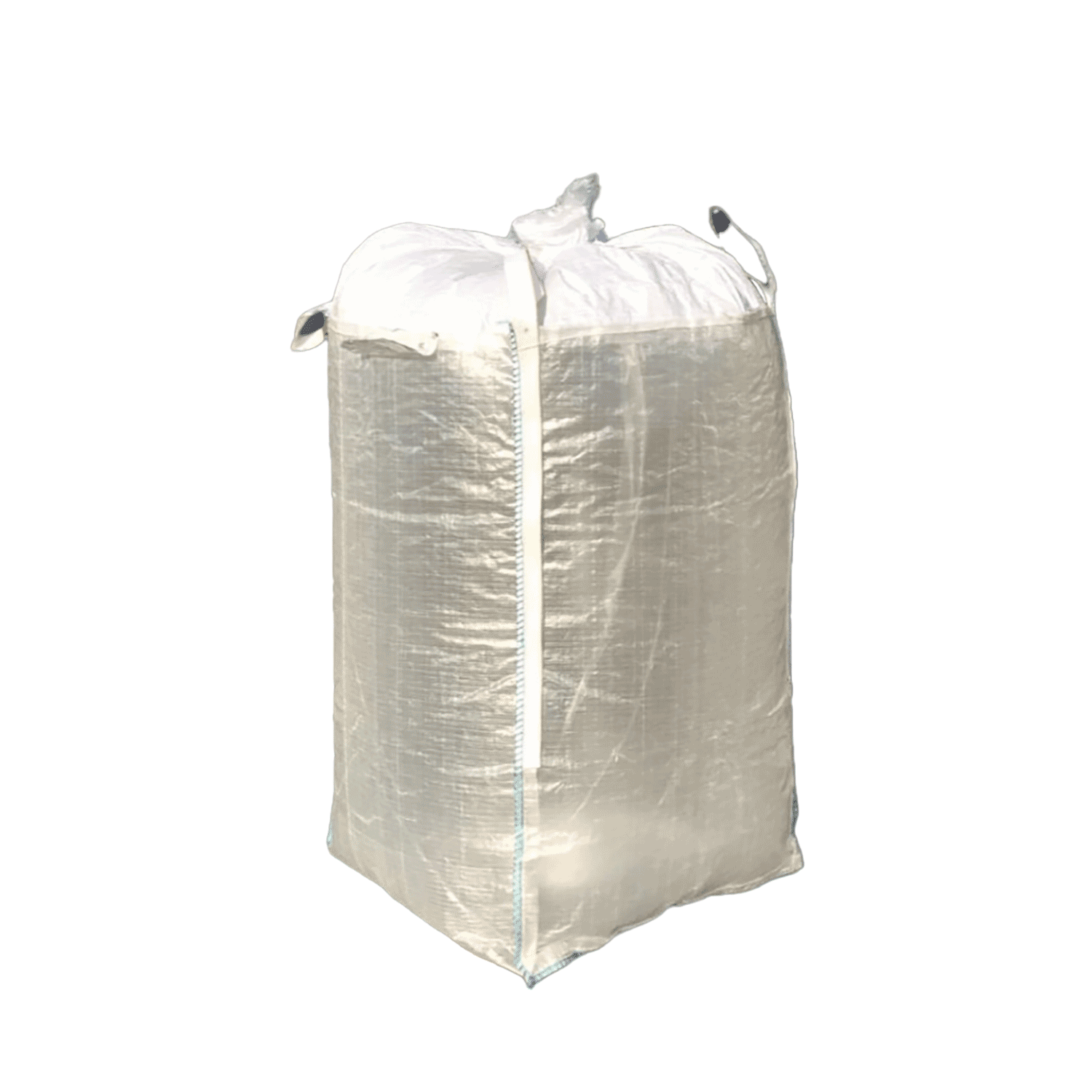 | FIBC Section Transparent Bags Transparent FIBCs – See-Through Bulk Bags Deccan Cans & Printers Pvt. Ltd. |