
Choosing an FIBC by volume alone can leave you with an overloaded lifting system, an incompatible discharge outlet, or a bag that does not fit your filling station. By the end, you will be able to match an FIBC to your material, equipment, site hazards, transport route, and inspection procedure before placing an order.
Key takeaways
- Match polypropylene, coating, seams and liners to the product.
- Confirm the safe working load and lifting-loop design before handling.
- Specify filling, discharge and electrostatic controls as one system.
- Inspect the bag, equipment and closure before lifting or emptying.
Match the FIBC to the Material and Handling Process
Start with the product, not the bag size. FIBC material selection depends on whether you are handling abrasive granules, fine powder, pellets, flakes, or a chemically aggressive product. Check compatibility with woven polypropylene, coating, seams, and any liner before ordering.
1. Measure the product’s bulk density in kilograms per cubic metre. A bag’s nominal volume does not equal its maximum fill weight: calculate the required mass against the bag’s dimensions, fill height, and safe working load (SWL). Specify the required working load limit and safety factor separately.
2. Describe the flow characteristics. Free-flowing pellets need controlled filling and a discharge outlet that will not release the load too quickly. Cohesive or aerated powders need a sift-resistant construction, suitable liner, and a discharge design that prevents bridging and trapped product.
3. Identify moisture risk before selecting the liner. Moisture-sensitive powders and granules need a compatible polyethylene liner or coated fabric, but a liner is not a substitute for covered, dry storage. Confirm chemical compatibility, seal method, and whether the product needs sift resistance or full moisture protection.
4. Match the bag to the equipment. Specify a top inlet that fits the filling nozzle, filter, or dust-extraction connection. Select a bottom spout, valve, cone, or cut-open discharge only after checking the receiving hopper, outlet height, and required flow control; cutting the bag changes the containment and recovery process.
Read the Load Specifications and Check Equipment Fit
A 1,000-litre FIBC is not automatically suitable for 1,000 kg. The usable mass depends on product bulk density, fill height, bag dimensions, lifting arrangement, and whether you empty through a spout or cut the bag.
Before ordering, confirm each item on the specification sheet:
- Safe working load (SWL): the maximum permitted working load for the stated lifting configuration. Treat SWL as a mass limit, not a volume rating.
- Safety factor: the ratio used to keep the rated SWL below the tested failure load. Specify the required safety factor instead of accepting an unspecified “heavy-duty” claim.
- Capacity: the internal volume in litres or cubic metres. Convert it to expected mass using the material’s bulk density, then allow headspace for safe closure.
- Bag dimensions: length, width, and height when filled. Check these against the pallet, filling station, truck body, container door, and warehouse rack.
- Fabric weight: usually stated in grams per square metre (GSM). It affects fabric strength, durability, and tare weight; it does not establish SWL by itself.
- Empty-bag weight: the tare mass used to calculate gross shipment weight and lifting-equipment demand.
- Equipment clearance: verify forklift tine entry, crane-hook access, loop length, top clearance, discharge-spout room, and the space needed to remove the liner.
Ask Deccan Cans & Printers Pvt. Ltd. for a filled-bag drawing showing these clearances, not only the flat bag dimensions. A bag that fits the product but fouls a rack beam or cannot clear the forklift mast is not a safe fit.
Related products
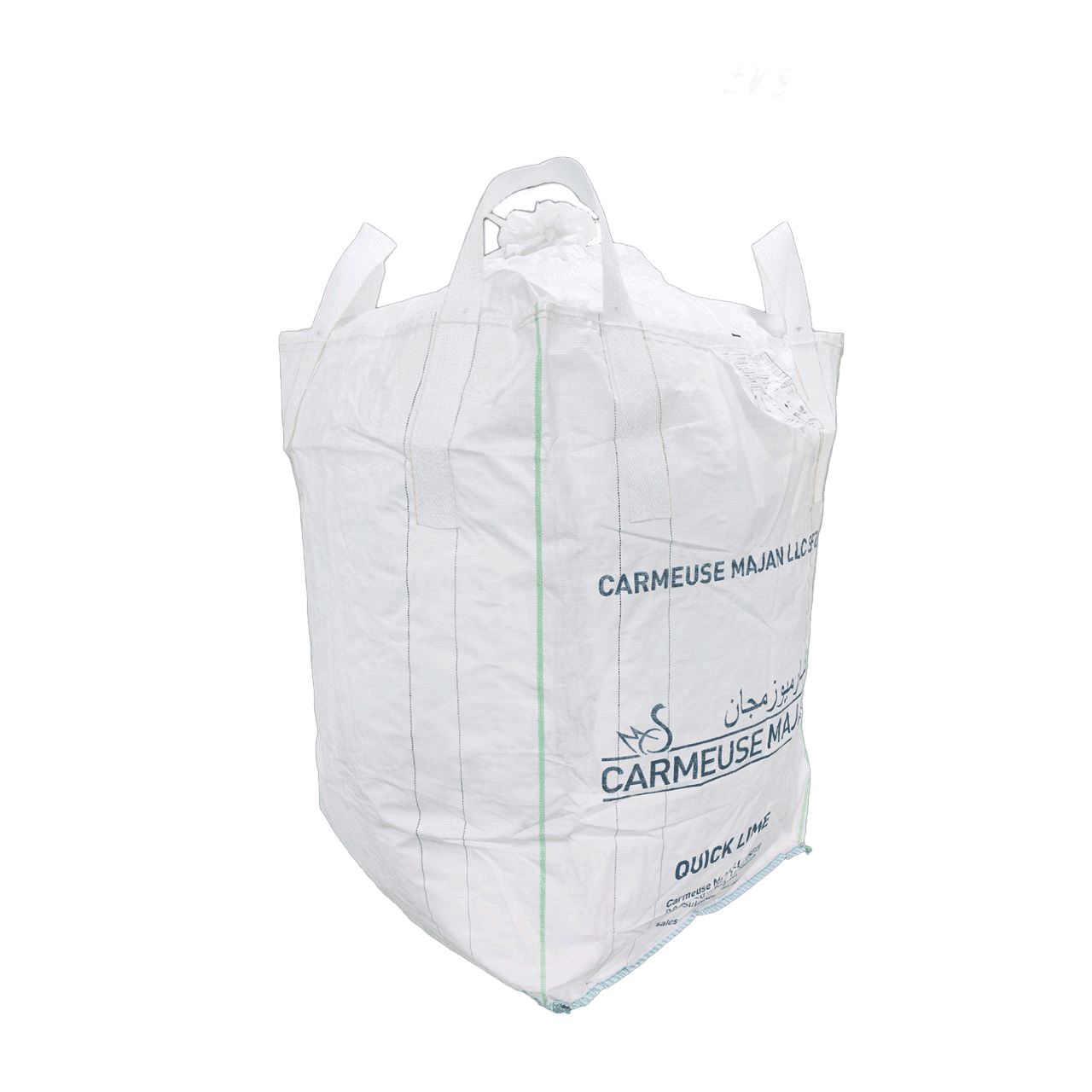 | FIBC Section Bags With Liners FIBC Liners – Bulk Bag Liners Deccan Cans & Printers Pvt. Ltd. |
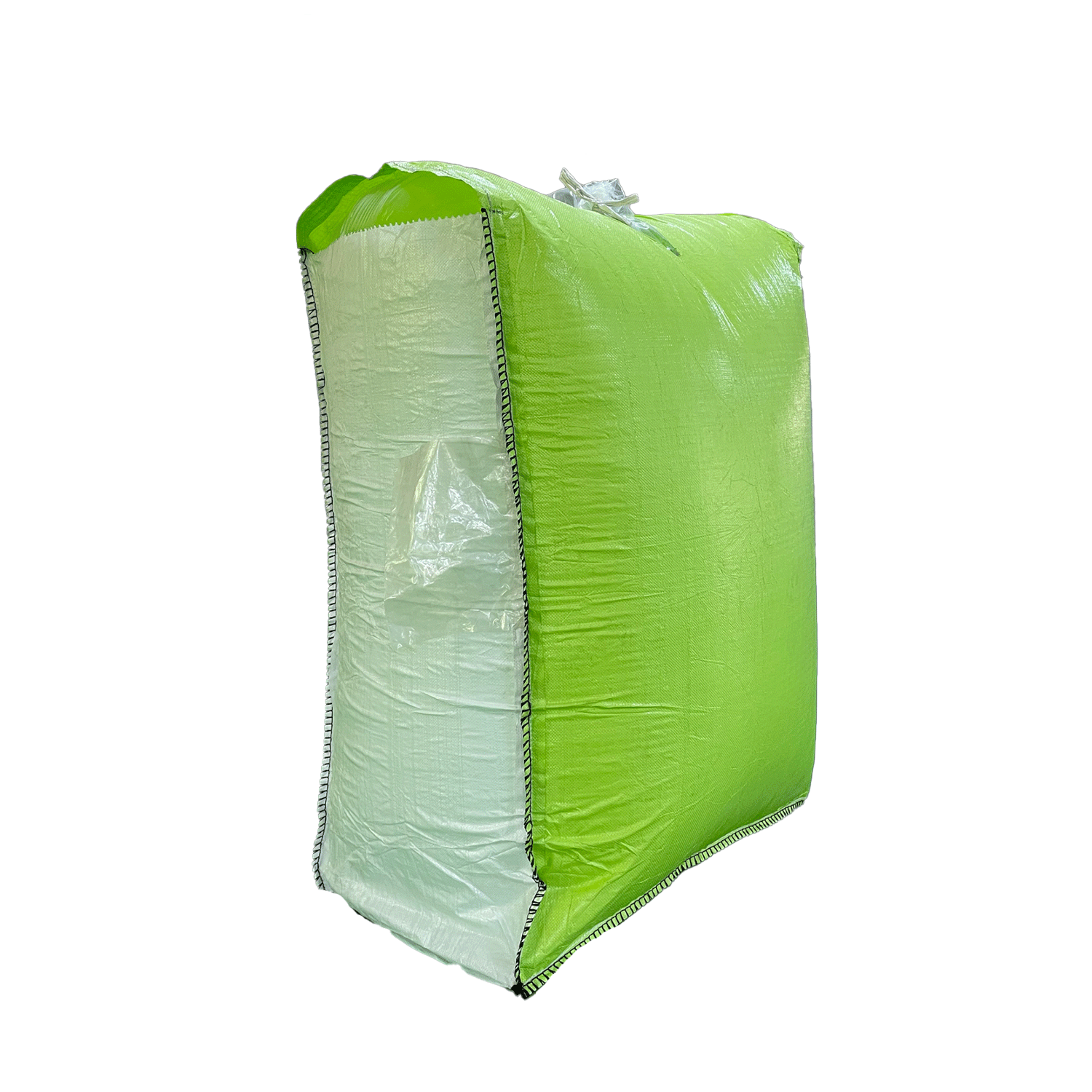 | FIBC Section Fertilizer Bag Range 1 & 2 Loop FIBC Bulk Bags Deccan Cans & Printers Pvt. Ltd. offers durable and cost-effective 1 & 2 Loop FIBC Bulk Bags, designed for the efficient... |
Choose Loops, Top Construction, and Bottom Discharge Together
Specify the lifting loops and fittings as one handling system. A single-hook crane, twin-hook frame, forklift tines, filling station, and discharge valve each impose different load paths and clearances.
| Configuration | Choose it when | Equipment fit |
|---|---|---|
| 1-loop FIBC | One central lifting point suits a compatible crane hook or lifting frame; verify the rated hook and loop geometry | Single-point crane handling |
| 2-loop FIBC | Two lifting points match a twin-hook frame and controlled, balanced lifting | Two-hook cranes or dedicated lifting beams |
| 4-loop FIBC | Four independent loops support forklift tines or a four-point lifting frame | Forklifts, cranes, and standard four-point frames |
| cross-bottom sling FIBC | The sling passes beneath the bag, spreading support and reducing reliance on corner loop alignment | Forklift or crane systems designed for bottom slings |
| multifilament-loop construction | You need flexible, abrasion-resistant loop material for repeated handling; confirm its tested SWL and attachment method | Equipment that accepts the specified loop width and hook radius |
Choose an open top for gravity or conveyor filling when dust control is not critical. Use a filling spout, with a tie or clamp closure, when the station connects to a hose; a duffle top suits broader, faster filling but needs a cover or drawcord.
Match the bottom to emptying equipment. A plain bottom is cut-open disposal only; a discharge spout with flap or tie closure suits a valve, hopper, or screw feeder. A conical spout helps controlled flow. Never hook a liner tie or body fabric, and never lift from fewer loops than specified.
Specify Electrostatic Control and Dangerous-Goods Packaging Precisely
A grounding tab does nothing if the conductive path is broken or the earth connection is absent. Select the FIBC type with the product’s minimum ignition energy, dust cloud, vapour, gas, and hazardous-area assessment—not the product name alone.
| Type | Electrostatic behaviour | Operating condition |
|---|---|---|
| Type A FIBC | Provides no electrostatic control. | Use only for non-flammable products where flammable dust, gas, and vapour are absent. |
| Type B FIBC | Limits energy from propagating discharges but does not equal grounded protection. | Use only after assessing ignition hazards; it is not a universal choice around flammable gases, vapours, or highly ignitable dust. |
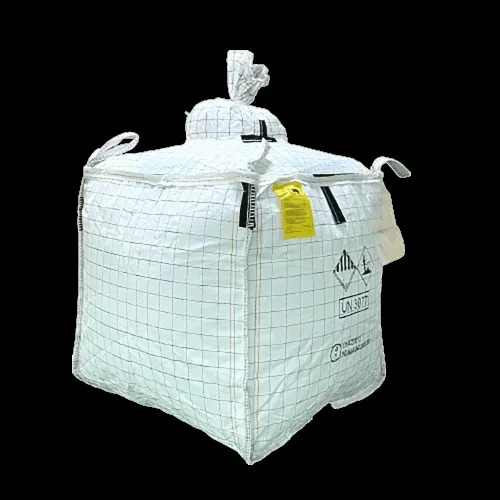
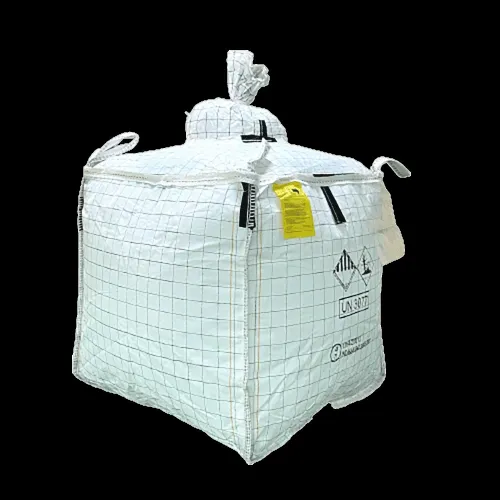
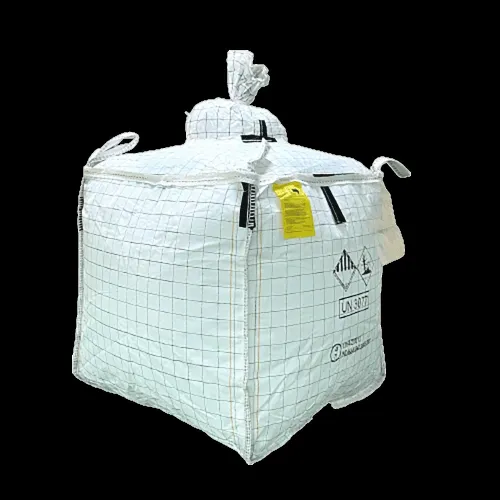
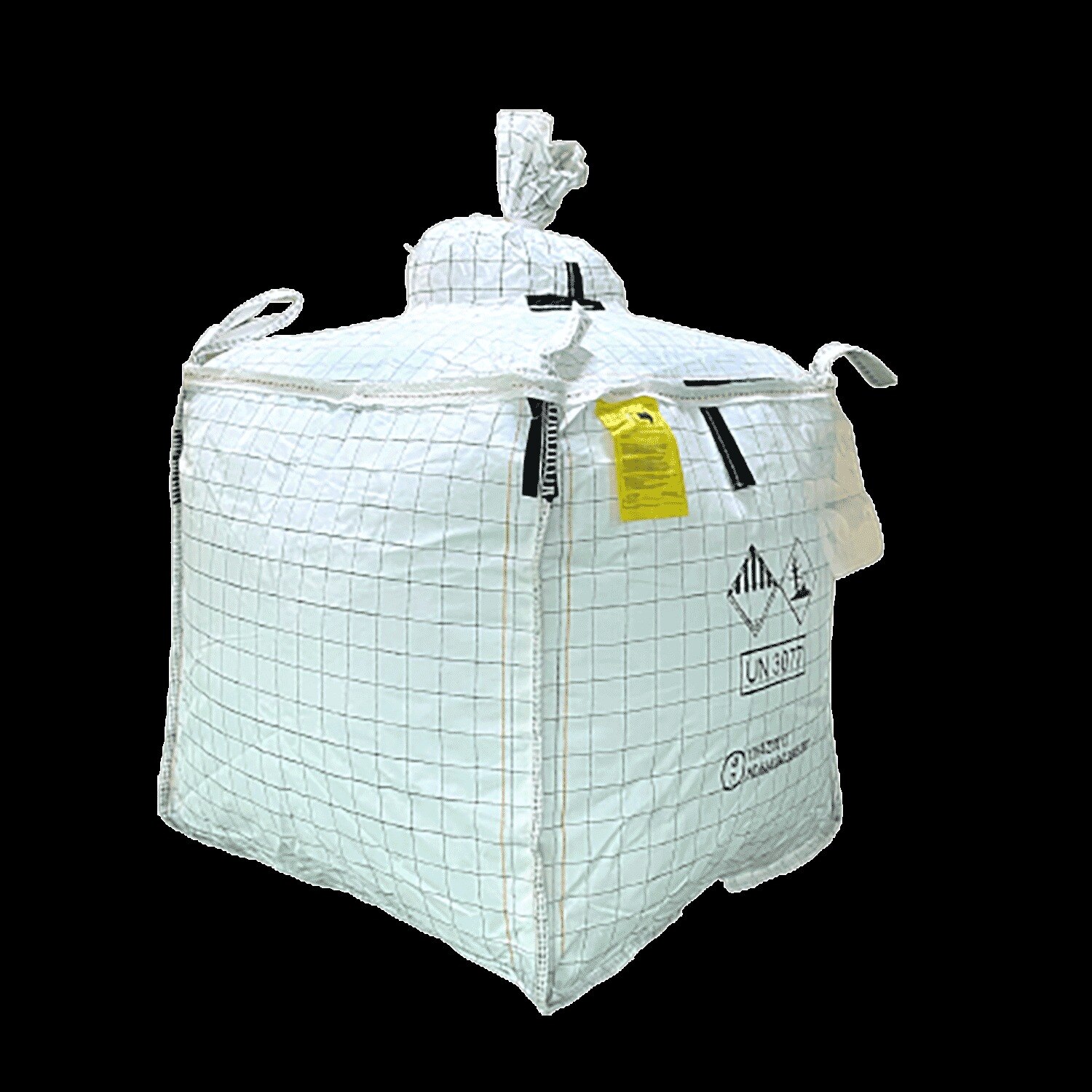
| Type C FIBC | Conductive yarns or fabric sections require bonding and grounding during filling and discharge. | Verify the earth connection, resistance test, continuous conductive paths, and clean, undamaged grounding point. |
| Type D FIBC | Uses dissipative or antistatic construction to control charge without a separate ground connection. | Confirm the tested design suits the site atmosphere and handling process. |
Treat the liner as part of the electrostatic system:
- Confirm whether it is polyethylene, antistatic, conductive, attached, or removable; an ordinary liner can hold isolated charge even when the outer fabric is grounded.
- For a UN-marked shipment, match the UN packaging instruction, packing group, maximum gross mass, closure method, transport route, and material compatibility.
- Specify the tested construction—uncoated woven plastic, coated woven plastic, or a liner version—not merely “UN FIBC.”
Use a Controlled Procedure from Inspection to Emptying
Use the FIBC inspection checklist before every filling operation, not only when the bag is new. Examine fabric, seams, lifting loops, discharge spout, closures, labels, liner, conductive yarns, chemical attack and UV degradation.
1. Quarantine any bag with cuts, broken load-bearing stitching, distorted loops, damaged conductive paths, contamination, or an unidentified previous product. Do not downgrade it informally for reuse.
2. Follow a written filling and lifting procedure. Confirm the product, batch, SWL, filling level and liner position; control dust with closed connections or local extraction, and keep people outside the filling zone.
3. For a Type C FIBC, connect the designated grounding point to a verified earth before filling. Keep the connection in place until discharge is complete, and stop if resistance, continuity or contamination prevents a reliable path.
4. Lift only from all specified loops with rated equipment. Keep the bag upright, centred and clear of forks, racks and people; never drag, jerk, stack an unstable bag or stand beneath a suspended load.
5. Restrain bags during transport to prevent sliding, impact and loop damage. Use a clean, dry, ventilated area for UV and monsoon storage: keep bags covered, off the ground and away from rain, sunlight and pooled water.
6. Establish an exclusion zone before discharge. Bond and ground Type C bags, connect dust extraction, open the discharge spout gradually, and control flow to prevent a sudden collapse or dust cloud.
7. Close and secure the discharge spout closure before moving the emptied bag. Isolate any spill, failed grounding, damaged bag or exposure incident, identify it with a quarantine tag, and prevent reuse until a competent person releases it.
Frequently asked questions
How do you match an FIBC to the material?
Identify whether the load is abrasive granules, fine powder, pellets, flakes or chemically aggressive, then check woven polypropylene, coating, seams and liner compatibility.
What load information must you check before ordering?
Confirm the bag’s safe working load, filled weight, lifting configuration and dimensions against your forklift, hoist, pallet and storage equipment.
Why do the loops, top and bottom discharge need to be specified together?
The filling method, lifting equipment and emptying process must align. Choose loop construction, top access and discharge design as one handling system.
When are electrostatic controls or dangerous-goods packaging needed?
Specify electrostatic protection for materials or processes that create ignition risks, and confirm the required dangerous-goods packaging design before shipment.
What procedure should you follow before emptying an FIBC?
Inspect the fabric, seams, loops, liner, closures and discharge spout; verify equipment compatibility; lift without shock loading; then control the outlet during emptying.
Related products
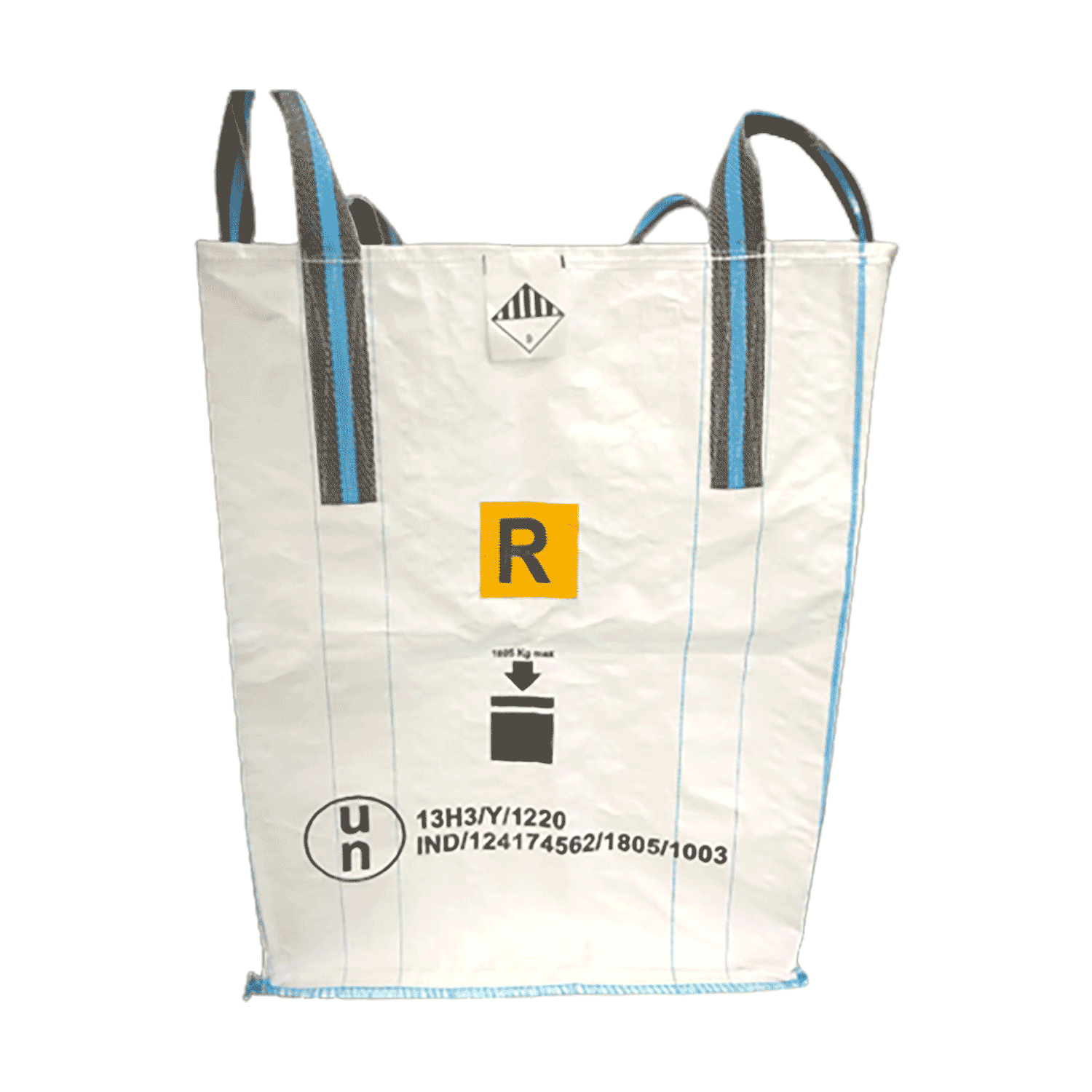 | FIBC Section Un Bags UN Certified Bulk Bags – Rigorous Performance Testing for Safety & Reliability Deccan UN Certified Bulk Bags are specially engineered for the safe... |
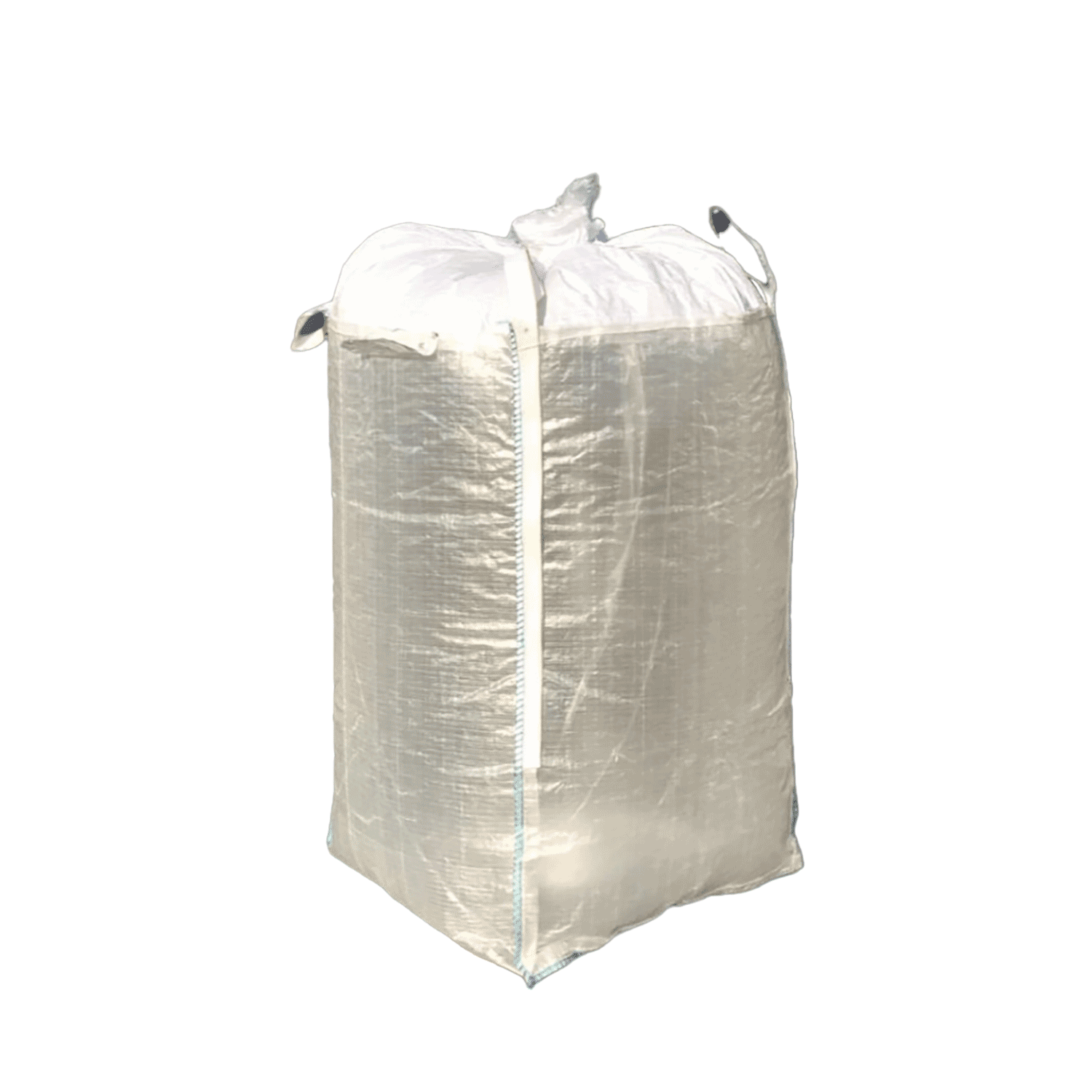 | FIBC Section Transparent Bags Transparent FIBCs – See-Through Bulk Bags Deccan Cans & Printers Pvt. Ltd. |
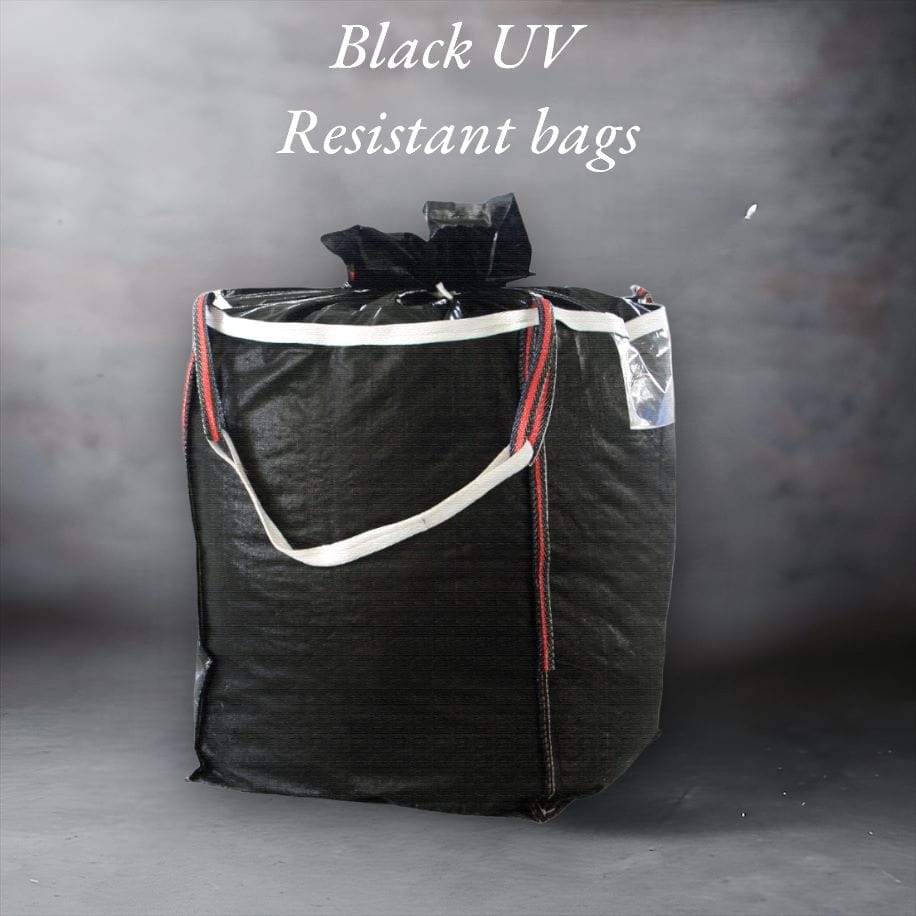 | FIBC Section Black Bags Black FIBC Bags – Enhanced UV Resistance & Extended Shelf Life UV exposure is one of the major challenges faced by the FIBC industry, as prolonged... |
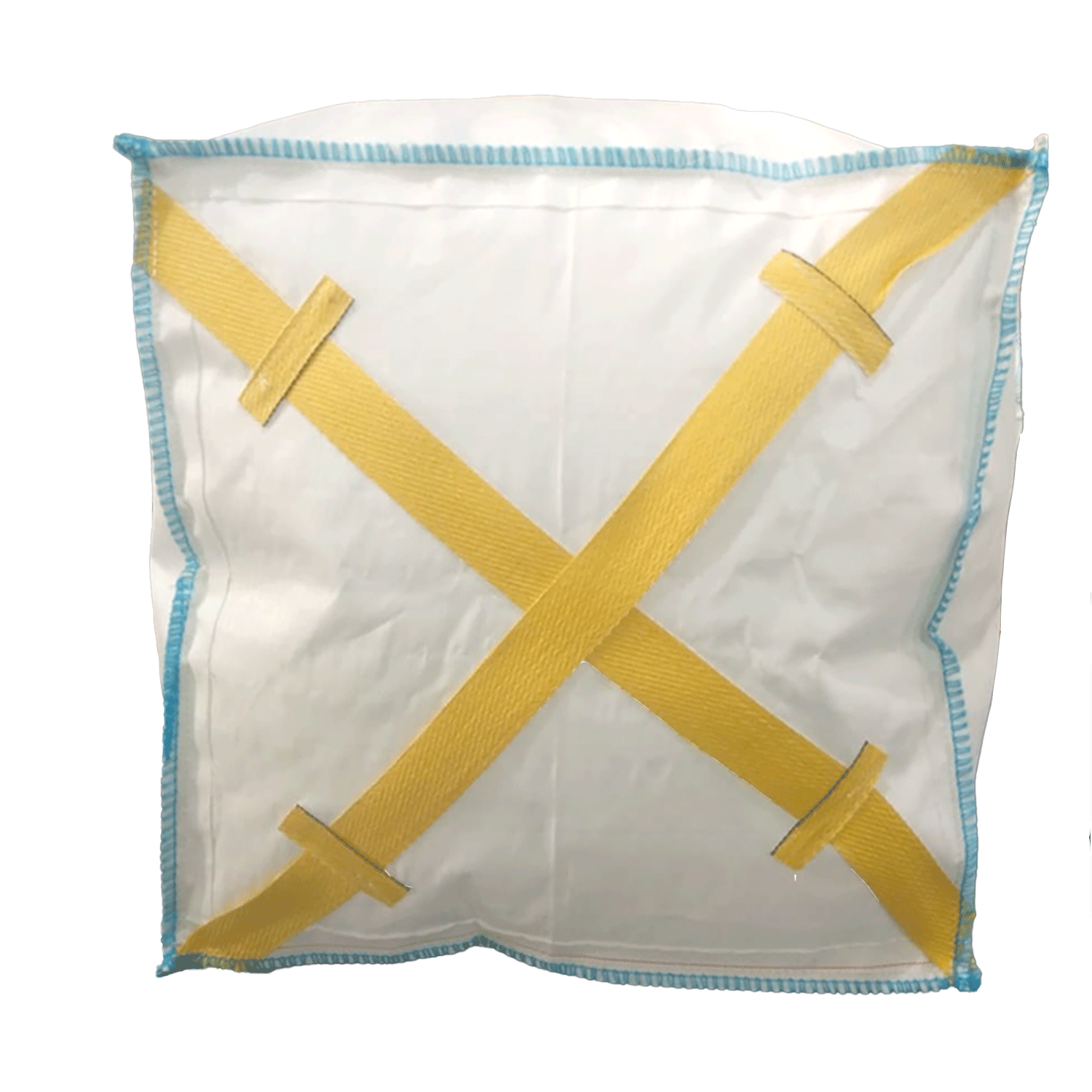 | FIBC Section Cross Bottom Sling Bags Cross Bottom Sling FIBCs – Bulk Bags Deccan Cans & Printers Pvt. Ltd. |