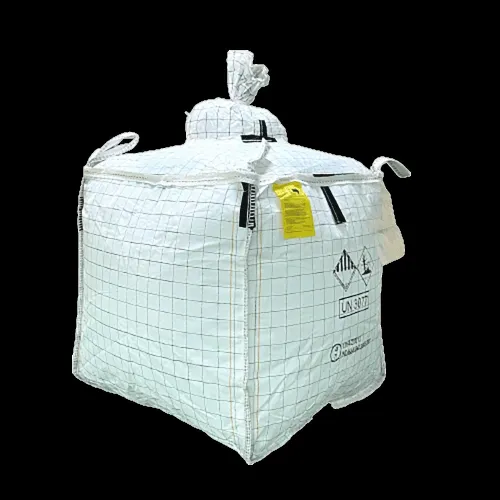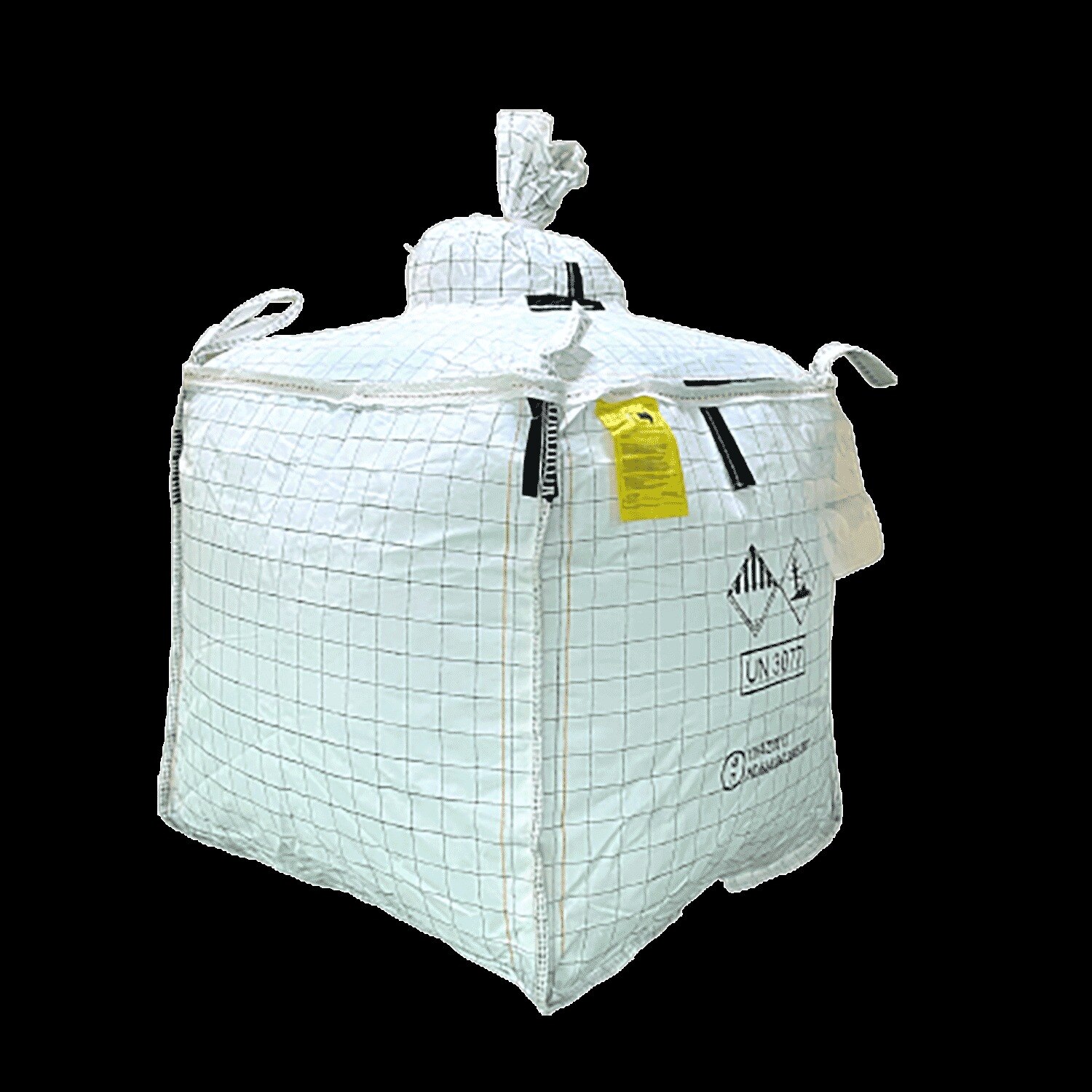
Choosing an FIBC for urea, NPK, seeds, grain or pesticides requires more than matching a bag’s advertised capacity. You need to compare product density, chemical and moisture exposure, filling and discharge equipment, static-control needs, lifting design and documented test performance before placing an order.
Key takeaways
- Match bag construction to product density, particle size and contamination risk.
- Specify both SWL in kilograms and usable volume in litres.
- Use liners, coated fabric or sift-proof seams to control moisture and leakage.
- Protect filled bags from sunlight, static, damp floors and damaged lifting loops.
Which FIBC construction suits each agricultural product?
Match the FIBC to density, particle size, chemistry and contamination risk before comparing price. Specify both safe working load (SWL) in kilograms and usable volume in litres: a 1 m³ bag can carry different masses because bulk density varies.
| Product | Suitable construction | Main specification |
|---|---|---|
| Urea FIBC bags | Coated woven polypropylene with sift-proof seams and moisture-resistant closure | Resist dust, humidity and caking; verify SWL against the urea’s bulk density |
| DAP and MAP bulk bags | Abrasion-resistant fabric, reinforced seams and a discharge outlet sized for compacting granules | Select fabric strength and outlet geometry for phosphate dust and bridging |
| NPK fertilizer bags | Coated body or compatible liner with sealed seams | Control blend dust, moisture entry and segregation during discharge |
| Potash packaging bags | Durable woven fabric with reinforced lifting and bottom seams | Match abrasion resistance and SWL to the product’s density and handling cycle |
| Seeds, grain and animal feed | Clean, traceable construction with documented virgin resin, inks, liner and hygiene controls | Request food- or feed-contact documentation; fertilizer service does not qualify the bag |
| Soil amendments and mineral powders | Abrasion-resistant fabric, sift-proof seams and full-opening or conical discharge | Prevent fabric wear, residual product and bridging |
| Pesticides | Chemically compatible woven polypropylene, coating, liner, ink and closures | Obtain compatibility confirmation before filling |
Ask for the polymer and liner compatibility statement, prior-use restrictions, contamination controls, lot code and production date. If the formulation is dangerous goods, identify the exact product, packing group and transport mode before requesting a UN-approved, correctly marked 13H FIBC.
How do capacity, SWL and lifting loops affect safe handling?
Choose the FIBC from its rated safe working load (SWL), not nominal volume alone. Confirm bulk density, target fill mass, filling density, usable volume, bag dimensions and headroom inside the warehouse or truck.
A 1 m³ bag holding prilled urea at roughly 700–800 kg/m³ will carry a different mass from one holding phosphate fertilizer at roughly 900–1,100 kg/m³. State both SWL in kilograms and volume in litres.
The FIBC safety factor 5:1 6:1 describes the relationship between tested breaking load and rated SWL. It does not allow you to fill the bag to five or six times its rating.
Match the lifting design to the equipment:
- One-loop, two-loop and four-loop bags need hooks or a spreader arrangement that supports their intended lifting points; four-loop bags normally use four points.
- Cross-corner FIBC loops place lifting points at the bag corners. Cross-bottom sling designs lift through slings beneath the body. Do not interchange these constructions.
- Check loop length, hook dimensions and lifting angle so hooks bear on the designed points without abrading the body fabric.
- Do not insert forklift tines under a bag unless it has purpose-built forklift sleeves.
For repeated movement, request a design tested for the actual handling cycle. A higher SWL does not provide unlimited reuse, and repeated-use bags require inspection and a handling method suited to that cycle.
When should you choose coated fabric, a liner or sift-proof seams?
The coated versus uncoated FIBC decision starts with dust and moisture, not fabric price. Choose uncoated woven polypropylene when ventilation and lower cost matter and the product is neither highly dusting nor moisture-sensitive.
| Option | Choose it when | Check before ordering |
|---|---|---|
| Uncoated woven polypropylene | Ventilation matters and dust or moisture risk is low | Product compatibility and abrasion resistance |
| Coated fabric | Fine fertilizer dust needs a tighter barrier | Static behaviour, heat sealing and recycling options |
| Liner | Fertilizer is hygroscopic, powder is fine, or contact with outer fabric is unacceptable | Material, FIBC liner thickness, fit, closure and puncture resistance |
| Sift-proof seams | Dust could escape through needle holes | Sift-resistance or seam-leakage performance, not fabric GSM alone |
A polyethylene liner is common, but it does not automatically make a bag moisture-proof. Specify the resin, FIBC liner thickness, fit and closure; require confirmation of chemical compatibility, puncture resistance and food- or feed-contact status. State whether it is loose, form-fitted or attached, and whether it is heat-sealed, tied, clamped or closed with a drawstring.
For dusty fertilizer, order sift-proof fertilizer bags with stitched or tape-sealed seams. Detail the FIBC filling and discharge spouts and their closures: a folded liner can restrict flow, while a small outlet encourages cutting the bag. For caking products, compare a conical or full-opening discharge with the diameter required by your auger or receiving hopper.
How should filled agricultural FIBCs be protected from moisture, sunlight and static?
1. Raise every filled FIBC on a pallet or another clean, stable surface. Keep it beneath a roof, away from walls, standing water and leaking pipes; fertilizer storage in monsoon conditions fails when moisture enters through a liner, spout or wet floor.
2. Keep filling and discharge spouts closed until use. During outdoor loading, use a cover or shade. FIBC UV storage guidance must come from the fabric’s UV test data: sunlight intensity, bag colour and loading time prevent a reliable fixed outdoor-exposure promise. Black fabric reduces light penetration but does not replace controlled storage or testing.
3. Treat fertilizer dust as an electrostatic handling risk. Type A bags have no intentional static-dissipation protection. A Type C conductive FIBC requires its conductive components to be interconnected and grounded to a verified earth path during filling and discharge; an unconnected grounding tab provides no intended protection.
Type D designs dissipate charge without direct grounding, but use them only under the manufacturer’s approved conditions and keep them free from conductive contamination.
4. Ask for ISO 21898 FIBC testing documents, including the tested fabric, seams, lifting construction, UV performance and static classification. Deccan Cans & Printers Pvt. Ltd., a Vapi-based packaging manufacturer, can translate your warehouse, filling line and monsoon-storage conditions into a written fabric, liner, grounding and UV specification.
Require evidence rather than labels such as weatherproof or heavy duty.
Related products
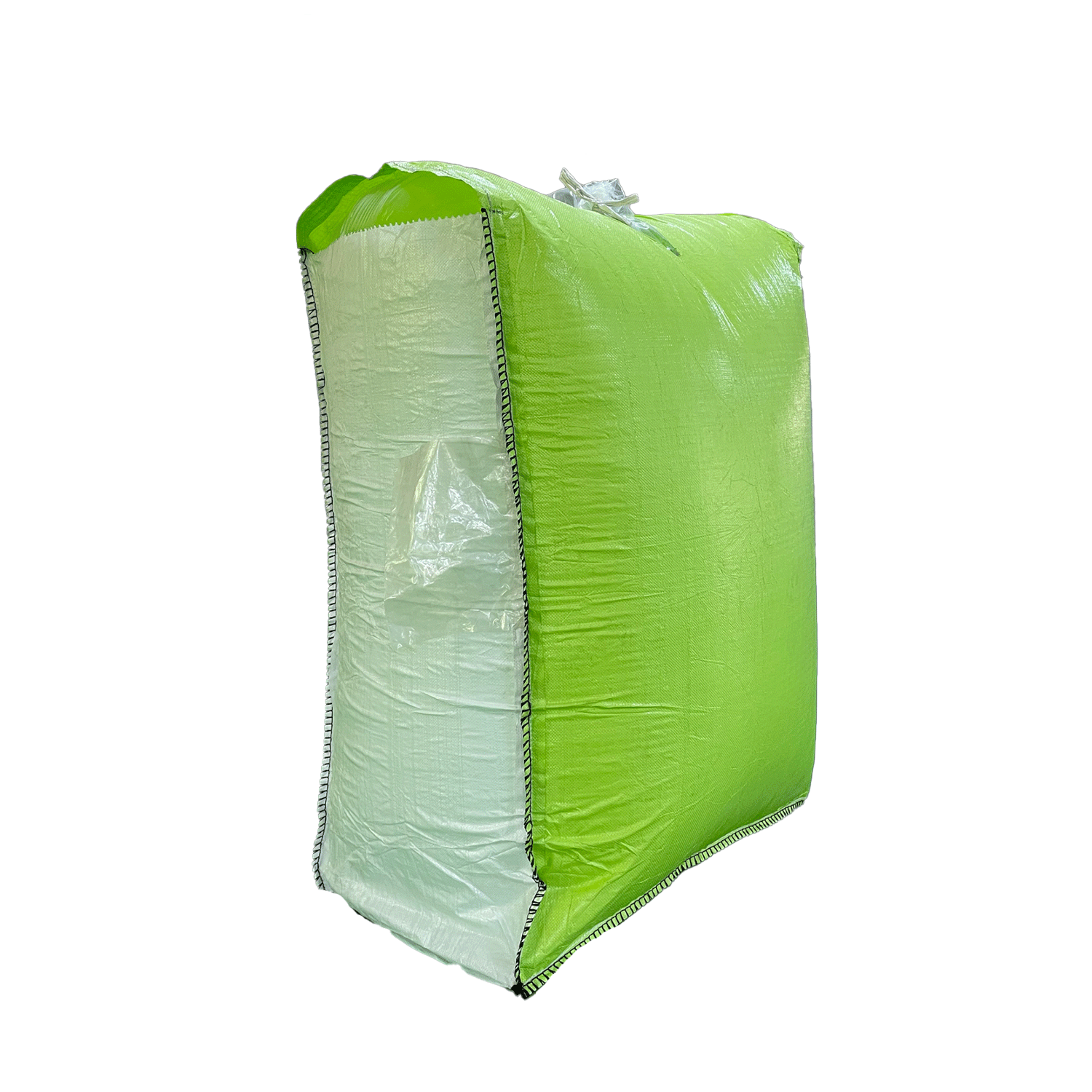 | FIBC Section Fertilizer Bag Range 1 & 2 Loop FIBC Bulk Bags Deccan Cans & Printers Pvt. Ltd. offers durable and cost-effective 1 & 2 Loop FIBC Bulk Bags, designed for the efficient... |
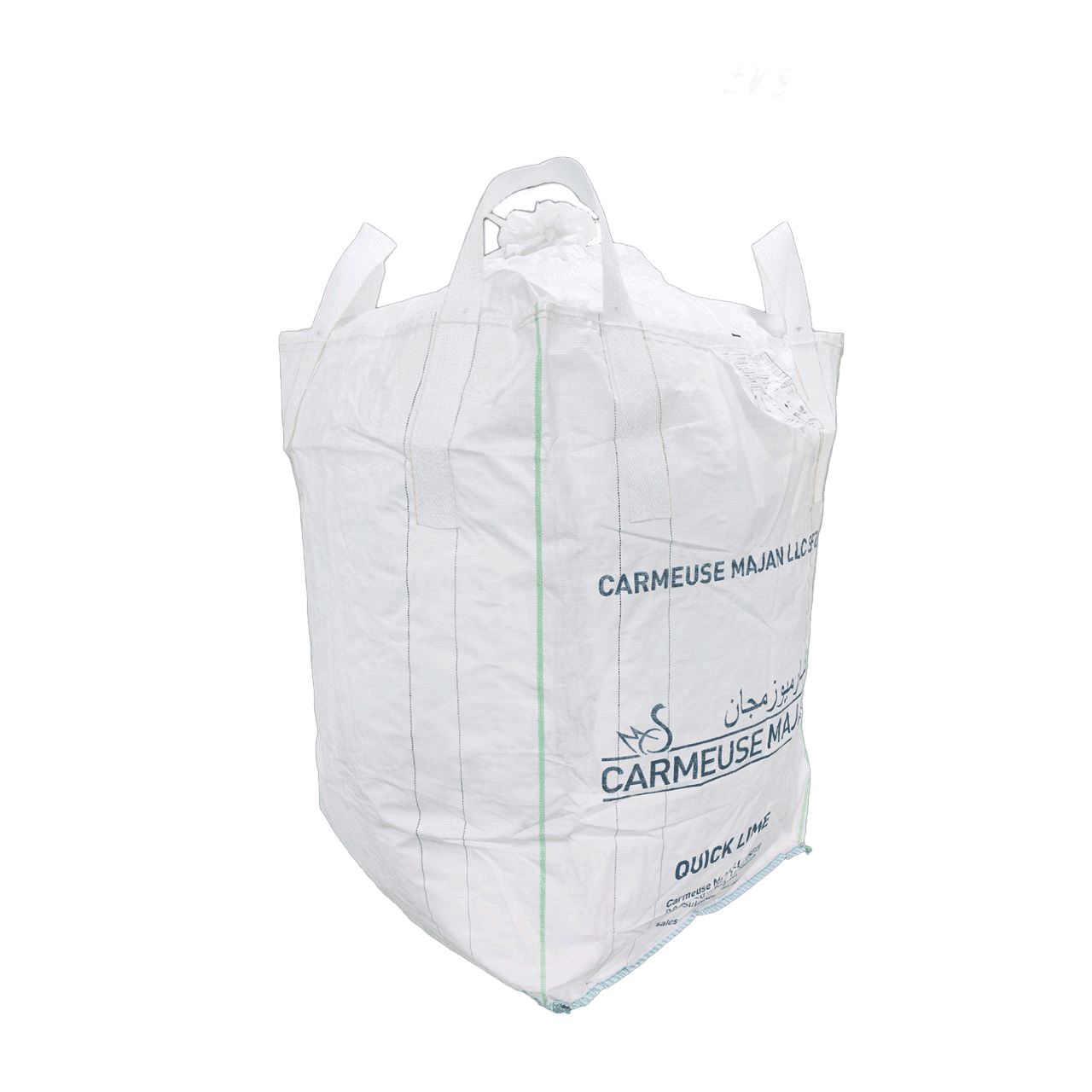 | FIBC Section Bags With Liners FIBC Liners – Bulk Bag Liners Deccan Cans & Printers Pvt. Ltd. |
What should you verify before ordering and reusing fertilizer bags?
1. Put a complete FIBC purchase specification on the order. Name the fertilizer and formulation, target fill mass, SWL, safety factor, dimensions, construction type, fabric coating, liner material and thickness, filling and discharge spouts, closure method, lifting arrangement, static type and UV requirement.
A 5:1 or 6:1 safety factor compares tested breaking load with rated SWL; it does not permit filling the bag five or six times above its rating.
2. Request the applicable ISO 21898 test basis, including the edition used, plus the test report or ISO 21898 certificate identifying the exact tested construction. For dangerous goods, match the UN mark, certificate, permitted contents and packing group to the actual fertilizer and transport use.
A generic “UN-approved” claim is insufficient; verify the UN-marked fertilizer FIBC and its documented approval.
3. Require traceability through the bag lot or batch code, production date and supplier specification revision. Before filling, record rejection for cuts, pulled yarns, open seams, damaged lifting loops, liner perforation, contamination or unreadable labels. After chemical exposure, ultraviolet ageing, overload or wet storage, do not approve reuse because the bag still looks intact.
4. Make FIBC inspection and reuse explicit: a single-trip FIBC requires a single-trip policy, while reusable bags need a documented inspection interval and rejection criteria. For seeds, grain and animal feed, record resin, additives, ink, hygiene controls and prior-use status; fertilizer packaging must not enter a food or feed chain by mistake.
Frequently asked questions
Which FIBC construction suits each agricultural product?
Select the construction according to bulk density, particle size, flow behaviour, chemical properties and contamination risk. Fine powders need tighter containment than coarse grains or seed products.
How do capacity, SWL and lifting loops affect safe handling?
Specify usable volume in litres and safe working load in kilograms. Check that the lifting-loop configuration suits your forklift, crane or pallet-handling method, and never exceed the marked SWL.
When should you choose coated fabric, a liner or sift-proof seams?
Choose coated fabric for added surface resistance, a liner when moisture or product purity needs stronger separation, and sift-proof seams when fine powder could escape through stitching.
How should filled agricultural FIBCs be protected from moisture, sunlight and static?
Store bags under cover on dry pallets, keep them away from direct sunlight and inspect for condensation or wet floors. Use an appropriate antistatic construction when the product and handling environment create static risk.
What should you verify before ordering and reusing fertilizer bags?
Before ordering, confirm product compatibility, dimensions, usable volume, SWL, lifting arrangement, closure, liner and seam requirements. Before reuse, inspect the fabric, seams, loops, discharge spout and contamination history; do not reuse a bag with cuts, chemical damage or unknown contents.
Related products
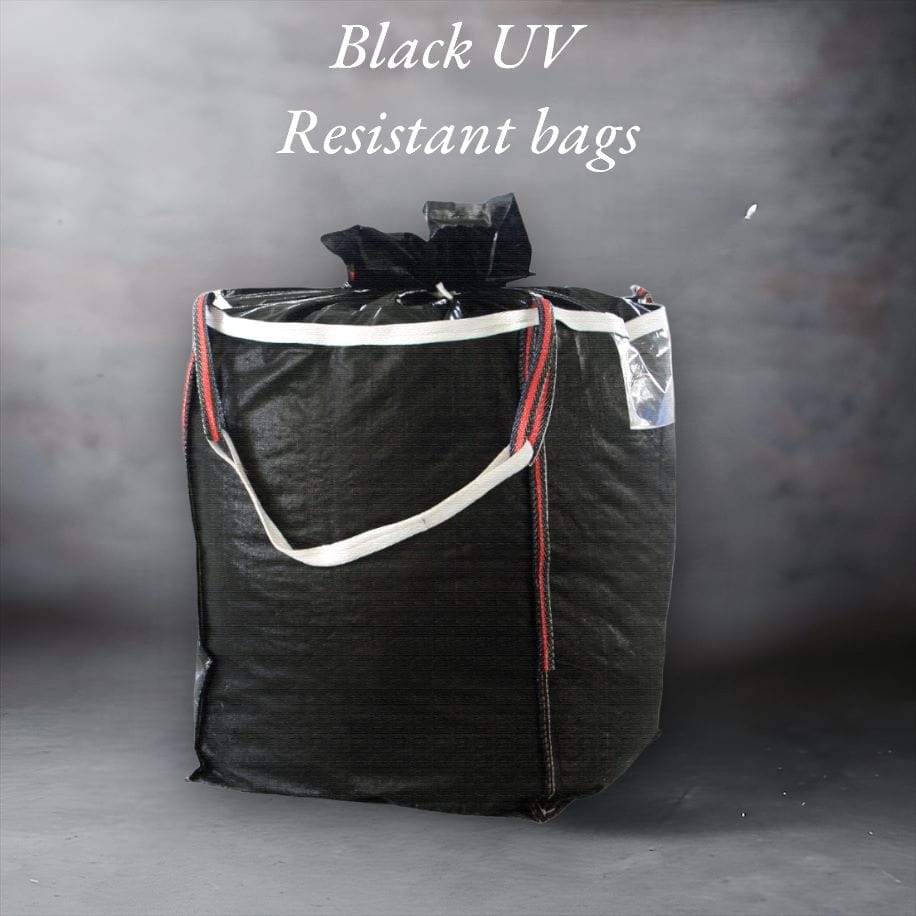 | FIBC Section Black Bags Black FIBC Bags – Enhanced UV Resistance & Extended Shelf Life UV exposure is one of the major challenges faced by the FIBC industry, as prolonged... |
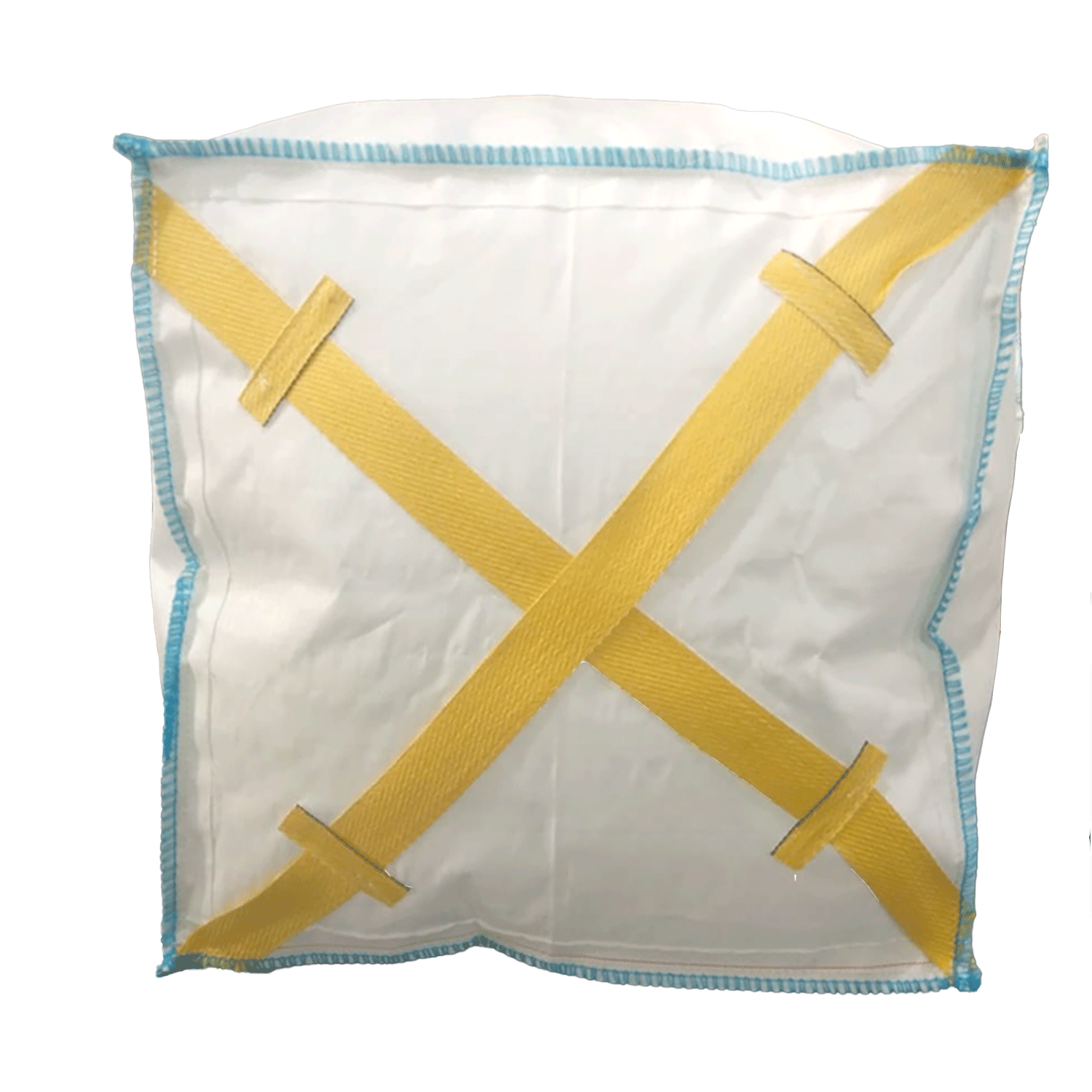 | FIBC Section Cross Bottom Sling Bags Cross Bottom Sling FIBCs – Bulk Bags Deccan Cans & Printers Pvt. Ltd. |
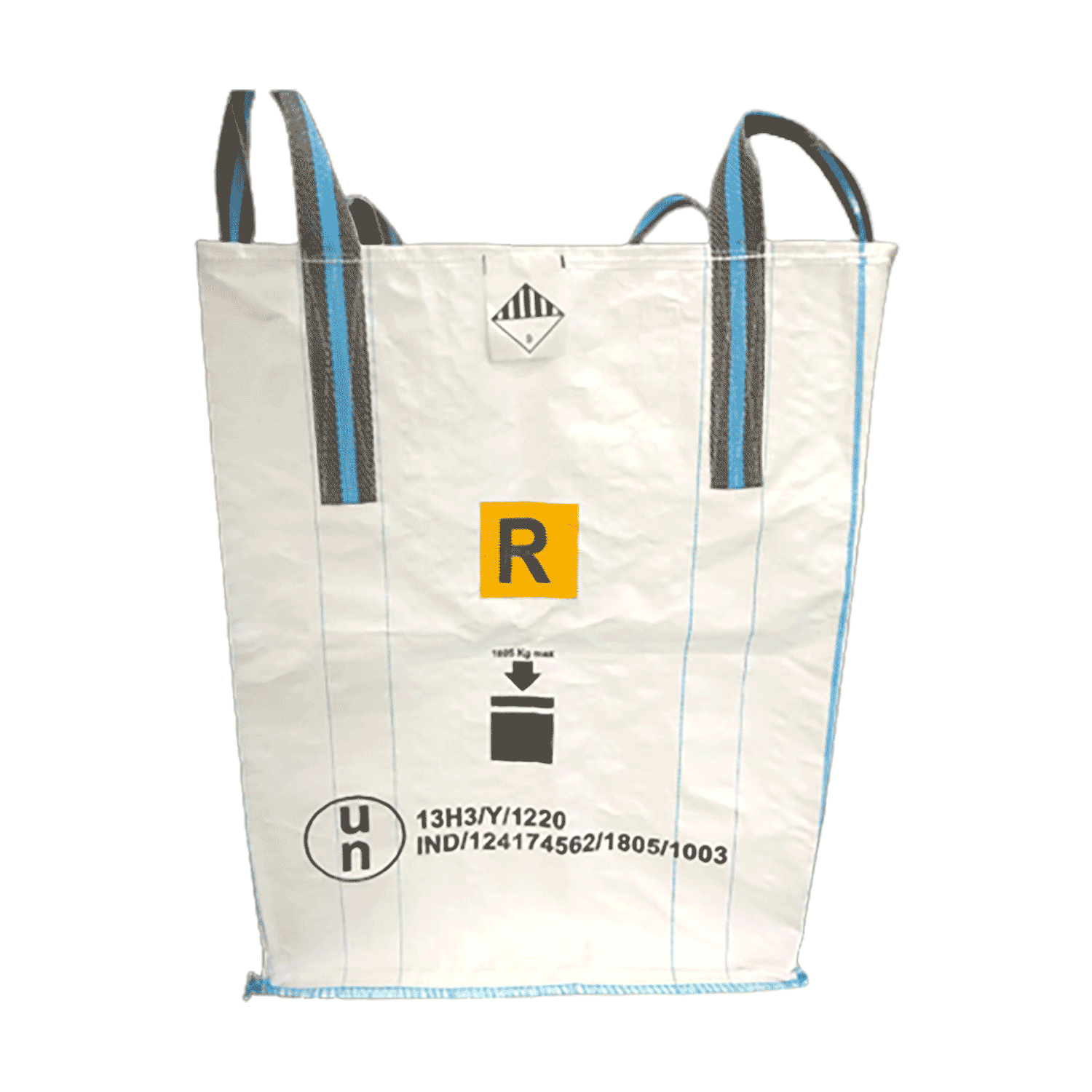 | FIBC Section Un Bags UN Certified Bulk Bags – Rigorous Performance Testing for Safety & Reliability Deccan UN Certified Bulk Bags are specially engineered for the safe... |
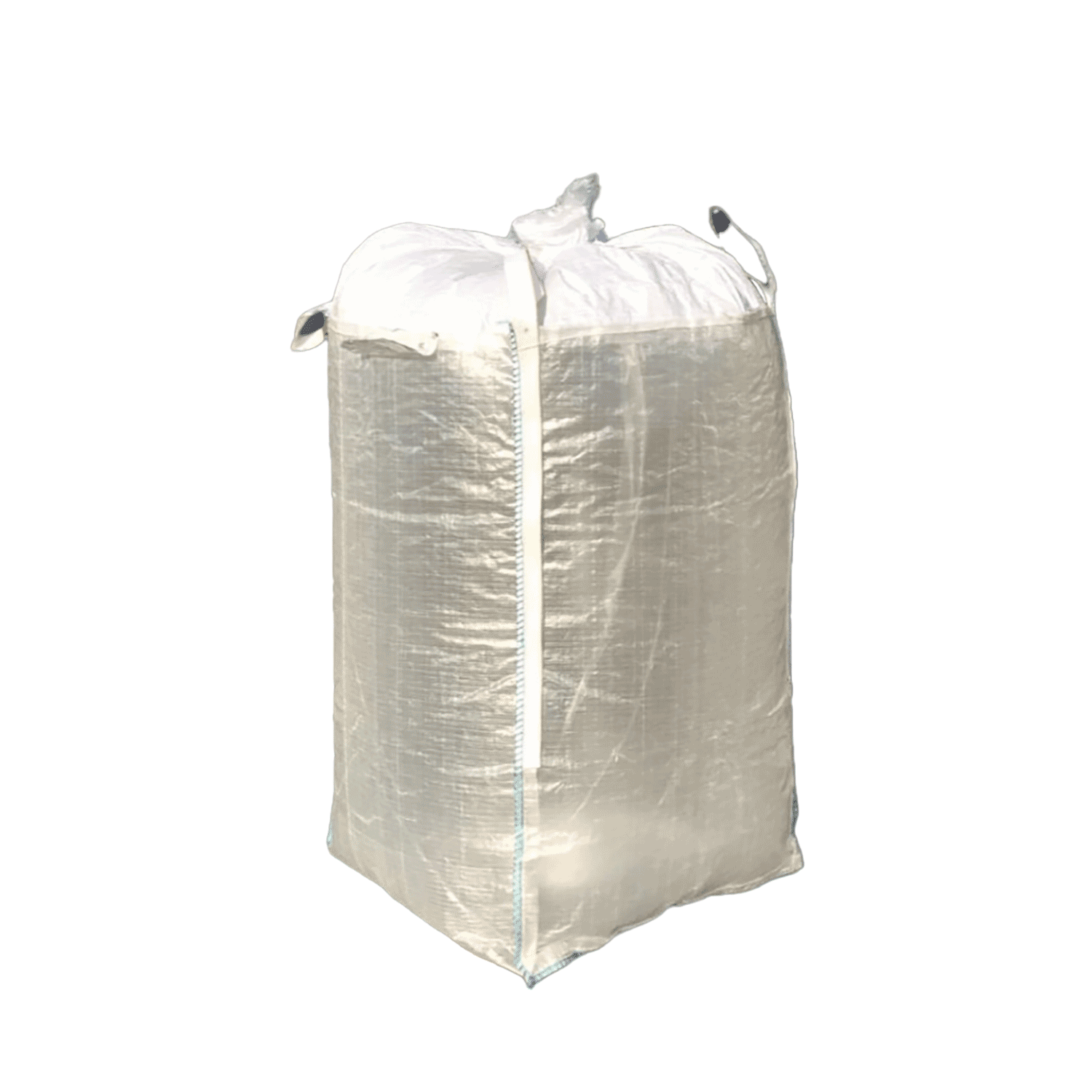 | FIBC Section Transparent Bags Transparent FIBCs – See-Through Bulk Bags Deccan Cans & Printers Pvt. Ltd. |