Chemical companies in Vapi need more than a bag with the right load rating: the product, hazard classification, filling system, lifting method and storage environment all affect the specification. By the end, you will be able to define a purchase checklist, verify UN and electrostatic requirements, and compare FIBC designs before approving a bag for plant use.
Key takeaways
- Use FIBCs for stable dry powders, granules, flakes and pellets.
- Specify fabric, liner, discharge spout and load rating around the chemical.
- Test chemical compatibility with the bag and complete filling system.
- Verify UN approval and control electrostatic risks before handling hazardous powders.
Which Chemicals Are Suitable for FIBCs?
FIBCs suit dry bulk chemicals that remain stable during filling, storage and discharge. FIBC packaging for powders, granules, flakes and pellets in FIBCs can cover pigments, fertiliser, resin, polymer, salt, mineral, detergent and chemical intermediates. Liquids, slurries and products that release dangerous vapour need a different package or a tested inner system.
| Product form | Main suitability question | What to confirm |
|---|---|---|
| Powders | Will dust escape or bridge at discharge? | Particle size, flowability, moisture sensitivity, dust explosibility and minimum ignition energy |
| Granules | Will impact or vibration damage the bag? | Bulk density, particle shape, abrasion and discharge rate |
| Flakes and pellets | Will the product snag or block the outlet? | Size range, static behaviour, flow pattern and residual quantity |
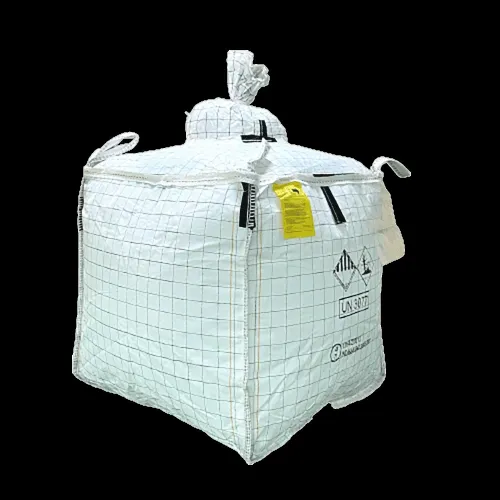
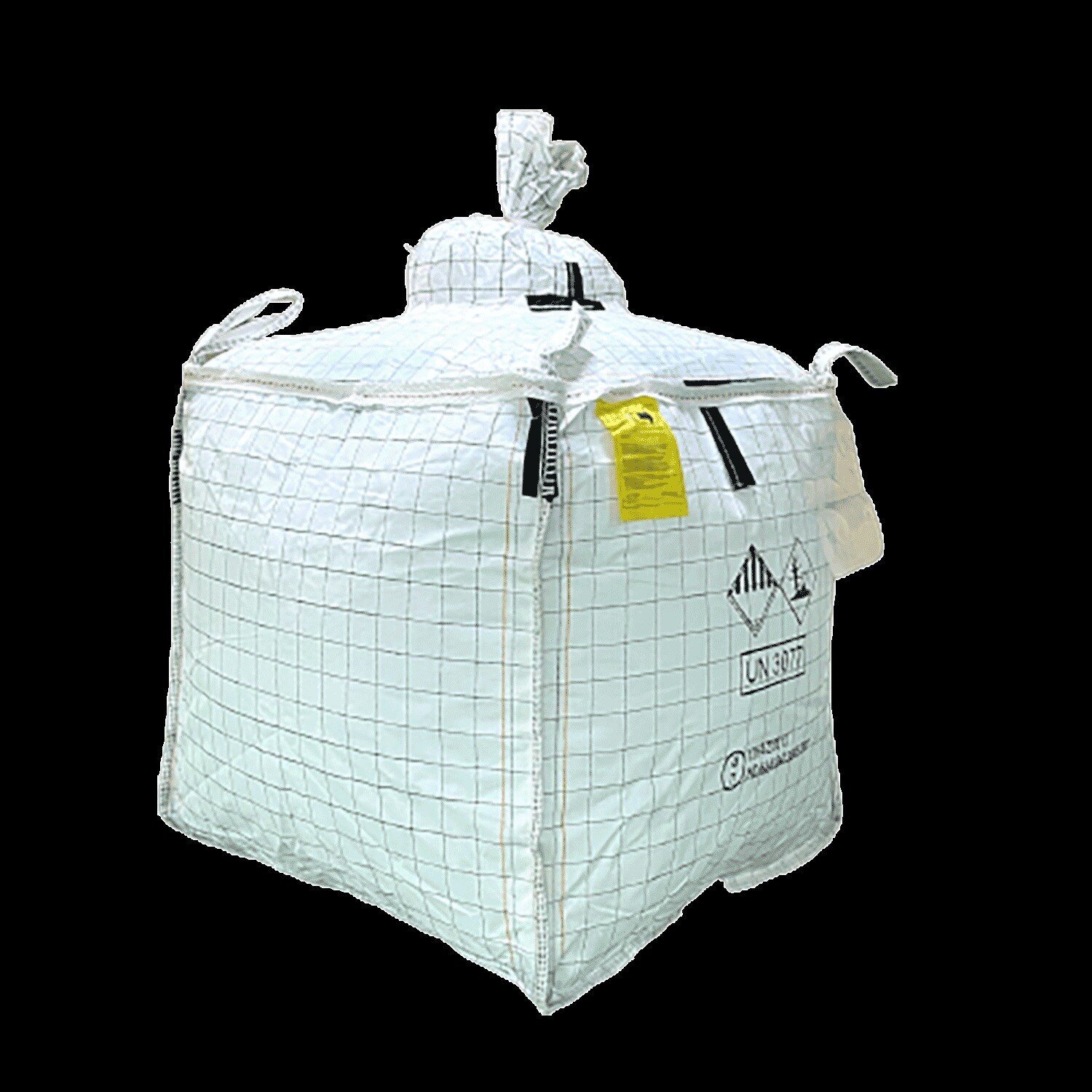
For hazardous powders, a mechanically strong chemical FIBC bags design can still fail the plant’s dust-explosion controls. Match the bag’s electrostatic type and bonding arrangement to the product’s ignition sensitivity, conveying method and hazardous-area zoning; Type C requires verified earthing throughout filling and discharge.
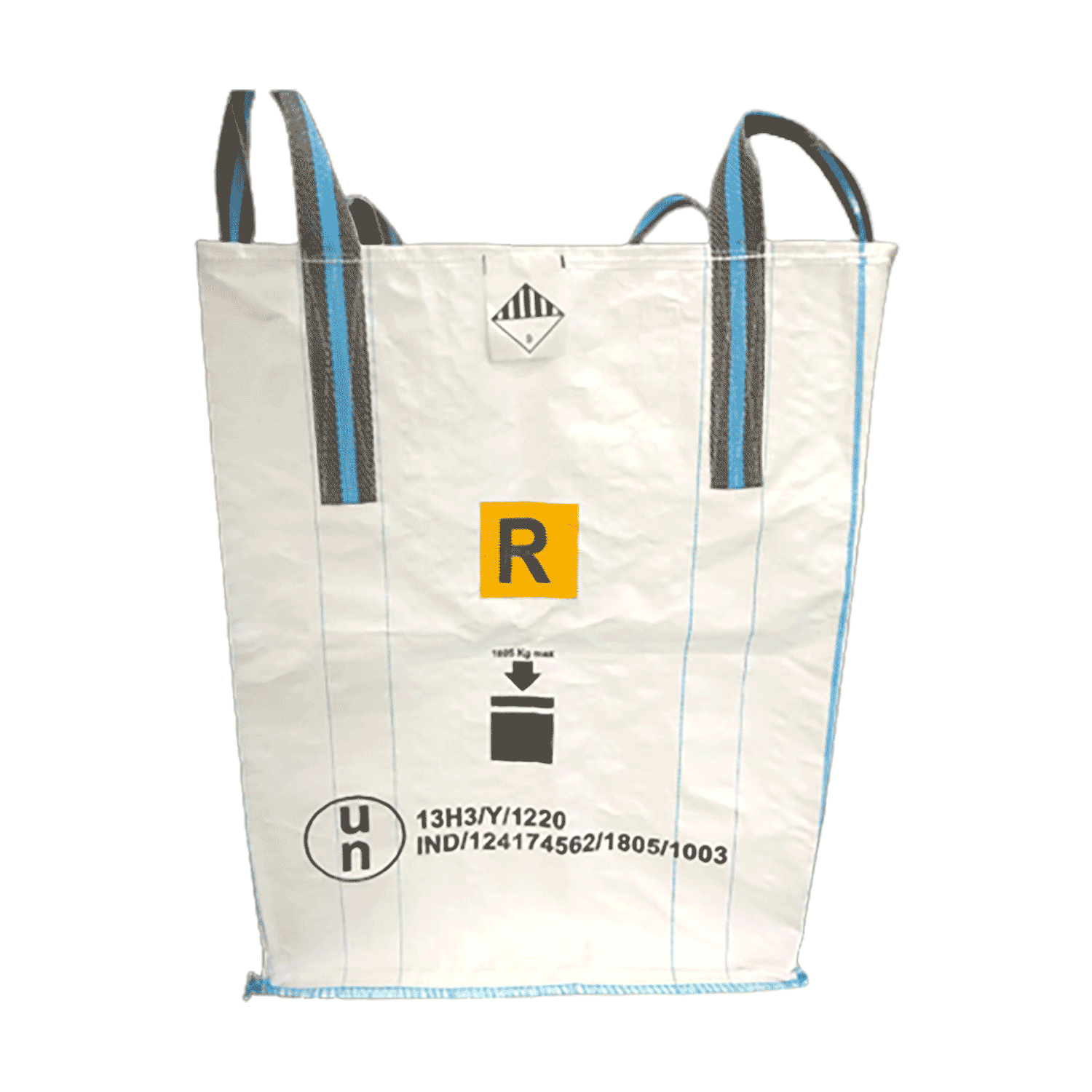
For regulated transport, specify the UN proper shipping name, UN number, packing group, physical state and transport mode before ordering. Confirm the required UN FIBC code, such as 13H1–13H4; a stated safe working load is not proof of UN certification.
Also provide bulk density, target net weight, dimensions, closure, discharge design and maximum fill height, because SWL describes lifting—not chemical capacity.
Build the FIBC Specification Around the Product
Begin with the product’s bulk density, particle size, flowability and target net weight. Define the maximum fill height, bag length and width, storage duration, stacking height, and exposure to sunlight or rain before selecting fabric.
| Construction | Benefit | Selection point |
|---|---|---|
| Coated polypropylene FIBC | Reduces dust escape and moisture ingress through the outer fabric | Use it when surface protection matters, but do not treat coating as a dust-tight closure |
| Uncoated polypropylene bags | Allow easier inspection and lower material complexity | Use them when external moisture and fine-powder containment are controlled |
| Polyethylene liner | Adds an internal chemical and moisture barrier | Specify liner thickness, neck design, seal method and liner attachment |
For fine powders, specify sift-proof seams, suitable thread and a liner that remains secured during filling and discharge. A loose liner can collapse into the outlet; a poor seam can sift product even when the fabric passes tensile testing.
State the safe working load (SWL) as the handling limit, separately from the chemical quantity the bag can hold. Set the required safety factor from the lifting method, reuse policy, stacking and transport conditions, then verify the rating on the certificate and marking.
Specify the complete interface:
- Top inlet diameter, closure and filling nozzle
- Bottom spout or valve length, tie-off and operator access
- Required residual quantity after discharge
- Lift-loop arrangement, bag dimensions and maximum fill height
- UN configuration, if regulated transport applies
A small inlet can bridge cohesive powder or trap air. A short, unlined outlet can release dust and leave a large heel. Approve the filling and discharge equipment with the FIBC, not as separate purchases.
Test Chemical Compatibility and the Complete Filling System
A compatibility claim is valid only when it covers the actual chemical, concentration, temperature, contact time and contamination risk. Confirm FIBC chemical compatibility with product samples, not a generic statement that polypropylene resists chemicals; strong oxidisers, hot product, aggressive solvents and variable mixtures can attack the fabric or weaken components.
Request a qualification test that exposes the woven polypropylene body, polyethylene liner, coating, thread, lifting loops, tie tapes, closures, printing and FIBC filling and discharge spout to the product under operating conditions. Check for swelling, embrittlement, softening, cracking, colour transfer, print loss, odour, mass change and loss of tensile or seal strength.
Test the assembled bag as well as material coupons.
- Fill and discharge a trial bag using the intended nozzle, valve, liner tie-off and operator procedure. Confirm that fine powder does not escape through sift-proof seams, the liner neck or closure, and that the outlet does not clog or leave an unacceptable residual heel.
- Repeat testing at the highest product temperature, longest planned storage time and realistic fill weight. Include moisture, sunlight and cleaning-agent exposure where those occur.
- Approve a defined liner seal: heat seal, tie closure or both. A polyethylene liner improves sift resistance and moisture protection, but moisture- or oxygen-sensitive chemicals may need a multilayer or foil-laminated barrier.
- At receipt, verify the bag code, batch traceability, liner and seal, seam condition, loop integrity, closure, dimensions and printing; reject contamination, moisture damage or an incorrect liner.
Verify UN Approval and Control Electrostatic Risk
A safe working load does not make a bag a UN-certified FIBC. For regulated chemicals, identify the UN proper shipping name, UN number, packing group, physical state and transport mode before ordering. Packing group I, II or III determines the required performance level.
UN code 13H1 13H2 13H3 13H4 identifies woven-plastics construction and whether the bag has a coating or liner. Match the exact code, product, filling weight, discharge arrangement and handling method to the approval.
Request these documents before purchase:
- UN certificate and test report
- Bag marking photograph showing the UN code and approval details
- Approved filling, discharge, lifting and stacking configuration
- Confirmation that the design is single-trip or approved for repeated use
Electrostatic classification is separate from mechanical strength. Type A, B, C and D FIBC choices must follow the chemical’s ignition sensitivity, dust-explosion data, conveying method and hazardous-area assessment.
| Type | Key control | Use condition |
|---|---|---|
| Type A | No electrostatic protection | Use only where flammable dust and vapour are absent |
| Type B | Limits brush discharges | Use only within the specified product and area conditions |
| Type C | Conductive elements | Earth and verify the bag before, during and after filling and discharge |
| Type D | Dissipates charge without a direct earth | Use only within the manufacturer’s stated product and environmental limits |
A grounding tab alone is not a control system. Bond the nozzle and receiving equipment, control filling velocity, manage liners and clothing, and use a written procedure with ground verification or an interlock. A broken or high-resistance path makes Type C operation unsafe.
Match Lifting Design, Storage and Inspection to Plant Operations
Select the lifting design from your plant’s hooks, forklift attachments and lifting cycle, not from bag price. A 1-loop and 2-loop FIBC suits dedicated hooks and lighter handling routines; four-loop lifting bags suit four-point frames and controlled vertical lifting.
A cross-corner FIBC works with loops extending from the four top corners, while a cross-bottom lifting design supports lifting from straps routed beneath the bag. Confirm clearances before ordering.
- Match the loop arrangement to the hoist or forklift attachment, bag dimensions, fill weight and stacking height. Never lift a four-loop bag from two loops unless the approved handling method allows it.
- Before filling, check the bag code, batch number, dimensions, SWL, safety factor, UN marking and electrostatic type against the purchase specification. A 5:1 or 6:1 ratio does not make a bag reusable or suitable for every lift.
- Inspect every bag for torn loops, open or sifting seams, liner damage, incorrect liner fit, blocked or unsealed discharge spouts, moisture, contamination and UV brittleness. Reject it; fabric tensile sampling alone will miss these failures.
- Record inspection results and isolate damaged stock. Store bags dry, covered, off the floor and away from sunlight, rain, sharp edges, chemicals and forklift traffic.
For Type C bags, verify the earth connection before, during and after filling; a broken ground path stops the process. Ask a Vapi supplier such as Deccan Cans & Printers Pvt. Ltd. for the certificate, test report, marking and approved lifting, filling and discharge configuration—not just “UN grade.”
Related products
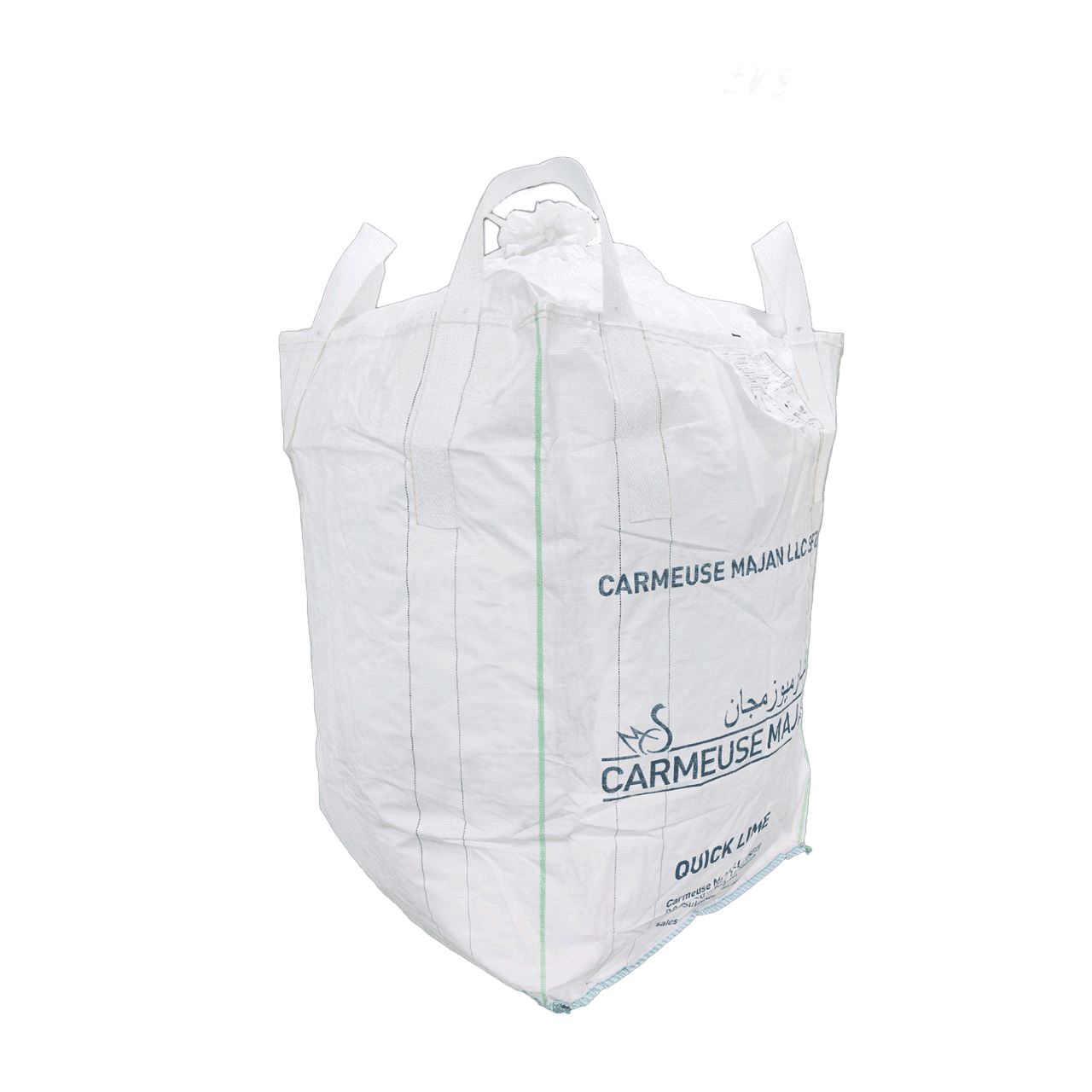 | FIBC Section Bags With Liners FIBC Liners – Bulk Bag Liners Deccan Cans & Printers Pvt. Ltd. |
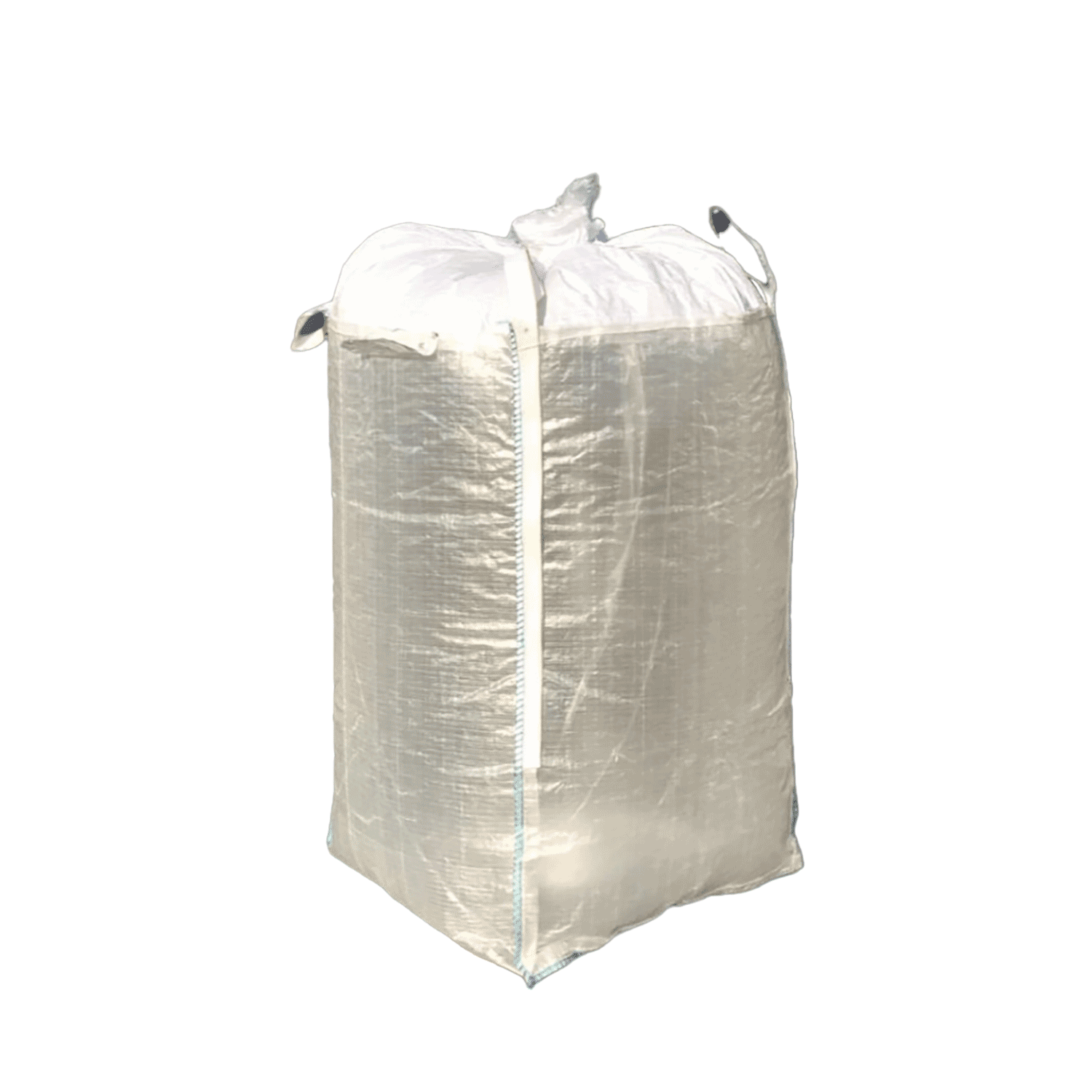 | FIBC Section Transparent Bags Transparent FIBCs – See-Through Bulk Bags Deccan Cans & Printers Pvt. Ltd. |
Frequently asked questions
Which chemicals are suitable for FIBCs?
FIBCs suit stable dry powders, granules, flakes and pellets, including pigments, fertiliser, resin, polymer, salt, minerals, detergents and chemical intermediates. Use a different package or a tested inner system for liquids, slurries and products that release dangerous vapour.
How should you build an FIBC specification for a chemical product?
Start with the product’s particle size, bulk density, moisture sensitivity, flow behaviour, chemical properties and filling and discharge method. Then specify the fabric, liner, seams, lifting loops, filling top, discharge outlet and safe working load.
What compatibility tests should you perform before using an FIBC?
Test the woven fabric, liner, seams, closure and discharge components against the chemical for contact, temperature, storage duration and expected handling. Assess the complete filling and discharge system rather than testing the bag alone.
When does a chemical FIBC need UN approval?
Use a UN-approved FIBC when the packaged material falls under dangerous goods rules that require certified packaging. Check the UN mark, packaging code, test details, maximum gross mass and approval documentation against the product and transport route.
How can you control electrostatic risk in chemical FIBC handling?
Classify the powder and work area, select the correct conductive or dissipative FIBC type, bond and earth the bag and equipment, and control ignition sources during filling and discharge.
Related products
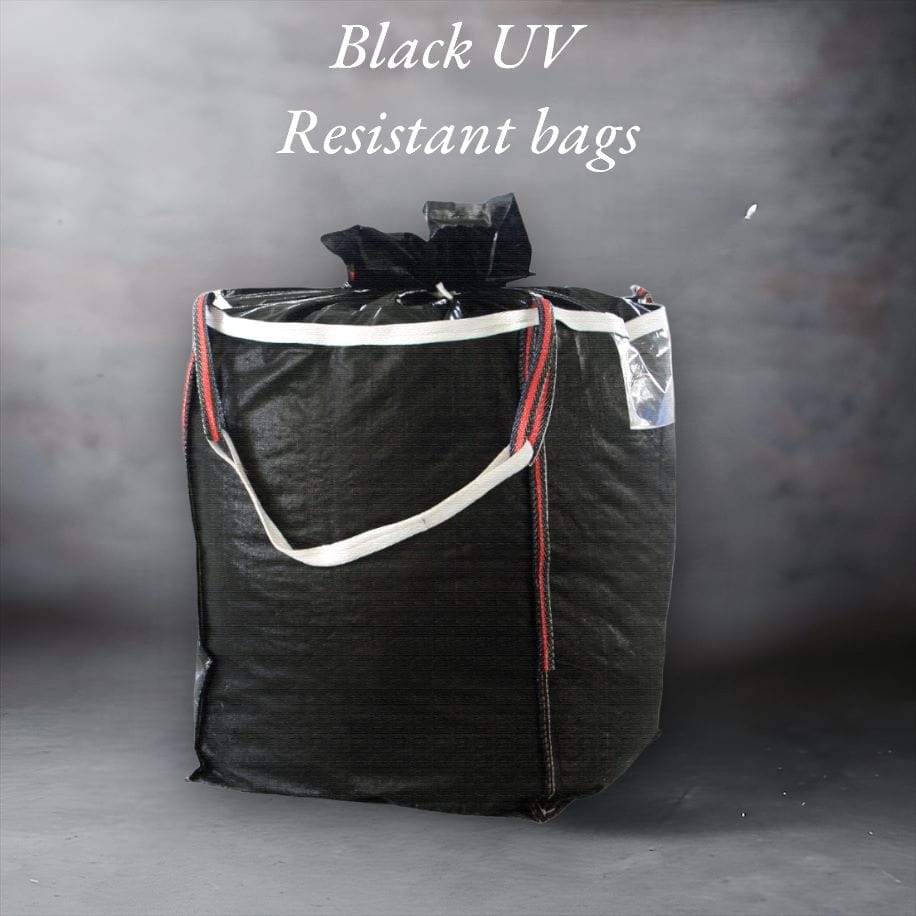 | FIBC Section Black Bags Black FIBC Bags – Enhanced UV Resistance & Extended Shelf Life UV exposure is one of the major challenges faced by the FIBC industry, as prolonged... |
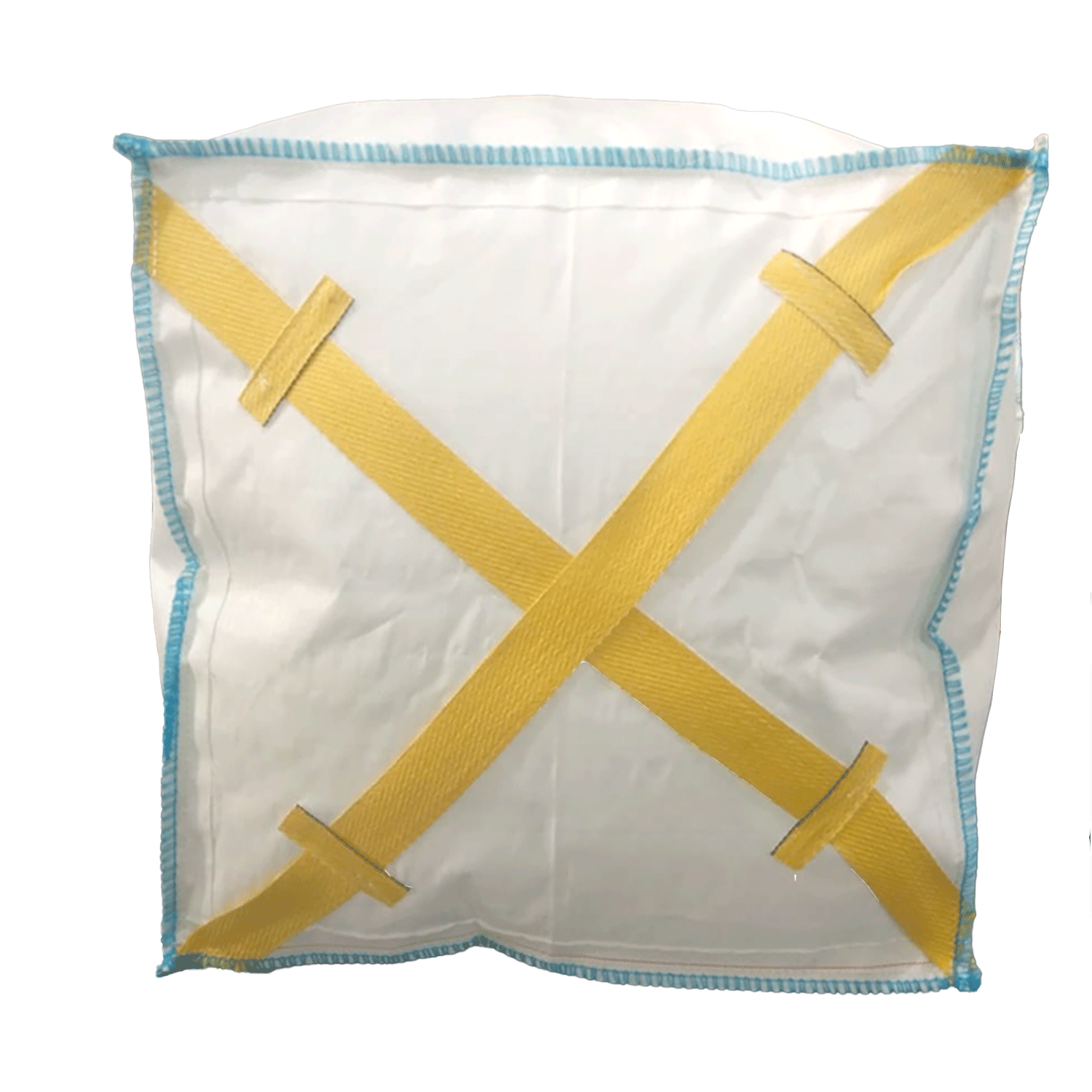 | FIBC Section Cross Bottom Sling Bags Cross Bottom Sling FIBCs – Bulk Bags Deccan Cans & Printers Pvt. Ltd. |
 | FIBC Section Un Bags UN Certified Bulk Bags – Rigorous Performance Testing for Safety & Reliability Deccan UN Certified Bulk Bags are specially engineered for the safe... |
 | FIBC Section Polyester Loop Bags/Multifilament Loops Polyester / Multifilament Loop FIBC Bags Deccan Cans & Printers Pvt. Ltd. |