
Choosing an industrial tin container requires more than matching a capacity to a product label. You need to verify the metal, lacquer, closure, compatibility, leak performance, dangerous-goods status and filling-line fit before approving a supplier. By the end, you can turn those checks into a purchase specification and compare manufacturers in Vapi on evidence rather than general claims.
Key takeaways
- Request drawings showing usable volume, dimensions, openings, weights and closure details.
- Check chemical compatibility using the exact liquid, concentration, temperature and storage time.
- Ask for UN test reports covering the approved container design and closure.
- Run filled-product trials before approving containers for production or transport.
What industrial tin-container specifications should you request?
Request a dimensional drawing and a filled-product trial, not only a nominal capacity. Usable fill volume, external length, width, height or diameter, opening size, empty weight and full weight determine whether industrial tin containers fit your filling line, pallets, shelving and lifting equipment.
| Format | Key specifications | Handling consequence |
|---|---|---|
| Rectangular tin cans | Length, width, height, corner radius, neck or lid opening | Pack tightly on pallets, but sharp corners and panel faces need dent protection |
| Round tin containers | Body diameter, height, lid diameter, base profile | Roll more easily and leave pallet gaps; check conveyor guides |
| Tin pails and cans | Capacity, tapered or straight body, handle clearance, lid overlap | Confirm stacking, hand carrying and discharge access |
| Square cans | Side length, shoulder shape, opening position | Improve packing density but require matching grippers and guides |
Specify tinplate grade, sheet thickness, coating, internal lacquer and seam construction. Gauge alone does not predict performance: drawing depth, beads or ribs, lid design and centre of gravity control dent resistance and stackability.
Describe the complete closure: friction-fit or seamed lid, screw cap, pour spout, handle, tamper-evident feature and gasket material. Ask what RLT or EOE means in the supplier’s drawing, then state the required closure torque and seal method.
Include the liner or lacquer in the approved specification; changing it can alter usable volume, filling speed and discharge behaviour.
How do you verify compatibility with chemicals and industrial liquids?
Approve chemical-compatible tin containers only after testing the complete package against the finished formulation, not merely checking whether steel resists corrosion. Evaluate:
- Tin body and welded or seamed joints
- Internal lacquer
- Gasket or liner
- Lid, spout, cap and closure torque
Request compatibility evidence for the exact chemical name, concentration, solvent system, impurities, filling temperature and intended storage period. A generic “chemical resistant” statement cannot predict under-film corrosion, lacquer softening, swelling or extractables. This matters in solvent packaging and acid and alkali packaging, where small formulation changes can produce a failure.
Ask the manufacturer or coating supplier for:
- Immersion or contact-test results using your formulation
- Test temperature, exposure duration and container orientation
- Changes in colour, mass, hardness, adhesion, blistering or corrosion
- Extractables data when the product is high-purity, pharmaceutical or analytical
- Gasket-material compatibility and the specified closure torque
Run a filled-container trial at the worst expected temperature, then inspect the lacquer, seam, gasket and closure for leaks, odour transfer, corrosion and pressure-related deformation. Test the actual cap or lid; changing a gasket, lacquer or closure can invalidate earlier results.
For flammable liquids, add vapour-leakage, closure-integrity and static-control assessments. Water testing alone proves little about volatile solvents. If the package needs a UN mark, qualify the exact body, seam, lining, closure and torque as one design, because the mark applies only to its tested conditions of use.
What leak and UN tests are required for hazardous liquids?
A UN mark proves a tested design type, not blanket approval for every liquid. For UN-approved tin containers, the evidence must identify the exact body, seam, lining, gasket, closure and closure torque tested together, plus the permitted liquid, capacity and packing group.
Ask for a test report or certificate from a competent laboratory covering:
- Drop testing from the specified height, including the closure and filled package
- Leak testing under the prescribed air-pressure conditions
- Internal hydraulic pressure testing for the required duration
- Stacking testing at the declared load and time
- The UN design-type mark, capacity, packaging material, packing groups and closure instructions
Packing groups indicate hazard severity: I is high danger, II is medium danger and III is low danger. A package qualified for Group III is not automatically acceptable for a Group I liquid.
A water-leak check alone cannot qualify a solvent pack. Flammable liquids also require evidence that vapour cannot escape through the seam, lid or gasket, while handling controls must address electrostatic discharge and grounding. Corrosive liquids require documented compatibility of the tinplate, internal lacquer and seal; toxic liquids require secure closure and traceable batch records.
Do not substitute a screw cap, gasket, lacquer or torque setting after testing. That change can invalidate the dangerous-goods packaging approval, so match incoming containers to the tested configuration and retain the report with each specification.
How should you compare tin-container manufacturers in Vapi?
A manufacturer’s catalogue proves range, not repeatability. Compare each tin packaging supplier on documented controls, representative industrial packaging samples, and its ability to preserve the approved construction after the first order. Request the same body dimensions, tinplate grade and thickness, internal lacquer, closure, gasket and closure torque in every quotation.
| Capability | Evidence to request | Warning sign |
|---|---|---|
| Production control | Batch records, seam inspection method and change-control procedure | “Equivalent” materials without written approval |
| Package qualification | Complete-package leak, closure and UN test reports when required | Results covering only the body or empty container |
| Sampling | Filled samples using your formulation, closure and proposed torque | Samples supplied with a different lining or lid |
| Commercial reliability | Confirmed lead time and dispatch plan, MOQ, capacity and replacement terms | Delivery promises without a production schedule |
Do not approve a sample by appearance alone. Fill it with the actual liquid, run the intended filling and closure process, and retain a sealed reference sample bearing the supplier’s batch number. Compare repeat deliveries against that sample for dimensions, seam quality, lacquer, closure parts, markings and cleanliness.
Ask these questions before issuing a purchase order:
- Which plant and process will make the production batch?
- How will you notify us before changing steel, lacquer, gasket, tooling or closure torque?
- What inspection records accompany each batch?
- How will you handle rejected containers, leakage and late dispatch?
For a quotation from Deccan Cans & Printers Pvt. Ltd., use those questions to distinguish a listed RLT/EOE format from a package the supplier can reproduce under your exact filling and transport conditions.
Related products
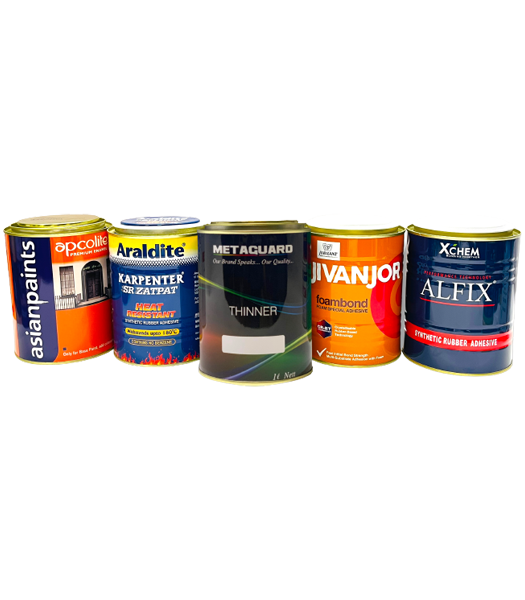 | Tin Containers Tin Containers Deccan Cans & Printers Pvt. Ltd. offers a robust range of Industrial Tin Containers, engineered to provide secure, durable, and... View product → |
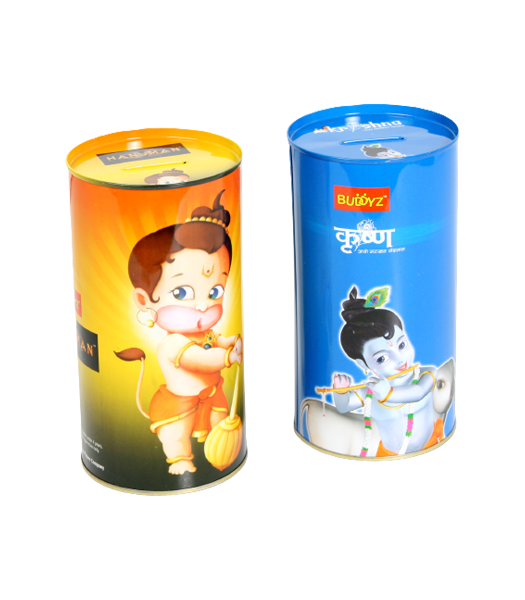 | Tin Containers Product Descriptions Deccan Cans & Printers Pvt. Ltd. 1. 80 × 150 mm Round Saving Box Product Code: 303*150RndSavingBox Application: Promotional The... View product → |
How do you qualify containers for filling, transport and incoming inspection?
Run a documented line trial before approving automated filling containers. Fill containers at the intended speed, product temperature and fill weight, then check that the body enters guides, the opening accepts the filling head, and the closure machine reaches the specified closure torque without tipping, denting or thread damage.
Record the acceptable dimensional tolerance, not only the nominal size.
Use a tin container quality inspection checklist for every delivered lot:
- Compare height, width, depth, opening diameter, usable fill volume and base stability with the approved sample.
- Verify tinplate grade, sheet thickness, internal lacquer or varnish, coating identification and lot markings against the test documentation.
- Inspect seams for skips, sharp edges, distortion and exposed metal; inspect closures, gaskets, liners, handles and tamper-evident features.
- Confirm clean, dry interiors and readable batch, capacity and handling marks.
- Measure closure torque across samples and reject parts outside the agreed range.
Test filled units through capping, palletising, forklift handling and representative vibration or drop conditions. Inspect for leaks, panel collapse, cap loosening and scuffing afterward; a container that fills correctly can still fail during transport.
For repeat orders, retain a sealed reference sample from the approved lot. Compare it with each delivery before release, because a changed lacquer, seam tool, gasket compound or closure can alter performance without changing the catalogue dimensions.
For hazardous liquids, qualify the complete body, seam, lining, closure and gasket together; changing one component requires a new review.
Frequently asked questions
What industrial tin-container specifications should you request?
Request a dimensional drawing, usable fill volume, external length, width, height or diameter, opening size, empty weight, full weight, steel thickness, coating details and closure type. Confirm pallet pattern, stacking limits and compatibility with your filling equipment.
How do you verify compatibility with chemicals and industrial liquids?
Give the manufacturer the exact product name, concentration, temperature range, storage duration and contact conditions. Check the internal lacquer or coating against the liquid, then run a filled-product trial that examines corrosion, swelling, odour, colour change, seal performance and leakage.
What leak and UN tests are required for hazardous liquids?
For a UN-marked package, request test evidence for the specific design and closure. The required performance tests include leakproofness, hydrostatic pressure, stacking and drop tests under the applicable UN packaging rules. Confirm the marking matches the tested package and hazardous-liquid packing instruction.
How should you compare tin-container manufacturers in Vapi?
Compare controlled dimensions, steel gauge, internal coating, closure consistency, tooling capability, batch traceability, sample lead time, filled-product testing and documentation. Do not compare quotations on nominal capacity alone; include rejects, line changes, freight and pallet utilisation.
How do you qualify containers for filling, transport and incoming inspection?
Approve a signed specification and golden sample, then test a filled batch on your line. Check dimensions, empty weight, seam and closure condition, leak performance, coating condition, label area and stacking behaviour. Record acceptance limits, retain samples and inspect every incoming lot against the agreed criteria.