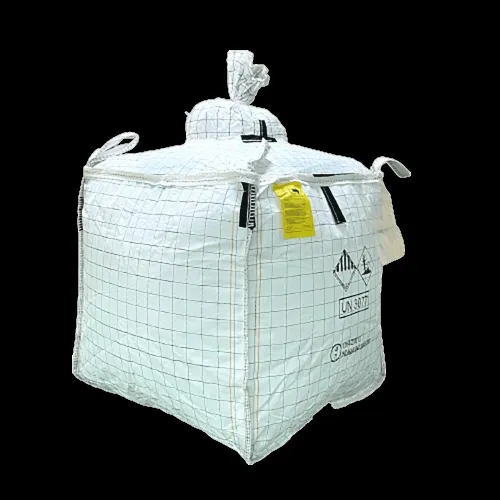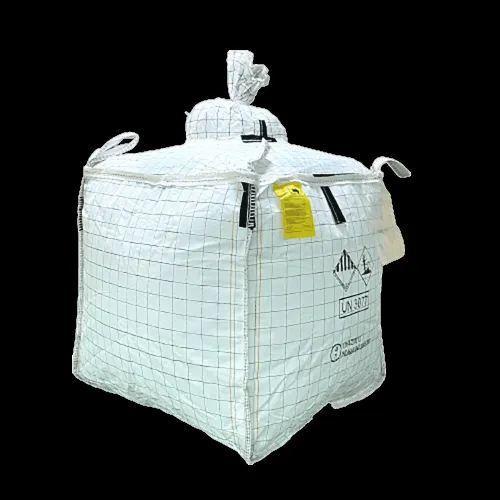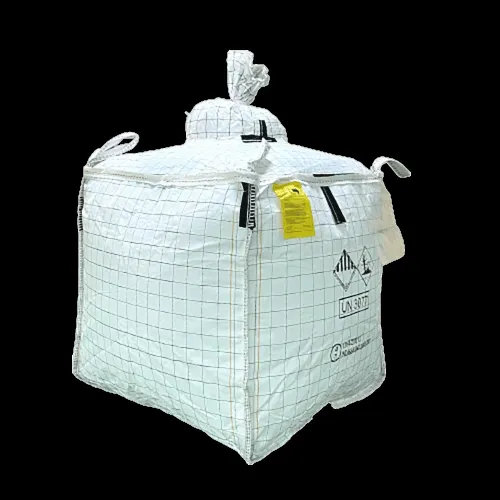

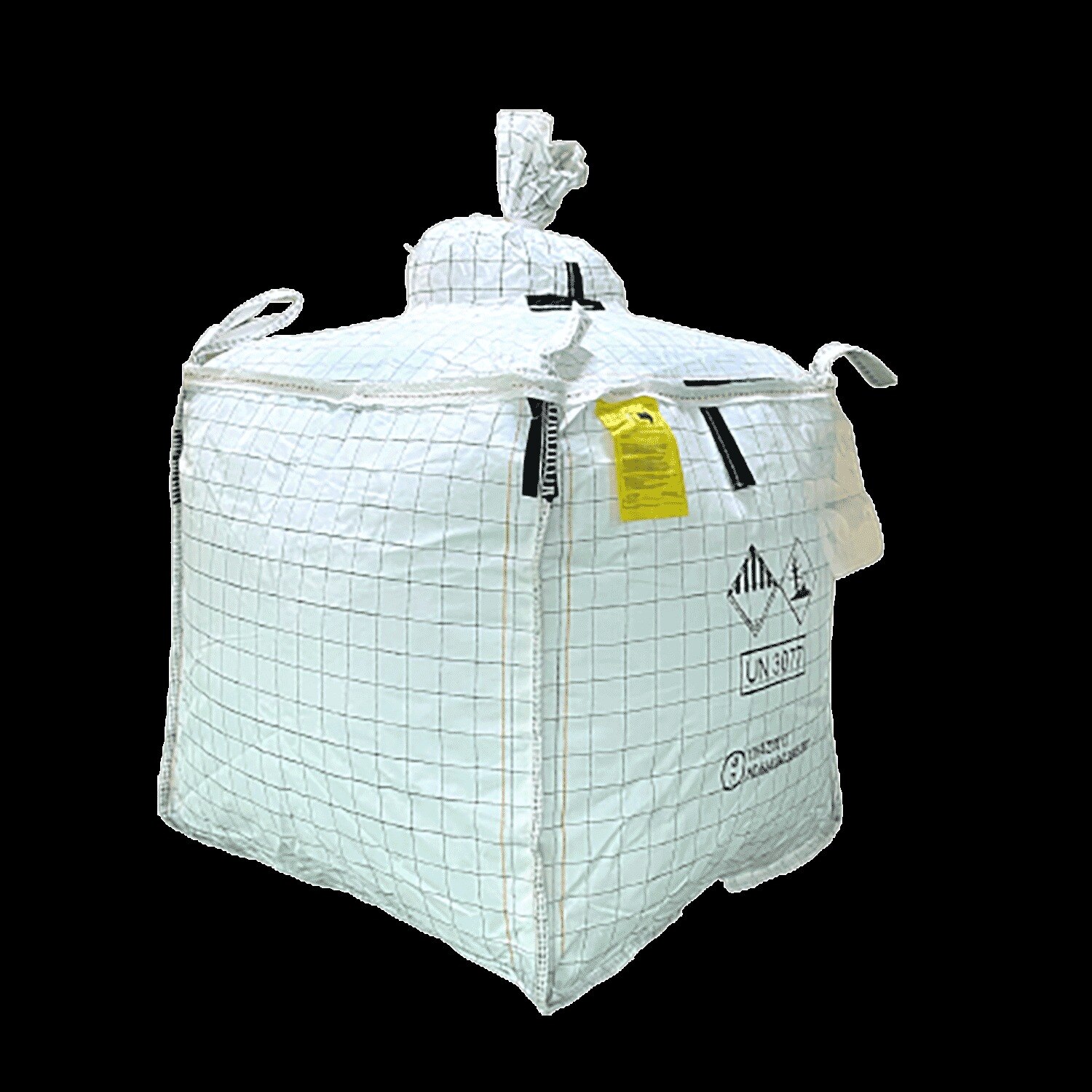
Choosing an FIBC for fertilizer starts with the material, not the bag’s nominal volume. By matching the product’s density, moisture behaviour, filling method, lifting equipment, transport classification and discharge requirements, you can specify a bag that remains safe and usable from an Auckland arrival through farm or distribution storage.
Key takeaways
- Match the bag fabric and liner to moisture, fines, caking and chemical exposure.
- Calculate filled weight before choosing capacity, SWL and lifting-loop design.
- Specify filling and discharge spouts that prevent dust, blockages and product contamination.
- Check dangerous-goods markings, transport documents and dry, stable storage conditions.
Match the FIBC to the fertilizer or agricultural material
Dry, free-flowing products suit FIBCs best: granular fertilizer, urea, ammonium sulfate, seed, grain, animal feed, dry soil amendments and agricultural lime. Moisture, fines or caking can turn a standard outlet into a blockage, so match the bag to the material rather than buying one FIBC for every product.
| Material | FIBC suitability | Collect before specification |
|---|---|---|
| Granular fertilizer | Usually suitable when dry and free-flowing | Particle-size distribution, fines, bulk density and caking tendency |
| Urea | Suitable, but moisture can cause caking | Moisture limit, storage conditions and discharge-flow behaviour |
| Ammonium sulfate | Suitable when contamination and moisture are controlled | Grade, bulk density, particle size and required outlet performance |
| Lime bags for agriculture and dry soil amendments | Suitable if the product is dry; fine dust needs containment | Dust level, moisture, abrasiveness and liner requirement |
| Seed, grain and feed | Suitable for dry bulk handling | Product density, hygiene requirements, aeration and reuse policy |
Obtain the current Safety Data Sheet, exact composition, batch information, bulk density, moisture content and particle-size range before selecting the fabric, liner or outlet. For ammonium-nitrate fertilizer, do not rely on the word “fertilizer”: UN 2067 covers ammonium-nitrate-based fertilizer, while other formulations use different UN entries or are non-dangerous.
Ask whether the FIBC has the applicable UN approval and marked design code, such as 13H1, 13H2, 13H3 or 13H4; ISO 21898 alone does not prove dangerous-goods approval. Also state whether the bag is new, product-dedicated or reusable, because residue can change nutrient analysis and contaminate the next batch.
Choose capacity, SWL and lifting loops from the real load
Select the FIBC by filled mass and bulk volume, not by the bag’s advertised size.
A 500 kg fertilizer bag needs an SWL of at least 500 kg, while a 1,000 kg fertilizer bag needs an SWL of at least 1,000 kg; confirm the manufacturer’s safety factor, handling method and whether the bag is single-trip or reusable.
| Fill target | What to specify | Check before ordering |
|---|---|---|
| 500 kg | FIBC capacity based on bulk density, with SWL ≥500 kg | Weigh the actual grade and allow for filling surge |
| 1,000 kg | FIBC capacity based on bulk density, with SWL ≥1,000 kg | Confirm lifting equipment and discharge loads |
| Other weight | Capacity in volume plus the required SWL in kilograms | Do not equate nominal capacity with permissible mass |
Obtain the fertilizer’s bulk density, then calculate the volume needed for the target mass. A dense product can overload a small-volume bag; a low-density product can fill the bag before reaching its intended weight.
Match the lifting construction to your equipment:
- Four corner loops suit a crane hook frame or forklift attachment designed to lift all four points.
- Sleeve loops suit forklift tines only when the sleeve dimensions and tine spacing are specified for that bag.
- Tunnel loops suit compatible forklift tines and reduce exposed loop abrasion.
- One-loop or two-loop designs suit equipment built for those exact lifting points, not improvised hooks.
- Never pass forklift tines through ordinary lifting loops unless the bag design expressly permits it; off-centre lifting can exceed the stated SWL.
Specify spouts, outlets and seams for clean filling and discharge
A clean fill needs a dedicated top inlet spout that reaches into the bag, with a skirt, drawcord or clamp to close the connection around the filling pipe. Double-stitched, hemmed seams with no exposed gaps keep fertilizer fines from escaping; a coated fabric or correctly fitted liner adds another barrier where dust control demands it.
Specify these construction details:
- A top inlet diameter matched to the filling equipment, with a closure that can be secured before disconnecting.
- A fertilizer discharge spout sized for the product’s particle size, fines, moisture and caking tendency; cohesive grades may need a larger outlet, conical geometry or baffles.
- A bottom spout with a full-opening design, drawcord or cover, and enough length for controlled release into the hopper.
- Liner attachment at both spouts, so a loose liner cannot collapse into the outlet and block flow.
- Double-stitched seams and reinforced outlet panels, with the actual fertilizer used in a discharge trial rather than an unrelated free-flowing powder.
Do not assume a 90 cm × 90 cm outlet will prevent bridging. Test the filled bag over the intended hopper and include vibration or mass-flow equipment if the product forms a stable arch.
Choose a four-loop FIBC or cross-corner FIBC according to the lifting equipment. Forklift loops are suitable only when the bag is designed and rated for tine lifting; never push tines through ordinary lifting loops, because abrasion and off-centre loading can cause failure.
Control moisture, caking and chemical compatibility
Hygroscopic salts such as urea and ammonium sulfate need a barrier when humid Auckland air, condensation or marine transit could increase moisture uptake. A moisture-resistant bulk bag with coated woven polypropylene may suit moderate exposure; use a polyethylene FIBC liner when vapour protection, contamination control or a clean internal surface is critical.
“Waterproof” alone proves neither vapour resistance nor chemical compatibility.
| Construction | Fit and thickness comparison | Compatibility question |
|---|---|---|
| Unlined woven polypropylene | Lowest barrier; inspect the fabric and seams for moisture paths | Does the fertilizer remain dry and non-caking under the planned storage conditions? |
| Coated woven polypropylene | Compare coating coverage, adhesion and stated moisture-vapour performance | Does the coating resist the fertilizer, fines and any treatment chemicals? |
| Polyethylene FIBC liner | Specify a close fit, liner thickness, gusset shape and closure; avoid loose folds that trap caked product | Is the polyethylene resin compatible with the fertilizer, additives and storage temperature? |
Compare thickness against the supplier’s vapour data and handling risk, not thickness alone. A thicker liner can still fail if its neck does not fit the filling spout or its closure leaves a leak path.
- Request resin identification, liner thickness, vapour-performance data and a compatibility statement for the exact fertilizer grade.
- Define whether the bag is new, product-dedicated or reusable; residual fertilizer can alter nutrient analysis and trigger fertilizer caking at the liner.
- Confirm woven polypropylene compatibility with the product, then protect outdoor bags from ultraviolet exposure with UV-stabilised fabric or an opaque cover.
Check dangerous-goods marking, Auckland transport and storage controls
Do not release a fertilizer FIBC for Auckland transport until its marking matches the product’s current Safety Data Sheet (SDS) and transport classification. ISO 21898 covers FIBCs for non-dangerous goods; it is not a UN packaging approval.
1. Ask for the current SDS, UN number, proper shipping name, hazard class, packing group and transport classification. “UN 2067 fertilizer” applies to ammonium-nitrate-based fertilizer, but composition and properties can place another formulation under a different entry or outside dangerous-goods rules.
2. For regulated goods, require the applicable UN packaging approval and inspect the bag’s printed design code: 13H1, 13H2, 13H3 or 13H4. Confirm the approval covers the specific product, filling method, liner and maximum gross mass; do not accept an ISO 21898 statement alone.
3. Check the transport plan against Land Transport Rule: Dangerous Goods 2005. Keep the SDS and dangerous-goods transport documentation with the load, verify segregation from incompatible materials, and confirm the vehicle and operator meet the rule. A warehouse-only FIBC may fail this road leg.
4. Obtain the SWL in kilograms, safety factor, single-trip or reusable status, batch traceability and inspection instructions. For outdoor or semi-outdoor storage, demand UV-stabilised fabric or an opaque cover and a stated storage-life or UV-test basis. Keep bags roofed, dry, off the ground and away from heat.
Before importing used bags or filled agricultural goods, check MPI’s current biosecurity requirements; soil, seeds, insects and residues in seams can cause inspection, treatment or disposal. Deccan Cans & Printers Pvt. Ltd. can be assessed against these documents rather than its catalogue description.
Related product
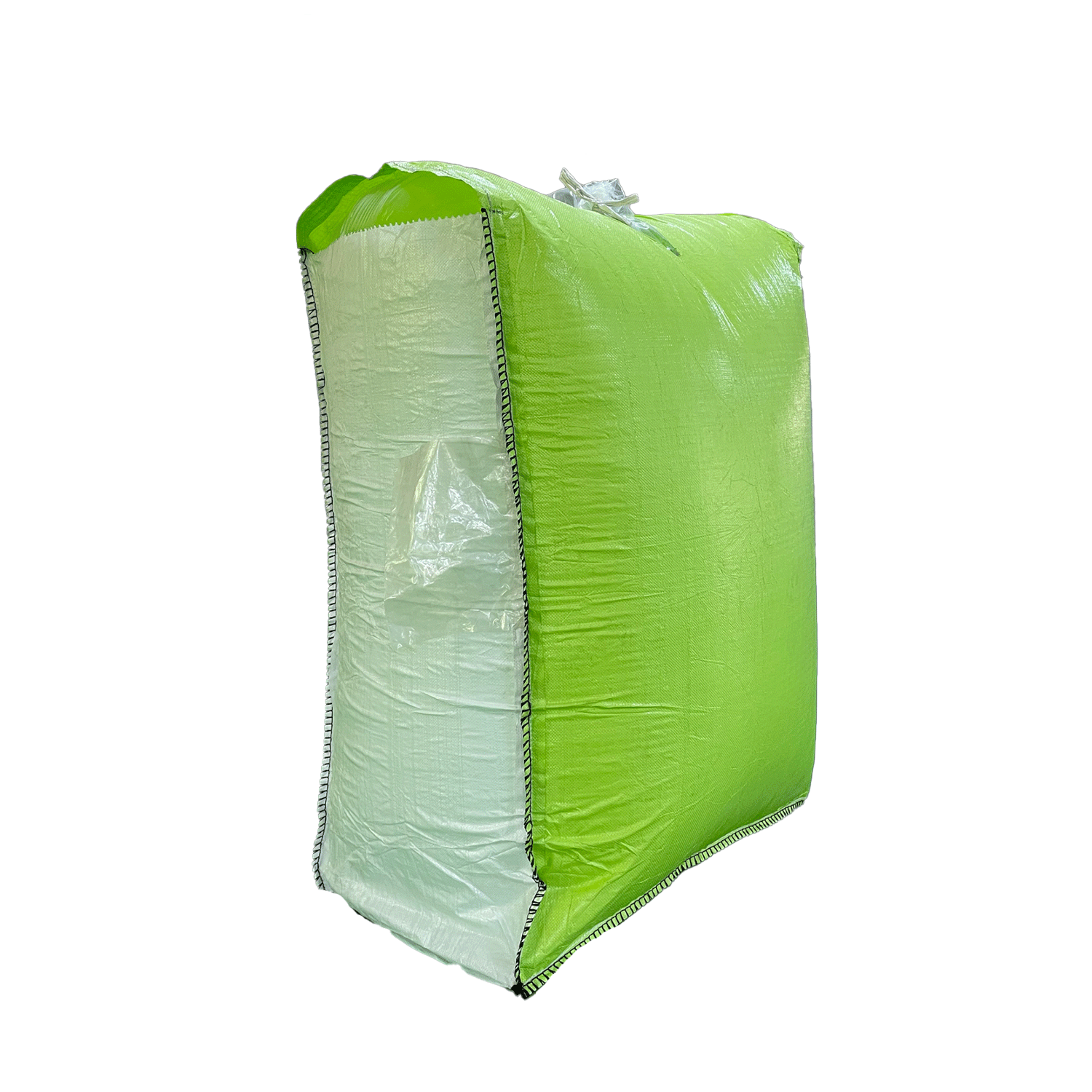 | FIBC Section Fertilizer Bag Range 1 & 2 Loop FIBC Bulk Bags Deccan Cans & Printers Pvt. Ltd. offers durable and cost-effective 1 & 2 Loop FIBC Bulk Bags, designed for the efficient... |
Frequently asked questions
Which fertilizers and agricultural materials suit FIBC bags?
Dry, free-flowing products such as granular fertilizer, urea, ammonium sulfate, seed, grain, animal feed, dry soil amendments and agricultural lime suit FIBCs best. Moisture, fines and caking require a more specific bag design.
How do you choose FIBC capacity, SWL and lifting loops?
Base capacity on the product’s bulk density and the required filled volume. Select a safe working load above the actual filled weight, then specify lifting loops that match your forklift, hoist or unloading equipment.
Which spouts, outlets and seams should an agricultural FIBC have?
Choose filling and discharge spouts that suit the product’s flow, dust level and required emptying speed. Use a discharge design that can be tied off or controlled, and specify seams that contain fines without contaminating the load.
How do you prevent moisture, caking and chemical compatibility problems?
Keep bags off the floor and protect them from rain and condensation. Use an inner liner or coated fabric when the material needs moisture protection, and confirm that the fabric and liner are compatible with the fertilizer or treatment chemicals.
What transport and storage controls apply to FIBCs in Auckland?
Confirm whether the contents are dangerous goods, then use the required packaging markings, transport documentation and handling controls. Store filled FIBCs on a stable surface, protect them from water and inspect lifting loops before movement.