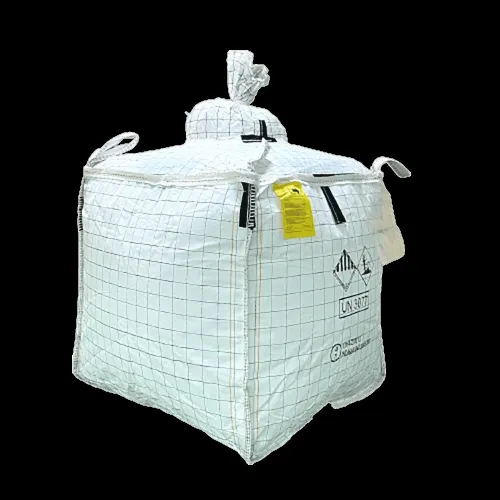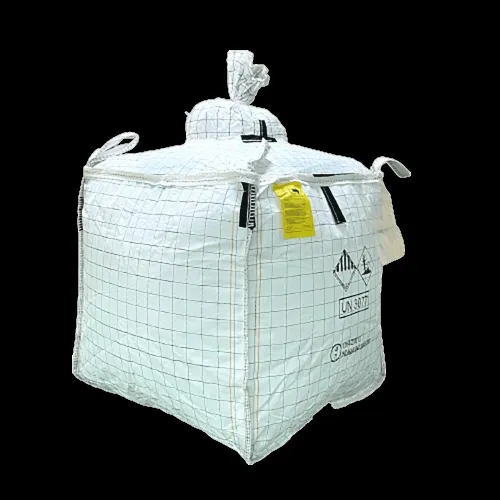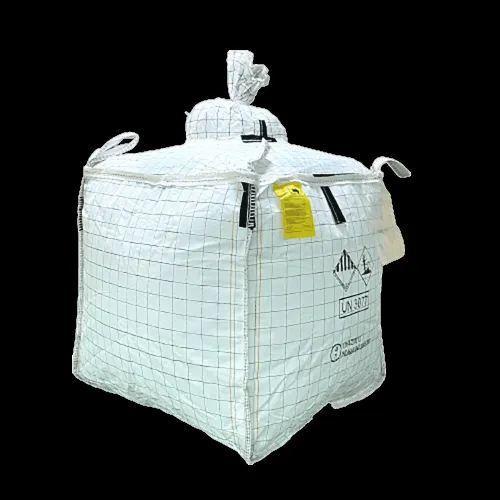

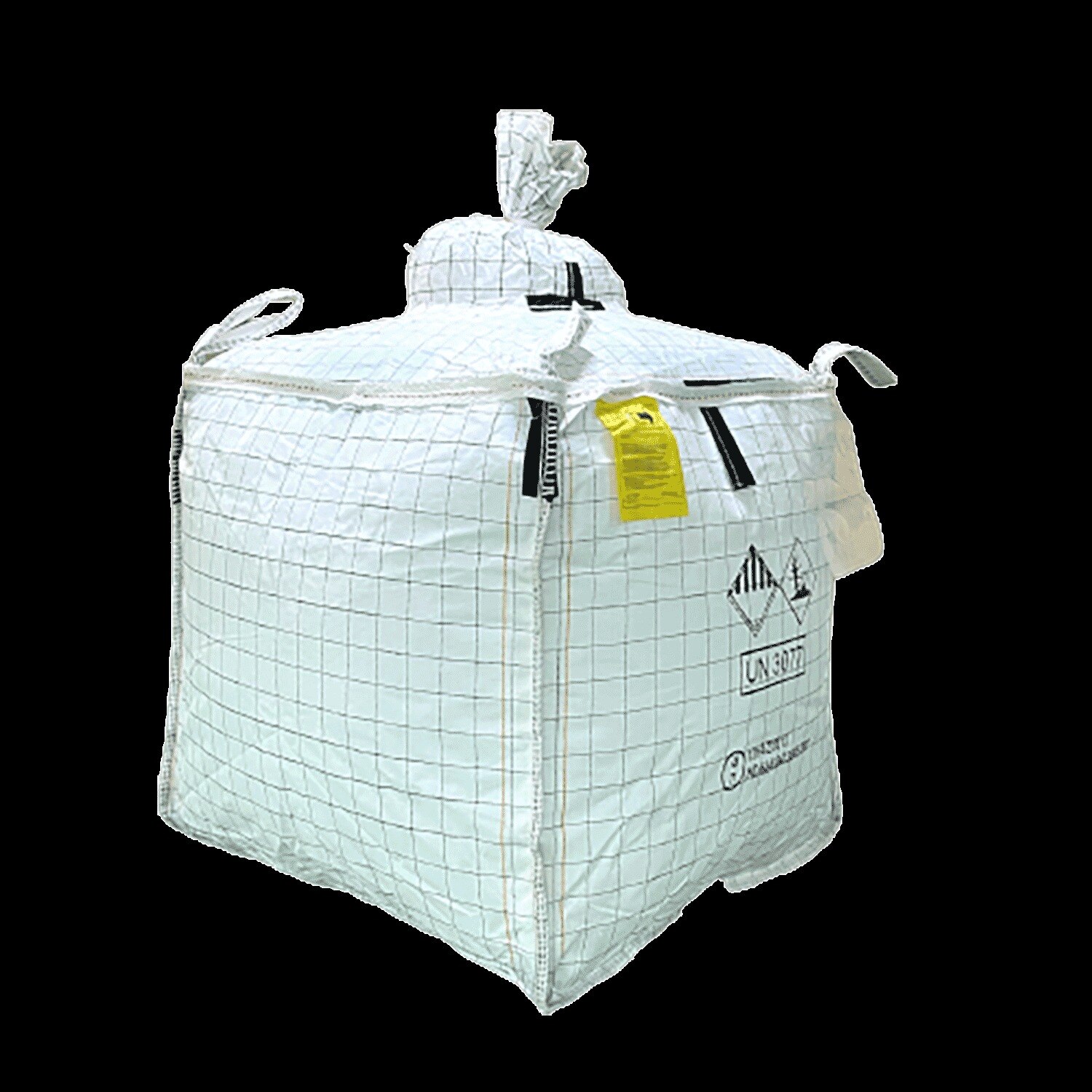
Choosing an FIBC involves more than matching a bag to a product weight. You need to confirm the complete load rating, material compatibility, electrostatic controls, filling and discharge equipment, transport rules, and storage conditions before the bag reaches your site. By the end, you will have a practical checklist for selecting, using, inspecting, and comparing bulk bags in Auckland operations.
Key takeaways
- Match SWL to the complete bag system, including loops, seams, liner and spouts.
- Specify bulk density, flow behaviour, moisture sensitivity and filling equipment before ordering.
- Request UN test documentation when the contents are classified as dangerous goods.
- Inspect loops, seams, liners and lifting points before every lift and after storage.
How to match an FIBC to the load and handling equipment
Start with the load’s mass, bulk density, flow behaviour and moisture sensitivity, then match the FIBC selection to the equipment that will fill, lift and empty it. A stated safe working load (SWL) rates the complete bag system—not just the polypropylene body—so loops, seams, liner, spouts and filling density all matter.
1. Choose the SWL above the actual filled mass, including uneven loading and retained product. Do not treat a 1,000 kg SWL bag as suitable for every 1,000 kg load; confirm the manufacturer’s test certificate and batch identification.
2. Specify dimensions from the available pallet, rack, truck and discharge clearance. A bag that fits the rated mass can still become unstable if it is too tall, too wide or unsupported during lifting.
3. Confirm the safety factor. A 5:1 safety factor normally identifies a single-trip design; a 6:1 safety factor does not automatically permit reuse. Follow the manufacturer’s FIBC reuse requirements, including controlled emptying, cleaning and inspection for abrasion, UV damage, contamination, seam damage and distorted loops.
4. Match filling equipment to the inlet: open top, duffle top or spout. For humid Auckland storage, add a compatible liner, coated fabric or sift-proof seams; woven polypropylene alone is not a moisture barrier.
5. Match discharge to the receiving equipment. Select a bottom spout, iris closure or full-discharge base that will not trap product or obstruct the valve.
6. Use every specified lifting loop with a vertically aligned hoist or correctly spaced forklift tines. Avoid shock loading, dragging and punctures, and never stand beneath a suspended bag.
Which FIBC construction suits powders, granules and controlled materials?
Choose the construction from the product’s ignition, moisture and leakage risks—not from the label “anti-static.” Type A FIBCs suit dry, non-combustible powders or granules where electrostatic ignition is not a concern. Fertilizer and minerals usually need robust woven polypropylene, reinforced seams and a sift-proof liner; abrasive grades need fabric and discharge components rated for wear.
| Type | Electrostatic behaviour | Suitable use and control |
|---|---|---|
| Type A FIBC | Provides no electrostatic protection | Non-combustible, non-dust-hazard products only |
| Type B FIBC | Limits propagating brush discharges but does not replace grounding | Dry combustible powders with a documented ignition-control system |
| Type C FIBC | Conductive construction requires Type C FIBC grounding during filling and emptying | Combustible dust, provided the earth connection, transfer line and receiving vessel are verified |
| Type D FIBC | Dissipative construction provides Type D FIBC electrostatic control without a grounding lead | Combustible products only within the manufacturer’s specified conditions |
For hygroscopic powders, food ingredients and Auckland’s humid coastal storage, specify a compatible polyethylene liner, coated fabric, sift-proof seams or a separate moisture barrier. Select food-contact materials for ingredients; check that liner folds cannot obstruct filling or discharge.
Waste and dangerous goods need a package specification matched to the substance, not merely ISO 21898:2004, which covers FIBCs for non-dangerous goods.
With combustible dust, control dust clouds, external residue, filling velocity, conductive equipment and the receiving vessel. A Type C bag with a missing or unverified earth connection is not being used as designed.
What UN approval and New Zealand transport rules actually cover
An UN marking proves a tested packaging design, not universal permission to carry any dangerous good. Verify the mark against the supplier’s UN packaging approval and test certificate: read the packaging code, approved packing group, maximum gross mass FIBC rating, test basis and any liner or sift-proof construction identified.
Match those details to the substance’s UN number and classification.
For Auckland road transport, apply the Land Transport Rule: Dangerous Goods 2005 and its amendments. Confirm the shipping document, segregation, load restraint, vehicle controls and emergency information before dispatch.
A 5:1 or 6:1 safety factor does not authorise reuse; use a bag again only when its written rating permits it and inspection finds no seam damage, abrasion, contamination, UV embrittlement or distorted lifting loops.
Sea freight adds the IMDG Code. Before loading a container, verify the UN number, proper shipping name, packing group, marine-pollutant status, packaging instruction and container-load requirements. A bag accepted on a New Zealand road is not automatically accepted aboard a vessel.
Treat hazardous waste according to its actual classification, not its intended disposal route. Confirm the waste description, packaging approval and required records with the carrier and receiving facility.
Store bags dry, covered from Auckland sun, away from heat and chemicals; use the specified lifting configuration, keep equipment vertically aligned and never stand beneath a suspended FIBC.
How to fill, lift, stack, store and inspect FIBCs safely
Prevent failure by treating the FIBC as a complete handling system, not just a woven bag. Check the bag, equipment and destination before product enters it.
- Inspect the empty bag for seam opening, torn or distorted FIBC lifting loops, damaged corner protection, liner punctures, cracked discharge closures and contamination in the spout. Reject it if the damage affects load-bearing or product containment.
- Fill on a level surface with the bag supported correctly. Keep the filling stream centred, prevent sudden impact, and stop at the marked capacity; weigh the filled bag and confirm the product does not exceed the complete system’s SWL.
- Lift with every specified loop, using the approved frame or forklift attachment. Keep the lifting device vertically aligned, raise smoothly without shock loading, and never stand beneath a suspended bag.
- During forklift movement, centre the load, keep tines level and fully engaged, and prevent contact with sharp pallet edges. Do not puncture, drag or clamp the fabric or liner.
- Set FIBC stacking height from the bag’s stacking test, filled-product stability, deformation allowance, floor loading and warehouse fire or racking limits. SWL alone does not authorise a stack height.
- For Auckland weather storage, keep bags dry, covered from direct sunlight, away from heat and chemicals, and within the supplier’s stated UV exposure limit.
- Secure the bag before discharge, open the outlet gradually, and control dust and product flow. Reuse only with the manufacturer’s written rating, controlled emptying, cleaning and a documented inspection; a 5:1 safety factor does not prove reusability, while some 6:1 designs do.
How to write an FIBC specification and compare alternatives
Request a complete specification, not “a 1,000 kg bulk bag.” Include SWL, safety factor, FIBC dimensions and capacity, fabric construction, loop configuration, filling and discharge spouts, seam type, liner specification, liner thickness and sealing, electrostatic type, UV exposure limits, batch identification and test certificate.
- State the product, bulk density, moisture sensitivity, particle size, packing group and transport mode.
- Require food-grade FIBC traceability when the contents contact packaging: resin declaration, production batch, cleaning status and declaration of compliance.
- Confirm the lifting-loop rating, intended lifting arrangement and whether the certificate covers the complete bag system.
- For dangerous goods, match the UN code, maximum gross mass and packing group to the substance; “ISO-compliant” is not enough.
- Ask for Type A, B, C or D electrostatic classification and the required grounding procedure.
If you compare quotes from Deccan Cans & Printers Pvt. Ltd., require these same documents rather than comparing price per bag.
| Option | Main advantage | Choose it when |
|---|---|---|
| FIBC | High-volume handling with low tare weight | You need flexible storage and forklift or crane movement |
| Woven sack | Simple, inexpensive smaller packs | People will lift individual bags |
| Rigid IBC | Shape retention and repeated handling | You need stackability, protection and easier cleaning |
| Drum | Strong containment for liquids or hazardous solids | The load needs rigid, sealed protection |
| Pallet | Stable unit-load base, not a container | Cartons or sacks already provide containment |
| Bulk tanker | Efficient road delivery without intermediate packaging | You can unload at a fixed site with compatible equipment |
An FIBC is the wrong package for a liquid, a load needing pressure containment, or a site without safe lifting and discharge equipment. It also fails as a moisture barrier unless the liner and seams are specified for that exposure.
Related products
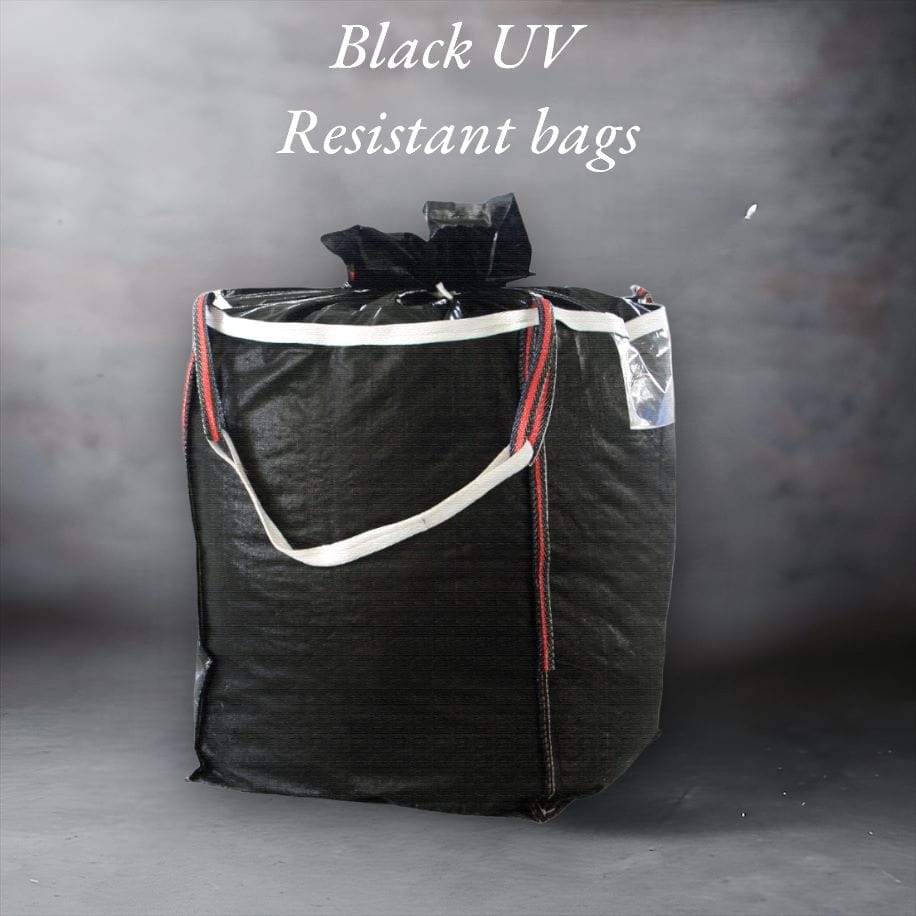 | FIBC Section Black Bags Black FIBC Bags – Enhanced UV Resistance & Extended Shelf Life UV exposure is one of the major challenges faced by the FIBC industry, as prolonged... |
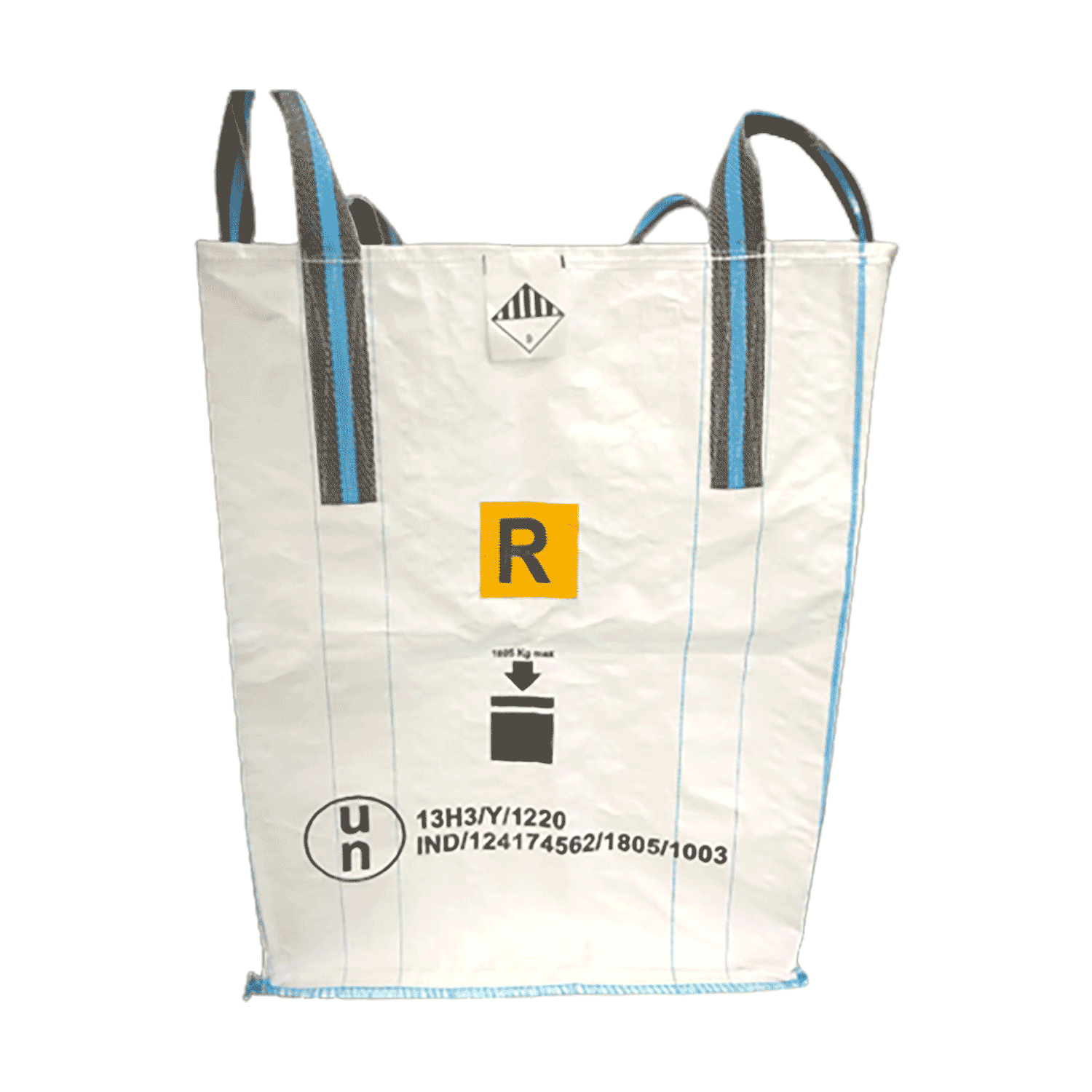 | FIBC Section Un Bags UN Certified Bulk Bags – Rigorous Performance Testing for Safety & Reliability Deccan UN Certified Bulk Bags are specially engineered for the safe... |
Frequently asked questions
What information do you need to match an FIBC to a load?
Provide the load mass, bulk density, flow behaviour, moisture sensitivity, filling method, discharge method and lifting equipment. Confirm that the stated SWL covers the complete bag system.
Which FIBC construction suits powders and granules?
Use a construction that matches flow and discharge requirements. Powders often need a suitable liner, sift-resistant seams or a controlled-discharge design, while free-flowing granules may use a standard woven polypropylene body.
When does an FIBC need UN approval?
UN approval applies when the contents are dangerous goods that require approved packaging under the applicable transport rules. Ask for the bag’s UN test documentation and confirm the packaging instruction for the specific substance.
What must you check before lifting an FIBC?
Check the SWL marking, lifting loops, seams, body fabric, liner and spouts for cuts, abrasion, contamination, moisture damage or deformation. Do not lift a bag with damaged lifting components.
How should you compare alternative FIBC specifications?
Compare SWL, safety factor, dimensions, fabric, liner, filling and discharge spouts, loop configuration, sift resistance, electrostatic controls, UN status and inspection requirements.
Related products
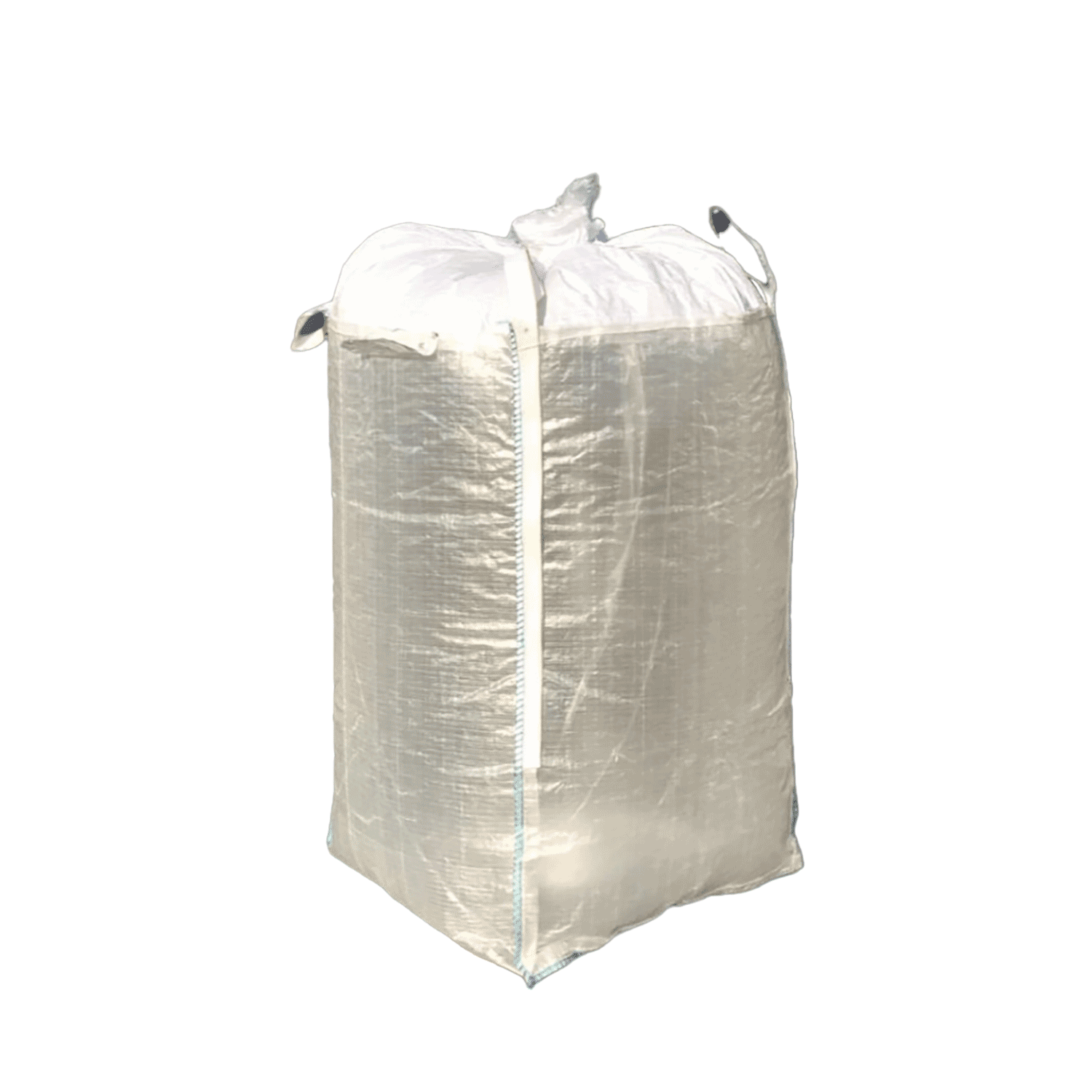 | FIBC Section Transparent Bags Transparent FIBCs – See-Through Bulk Bags Deccan Cans & Printers Pvt. Ltd. |
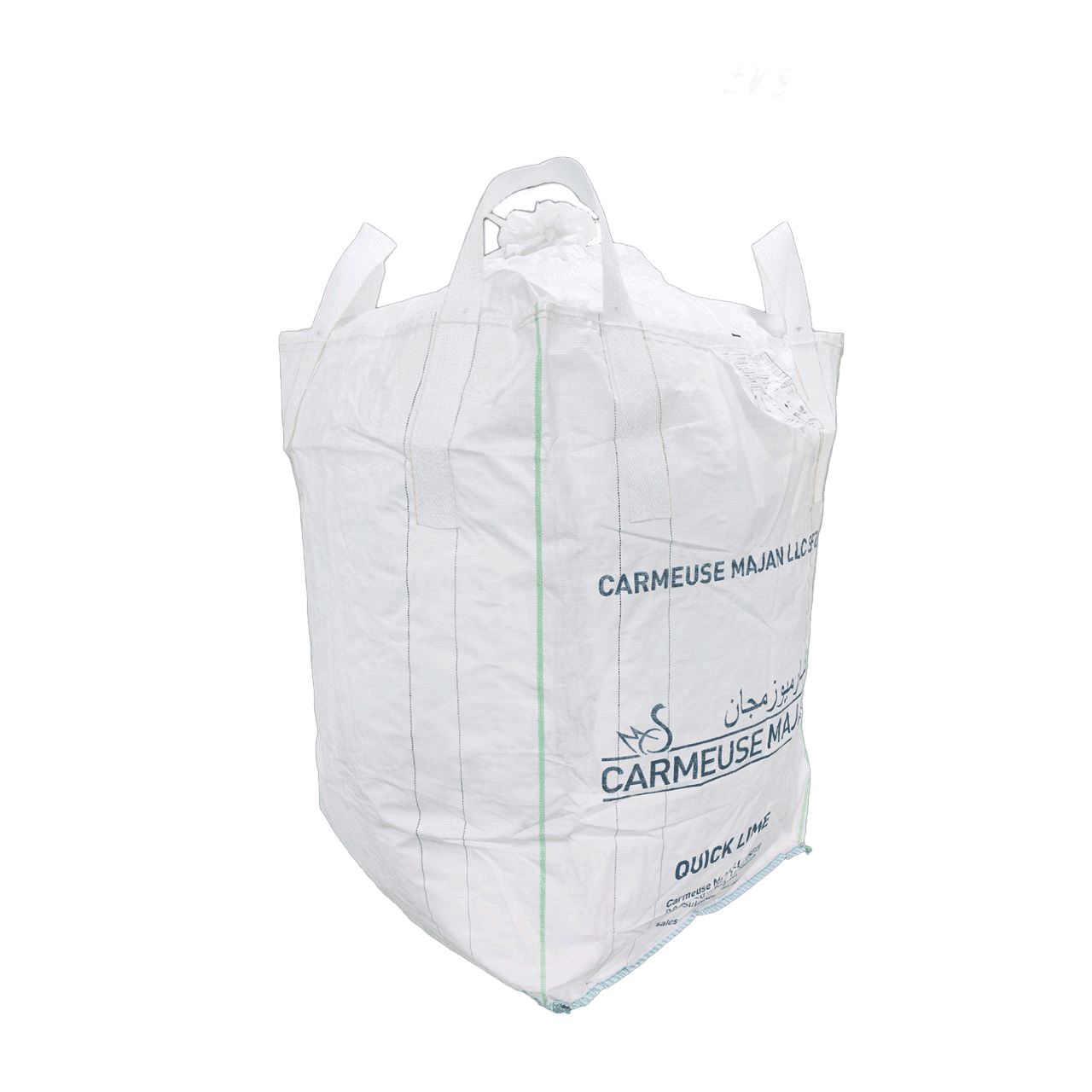 | FIBC Section Bags With Liners FIBC Liners – Bulk Bag Liners Deccan Cans & Printers Pvt. Ltd. |
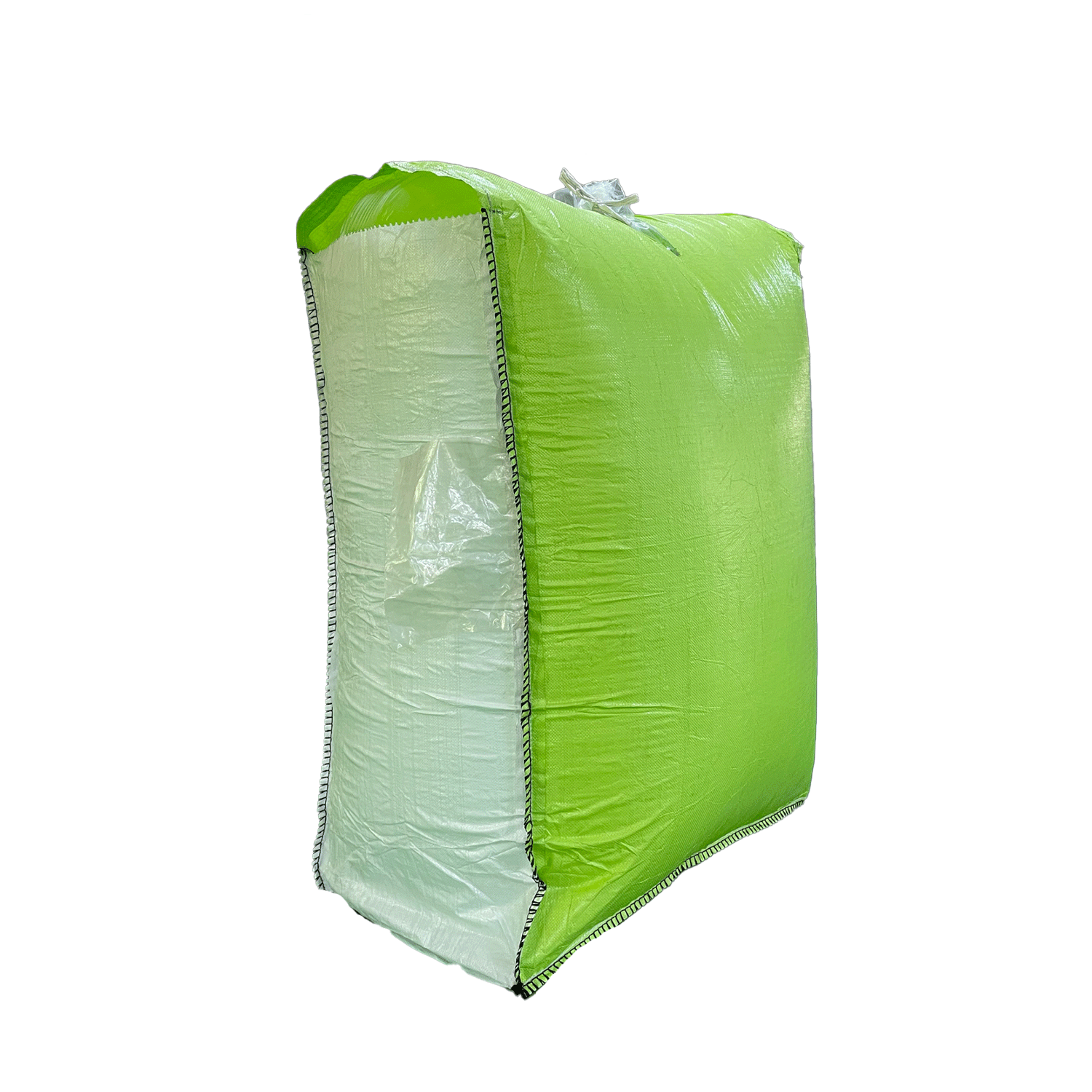 | FIBC Section Fertilizer Bag Range 1 & 2 Loop FIBC Bulk Bags Deccan Cans & Printers Pvt. Ltd. offers durable and cost-effective 1 & 2 Loop FIBC Bulk Bags, designed for the efficient... |
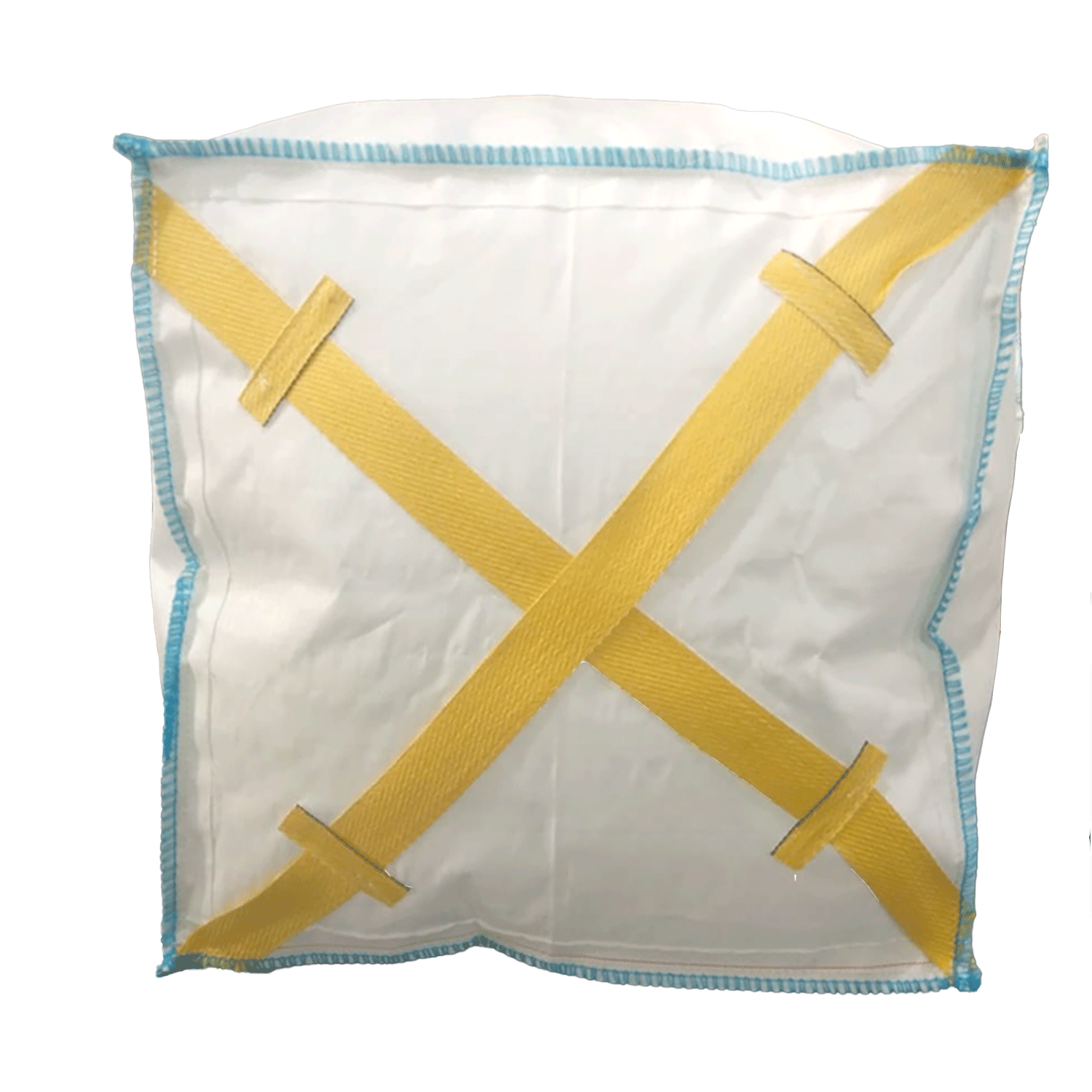 | FIBC Section Cross Bottom Sling Bags Cross Bottom Sling FIBCs – Bulk Bags Deccan Cans & Printers Pvt. Ltd. |