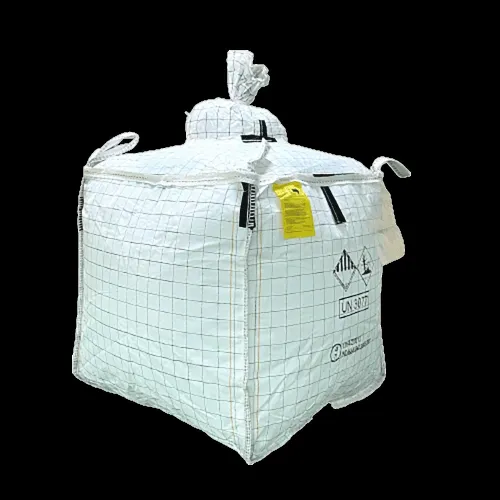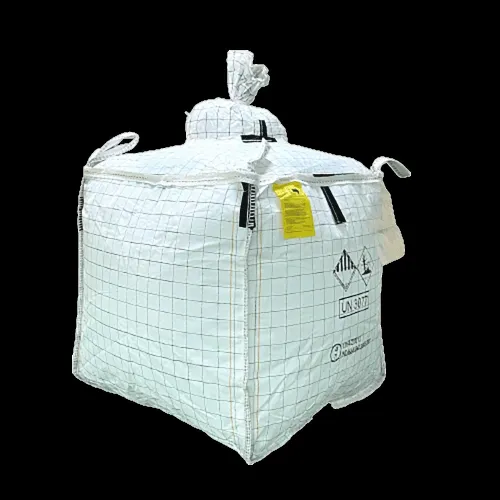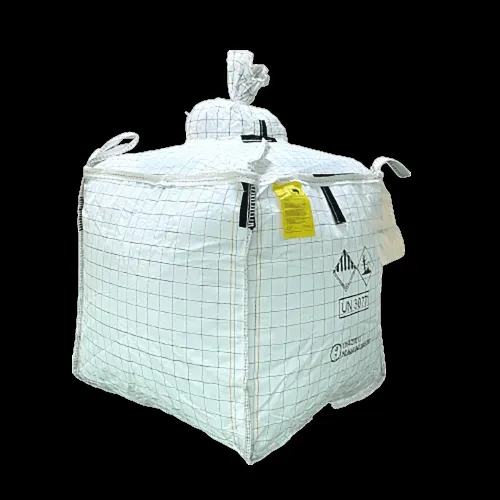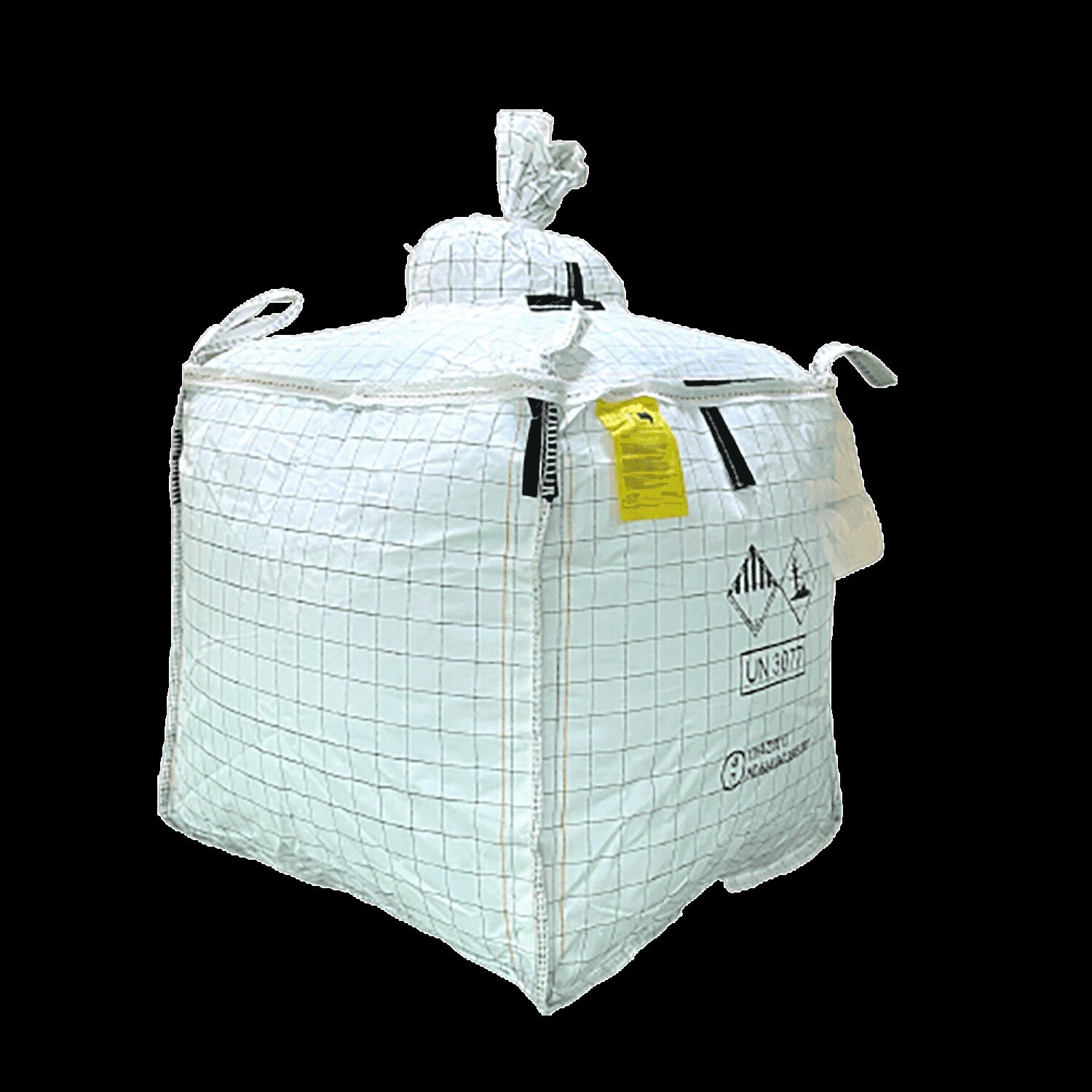
Petrochemical pellets, powders, catalysts and additives do not all belong in the same bulk package: product form, hazard classification, electrostatic risk and transport route determine whether you need an FIBC, drum, tanker or another container. By the end, you will be able to match the material with a bag construction, verify compliance documents and define safer filling, storage and discharge controls for Dahej conditions.
Key takeaways
- Use FIBCs for compatible free-flowing solids, including pellets, powders and dry catalysts.
- Match polypropylene construction and discharge design to the product and Dahej conditions.
- Select static-control and UN-certified bags for hazardous materials and dust risks.
- Document filling, emptying, storage and transport procedures before dispatch.
Which Petrochemical Materials Belong in an FIBC?
Free-flowing solid petrochemical materials belong in an FIBC when you need palletised bulk handling rather than individual containers. Suitable examples include polymer pellets, plastic powders, carbon black bags, dry catalysts, resin granules and powdered additives, provided the product is compatible with polypropylene and the bag’s discharge system.
| Material or condition | FIBC decision | Choose instead when |
|---|---|---|
| Polymer pellets, resin granules | Suitable for bulk filling and discharge | Use smaller sacks when contamination control or frequent product changes matter |
| Plastic powders, carbon black, additives | Suitable with sift-proof construction and a controlled discharge | Use drums when dust containment, sampling or small-batch handling dominates |
| Dry catalysts or other powders | Suitable after checking flow, moisture sensitivity and ignition hazards | Use sealed drums when the powder is highly reactive, toxic or difficult to discharge safely |
| Flammable liquids, solvents, residual monomer or gases | Not suitable for a conventional FIBC | Use approved drums, intermediate bulk containers, tankers or gas cylinders |
| Large-volume liquid feedstocks | Not suitable for a standard FIBC | Use a compatible tanker or dedicated liquid container |
A conventional polypropylene bag is not automatically dangerous-goods packaging. If the material is regulated, select a tested UN design with the applicable code, such as 13H1, 13H2, 13H3, 13H4, 13L1 or 13L2; adding a UN label cannot upgrade an ordinary bulk bag.
For combustible powders, also assess dust clouds, vapour and hybrid mixtures before choosing the package.
Match Bag Construction to the Product and Dahej Conditions
Set the FIBC safe working load (SWL) from the densest expected product, not its nominal volume. Aeration, vibration and settling change bulk density, so check mass, dimensions, top clearance, filling method and lifting-loop geometry together. Treat a 5:1 and 6:1 safety factor as design classifications, never as permission to exceed the SWL.
| Construction choice | Specify | Failure avoided |
|---|---|---|
| Dimensions and loops | Match capacity to settled density; use four-loop or cross-corner lifting for the site’s equipment | Overloaded seams, unstable lifting and poor pallet fit |
| Fabric and coating | Choose polypropylene fabric strength, UV stabilisation and a coated or uncoated surface against powder size and moisture | Tearing, sifting and rain ingress |
| Closures | Use a tied or fitted filling spout and a controlled discharge spout with a throttle or closure flap | Dust release and unsafe manual slitting |
| Liner and seams | Specify liner thickness, fit, attachment points, sift-proof seams and discharge-spout alignment | Leaks, liner collapse and blocked emptying |
| Dahej protection | Add moisture-resistant construction, covered storage and UV protection against monsoon humidity, heat and coastal exposure | Wet product, fabric degradation and caking |
Do not treat an antistatic liner as equivalent to a Type C FIBC. An insulating polyethylene liner can interrupt the conductive path and accumulate charge, so assess the liner, bag classification and filling and discharge equipment as one system.
For fine powders, confirm whether mass-flow or anti-bridging equipment is needed; operators should never cut the bag to restart flow. Before acceptance, obtain:
- Product compatibility confirmation
- Rated SWL and safety-factor classification
- Liner, dimensions, seams, loops and spout specification
- Complete test report or certificate for the exact construction
Choose the Correct FIBC Type for Static and Dust Hazards
The right FIBC type depends on ignition risk, dust behaviour and the filling and discharge equipment—not only on whether the powder is conductive. IEC 61340-4-4 distinguishes the four classes:
| Type | Construction and protection | Operating limit |
|---|---|---|
| Type A FIBC | Insulating fabric with no electrostatic control | Use only for non-flammable products where no flammable dust or vapour can form. |
| Type B FIBC | Insulating fabric designed to limit propagating brush discharges | Suitable for some combustible powders, but not where flammable vapour or gas is present. |
| Type C FIBC | Conductive yarns or elements that must connect to earth | Use for combustible powders when the bag, grounding point and continuity path are verified before transfer. |
| Type D FIBC | Specially engineered dissipative fabric that releases charge without plant earthing | Use only within the manufacturer’s stated conditions; keep the fabric clean and undamaged. |
For combustible petrochemical powders, treat the bag and process as one system. An antistatic polyethylene liner is not automatically Type C; it can interrupt the grounding path or accumulate charge itself.
Before filling or discharge:
- Complete a hazardous-area assessment for dust clouds, residual solvent or monomer vapour, and hybrid mixtures.
- Bond and ground the equipment; connect a Type C FIBC before transfer and keep it connected throughout.
- Inspect conductive yarns, grounding points and continuity. Reject a damaged or contaminated path.
- Use dust extraction, sealed connections and a controlled discharge spout. Never cut or puncture a bag to clear bridging.
- Remove ignition sources and control ventilation, static, hot surfaces and sparks.
Preventing electrostatic ignition does not replace dust containment or explosion controls.
Verify UN Certification, Standards and Supplier Documents
A UN-certified FIBC is required when the petrochemical product is classified as dangerous goods for transport and the applicable packing instruction permits an FIBC.
An ordinary polypropylene bulk bag does not become UN packaging when someone adds a UN label; the design must have passed the required performance tests for the declared product and packing group.
Construction codes identify what the bag protects against:
| Code | Construction | Check before acceptance |
|---|---|---|
| 13H1 | Woven plastic without an inner liner | Use only where sift-proofing and moisture protection are not required |
| 13H2 | Woven plastic, sift-proof | Confirm the seams and closures suit the powder |
| 13H3 | Woven plastic, water-resistant | Confirm the coating protects against the declared exposure |
| 13H4 | Woven plastic, sift-proof and water-resistant | Confirm both controls match the product and route |
Inspect the complete UN marking, not just the symbol. It should show the packaging code, performance level X, Y or Z, maximum gross mass, the solid marking for solids, manufacture year, country and manufacturer or approval identification.
Ask the supplier for:
- The UN certificate or test report covering the exact design
- The product’s UN number, proper shipping name and packing group
- Safe working load, safety factor, liner, bag type and lifting arrangement
- Product-compatibility evidence and inspection criteria
- Written approval for any reuse
Changing fabric, liner, dimensions or seam construction can invalidate approval. A static-dissipative liner is not automatically a Type C FIBC; verify the complete grounding path and equipment arrangement. Deccan Cans & Printers Pvt. Ltd. should provide the design documents for the exact liner and bag configuration quoted, not a generic certificate.
Related products
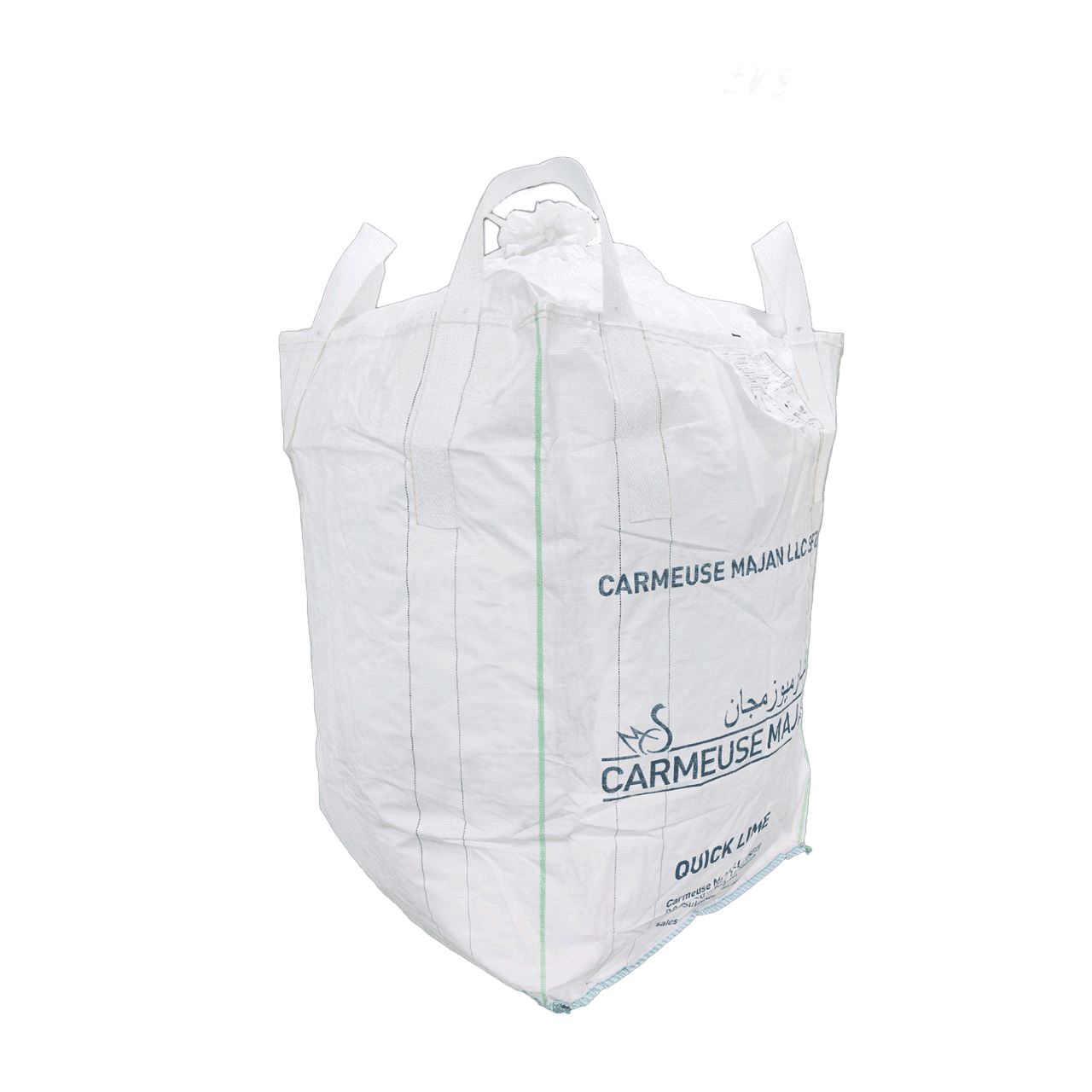 | FIBC Section Bags With Liners FIBC Liners – Bulk Bag Liners Deccan Cans & Printers Pvt. Ltd. |
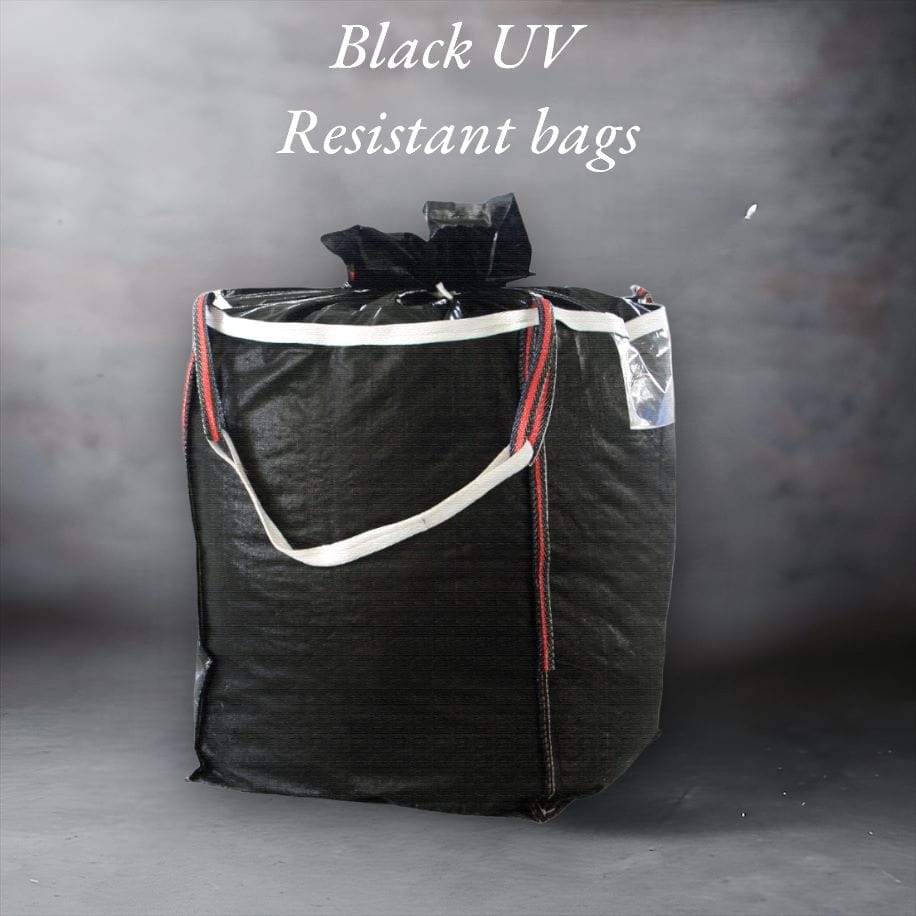 | FIBC Section Black Bags Black FIBC Bags – Enhanced UV Resistance & Extended Shelf Life UV exposure is one of the major challenges faced by the FIBC industry, as prolonged... |
Set Safe Filling, Emptying, Storage and Transport Procedures
A safe FIBC filling procedure controls mass, air movement, static and dust from the moment the bag is positioned. Treat the safe working load as a limit, not a target: bulk density changes with aeration and settling, so leave top clearance and keep the bag within its rated volume and mass.
1. Inspect the fabric, seams, loops, liner and spouts before use. Reject any bag with cuts, contamination, wetness or damaged lifting loops. Secure all loops to a compatible frame, keep the bag upright, and support it without dragging across floors or forks.
2. Complete a hazardous-area assessment before connecting equipment. Identify combustible dust, flammable vapour and hybrid-mixture risks, then specify ventilation, dust extraction, bonding, grounding and ignition-source controls. Connect the approved grounding path before product enters the bag; an insulating liner can interrupt it.
3. Use the designed filling head and close the inlet after filling. Do not overfill, vibrate or drop the bag. Capture displaced air through dust extraction rather than allowing a dust cloud around the operator.
4. Follow the FIBC discharge procedure: ground the system, attach the outlet to sealed receiving equipment, open the controlled spout gradually, and throttle flow when bridging starts. Never cut, puncture or shake the bag manually.
5. For Dahej monsoon storage, keep filled and empty FIBCs under cover, off the ground and away from direct sunlight, rain and salt-laden air. During transport, restrain bags against sliding, crushing and sharp contact, and use a weatherproof outer cover without blocking safe lifting.
Frequently asked questions
Which petrochemical materials belong in an FIBC?
Use FIBCs for compatible free-flowing solids such as polymer pellets, plastic powders, carbon black, dry catalysts, resin granules and powdered additives.
How do you match FIBC construction to petrochemical products?
Check polypropylene compatibility, bag construction, liner requirements and discharge design against the material and local Dahej handling conditions.
Which FIBC type is suitable for static and dust hazards?
Choose the FIBC category and grounding arrangement that control electrostatic ignition and dust exposure for the product and process.
What documents should you verify before using an FIBC?
Check the bag’s UN certification, applicable standards, test information, batch identification and supplier documents before filling.
How should petrochemical FIBCs be filled, emptied, stored and transported?
Use controlled procedures for filling, grounding, discharge, stacking, protection from damage and secure transport.
Related products
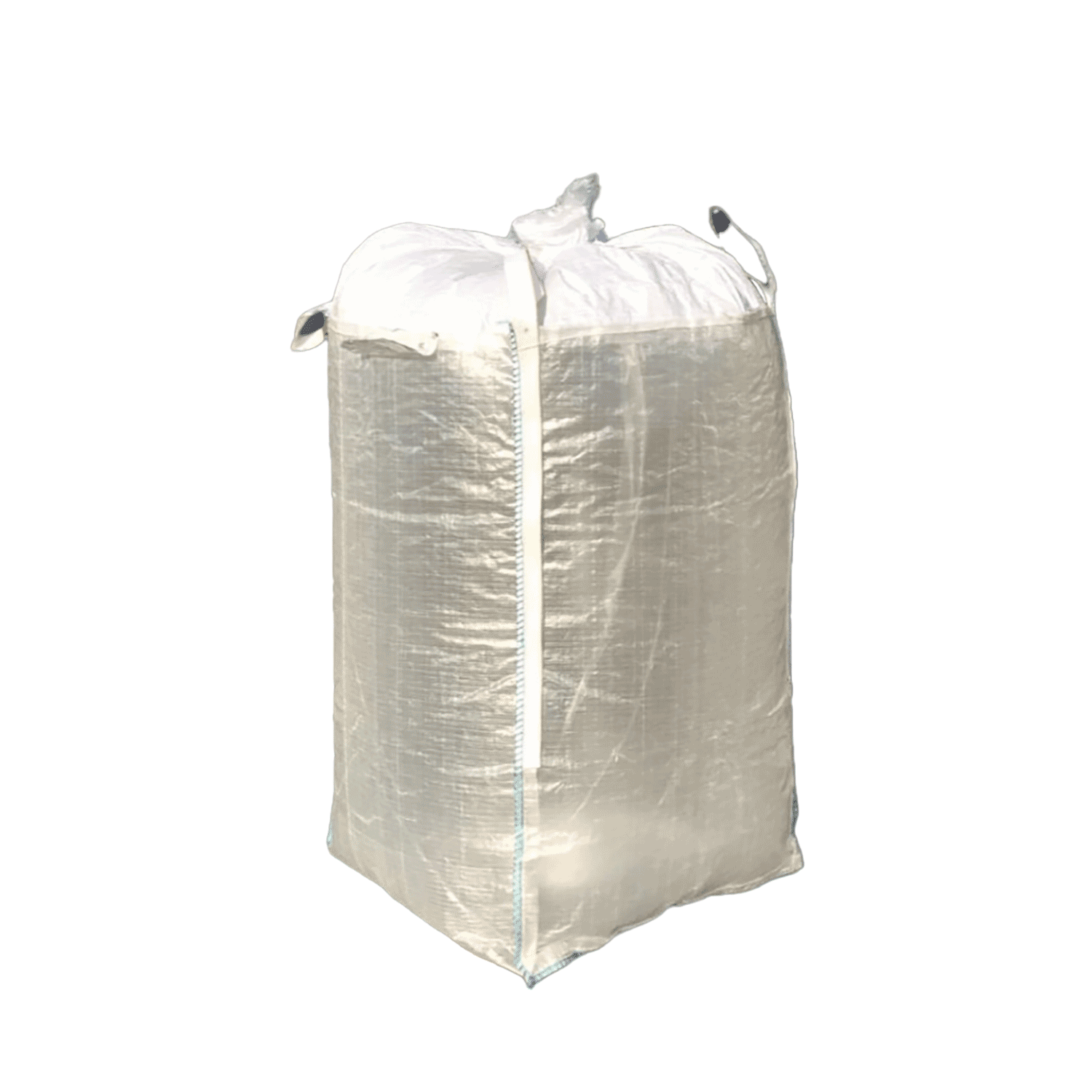 | FIBC Section Transparent Bags Transparent FIBCs – See-Through Bulk Bags Deccan Cans & Printers Pvt. Ltd. |
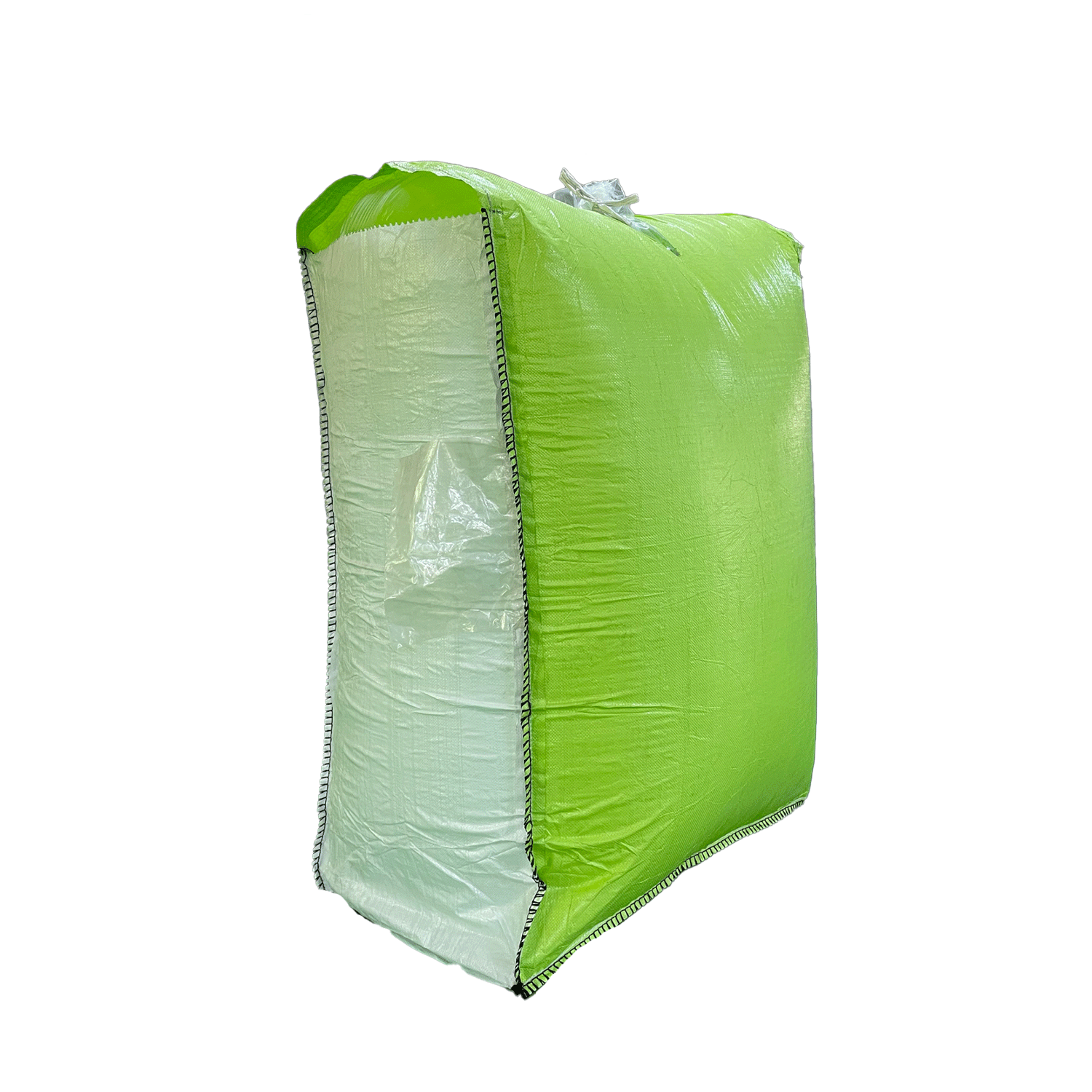 | FIBC Section Fertilizer Bag Range 1 & 2 Loop FIBC Bulk Bags Deccan Cans & Printers Pvt. Ltd. offers durable and cost-effective 1 & 2 Loop FIBC Bulk Bags, designed for the efficient... |
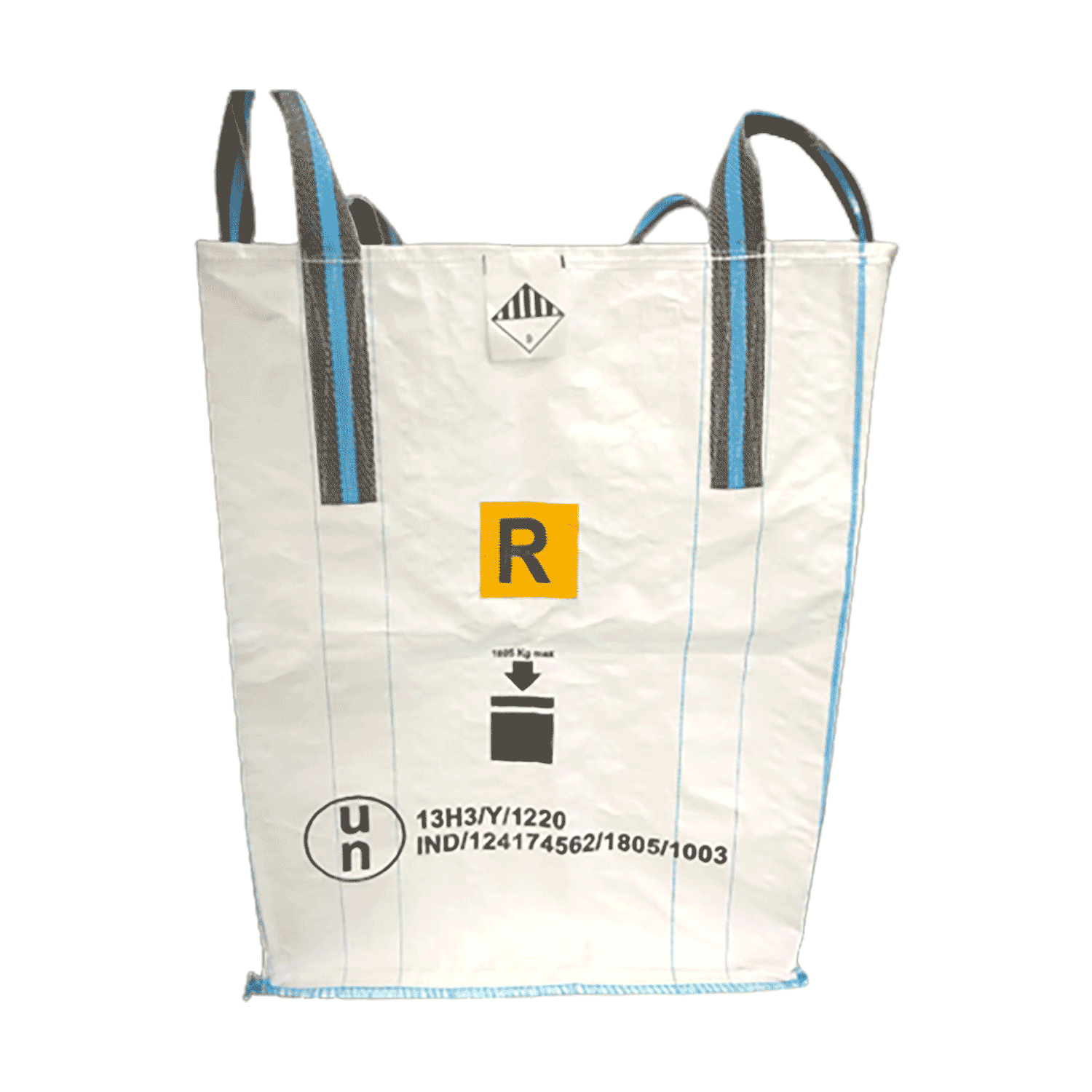 | FIBC Section Un Bags UN Certified Bulk Bags – Rigorous Performance Testing for Safety & Reliability Deccan UN Certified Bulk Bags are specially engineered for the safe... |
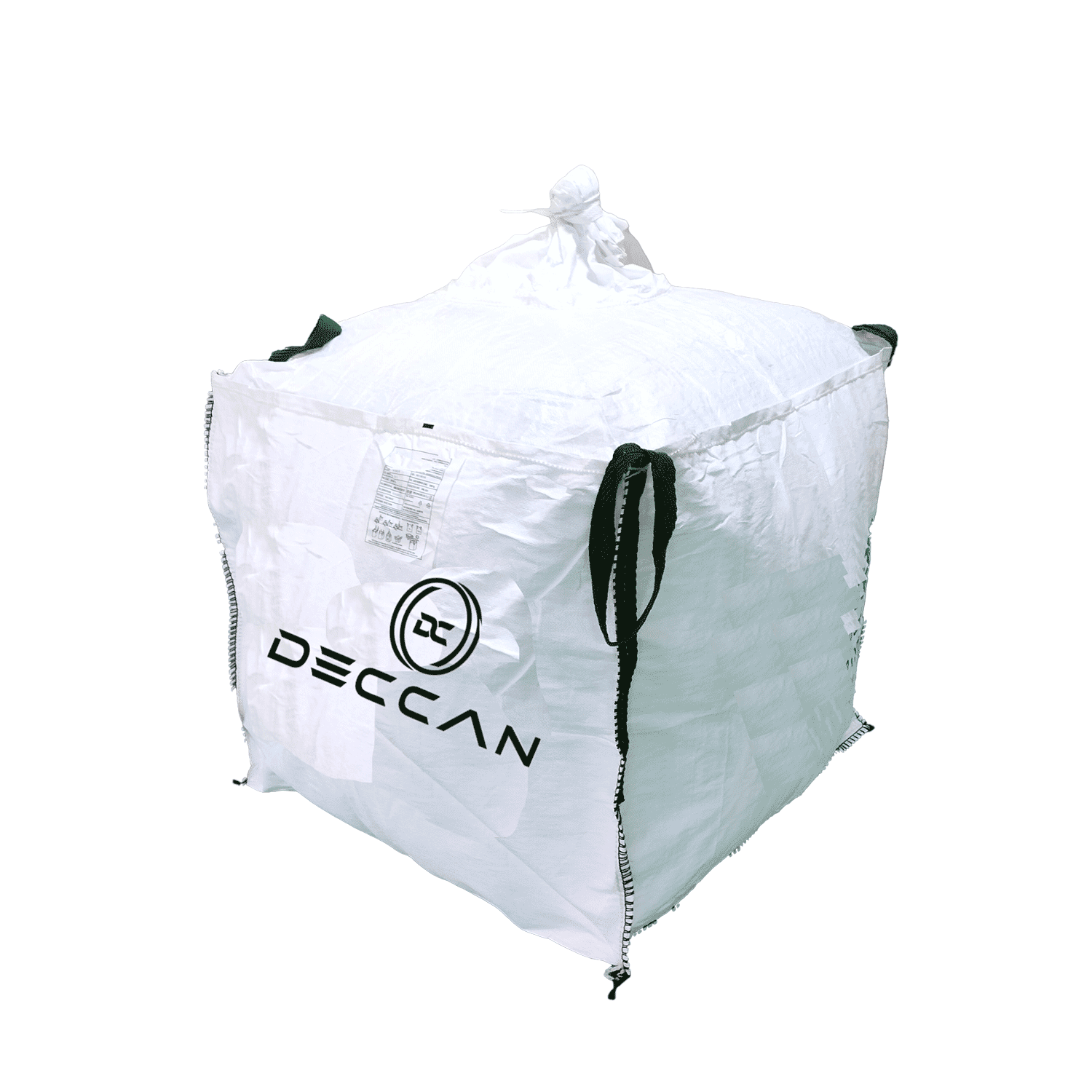 | FIBC Section Polyester Loop Bags/Multifilament Loops Polyester / Multifilament Loop FIBC Bags Deccan Cans & Printers Pvt. Ltd. |