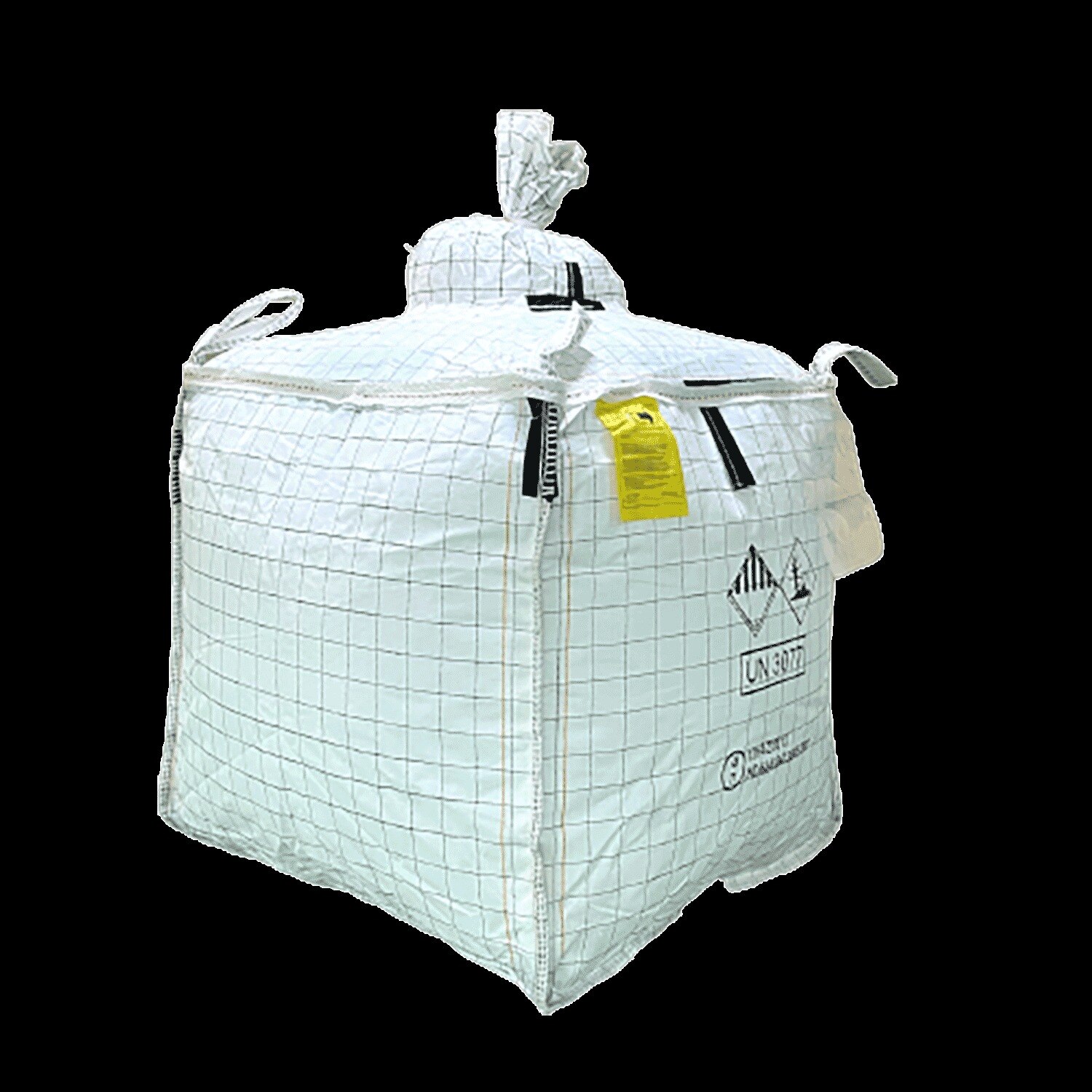
A fertilizer or chemical product cannot be matched to an FIBC by name alone. By the end, you will be able to connect the product hazard, bulk density, filling system, lifting method, chemical compatibility and regulatory status to a bag specification that can be checked before purchase.
Key takeaways
- Match fabric and liner selection to particle size, moisture and chemical compatibility.
- Coordinate bag capacity, dimensions and lifting loops with your filling and discharge equipment.
- Use a UN-certified FIBC when hazardous-solid transport rules require certified packaging.
- Specify static-control type, liner design, testing and plant-handling conditions in writing.
Match the FIBC to the Fertilizer or Chemical Product
FIBC bulk bags suit dry, free-flowing fertilizers and chemicals that do not require liquid containment. Product name alone is not enough: hazard classification, particle behaviour, contamination sensitivity and moisture exposure determine the bag construction.
| Product | Suitable FIBC use | Information to verify |
|---|---|---|
| Granular fertilizer and prilled urea | Granular fertilizer FIBC bags and prilled urea bulk bags | Bulk density, particle size, dust generation, moisture sensitivity and caking risk |
| Ammonium sulfate, DAP and MAP | Ammonium sulfate FIBC and DAP and MAP bulk bags | Abrasion, dust, settling, contamination limits and discharge behaviour |
| Calcium ammonium nitrate | Dry fertilizer FIBC with strict cleanliness controls | Ammonium nitrate content, incompatible residues, oils, organics and reducing agents |
| Pigments, powders and flakes | FIBCs selected for fine-particle retention and controlled discharge | Cohesion, aeration, dust explosibility, liner requirement and electrostatic risk |
Before selecting the bag, collect:
- Product safety data sheet, UN number, dangerous-goods class, packing group and required marking, including whether design type 13H1, 13H2, 13H3 or 13H4 applies
- Bulk density, target fill mass, settled volume, aeration behaviour and expected storage duration
- Moisture content, temperature at filling, particle abrasiveness and cleaning or contamination limits
- Required safe working load, fill and discharge equipment, lifting method and reuse expectation
- Dust explosibility data and grounding requirements under IEC 61340-4-4; a Type C bag requires grounding
- Liner material, fabric, coating and seam compatibility with the product and local humid, coastal storage conditions
Set Capacity, Dimensions and Lifting Construction Together
A 1,000 kg FIBC safe working load does not define the bag’s volume. Set the size from the required product mass divided by bulk density, then allow for aeration during filling and compaction during storage. The same mass of prilled urea and a fine chemical powder can require different FIBC dimensions and bulk density calculations.
Use this sequence before approving a drawing:
- Record the product’s loose bulk density, expected settled density and target fill mass.
- Calculate usable filling volume, then compare it with the bag’s internal dimensions; do not treat the stated SWL as a volume rating.
- Specify the SWL, design safety factor, test standard and lifting method. A bag that fits the product can still fail if its rated mass limit is exceeded.
- Confirm that the loops, forklift pockets or pallet base match the plant’s hooks, spreader beam or forklift. Never lift through a filling or discharge spout.
| Loop arrangement | Handling equipment | Selection point |
|---|---|---|
| 1-loop and 2-loop FIBC handling | Compatible single- or two-hook lifting equipment | Use only where the lifting device supports the specified loop positions. |
| 4-loop FIBC bags | Four-hook frame, crane beam or approved forklift arrangement | Keep all four loops engaged and loaded evenly. |
| Forklift pockets | Fork tines | Verify pocket width, entry direction and rated load before lifting. |
Ask for a trial fill if the product settles sharply or bridges at discharge. The final dimensions must preserve headroom, loop clearance and stable stacking rather than merely meeting the calculated volume.
Determine When a UN-Certified FIBC Is Required
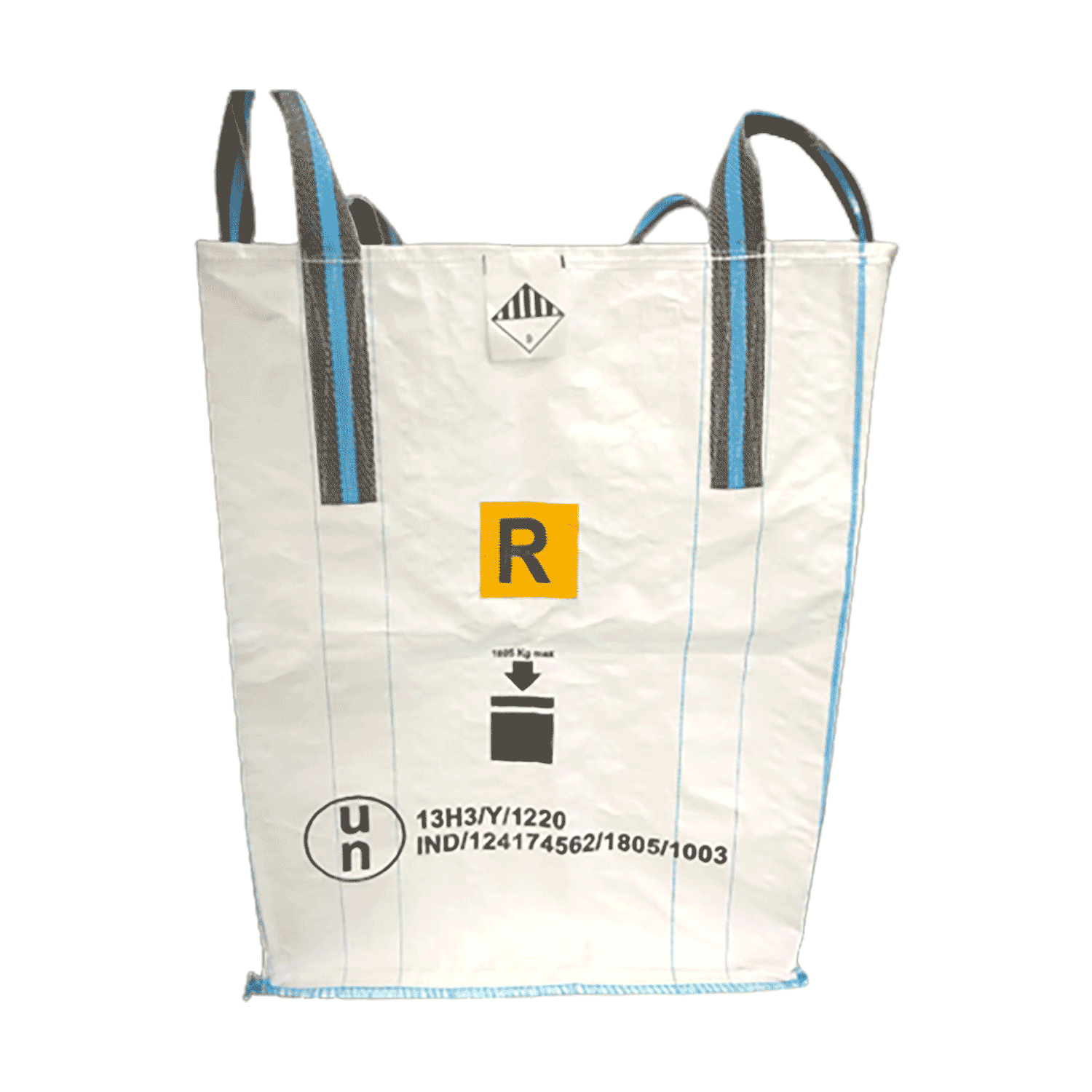
An ordinary industrial FIBC is unsuitable when the dangerous-goods entry requires UN specification packaging, or when its construction cannot meet the named UN packaging instruction.
Check these details against the product’s Safety Data Sheet and the transport entry for its UN number:
- Confirm the transport class, packing group I, II or III, and the applicable UN packaging instruction. Packing group I demands the highest performance level; groups II and III allow progressively lower levels, but neither makes an untested industrial bag acceptable.
- Check whether the instruction permits an FIBC and specifies a design type. A packing group FIBC must match that instruction, capacity, filling method and performance test level.
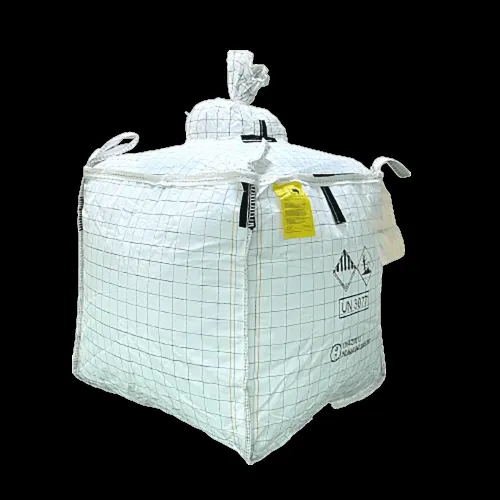
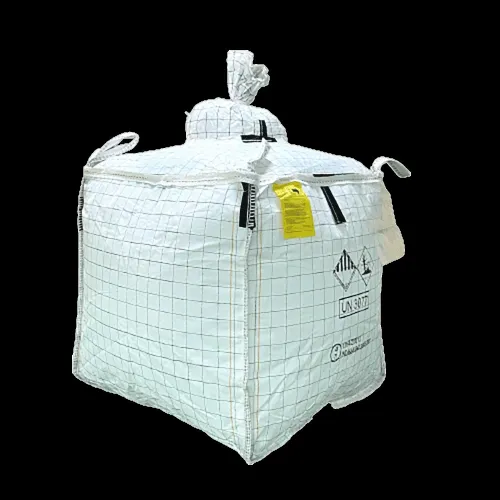
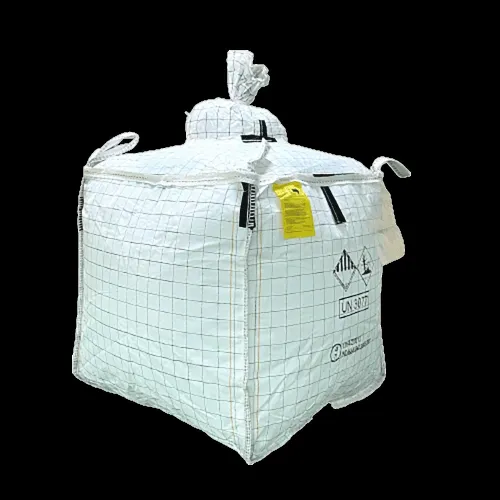
- Inspect the bag’s permanent UN marking, not a quotation or catalogue description. The 13H1 13H2 13H3 13H4 FIBC design types identify woven-plastics construction: 13H1 is uncoated, 13H2 coated, 13H3 has a liner, and 13H4 is coated and fitted with a liner.
- Reject a bag if its marked design type, SWL, liner arrangement or test documentation does not match the shipment. A standard four-loop bag with no UN specification marking is not converted into compliant packaging by adding a liner.
Use the transport mode’s rules—such as ADR, IMDG Code or the applicable national regulation—because a packaging approval for one movement does not automatically cover another. For combustible powders, complete the separate IEC 61340-4-4 static assessment; UN certification does not make a Type A FIBC safe against incendive electrostatic discharge.
Check Chemical Compatibility, Liners and Static-Control Risk
Do not approve an FIBC from polypropylene fabric alone: evaluate every wetted and load-bearing component against the actual chemical, concentration, temperature and exposure time. FIBC chemical compatibility includes the woven fabric, coating, seams, thread, filling spout, discharge spout and closure.
- Request compatibility evidence for the polypropylene and coating, including swelling, softening, embrittlement, permeation and loss of seam strength.
- Test the liner polymer and seal at the operating temperature; moisture protection does not prove chemical resistance.
- Compare a loose liner and form-fit liner for movement, abrasion, trapped dust and discharge performance.
- Specify an aluminium barrier liner when vapour or oxygen protection is required, then verify its puncture resistance and electrostatic effect.
A liner can insulate the product surface and interrupt a bag’s intended discharge path. Assess the complete bag, liner, filling head, extraction duct, grounding equipment and discharge station together; a standard polyethylene or polypropylene liner can invalidate an otherwise suitable antistatic design.
Use IEC 61340-4-4 to classify Type B Type C Type D FIBC construction against the plant’s dust-explosion assessment. Type A is unsuitable where incendive discharges are possible. Type C requires interconnected conductive elements and a verified ground during filling and discharge; Type D relies on dissipative construction and controlled handling.
Confirm product minimum ignition energy, charging rate, filling velocity, humidity and nearby conductive equipment before selecting the type. Define dust-tight spouts, vent filtration, closure method and residual hold-up, or intact fabric will not prevent airborne dust.
Write a Dahej FIBC Specification That Survives Plant Use
Write the FIBC procurement specification around the product hazard, handling cycle and plant conditions—not “one-tonne bag.” State whether the package needs UN marking such as 13H1, 13H2, 13H3 or 13H4, then define the acceptance evidence.
- Record SWL, safety factor, dimensions, usable volume, bulk-density basis and expected settling.
- Specify loop arrangement, fork pockets, top-fill geometry and discharge-spout size.
- State fabric, coating, seam thread, liner attachment, UV requirement and moisture protection.
- For Type C construction, define the resistance test method, acceptance limit and records for the bag, grounding lead and plant earth.
- Require a batch number, manufacturing date, design type, test report and a certificate linking each delivery to its production lot.
- Define inspection criteria for torn fabric, damaged loops, seam opening, contaminated liners, blocked spouts and forklift abrasion.
For FIBC storage in coastal environments, keep filled bags under a dry roof, off the floor and away from rain, standing water, direct sun and chemical contamination. Set a first-in, first-out rotation and record exposure time; humidity and ultraviolet exposure can reduce strength before the expected reuse interval.
FIBC reuse and inspection must match the qualification: do not reuse a single-trip bag. Before each lift, inspect the loops, seams, base, liner and labels, and quarantine any bag with impact or abrasion damage. When comparing FIBC suppliers in Dahej, ask for sample-bag testing, lot traceability and written reuse limits; Deccan Cans & Printers Pvt.
Ltd. belongs on a shortlist only when it supplies that evidence.
Related products
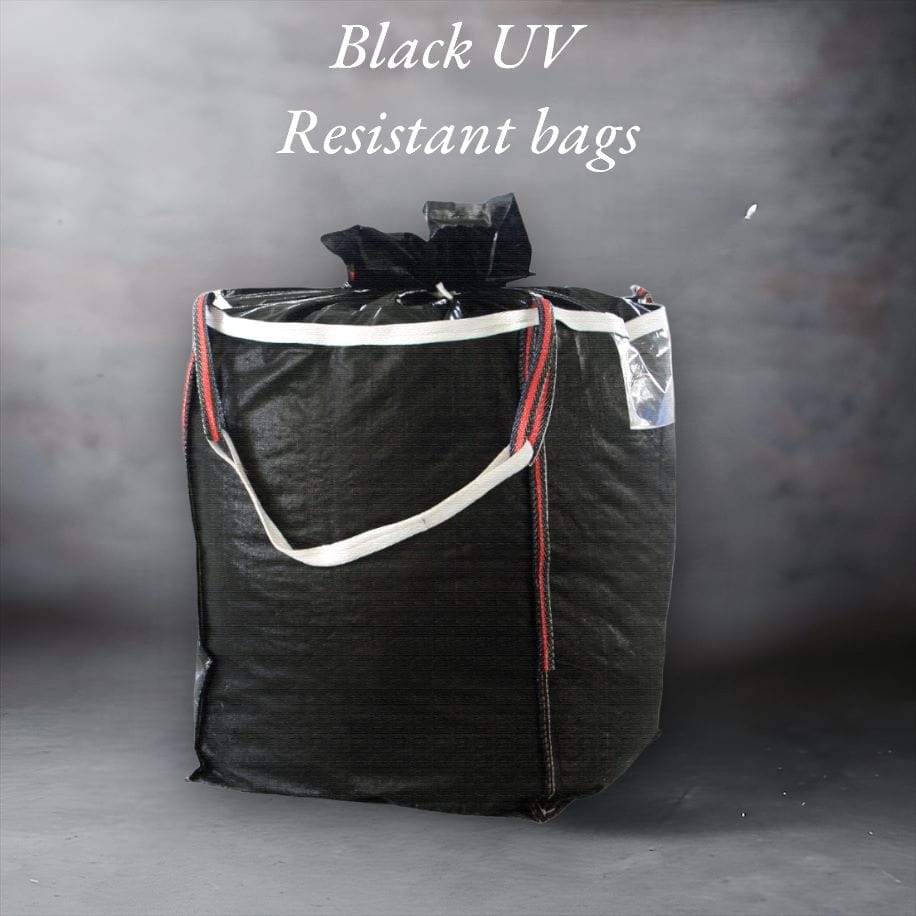 | FIBC Section Black Bags Black FIBC Bags – Enhanced UV Resistance & Extended Shelf Life UV exposure is one of the major challenges faced by the FIBC industry, as prolonged... |
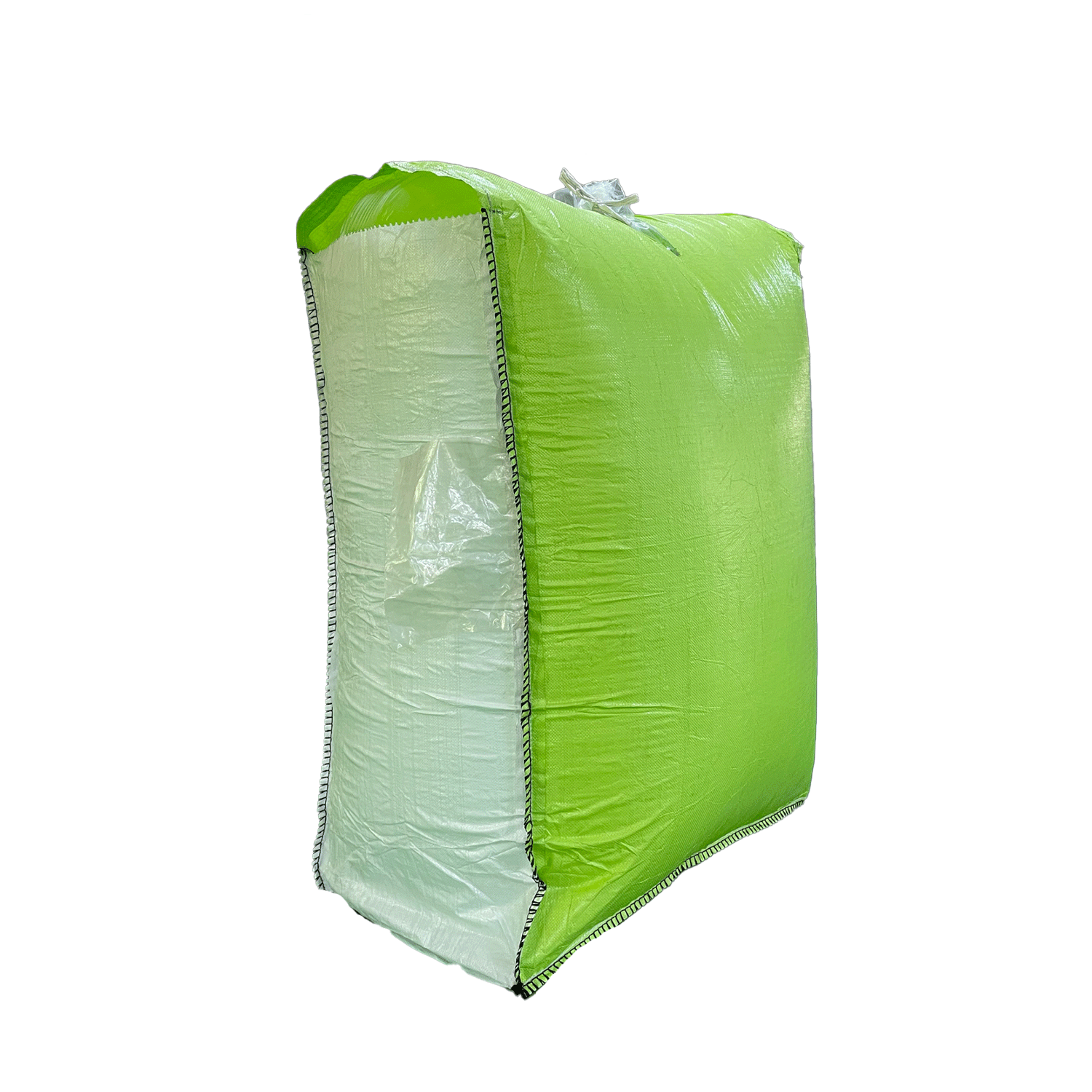 | FIBC Section Fertilizer Bag Range 1 & 2 Loop FIBC Bulk Bags Deccan Cans & Printers Pvt. Ltd. offers durable and cost-effective 1 & 2 Loop FIBC Bulk Bags, designed for the efficient... |
Frequently asked questions
How do you match an FIBC to a fertilizer or chemical product?
Start with the product’s hazard classification, particle behaviour, moisture sensitivity and contamination limits. Then select fabric, coating, liner and discharge construction that suit those conditions.
What should you specify for FIBC capacity and lifting construction?
Set the safe working load, filled dimensions, top and bottom construction, loop arrangement and equipment clearances together. Check the filled bag against your filling, storage, forklift and discharge systems.
When is a UN-certified FIBC required?
Confirm the product’s transport classification and shipping route. Use a UN-certified FIBC when the applicable dangerous-goods rules require certified packaging for that hazardous solid.
How do liners and static control affect chemical FIBCs?
Choose a liner for chemical compatibility, moisture protection and contamination control. Select the static-control construction from the product’s ignition risk, grounding procedure and filling or discharge conditions.
Related products
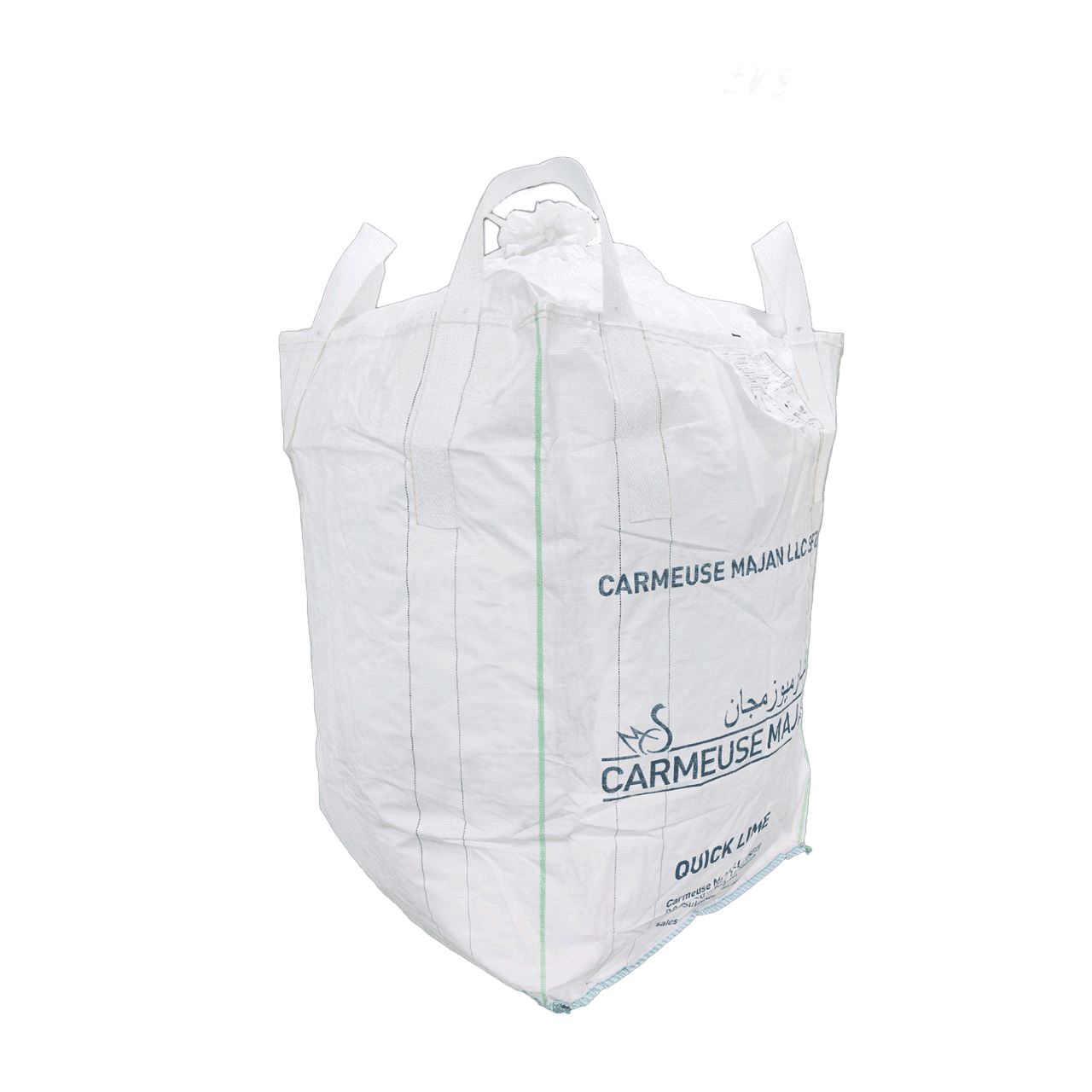 | FIBC Section Bags With Liners FIBC Liners – Bulk Bag Liners Deccan Cans & Printers Pvt. Ltd. |
 | FIBC Section Un Bags UN Certified Bulk Bags – Rigorous Performance Testing for Safety & Reliability Deccan UN Certified Bulk Bags are specially engineered for the safe... |