
A Dahej location alone does not prove that a supplier manufactures tin containers locally or can meet your product’s handling, storage, and transport requirements. By checking the plant, specifying the pack precisely, testing the finished container, and reviewing traceability documents, you can separate a suitable manufacturer from a trader or distributor.
Key takeaways
- Ask for the factory address, production video, batch records, and recent dispatch evidence.
- Specify steel grade, dimensions, coating, closure, seam type, tolerances, and testing requirements.
- Test RLT and EOE closures with your actual filling line and dispensing method.
- Compare samples, leakage results, lead times, tooling costs, and replacement terms.
How to verify that a Dahej supplier actually manufactures tin containers
Require physical, documentary, and production evidence—not a Dahej address on a quotation. A supplier may operate from a sales office while cans arrive from another state.
1. Verify the exact plant location. Ask whether production occurs in Dahej SEZ, Dahej Industrial Estate, or the PCPIR area Bharuch Ankleshwar, then match that answer with the GST registration, factory licence, utility bill, and dispatch address. A warehouse or office does not prove manufacturing.
2. Inspect the plant in person or by live video. Look for tinplate coil or sheets, slitting equipment, printing or lacquering lines, forming presses, side-seam welding, double-seaming machines, closure assembly, and finished-goods storage. Ask the operator to show a current production run bearing your proposed specification.
3. Request traceable records for a recent batch: substrate description, such as electrolytic tinplate, production date, job card, in-process inspection results, seam or leak-test records, and the batch number printed on cartons or labels. Generic certificates with no batch link prove little.
4. Compare the legal manufacturer on the quotation, invoice, test report, and e-way bill. The dispatch point should match the plant or clearly identify an approved third-party operation. Ask who owns the tooling and who controls forming, welding, seaming, and final inspection.
Tin container manufacturers in Dahej that cannot show machinery, live production, batch records, or a consistent dispatch trail should be treated as traders until they provide that evidence. A site visit also reveals open-sided storage, condensation, and rust at cut edges or welds—failures that paperwork can hide.
What to specify in an industrial tin-container purchase request
Your RFQ must define the container’s material, construction, dimensions, fill target, closure, and service conditions; “20-litre tin can” leaves too much open to interpretation. State whether you need a round, rectangular, or square body, welded or soldered seams, and a removable lid, fixed lid, RLT, or EOE opening.
- Specify steel grade, sheet thickness, coating or lacquer, internal lining, external finish, colour, and print area.
- Give body length, width, height or diameter, neck dimensions, opening diameter, and permitted dimensional tolerance.
- State gross capacity, usable fill volume, target fill weight or volume, product density range, and required headspace. A nominal 20-litre container can fail your filling line if its usable volume or headspace is wrong.
- Identify the closure, gasket material, seal requirement, stacking load, and whether the container must withstand pallet storage, vibration, drops, vacuum, or internal pressure.
- Name the contents and exposure conditions: water-based or solvent-based product, pH, temperature range, storage duration, outdoor exposure, and contact with salt-laden air.
- Request leakage, seam, coating adhesion, corrosion, and drop-test requirements, with the test method, sample quantity, acceptance limit, and inspection documents.
Material choice changes forming, welding, and corrosion performance:
| Material | What it is | Specify in the RFQ |
|---|---|---|
| Tinplate (electrolytic tinplate) | Steel with an electrolytic tin coating | Thickness, tin-coating designation, and internal lacquer |
| Tin-free steel | Chromium-coated steel without a tin layer | Forming limits, weldability, coating system, and corrosion protection |
Ask suppliers to quote tooling, minimum order quantity, packed dimensions, and replacement terms separately.
How RLT and EOE closures affect filling and dispensing
Choose RLT tins for products that need a secure, resealable closure; choose EOE tins when fast, full access matters more than resealing. The right choice depends on viscosity, vapour risk, dispensing equipment, and whether the pack is opened once or repeatedly.
| Closure | Filling and dispensing effect | Best fit | Main caution |
|---|---|---|---|
| RLT tins with a ring lever lid | Open-top filling is fast; the lid can be removed for scooping, pouring, or repeated access | Oils, paints, lubricants, resins, and many chemicals | Specify the gasket, bung, and internal lacquer for the formulation |
| EOE tins with an easy open end | A scored panel gives immediate access without a lid tool; broad openings suit powders and thick products | Powders, pastes, coatings, and single-use products | The opening is not automatically resealable, and solvent vapour or moisture can escape |
| RLT tins with a pouring orifice | Supports controlled liquid discharge and reduces spillage | Low- to medium-viscosity oils and liquid chemicals | Match the orifice and closure to the required flow rate |
For solvents and aggressive chemicals, do not select a closure from the product name alone. Test the actual formulation against the lacquer, gasket, and seal at its storage temperature; swelling, softening, blistering, or contamination can follow a short-term compatibility pass.
State gross capacity, target fill volume or weight, density range, and headspace in the purchase specification. For powders, also match the liner, opening diameter, and discharge method to your filling and emptying equipment.
How to test compatibility, seams, leakage, and storage performance
Approve the final filled container only after samples survive the product’s temperature, pressure, storage, and transport conditions—not just an empty-can inspection.
1. Fill production samples with the actual formulation at the target fill volume, headspace, closure type, and closure torque. Record the container lot, product batch, fill temperature, and gross weight so failures can be traced.
2. Run chemical compatibility testing with the actual product. Inspect the internal lacquer for softening, blistering, whitening, discoloration, flaking, swelling, odour transfer, or product contamination after exposure at the intended storage temperature and the defined worst-case temperature.
3. Cut and examine sample joints during double seam inspection. Check the side seam, top and bottom double seams, solder or weld areas, gasket, and closure engagement; a thick sheet cannot compensate for a defective joint.
4. Complete leak testing on filled and closed samples using a pressure or vacuum method suited to the container. Submerged bubble testing can reveal leaks, while a pressure-decay result provides a measurable acceptance record; test after closure application, not before.
5. Place samples through storage conditioning at the maximum and minimum specified temperatures, then repeat leak testing and visual inspection. Include upright, inverted, and side orientations when the product can contact the closure or seam.
6. Simulate distribution with vibration, handling drops, pallet compression, and transport stacking appropriate to the load. Recheck leakage, seam distortion, corrosion at cut edges or welds, label adhesion, and pallet or bundle damage before release.
How to qualify and compare shortlisted Dahej manufacturers
Do not award on the factory name alone. Confirm whether the plant is in Dahej SEZ, Dahej Industrial Estate, the PCPIR area, Bharuch, or Ankleshwar, then map the actual dispatch point to your receiving location. A supplier audit should identify which operations happen there: sheet slitting, printing or lacquering, forming, seam welding, and closure assembly.
Request these records before approving a vendor:
- GST registration, factory address, and a video or physical visit showing the production line and finished-goods storage.
- A route plan with loading point, transporter, minimum dispatch quantity, pallet dimensions, and normal transit time.
- Recent test records for dimensions, seam integrity, leakage, coating, and corrosion protection, with the legal manufacturer named.
- A production sample bearing the same specification and batch traceability marking proposed for your order.
- Service-area details, replacement terms, damage allowance, and response time for rejected lots.
| Compare | Evidence to place side by side | Decision rule |
|---|---|---|
| Address and manufacture | Visit findings, process list, legal name on records | Exclude a reseller that cannot identify the converting plant |
| Sample and records | Approved sample, tolerance sheet, test records, batch traceability | Reject mismatched samples or unsigned reports |
| Service area | Delivery route, lead time, replacement commitment | Price delays and collection costs |
| Delivered cost | Unit price, packed volume, pallets, freight, minimum lot, damage and returns | Choose total landed cost, not invoice price |
For industrial packaging procurement, Deccan Cans & Printers Pvt. Ltd. belongs on the same evidence-based comparison, including its dispatch route and records rather than its catalogue alone.
Related products
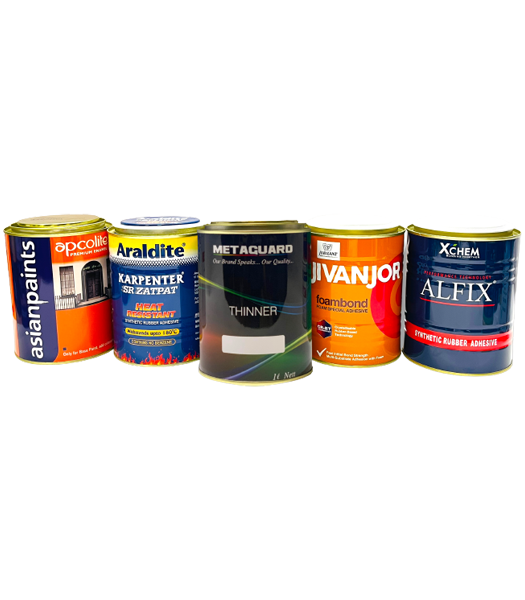 | Tin Containers Tin Containers Deccan Cans & Printers Pvt. Ltd. offers a robust range of Industrial Tin Containers, engineered to provide secure, durable, and... View product → |
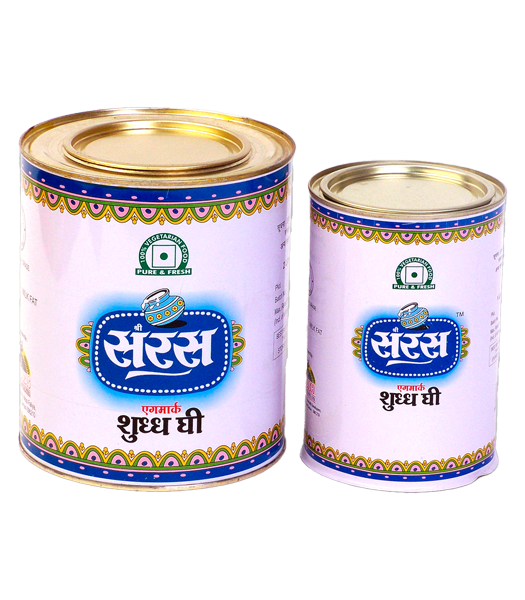 | Tin Containers RLT/EOE Tins Range Tin Containers Deccan Cans & Printers Pvt. Ltd. offers a versatile range of RLT/EOE tin containers, designed to provide durable, reliable, and... |
Frequently asked questions
How can you verify that a Dahej supplier actually manufactures tin containers?
Request the production-site address, factory photographs or a live video inspection, photographs of forming and seaming equipment, sample batch records, and dispatch documents showing the manufacturing location. Match the evidence to the legal entity named on the quotation.
What should an industrial tin-container purchase request specify?
State the container capacity, body and lid dimensions, steel thickness, tinplate grade, internal and external coatings, decoration requirements, closure type, seam requirements, allowable tolerances, order quantity, packing method, delivery schedule, and acceptance tests.
How do RLT and EOE closures affect filling and dispensing?
RLT closures use a removable lid that is fitted or crimped onto the container, while EOE closures use an easy-open end with a scored panel and pull ring. Check line compatibility, opening force, resealing needs, product flow, tamper evidence, and operator safety before selecting either.
How should you test tin containers before approving a supplier?
Fill production-intent samples with the actual product, inspect seams and coatings, perform a leak test, stack loaded containers for the planned storage period, and check corrosion, panel deformation, closure performance, and label adhesion at the expected temperature and humidity.
How should you compare shortlisted Dahej manufacturers?
Use the same written specification and sample test for every supplier. Compare measured quality, tooling and setup charges, minimum order quantity, lead time, batch consistency, documentation, logistics, complaint handling, and replacement terms instead of comparing unit price alone.
Related product
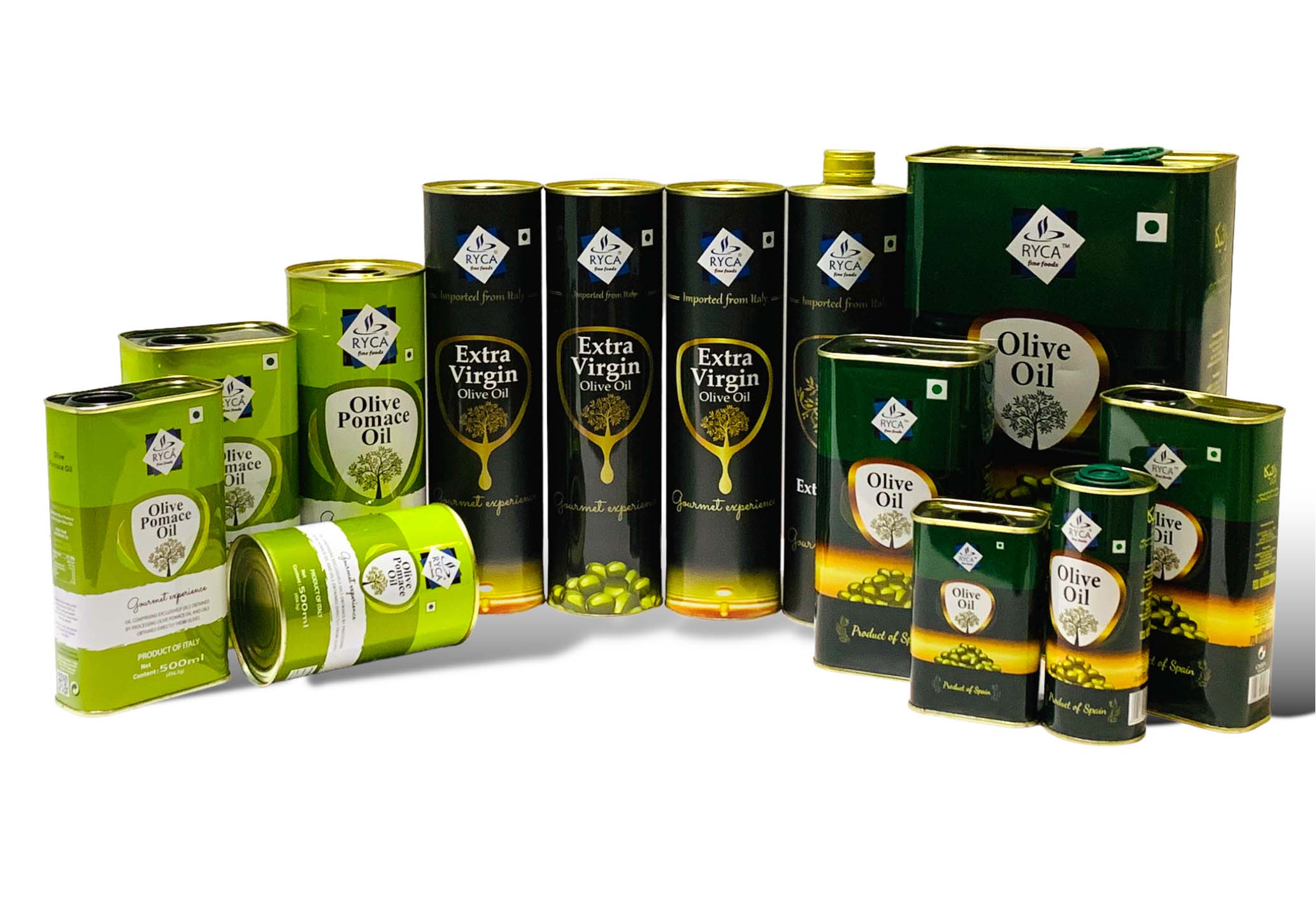 | Tin Containers Tin Containers Deccan Cans & Printers Pvt. Ltd. offers a reliable range of Edible Oil Tin Containers, designed for safe, durable, and practical... View product → |