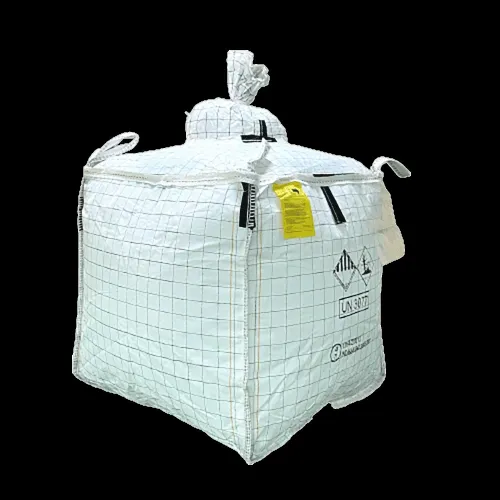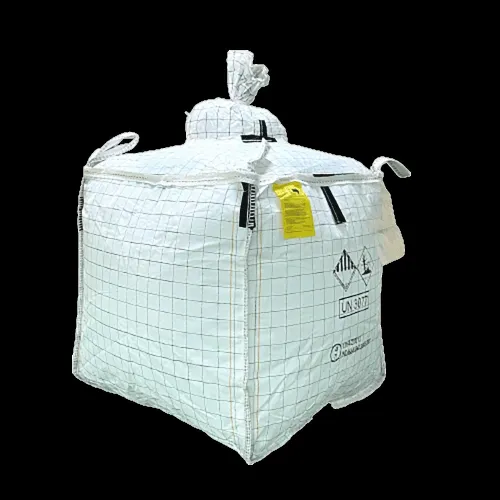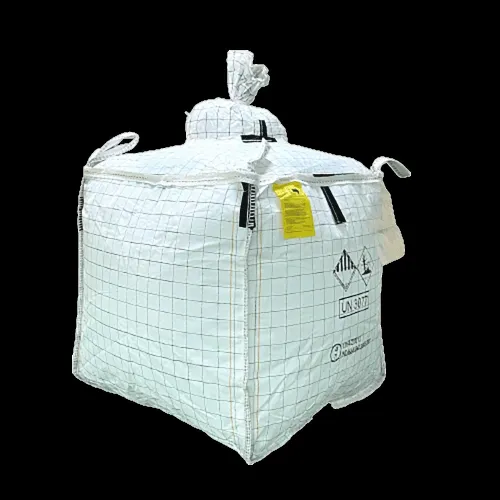

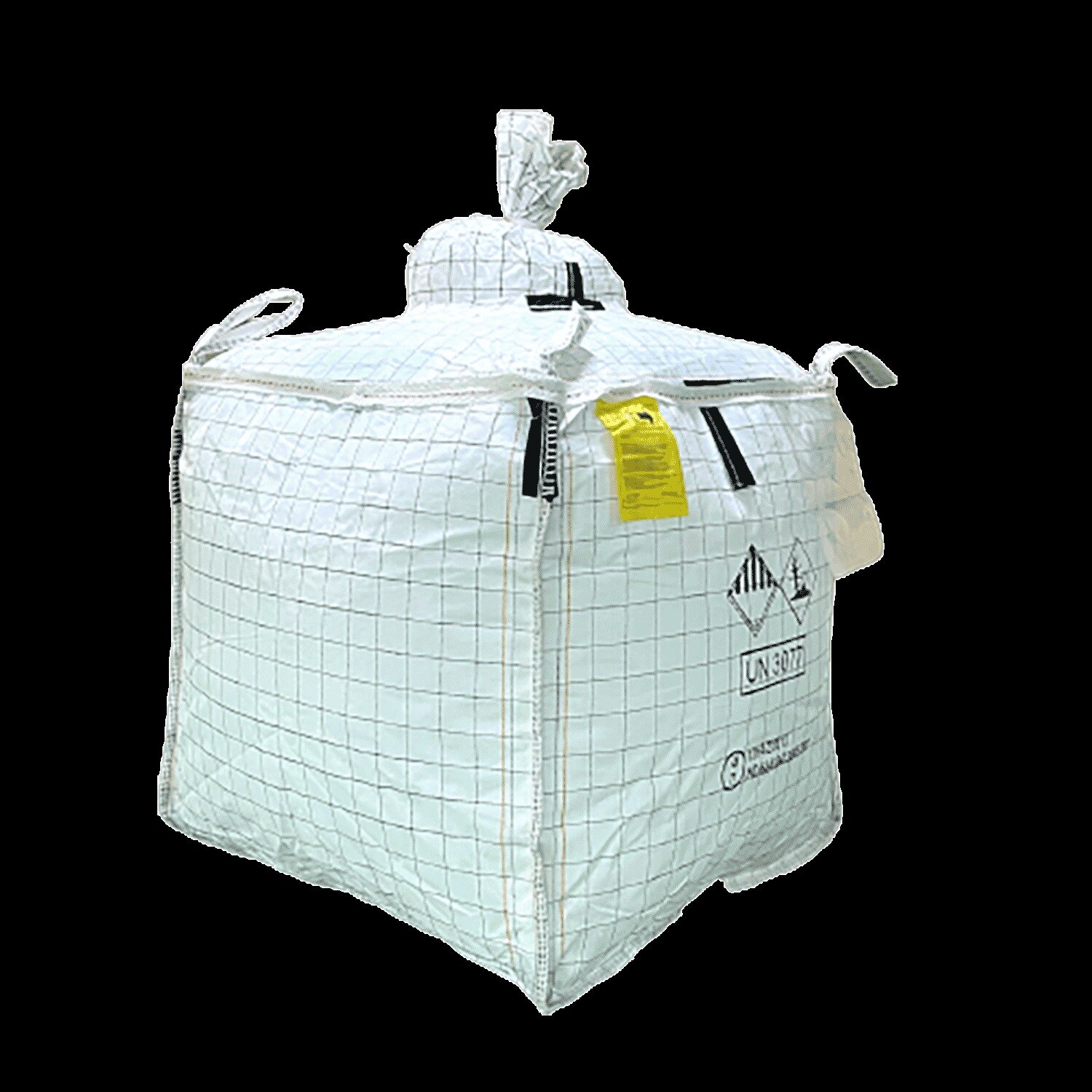
A high-capacity FIBC is not selected by volume alone: the safe working load, tested construction, material behaviour and handling equipment must all match. By the end, you will be able to write a practical purchase specification, choose the right lifting and discharge arrangement, and identify storage, electrostatic and compliance risks before bags reach your Dahej facility.
Key takeaways
- Calculate usable volume from bulk density, settlement and required headspace.
- Match loop configuration and lifting points to your forklift or crane equipment.
- Select fabric, liner and discharge spout for the stored material.
- Request SWL tests, electrostatic controls and dangerous-goods documentation before purchase.
Specify SWL, dimensions and usable fill volume before comparing bags
A bag is large enough only when its usable fill volume accommodates the material at its actual bulk density, including headspace and settlement. It is strong enough only when its tested safe working load (SWL) exceeds the heaviest filled condition; “high-capacity FIBC” is a buying description, not a formal strength class.
1. Record the load mass, bulk density range and whether the material settles, aerates, bridges or compacts. Calculate required volume as mass ÷ bulk density, then add headspace for filling equipment, product movement and settlement. Do not treat the bag’s nominal geometric volume as usable FIBC capacity.
2. Specify FIBC dimensions in millimetres or metres: length, width, body height, top inlet position and bottom clearance. Check that the filled height fits beneath the filling head, inside the storage bay and within the transport envelope. A bag that fits on paper can foul a frame or leave no room for safe lifting.
3. State the required SWL in kilograms and compare it with the heaviest filled load, not the average batch. Confirm the manufacturer’s tested design and safety factor; volume alone cannot establish lifting strength. A 500–2,000 kg rating range is common in industrial purchasing, but the bag’s documented rating controls.
4. Request the usable fill volume, maximum fill height and settling allowance in writing. If the powder needs vibration, a liner or a specific outlet, include that equipment when sizing the bag; an oversized body with restricted discharge can become unusable.
Match loops, lifting points and bag construction to your handling equipment
Choose loops that present a clear, vertical lift to the equipment; never improvise by catching the fabric body or using fewer lifting points than specified. A forklift must contact only designed sleeves or lifting loops, with tine width, spacing and insertion depth confirmed against the bag drawing.
A crane lift needs all specified loops engaged and a spreader or sling arrangement that avoids excessive lifting angles.
| Option | Lifting construction | Best fit |
|---|---|---|
| 1-loop FIBC | One central loop; requires a compatible hook, balancer or designed lifting beam | Crane or hoist lifts where one-point suspension is approved |
| 2-loop FIBC | Two opposing loops; both must remain aligned and fully supported | Equipment designed for two-point lifting, not ordinary four-tine handling |
| four-loop FIBC | Four corner loops or cross-corner straps | Forklift sleeves, lifting frames and cranes using four-point support |
| cross-bottom sling FIBC | Straps run beneath the bag and transfer load through the base | Forklift or crane handling when the site can access every sling safely |
For pallet handling, specify a pallet base or sleeve arrangement that leaves the tines clear of the filled body. Do not drag the bag, let tines rub its woven fabric, or lift it with a damaged, twisted or partly engaged loop. Confirm loop access at the actual pallet height and lifting angle.
Repeated movement demands a tested construction and an inspection regime, not merely a 5:1 or 6:1 safety factor. A single-trip bag is not reusable because its seams and loops look intact.
Choose fabric, liner and discharge design for the material inside
Choose the liner and outlet before ordering around the bag’s nominal capacity: hygroscopic, cohesive or hazardous powders need different protection from dry, free-flowing granules. A poor match creates caking, leakage, contamination or a blocked discharge station.
| Material or risk | Fabric and liner choice | Discharge design |
|---|---|---|
| Dry, free-flowing powder | Uncoated polypropylene can suit clean, non-moisture-sensitive material | Standard FIBC discharge spout with a controlled closure |
| Hygroscopic or caking powder | Use a sealed FIBC liner; coated FIBC fabric alone does not stop moisture vapour | Iris closure or liner-integrated spout to limit air and moisture entry |
| Cohesive or compacting powder | Select a liner that will not collapse around the product and confirm chemical compatibility | Conical bottom, larger outlet or massaging aids; a small spout can leave the bag unusable |
| Chemical powder | Check the product’s solvent, acid, alkali and temperature compatibility against fabric, liner, thread and coatings | Specify a closure that prevents seepage during storage and transport |
| Food, pharmaceutical or high-purity material | Require traceable raw materials, suitable liner and thread, cleaning status and contamination controls | Use a controlled, protected discharge path and documented packaging condition |
Match the outlet diameter and closure to the downstream equipment, not just to the powder flow rate. An unrestricted opening can flood a conveyor or mixer, while a tight iris closure can choke a bridging powder.
State the required discharge rate, liner material, seam construction and whether the bag needs a separate liner or a coated FIBC fabric.
Seal the top and FIBC discharge spout during storage; covered staging still matters because polypropylene degrades under ultraviolet exposure. For combustible powders, specify the required electrostatic type and liner arrangement with the process safety team; Type C and Type D FIBCs are not interchangeable.
Set operating rules for filling, lifting, stacking, discharge and reuse
Before filling, complete an FIBC inspection: check fabric, seams, loops, liner, top closure, discharge spout and label. Place the bag on a sound pallet or frame, fill it evenly, keep within its tested SWL and fill height, and close every opening before moving it.
- For FIBC lifting safety, use every lifting loop specified by the design. Keep forklift tines from touching the body, do not drag the bag, and never lift it by damaged loops or with a partly closed discharge spout. Use only compatible forks, beams or slings, with no person beneath a suspended load.
- For Type C bags, connect the grounding lead to earth before filling and keep it connected during discharge. Check the connection and resistance in the site procedure; a disconnected or high-resistance lead removes the intended protection.
- For FIBC stacking, use a level surface, keep bags upright, and follow the supplier’s stated stack height. Do not stack damaged or bulging bags, or place them where water, heat or sunlight can reach them.
- During discharge, secure the bag, control the outlet from a safe position, and stop if flow bridges, the liner moves, or the fabric strains. Never cut an outlet while the bag is suspended.
Treat FIBC reuse as a controlled decision, not a visual guess. Single-trip bags are not reusable; reusable designs need documented FIBC inspection, cleaning or reconditioning, and approval before each cycle. Reject bags with cuts, broken loops, failed seams, contamination, brittle UV-damaged fabric, unreadable identification or liner damage.
Store covered and dry; UV stabilization does not permit permanent outdoor storage.
Verify electrostatic, dangerous-goods and supplier documentation before purchase
Before ordering, get evidence that the bag matches the material, hazard classification and handling site—not just its stated capacity. For non-dangerous solids, request the applicable ISO 21898 design, performance and test report, including SWL, safety factor, construction and batch traceability.
| Option | Evidence to request | Site control |
|---|---|---|
| Type C FIBC | Electrical resistance test and grounding-point specification | Bond the bag to verified earth before filling and discharge; check lead continuity and resistance |
| Type D FIBC | Manufacturer’s electrostatic-performance documentation and approved material or liner combination | Keep fabric clean and undamaged; reject conductive coatings, unsuitable liners and unauthorised repairs |
| UN-certified FIBC | UN certificate, construction code, performance-test result, marking and packing instruction | Confirm the product classification, filling density and transport mode before procurement |
Ask the supplier for these documents:
- The current test report or certificate, not only a printed ISO 21898 reference
- UN marking that matches the applicable dangerous-goods packaging instruction
- Raw-material, liner and sewing-thread traceability for food, pharmaceutical or high-purity contents
- Cleaning status, contamination controls and controlled-packaging records where product-contact purity matters
- Inspection and replacement criteria for loops, seams, liners, grounding leads and discharge spouts
For a Dahej plant, record the filling and discharge points, earthing arrangement, hazardous-area classification, ignition sources and operator checks in the purchase specification. Deccan Cans & Printers Pvt. Ltd. should receive those site details with the enquiry so the quoted construction is tested against actual use rather than selected from a catalogue.
Related products
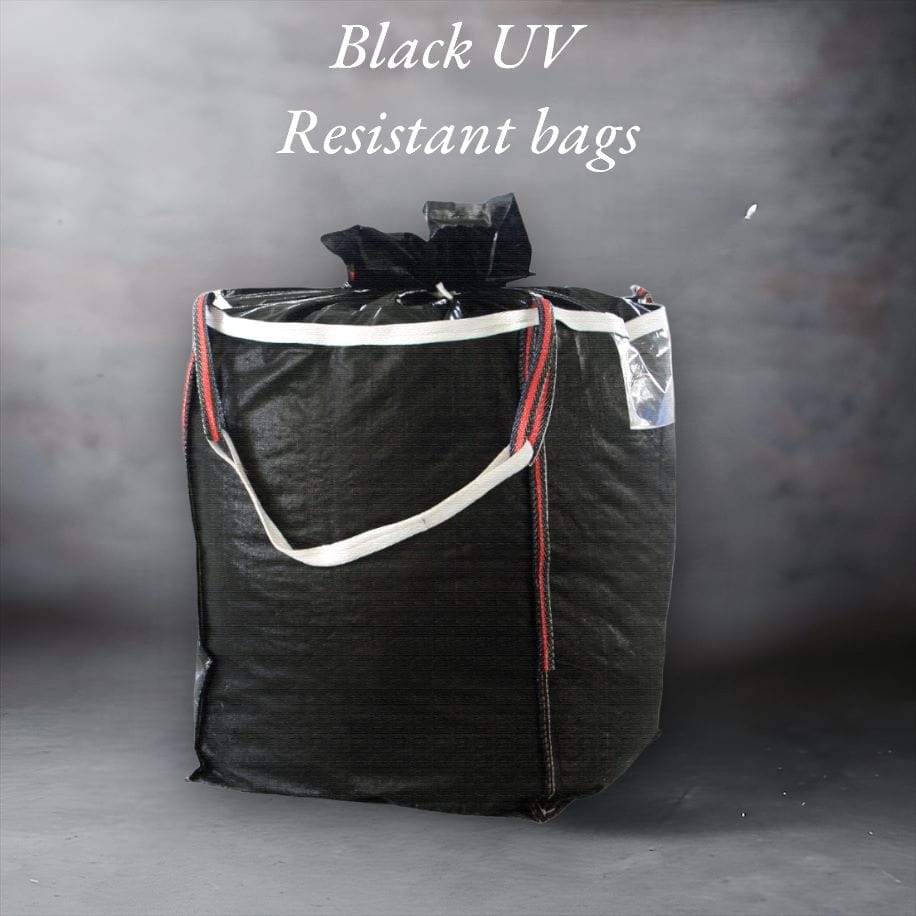 | FIBC Section Black Bags Black FIBC Bags – Enhanced UV Resistance & Extended Shelf Life UV exposure is one of the major challenges faced by the FIBC industry, as prolonged... |
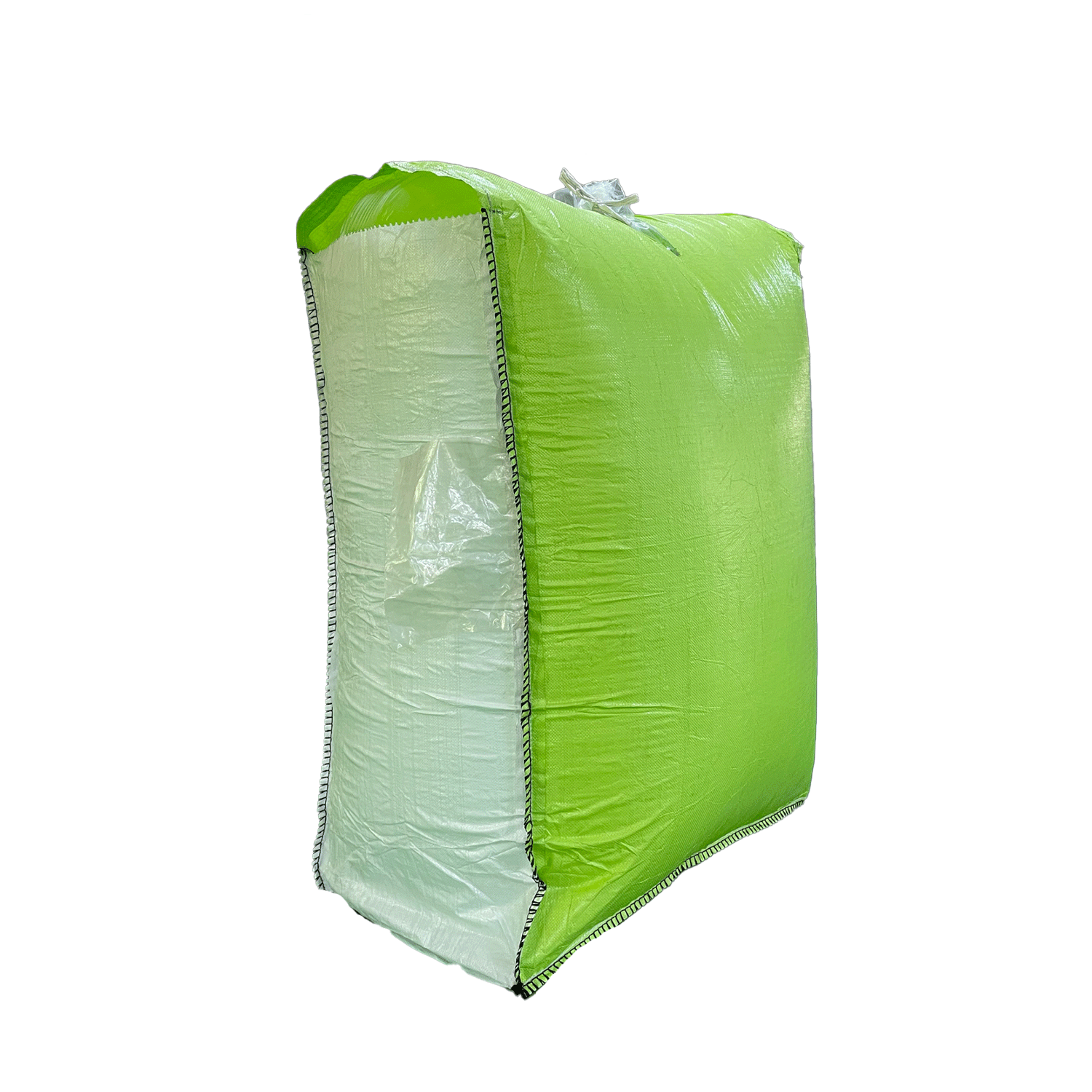 | FIBC Section Fertilizer Bag Range 1 & 2 Loop FIBC Bulk Bags Deccan Cans & Printers Pvt. Ltd. offers durable and cost-effective 1 & 2 Loop FIBC Bulk Bags, designed for the efficient... |
Frequently asked questions
How do you specify the right FIBC bag capacity?
Start with the material’s actual bulk density, then calculate usable fill volume with headspace and settlement. Confirm that the tested SWL exceeds the heaviest filled condition.
Which FIBC lifting design matches industrial handling equipment?
Match loop type, lifting points and bag construction to the equipment you use, such as forklift tines, crane hooks or spreader bars.
How do fabric, liners and discharge designs affect FIBC selection?
Choose fabric weight and coating, liner material and discharge outlet design according to the material’s flow, moisture, contamination and static-control needs.
What operating rules apply when filling, lifting, stacking and reusing FIBC bags?
Follow the bag’s SWL, keep it upright during lifting, control filling and discharge, stack only when the design permits it, and inspect every bag before reuse.
Which FIBC documents should you verify before purchase?
Request test evidence for the stated SWL, electrostatic classification and controls, dangerous-goods certification when required, plus traceable supplier and batch documentation.
Related products
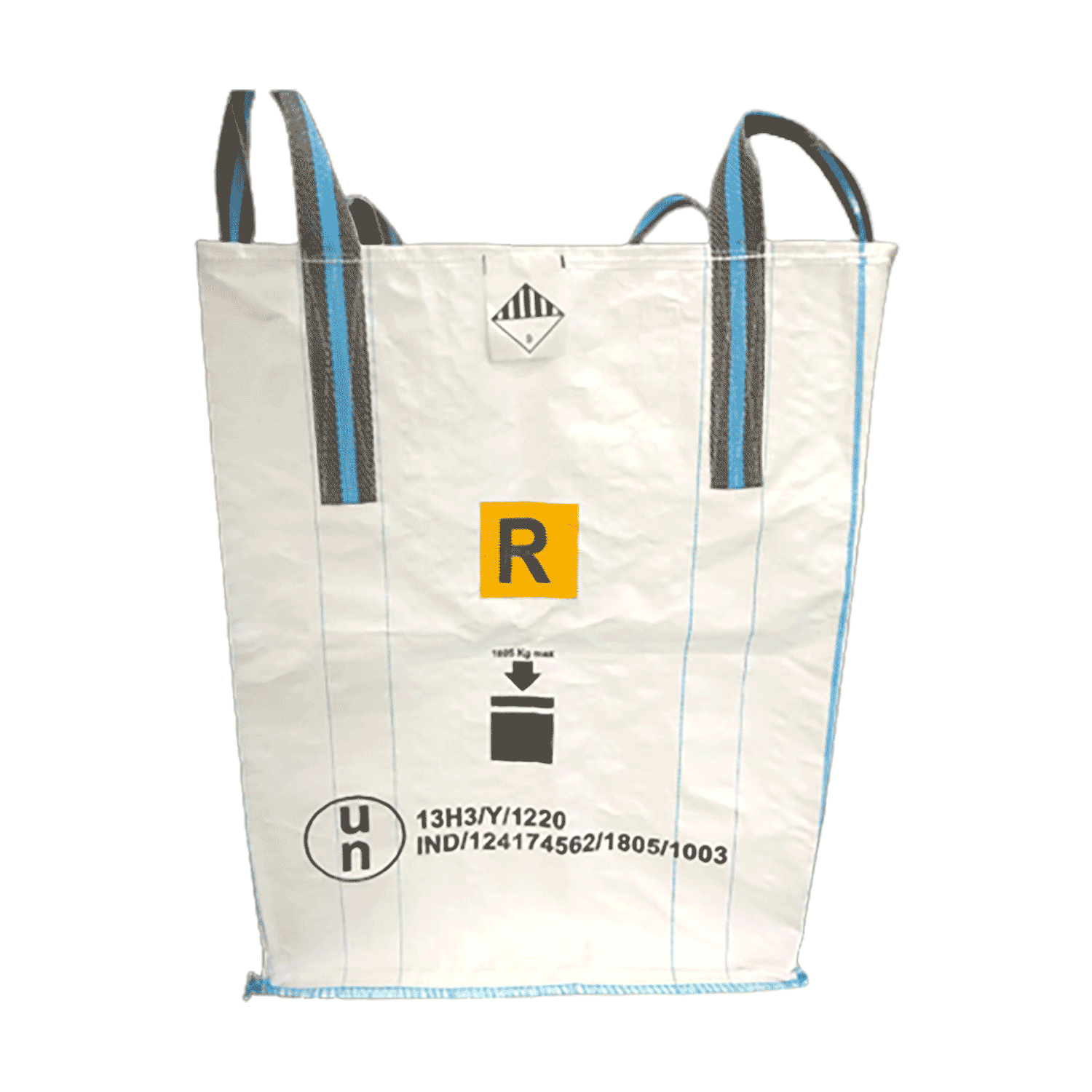 | FIBC Section Un Bags UN Certified Bulk Bags – Rigorous Performance Testing for Safety & Reliability Deccan UN Certified Bulk Bags are specially engineered for the safe... |
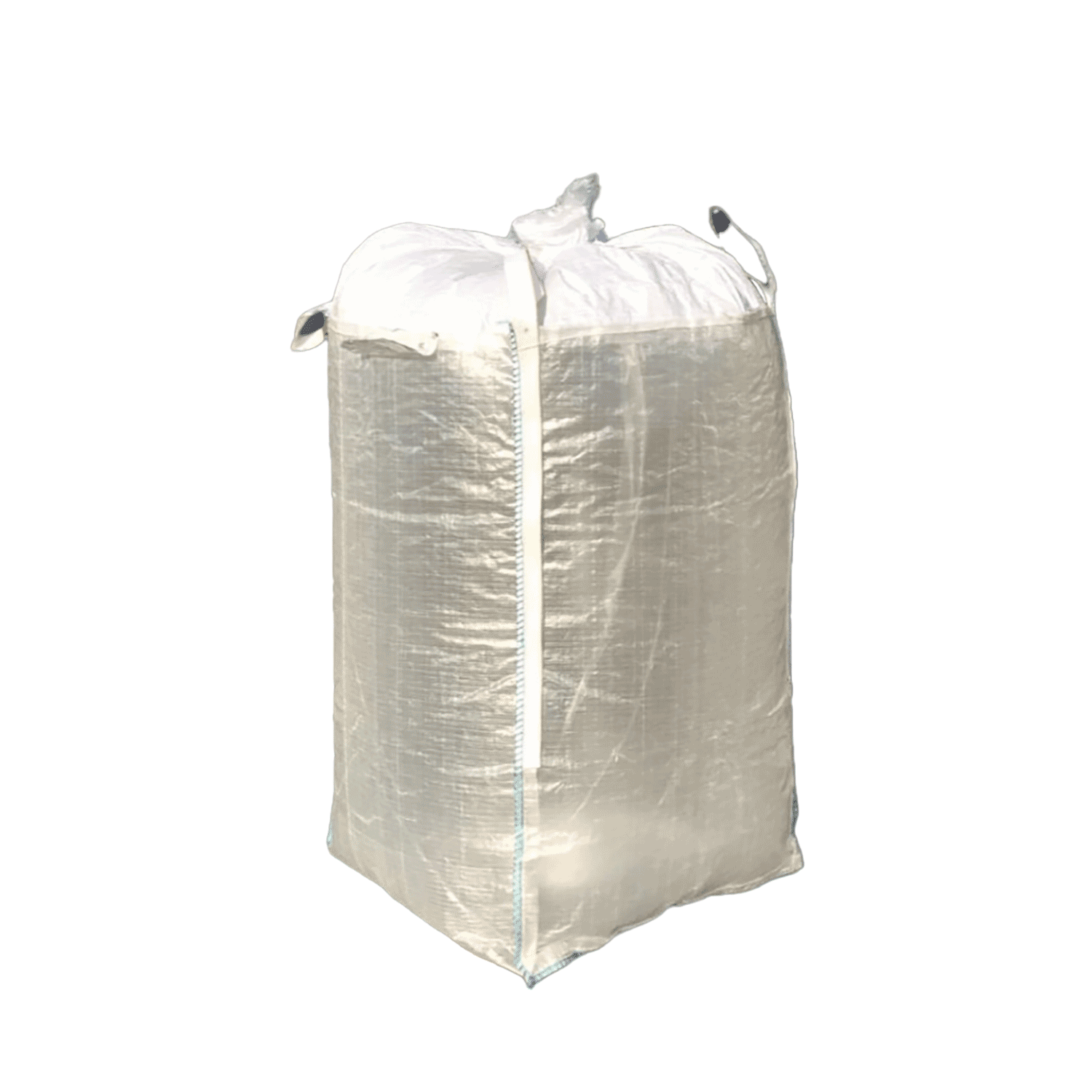 | FIBC Section Transparent Bags Transparent FIBCs – See-Through Bulk Bags Deccan Cans & Printers Pvt. Ltd. |
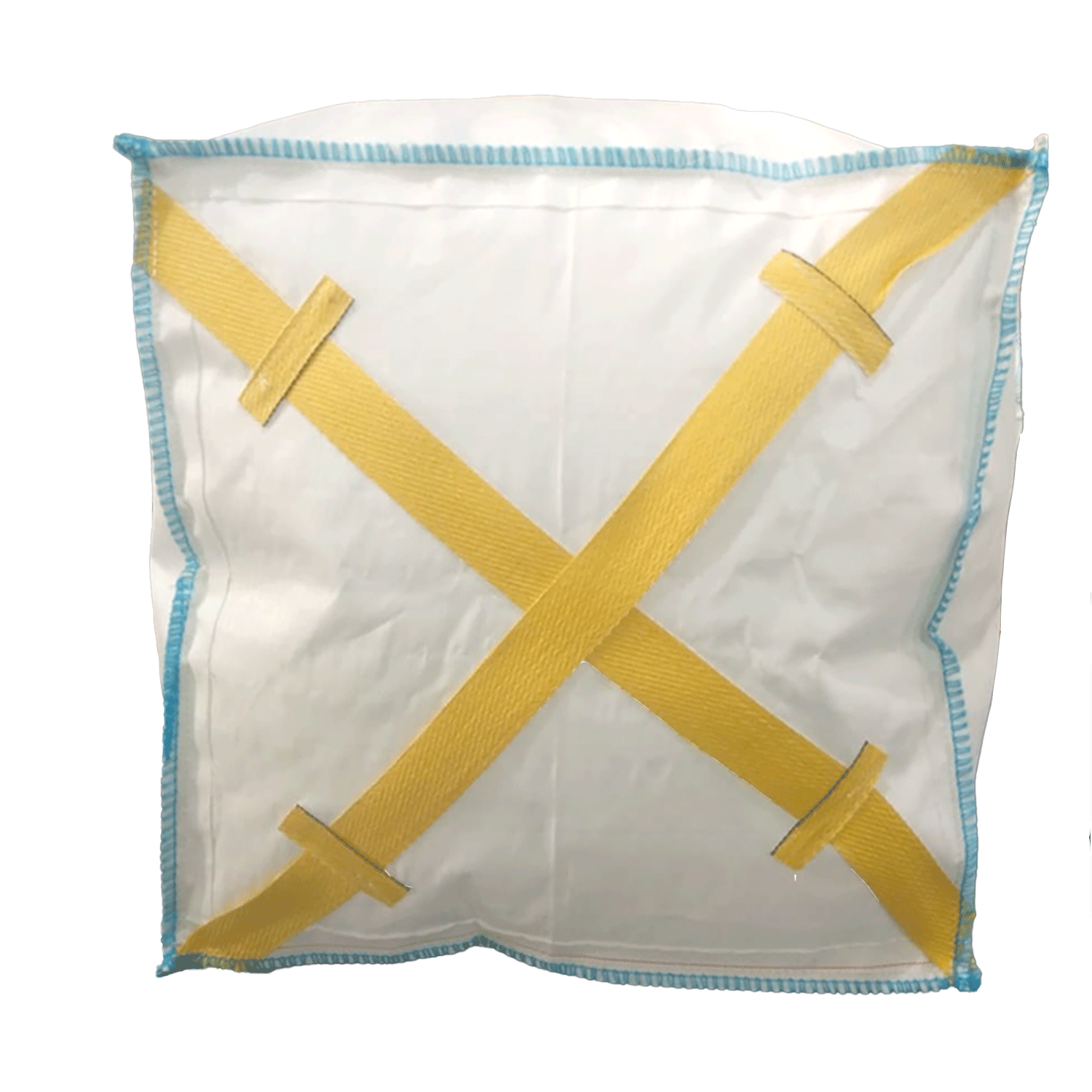 | FIBC Section Cross Bottom Sling Bags Cross Bottom Sling FIBCs – Bulk Bags Deccan Cans & Printers Pvt. Ltd. |
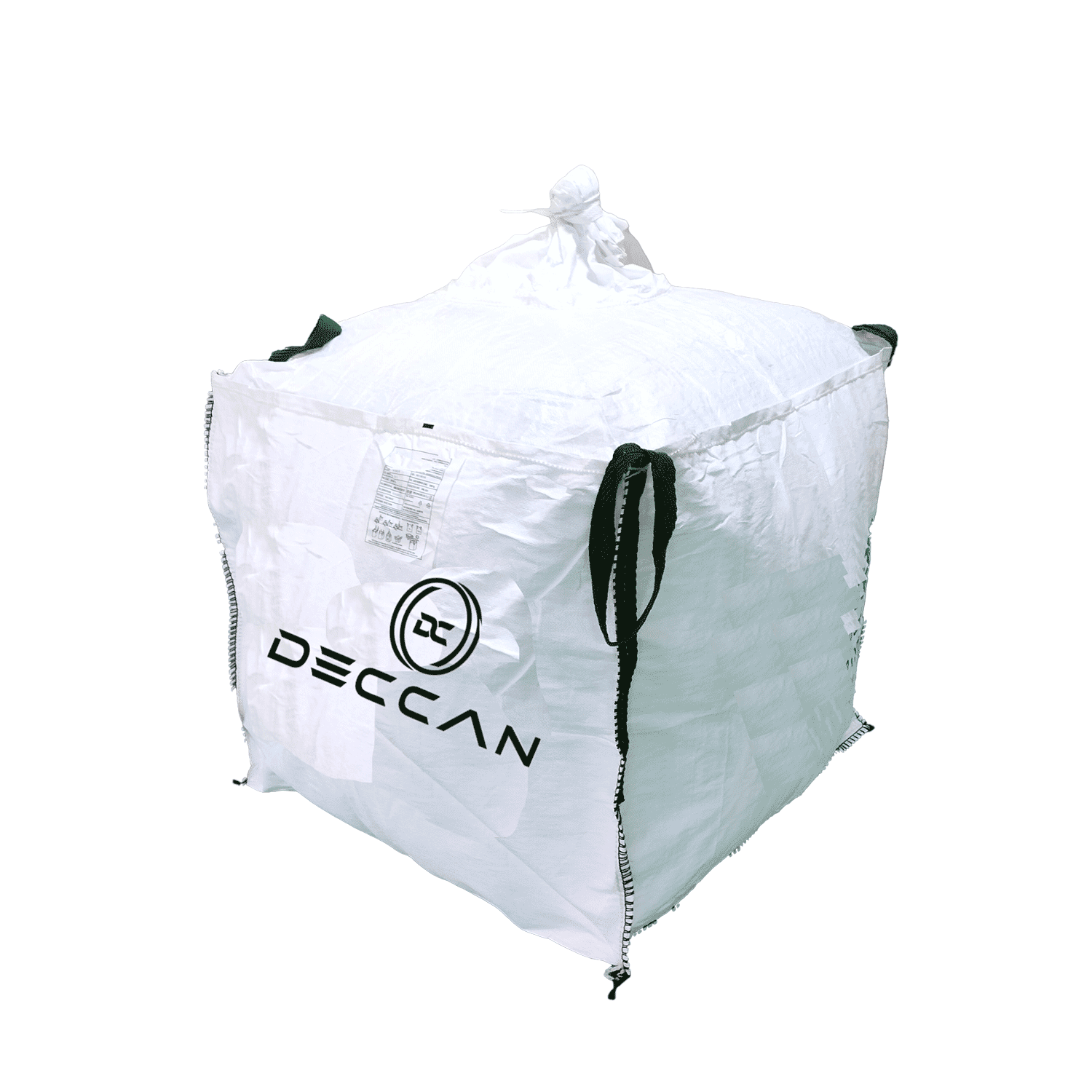 | FIBC Section Polyester Loop Bags/Multifilament Loops Polyester / Multifilament Loop FIBC Bags Deccan Cans & Printers Pvt. Ltd. |