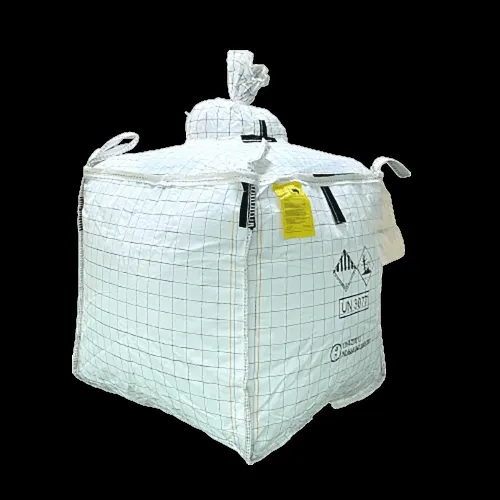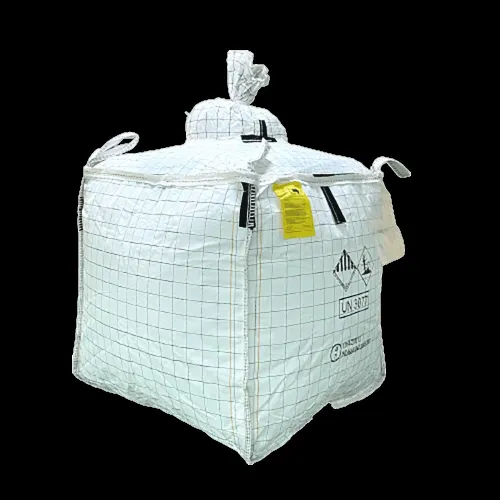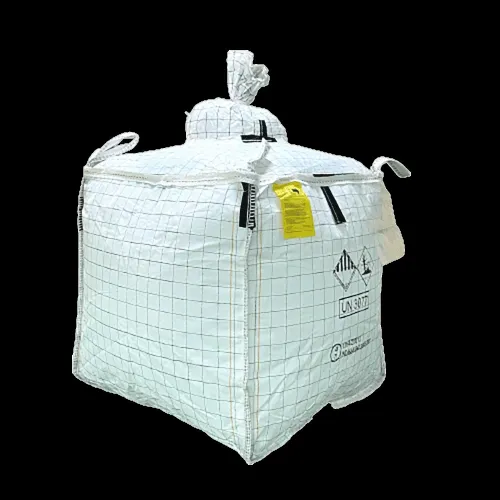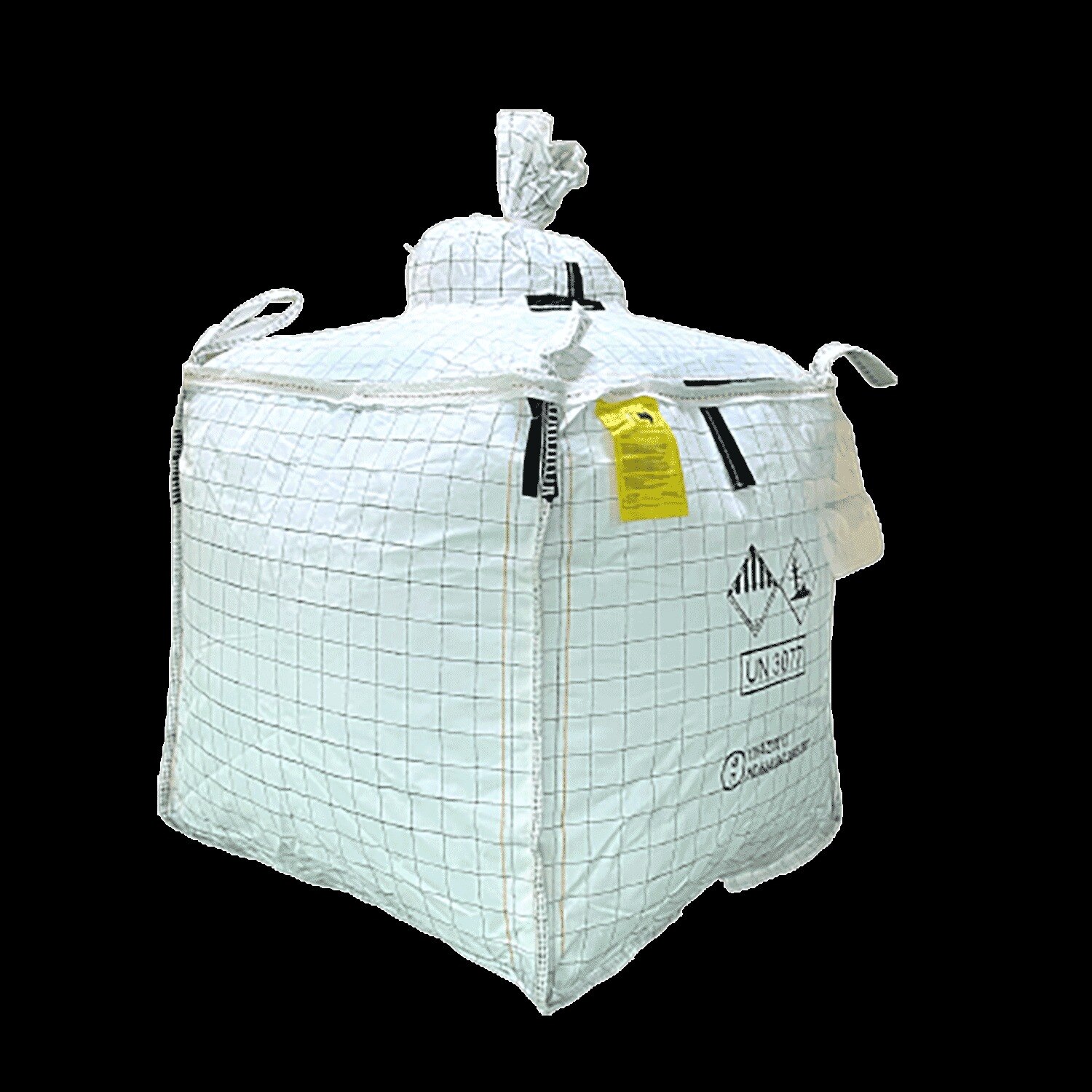
An FIBC specification must match the commodity, filling equipment, lifting method, transport mode and hazards—not just the bag’s advertised volume or safe working load. By the end, you will be able to calculate a workable bag size, choose construction and electrostatic protection, and verify whether the completed shipment meets European and international requirements.
Key takeaways
- Match fabric, seams and discharge fittings to the commodity and filling equipment.
- Calculate filled weight, working load and lifting-loop clearance before selecting a bag.
- Specify liners, coatings and electrostatic protection as one compatibility decision.
- Request UN documentation and inspect labels, seams and closures before dispatch.
Match the FIBC construction to the commodity and filling process
Start with the commodity and the equipment, not a standard bag size. A fine powder, free-flowing granule and sharp-edged mineral impose different fabric, seam and discharge requirements.
1. Define the woven polypropylene grade from the load and product behavior. State virgin or recycled material, fabric weight, coating requirement and sift-proof seam construction. Uncoated fabric breathes but is not a moisture or oxygen barrier; use a liner or coated fabric for hygroscopic, oxidizable or odour-sensitive goods.
2. Specify bag dimensions around the pallet footprint, filling head and available storage space. Record length, width, body height and headspace, then confirm that the filled bag clears the pallet, trailer or container. Do not treat volume capacity as payload.
3. State the safe working load, test or safety factor, lifting-loop arrangement and use cycle separately. Name one-loop, two-loop, four-loop, cross-corner or cross-bottom lifting, based on the forklift tines, crane hooks or automated line. A printed SWL does not authorise reuse; inspection and handling history decide that.
4. Match the filling method and top construction. Use a full-open top for rapid manual loading, a conical or duffle top for controlled filling, or an inlet sized and positioned for a dust-controlled filling head. Specify the outlet as flat-bottom, spout, conical or iris-closure, with its diameter, length and tie or valve arrangement.
Confirm the filling ratio, discharge sequence and liner fit together. For combustible powders, also specify the IEC 61340-4-4 Type C or Type D design and the plant grounding procedure; “anti-static” alone proves nothing.
Calculate capacity before choosing the lifting-loop design
Start with the product volume, not the lifting loops. Divide fill weight by product bulk density: a 1,000 kg fill at 600 kg/m³ requires 1.67 m³ of product space. Add headspace by dividing that result by the intended fill ratio; at 90%, the bag needs 1.85 m³ nominal capacity.
- Check the bag’s filled dimensions against the pallet footprint, including overhang, forklift clearance and permitted stacking height.
- Check the trailer or container limits: door opening, internal length and height, payload, axle distribution, and the number of bags per load.
- Confirm that the filled bag’s centre of gravity remains stable during lifting and transport.
A nominal 1.85 m³ bag may not fit a 1,000 × 1,200 mm pallet if its base bulges beyond the pallet footprint. Ask for filled-bag dimensions, not only flat dimensions. A trial fill exposes settling, bulging and unusable headspace before production.
Choose the lifting-loop design from equipment access and the specified safe working load (SWL), not from volume alone.
| Design | Suitable handling | Main constraint |
|---|---|---|
| One-loop | Dedicated crane hook or automated filling line | Needs controlled, centred lifting |
| Two-loop | Compatible forklift frame or paired hooks | Uneven loading can tilt the bag |
| Four-loop | Forklift, spreader frame or crane | Requires all loops to share the load |
| Cross-corner or cross-bottom sling | Fork pockets, crane frames or automated systems | Confirm sling path and outlet clearance |
State the SWL, lifting configuration, safety factor, and single-trip or reusable status separately. Printed SWL does not authorise reuse or compensate for damaged loops.
Choose liners, fabric coatings and electrostatic protection together
Choose between coated and uncoated fabric according to what must stay inside the bag. Woven polypropylene is not an oxygen or moisture barrier, so hygroscopic, oxidizable or odour-sensitive goods need a liner, coating or inner package.
A coating improves sift resistance but reduces breathability; liner fit, heat sealing, venting and discharge design then determine whether the bag protects the product or empties badly.
| Option | What it means | When it applies |
|---|---|---|
| Uncoated fabric | Air-permeable woven polypropylene | Dry, non-dusting goods where moisture and oxygen protection come from the product or an inner package |
| Coated fabric | Polypropylene film bonded to the weave | Fine powders or goods needing better sift resistance; do not assume it provides a complete vapour barrier |
| Breathable fabric | Construction that allows air to pass | Products needing deaeration during filling or discharge; avoid it when humidity or oxygen is the failure mode |
| Loose liners | Separate liner with extra material inside the bag | Simple, economical protection; secure it against folding into the outlet |
| Form-fit liners | Liner shaped to the bag body | Cleaner filling and better usable volume with less trapped product |
| Bottle-shaped liners | Liner with a defined neck and body | High cleanliness, controlled filling and efficient discharge; specify outlet compatibility |
| Type A | No electrostatic protection | Nonflammable products and nonhazardous environments |
| Type B | Limits propagating brush discharges | Combustible powders after a documented ignition-risk assessment |
| Type C | Conductive elements requiring earth continuity | Combustible powders when operators can verify grounding before filling and discharge |
| Type D | Dissipative construction without a user earth lead | Processes needing certified protection where reliable grounding cannot be maintained |
A Type C bag fails its purpose if the ground clamp, continuity path or liner is damaged. Specify the FIBC type alongside the filling, discharge and plant-grounding procedure.
Verify UN packaging and every transport leg from Helsinki
An FIBC is suitable only when its UN design, contents classification and transport mode all match. A bag accepted for a Finnish road leg under ADR is not automatically accepted at sea under the IMDG Code, by rail under RID or by air under the IATA Dangerous Goods Regulations.
Check the shipment in this order:
- Confirm the product’s UN number, proper shipping name, hazard class, packing group and any subsidiary risk on the safety data sheet and transport classification.
- Match that classification to the current ADR, IMDG Code, RID or IATA packing instruction. Record the exact packing instruction number; do not rely on a supplier’s statement that the bag is “UN approved.”
- Inspect the FIBC marking and certificate for the tested design code, such as UN construction codes 13H1–13H4, manufacturer, certificate or approval reference, maximum gross mass and capacity. The code covers specific combinations of woven plastic, coating and sift-proof construction.
- Request the underlying UN test report or approval document. Check that its design, dimensions, liner, closure, lifting arrangement and test mass match the delivered bag; ISO 21898:2004 alone does not prove dangerous-goods compliance.
- Verify the permitted filling ratio or maximum fill level, product density, net mass and required headspace against the certificate and loading instructions. SWL is not a permitted payload or a reuse approval.
Have the carrier confirm mode acceptance, especially for air freight. Recheck the bag, pallet and documents after any change to liner, closure, commodity or fill weight.
Build a procurement specification that survives delivery and compliance checks
Require a document pack before approving the first production run, not after the shipment reaches Helsinki. Tie every document to the FIBC design, batch number, intended commodity and transport route.
- Request the technical drawing: fabric grade, dimensions, safe working load, safety factor, loop configuration, filling and discharge openings, liner or coating, seam type and pallet footprint.
- For ordinary goods, request design, test and marking evidence against ISO 21898:2004. For dangerous goods, require the actual UN packaging certificate, certificate number, tested FIBC type, packing group, filling ratio and closure configuration; ISO 21898:2004 does not replace UN approval.
- For food or feed contact, obtain the EU Framework Regulation declaration, material composition, migration documentation and good-manufacturing-practice statement. Check plastic liners, coatings, seals and closures against Regulation (EU) No 10/2011.
- If wooden pallets, crates, skids or dunnage accompany the bags, require a legible ISPM 15 treatment mark. ISPM 15 does not apply to FIBC fabric.
- Put recyclability, recycled content, minimisation, labelling and reporting responsibilities into the contract against the application timetable for Regulation (EU) 2025/40, rather than accepting a generic “eco” claim.
- For goods placed on the Finnish market, name the obligated producer, reporting party, packaging quantities and approved compliance arrangement. Delivery terms alone do not allocate Finnish producer responsibility.
Ask Deccan Cans & Printers Pvt. Ltd. to link liner and closure specifications to the supplied food-contact declaration, rather than treating the bag fabric as the whole compliance assessment. Reject missing batch traceability, altered certificates or pallets without marks.
Related products
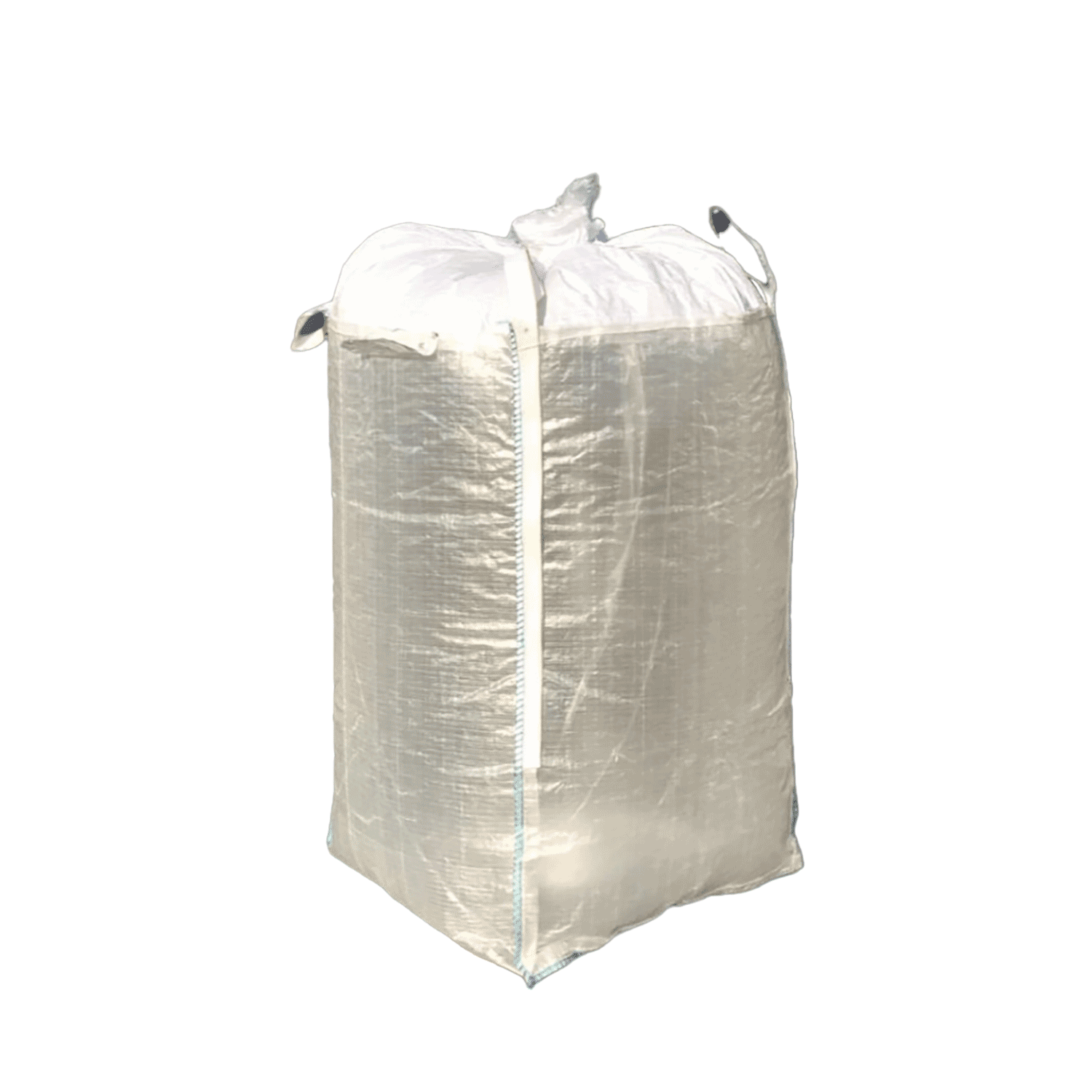 | FIBC Section Transparent Bags Transparent FIBCs – See-Through Bulk Bags Deccan Cans & Printers Pvt. Ltd. |
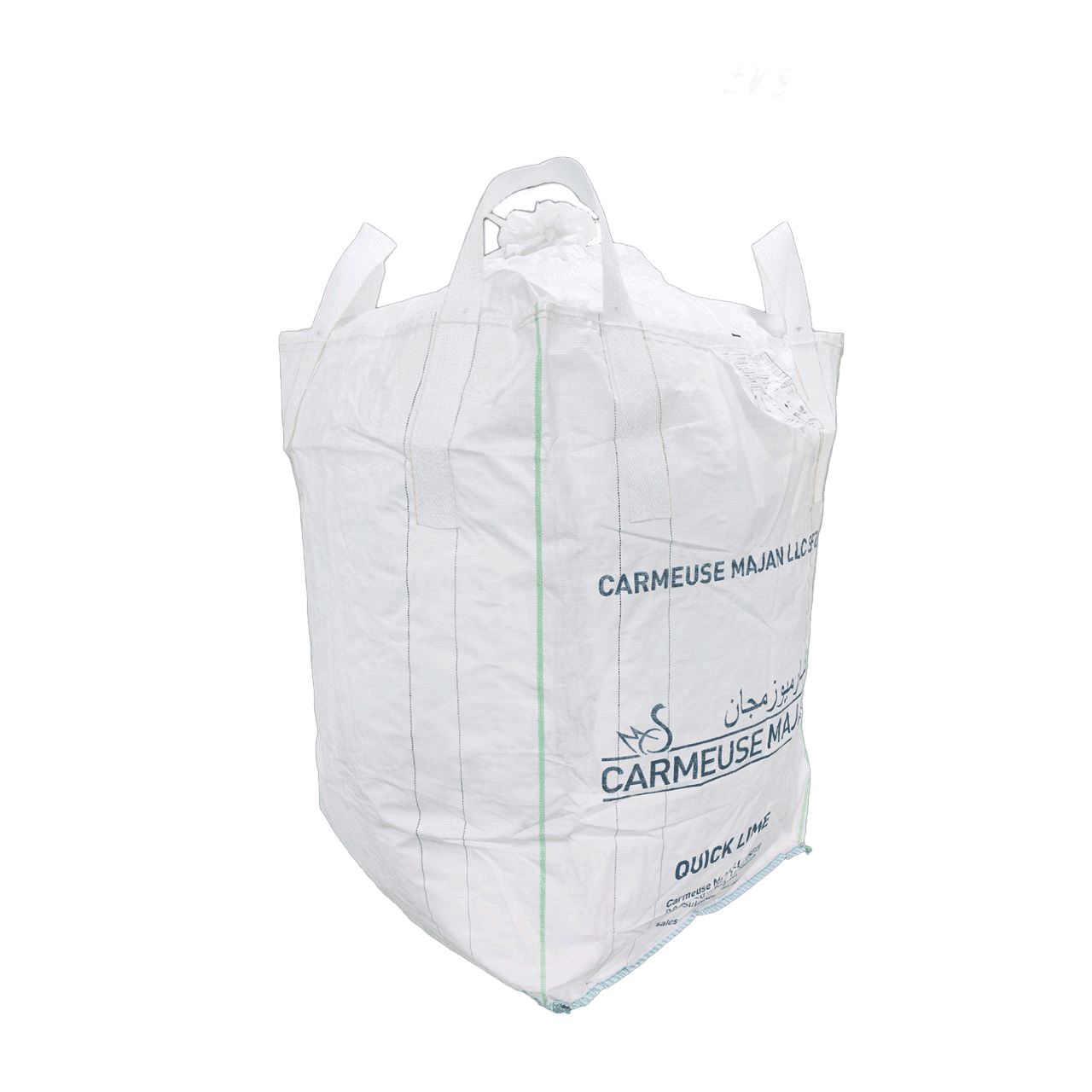 | FIBC Section Bags With Liners FIBC Liners – Bulk Bag Liners Deccan Cans & Printers Pvt. Ltd. |
Frequently asked questions
How do you match FIBC construction to the commodity?
Assess whether the load is powder, free-flowing granule or sharp-edged mineral, then specify suitable fabric weight, seam strength, filling method and discharge design.
How do you calculate FIBC capacity before choosing lifting loops?
Calculate the commodity’s bulk density, target filled weight, bag dimensions, working load limit and the clearance required by your forklift or lifting frame.
When do FIBC liners, coatings and electrostatic protection need to be specified together?
Specify them together when the load is moisture-sensitive, dusty, electrically sensitive or prone to leaking through the woven fabric. Check the filling and emptying equipment as well.
What should you verify for UN packaging shipped from Helsinki?
Check the UN packaging certificate, bag marking, tested design type, closure instructions, commodity classification and each transport leg’s handling and documentation requirements.
Related products
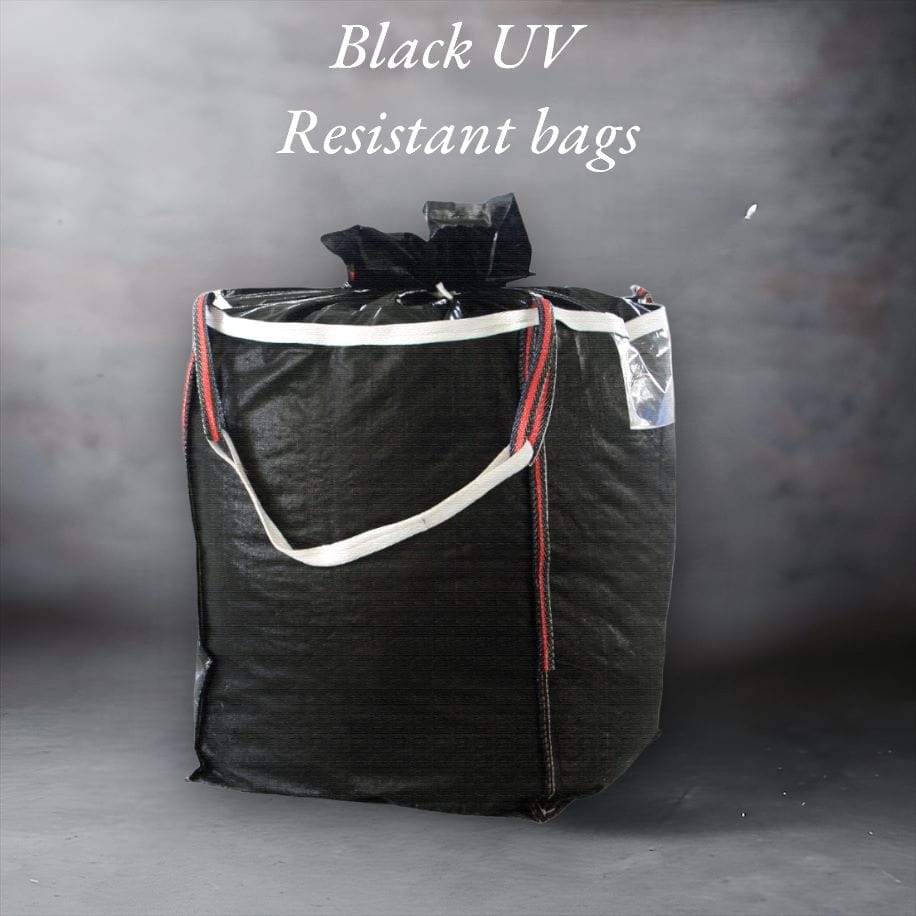 | FIBC Section Black Bags Black FIBC Bags – Enhanced UV Resistance & Extended Shelf Life UV exposure is one of the major challenges faced by the FIBC industry, as prolonged... |
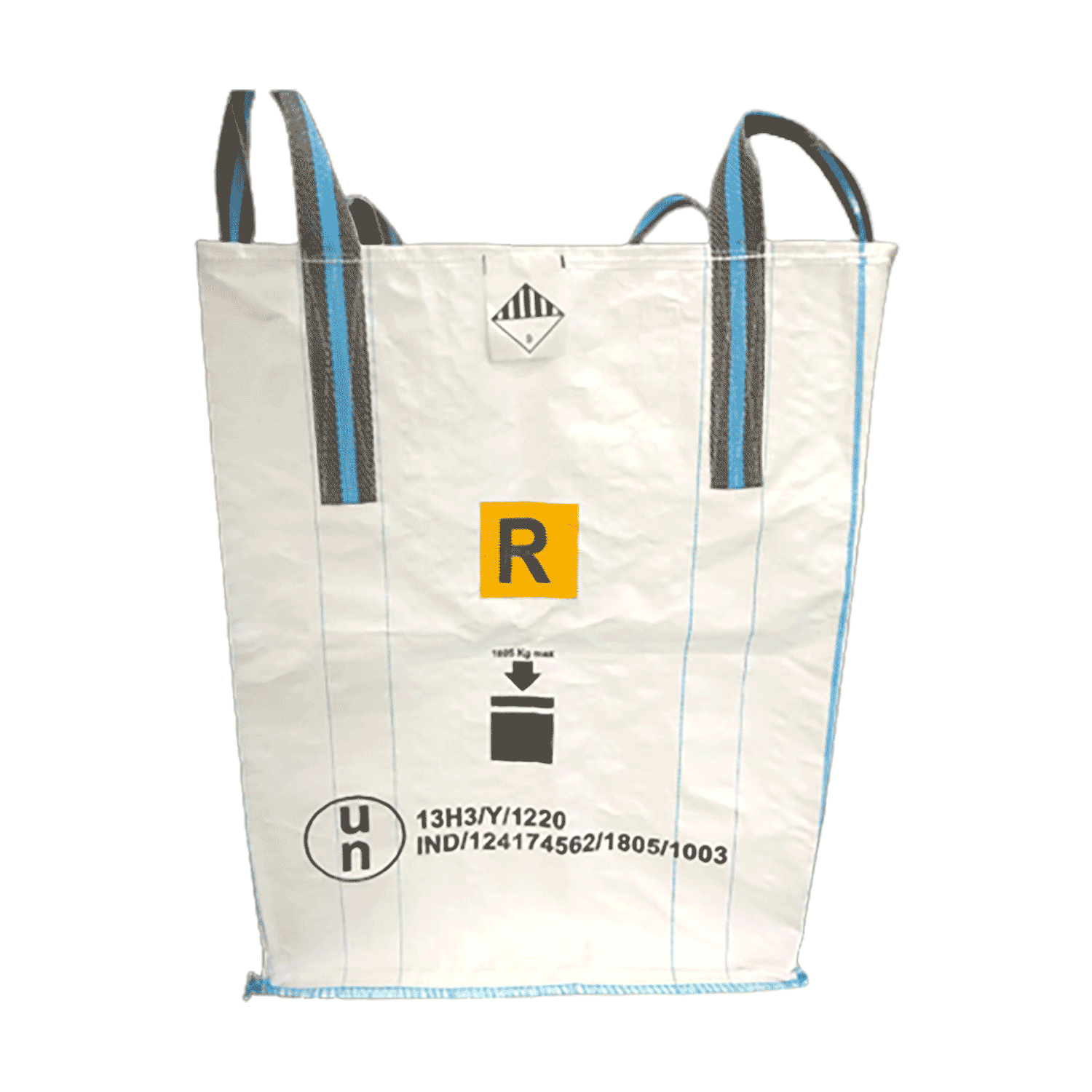 | FIBC Section Un Bags UN Certified Bulk Bags – Rigorous Performance Testing for Safety & Reliability Deccan UN Certified Bulk Bags are specially engineered for the safe... |
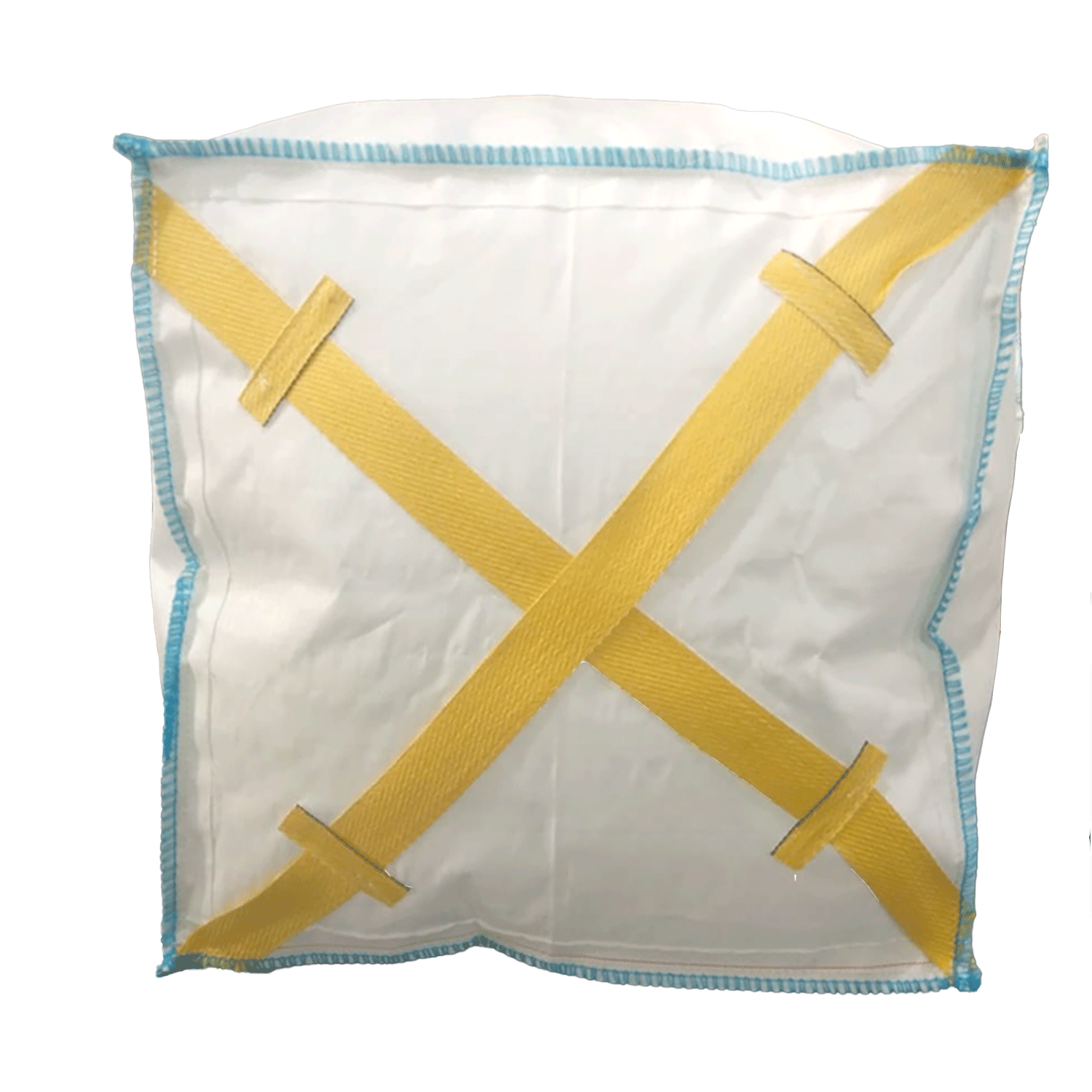 | FIBC Section Cross Bottom Sling Bags Cross Bottom Sling FIBCs – Bulk Bags Deccan Cans & Printers Pvt. Ltd. |
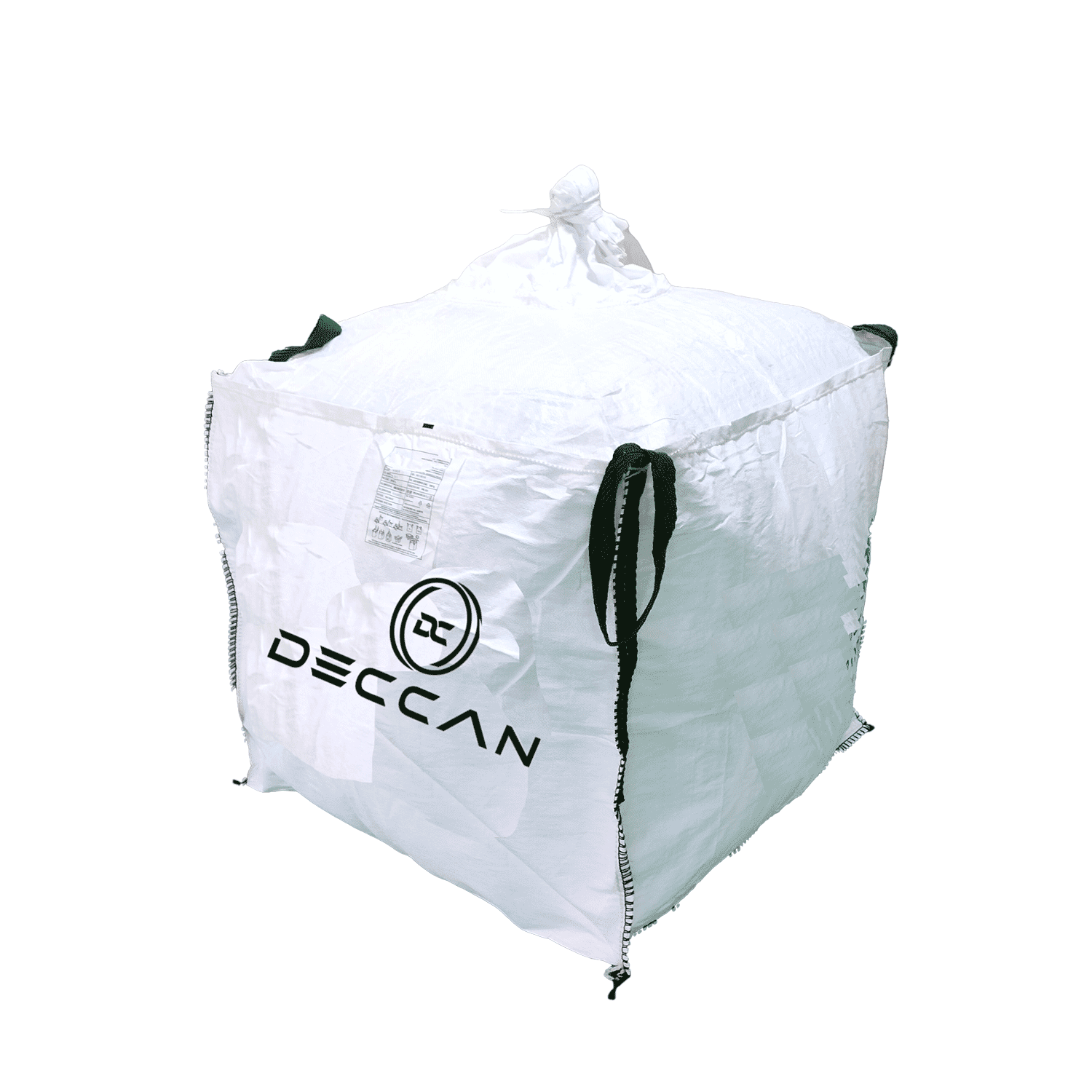 | FIBC Section Polyester Loop Bags/Multifilament Loops Polyester / Multifilament Loop FIBC Bags Deccan Cans & Printers Pvt. Ltd. |