
International shipment begins with classification, not bag selection: an ordinary cargo FIBC follows a different path from a bag carrying dangerous goods. You will be able to match the cargo to the correct transport rules, verify the bag’s approval and construction, control static electricity, and specify compatibility checks before the shipment is packed.
Key takeaways
- Classify cargo using its Safety Data Sheet, UN number and packing group.
- Match the UN mark to the exact tested FIBC design.
- Specify safe working load, construction and lifting features—not only dimensions.
- Control static charge and verify compatibility before filling and shipping.
Start with the cargo classification and the route
Classify the cargo before choosing the bag: an ordinary FIBC suits non-dangerous solid material, while dangerous goods require packaging that meets the applicable UN performance requirements. Start with the product’s Safety Data Sheet, UN number, packing group I, II or III, physical state, filling ratio and maximum gross mass.
| Shipment situation | Governing rules | FIBC decision |
|---|---|---|
| Ordinary cargo | ISO 21898 for flexible intermediate bulk containers carrying non-dangerous solid materials | Use an FIBC designed and tested for the material; ISO 21898 compliance does not approve it for dangerous goods |
| Dangerous goods by sea | UN Recommendations on the Transport of Dangerous Goods, implemented through the IMDG Code | Use the UN-marked FIBC type and packaging instruction authorised for that substance, packing group and gross mass |
| Dangerous goods by air | UN Recommendations and the IATA Dangerous Goods Regulations | Confirm that the bag and its filling quantity meet the stricter air-transport packaging instruction and carrier acceptance rules |
| Dangerous goods by road or rail | The national rules adopting ADR, RID or another applicable transport code | Check the departure, transit and destination requirements before dispatch |
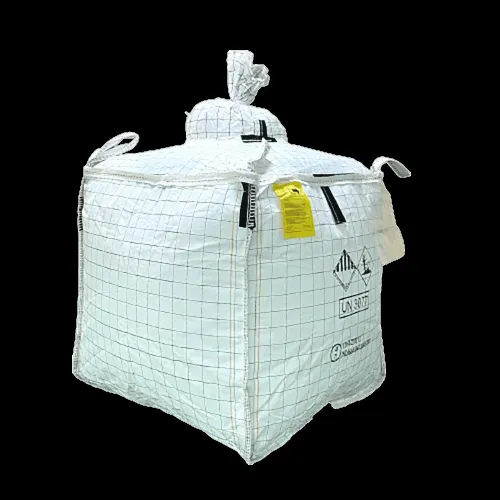
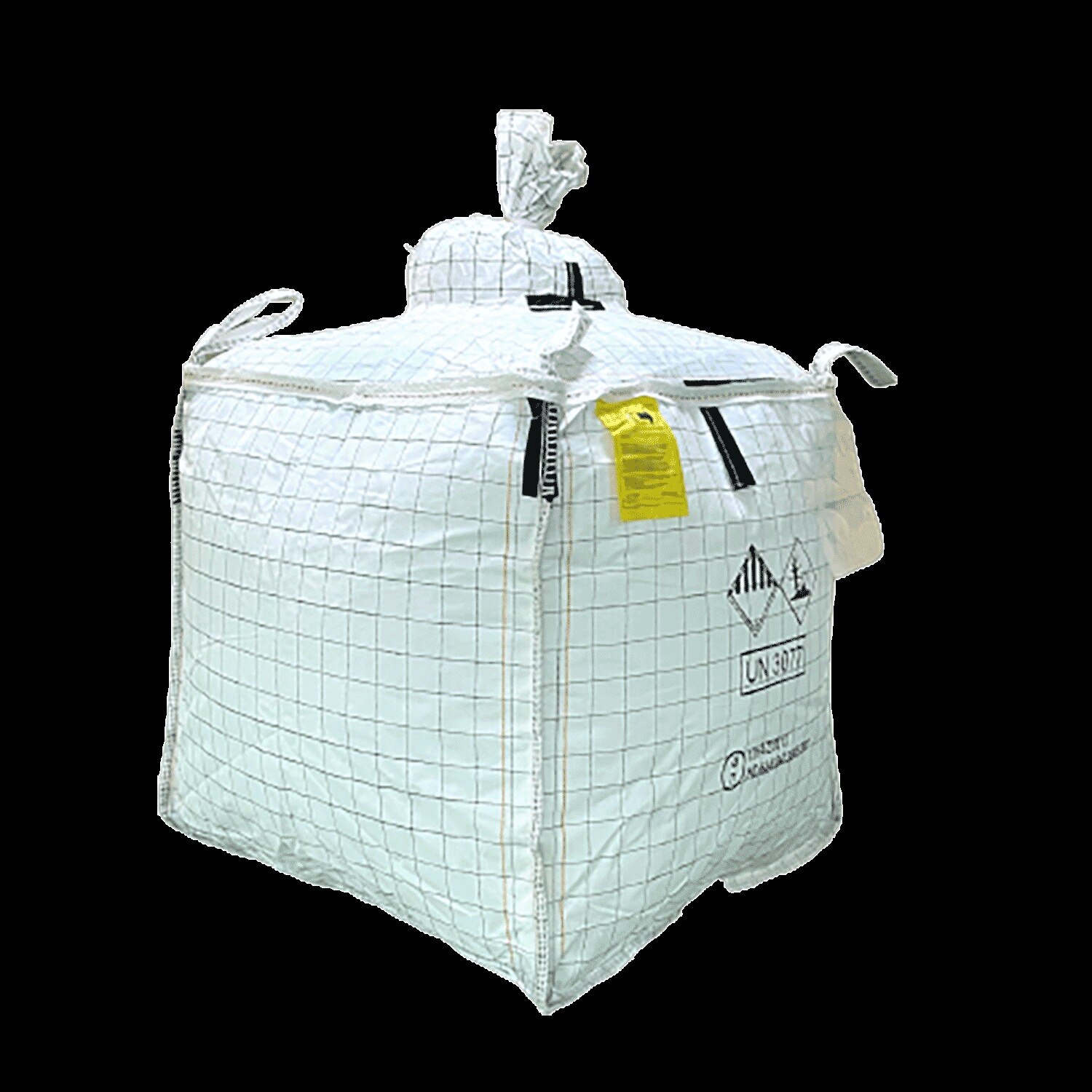
A UN mark is not a general licence for international bulk packaging. It identifies a tested packaging design; it does not replace the shipper’s declaration, dangerous-goods labels, placards, transport documents or carrier approval.
Ask for the test certificate and verify that its packaging code, performance level, tested pressure, maximum gross mass and approval details match your exact cargo and route.
If the cargo is not classified as dangerous goods, do not pay for a UN-marked package without a reason: the added controls can increase cost and restrict filling options. Regardless of classification, secure the loaded transport unit against shifting, toppling and abrasion; lifting SWL alone does not secure cargo at sea or on the road.
Match the UN mark to the tested bag design
A UN-marked FIBC is valid only when its tested design matches your material, packing group, filling method and transport limit. Match the material’s UN number and packing instruction to the approval documents; then confirm that the bag’s maximum gross mass and filling ratio cover the intended load.
Check the mark for these design and approval details:
- The UN symbol and a packaging code such as 13H1, 13H2, 13H3 or 13H4, identifying the flexible IBC construction.
- The performance level, shown as X, Y or Z. X covers packing group I II III, Y covers packing group II III, and Z covers packing group III only.
- The letter S for solids, the maximum gross mass in kilograms, and the test pressure in kilopascals where the marking includes one.
- The test year, approving authority or country code, and the manufacturer or certification identification.
A code is not transferable to any bag that looks similar. Changing the fabric, coating, liner, dimensions, lifting loops, closure or maximum gross mass creates a different design and can invalidate reliance on the original approval. Request the design-type test certificate and compare every listed feature with the production bag.
The mark also does not replace dangerous-goods documentation. Confirm the shipper’s declaration, package labels, placards, transport documents and carrier acceptance for the actual route. A passed drop or stacking test does not secure the load; prevent shifting, toppling and abrasion inside the vehicle or container.
Specify the load-bearing construction, not just the bag size
Do not approve an FIBC from its dimensions alone: a 1,000-litre bag can fail if its lifting loops, seams or closure system do not match the cargo and handling method. Request the safe working load, maximum gross mass and safety factor shown against the tested construction.
| Feature | Compare | Why it matters |
|---|---|---|
| Safe working load | Contents load versus maximum gross mass, which includes fabric, liner, closures and contents | Prevents overloading the lifting system |
| Safety factor | Test factor and test method used for the stated rating | Reveals the margin behind the SWL |
| Lifting system | Four-loop FIBC bags lifted through all four loops together; corner loops, sleeves or straps require their specified equipment | Two-loop lifting, forklift tines through loops or sharp sling angles can overload individual points |
| Seams | Stitch pattern, reinforcement and seam strength at body, loops and discharge spout | Abrasion or concentrated stress can split a seam during lifting |
| Closures | Top inlet and bottom outlet type, tie method and dust-tightness | An unsuitable closure can spill cargo or admit moisture |
| Coating | Coated or uncoated fabric, with the coating’s chemical and moisture resistance | The wrong coating can soften, crack or contaminate the load |
| Liner | Loose, form-fit or attached liner, material and thickness | It must suit the cargo and remain intact during filling and discharge |
For a UN design, match every construction detail, including dimensions, fabric, liner and gross mass; a changed liner or closure can invalidate reliance on the approval. Specify cargo density, filling temperature and discharge equipment to Deccan Cans & Printers Pvt. Ltd., then require a drawing and test report matching those details.
A single-trip bag is not reusable because it looks clean. Reuse needs a documented inspection of loops, seams, abrasion, UV damage, contamination, liner and closures, plus cargo securing that stops shifting and chafing in transit.
Related products
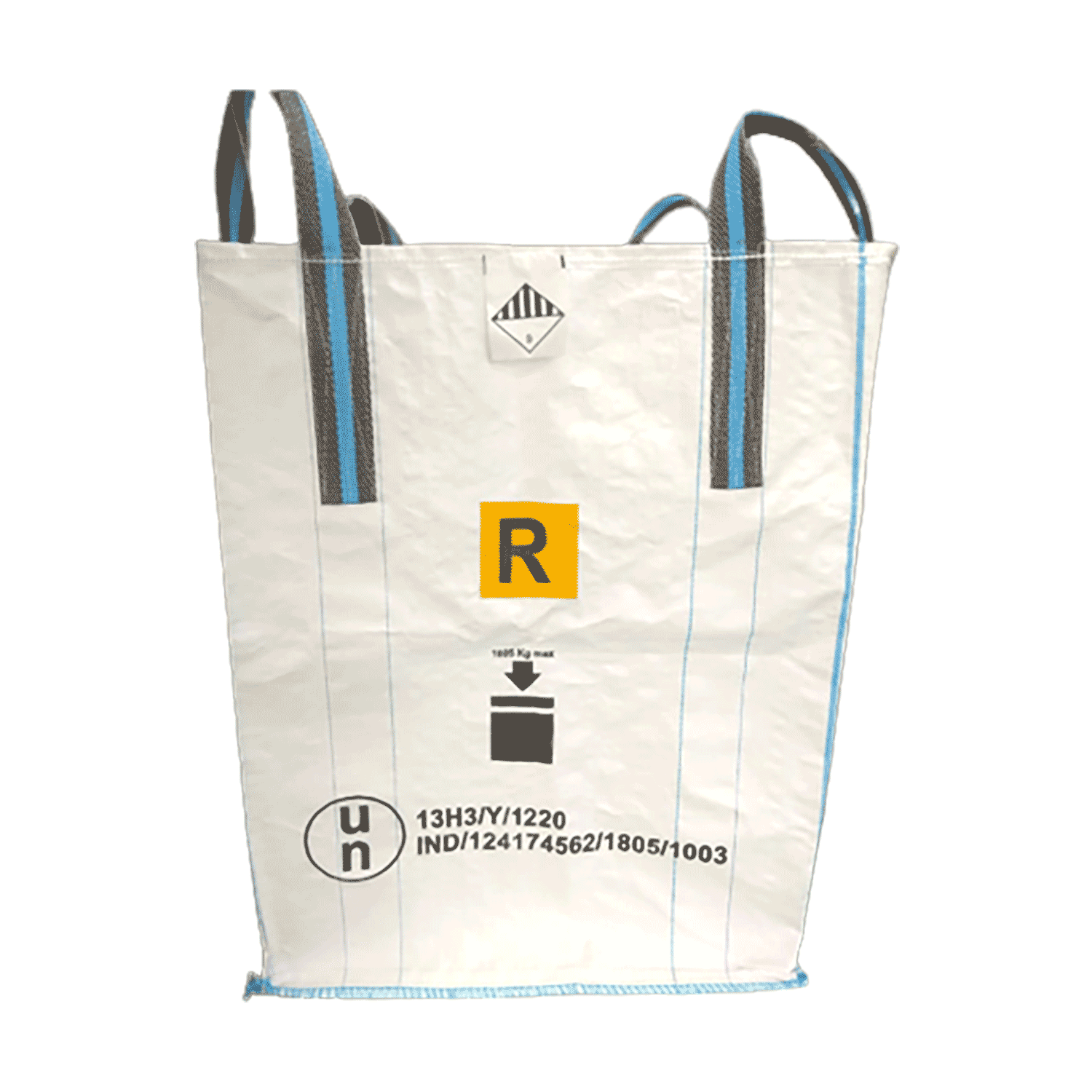 | FIBC Section Un Bags UN Certified Bulk Bags – Rigorous Performance Testing for Safety & Reliability Deccan UN Certified Bulk Bags are specially engineered for the safe... |
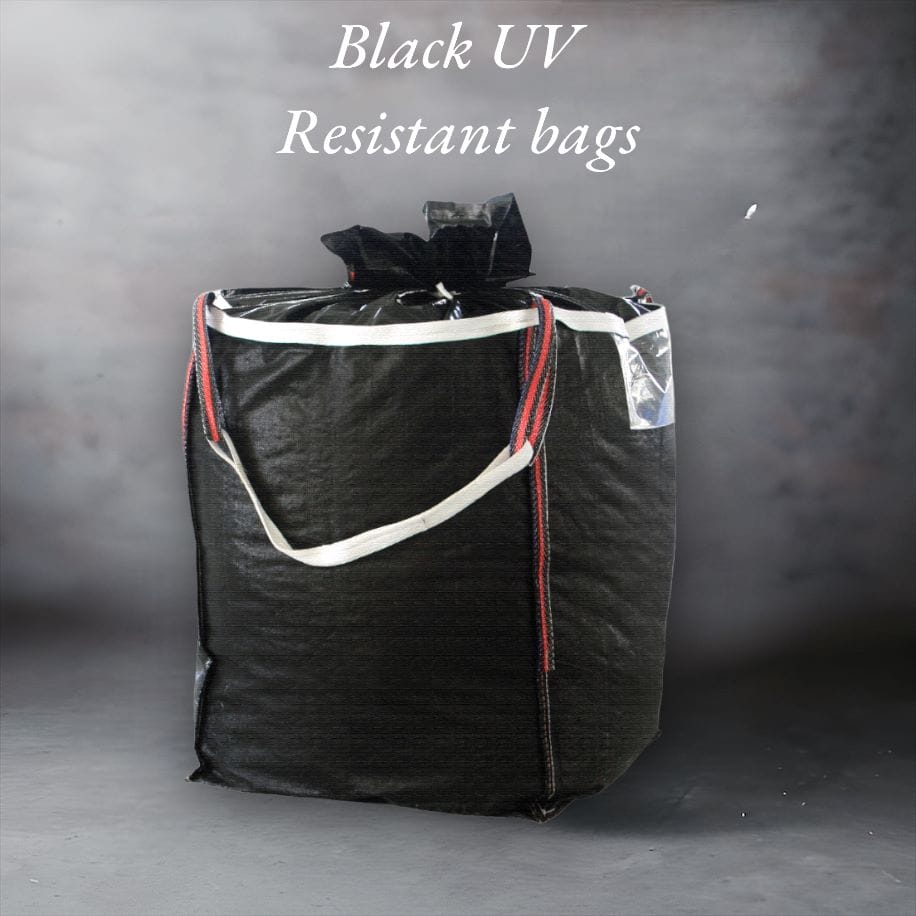 | FIBC Section Black Bags Black FIBC Bags – Enhanced UV Resistance & Extended Shelf Life UV exposure is one of the major challenges faced by the FIBC industry, as prolonged... |
Choose the correct FIBC type and control static charge
A combustible dust or flammable-vapour atmosphere makes static control a process decision, not a bag preference. Select the FIBC against the ignition hazard during filling, discharge and grounding, then use the same tested configuration in operation.
| Type | Charge behaviour | When it applies |
|---|---|---|
| Type A FIBC | Standard insulating fabric; provides no static-dissipation control | Nonflammable products in locations without combustible dust or flammable vapour. Do not use it where electrostatic discharge could ignite the contents or atmosphere. |
| Type B FIBC | Limits high-energy propagating brush discharges | Certain combustible powders where the assessment excludes ordinary brush-discharge ignition. It is not a universal solution for combustible-dust or flammable-vapour hazards. |
| Type C FIBC | Conductive elements must be electrically interconnected and grounded; resistance to ground is commonly below 1.0 × 10^7 ohms | Higher-risk filling or discharge where a verified earth path is required. Ground before filling and keep the connection in place through discharge. |
| Type D FIBC | Dissipates charge without a dedicated earth connection | Use only the specified fabric system in the assessed conditions. Contamination, humidity, or contact with conductive or grounded objects can defeat its protection. |
For a Type C FIBC, bond the bag’s grounding tab to a verified plant earth, bond the filling and discharge equipment, and check continuity before each operation. Grounding the bag after filling is too late: charge may already have found an incendive path.
Document the test method, resistance result, grounding point and operator check. Never substitute Type D for Type C without reviewing the hazard assessment and the manufacturer’s tested-use limits.
Prove compatibility and protect the packed load in transit
A technically approved FIBC can still fail if its materials, closure or handling history do not suit the load. Confirm FIBC liner compatibility with the powder’s chemistry, particle size, temperature and storage duration before filling.
For moisture-sensitive powders, treat the liner as a barrier system, not an accessory. Specify liner material, welded or heat-sealed joints, water-vapour transmission, pinhole controls and closure design; a sift-proof seam limits powder leakage but is neither hermetic nor moisture-proof.
Before release, record these checks:
- Match the fabric, coating, liner and closure to the product, then confirm the finished bag remains within its specified maximum gross mass and safe working load.
- Inspect sift-proof seams, lifting loops, corner welds, discharge spouts and closures for incomplete stitching, cuts, abrasion or distortion.
- Keep bags dry, covered, off the floor and away from sunlight, heat, sharp edges and chemicals. Follow the supplier’s storage period and rotation records.
- Reuse only a design intended for reuse under a documented inspection regime. Reject any bag with damaged loops, seam wear, fabric abrasion, contamination, UV degradation, liner damage or faulty closures; an apparently sound single-trip bag is not reusable.
- Secure filled FIBCs inside the transport unit against movement, toppling and abrasion. Use a cargo plan, blocking, bracing or restraint suited to the vehicle and route; lifting SWL does not secure cargo during sea or road transport.
For non-dangerous solids, ISO 21898 covers construction and performance, but it does not approve a bag for dangerous goods. Preserve the tested design: changing the liner, dimensions or lifting system can invalidate its qualification.
Frequently asked questions
What information should you check before selecting an FIBC?
Check the Safety Data Sheet, UN number, packing group, physical state, filling ratio and maximum gross mass.
Why must the UN mark match the tested FIBC design?
The UN mark applies to the tested bag construction, so changes to fabric, seams, liners or lifting features can invalidate the design.
What construction details matter besides FIBC dimensions?
Specify the safe working load, safety factor, lifting loops, seams, discharge features, liner and handling method.
How do you control static charge in an FIBC?
Choose the correct FIBC type for the material and filling environment, then define grounding and handling controls for static-sensitive cargo.
How can you protect bulk cargo during international transit?
Verify material compatibility, secure the load, protect it from moisture and abrasion, and confirm the packed gross mass stays within limits.
Related products
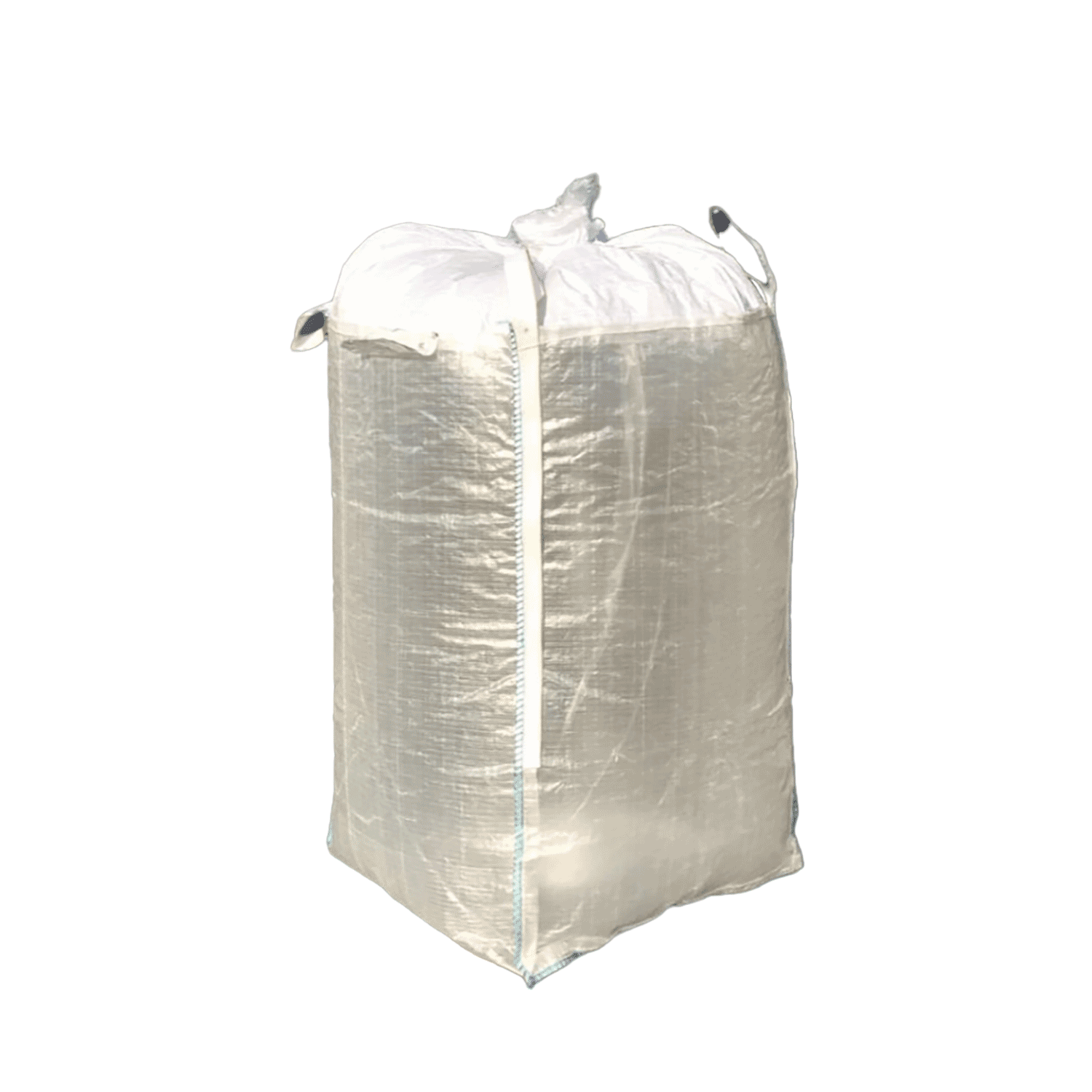 | FIBC Section Transparent Bags Transparent FIBCs – See-Through Bulk Bags Deccan Cans & Printers Pvt. Ltd. |
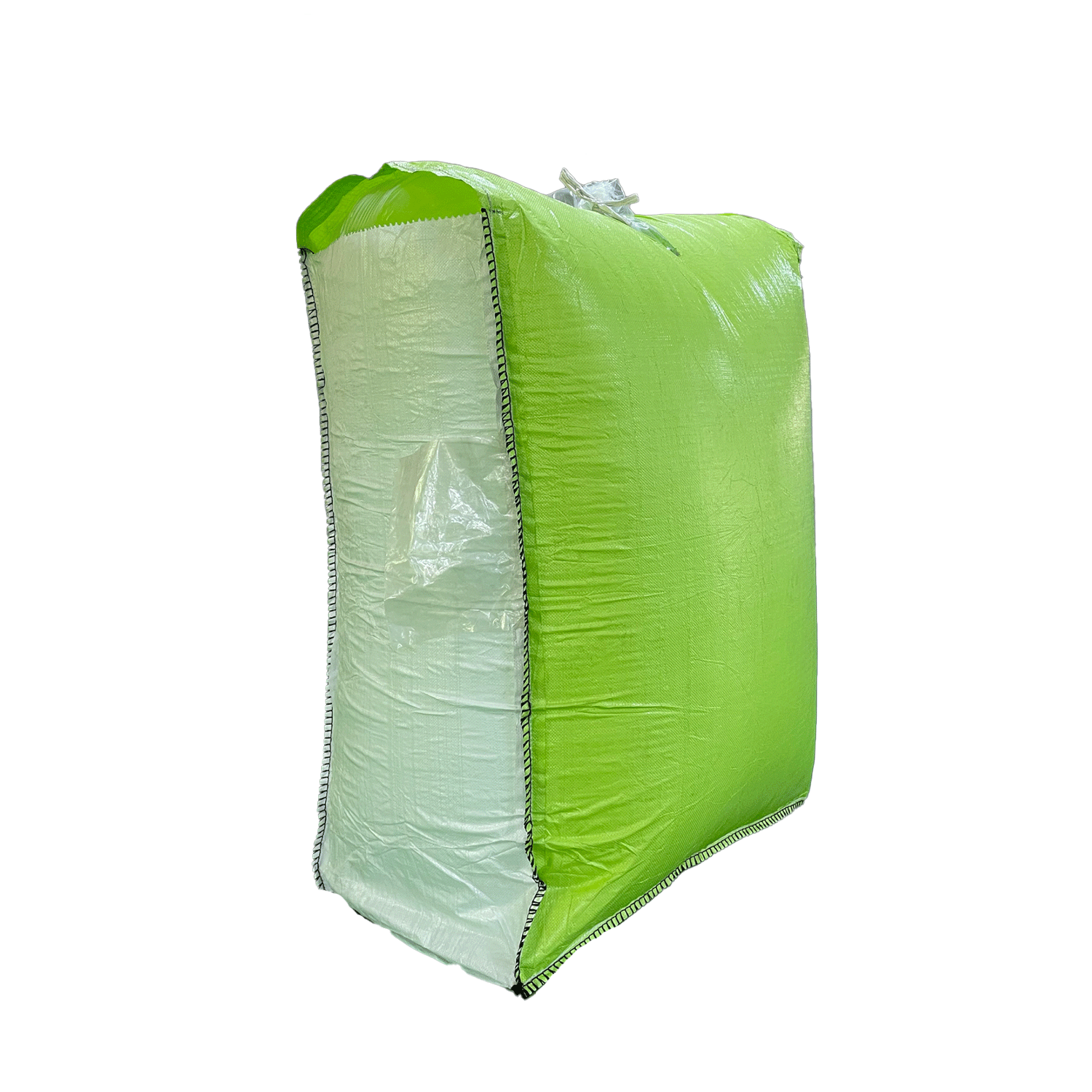 | FIBC Section Fertilizer Bag Range 1 & 2 Loop FIBC Bulk Bags Deccan Cans & Printers Pvt. Ltd. offers durable and cost-effective 1 & 2 Loop FIBC Bulk Bags, designed for the efficient... |
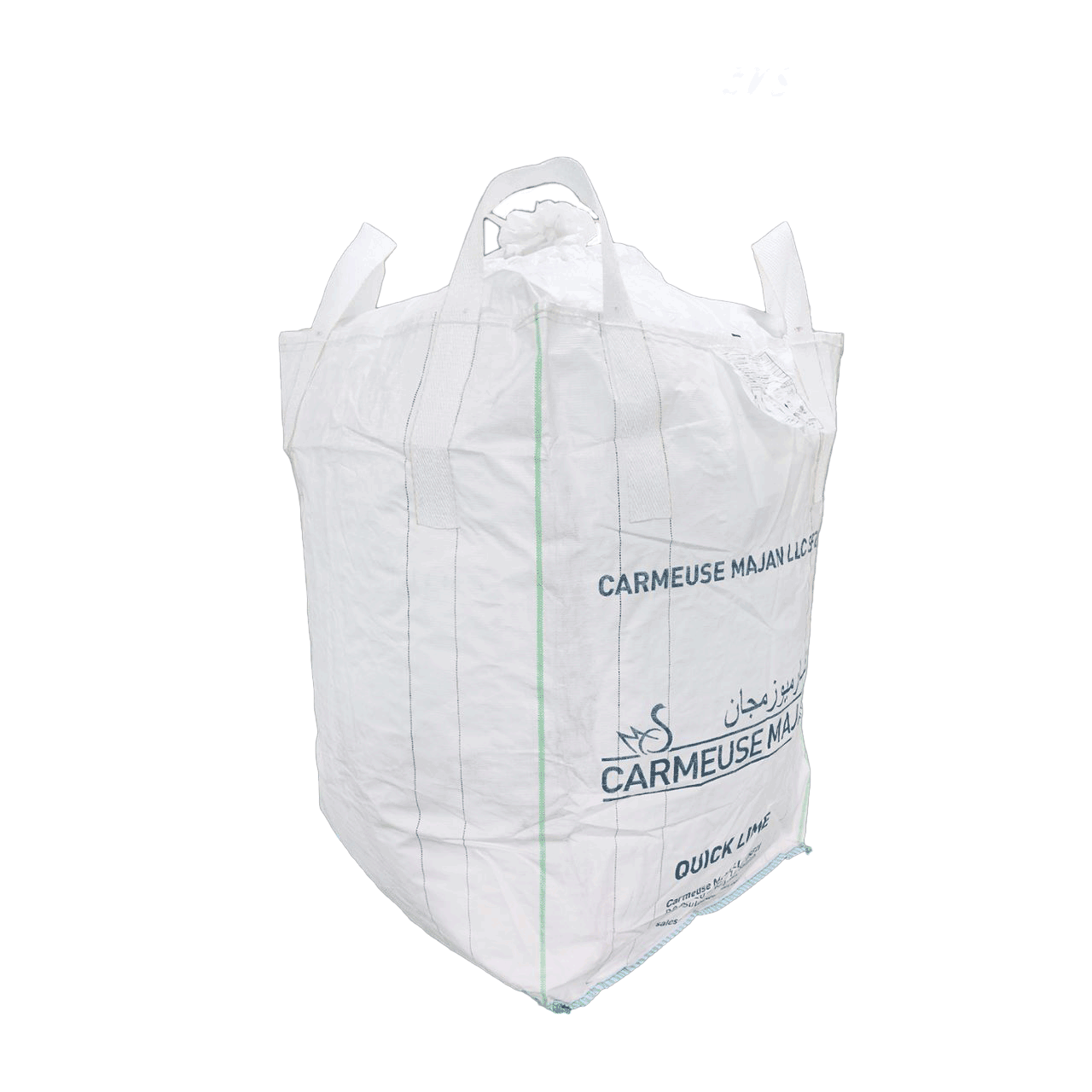 | FIBC Section Bags With Liners FIBC Liners – Bulk Bag Liners Deccan Cans & Printers Pvt. Ltd. |
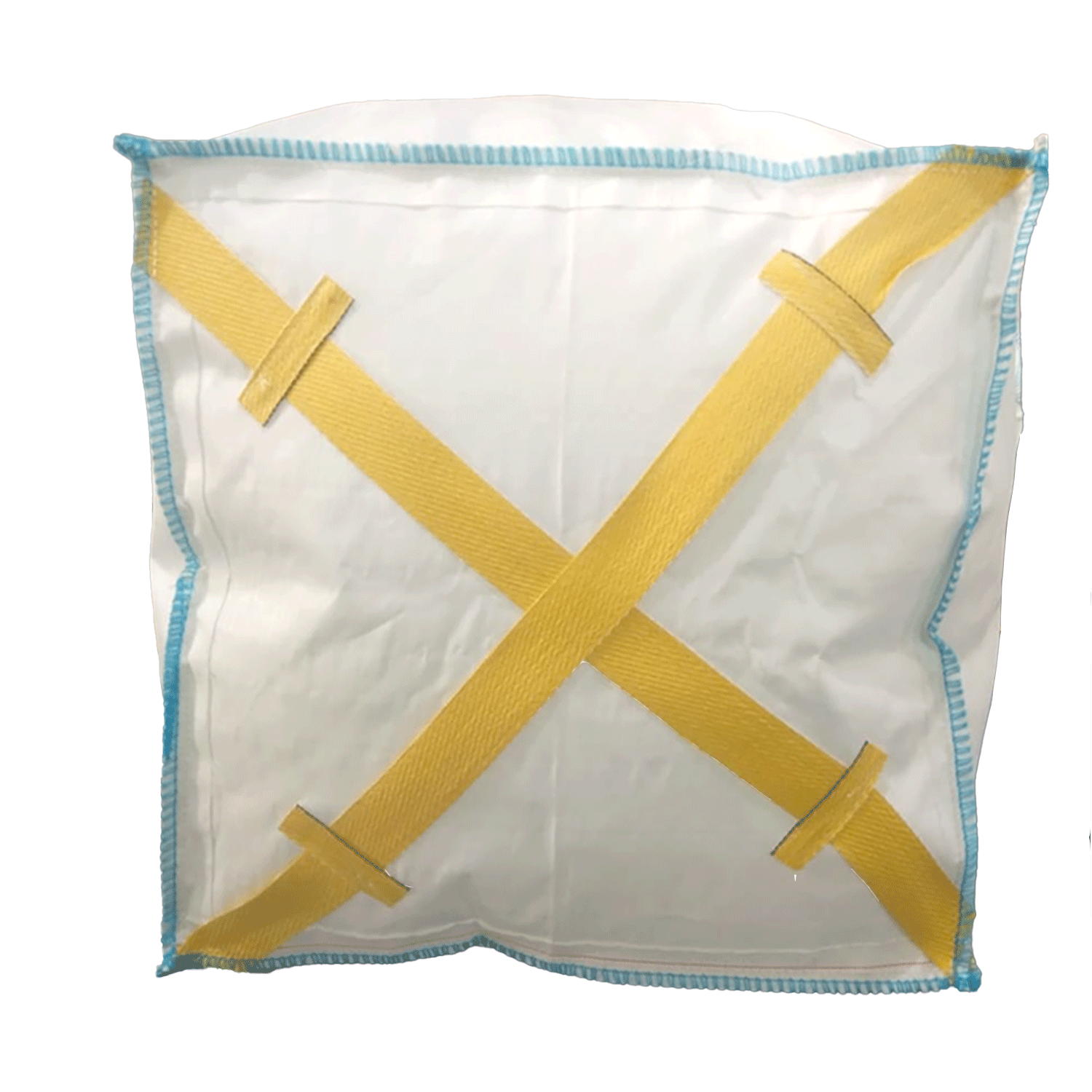 | FIBC Section Cross Bottom Sling Bags Cross Bottom Sling FIBCs – Bulk Bags Deccan Cans & Printers Pvt. Ltd. |