
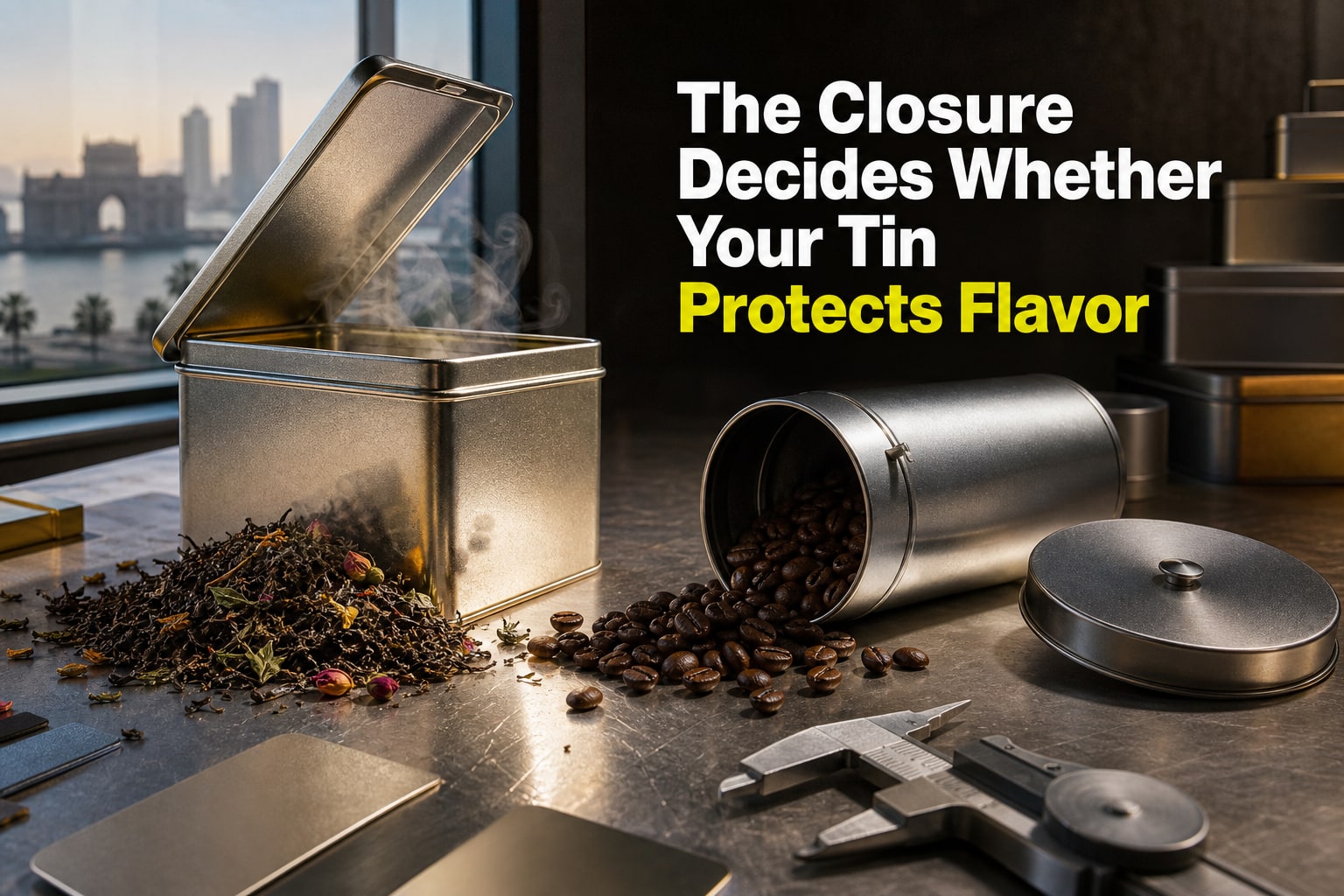
Tea and ground coffee do not place the same demands on a package: tea is highly vulnerable to moisture and odour transfer, while freshly roasted coffee also releases carbon dioxide and loses aroma quickly. By the end, you will be able to compare tinplate cans, metal boxes, pouches, glass and plastic, calculate a workable fill volume, and write a supplier specification that covers closure, coating and Mumbai’s humid distribution conditions.
Key takeaways
- Use moisture and odour barriers for tea; add oxygen and gas control for roasted coffee.
- Compare usable capacity, not just external tin dimensions or printed volume.
- Choose a gasket, valve or inner pouch based on freshness and filling needs.
- Request material, closure, food-contact and batch documents before approving tin containers.
Tea and coffee need different protection from the same pack
Tea leaves mainly need protection from moisture, light and foreign odours; roasted coffee needs those barriers plus control of oxygen and carbon dioxide. That difference determines whether a decorative box is adequate or whether the pack needs a valve, gasket or sealed inner pouch.
| Packaging concern | Tea leaves | Roasted coffee |
|---|---|---|
| Aroma | Preserve delicate volatile notes; prevent spices, detergents or printed materials from tainting the leaves. | Retain a stronger, easily lost aroma; limit oxygen ingress because oxidation flattens flavour. |
| Moisture | Keep leaves crisp and free-flowing; humidity can soften them and accelerate staling. | Prevent moisture pickup that causes clumping and dull flavour. |
| Gas pressure | No post-processing gas release after normal packing. | Freshly roasted beans and ground coffee release carbon dioxide; a fully sealed container can bulge or force open its closure before degassing. |
| Suitable pack | A friction-fit or hinged tea tin can work when its fit and barrier performance are verified. | Use a gasketed or seamed tin, a one-way degassing valve, or a sealed high-barrier inner pouch inside a rigid tin. |
A slip-lid is not automatically airtight. For either product, inspect the lid geometry, friction fit, gasket or sealing compound, and repeat-opening performance; coffee demands stronger evidence because aroma loss becomes obvious sooner. Do not fill freshly roasted coffee into a fully sealed tin until the roast has degassed, or use a pressure-managing design.
Tin containers provide light protection and rigid presentation, but tea and coffee tins protect the product only when their closure and internal coating suit the contents. A reusable metal outer box paired with a sealed high-barrier pouch can give coffee both aroma protection and shelf appeal.
How to compare sizes, shapes and usable capacity
Choose the tea and coffee tins range by fill weight and measured product volume, not by external dimensions alone. A tall, narrow tin may hold the same volume as a short, wide one, but its opening, scoop access and remaining headspace will differ.
| Format | Useful application | Main trade-off |
|---|---|---|
| Short, wide tin | Loose-leaf tea and coarse coffee | Easier scooping; larger lid area needs a reliable seal |
| Tall, narrow tin | Small tea leaves and ground coffee | Efficient shelf footprint; harder to empty completely |
| Rectangular tin | Retail sets and shelf packing | Uses carton space well; corners can retain product |
Calculate usable capacity with this formula: fill weight ÷ settled bulk density = product volume. Add headspace above that result, then test the actual closure.
For example, 250 g of coffee at a measured settled density of 0.40 g/ml needs 625 ml of product space; a 10% allowance brings the target usable capacity to about 690 ml.
- Weigh the exact roast, grind or leaf grade.
- Fill a graduated cylinder, tap it using a consistent method, and record settled volume.
- Repeat the measurement three times; use the highest result for pack sizing.
- Confirm that the lid, gasket and dispensing opening still seal with the planned headspace.
Compare tin containers by internal capacity, opening diameter, wall shape and usable corner space. Do not approve a size from nominal volume alone: tea expands when loosely filled, while fine coffee settles and leaves less accessible volume after repeated opening.
The closure determines whether a metal box protects the product
Choose a gasketed hinged lid or seamed tinplate can for roasted coffee; use a friction-fit slip lid for tea only when testing proves the fit remains tight. A decorative lid protects against light and dust, but a loose seam lets aroma escape and humid air enter.
| Option | Protection | Best use |
|---|---|---|
| Slip lid | Friction fit; depends on lid geometry, liner and tolerances | Tea leaves and short-term repeat opening |
| Hinged lid with gasket | Resealable and better controlled leakage | Coffee or tea opened daily |
| Seamed tinplate can | Hermetic closure when the body, end and seam are correctly specified | Roasted coffee requiring strong oxygen and aroma control |
Ask for evidence from the finished metal boxes, not just the metal grade. Require water-vapour transmission and oxygen-leakage results for the complete pack, including lid, liner, gasket and dispensing opening. A thick wall cannot compensate for a leaking closure.
Test production-intent samples through the number of opening and closing cycles expected in use. Measure lid pull-off force or closure torque before and after cycling, then check for looseness, flange damage and gasket displacement. Run vacuum-decay or pressure-decay leak testing where the design permits it.
Fill samples with the actual tea or coffee and compare aroma, headspace oxygen and moisture before and after humid storage. For coffee, a sensory check after repeated opening is essential: an attractive pack that loses roast aroma is failing its purpose.
Tinplate cans versus pouches, glass, plastic and bulk bags
Tinplate cans are the better choice when rigidity, light protection, stackability and premium shelf presentation outweigh minimum transport weight. “Tin” normally means tinplate: low-carbon steel with a thin tin coating, not solid tin. Specify steel thickness, temper, tin-coating designation and internal coating instead of ordering only a “tin” size.
| Option | Main advantage | Choose it when | Main compromise |
|---|---|---|---|
| Tinplate cans or metal boxes | Rigid, opaque, stackable and reusable | You need retail presentation, light protection and repeated opening | Higher freight volume, tooling cost and dent risk |
| Laminated pouch | Low weight with an efficient barrier structure | Transport cost matters, or a sealed inner pack must protect aroma | It needs an outer carton or tin for stiffness and display |
| Glass jar | Inert, transparent and premium-looking | Product visibility matters and breakage risk is controlled | Heavy, breakable and light-transmitting unless opaque |
| Plastic container | Light, impact-resistant and easy to shape | Handling durability and low weight matter more than premium feel | Oxygen, odour and light performance depend on the resin and barrier |
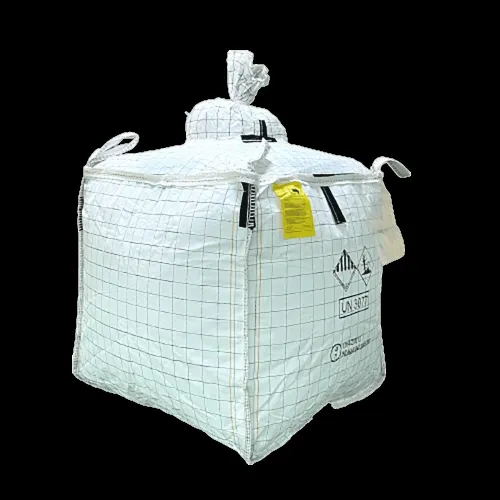
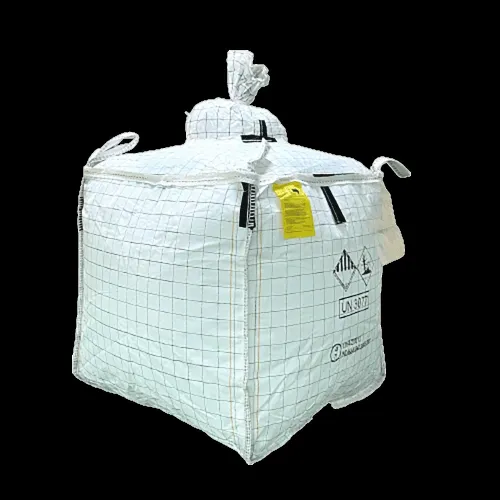
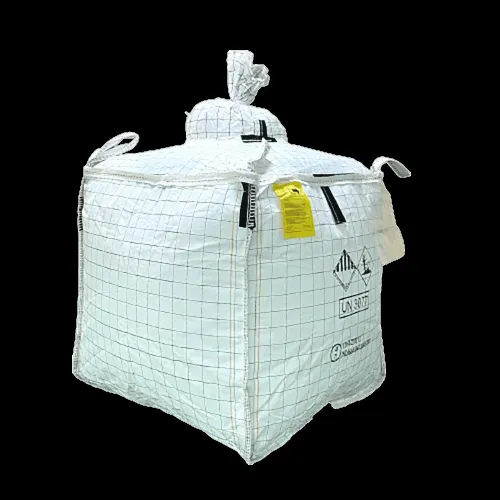
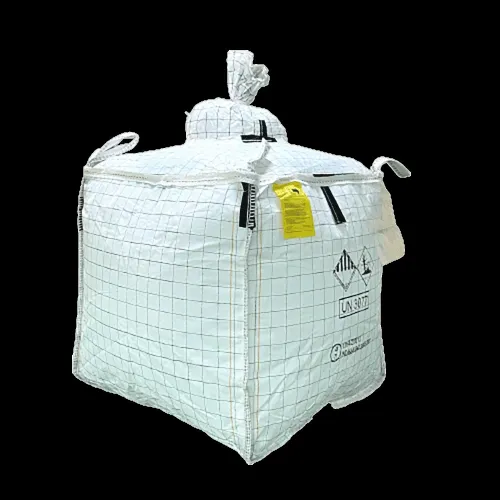
| FIBC | Large-volume handling and economical storage | You are moving dry tea or coffee between factories or warehouses | It is unsuitable for retail and needs a food-contact liner |
Tin containers do not automatically preserve coffee aroma. An unlined box with a loose lid can lose flavour faster than a validated pouch, while attached plastic liners, valves, gaskets or mixed closures complicate steel recycling.
Use a tin with a sealed inner pouch when you want both barrier performance and a reusable outer pack. Choose a plain pouch for weight-sensitive distribution, glass for visibility, plastic for impact resistance and an FIBC for bulk logistics.
The Mumbai buyer’s specification and approval checklist
Approve a sample only after the supplier gives you a written specification and test plan. “Food grade” alone proves nothing. For your tea and coffee tins range, request steel thickness, tin-coating designation, temper, internal lacquer type, closure liner, gasket, seam construction, and external ink and coating details.
1. Request a food-contact declaration naming the lacquer, liner and adhesives, plus migration-test evidence for the intended food type and filling process. Confirm that printing inks and external coatings cannot contact the product.
2. Fill tins with the actual tea or coffee, including the planned roast, grind or leaf grade. Check odour transfer, staining, blackening, lacquer adhesion and flavour change through the intended shelf life.
3. Measure closure performance through repeated opening and closing. Test moisture ingress, oxygen leakage and seal retention; a metal wall cannot compensate for a poor lid seam, gasket or dispensing opening.
4. Run comparative humidity and corrosion exposure, recording scratches, cut edges, condensation and rust. Treat salt-spray results as screening evidence, then qualify the pack through real Mumbai storage and distribution conditions.
5. Approve a pilot production lot only after checking dimensions, lid fit, seam quality, coating coverage, decoration registration and fill capacity. Set acceptable limits and retain samples for comparison during repeat orders.
Deccan Cans and Printers Pvt. Ltd. should be asked for production samples made with the proposed steel, lacquer and closure—not a visually similar tinplate can—so your approval covers the materials that will actually reach customers.
Related product
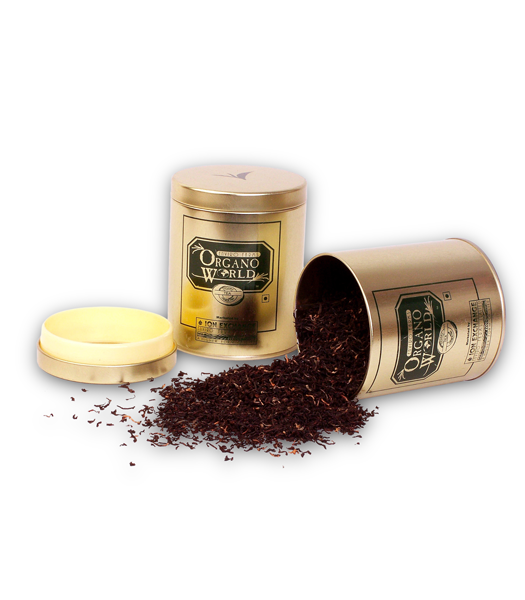 | Tin Containers Tea and Coffee Tins Range Tea & Coffee Tins Range – Product Descriptions Deccan Cans & Printers Pvt. Ltd. 1. |
Frequently asked questions
Why do tea and coffee need different tin protection?
Tea mainly needs protection from moisture, light and foreign odours. Roasted coffee also releases carbon dioxide and loses quality when exposed to oxygen, so it may need a valve or sealed inner pouch.
How should you compare tea and coffee tin sizes?
Compare internal dimensions, fill weight, headspace and usable capacity for the specific tea or coffee format. External dimensions alone do not show how much product the tin holds.
Which closure should a tea or coffee tin use?
Use a tight-fitting lid with a gasket for a reusable pack. Roasted coffee may need a one-way degassing valve and a sealed inner pouch, while tea usually needs a moisture- and odour-resistant seal.
Are tinplate cans better than pouches, glass, plastic or bulk bags?
Tinplate cans provide rigid protection, light blocking and strong shelf appeal. Pouches reduce weight, glass offers product visibility, plastic can lower cost, and FIBC bulk bags suit industrial quantities rather than retail packs.
What should a Mumbai packaging buyer check before approving tins?
Check dimensions, usable capacity, tinplate specification, food-contact suitability, closure performance, print quality, corrosion protection, batch traceability and required supplier documents.