
Exporters need packaging that carries a high payload without consuming excessive container space, adding unnecessary tare weight, or creating extra manual handling. By the end, you will know how FIBCs achieve those efficiencies, where they outperform sacks and rigid containers, and which construction, handling and compliance details to specify before shipment.
Key takeaways
- Use 500–2,000 kg FIBCs to reduce tare weight and handling touches.
- Match bag fabric, liner, lifting loops and discharge design to the cargo.
- Add liners, desiccants or sealed closures when moisture threatens the load.
- Check dimensions, safe working load, markings and inspection records before export.
Why FIBCs fit high-volume export shipments
A single FIBC commonly carries 500–2,000 kg while weighing only a small fraction of its rated payload. That low tare weight reduces packaging mass, handling touches and empty-packaging volume compared with smaller sacks or rigid containers, making FIBC export packaging practical for high-volume dry cargo.
FIBC bags use container height and width efficiently, then collapse when empty, reducing storage space and reverse-logistics freight. Their advantage narrows when the shipment requires pallets, protective covers, polyethylene liners or returned bags. Container utilisation FIBC bags achieve depends on the complete packed system, not the bag alone.
Before loading, confirm these handling controls:
- Use every designated lifting loop with compatible forklift attachments, spreaders or crane gear; never lift from a spout or drag the bag.
- Follow the bag’s stacking limit and keep the load within the container’s allowable floor loading; spread concentrated weight across the floor.
- Centre each bag and leave no arrangement that allows loops, seams or fabric to snag on doors, walls or dunnage.
- Restrain flexible cargo against bulging and movement under the IMO/ILO/UNECE Code of Practice for Packing of Cargo Transport Units.
A tightly filled container is not automatically a secured load. Flexible bulk bags for shipping can shift during braking, vessel motion or uneven handling, so use blocking, bracing, lashing or other suitable restraint designed for the cargo and container plan.
What an export FIBC is built to do
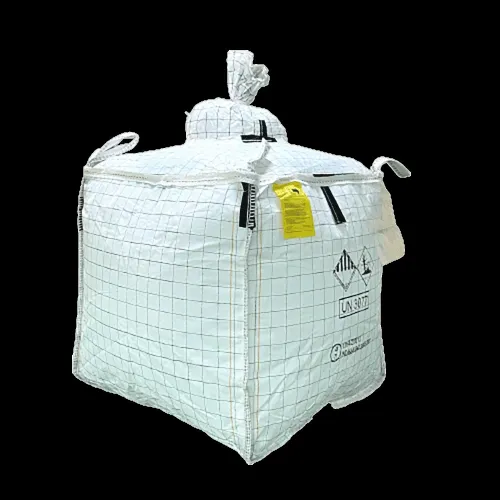
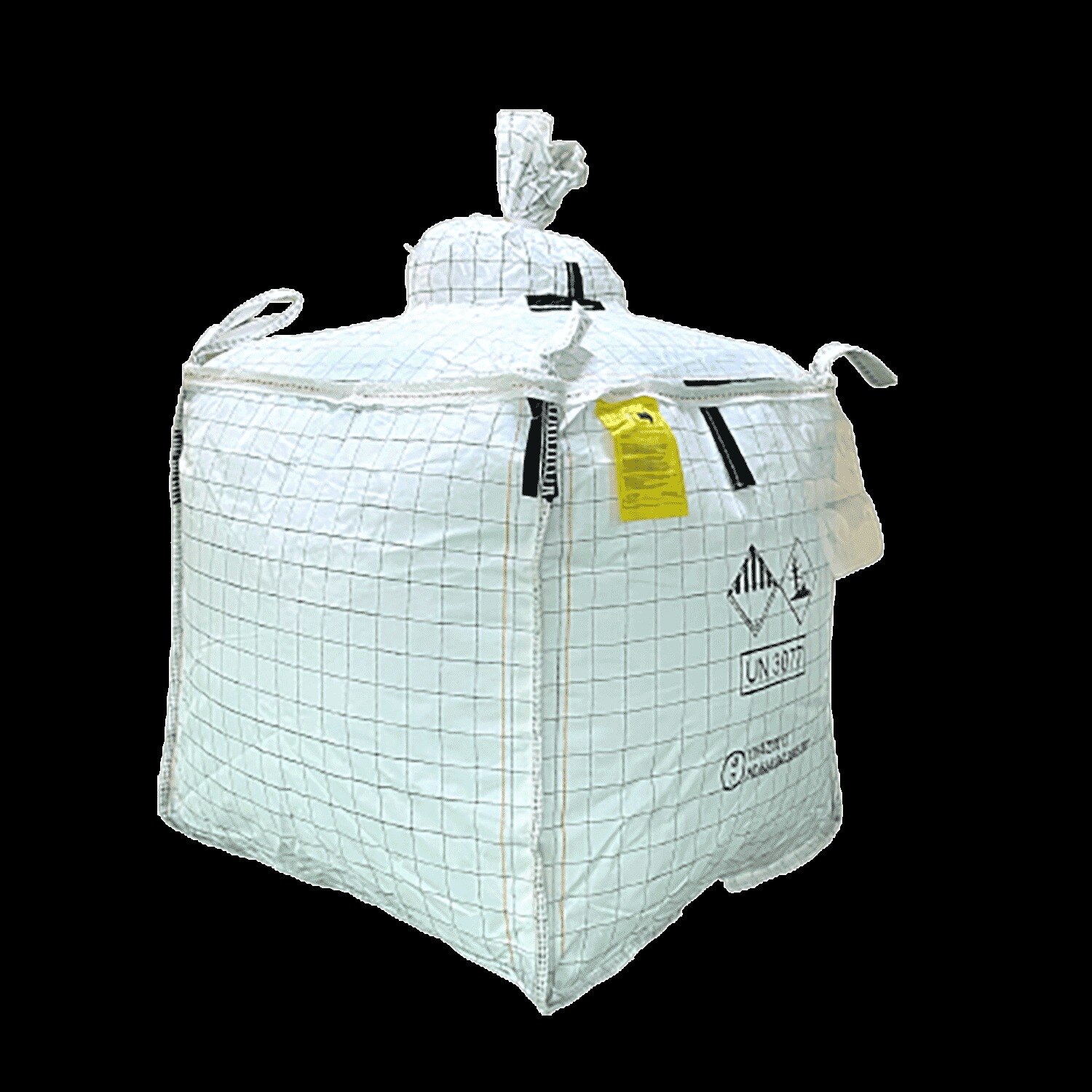
An export FIBC is built around woven polypropylene fabric, top filling spouts, bottom discharge spouts, lifting loops, stitched seams and closures. Optional sift-proof seams and construction keep fine powder from escaping through needle holes. Each component must suit the filling machine, lifting method and discharge equipment.
| Loop arrangement | Safe handling requirement |
|---|---|
| One-loop bags | Use compatible paired lifting equipment designed for the loop |
| Two-loop bags | Engage both loops with compatible paired lifting equipment |
| Four-loop bags | Engage all four designated loops with a spreader, forklift attachment or approved arrangement |
| Cross-corner-loop bags | Engage every designated loop using the specified lifting arrangement |
Safe working load (SWL) is the rated load for a specified handling method, not simply the amount the fabric appears to hold. A bag with a 1,000 kg physical capacity is not adequately specified until you know its SWL, lifting method and safety factor.
State the FIBC safety factor: 5:1 or 6:1 for the intended service. A high ratio does not make one-trip packaging reusable; reuse requires a documented inspection and cleaning regime.
Never lift from a filling or discharge spout, unused loop or improvised point. The resulting seam damage can weaken the bag without leaving obvious external evidence. Confirm the closure type, outlet control and liner or sift-proof specification before ordering.
How to match the bag to the cargo and alternatives
An FIBC selection guide starts with the cargo, not the bag’s nominal volume. Record the product type, bulk density and flowability, particle size, moisture sensitivity, filling equipment, discharge method, bag dimensions and required capacity before requesting a quotation.
- Cohesive powders can bridge or rat-hole, so specify a suitable outlet and flow-assistance method.
- Dense loads released too quickly through a bottom discharge FIBC can destabilise receiving equipment.
- Match outlet diameter, iris or tie closure, and discharge speed to the downstream machinery.
- Confirm the liner fit when moisture or contamination control matters; ordinary woven polypropylene is not a moisture barrier.
Deccan Cans & Printers Pvt. Ltd. can add value when it converts these variables into a documented bag drawing, liner fit, SWL and discharge specification. That record prevents a bag with the right capacity from failing at filling or unloading.
FIBC versus sacks drums crates ISO tanks is a choice about volume, handling and protection:
| Option | Best fit | Main limitation |
|---|---|---|
| Woven polypropylene sacks | Smaller lots and manual handling | More bags and handling touches |
| Paper bags | Printed, more rigid-sided presentation | Greater moisture sensitivity |
| Plastic or steel drums | Stackability, impact resistance and sealed containment at lower unit volumes | Higher tare weight |
| Wooden crates | Machinery or fragile goods needing rigid protection | Poor fit for free-flowing bulk solids |
| ISO tanks | Liquids and high-volume fluid cargo | Not intended for dry solids |
Use an FIBC for dry bulk when its handling equipment, outlet and protection level match the cargo.
Related products
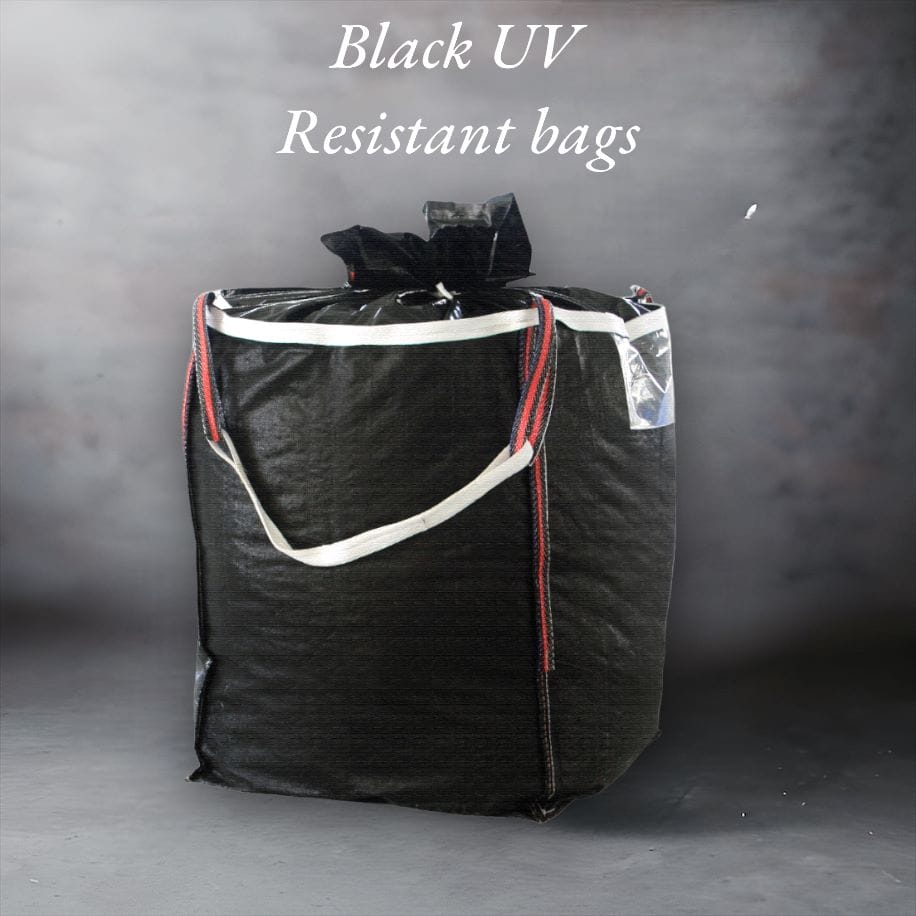 | FIBC Section Black Bags Black FIBC Bags – Enhanced UV Resistance & Extended Shelf Life UV exposure is one of the major challenges faced by the FIBC industry, as prolonged... |
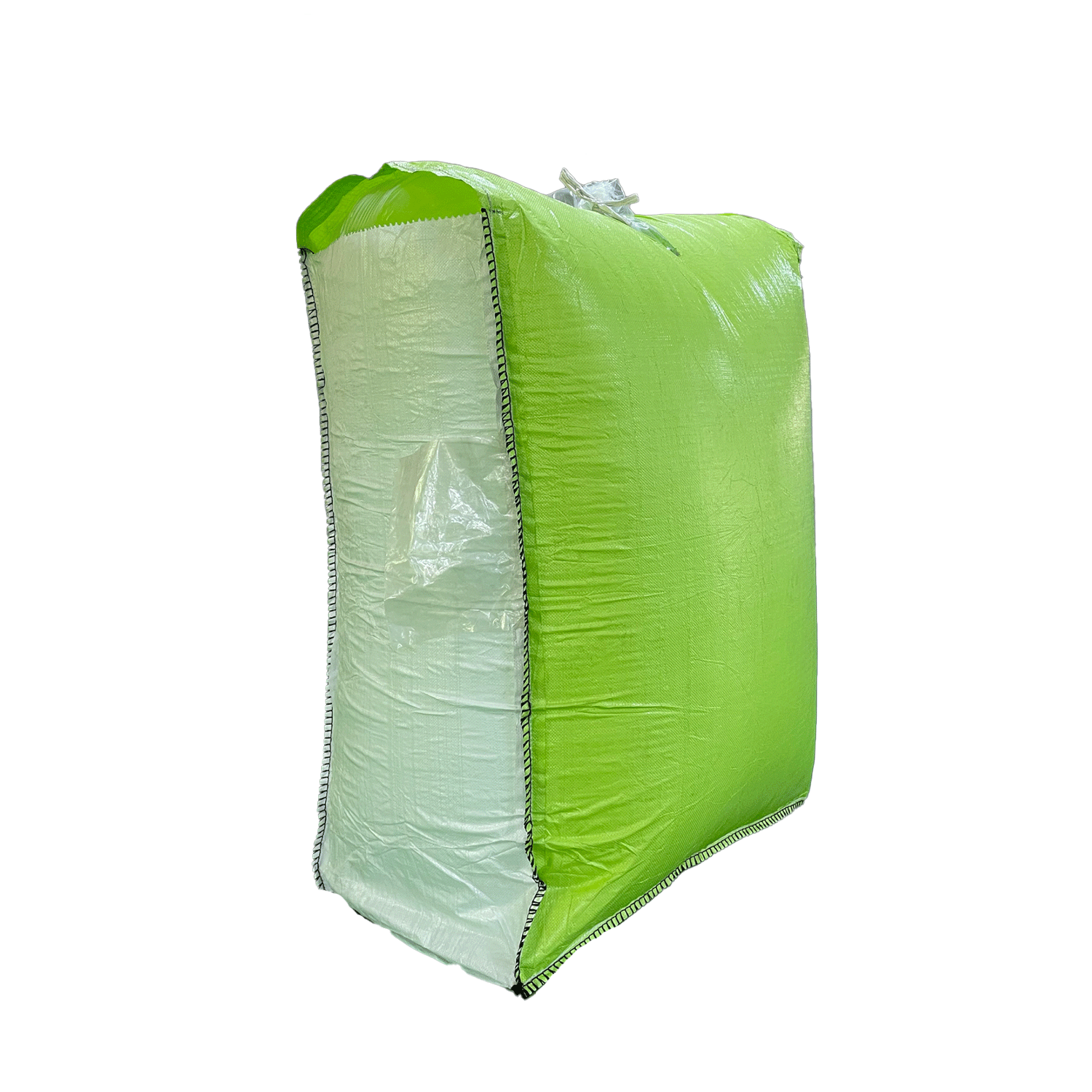 | FIBC Section Fertilizer Bag Range 1 & 2 Loop FIBC Bulk Bags Deccan Cans & Printers Pvt. Ltd. offers durable and cost-effective 1 & 2 Loop FIBC Bulk Bags, designed for the efficient... |
How exporters control moisture, leakage and contamination
A sound export load needs more than a strong bag: ordinary woven polypropylene is not a moisture barrier. Rain during road transport, condensation inside a container, salt-laden port air and ocean temperature cycling can wet cargo without submerging the FIBC.
For hygroscopic powders, humidity-sensitive goods or contamination control, specify a form-fit polyethylene liner as an FIBC liner for moisture protection. Use coated FIBC fabric or a barrier film bulk bag when product sensitivity and exposure demand more protection, but account for higher cost, harder filling and discharge, altered fit and changed electrostatic behaviour.
Control leakage and contamination with:
- Specify sift-proof seams FIBC construction, then inspect seams, fabric and liner for pinholes, abrasion or seam damage before filling.
- Keep filling and discharge closures secured; match the outlet and liner opening to the equipment so powder cannot escape or the liner bunch up.
- Clean filling, forklift and discharge equipment before use. Residue from a previous product can contaminate the next load.
- Store filled bags dry and under cover when the cargo specification calls for it. Use desiccants or container moisture controls when appropriate.
- Keep bags away from nails, broken boards, sharp dunnage and container edges; restrain them without cutting into the fabric.
Timber pallets, skids and dunnage can trigger ISPM 15 treatment and marking requirements. Those rules apply to the wood, not to the polypropylene bag, so verify both parts of the shipping unit separately.
The export checks that prevent a failed shipment
A failed shipment often starts with a bag that looked acceptable on the warehouse floor. Use this FIBC export inspection checklist before loading:
- Inspect fabric, seams, lifting loops, filling and discharge spouts, closures and liner for cuts, pinholes, contamination or loose stitching. Confirm the SWL, safety factor, dimensions and permitted filling ratio on the specification sheet.
- Centre the load and keep the bag within its designed shape. Engage every designated lifting loop with compatible equipment; keep forks and hooks clear of fabric. Never drag the bag or lift it from a spout, unused loop or unapproved point.
- Store UV-stabilised fabric under cover. Sunlight, rain, long port dwell times and condensation still require a storage plan matched to the cargo specification.
IEC 61340-4-4 Type C Type D FIBC selection depends on dust, solvent and ignition hazards. Type C requires grounding during filling and emptying; Type D dissipates charge under specified conditions without a separate earth connection.
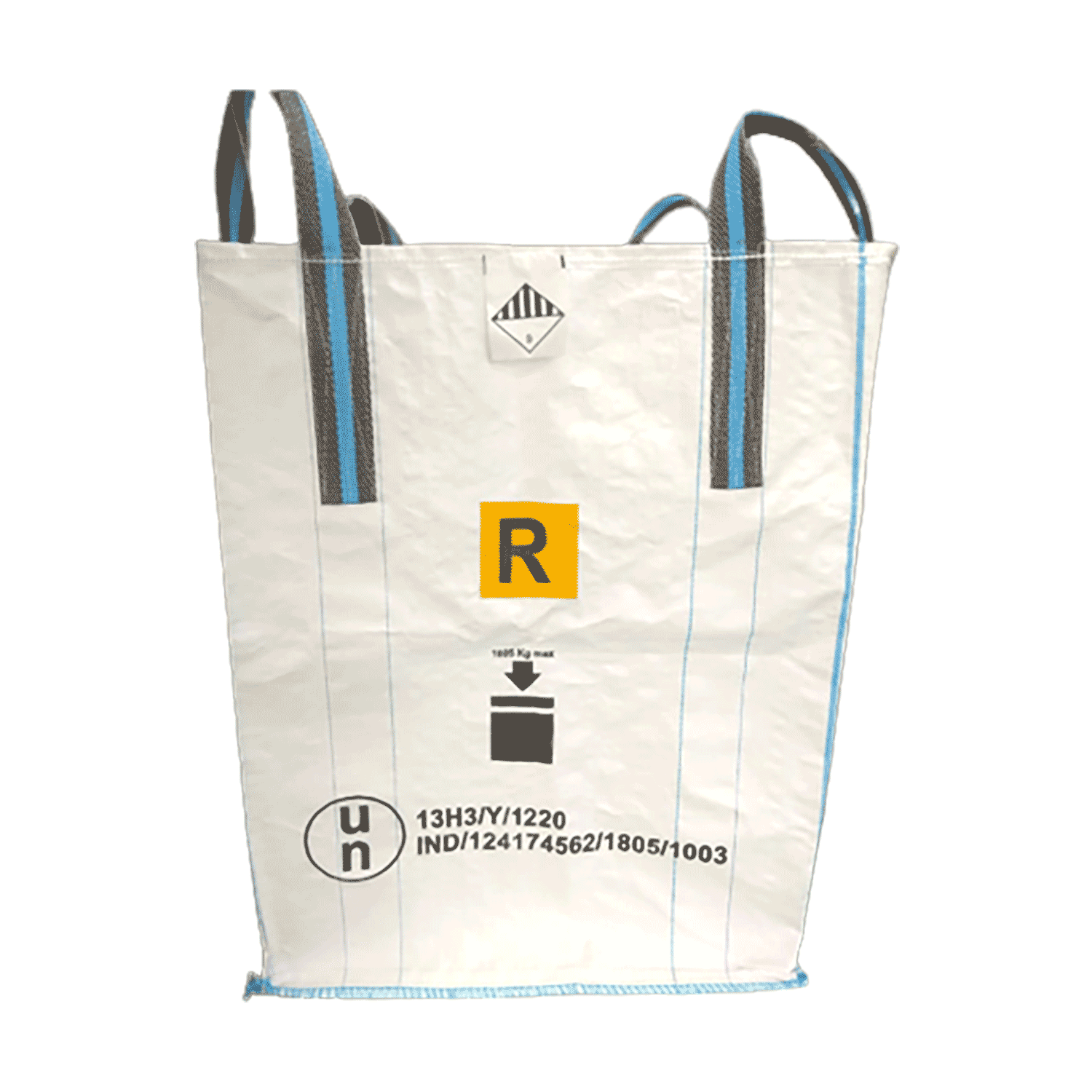
UN FIBC 13H1 13H2 13H3 13H4 marks identify tested woven-plastic designs:
| Code | Construction |
|---|---|
| 13H1 | Uncoated, no liner |
| 13H2 | Coated, no liner |
| 13H3 | Uncoated, with liner |
| 13H4 | Coated, with liner |
Match the mark to the packing group, substance, test level, filling ratio, closure and liner configuration. A UN mark approves a tested design type, not every size or commodity. ISO 21898 FIBC standard covers non-dangerous solids; dangerous goods need applicable transport rules and certification records. One-trip bags are not reusable.
Reusable bags need documented cleaning and inspection for fabric, seams, loops, closures, residue, UV damage and chemical attack.
Frequently asked questions
Why are FIBCs suitable for high-volume export shipments?
A single FIBC commonly carries 500–2,000 kg while adding little tare weight, reducing handling touches and empty-packaging volume.
How do you match an export FIBC to its cargo?
Check the cargo’s weight, particle size, flow behaviour, moisture sensitivity, dust risk and discharge needs before choosing fabric, liner and construction.
How can exporters control moisture, leakage and contamination?
Use a suitable liner, sealed seams or closures, clean handling practices and moisture protection such as desiccants when the cargo requires it.
What should exporters check before loading FIBCs?
Verify the bag’s safe working load, dimensions, lifting loops, closure and discharge features, markings, cargo compatibility and inspection records.
Related products
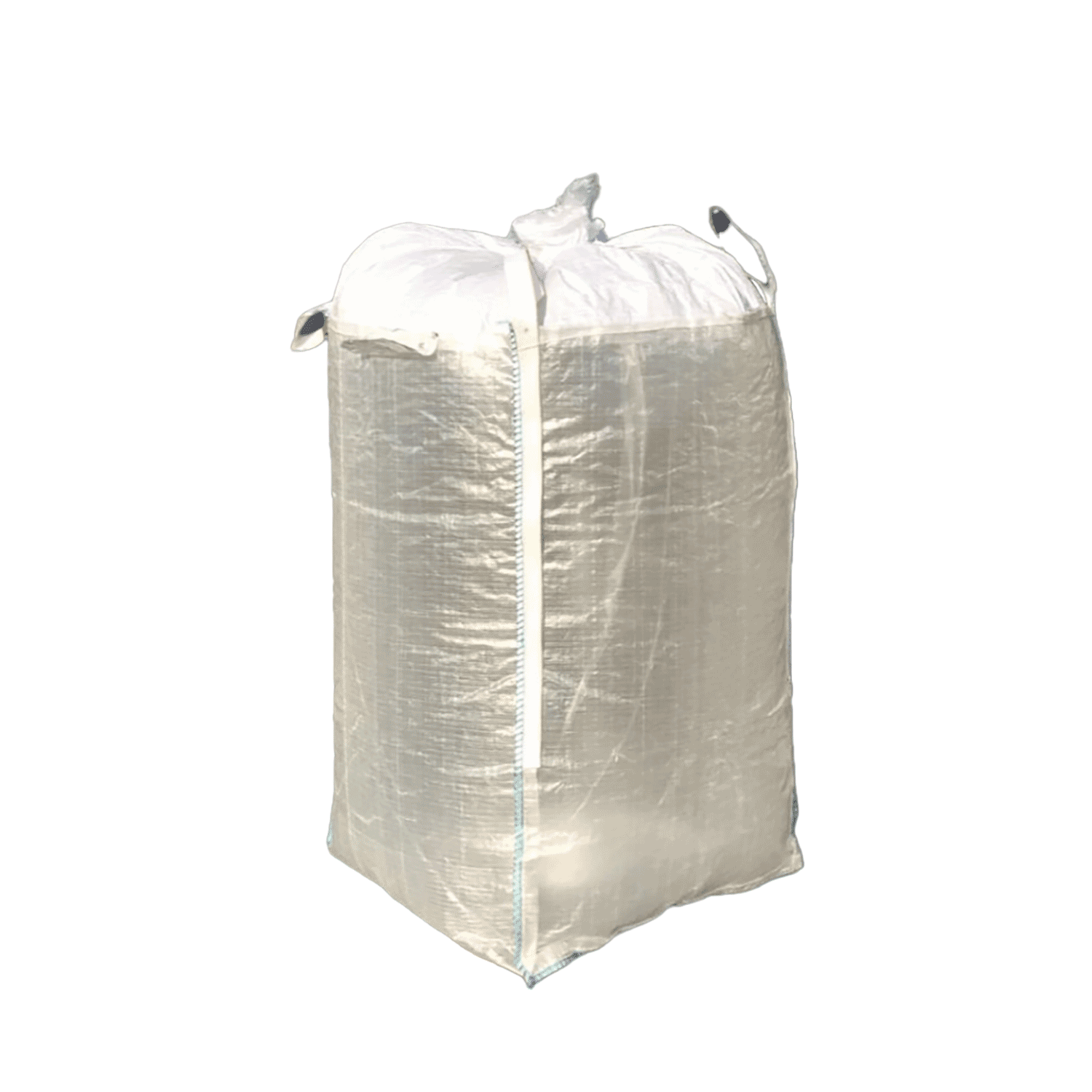 | FIBC Section Transparent Bags Transparent FIBCs – See-Through Bulk Bags Deccan Cans & Printers Pvt. Ltd. |
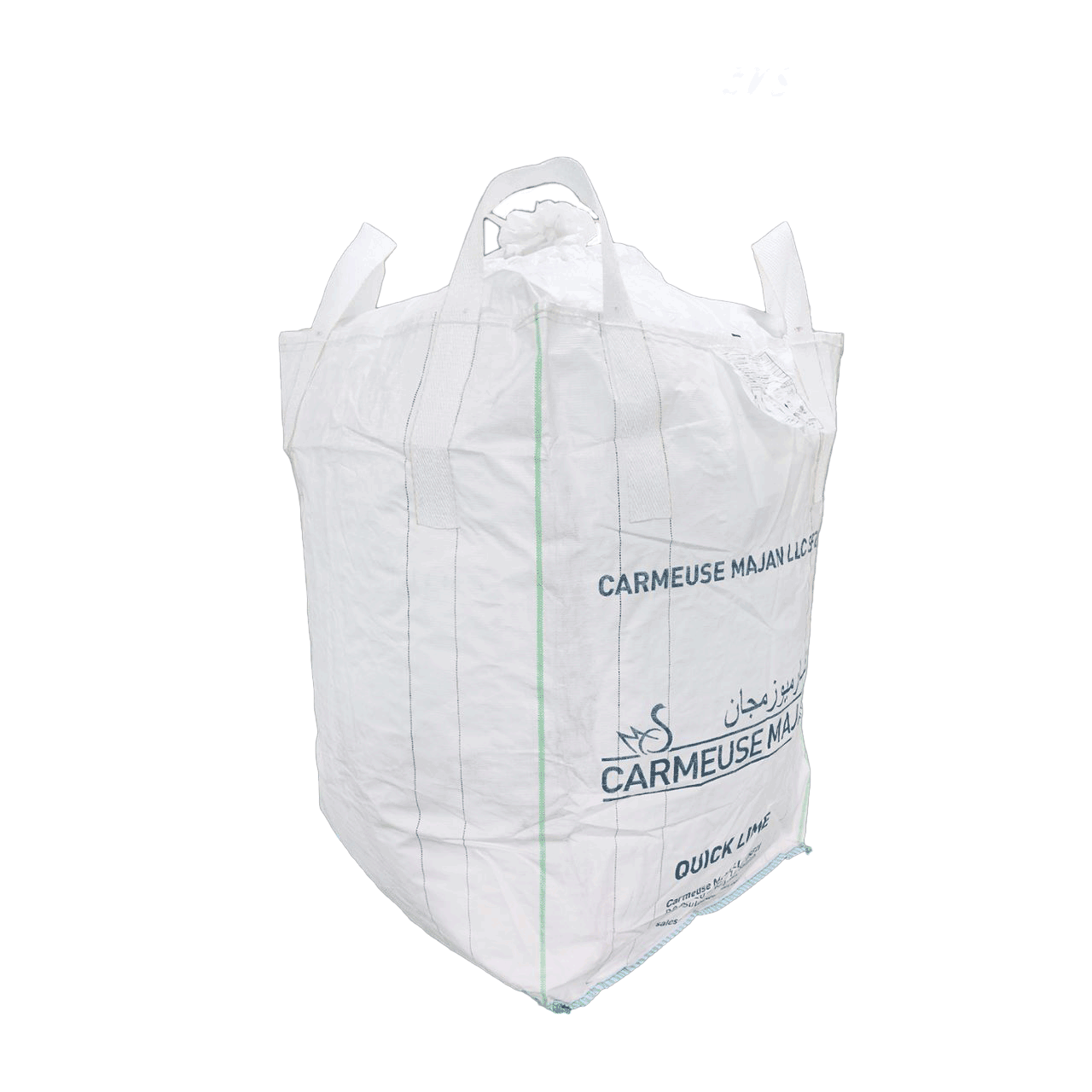 | FIBC Section Bags With Liners FIBC Liners – Bulk Bag Liners Deccan Cans & Printers Pvt. Ltd. |
 | FIBC Section Un Bags UN Certified Bulk Bags – Rigorous Performance Testing for Safety & Reliability Deccan UN Certified Bulk Bags are specially engineered for the safe... |
 | FIBC Section Cross Bottom Sling Bags Cross Bottom Sling FIBCs – Bulk Bags Deccan Cans & Printers Pvt. Ltd. |