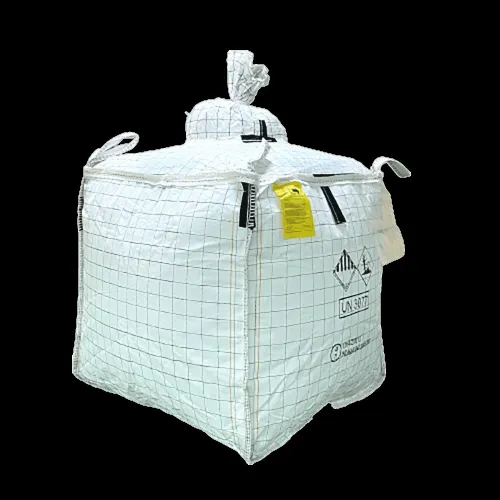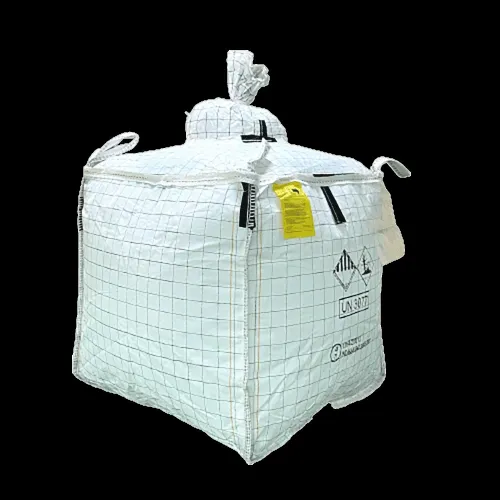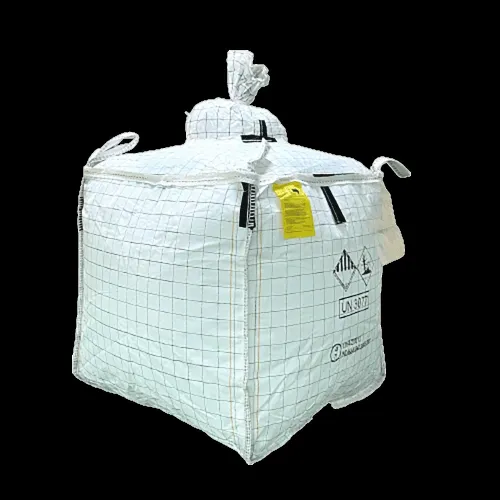

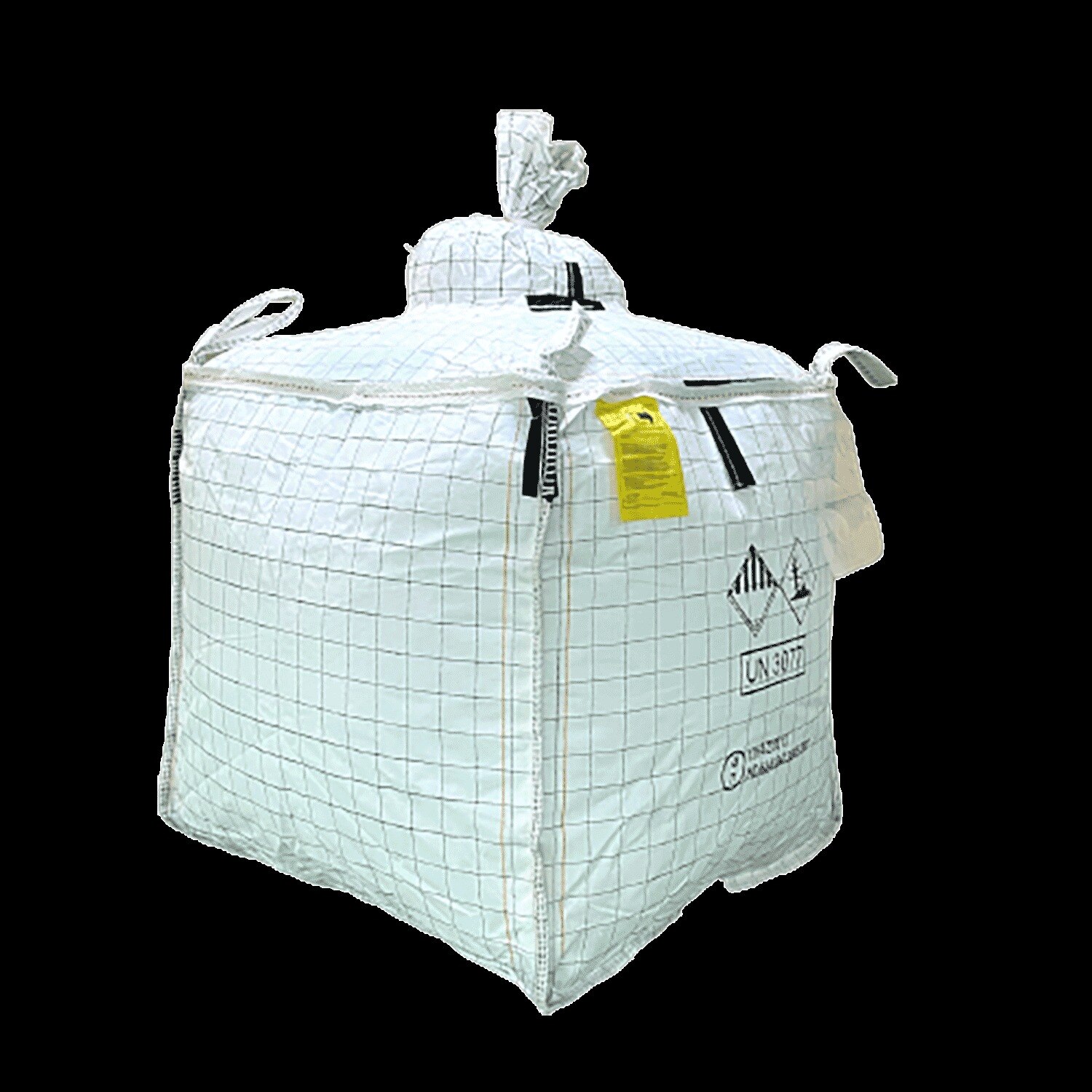
An export FIBC must match the cargo, the transport mode, the destination’s rules, and the exact handling system—not just the product’s volume. By the end, you will be able to identify the required UN design type, packaging group, construction, documentation, and inspection controls before requesting quotations.
Key takeaways
- Record the UN number, hazard class, packing group, and packing instruction.
- Request the UN test certificate, approval marking, and latest inspection records.
- Match SWL, safety factor, dimensions, filling, discharge, and lifting method.
- Use Type C or Type D construction when combustible dust creates static risk.
Which rules govern the shipment?
Classify the cargo before choosing the FIBC: ordinary, dangerous, combustible, food-contact, pharmaceutical, or otherwise controlled. For dangerous goods, record the UN number, proper shipping name, hazard class, packing group, and packing instruction under the UN Recommendations on the Transport of Dangerous Goods.
| Mode | Governing framework | What to reconcile |
|---|---|---|
| Road | ADR | Dangerous-goods classification, packing instruction, vehicle and carrier conditions |
| Sea | IMDG Code | Packaging, marking, segregation, container stowage, and declaration rules |
| Air | IATA Dangerous Goods Regulations | More restrictive quantity, packing, labelling, and airline acceptance requirements |
| Non-dangerous cargo | ISO 21898:2004 | FIBC construction, performance, marking, and test methods |
National import rules, customs requirements, carrier acceptance conditions, and destination-country controls can add obligations that a UN mark does not cover. Ask the importer or freight forwarder to confirm destination requirements in writing; no universal FIBC specification overrides national law or carrier policy.
For non-dangerous goods, ISO 21898:2004 provides the principal international framework. It does not make an FIBC suitable for dangerous goods. A combustible dust may need electrostatic controls, while food-contact or pharmaceutical cargo needs documented material and contamination controls beyond a general packaging standard.
Allow export time for classification checks, sampling, certificates, container planning, and destination compliance. If the shipment needs stronger containment, liquid handling, easier segregation, or another approved package, compare the FIBC with smaller sacks, rigid IBCs, drums, or specialized hazardous-goods packaging before booking freight.
How do you verify a UN-certified FIBC?
Start with the UN mark: it proves that a particular FIBC design type passed approval, not that every bag from that supplier is certified. Compare the complete mark with your purchase specification, including the packaging symbol, design type, packaging group, maximum gross mass or applicable test information, and manufacturer or approval identification.
Before accepting the shipment, request and match these records:
- Approval number and design-type certificate.
- Chapter 6.5 test report covering lifting, drop, topple, righting, tear, and stacking tests.
- Manufacturing records and inspection records.
- Confirmation of the actual fabric, coating, liner, closure, discharge spout, dimensions, lifting arrangement, and filling condition.
The certificate must describe the construction being supplied. A liner substitution, changed closure, or different discharge construction can invalidate the approved design, even when the replacement bag feels stronger. The UN Model Regulations tests apply to the complete construction, not an abstract bag size.
Match the cargo’s packing instruction to the approved packaging group: Group I covers high danger, Group II medium danger, and Group III low danger.
For flexible plastics, check the code: 13H1 means woven plastic without liner or coating; 13H2 means coated woven plastic without liner; 13H3 means uncoated woven plastic with liner; and 13H4 means coated woven plastic with liner. A physically strong ordinary bulk bag is not a UN-certified package.
How should you specify load, dimensions, and handling?
Specify the actual safe working load, not just a slogan such as 5:1 or 6:1. A safety factor does not replace a test report for the exact bag, lifting method, number of lifts, filling density, stacking condition, and intended reuse.
Give the supplier the cargo’s bulk density, particle size, filling method, discharge method, target fill mass, and handling equipment.
| Method | Specify | Main check |
|---|---|---|
| Forklift | Loop arrangement and fork spacing | Confirm forks cannot damage the base |
| Crane or frame | Lift points and frame dimensions | Confirm all loops share the load |
| Sling | Sling angle and contact points | Confirm the sling cannot cut or distort panels |
Choose bag dimensions from the complete logistics unit: pallet pattern, container interior, automatic filling head, warehouse rack, and stacking plan. A nominal 1 m³ bag may need a different filling ratio, footprint, height, or baffle construction. Baffles improve dimensional stability but can restrict flow when the product bridges or aerates poorly.
State inlet and outlet diameter, spout length, closure method, liner attachment, dust flap or sift-proof seam, and required discharge rate. Check whether the loop arrangement suits one lift or repeated handling. Before filling, inspect every bag for contamination, wetness, seam damage, broken loops, distorted panels, and compromised closures; repeat those checks after transit before unloading.
If the cargo cannot be filled, discharged, stacked, or recovered safely, choose another package.
Which construction protects the cargo and controls static?
Choose mechanical strength, moisture control, chemical compatibility, contamination control, and electrostatic protection as separate decisions. A strong fabric does not make a bag safe near ignition sources, and a liner that blocks dust does not prove chemical resistance.
| Type | Electrostatic behaviour | Operating requirement |
|---|---|---|
| Type A | Limited protection; no controlled charge dissipation | Keep away from combustible dust or vapour ignition hazards |
| Type B | Limited protection; restricted protection against propagating brush discharges | Use only after a documented electrostatic assessment |
| Type C | Conductive, grounded construction | Ground continuously during filling and emptying; verify resistance to ground below 1.0 × 10^8 ohms |
| Type D antistatic construction | Dissipates charge without a dedicated ground connection | Use the specified design and handling controls; do not substitute Type A or B |
For Type C, specify the grounding point, the receiving site’s connection procedure, and the continuity check. Type A, Type B, Type C, and Type D FIBCs are not interchangeable under IEC 61340-4-4.
Check compatibility against the actual concentration and temperature of powders, granules, liquids, hygroscopic goods, acids, alkalis, oxidisers, or solvents. Confirm the fabric, seam thread, liner polymer, additives, coating, and closure.
A liner can reduce moisture, dust, and contamination, yet alter discharge, product recovery, static behaviour, and UN classification. Coated fabric alone proves neither immersion resistance nor a water-vapour transmission rate. Specify UV exposure, abrasion, compression, condensation, container stowage, privacy, heat exposure, flow, stability, and the approved lifting method.
For combustible or dusty cargo, obtain a documented electrostatic assessment instead of choosing from the product name.
What should the supplier document and the exporter inspect?
Give the supplier a written export specification before approving production. Include the cargo name, UN number, hazard class, packing group, particle size, bulk density, filling and discharge methods, destination, transport mode, required certificates, SWL, dimensions, liner details, closure design, loop configuration, and pallet or container pattern.
1. Request the certificate of analysis, safety data sheet, declaration of conformity, test report, certificate of origin, packing list, commercial invoice, and container-loading records when applicable. For food or pharmaceutical cargo, also request the jurisdictional declaration, migration documents, manufacturing controls, and polymer and additive identification. “Food grade” or “FDA/EU compliant” is incomplete without this evidence.
2. Preserve traceability with the bag batch or lot number, production and inspection records, shipment photographs, and retention samples. Deccan Cans & Printers Pvt. Ltd. can add value by converting this specification into a documented construction instead of quoting only a generic size or fabric.
3. Before loading, sample or inspect seams, lifting loops, closures, contamination, wetness, and label accuracy. Check that the liner, discharge arrangement, dimensions, and UN documentation match the approved design; a changed closure or liner can invalidate the evidence.
4. Load dry cargo using suitable wrapping or desiccation where specified, and use a plan that prevents abrasion, crushing, and compression damage. Reinspect the bags after arrival before opening, and record certification checks, sampling, document review, and container controls as export costs.
If evidence is missing, delay shipment or choose drums, rigid IBCs, smaller sacks, or specialised hazardous-goods packaging rather than relying on an unverified claim.
Related product
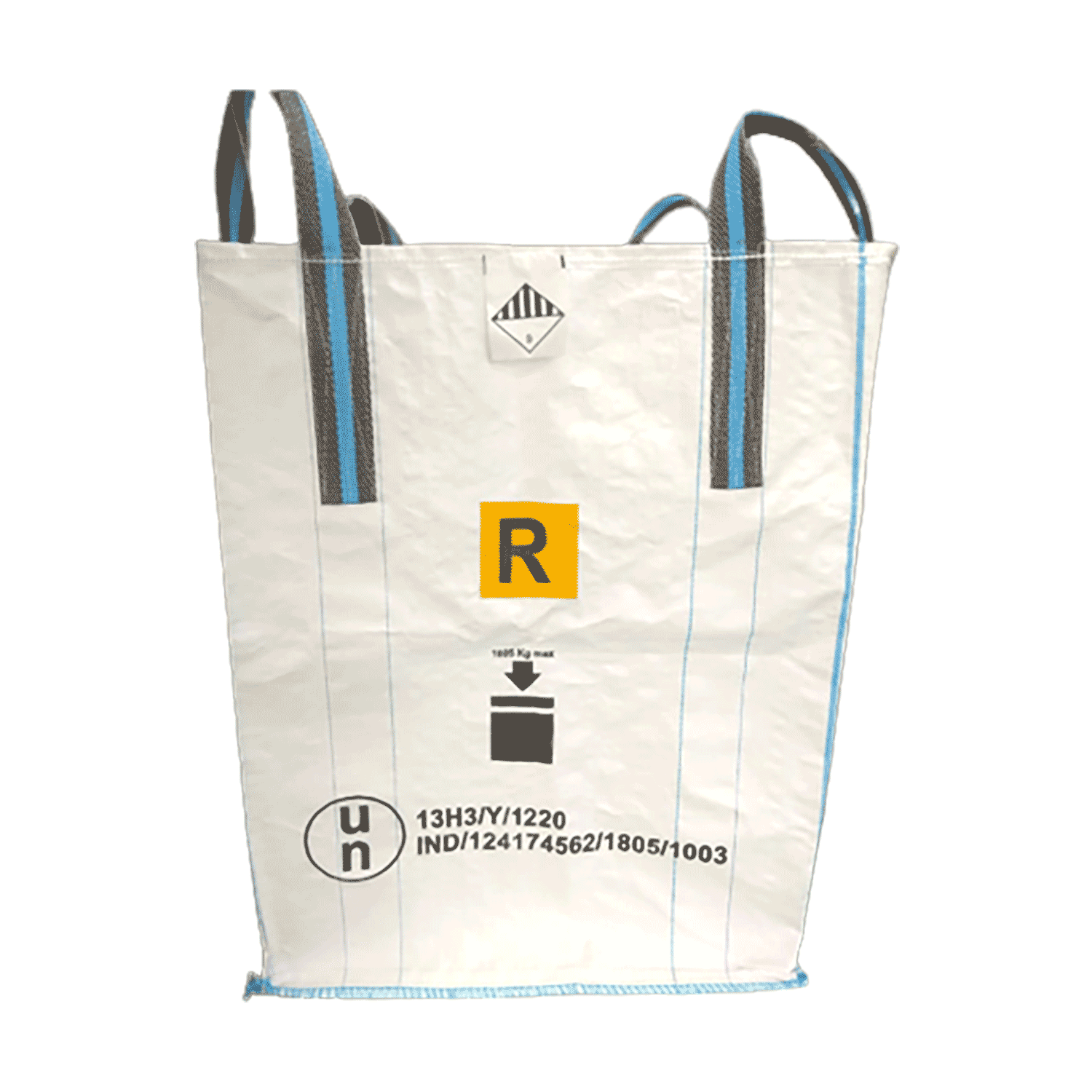 | FIBC Section Un Bags UN Certified Bulk Bags – Rigorous Performance Testing for Safety & Reliability Deccan UN Certified Bulk Bags are specially engineered for the safe... |
Frequently asked questions
Which rules govern international FIBC shipments?
Classify the cargo first. For dangerous goods, record the UN number, proper shipping name, hazard class, packing group, and packing instruction under the UN Recommendations on the Transport of Dangerous Goods. Then check the rules for the transport mode: IMDG Code for sea freight, IATA Dangerous Goods Regulations for air freight, and the applicable national road or rail rules.
How do you verify a UN-certified FIBC?
Ask for the UN packaging test certificate and confirm that the FIBC approval marking matches the certificate. Check the packaging code, performance level, test pressure where shown, manufacturer identification, year of manufacture, and the applicable packing group. Do not rely on the words UN certified alone.
How should you specify an FIBC for export?
State the product weight and density, target safe working load, safety factor, bag dimensions, filling and discharge arrangements, lifting loops, liner requirement, stacking conditions, and transport mode. Confirm that the bag fits the pallet, container, filling equipment, and discharge equipment.
Which FIBC construction controls static electricity?
Use Type A for products without a flammable atmosphere, Type B for limited-incendive applications, Type C when grounding is available, and Type D when a verified grounding system is not practical. Keep Type C bags grounded during filling, discharge, and handling, and obtain the supplier's static-control test evidence.
What should the supplier document and the exporter inspect?
Obtain the specification sheet, UN test certificate where required, material and liner details, static-control evidence, inspection records, and traceability information. Inspect fabric, seams, loops, liner, closures, labels, contamination, moisture, damage, and the bag's marking before loading.