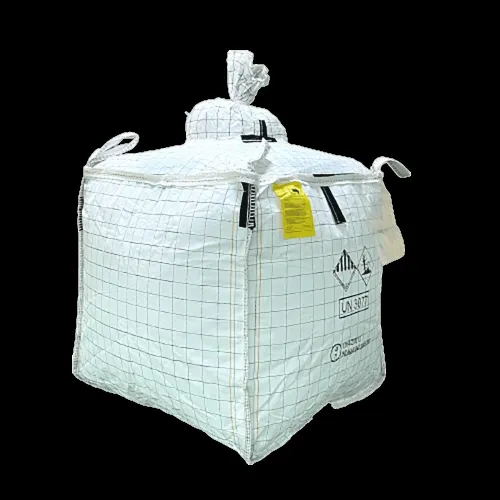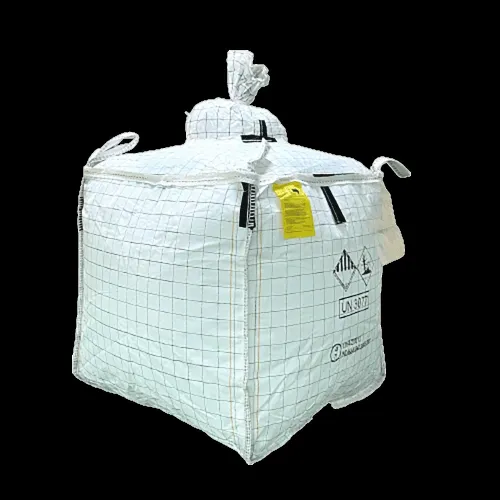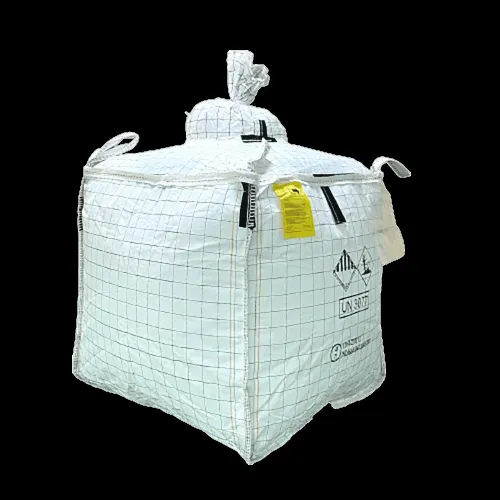

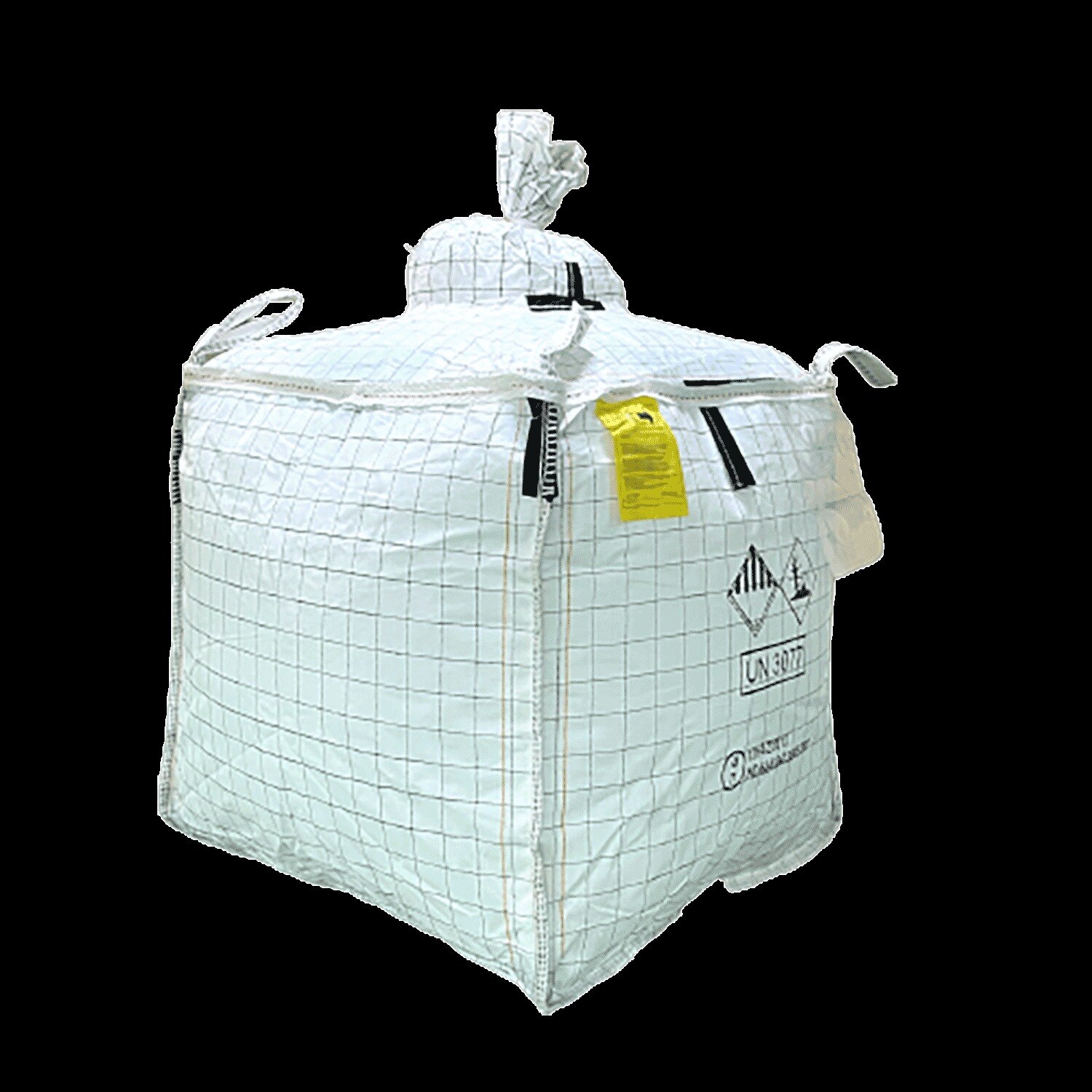
The right FIBC depends on the material’s chemistry, flow behaviour, electrostatic hazard, density and transport classification—not just the bag’s advertised capacity. By the end, you can specify a suitable construction, calculate the mechanical requirements, define safe handling controls and request evidence that the finished bag matches the job.
Key takeaways
- Match fabric, liner and seams to particle size, moisture and flow.
- Check chemical compatibility and electrostatic controls before ordering.
- Specify dimensions, lifting loops and discharge design—not capacity alone.
- Request dangerous-goods approval and complete batch documentation.
Match the FIBC construction to the material
Choose the FIBC construction from the material’s flow, particle size, moisture and discharge behaviour—not from capacity alone. Chemical FIBC bags for dry solids need fabric and liner materials that tolerate the actual product, while mineral bulk bags need abrasion resistance and seams suited to heavy loads.
| Material | Suitable construction | Selection point |
|---|---|---|
| Dry, compatible chemicals | Coated woven polypropylene with an attached or form-fit liner | The liner limits dust, moisture and contamination; verify that it does not permeate or react with the chemical. |
| Fine powders and cohesive minerals | Form-fit liner, suitable bottom outlet and reinforced fabric | Powder handling can cause bridging, rat-holing and heel retention. A larger outlet alone will not fix poor flow. |
| Abrasive minerals | Heavy-duty woven fabric with reinforced seams and abrasion-resistant lifting loops | Specify fabric strength and discharge hardware for sharp particles and high bulk density. |
| Granules and pellets | Uncoated woven polypropylene with a standard spout or duffle outlet | This construction usually supports efficient filling and emptying; add a liner when dust control or product purity demands it. |
| Flammable powders or vapours | Type C with a verified grounding path, or Type D where its specified conditions apply | Do not treat Type A or Type B as a substitute for static-control design. |
Match the bottom construction to the material’s flow: flat, conical or baffled designs suit different discharge demands. Specify outlet diameter and length, liner fit, vibration and the controlled opening sequence; otherwise the bag can retain valuable product or release it unpredictably.
Check chemical compatibility and electrostatic risk before ordering
Obtain written chemical compatibility confirmation for the complete FIBC assembly, not just the woven polypropylene fabric. Match the fabric and liner to the material’s pH and concentration, temperature, contact time, mechanical stress, moisture content and storage duration. Check solvent exposure, strong oxidizers, aromatic or chlorinated solvents, hot materials and liquids that could permeate polypropylene.
A liner can fail before the outer fabric and can alter the bag’s dimensions, filling speed and discharge.
1. Give the supplier the exact material, concentration, temperature range, contact time and cleaning chemicals. Request compatibility data for the liner film, seams, spout and fabric, plus evidence from immersion or permeation testing where the material is liquid, volatile or aggressive.
2. Identify the electrostatic hazard. Decide whether filling or emptying can create an explosible dust cloud or flammable vapour, then specify the applicable electrostatic test standard, permitted operation and grounding method. “Anti-static” alone is not a specification.
3. Select the correct construction: Type A provides no intentional static control; Type B limits surface-discharge risk but does not dissipate charge to ground; Type C requires its conductive or dissipative elements to remain connected to ground; Type D dissipates charge without grounding under specified conditions.
4. Confirm that the liner does not interrupt a Type C grounding path and that its fit will not cause charge accumulation. Do not treat a larger outlet or a UN mark as proof of compatibility or ignition protection; both require separate verification.
Specify capacity, dimensions, lifting and discharge performance
Start with the required mass, not the bag’s advertised volume. Divide the maximum batch mass by the material’s lowest measured bulk density to calculate the required fill volume, then leave headspace for safe filling, settling and closure. A powder that aerates during filling needs more working volume than its settled bulk density suggests.
Confirm the specification against these handling inputs:
- State the target mass, bulk density range and fill volume, then select FIBC dimensions that fit the filling spout, pallet, storage rack and transport envelope.
- Specify a safe working load above the heaviest filled bag. Do not infer it from volume: fabric, seams, loop geometry, lift method, filling ratio and single-trip or reusable use determine the rating.
- Ask for the manufacturer’s safety factor and use each lifting loop only in its approved configuration. Forklift tines through loops or incompatible hooks can impose a local overload and tear the bag.
- Describe the material’s flow behaviour, including whether it is cohesive or likely to bridge and rat-hole. Specify the bottom construction, outlet diameter and outlet length for that material.
- Match the liner fit and outlet to the filling and discharge equipment. A loose or badly positioned liner can restrict flow and leave a large heel, so require a controlled opening sequence and test the complete bag assembly.
Run a discharge trial with the actual powder and equipment before approving production quantities. Vibration or an agitator can improve flow, but neither compensates for an unsuitable outlet or an FIBC that is too short for the filling head.
Fill, move, stack, store and empty the bag without damaging it
An FIBC that looks intact can still have weakened loops or seams. Before FIBC filling, inspect the fabric, lifting points, seams, outlet and liner; confirm the bag’s marked safe working load, rather than estimating capacity from its volume.
- Fill on a level surface with the bag supported evenly. Keep the filling spout aligned, avoid overfilling or uneven loading, and close the inlet securely.
- Use the manufacturer’s specified loops and lift configuration during forklift handling. Never push forklift tines through lifting loops, drag the bag, or let it catch on sharp edges.
- For stacking bulk bags, place each bag on a firm, level base and keep the stack within the supplier’s stated height and pattern. Remove leaning, bulging or damaged bags before they fall.
- Store bags under cover, away from direct sunlight, rain, heat, chemicals and abrasive surfaces. Fold reusable bags only under the supplier’s inspection and reuse procedure.
- During FIBC discharge, secure the bag above the receiving vessel and open the outlet gradually. Connect a Type C bag to ground as specified; do not strike, shake or cut the bag to clear a blockage.
Stop using any bag with torn fabric, exposed stitching, damaged loops, leaking seams or a distorted liner. A replacement costs less than a dropped load or contaminated material.
Verify dangerous-goods approval and supplier documentation
A bag marked “ISO 21898 compliant” is not automatically approved for dangerous goods. ISO 21898 covers FIBCs for non-dangerous goods; regulated transport requires evidence that the specific design passed the applicable tests under the UN Recommendations on the Transport of Dangerous Goods.
1. Ask for the UN certificate and test report. Confirm the packaging code, such as UN packaging code 13H, the approved construction, packing group, maximum gross mass, and the tested design identification. The code applies to the complete tested design, not simply to polypropylene fabric.
2. Match the UN mark printed on the bag to the paperwork. Check the manufacturer, production or design reference, bag type, and any limits on liner use, filling, discharge, stacking, or transport. A UN mark proves performance against specified tests; it does not prove chemical compatibility, static-ignition protection, or suitability at your filling temperature.
3. Require batch traceability. The supplier should link each delivery to a production batch, raw-material or fabric records, inspection results, and retained test samples or certificates. Reject bags with missing marks, altered labels, unreadable codes, or paperwork that identifies only a generic product family.
4. For a Type C FIBC, obtain the grounding specification and continuity or resistance records. Inspect the conductive yarns, grounding tab, and connection before filling; a broken path or nonconductive clip defeats the safety system.
Deccan Cans & Printers Pvt. Ltd. should be asked for these documents when quoting a lined or specialist FIBC, rather than relying on “anti-static” or “UN quality” as a specification. Keep the certificate, purchase order, batch record, inspection result, and transport classification together for every shipment.
Related products
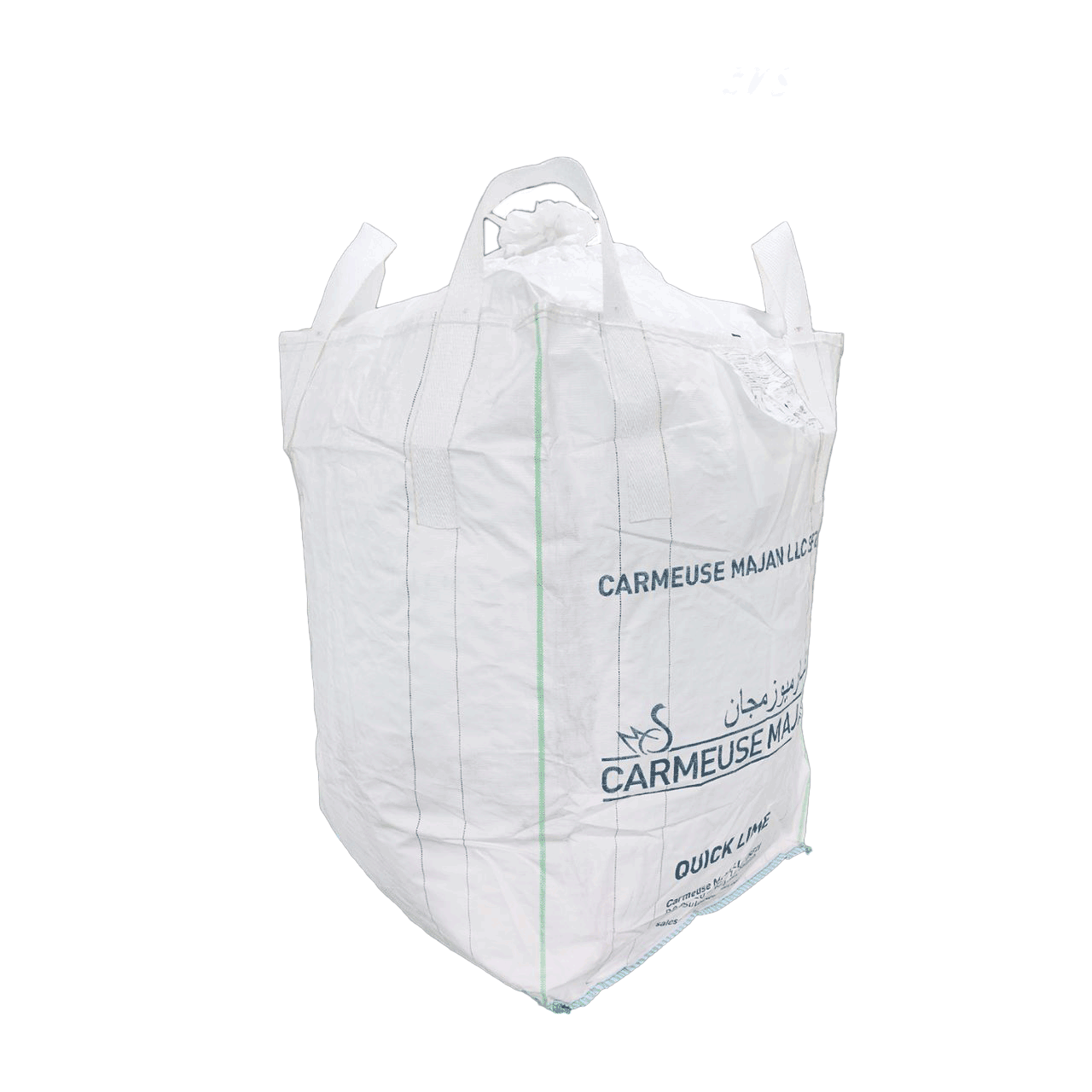 | FIBC Section Bags With Liners FIBC Liners – Bulk Bag Liners Deccan Cans & Printers Pvt. Ltd. |
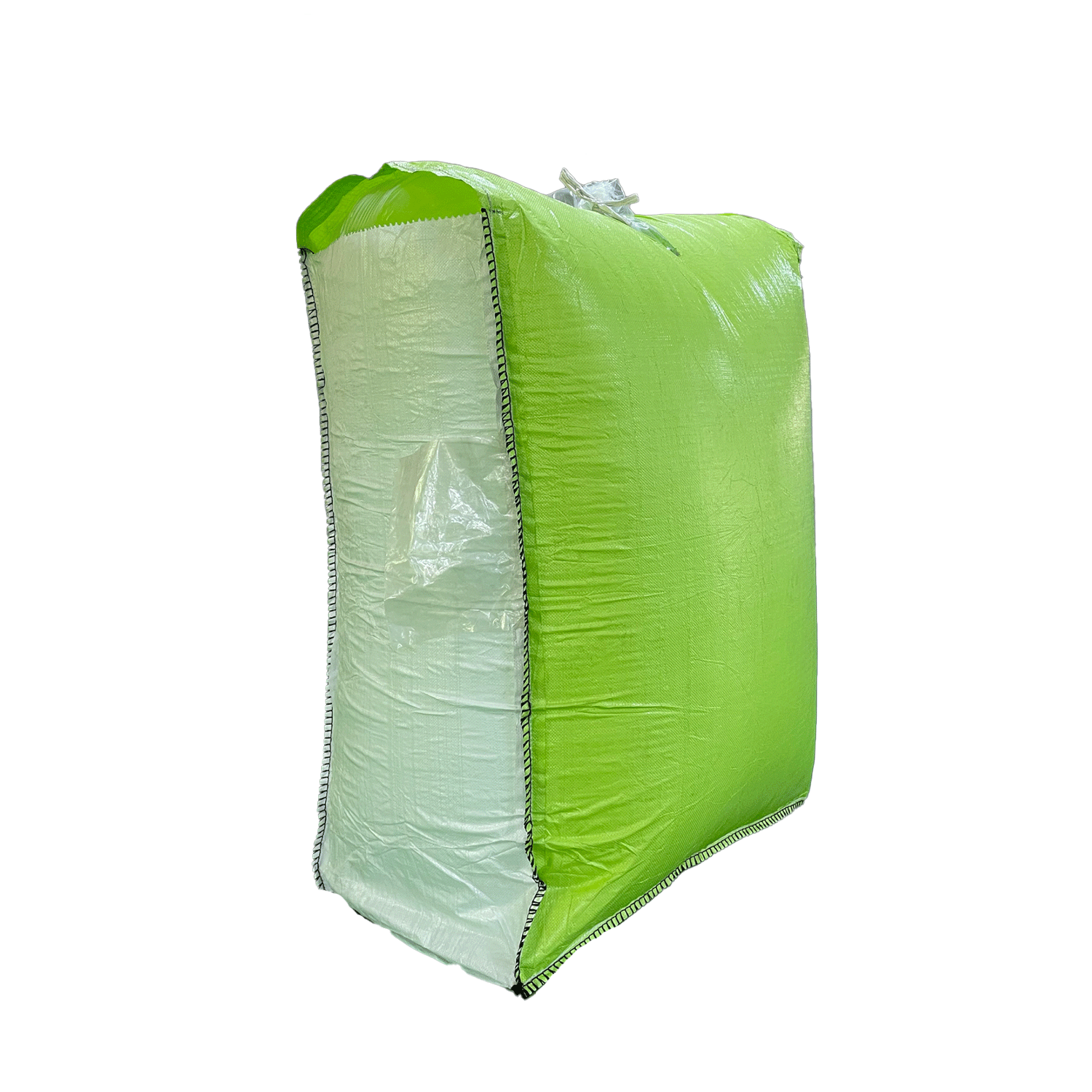 | FIBC Section Fertilizer Bag Range 1 & 2 Loop FIBC Bulk Bags Deccan Cans & Printers Pvt. Ltd. offers durable and cost-effective 1 & 2 Loop FIBC Bulk Bags, designed for the efficient... |
Frequently asked questions
How do you choose FIBC construction for chemicals, minerals and industrial materials?
Match the fabric, liner, seams and discharge design to the material’s particle size, moisture, flow, abrasion and emptying behaviour.
What chemical and electrostatic checks are needed before ordering an FIBC?
Confirm that the fabric and liner tolerate the product, then identify electrostatic hazards and select the required conductive or antistatic construction.
What FIBC specifications affect filling, lifting, stacking and discharge?
Specify safe working load, dimensions, lifting-loop arrangement, filling opening, discharge outlet and the required stacking and emptying performance.
When does an FIBC need dangerous-goods approval and supplier documentation?
Request the applicable UN approval, test information, batch traceability and handling instructions when the material is classified as dangerous goods.
Related products
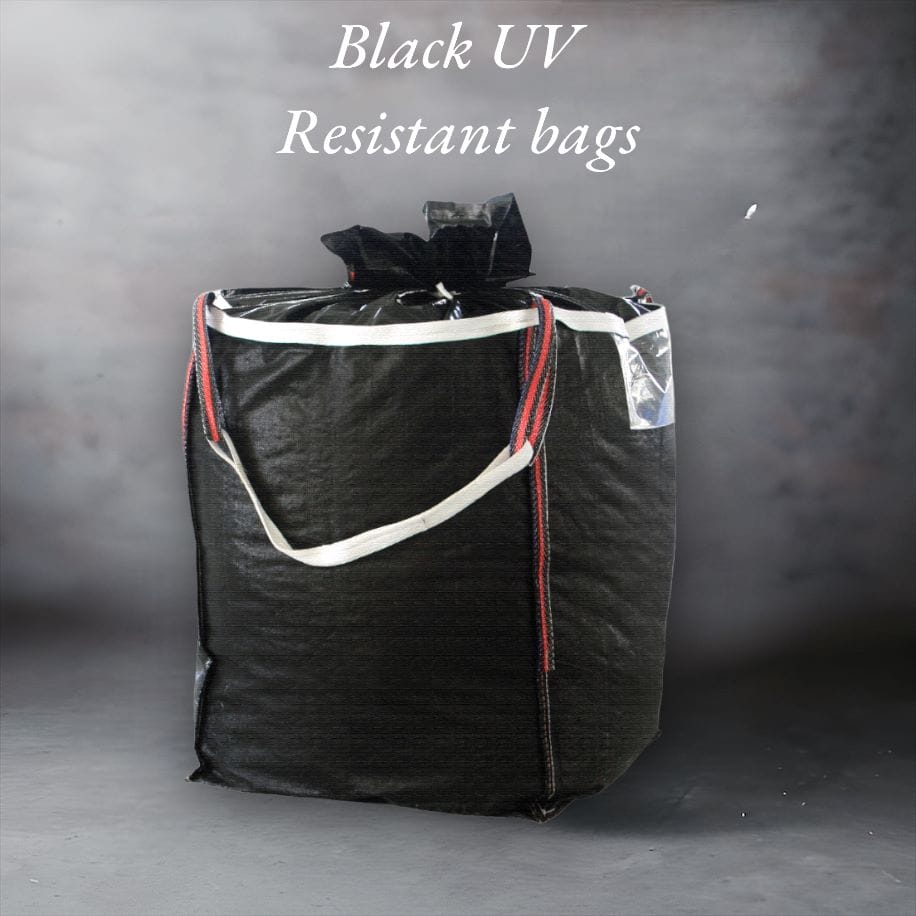 | FIBC Section Black Bags Black FIBC Bags – Enhanced UV Resistance & Extended Shelf Life UV exposure is one of the major challenges faced by the FIBC industry, as prolonged... |
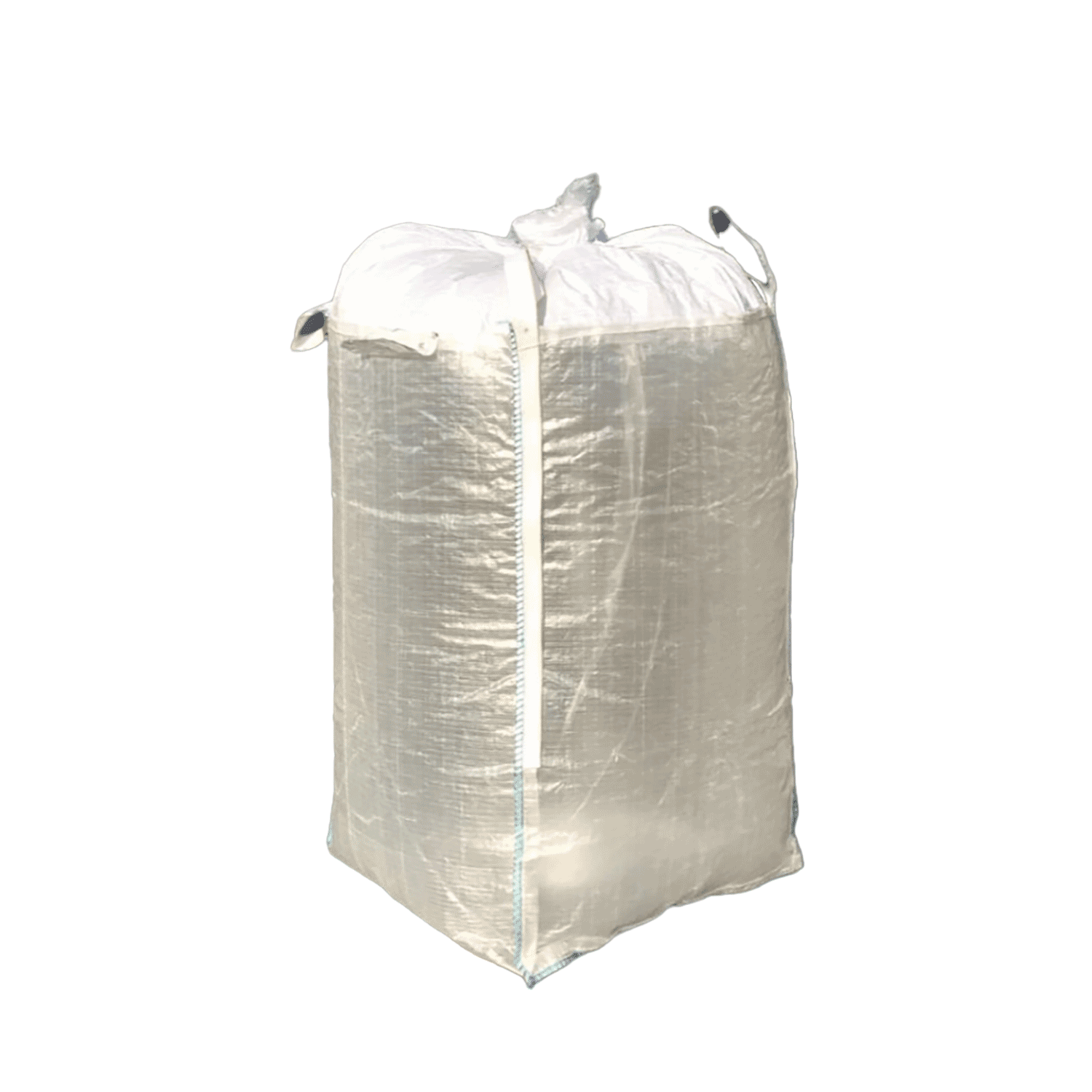 | FIBC Section Transparent Bags Transparent FIBCs – See-Through Bulk Bags Deccan Cans & Printers Pvt. Ltd. |
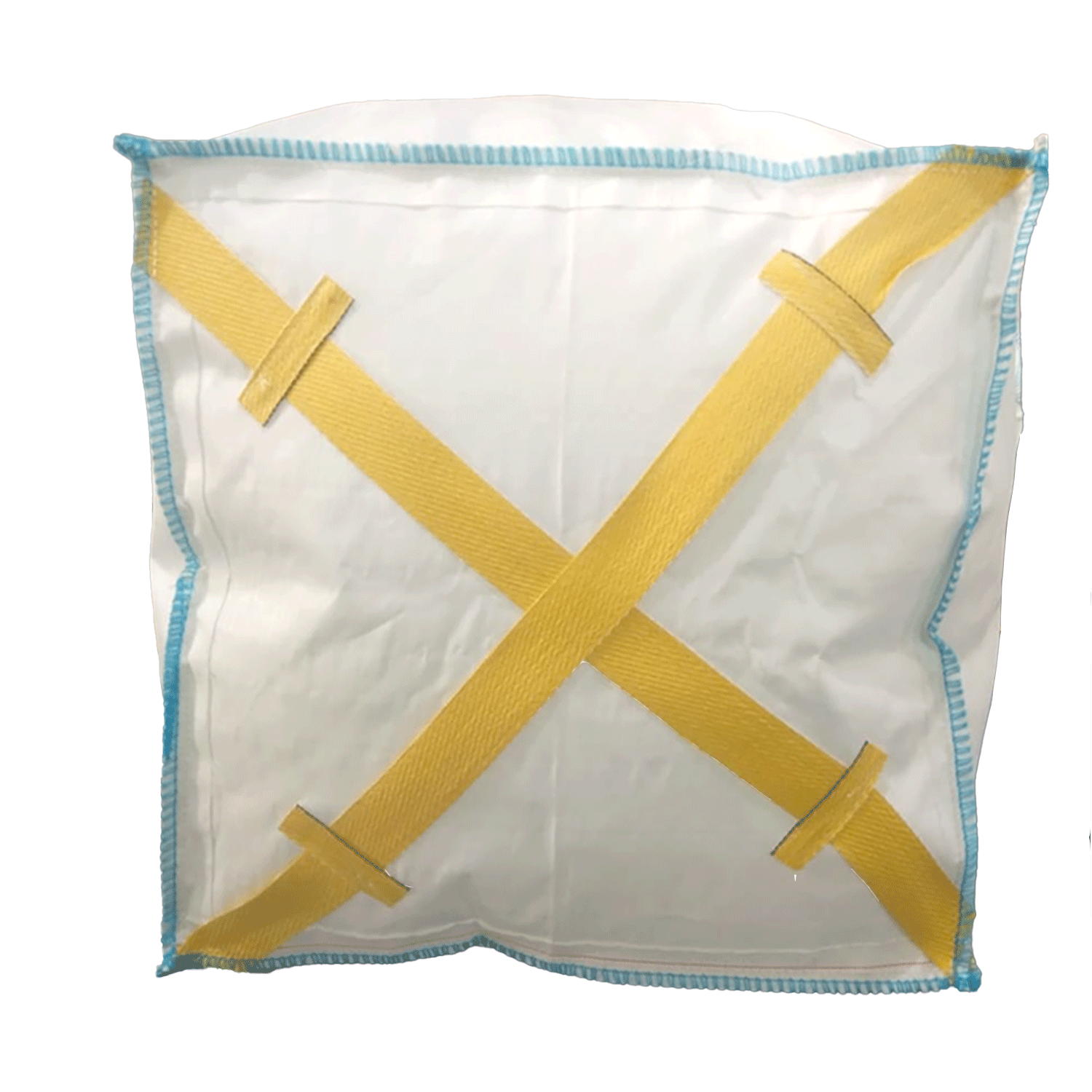 | FIBC Section Cross Bottom Sling Bags Cross Bottom Sling FIBCs – Bulk Bags Deccan Cans & Printers Pvt. Ltd. |
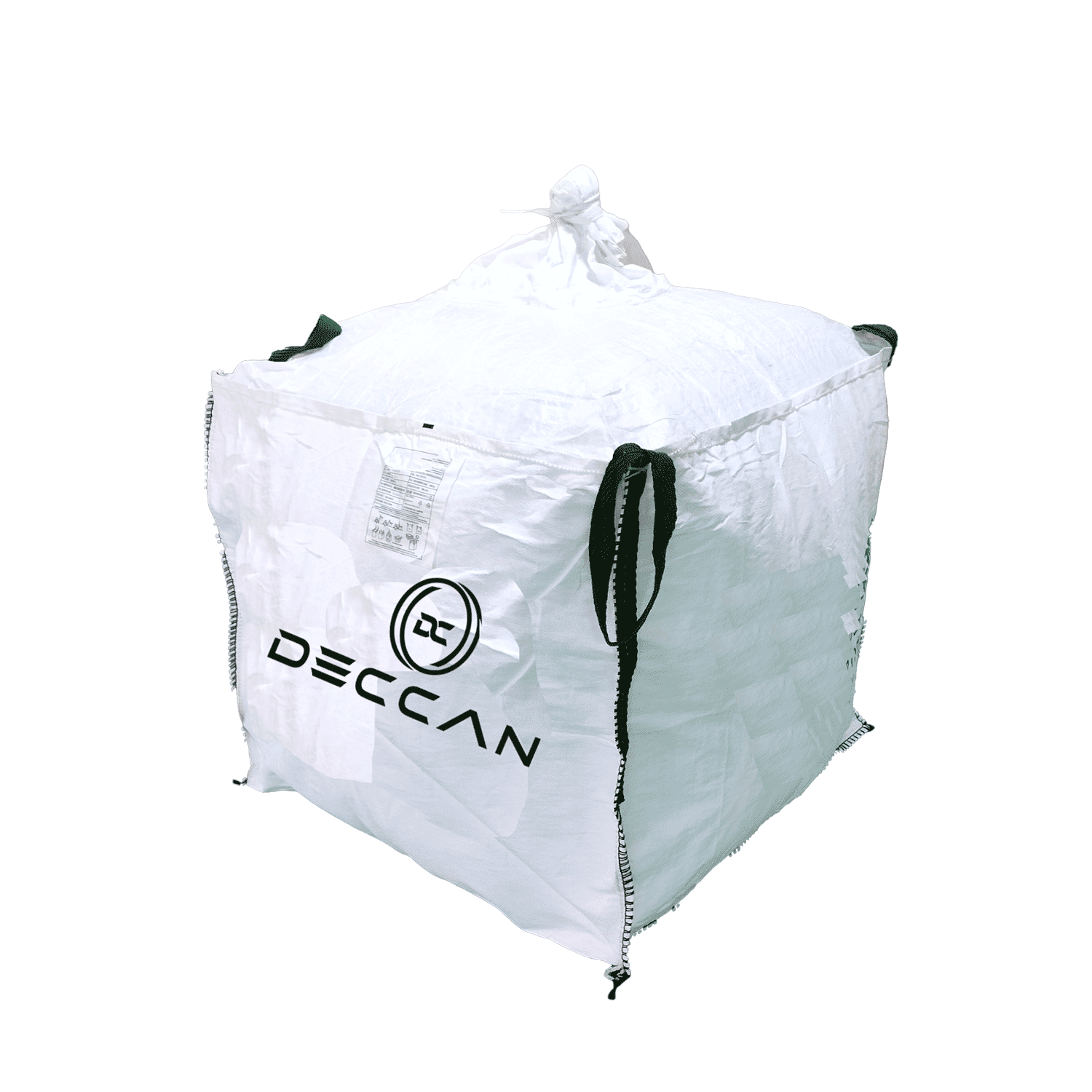 | FIBC Section Polyester Loop Bags/Multifilament Loops Polyester / Multifilament Loop FIBC Bags Deccan Cans & Printers Pvt. Ltd. |