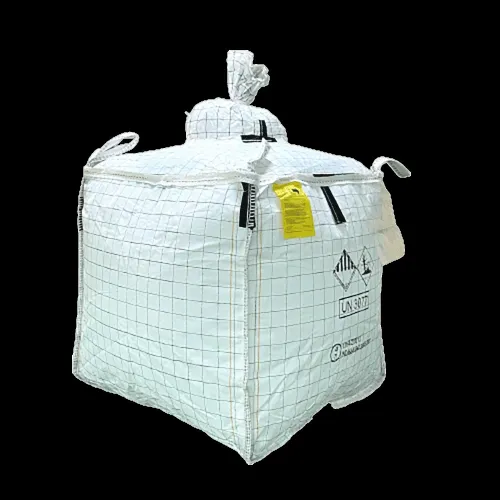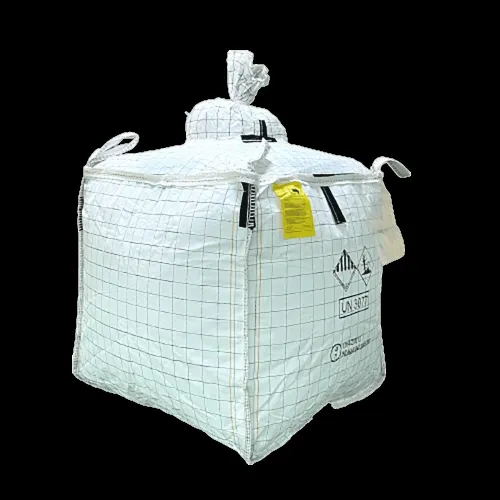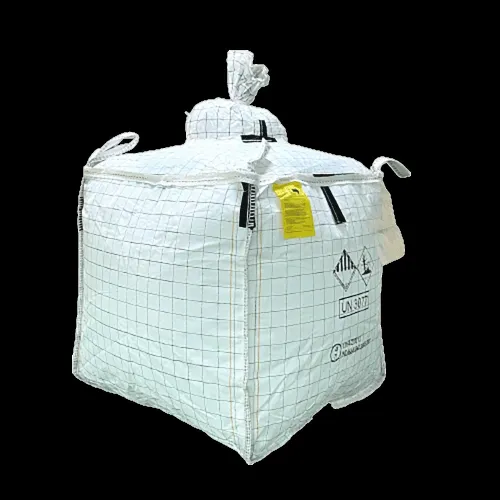

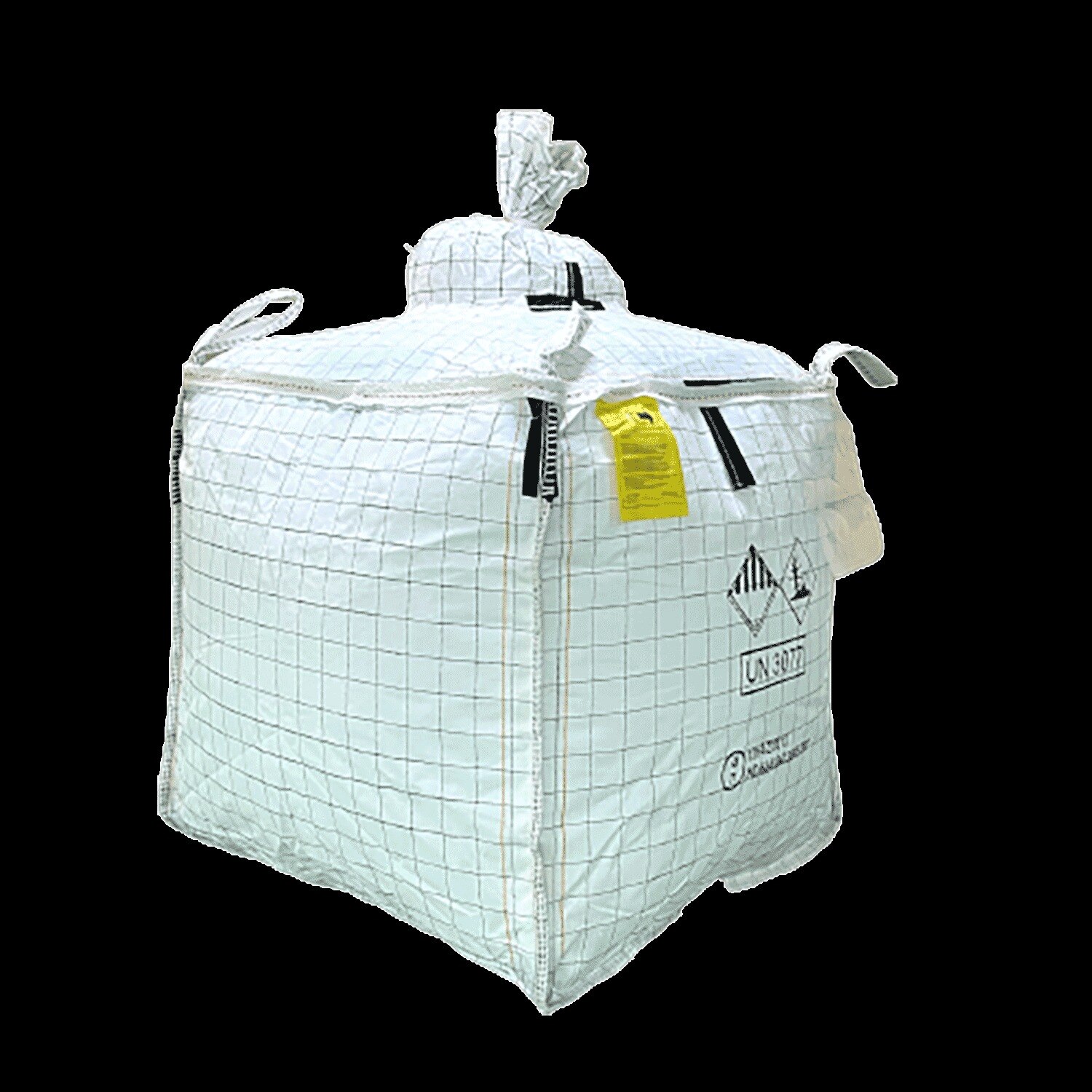
A “food grade” label does not identify one worldwide certification or prove that a complete bulk bag is suitable for direct food contact. You will be able to define the required construction, request the right compliance evidence and reject bags that create contamination, static, barrier or transport risks.
Key takeaways
- Request food-contact declarations, migration tests and traceability records.
- Match the liner polymer and thickness to the ingredient and filling conditions.
- Specify SWL, safety factor, grounding and transport protection before ordering.
- Separate hygienic manufacturing controls from claims about food-contact suitability.
What makes an FIBC suitable for food contact?
A food-grade FIBC definition describes a bulk bag whose food-contact surfaces are suitable for the stated product and conditions. Food-contact suitability is not the same as hygienic manufacture: an ordinary industrial FIBC may be strong enough for transport yet contain materials, residues or processes unsuitable for food.
Name these details before approval:
- Destination market and importing country food-contact rules
- Food or ingredient, including oily, acidic, powdered or alcoholic products
- Direct-contact surfaces, contact time and maximum temperature
- Whether the bag is used once, stored, filled hot or exposed to cleaning agents
“Food grade” is not a globally uniform certification. In the EU, Regulation (EC) No 1935/2004 requires materials not to endanger health, alter food composition unacceptably or impair taste and smell. EU Regulation (EC) No 2023/2006 sets GMP requirements for food contact materials.
Polypropylene and polyethylene components also fall under EU Regulation (EU) No 10/2011 plastic food-contact materials, including migration limits and use conditions.
For the United States, FDA 21 CFR 177.1520 is relevant to polypropylene and polyethylene. It does not automatically clear the finished FIBC. Request evidence covering colorants, coatings, adhesives, liners, sewing threads, inks and other components.
A generic supplier statement is not a complete regulatory declaration. The declaration must identify materials, restrictions, intended use, test conditions and traceability for the complete bag, not only its woven fabric.
Which documents and factory controls should you require?
Require a complete food-contact dossier for the finished FIBC, not a certificate covering woven fabric alone. The declaration of compliance must name the destination country’s rules, intended food simulant, contact time and temperature, restrictions, and the applicable polypropylene grade and polyethylene grade.
Request these documents:
- Material specification listing grades, additives and suppliers for the polypropylene fabric, coating, liner, sewing thread, lifting loops, printing ink, labels and tie cords.
- Migration-test results showing overall and specific migration under the stated food-simulant and contact conditions.
- Lot traceability linking fabric, liner and component lots to the production date, inspection records and declaration of compliance.
- Written confirmation of foreign-body control, odor acceptance criteria, sealed inner packaging and segregation from chemicals and non-food products.
Paperwork does not prove cleanliness. A compliant polymer can still fail because of oil, dust, insects, fibers, odor or residues.
| Control | Evidence to require | Failure prevented |
|---|---|---|
| Controlled production | Clean-area rules, worker hygiene, pest control, cleaning records and inspection records | Contamination entering the bag |
| Foreign-body control | Line clearance, tool checks and pinhole, cut, stitch and spout inspections | Fibers, broken stitches or product leakage |
| Packaging and storage | Sealed inner packaging and chemical segregation | Dust, odor transfer and residue |
Add written controls for organic, halal, kosher, allergen control and pharmaceutical ingredients. Require segregation, cleaning validation and confirmation that no animal-derived processing aid or allergen enters the supply chain.
How should you specify the liner and bag construction?
Choose the liner from the powder’s behaviour, not from a supplier’s word “lined.” Woven polypropylene alone is not a dependable oxygen barrier, water-vapour barrier or aroma barrier. Your FIBC liner selection must address fit, liner film thickness, permeability, sealing and the filling spout and discharge spout.
| Option | Fit and residual product | Barrier, static and sealing points |
|---|---|---|
| Loose polyethylene liner | Fast to install; excess film creates folds, collapse and residual product | Basic moisture control; weak oxygen and aroma protection; seal folds carefully |
| Form-fit liner | Matches the bag; reduces trapped folds and incomplete discharge | Specify the liner drawing and seal geometry; poor dimensions still obstruct flow |
| Aluminium-barrier liner | Close fit is essential; damage or creasing can create leaks | Strong oxygen barrier, water-vapour barrier and odor retention; inspect seals and pinholes |
| Conductive liner or antistatic liner | Fit follows the bag and equipment | Controls static only when its performance matches the hazard assessment; specify grounding or dissipation requirements |
Before ordering, put these details on the drawing:
- Film polymer, liner film thickness, oxygen and water-vapour permeability targets, and allowable residual product.
- Heat-seal method, seal width, attached or loose construction, liner dimensions, gusset shape and neck design.
- Filling spout, discharge spout, closure type and closure dimensions.
- Sift-proof FIBC seam construction, spout seals, pinhole limits, leak or pressure test and inspection criteria.
Match the liner drawing to the FIBC dimensions and filling equipment. A poor fit can collapse during filling, trap folds during discharge or leave an improperly sealed liner that loses moisture protection. Food-contact compliance does not prove sift-proof performance; seams, spouts, closures, cuts and broken stitches need separate controls.
What load, static and transport controls apply internationally?
Specify each FIBC by safe working load, bag type, filling and discharge arrangement, lifting-loop configuration, stackability, pallet and container handling, and test requirements under ISO 21898 for non-dangerous-goods FIBCs.
A 5:1 safety factor or 6:1 safety factor relates ultimate test load to rated safe working load; it never permits filling the bag to five or six times its rating.
| Type | Charge behaviour | Required control |
|---|---|---|
| Type A FIBC | No static protection | Use only where combustible dust and ignition hazards are absent |
| Type B FIBC | Limits propagating brush discharges | Control combustible dust and prevent ignition sources; it is not a substitute for grounding |
| Type C FIBC | Conductive construction | Verify grounding before and throughout filling and emptying |
| Type D FIBC | Dissipates charge under specified conditions | Use the manufacturer’s system conditions without a grounding connection |
For combustible dust, match the bag and process to the powder’s minimum ignition energy, dust-explosion zoning, bonding, grounding, conveying air and filling velocity. “Food grade” or “antistatic” does not prove electrostatic safety.
- Prefer a new one-trip FIBC when contamination, unknown previous loads or traceability matters; accept a reused FIBC only with documented load history, cleaning, inspection and requalification.
- For ocean transport, control pallet stability, top-load and lateral restraint, sharp-surface contact, loop access and bag compression.
- Load a dry container and address container condensation with moisture control; desiccants cannot replace a suitable barrier liner or dry loading practice.
How can you turn these requirements into a purchase specification?
Turn the decision into a FIBC purchase specification that an international importer can approve, inspect and trace.
1. Describe the ingredient, destination market, direct-contact use, contact time and temperature. State whether the bag is for food ingredient packaging, certified-organic, allergen-controlled, halal, kosher, pharmaceutical or combustible-dust service.
2. List every direct-contact surface and material component: woven fabric, coating, liner, thread, loops, ink, labels, tie cords and adhesive. Require traceability from each lot to the finished FIBC assembly.
3. Set measurable requirements for moisture, oxygen and aroma barrier, static type, sift-proof seams, pinholes, closures, safe working load, lifting configuration and reuse. Define foreign-material acceptance and odor acceptance separately from food-contact compliance.
4. Approve the liner drawing against the filling and discharge equipment. Check dimensions, necks, spouts, seals, closures and gussets; poor fit creates trapped folds, incomplete discharge and liner damage.
5. Make supplier qualification depend on a declaration of compliance, material specifications, migration results, intended simulants and contact conditions, production lots, inspection records and a complete migration compliance dossier—not a fabric-only “food grade” statement.
6. Use an inspection checklist on the production sample. Reject broken stitches, cuts, oil, dust, insects, foreign fibers, odor, damaged loops, leaking spouts or unsealed liners.
A food-contact FIBC can still fail an organic, allergen-control or combustible-dust process. Deccan Cans & Printers Pvt. Ltd. can contribute by translating these limits into a custom FIBC’s fabric, liner, closure and handling configuration.
Frequently asked questions
What makes an FIBC suitable for food contact?
Its food-contact surfaces must suit the product, temperature, use conditions and destination-market rules; strength alone is insufficient.
Which documents should you require for food-grade FIBCs?
Request a declaration of compliance, material specifications, migration-test results, batch traceability and factory hygiene records.
How should you specify the liner and bag construction?
Name the liner polymer, thickness, dimensions, closure, seam design, fabric specification, safe working load and safety factor.
What load, static and transport controls apply internationally?
Define the safe working load, test method, electrostatic classification, grounding instructions, palletisation and protection against moisture and contamination.