Choosing an FIBC by volume alone can leave you with an overloaded bag, uncontrolled dust, poor discharge or an unsafe lifting arrangement. By the end, you will be able to match the bag’s construction, rating, liner, outlet and documentation to your material, equipment and Santiago operating conditions.
Key takeaways
- State both bag volume and safe working load before ordering.
- Match lifting loops and discharge outlets to your filling equipment.
- Use liners, coated fabric or antistatic designs when the material requires them.
- Request test certificates, food-contact records or hazardous-goods documentation before use.
How do you match an FIBC to the material and required payload?
Match the FIBC to the material first, then state both FIBC capacity in litres or cubic metres and safe working load in kilograms. A 1 m³ bag has no universal payload: a light agricultural product, dense mineral and compacted powder impose different loads on fabric and lifting loops.
Confirm filled bulk density, settling during transport, and whether the contents are free-flowing, cohesive, oily, dusty, hygroscopic or abrasive.
Specify the safe working load for the actual filling condition, not nominal volume. Ask for the design safety factor: ISO 21898 commonly uses 5:1 for single-trip FIBCs and 6:1 for multiple-trip designs. A 6:1 marking does not authorise reuse without inspection.
| Container or process | Strength | Choose it when |
|---|---|---|
| Woven polypropylene FIBC | Flexible, efficient bulk handling | The process can safely lift a flexible container |
| Paper valve bag | Smaller, stackable units | You need controlled manual or automated emptying |
| Rigid intermediate bulk container or drum | Better rigidity and containment | Pressure, temperature control or chemical compatibility governs |
| Silo transfer | Integrated process handling | Lifting a filled flexible container is unsafe |
Include bag dimensions, tolerances, pallet or hopper clearance, fabric weight and basis weight of FIBC bags in the purchase specification. Also confirm whether the bag settles in transit and whether its dimensions remain compatible with filling and discharge equipment.
Which lifting loops, filling method and outlet fit your equipment?
Choose the lifting arrangement your equipment has actually been tested to use, not the one shown in a catalogue photograph.
| Arrangement | Equipment and checks | Main risk |
|---|---|---|
| 1-loop FIBC | One tested crane hook or compatible sling; verify loop geometry and SWL | An incompatible hook can bend or cut the loop |
| 2-loop FIBC | Two-point hook or sling system with tested spacing | Uneven loading can twist the bag |
| 4-loop FIBC | Four-point frame only when the manufacturer tested that configuration | Four loops do not automatically authorise four-point crane lifting |
| Cross-corner FIBC loops | Forklift hooks, crane bars or frames matched to corner spacing | Incorrect spacing loads one corner |
| Cross-bottom sling FIBC bags for forklifts and cranes | Equipment that supports the specified bottom slings and provides tine or hook clearance | A tine or bar can crush the bag or snag the outlet |
Confirm top-lift construction, lifting-point spacing, crane-bar dimensions, forklift clearance, filling level and the bag’s rated lifting method. A 4-loop FIBC needs documented evidence for the intended lift.
State whether filling uses a gravity chute, screw conveyor, pneumatic line or manual process. Inlet diameter, connection type, dust extraction and static behaviour change with filling rate.
Match the outlet to flowability, cohesive strength, particle-size distribution and moisture. Cohesive powder can bridge or rat-hole in a standard spout; specify a larger outlet, iris closure, conical bottom, suitable liner or mass-flow equipment. Free-flowing granules need a closure that controls release.
Require inlet and outlet dimensions, closure type, discharge direction and clearance beneath the filled bag.
When do coated fabric, liners and antistatic controls become necessary?
Use uncoated woven polypropylene when the material needs neither sift-proofing nor a moisture barrier and the handling environment is controlled. Choose coated FIBC fabric, sift-proof seams or a polyethylene liner for FIBC when contents are fine, dusty, oily, hygroscopic or separated from ambient moisture.
| Construction | Best fit | Main limitation |
|---|---|---|
| Uncoated FIBC fabric | Granules and dry, free-flowing raw materials | Does not reliably stop dust or water vapour |
| Coated fabric or sift-proof seams | Fine powders and oily products | Coating and seams still need compatibility checks |
| Polyethylene liner for FIBC | Hygroscopic or moisture-sensitive contents | Can collapse, trap product or alter static behaviour |
“Moisture-resistant” is not “moisture barrier.” Woven fabric, seams, spouts and closures can admit water vapour, so store sensitive contents and empty bags covered and dry. Specify liner material, FIBC liner thickness and gusset design, fit, inlet, outlet and closure method, plus compatibility with filling and discharge equipment.
Confirm that the liner does not:
- Restrict filling or discharge flow.
- Collapse, trap product or encourage bridging.
- Change grounding or charge dissipation during emptying.
For combustible powders, obtain minimum ignition energy, Kst and Pmax data and complete a process hazard assessment. IEC 61340-4-4 classifies FIBCs as Type A, B, C or D: Type C requires a verified ground connection during filling and discharge, while Type D uses controlled dissipative construction without the same grounding procedure.
A conductive or static-dissipative bag is not automatically explosion-safe around flammable vapours or in a classified area.
What documentation proves an FIBC is suitable for food, chemical or hazardous contents?
A suitable FIBC needs two separate proofs: the material will not damage it, and the intended rules approve its use. One does not replace the other.
1. For food or feed ingredients, request food-grade FIBC documentation identifying the polypropylene fabric, coating, inks, sewing thread and liner. Require applicable migration results or a declaration of compliance. Chile’s Reglamento Sanitario de los Alimentos sets sanitary requirements for food-contact materials, so “food grade” alone proves nothing.
2. For pharmaceutical bulk bags, add cleanliness limits, change-control records, batch traceability and contamination-control requirements. A chemically compatible bag can still fail a pharmaceutical specification through residue, uncontrolled material changes or missing production records.
3. For chemicals, verify a chemical-resistant FIBC against the exact substance, concentration, temperature and contact time. The word “chemical” describes no performance. Ask for compatibility evidence covering the fabric, coating, liner, thread, closure and spout.
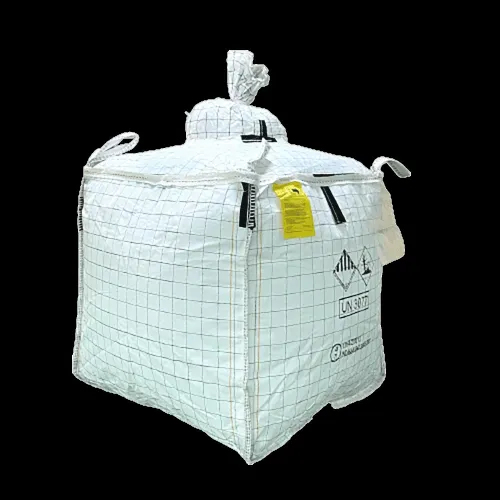
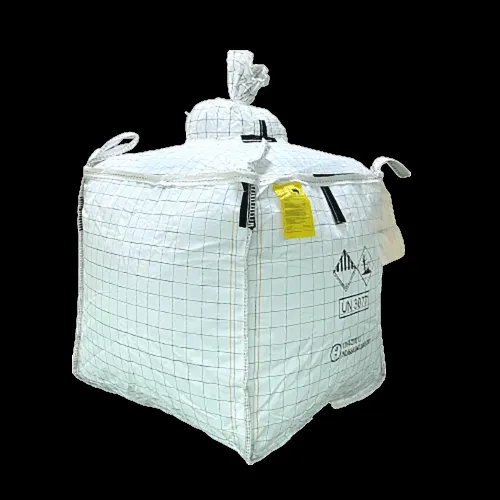
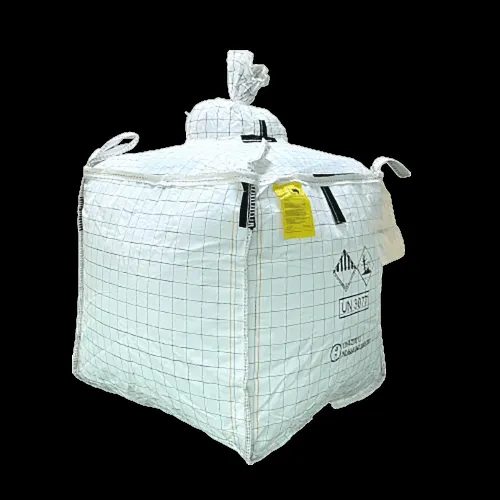
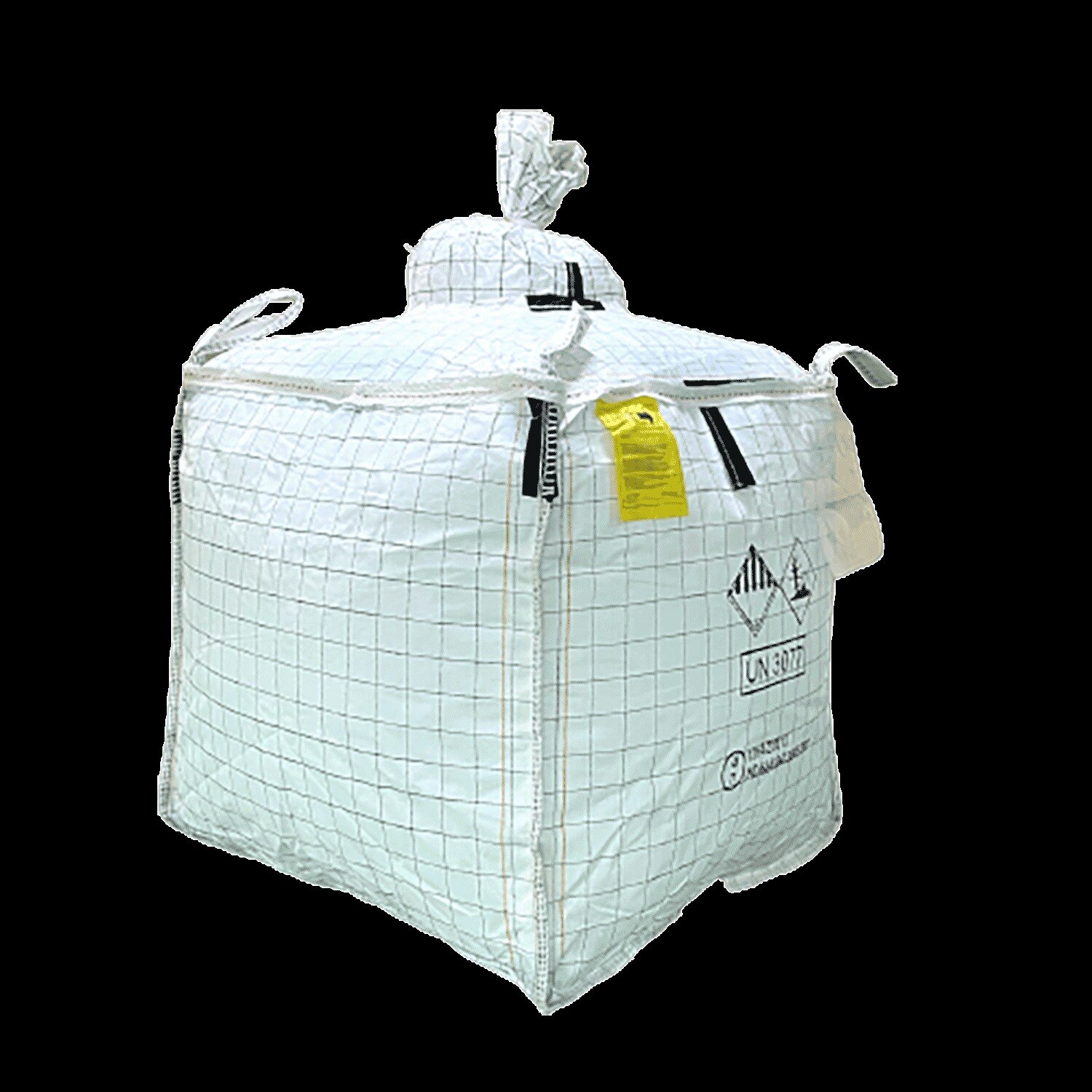
4. For dangerous goods, record the product’s UN code, UN entry, packing instruction and required packing group before ordering. Confirm the UN-certified FIBC packaging group and UN marking, then obtain the packaging approval and test certificate. The approval covers a defined construction and test configuration, not every hazardous material.
Match the approved fabric, coating, liner, closure and discharge spout exactly; replacing a liner or closure can invalidate its relevance. Adding a dangerous-goods label does not upgrade an ordinary FIBC.
How should you inspect, store and source FIBCs for Santiago operations?
Before loading, read the sewn-in label and purchase record for SWL, safety factor, dimensions, batch number, lifting configuration, liner details and inspection status.
| Service type | Required control | Decision |
|---|---|---|
| Single-trip | Use once within its stated SWL and handling method | Do not reuse |
| Reusable | Document inspection and disposition after every handling cycle | Apply stated FIBC reuse limits |
| Unknown history | Prior service cannot be verified | Reject, even if marked 6:1 |
Use this FIBC inspection checklist: reject cuts, pulled seams, fabric abrasion, chemical attack, UV embrittlement, damaged lifting loops, contamination, or a torn, leaking or displaced liner. Check stitching for skipped sections and open seams. Operate inlet and outlet closures without forcing them; resistance can damage the spout or leave the closure unreliable.
Store unused bags for FIBC storage in Santiago Chile on pallets or another clean surface. Keep them covered and away from rain, condensation, direct sunlight, rodents, sharp edges and chemicals. Specify UV stabilisation and a maximum outdoor or open-sided-warehouse exposure period in days; UV stabilisation does not make a bag weatherproof.
Plan forklift clearance, stable pallets, dust extraction during filling, controlled discharge, and empty-bag disposal or recycling. Ask Deccan Cans & Printers Pvt. Ltd. for the technical data sheet, FIBC batch traceability, test records, applicable food or dangerous-goods documents, and written limits for reuse, storage and lifting before comparing price or lead time.
Related products
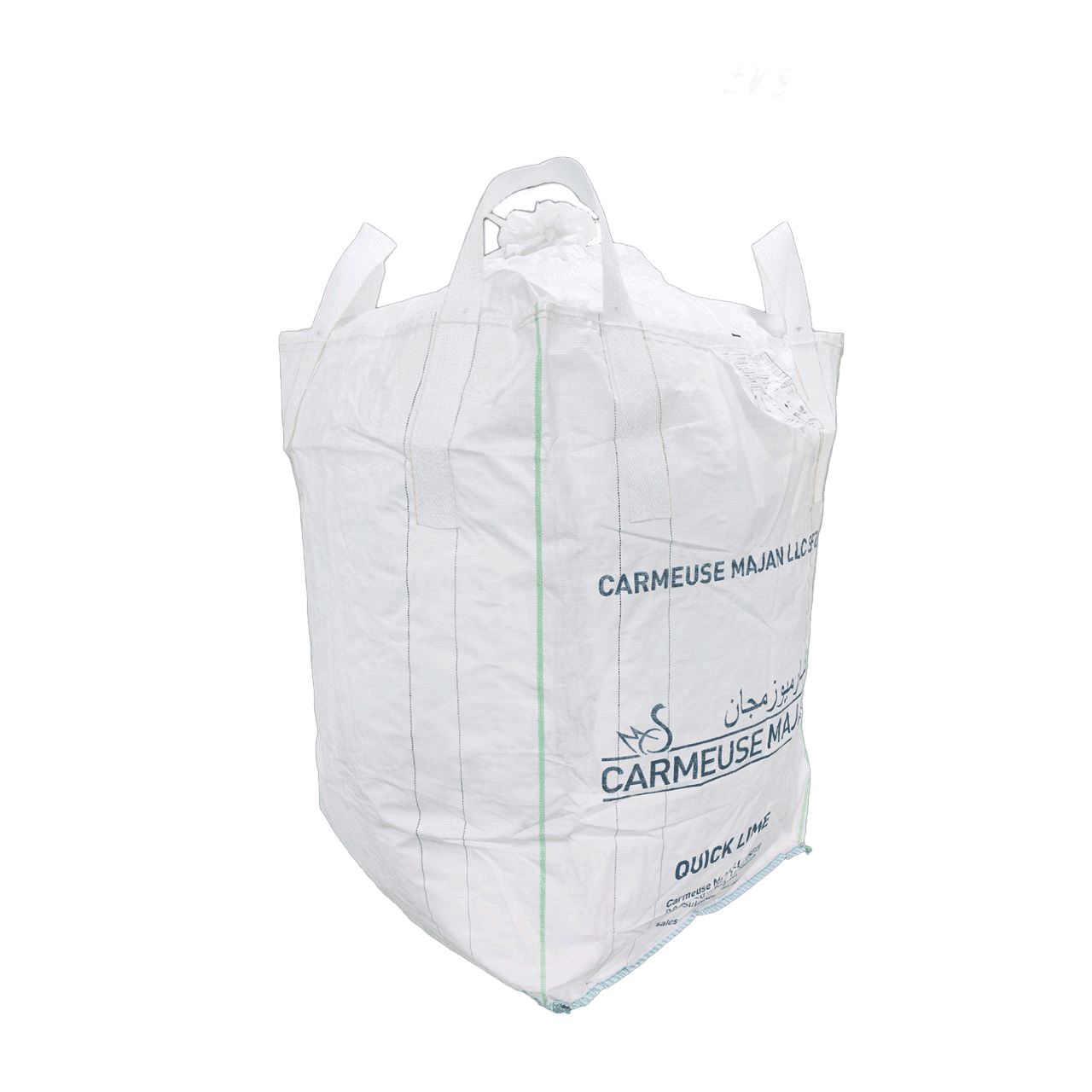 | FIBC Section Bags With Liners FIBC Liners – Bulk Bag Liners Deccan Cans & Printers Pvt. Ltd. |
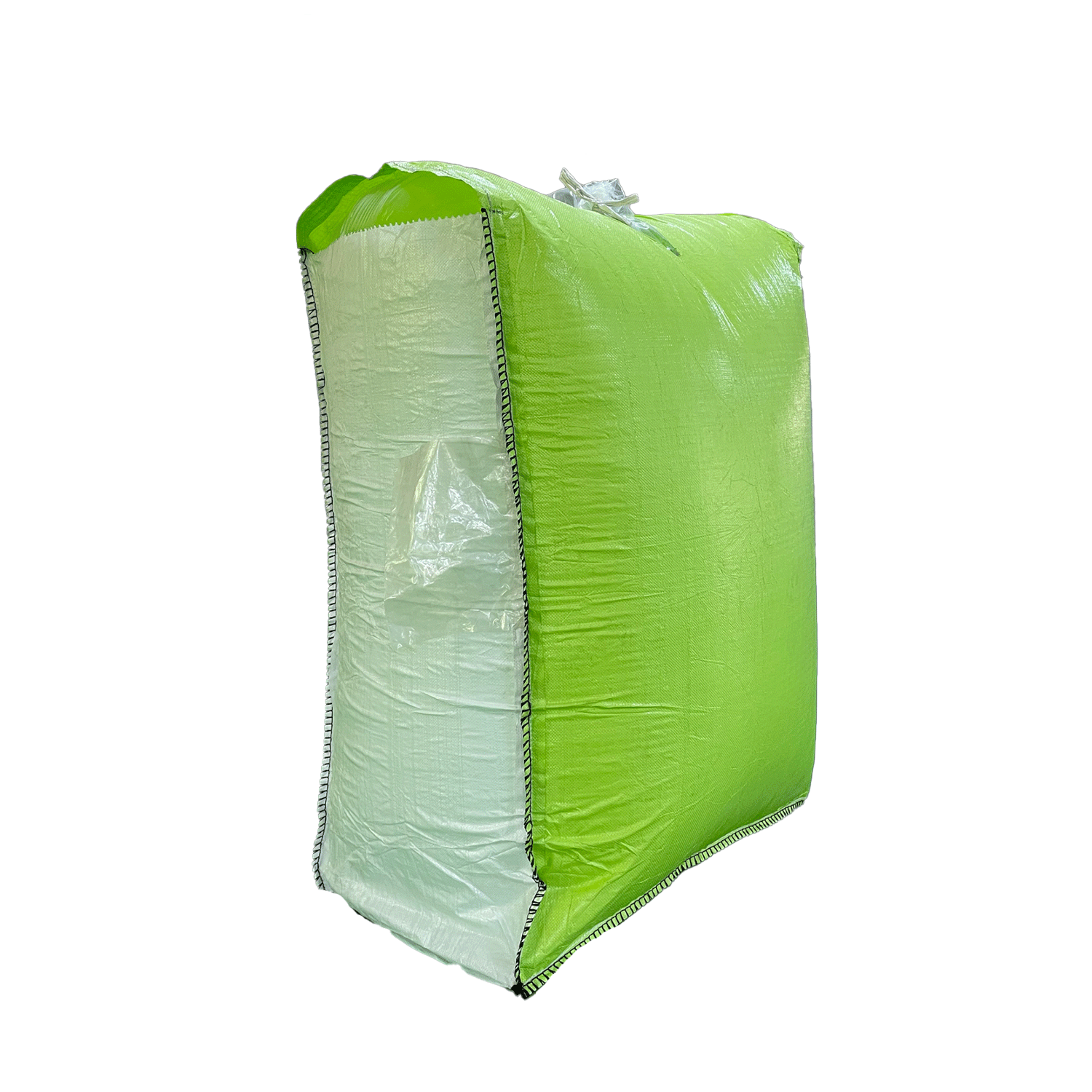 | FIBC Section Fertilizer Bag Range 1 & 2 Loop FIBC Bulk Bags Deccan Cans & Printers Pvt. Ltd. offers durable and cost-effective 1 & 2 Loop FIBC Bulk Bags, designed for the efficient... |
Frequently asked questions
How do you match an FIBC to the material and required payload?
Identify the material’s bulk density, flow behaviour, moisture sensitivity and payload, then specify capacity in litres or cubic metres alongside safe working load in kilograms.
Which lifting loops, filling method and outlet fit your equipment?
Match loop configuration, filling spout and discharge outlet to your forklift, hoist, filling line and receiving equipment before ordering.
When do coated fabric, liners and antistatic controls become necessary?
Use coated fabric for added moisture or fine-particle resistance, liners for contamination and moisture control, and antistatic construction when dust ignition or static discharge presents a hazard.
What documentation proves an FIBC is suitable for food, chemical or hazardous contents?
Request the bag specification, safe working load and test records, plus food-contact declarations, chemical compatibility information or hazardous-goods certification when the contents require it.
How should you inspect, store and source FIBCs for Santiago operations?
Check fabric, seams, lifting loops, inlet and outlet for damage; store bags clean, dry and protected from sunlight; and source against a written specification and inspection process.
Related products
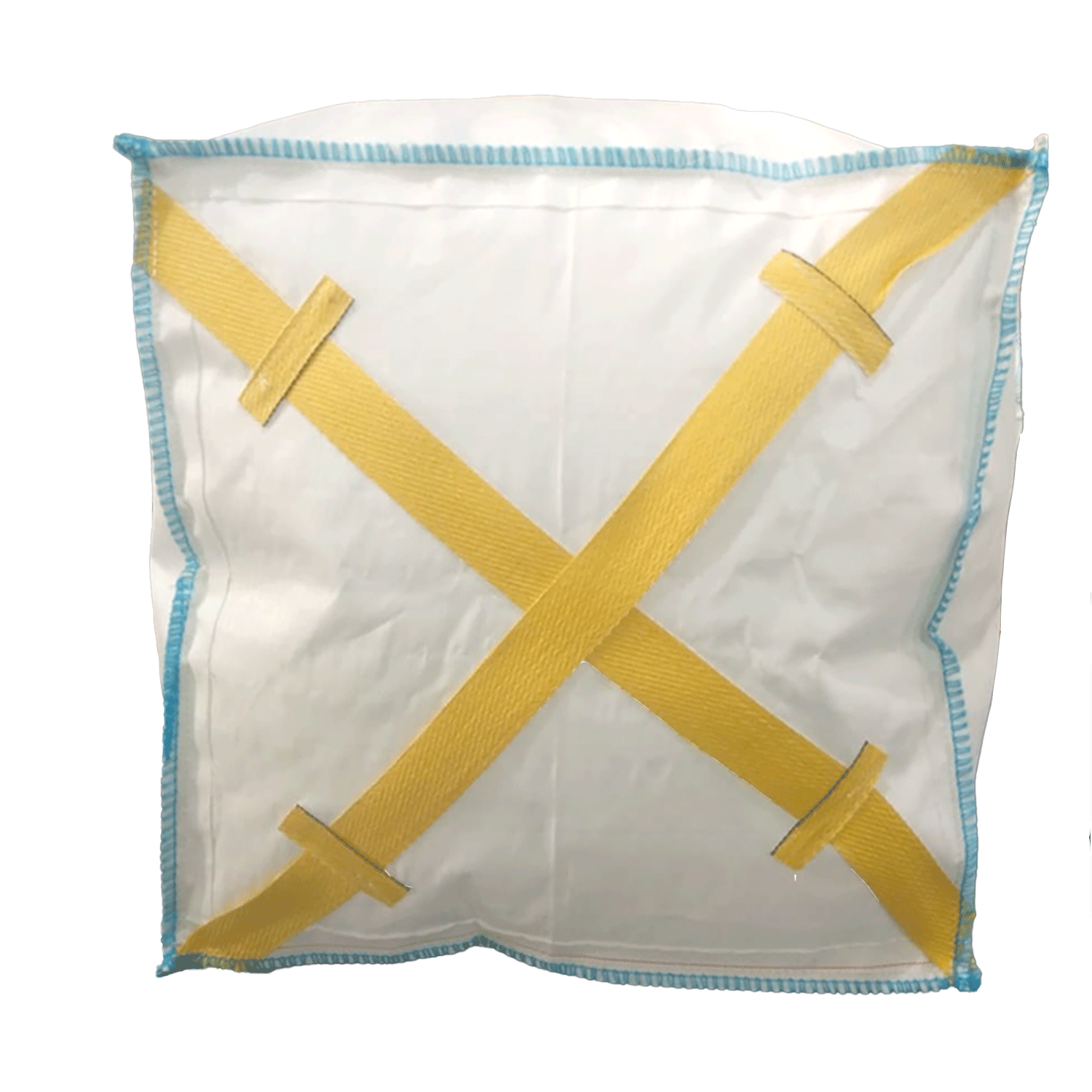 | FIBC Section Cross Bottom Sling Bags Cross Bottom Sling FIBCs – Bulk Bags Deccan Cans & Printers Pvt. Ltd. |
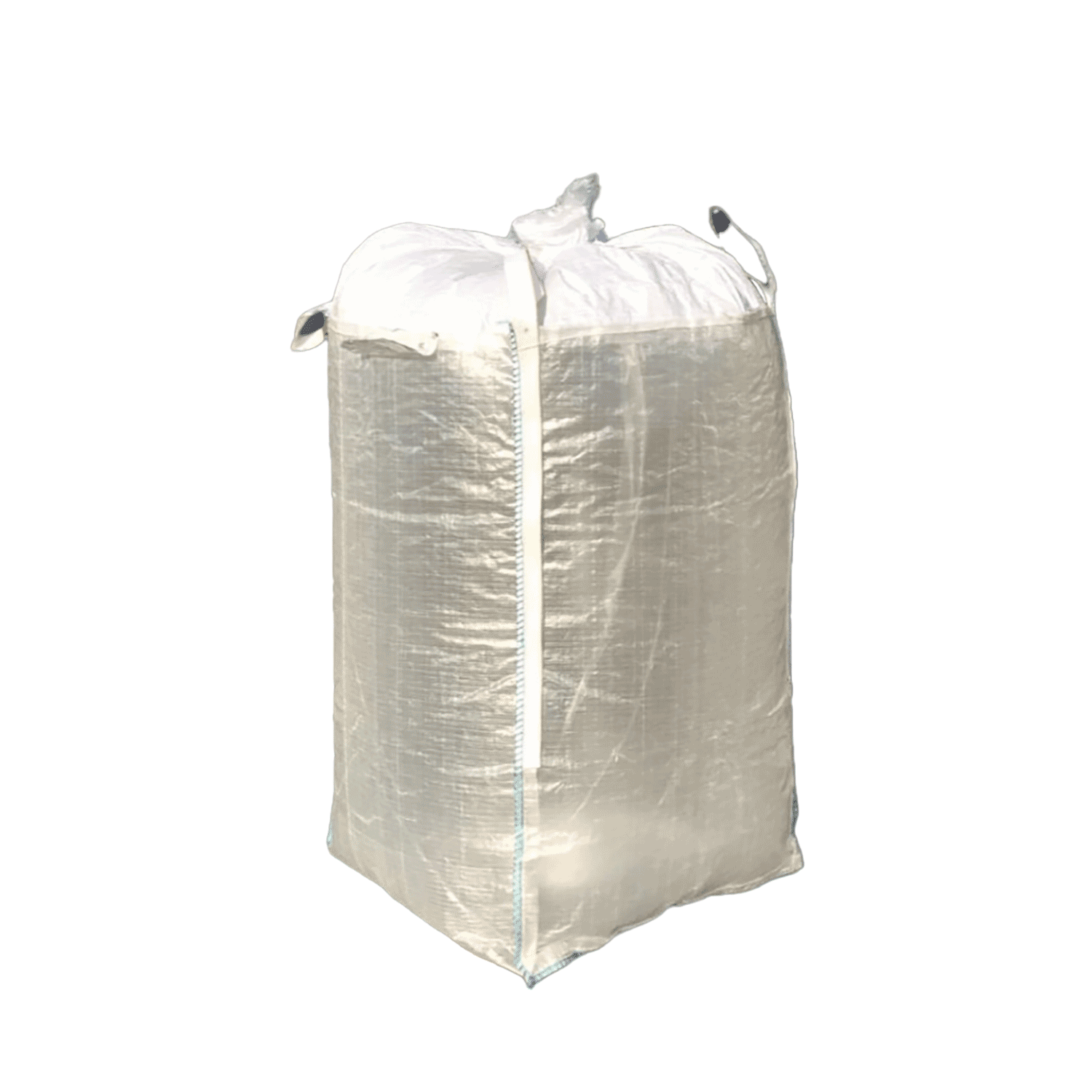 | FIBC Section Transparent Bags Transparent FIBCs – See-Through Bulk Bags Deccan Cans & Printers Pvt. Ltd. |
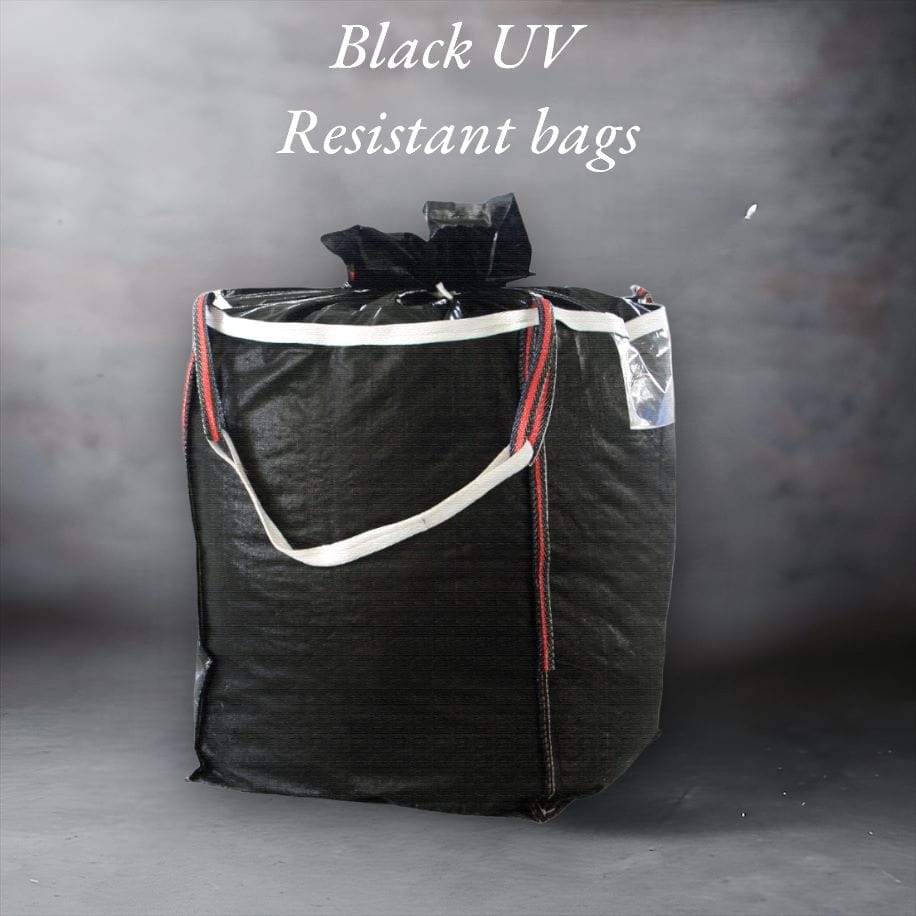 | FIBC Section Black Bags Black FIBC Bags – Enhanced UV Resistance & Extended Shelf Life UV exposure is one of the major challenges faced by the FIBC industry, as prolonged... |
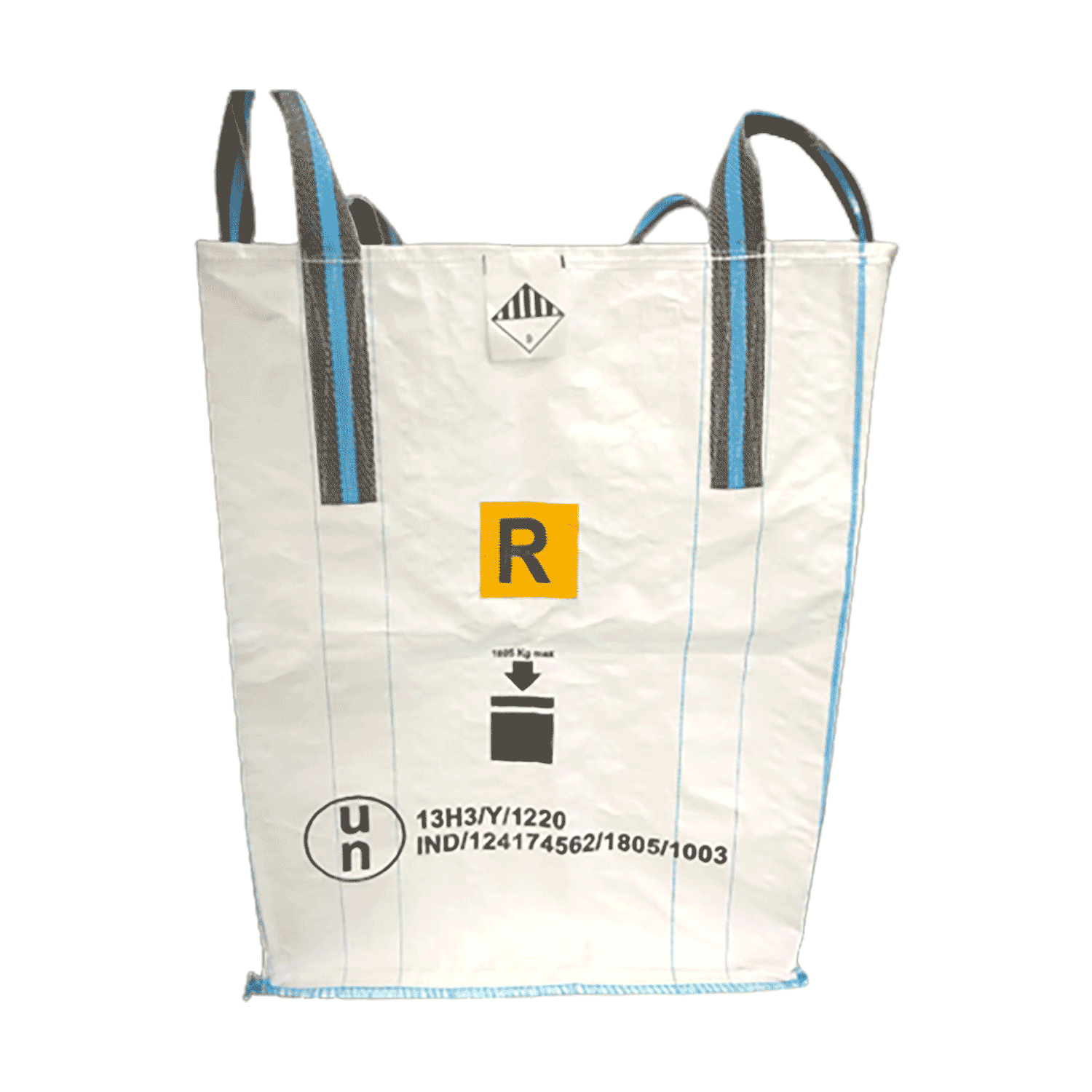 | FIBC Section Un Bags UN Certified Bulk Bags – Rigorous Performance Testing for Safety & Reliability Deccan UN Certified Bulk Bags are specially engineered for the safe... |