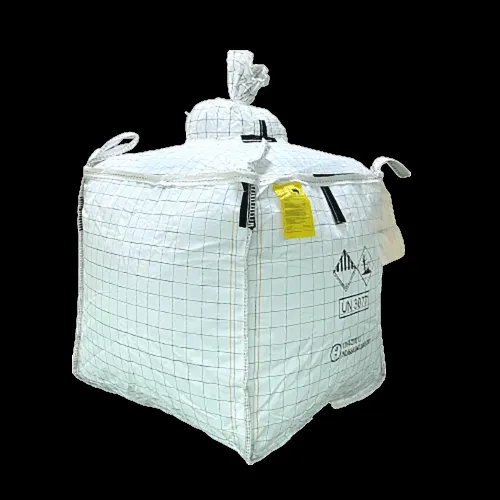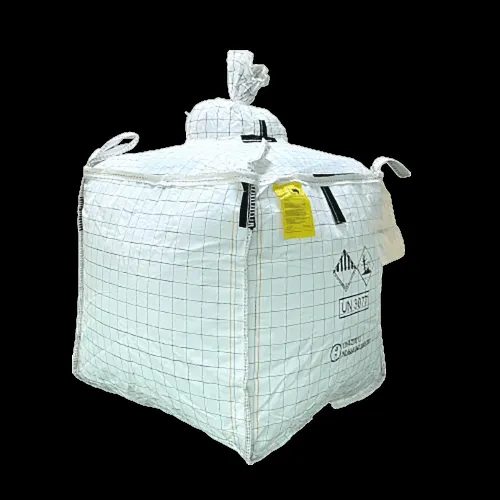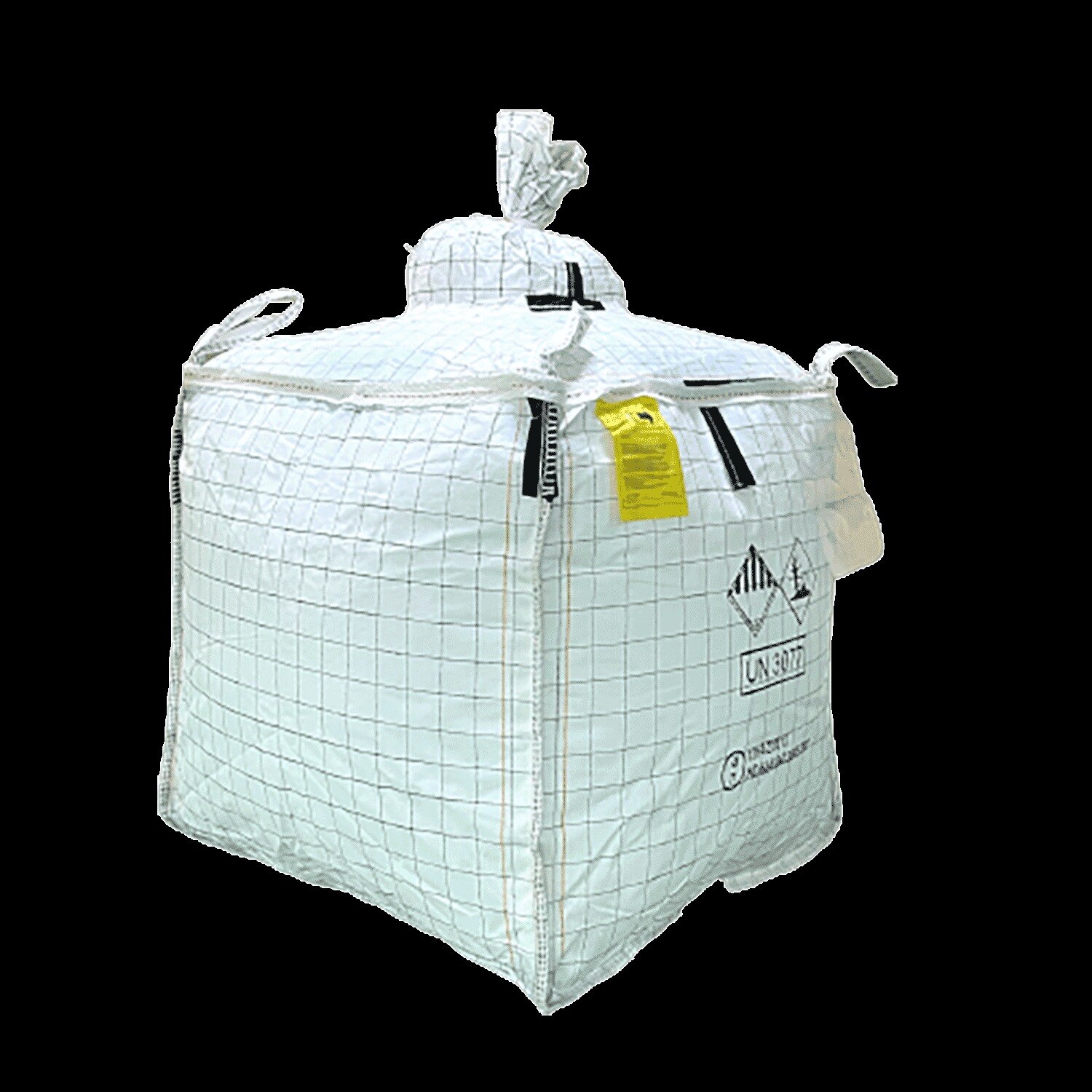
Choosing a heavy-duty FIBC starts with kilograms, bulk density, lifting equipment and the available storage footprint—not the bag’s advertised litre capacity. By the end, you will be able to calculate the required size, match the loop design to your handling equipment, identify construction and safety controls, and request documents that support the specification.
Key takeaways
- Calculate volume by dividing load mass by bulk density.
- Leave headspace for filling and material settlement.
- Match loop design to your forklift, hoist or lifting frame.
- Specify SWL, safety factor, discharge and static controls in writing.
Calculate capacity from load, density and available space
Start with the load, not the bag’s litre rating. Divide the required mass in kilograms by the material’s bulk density in kilograms per cubic metre: required volume = mass ÷ density. Add headspace for filling and settlement; do not fill to the geometric maximum.
A 1,000-litre bag holds 1 cubic metre, but its nominal capacity in litres is not its safe working load. A dense product can exceed the bag’s SWL before the bag looks full.
| Service category | Typical use | What to confirm |
|---|---|---|
| 5:1 | Single-trip service | Rated mass for the product and handling cycle |
| 6:1 | Reusable or multi-trip service | Reuse conditions, inspection interval and rated mass |
Treat 5:1 and 6:1 as design categories, not substitutes for the stated SWL. Compare both calculated volume and mass with the specification sheet.
- Check the filling factor, dimensions, top inlet, bottom discharge and lifting configuration.
- Confirm the filled bag fits the pallet length and width, rack clearance, truck body and container door height.
- Ask whether settlement or bulging extends beyond the stated footprint.
- Require the supplier to confirm the rated mass for your product, fill height and handling cycle before approval.
Do not infer stacking tiers from SWL or dimensions. Require tested top-load performance, the permitted stacking pattern, pallet or floor conditions, and whether direct stacking is allowed—especially where seismic or handling disturbance matters in Santiago.
Match loop configuration and construction to the lifting system
Choose the lifting system before approving the bag: a 1-loop FIBC needs a compatible single-point hook or lifting frame, while a 2-loop FIBC requires a two-point attachment supporting both loops.
| Option | Required equipment | Main risk |
|---|---|---|
| 1-loop FIBC | Single-point hook or frame | A two-point attachment can pull the central loop sideways. |
| 2-loop FIBC | Two hooks or a frame supporting both loops | Lifting one loop overloads the remaining loop. |
| Four-loop FIBC | Four correctly positioned hooks, four-point frame or compatible forklift attachment | Engaging only two loops invalidates the tested design. |
| Cross-corner-loop FIBC | Hooks or frame aligned with all four corner loops | Twisting or loop rubbing damages load-bearing points. |
| Sleeve-lift bag | Forklift tines inserted through its reinforced sleeves | Ordinary fork contact does not provide the specified support. |
Check the woven polypropylene fabric weight, seam construction, loop stitching, lifting-loop rating, base panels, top inlet and bottom discharge. Ask for the tested lifting configuration and a documentable safety factor, not just a litre capacity.
Sharp fork edges, incompatible hooks and loop rubbing can invalidate a tested design even when the fabric looks intact. Confirm whether discharge uses a flat base, spout, flap or closure system, and how the filling inlet connects to the process. Reject any design your forklift, crane or lifting frame cannot engage exactly as tested.
Control lifting, discharge, dust and static hazards
Prevent injury, product loss and ignition by treating FIBC safety as an operating procedure, not a property of the fabric alone.
1. Before filling, inspect the fabric, seams, lifting loops, inlet, outlet and discharge closure. Remove any bag with cuts, pulled stitching, chemical damage or a defective closure.
2. Place the bag on a stable pallet or approved surface, centre the load and keep people away from beneath suspended FIBCs. Use the specified forklift pockets, lifting frame or crane hooks; raise smoothly, keep the route clear and secure the bag against swinging before movement.
3. Do not infer stacking height from SWL or bag dimensions. Use the tested top-load limit, settled shape, pallet or floor condition, tier limit and seismic or impact risk. Your storage specification must state whether direct stacking is permitted or pallets are required.
4. For combustible powder, Type A provides no intentional static protection. Type B limits propagating brush discharges but is unsuitable where a flammable atmosphere is present. A Type C FIBC needs a verified conductive path and a grounding FIBC connection before filling and until discharge ends.
A Type D FIBC dissipates charge without a separate ground when its specification remains intact. Black fabric proves nothing about antistatic performance.
5. Control dust at filling and discharge with local extraction, ventilation, sealed connections and prompt housekeeping. Under Supreme Decree No. 594, assess airborne dust, access, operator exposure and ignition sources at the Santiago workplace; sift-proof fabric controls leakage, not combustible dust clouds.
Compare FIBCs with sacks, rigid containers, drums and pallets
A heavy-duty FIBC is the right choice when you need flexible bulk transport, mechanised discharge and compact empty returns rather than rigid impact protection.
It carries far more material than woven sacks and takes less empty-return space than rigid containers, but its walls resist puncture and hold shape less effectively than rigid intermediate bulk containers or drums.
| Format | Full-cycle strengths | Main limitations |
|---|---|---|
| FIBC | Forklift sleeves, lifting frames or cranes; spout discharge; folds for return; inspect before reuse | Needs a tested stacking plan and careful fork handling; clean by vacuuming or product-specific procedures; fabric, seams and closures can spread contamination |
| Woven sacks | Hand handling, simple filling and low-unit quantities | More bags, pallet labour and seams to manage; limited mechanised discharge; harder to clean and reuse safely |
| Rigid intermediate bulk containers | Forklift movement, predictable stacking, impact protection and valve discharge; wash with approved equipment | More storage and return space; cleaning and contamination control depend on the vessel |
| Drums | Rigid, comparatively impermeable containment for smaller or higher-barrier units | Require drum handling equipment, occupy more storage and return space, and need controlled washing or disposal |
| Pallets | Support forklift movement and stable loading | Contain no bulk material by themselves |
For fine powders, separate leakage through fabric or seams from combustible dust-cloud risk. A sift-proof construction or liner controls leakage, not ignition; specify liner material, thickness, fit, closure, permeability and heat-seal integrity. A coated bag serves a different moisture or sift-control need than a separate liner system.
Choose tin packaging when rigid barrier protection and smaller units matter; choose an FIBC when flexible bulk transport and mechanised discharge matter.
Build a supplier specification that can be checked on receipt
Approve a bag against a written receiving specification, never against “1,000 litres.” Send the Santiago supplier:
- Product name, bulk-density range, target kilograms per bag, calculated volume (mass ÷ density), dimensions, pallet and vehicle limits, filling equipment, discharge method, lifting attachment and reuse category.
- Fabric weight, seam type, loop-stitching method, loop rating, base design, inlet and outlet dimensions, SWL, safety factor, inspection method and maximum stacking tiers.
- Batch number, certificate, traceability record, incoming-inspection record and confirmation that the filled bag may be stacked directly or requires pallets.
For outdoor travel, specify UV-stabilized fabric and a maximum exposure period. A waterproof cover does not stop ultraviolet degradation during Santiago’s strong summer sunlight.
| Packaging code | Construction to verify | Approval consequence |
|---|---|---|
| 13H1 | Woven plastic without inner liner | Confirm the tested contents and sift-proof performance |
| 13H2 | Woven plastic, sift-proof | Do not substitute a different seam or closure |
| 13H3 | Woven plastic, water-resistant | Check the tested water-resistance design |
| 13H4 | Woven plastic with inner liner | Verify liner material, fit and closure |
A UN-certified FIBC requires the complete design type, marking, performance-test record and permitted contents. Approval covers the tested dimensions, seams, loops, liner and closures—not every polypropylene bag.
Deccan Cans & Printers Pvt. Ltd. can help compare an FIBC with a rigid tin route, but you still verify every document and receipt condition. Reject any quote missing SWL, safety factor, lifting design or service conditions.
Related products
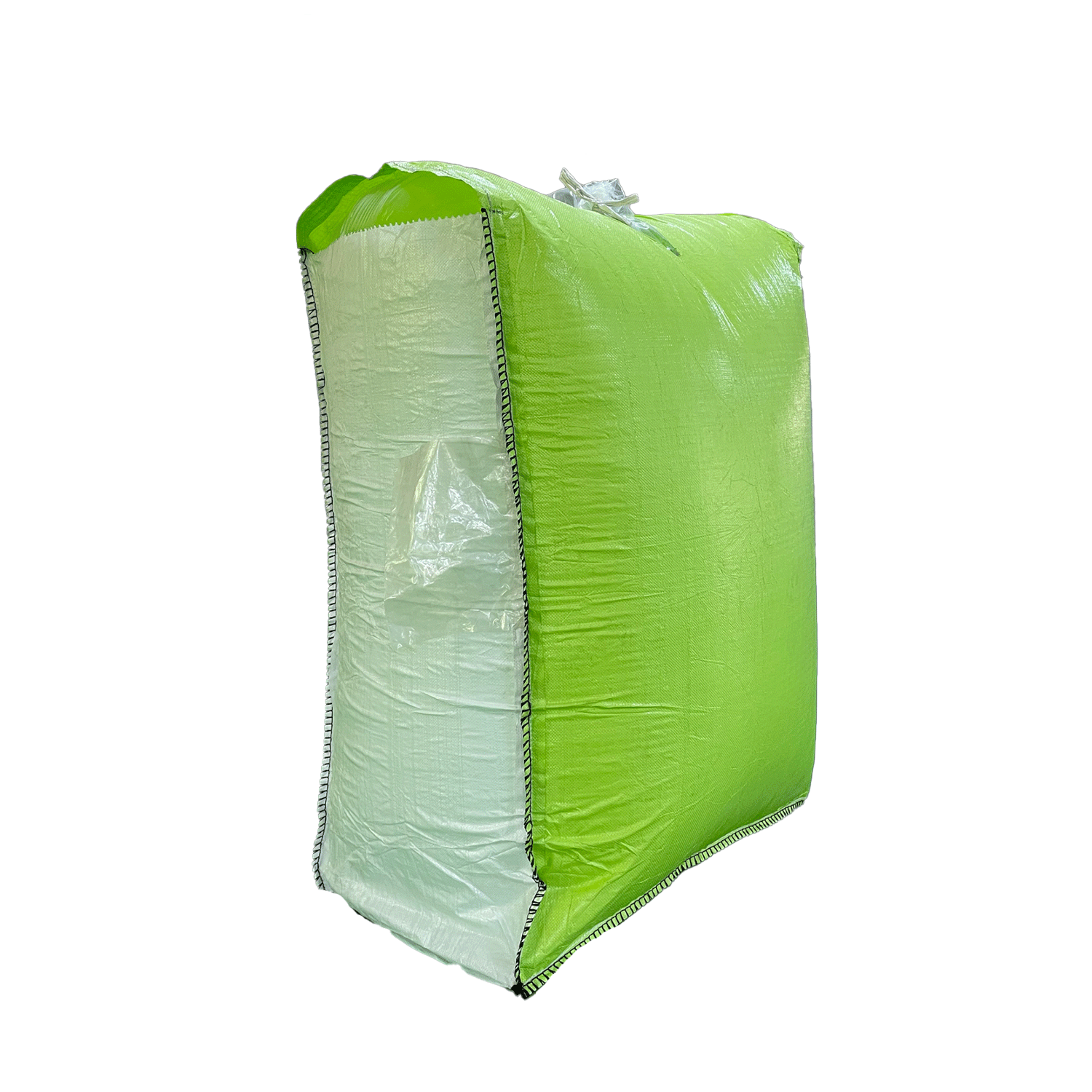 | FIBC Section Fertilizer Bag Range 1 & 2 Loop FIBC Bulk Bags Deccan Cans & Printers Pvt. Ltd. offers durable and cost-effective 1 & 2 Loop FIBC Bulk Bags, designed for the efficient... |
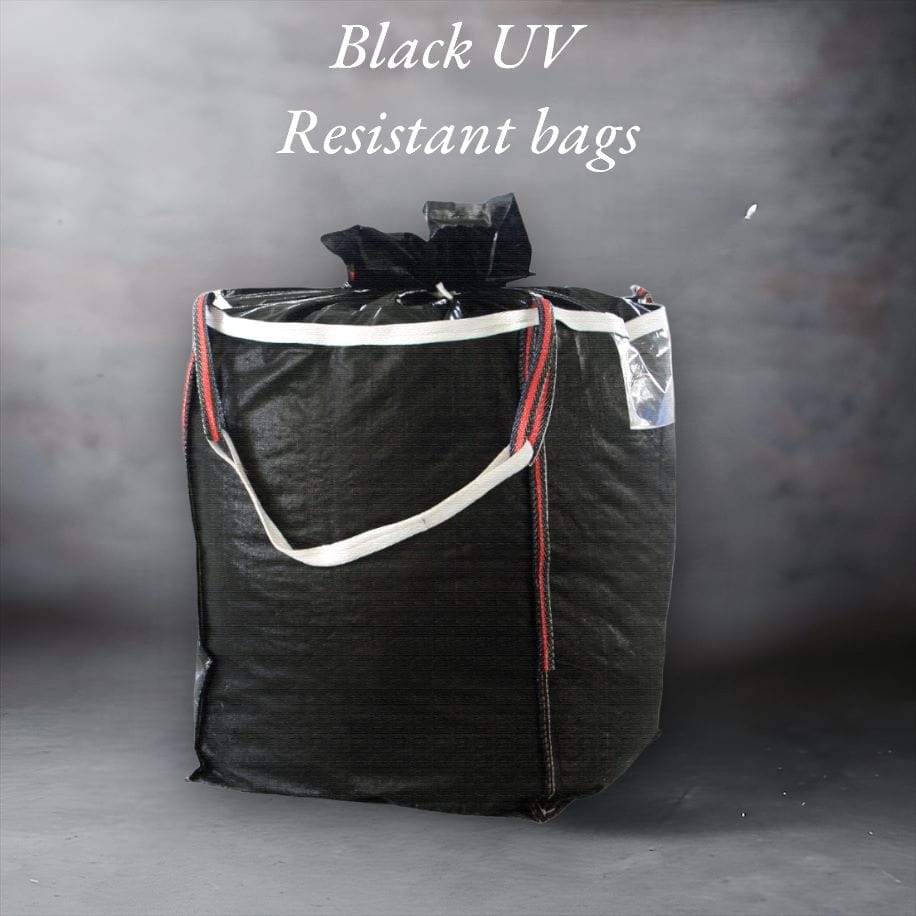 | FIBC Section Black Bags Black FIBC Bags – Enhanced UV Resistance & Extended Shelf Life UV exposure is one of the major challenges faced by the FIBC industry, as prolonged... |
Frequently asked questions
How do you calculate the required FIBC capacity?
Divide the required load in kilograms by its bulk density in kilograms per cubic metre. Add headspace for filling and settlement instead of filling to the bag’s geometric maximum.
Which FIBC loop configuration should you choose?
Match the loop type and construction to your lifting system. Confirm whether you use forklift tines, a hoist, a lifting frame or another attachment before ordering.
How can you control FIBC lifting, discharge, dust and static hazards?
Confirm the bag’s safe working load, safety factor, lifting instructions, discharge design, dust-control features and static classification. Use grounding and bonding procedures when the material and site risk assessment require them.
When is an FIBC better than sacks, drums or rigid containers?
An FIBC suits dry bulk materials when you need fewer handling units and efficient storage or transport. Compare it with sacks, drums, rigid containers and pallets based on load size, reusability, protection, stacking and discharge needs.
What should a supplier specification include?
Record the material, target mass, bulk density, dimensions, capacity, safe working load, loop configuration, fabric construction, liner, discharge features, static classification and required documents. Check those details against the delivered bag and label.
Related products
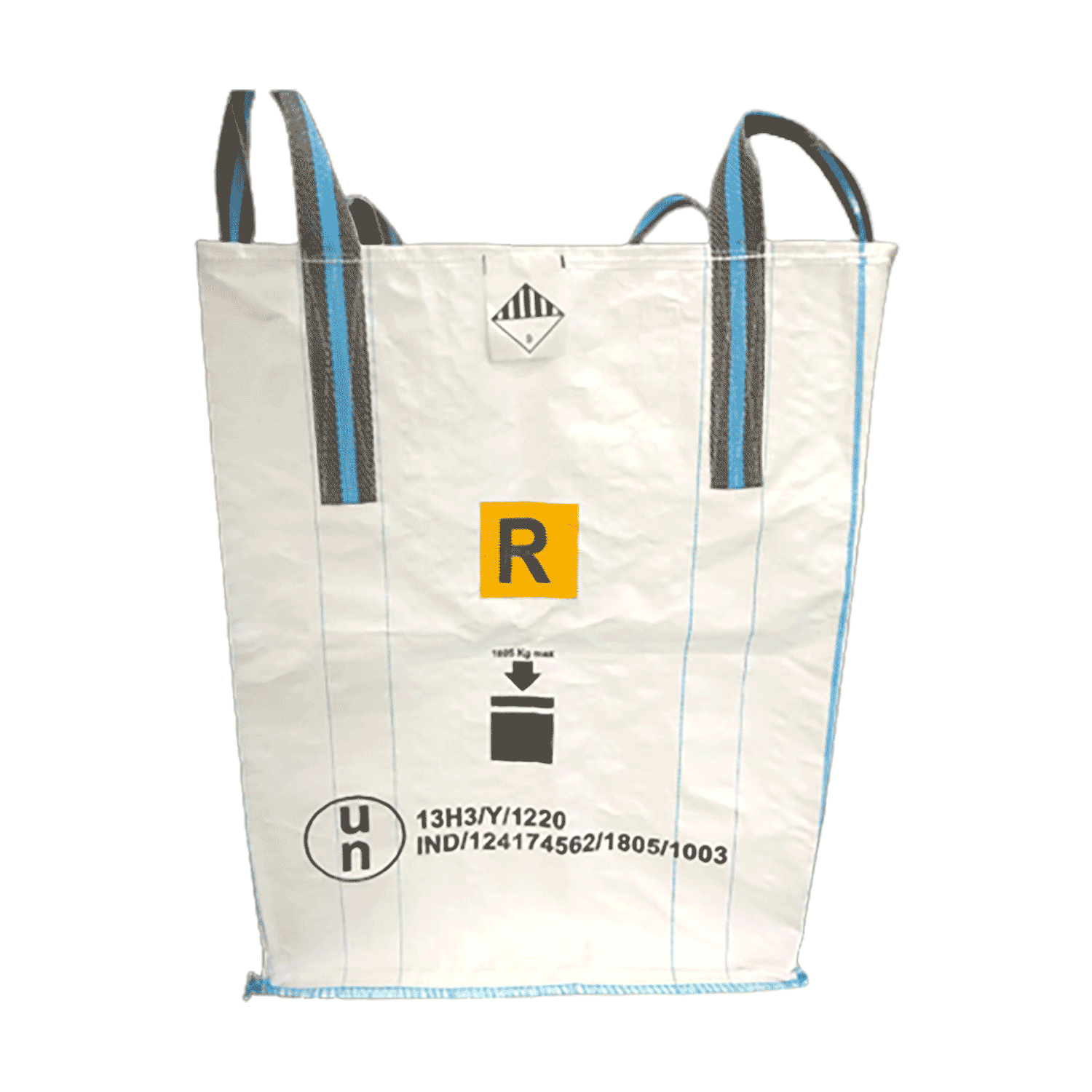 | FIBC Section Un Bags UN Certified Bulk Bags – Rigorous Performance Testing for Safety & Reliability Deccan UN Certified Bulk Bags are specially engineered for the safe... |
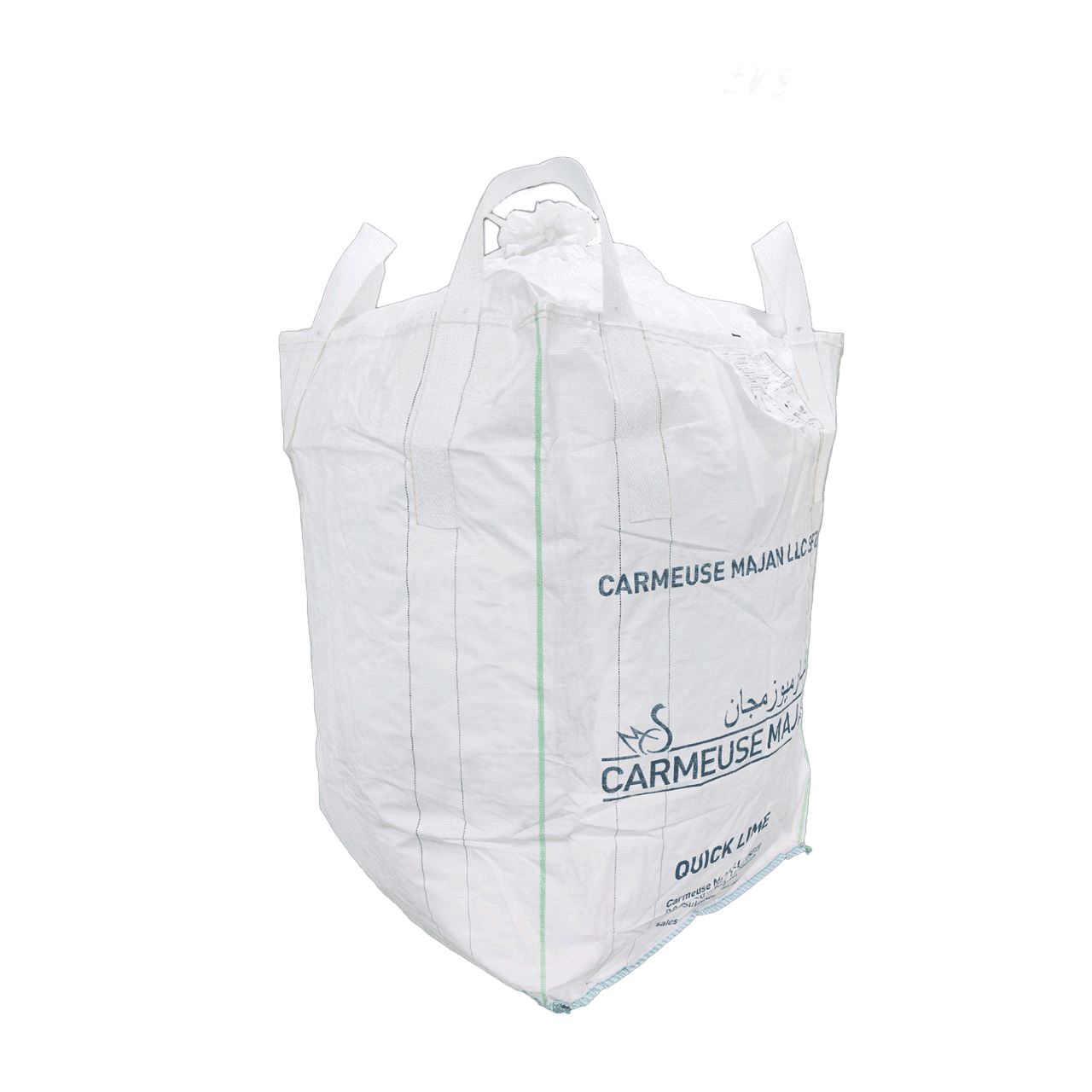 | FIBC Section Bags With Liners FIBC Liners – Bulk Bag Liners Deccan Cans & Printers Pvt. Ltd. |
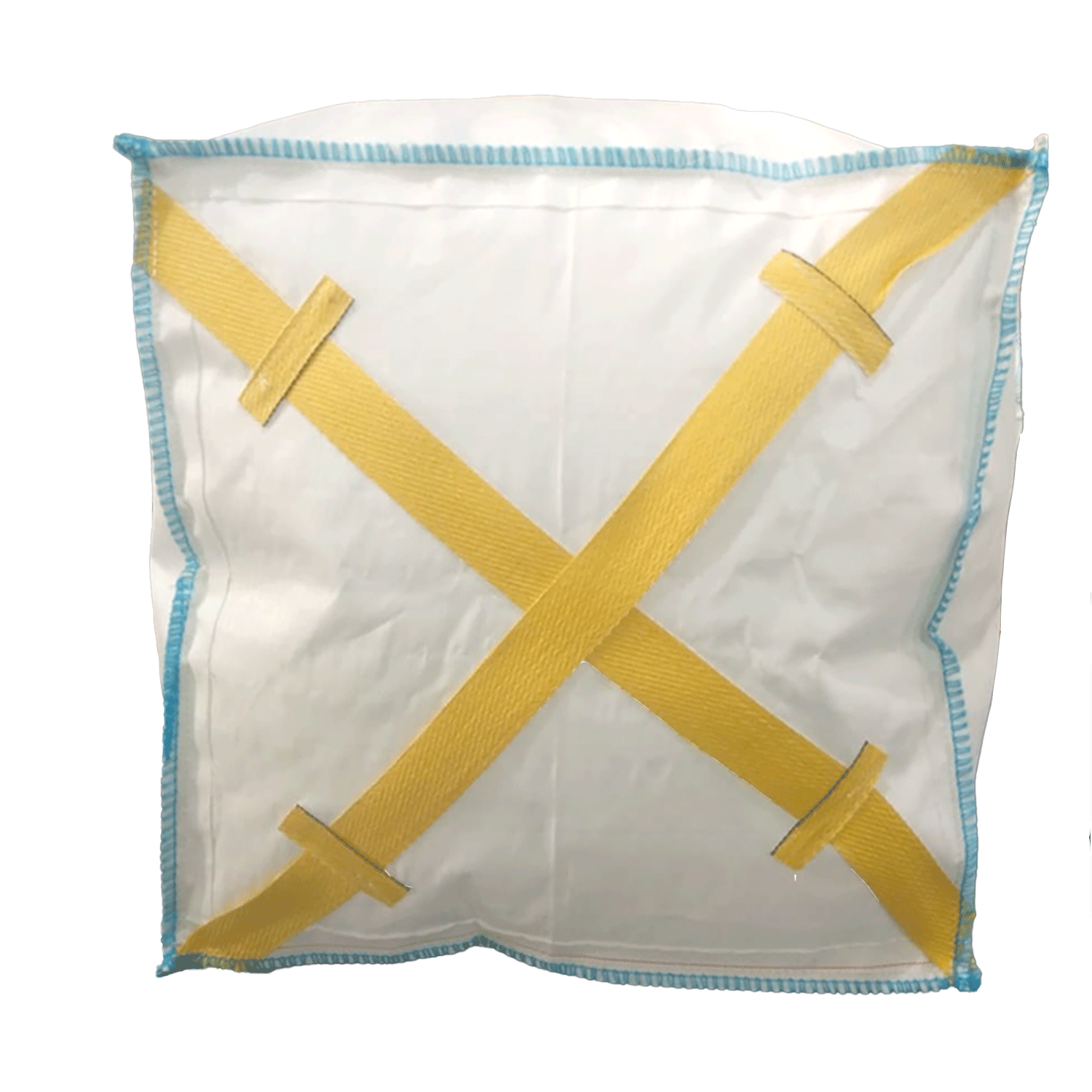 | FIBC Section Cross Bottom Sling Bags Cross Bottom Sling FIBCs – Bulk Bags Deccan Cans & Printers Pvt. Ltd. |
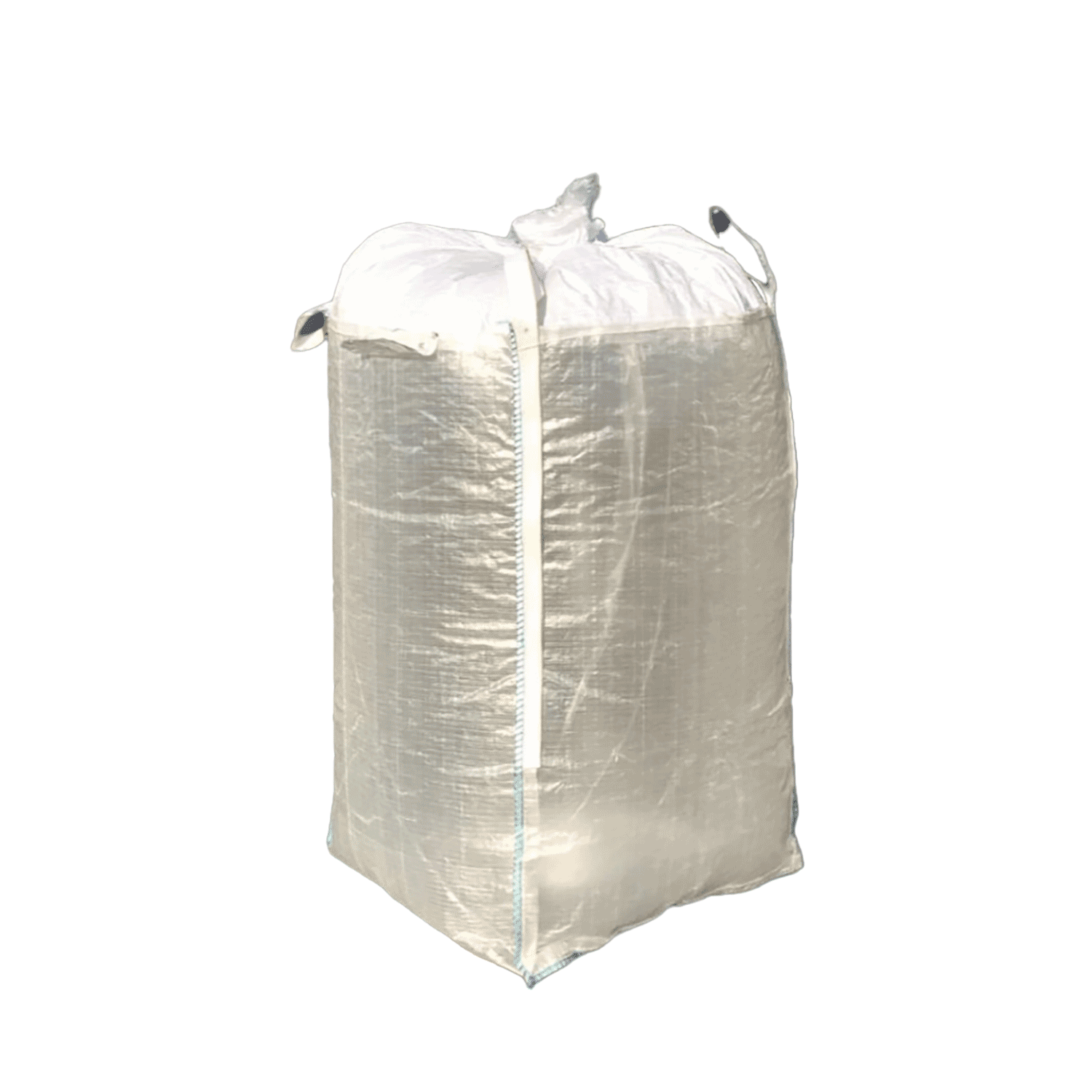 | FIBC Section Transparent Bags Transparent FIBCs – See-Through Bulk Bags Deccan Cans & Printers Pvt. Ltd. |