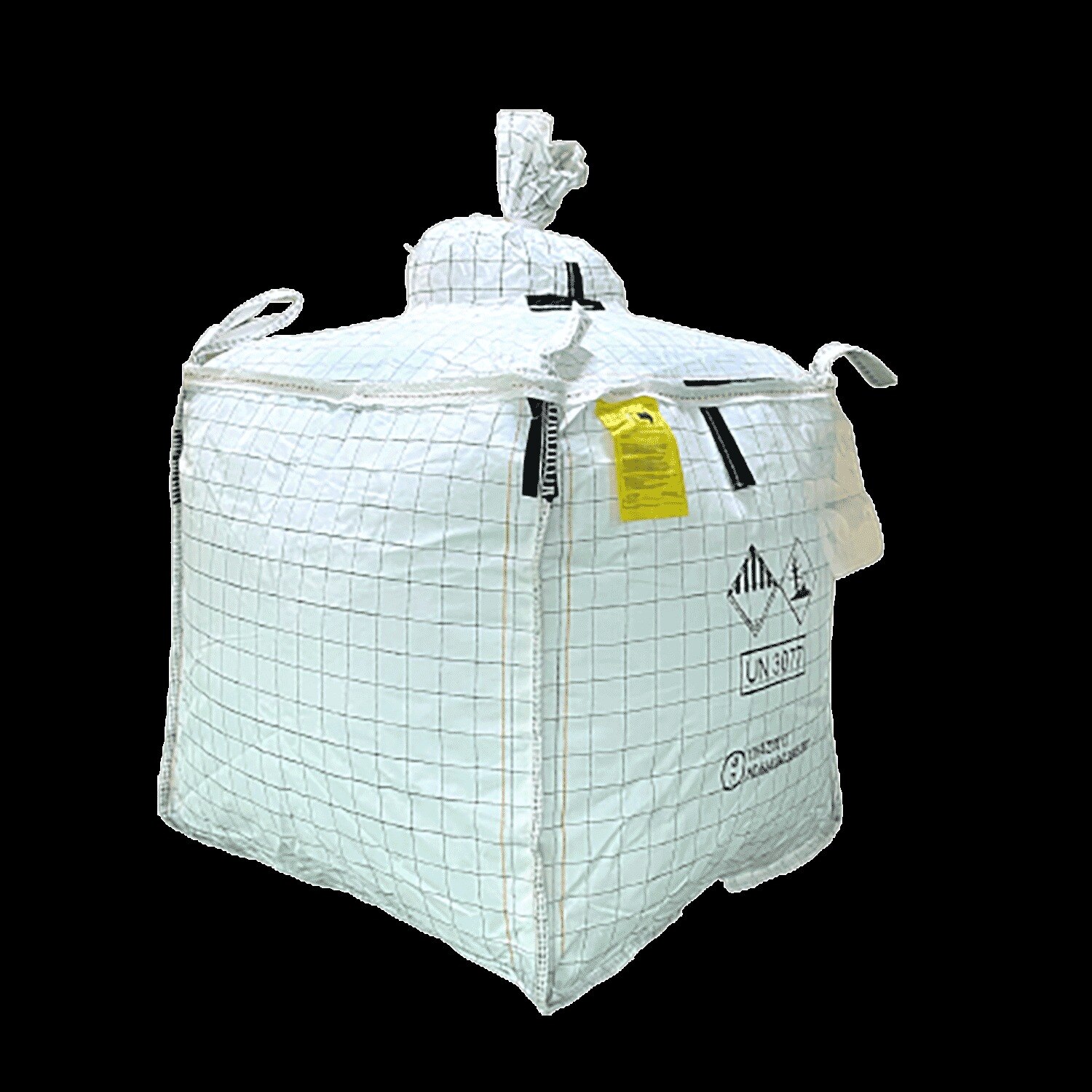
Choosing an FIBC by capacity alone can produce an overloaded bag, leaking powder, a blocked discharge spout or an unsafe static charge. You will be able to match construction, capacity, material compatibility, handling method and storage controls to the product you need to move in Seoul.
Key takeaways
- Treat FIBC volume and safe working load as separate specifications.
- Match fabric, coating and liner to moisture, dust and contamination risks.
- Specify inlet and discharge sizes around your actual filling and emptying equipment.
- Define lifting loops, grounding and hazardous-area controls before ordering.
How an FIBC is built, and why volume is not its load rating
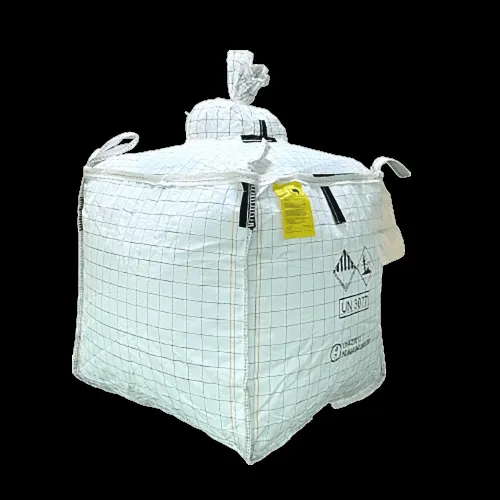
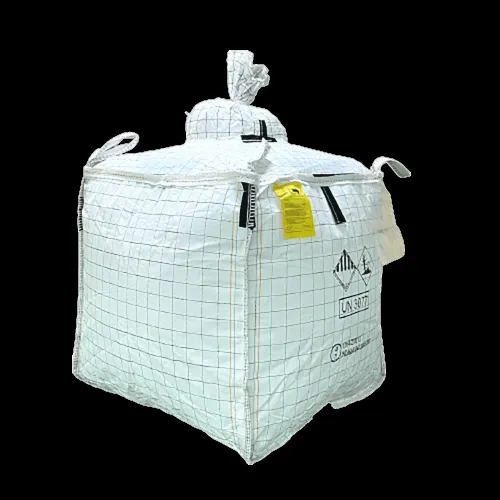
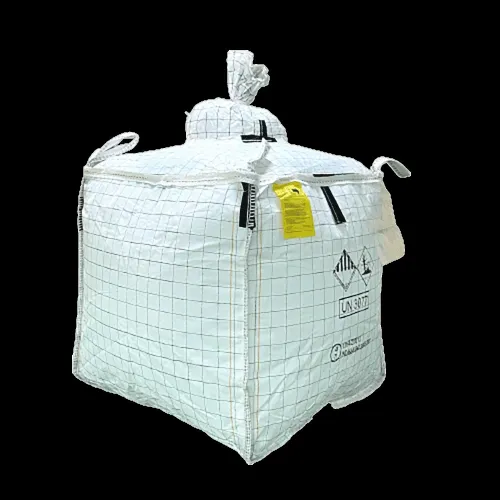
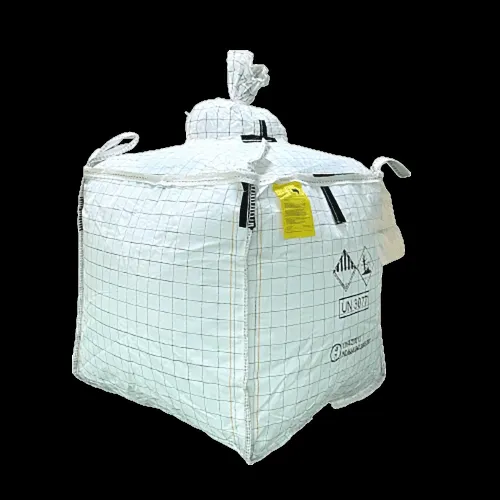
An FIBC is a flexible polypropylene container whose capacity and load rating are separate specifications. Its body fabric carries the material, while the lifting loops transfer the filled weight to handling equipment. The top inlet controls filling; the bottom discharge controls emptying.
| Part | Function | Check before ordering |
|---|---|---|
| Body fabric | Forms the load-bearing shell | Confirm its construction and marked safe working load (SWL) |
| Lifting loops | Connect the bag to hooks or a lifting frame | Use the stated number and arrangement of loops |
| Top inlet | Receives powder, granules or raw material | Match its diameter and closure to your filling equipment |
| Bottom discharge | Releases material through a spout | Trial spout size, flap length, liner attachment and tie-cord access with cohesive powders |
| Liner | Adds containment or a product barrier | Specify it when moisture, oxygen, dust or contamination matters |
Match capacity to bulk density, not volume alone. A nominal 1.0 m³ bag holding material at 0.5 kg/L contains about 500 kg; the same volume at 1.0 kg/L contains about 1,000 kg. Confirm the material’s measured or supplier-stated bulk density, then select a bag whose marked SWL exceeds the intended filled mass.
A 5:1 or 6:1 safety factor qualifies construction; it does not permit loading beyond the marked SWL. Put the SWL, filling density, lifting configuration and single-trip or reusable status on the purchase specification.
Never lift from the liner, drag the bag, use fewer loops than specified, or place forklift tines where the design does not allow them.
Choose the fabric, coating and liner for the material
Choose the construction by asking what must stay inside: particles, moisture, vapour, contamination, or static charge. An uncoated FIBC suits dry, free-flowing granules that do not need a barrier; coated polypropylene or an FIBC liner adds leakage and moisture control.
| Material or use | Suitable construction | Reason |
|---|---|---|
| Fine powders and granules | Sift-proof seams plus an FIBC liner | Limits dust escape; select liner thickness and permeability for particle size and discharge behaviour |
| Dry, non-hygroscopic granules | Uncoated FIBC | Provides economical handling without adding a barrier the material does not need |
| Hygroscopic fertilizers and powders | Coated polypropylene with a barrier liner | Reduces moisture ingress; specify storage off the floor and away from rain and condensation |
| Chemicals | Chemical-compatible fabric, coating and liner; UN design when required | Check the exact chemical, concentration, temperature and storage period; a UN mark does not prove compatibility with every product |
| Food or pharmaceutical raw materials | Controlled product-contact liner and clean FIBC | Require cleanliness limits, foreign-matter controls, traceability, integrity testing and documented materials; virgin polypropylene alone is not food- or pharmaceutical-grade |
Polypropylene fabric offers little protection against oxygen, water vapour, odours or light. Use a suitable polyethylene or aluminium laminate for sensitive materials; choose a rigid, light-blocking tin container when hermetic protection matters more than bulk handling.
A liner can reduce leakage yet leave more residue, collapse during discharge or interrupt grounding. Buy the complete bag-and-liner configuration as one tested design, especially for combustible powders. UN codes 13H1, 13H2, 13H3 and 13H4 identify tested uncoated, coated, liner-equipped constructions—not universal chemical approval.
Control leakage, moisture, contamination and discharge problems
Seal fine powders at the package, not after a spill. Specify sift-proof seams and inspect stitching before filling; a loose thread or needle hole can release product during lifting. Select the liner for particle size, permeability and chemical compatibility, then close the inlet securely after filling.
A liner that reduces leakage can still collapse during discharge or retain material, so test it with the actual powder.
Prevent moisture ingress during Seoul’s humid summer and monsoon season by storing FIBCs off the floor, under cover and away from condensation and ultraviolet light. Define storage limits for moisture-sensitive materials, and use a barrier liner when the product absorbs water.
Keep filling and handling equipment clean and dry, and use dedicated or validated-clean equipment to prevent cross-contamination between materials.
Do not choose a discharge arrangement from bag dimensions alone. A bottom discharge spout is not equivalent to a full-bottom or iris discharge: spout diameter, flap length, liner attachment and tie-cord access determine whether cohesive powder bridges or flows.
Trial the complete bag with the actual material and confirm that the operator can control the flow without cutting the liner. Check residual material after emptying. If the liner, tie-offs or spout interrupt the conductive path, purchase and test the complete bag-and-liner assembly for the intended grounding procedure.
Plan safe lifting and electrostatic control
Treat the marked safe working load (SWL) as the ceiling, not a target. A 5:1 and 6:1 safety factor describes construction qualification, not permission to load beyond the rating. Specify the SWL, intended filling density, lifting configuration, and whether the bag is single-trip or reusable.
A 1.0 m³ bag holding powder at 0.5 kg/L contains about 500 kg; at 1.0 kg/L, it contains about 1,000 kg. Volume never supplies the SWL.
Lifting performance is configuration-specific. Use the stated number and arrangement of loops, keep every loop engaged, and never lift from the liner. Dragging the bag or placing forklift tines through unsuitable loop positions creates forces absent from the qualification test.
For combustible powders, select the electrostatic class with the filling and discharge procedure. IEC 61340-4-4 classifies FIBCs by electrostatic behaviour. Type C FIBC uses conductive or dissipative elements and requires a verified earth connection before filling and emptying.
Type D FIBC dissipates charge without a user-applied ground connection, but only within its specified design and operating environment.
- Record the SWL and loop arrangement on the purchase specification.
- Confirm that the bag-and-liner assembly retains its tested electrostatic classification; polyethylene or aluminium-laminated liners, tie-offs and spouts can interrupt conductivity.
- Treat UN transport approval as separate from electrostatic suitability, then verify grounding, filling and discharge equipment for the actual combustible or hazardous material.
Turn the requirements into a Seoul FIBC specification
Put the failure you are preventing on the FIBC specification sheet: moisture ingress, powder escape, poor visibility, unsafe lifting or contamination. State the product, bulk density, target fill mass, dimensions, SWL, filling density, trip status and lifting method; volume alone does not define a safe bag.
| Option | What to specify | When it applies |
|---|---|---|
| Standard | Uncoated woven polypropylene | Dry granules that do not need a moisture barrier |
| Coated | Polypropylene fabric with coating | Powder retention or added surface protection |
| Liner-equipped | PE or aluminium-laminated liner, with tie-offs and spouts | Fine, hygroscopic or contamination-sensitive materials |
| Transparent | See-through fabric or panels | Visual level and material checks during handling |
| Black | Black fabric, with required UV specification | Light-sensitive contents or outdoor exposure |
| Cross-bottom | Cross-corner loops and their rated lifting arrangement | Forklift or crane handling matched to those loops |
| 1-loop | One lifting loop with stated SWL | Equipment designed for single-point lifting |
| 2-loop | Two-loop arrangement with stated SWL | Handling gear designed for two attachment points |
| Multifilament-loop | Specified loop construction and rated configuration | When lifting equipment requires that loop design |
Ask an FIBC supplier in Seoul to provide:
- ISO 21898 compliance evidence and the complete bag-and-liner electrostatic classification under IEC 61340-4-4.
- The exact UN 13H1 13H2 13H3 13H4 design code when dangerous-goods approval is required; the UN mark does not prove chemical compatibility.
- Product-contact material, cleanliness, foreign-matter limits, traceability and integrity tests for food or pharmaceutical raw materials.
- SWL, safety factor, reusable or single-trip status, and instructions never to lift from the liner or fewer loops than specified.
Deccan Cans & Printers Pvt. Ltd. can be compared on these written details rather than on bag appearance alone.
Related products
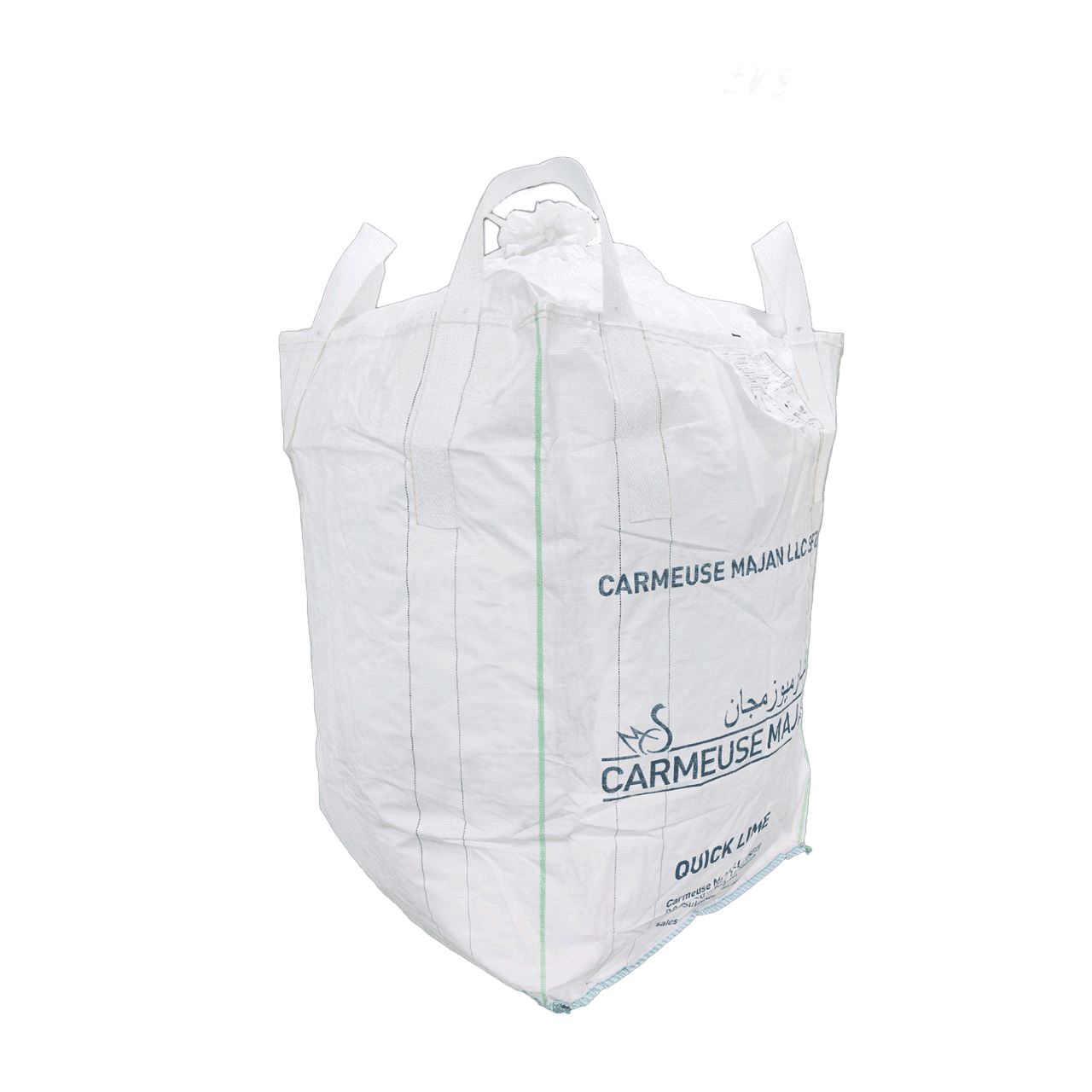 | FIBC Section Bags With Liners FIBC Liners – Bulk Bag Liners Deccan Cans & Printers Pvt. Ltd. |
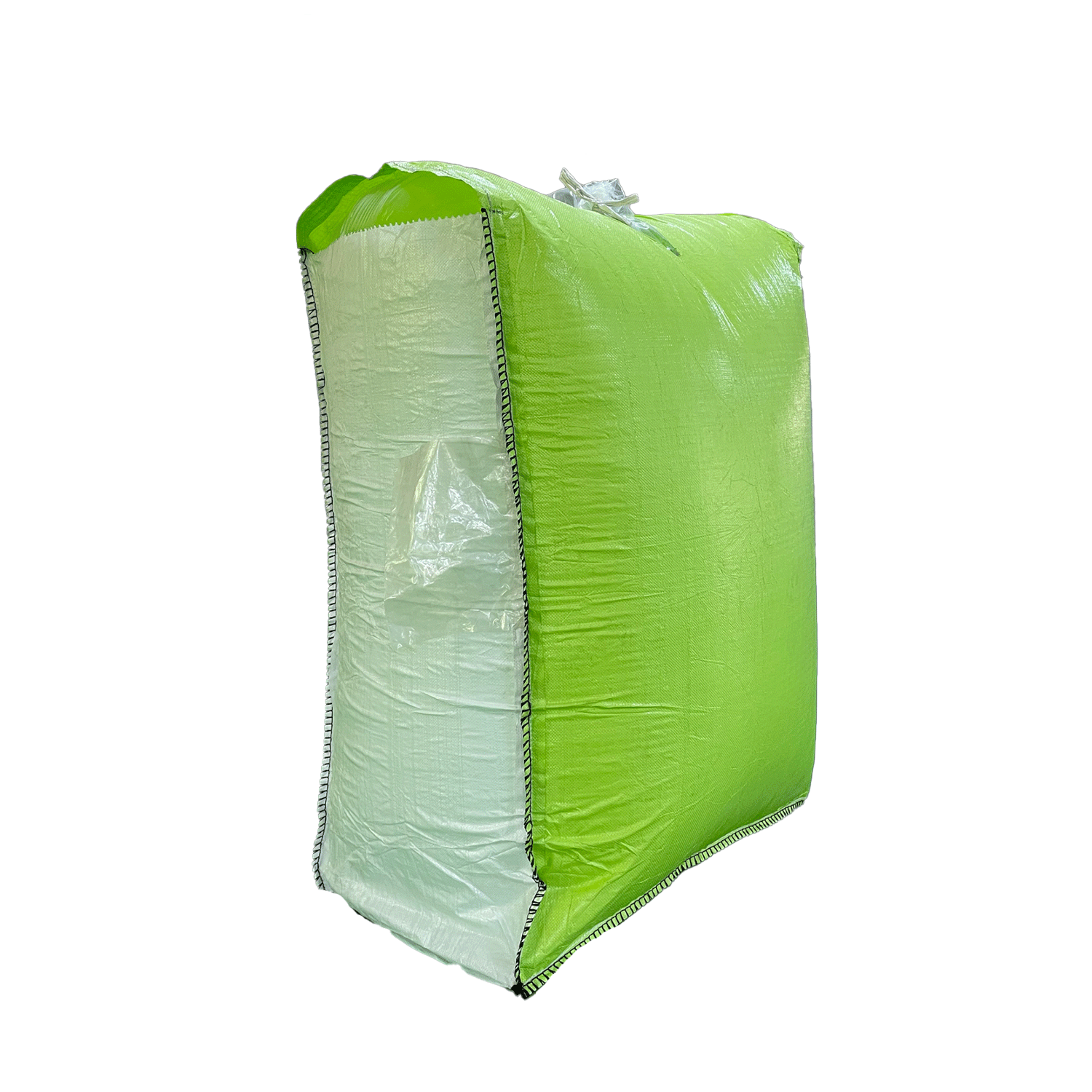 | FIBC Section Fertilizer Bag Range 1 & 2 Loop FIBC Bulk Bags Deccan Cans & Printers Pvt. Ltd. offers durable and cost-effective 1 & 2 Loop FIBC Bulk Bags, designed for the efficient... |
Frequently asked questions
Does a larger FIBC automatically carry more weight?
No. Capacity and safe working load are separate specifications. Confirm the bag’s stated safe working load for the filled material and handling method.
How do you choose an FIBC fabric, coating and liner?
Match the polypropylene fabric, coating and liner to the material’s particle size, moisture sensitivity, dust level, contamination risk and discharge requirements.
How can an FIBC reduce leakage and moisture problems?
Specify suitable seams, an inner liner, coated fabric and correctly sized inlet and outlet closures. Check that the discharge design matches the material’s flow behaviour.
What must a Seoul FIBC specification include?
State dimensions, capacity, safe working load, safety factor, fabric and coating, liner, inlet, outlet, lifting loops, electrostatic classification, printing and delivery requirements.
Related products
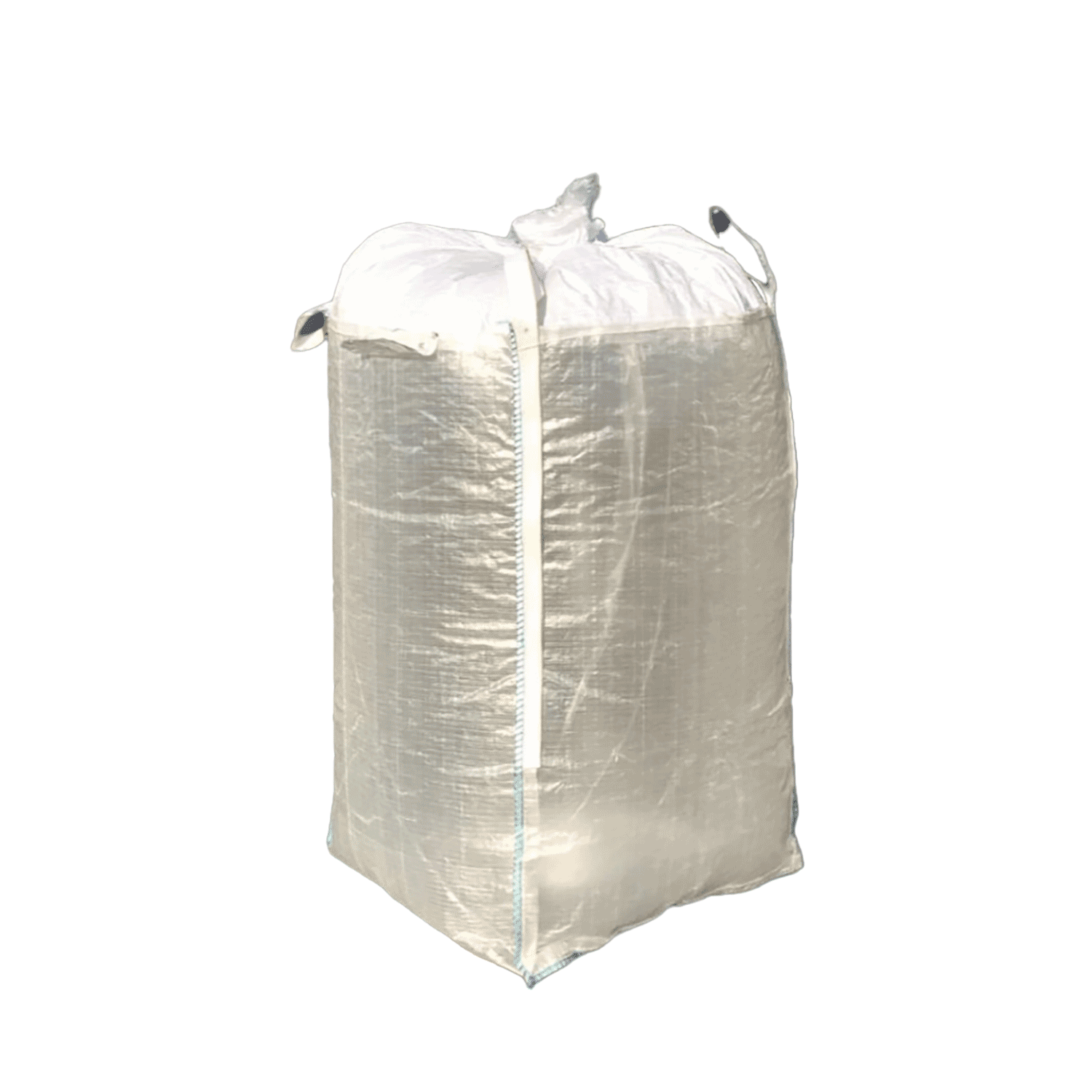 | FIBC Section Transparent Bags Transparent FIBCs – See-Through Bulk Bags Deccan Cans & Printers Pvt. Ltd. |
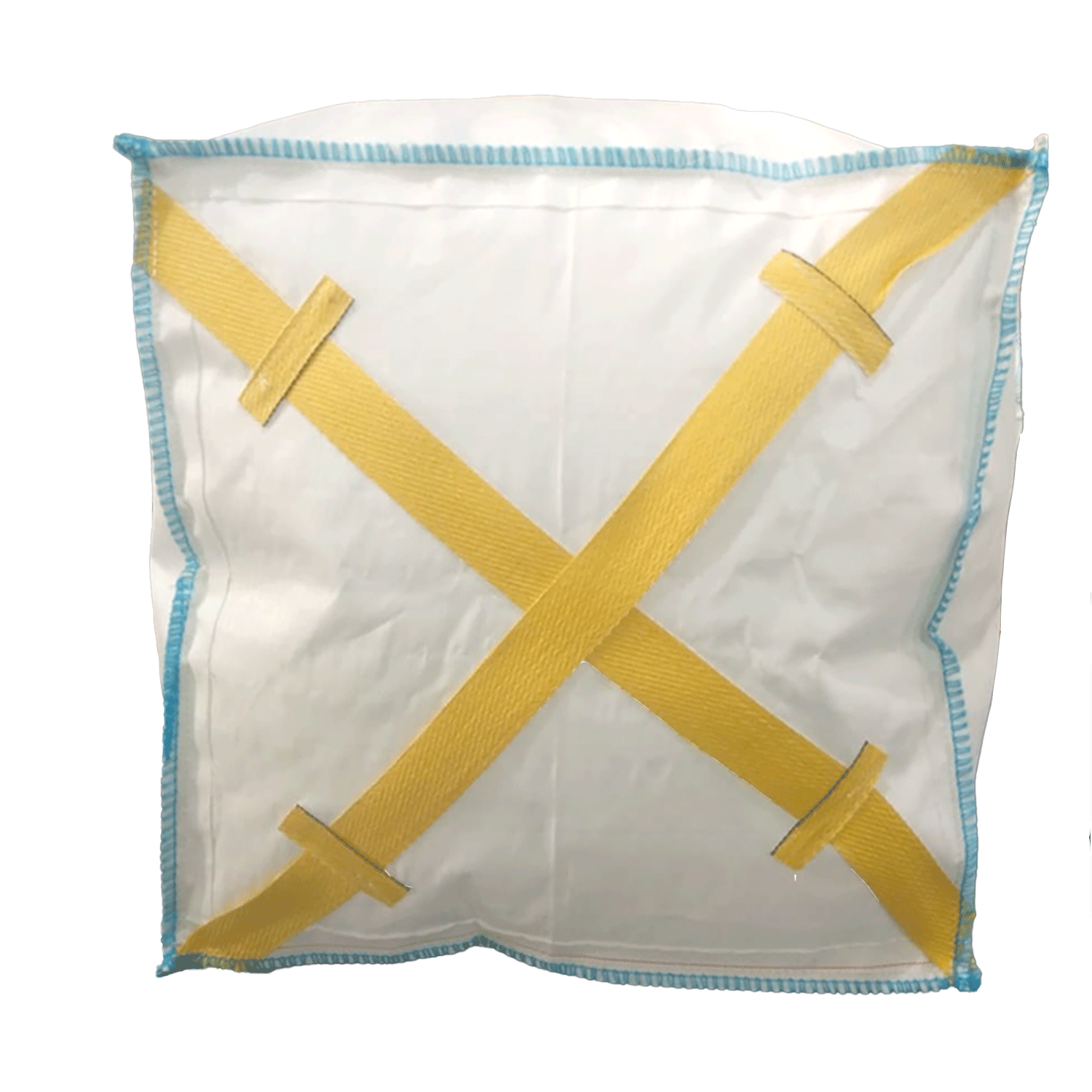 | FIBC Section Cross Bottom Sling Bags Cross Bottom Sling FIBCs – Bulk Bags Deccan Cans & Printers Pvt. Ltd. |
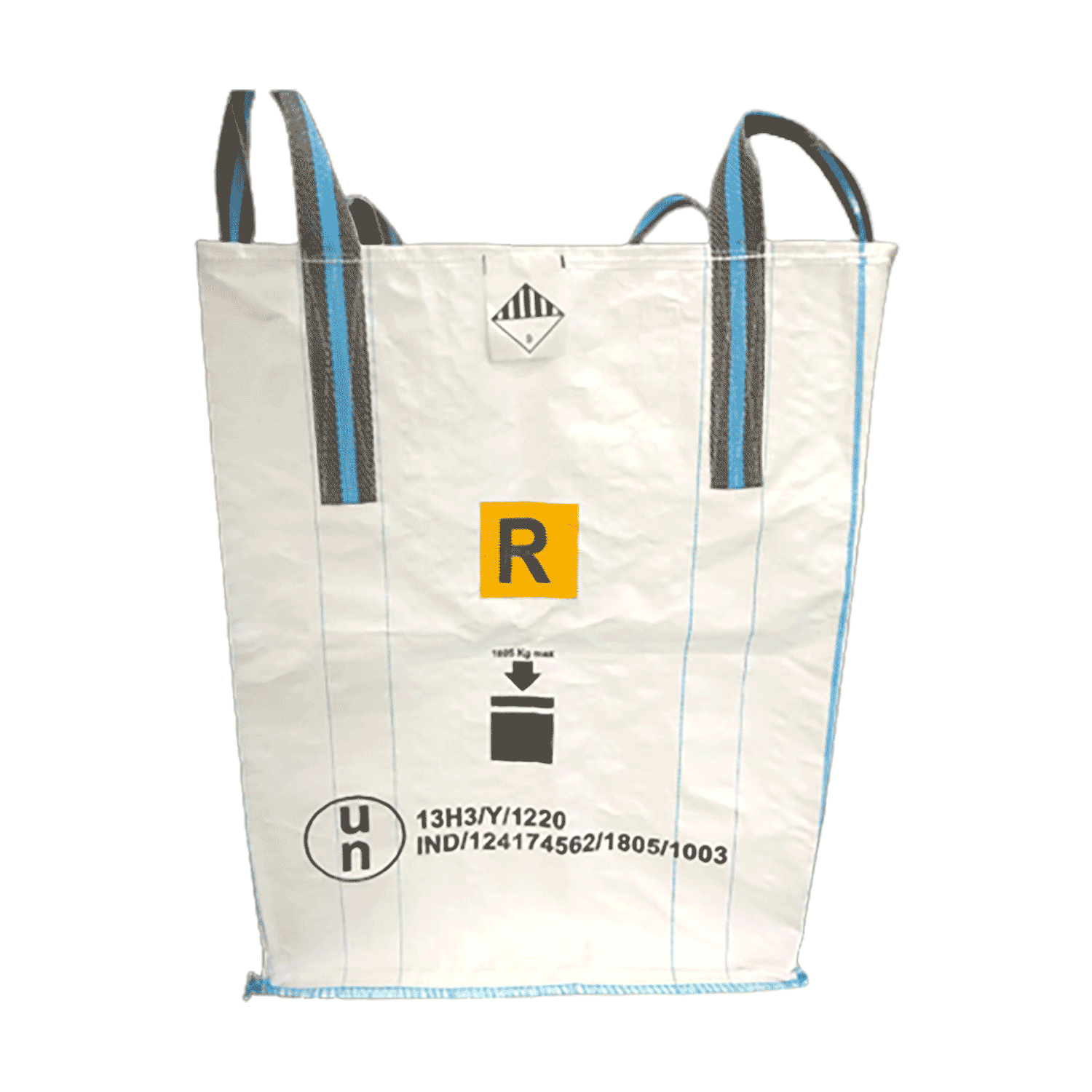 | FIBC Section Un Bags UN Certified Bulk Bags – Rigorous Performance Testing for Safety & Reliability Deccan UN Certified Bulk Bags are specially engineered for the safe... |
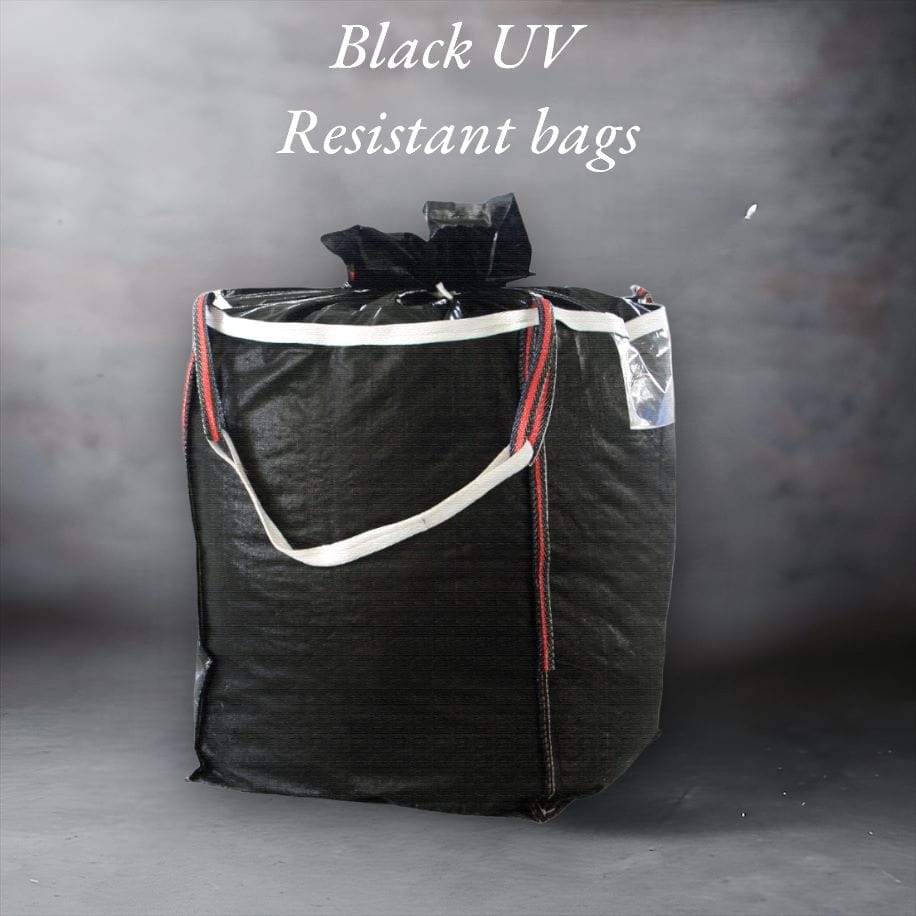 | FIBC Section Black Bags Black FIBC Bags – Enhanced UV Resistance & Extended Shelf Life UV exposure is one of the major challenges faced by the FIBC industry, as prolonged... |