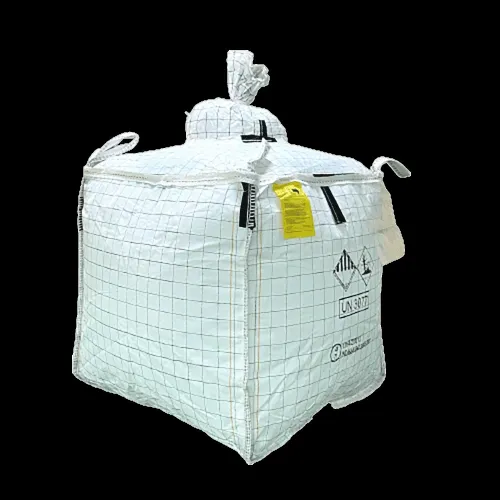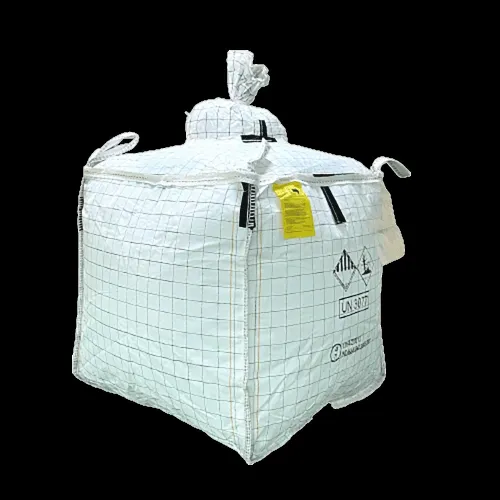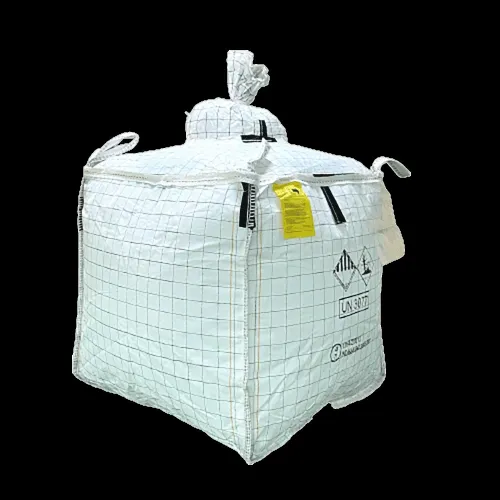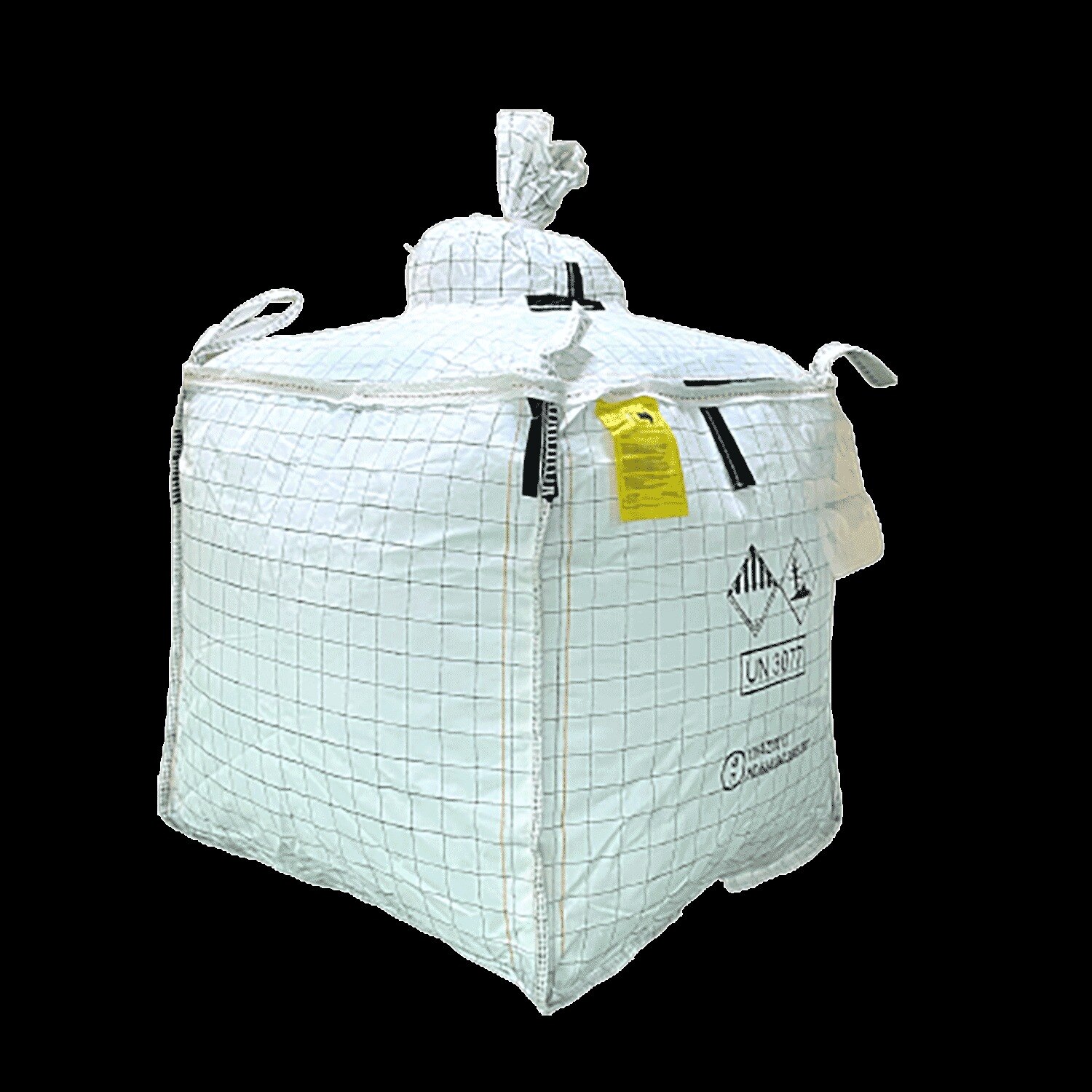
A conductive FIBC is not automatically safe for every powder, liner, transfer system, or hazardous area. By the end, you will be able to choose between Type C and Type D construction, define the electrical evidence to request, control grounding at your Sydney site, and check whether a supplied batch matches the tested design.
Key takeaways
- Choose Type C when you can maintain a ground connection during filling.
- Choose Type D when grounding cannot be assured, subject to manufacturer certification.
- Specify IEC 61340-4-4 type, breakdown voltage, resistance and test documentation.
- Inspect the bag, liner, equipment and ground path before each transfer.
Type C or Type D: which conductive FIBC suits your process?
A conductive FIBC controls electrostatic charge through conductive or dissipative fabric, threads and designated electrical features. The label alone proves nothing: IEC 61340-4-4 separates four electrostatic types.
Type A FIBC versus Type B FIBC is a distinction between ordinary insulating construction and limited control of brush discharges:
| Type | Electrical behaviour | Operating control |
|---|---|---|
| Type A | Insulating fabric with no electrostatic control | Do not use where static ignition is a hazard |
| Type B | Insulating fabric with a breakdown voltage below 6 kV | Controls propagating brush discharges, but is not groundable |
| Type C | Conductive fabric or interconnected conductive threads | Connect the grounding point before filling, throughout transfer and until empty; the commonly specified maximum resistance to ground is 1.0 × 10^7 ohms |
| Type D | Dissipative fabric that safely releases charge without a ground lead | Use the specified bag system in its tested condition; do not substitute ordinary fabric or contaminated components |
Choose a Type C FIBC when your process can provide a verified earth connection and needs a defined conductive path. An isolated Type C bag can accumulate charge like an insulating bag. Choose a Type D FIBC when grounding is impractical but the bag, handling equipment and atmosphere suit its tested dissipative performance.
A standard polyethylene liner can isolate contents from Type C fabric and accumulate charge itself. Specify and test the liner-and-bag combination. ISO 21898 addresses FIBC mechanical performance; IEC 61340-4-4 addresses electrostatic performance, so passing one does not prove the other.
Specify the electrical performance, not just an “anti-static” label
An “anti-static” label proves neither a discharge path nor suitability for combustible dust. Require the supplier to identify the IEC 61340-4-4 type and record these measurements:
| Measurement | What to require | Why it matters |
|---|---|---|
| resistance to ground | Type C conductive elements to the grounding point: no more than 1.0 × 10^7 ohms | A failed path can leave charge on the bag during filling or discharge |
| surface resistance | Values for the fabric or dissipative surface, with the test voltage and conditioning stated | Deposits, moisture and chemical attack can change charge dissipation |
| inter-fabric resistance | Results between specified conductive layers or yarn networks | A broken yarn, abrasion or repair can interrupt the internal circuit |
Specify the liner separately. Name its material, thickness, construction and electrical behaviour, then state how it connects to the bag’s conductive system. An ordinary insulating polyethylene liner can isolate the product from the outer bag and defeat an assumed discharge path.
Ask for a batch-specific IEC 61340-4-4 test certificate, production-lot traceability, a construction drawing, the grounding-tab location and visual criteria for broken conductive yarns. The report must show the test method, applied voltage, conditioning, measured values and pass/fail limits; a certificate from an earlier sample does not clear a damaged bag.
Confirm mechanical suitability under ISO 21898 separately. Its pass does not establish electrostatic performance. Require a site procedure for continuity checks, and define rejection after abrasion, powder buildup, moisture exposure, chemical attack, cleaning or repair.
Ground a Type C bag before filling and keep the circuit intact
Use the manufacturer-designated grounding tab or terminal, not a lifting loop, liner, or random fabric area. Type C FIBC grounding is effective only when that point is connected to a verified plant earth and the conductive grid remains intact.
1. Stop the filling equipment and attach a clean, secure earth lead to the grounding point before opening the product path. Bond and ground conductive filling pipes, augers, clamps, scales, drums, tin containers, and transfer vessels; grounding the bag alone does not remove charge from isolated plant items.
2. Perform a continuity check from the bag’s conductive elements to earth before filling. Record the resistance and reject the setup if it exceeds the specified limit, commonly 1.0 × 10^7 ohms under IEC 61340-4-4 testing. Do not clip through dirt, coating, or product residue.
3. Start filling only after the ground alarm confirms the connection. Keep the lead attached while filling, moving, weighing, staging, discharging, and transferring material; prevent the cable from snagging or pulling free as the bag settles.
4. Treat a ground alarm, broken lead, sudden resistance change, or visible conductive-yarn damage as a stop condition. Halt product flow, isolate the transfer equipment, and keep personnel clear until charge-producing movement has stopped.
5. Inspect the tab, lead, clamp, bag grid, hoses, and nearby metalwork, then repeat the continuity check. Resume only after the alarm clears and the recorded result passes; replace the bag when the circuit cannot be restored or its damage cannot be assessed.
Keep the connection in place until the bag is empty and ready for removal. Disconnecting earlier can leave a charged bag or vessel without a controlled discharge path.
Inspect the whole transfer system and set retirement rules
A conductive FIBC is safe only as part of a verified transfer system. A conductive liner can electrically isolate the product from a Type C bag and accumulate charge, so specify and test the liner-and-bag combination together. Check the hose path and receiving vessel for continuity, bonding and grounding equipment, and ignition-capable gaps.
A dust cloud can ignite when its concentration and minimum ignition energy coincide with a discharge; conveying speed, leaks and hybrid mixtures change that risk. Coordinate the assessment with the applicable AS/NZS or AS/NZS IEC hazardous-area requirements.
Retire or quarantine a reusable bag when:
- The conductive grid, designated grounding tab or fabric has cuts, abrasion, pulled threads, chemical attack or heat damage.
- Powder deposits, moisture or a contaminated grounding point prevent a reliable electrical connection.
- Cleaning, patching or repair has occurred without a documented electrical re-test of the finished bag and conductive liner.
- The measured resistance-to-ground fails the manufacturer’s acceptance limit, or the test history is missing.
- The bag’s cycle count, filling history or exposure to a new powder is unknown.
Count more than purchase price: cleaning, drying, inspection, electrical testing, rejected batches, downtime and disposal determine the cost of reuse. Choose another package when operators cannot maintain the ground connection, the liner cannot be verified, the material is wet or chemically aggressive, or the dust assessment identifies ignition energy below the system’s controlled discharge capability.
A rigid conductive vessel or a single-use package can be safer when it removes uncertain interfaces.
Buy and verify a compliant batch for a Sydney site
For conductive FIBC bags Sydney, request a lot-specific compliance pack before approving delivery. A supplier’s old certificate does not prove that a new batch, or a visibly damaged bag, remains safe.
- State Type C or Type D under IEC 61340-4-4; reject “anti-static” as the only description.
- Request the production test certificate showing resistance-to-ground or dissipative performance, test voltage, method, acceptance limit, batch number and test date.
- For Type C, require the grounding-tab location, conductive-yarn construction, broken-yarn inspection criteria and a written site continuity-check procedure.
- Confirm mechanical performance and dimensions against ISO 21898; that standard does not replace IEC 61340-4-4 testing.
- If the contents are dangerous goods, obtain UN packaging approval, design-test evidence, markings and filling limits required by the Australian Dangerous Goods Code.
- Give the supplier your dust classification and equipment details so the specification aligns with AS/NZS hazardous area requirements.
On arrival, record the supplier, batch, delivery date, bag serials, certificate, photographs and inspection results. Quarantine bags with torn fabric, exposed yarn breaks, damaged grounding tabs or altered seams; test Type C continuity before filling and after any repair.
Sydney delivery affects storage as well as freight: keep bags dry, shaded and protected from crushing until inspection. Custom liners, spouts, lifting loops or discharge designs can interrupt conductive paths or change the grounding method, so approve a drawing and sample before production.
Deccan Cans & Printers can be assessed on that documented custom specification, not on a generic FIBC listing.
Frequently asked questions
What is the difference between Type C and Type D conductive FIBC bags?
Type C bags require a reliable earth connection during filling, emptying and handling. Type D bags dissipate electrostatic charge without a dedicated ground connection when their specified design and certification conditions are met.
What electrical performance should you specify for a conductive FIBC?
Specify the IEC 61340-4-4 electrostatic type, fabric and thread construction, resistance or breakdown-voltage limits, grounding features and batch test documentation. Do not rely on an unqualified “anti-static” label.
How do you ground a Type C FIBC correctly?
Connect the bag’s designated grounding point to a verified earth before filling, then keep the circuit intact during filling, discharge and movement. Check the connection and continuity before each transfer.
What should you inspect before using a conductive FIBC?
Inspect the bag fabric, seams, lifting loops, grounding tabs, liner, filling equipment, discharge equipment and earth path. Retire the bag when damage, contamination, failed continuity or an exceeded use limit affects its electrical performance.
How can a Sydney site verify a compliant conductive FIBC batch?
Request the manufacturer’s declaration, IEC 61340-4-4 classification, test results, batch or lot number, inspection records and written use limits. Match those documents to the bag markings and your transfer procedure before acceptance.