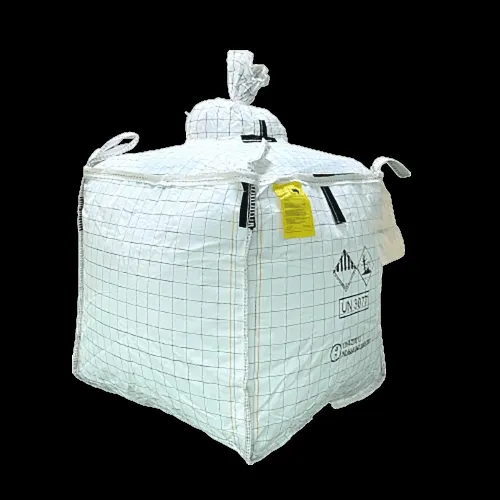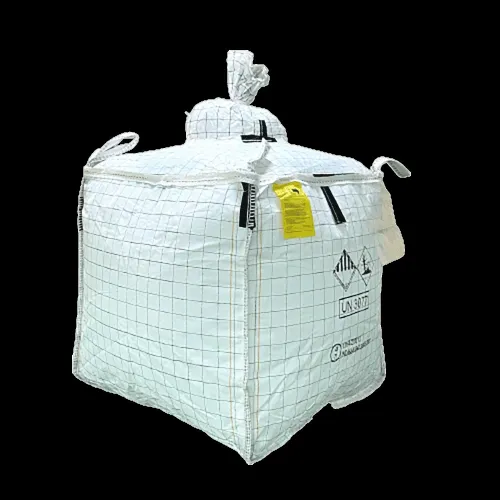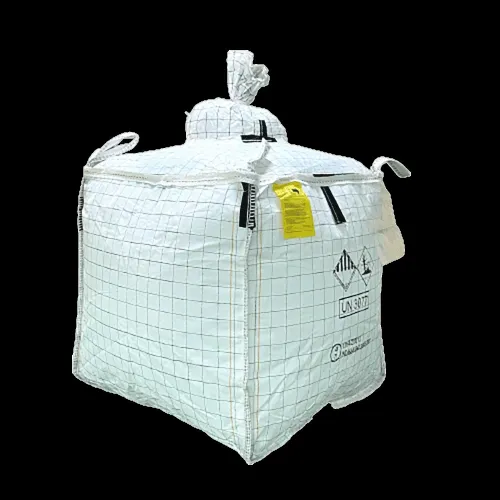

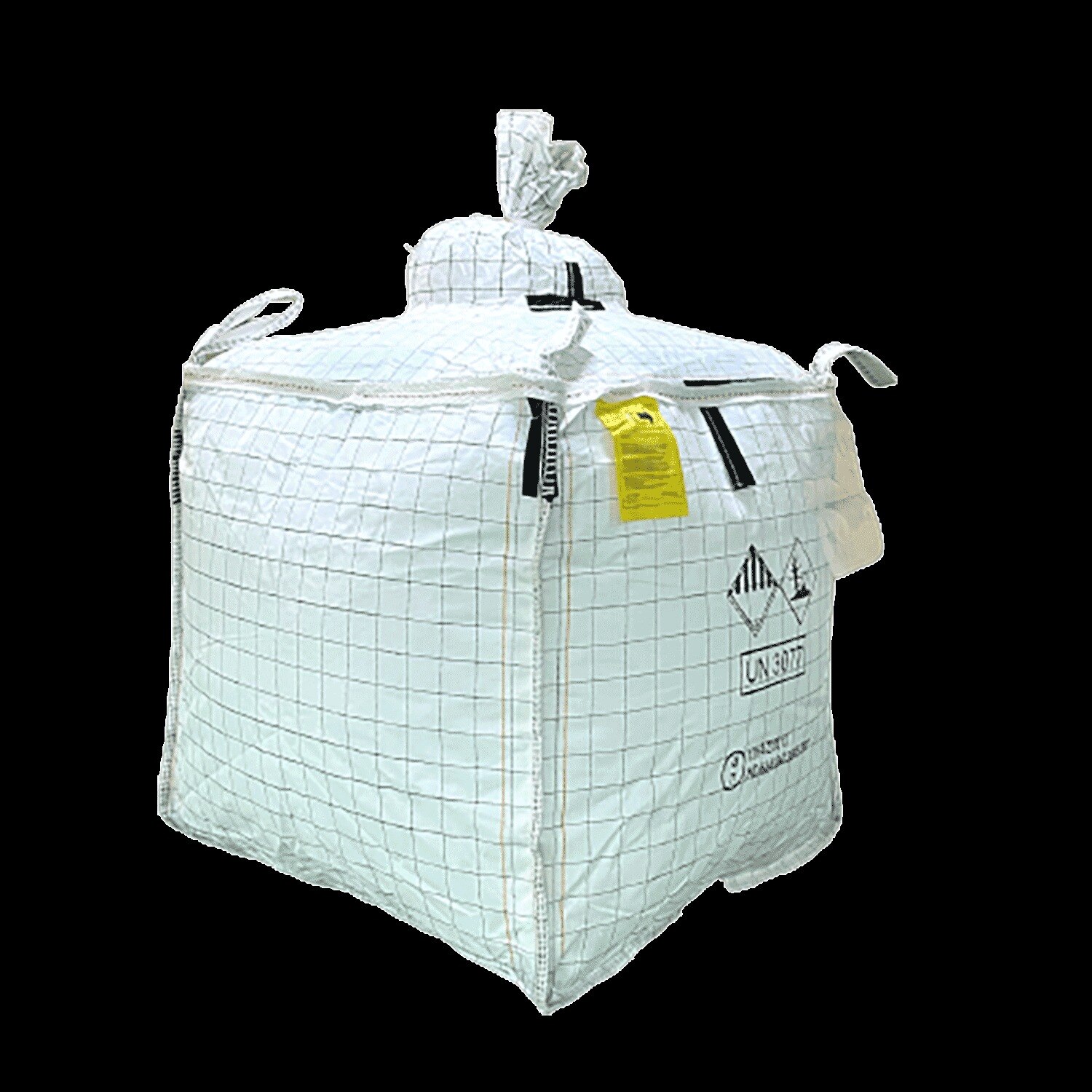
A food-grade FIBC is not defined by a label, colour or lifting capacity. You need to match the bag and every food-contact component to the commodity, then verify Australian compliance, manufacturing hygiene, traceability and handling controls before accepting a delivery in Sydney.
Key takeaways
- Request a food-contact declaration, batch traceability and a migration-test basis.
- Choose virgin polypropylene, cleanable construction and liners suited to the commodity.
- Control manufacture, storage and delivery to prevent fibres, pests, moisture and cross-contamination.
- Trial filled bags for flow, discharge, handling, stacking and seal performance.
What makes an FIBC suitable for food commodities?
Dry, free-flowing commodities suit food grade FIBC bags: flour, grains, sugar, starch, animal feed, powdered ingredients, seeds and plastic or food-processing granules. These products need containment during filling, storage and transport rather than protection from liquid leakage or refrigeration.
A food-grade bulk bag is specified for the intended food, temperature, contact time and use conditions. Its polypropylene fabric, liner, sewing thread, ink, coating and closures need evidence of suitability under the Australia New Zealand Food Standards Code, including Standard 1.4.3 for articles and materials in contact with food.
“Food grade” is not a single Australian certification. A search for flour bags in bulk packaging Sydney Australia should not end with a bag described only as clean.
| Bag description | What it proves | Suitable decision |
|---|---|---|
| Food-grade FIBC | Components and hygiene controls are matched to the food and use | Dry food commodities requiring controlled food-contact packaging |
| Clean FIBC | The bag was cleaned or appears free from visible soil | Use only where documented food-contact suitability is also provided |
| Ordinary industrial FIBC | Mechanical containment for non-food materials | Do not use for food because residues, inks, fibres or manufacturing controls may be unsuitable |
Choose another package for liquids, wet or sticky products, chilled perishables, strongly odorous ingredients or goods requiring a hermetic barrier. A sealed liner can extend an FIBC’s uses, but it does not automatically make the outer bag or every component food-contact suitable.
What evidence proves Australian food-contact suitability?
A supplier’s “food grade” label proves little without documents linking the finished FIBC to its intended use. Under the Australia New Zealand Food Standards Code, including Standard 1.4.3, request a food-contact declaration covering the fabric, liner, sewing thread, coating, ink and closures.
Ask for:
- The polymer grade, additives, recycled-content status and manufacturer for every food-contact component.
- Migration test reports naming the test laboratory, sample or lot number, food simulant, temperature, contact time and results against the stated limit.
- The compositional or regulatory basis used for the declaration, with conditions of use matching your food, filling temperature and storage period.
- Lot or batch traceability from resin and liner through sewing, inspection and final release.
- A certificate of conformity, release record, packaging specification and non-conformance or recall procedure.
| Document | What it demonstrates | What it does not demonstrate |
|---|---|---|
| Food-contact declaration | The supplier has assessed identified materials for the stated use | A generic polypropylene statement does not cover inks, thread or additives |
| Migration test report | Tested substances stayed within the stated limits under specified conditions | A passing result for one liner or food simulant covers every bag design |
| Lot traceability record | Your delivery connects to production and release records | A batch number alone does not prove hygienic manufacture |
A search for “migration testing FIBC bags Australia” is not evidence by itself; inspect the actual report. ISO 21898 or BRCGS Packaging Materials records add useful mechanical or hygiene evidence, but neither replaces food-contact documentation under Standard 1.4.3.
Which FIBC materials and components affect hygiene?
A white woven body does not make an FIBC hygienic. Specify virgin polypropylene FIBC fabric, identify its polymer grade and additives, and reject material with unexplained recycled content. Check that the fabric has no loose fibres, broken tapes, oil residue or embedded foreign material.
| Component | What to assess | What can go wrong |
|---|---|---|
| Liner | Material, thickness, fit, pinhole inspection and sealed necks | Moisture, insects or powder enter through gaps and pinholes |
| Seams and thread | Stitch pattern, seam strength and food-safe sewing thread | Loose fibres or seam openings contaminate the product |
| Spouts and closures | The FIBC discharge spout and filling inlet, tie cords, caps and closure method | An unsealed outlet admits dust or leaks fine powder |
| Coating and printing | Coating chemistry, adhesion, ink location and migration evidence | Ink or coating transfers to food or sheds fragments |
| Loops | Clean construction, protected stitching and load integrity | Damaged yarn enters the product or the bag fails during handling |
Ask for an FIBC liner food contact declaration covering the intended food, temperature and contact time. Inspect samples before purchase and cut open a liner to check its fit rather than judging only the outer bag.
- Require batch traceability for fabric, liner, thread, ink and coating.
- Confirm printing stays outside the product-contact area and cannot flake.
- Check conductive yarns, grounding tabs and continuity where electrostatic control applies; use a verified grounding step, not visual inspection alone.
- Test the closure after filling, tipping and vibration, because a sound empty bag can develop a leaking neck during handling.
How should food-grade FIBCs be made, stored and delivered?
Keep the empty FIBC closed, clean and traceable from final inspection through delivery. FIBC manufacturing hygiene starts with controlled areas, covered finished-bag storage, foreign-body controls and inspection for broken threads, loose fibres, stains and damaged closures. Printing must be controlled so ink, flakes and incorrect markings cannot contaminate the bag or identify the wrong lot.
| Stage | Control to specify | Failure prevented |
|---|---|---|
| Manufacture | Inspect the liner, neck, spout, tie cord and seams; record lot release and non-conformances | Pinholes, insects, fibres and foreign material entering through weak points |
| Storage | Use sealed outer packaging, dry covered racking, pest monitoring and separation from chemicals, waste and strong odours | Dust, moisture, pests, odour transfer and UV damage |
| Transport | Load protected bags in a clean, dry vehicle; keep packaging intact and record the dispatch lot | Road dirt, rain, condensation and loss of traceability |
Use foreign-matter prevention packaging that keeps each bag closed until filling. A visibly clean surface proves little, so request release records and the supplier’s non-conformance process. BRCGS Packaging Materials can provide an audit framework, while ISO 21898 addresses FIBC design, testing and marking; neither replaces Australian food-contact evidence.
For FIBC storage Sydney conditions, keep polypropylene bags indoors or under cover, away from direct sunlight, and record storage duration. UV-stabilised fabric reduces exposure risk but does not make prolonged outdoor storage acceptable. Include pest control food packaging requirements in warehouse inspections, and reject packaging that is wet, torn, unsealed or odorous.
How do you specify and trial the right food-grade FIBC?
Set the FIBC SWL and safety factor separately. Specify the load mass, filling density, lift configuration, forklift or hoist method, stacking conditions and intended number of trips. A 1,000 kg SWL with a 5:1 safety factor uses a 5,000 kg minimum break-load basis; it cannot carry 5,000 kg or imply five reuses.
Use the IEC 61340-4-4 FIBC classification after assessing dust explosibility, ignition sources, humidity and equipment:
| Type | Selection point | Required control |
|---|---|---|
| Type A | Non-conductive construction for non-hazardous contents | Keep away from flammable dust and vapour hazards |
| Type B | Limits brush discharges where combustible dust is present | Control nearby ignition sources |
| Type C | Conductive construction | Type C bulk bag grounding must connect to a verified earth before filling and discharge |
| Type D | Dissipative construction without a grounding lead | Use only under the manufacturer’s stated conditions |
Choose the outlet with the receiving equipment, not the bag’s capacity alone. Run FIBC discharge testing using the actual powder, liner, bottom construction, outlet diameter, moisture level and particle-size distribution; fine powders can bridge or rat-hole despite an adequate SWL.
- Request a trial bag, test certificate, liner and closure inspection criteria.
- Define fill weight, discharge rate, residual material limit and acceptable damage.
- Specify single-trip use unless you have validated cleaning, inspection and release controls.
- Treat ISO 21898 as a mechanical standard, not food-contact approval.
When trialling a liner-equipped sample from Deccan Cans & Printers Pvt. Ltd., record the batch, seal condition, earthing check and discharge result against the approved specification.
Frequently asked questions
What makes an FIBC suitable for food commodities?
A suitable FIBC uses controlled materials and construction for the commodity, filling process and handling conditions. Specify virgin polypropylene where appropriate, a food-contact liner when required, clean seams, a defined safe working load and controls that prevent contamination during manufacture and transport.
What evidence proves Australian food-contact suitability?
Ask the supplier for a signed food-contact declaration identifying the bag, materials, intended food use and compliance basis. Request supporting migration or extractive test information, supplier traceability and manufacturing hygiene records. Check the evidence against the intended commodity, temperature, contact time and Australian requirements, including the applicable Food Standards Code provisions.
Which FIBC materials and components affect hygiene?
The woven polypropylene body, inner liner, coating, thread, lifting loops, discharge spout, filling spout, closures and printing ink can all affect hygiene. Confirm whether each component contacts the food, whether it is virgin or recycled material, and whether the liner prevents product contact with the outer fabric.
How should food-grade FIBCs be made, stored and delivered?
Manufacture them in a controlled area with documented cleaning, inspection and traceability. Keep finished bags sealed, off the floor and protected from dust, moisture, pests, sunlight and chemicals. Deliver them in closed, clean transport packaging and inspect for holes, stains, odours, loose fibres and damaged closures before use.
How do you specify and trial the right food-grade FIBC?
Define the commodity, bulk density, bag capacity, safe working load, filling and discharge equipment, liner, closure, stacking pattern and transport route. Trial production quantities under real filling, storage and discharge conditions, then record flow, dusting, bag deformation, seam performance and product recovery before approval.