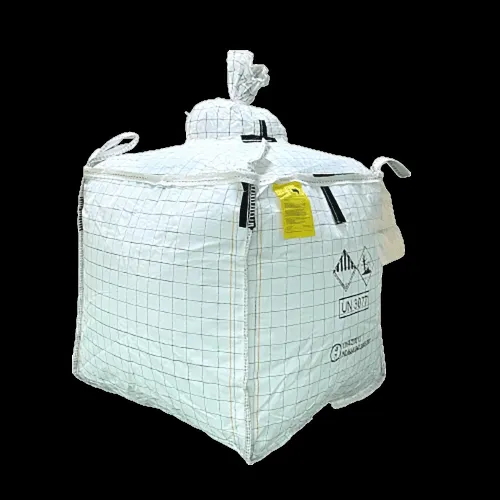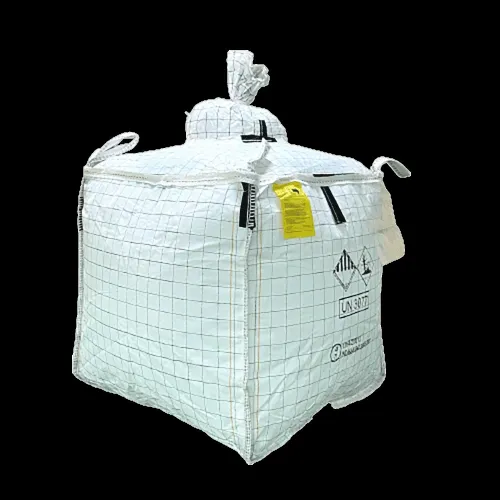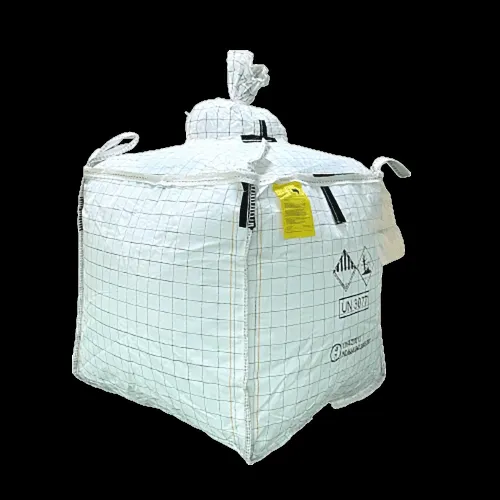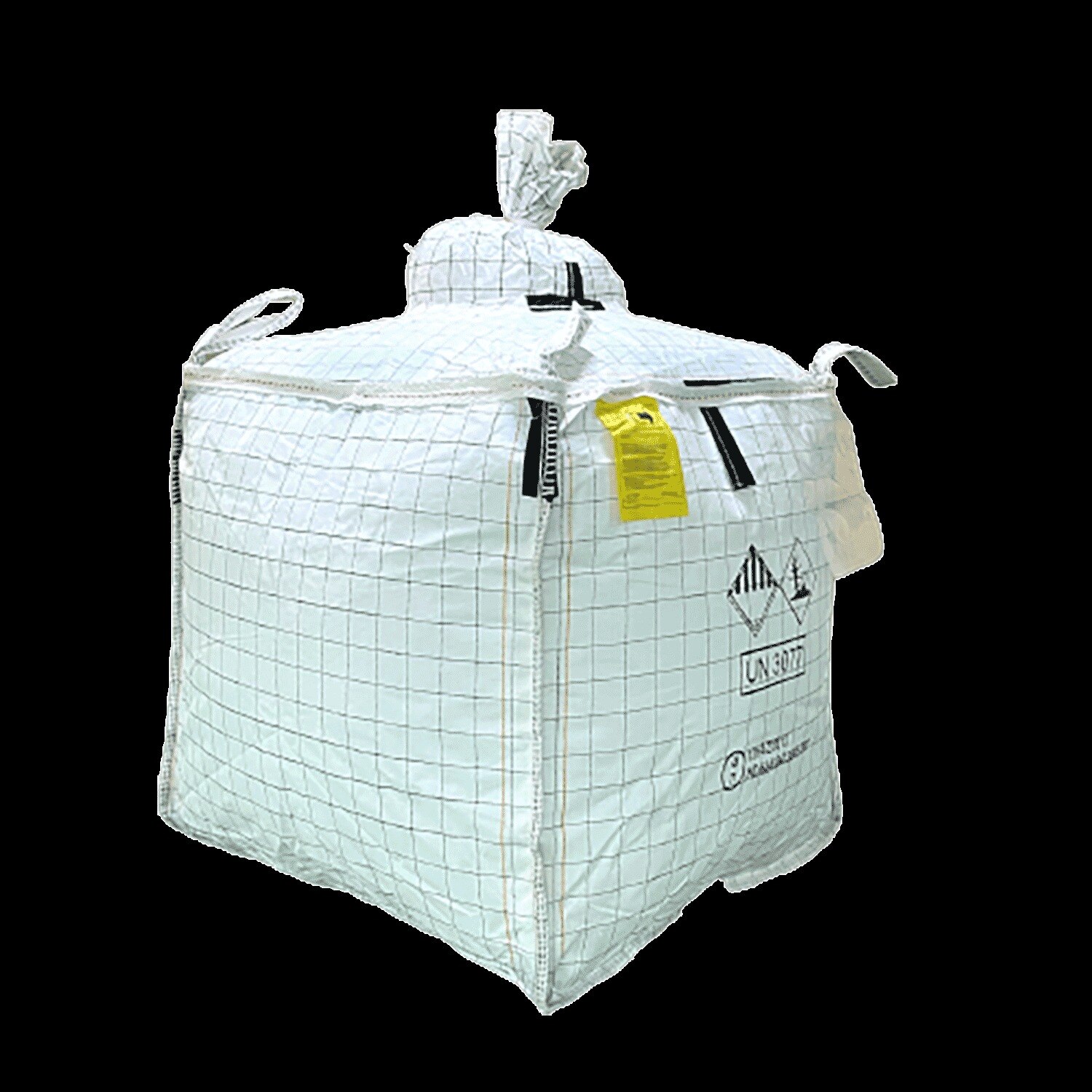
A high-capacity FIBC is not defined by its cubic-metre volume alone. You need to match safe working load, material density, lifting construction, discharge equipment, electrostatic controls and storage conditions before approving a bag for use.
Key takeaways
- Use SWL, material density and usable volume to size an FIBC.
- Specify fabric, liner, loops and outlets for your material and transfer process.
- Control static electricity with the correct FIBC type and grounding procedure.
- Protect filled bags from moisture, stacking damage and unapproved reuse.
Define capacity by SWL, density and usable volume
A high-capacity FIBC is defined by its safe working load (SWL), not by cubic metres alone. SWL is the maximum permitted filled weight marked for that bag’s construction and handling method. Two bags with identical external dimensions can have different SWLs because their fabric, seams, lifting loops, liner and discharge outlet differ.
Calculate the required usable volume from target mass and bulk density: target mass ÷ density ÷ usable-fill fraction. For 1,000 kg of material at 650 kg/m³, the material occupies 1.54 m³.
If the design allows 90% of nominal volume for headspace and safe filling, select at least 1.71 m³, then confirm that the bag’s marked SWL is at least 1,000 kg.
Use this sequence before ordering:
- Obtain the product’s loose and settled bulk density from its SDS or a measured sample.
- Calculate material volume using target weight ÷ density.
- Add headspace required for filling, settling, aeration and the filling nozzle.
- Check the discharge outlet, liner and bag dimensions against the hopper, forklift and storage space.
- Confirm the marked SWL, test certificate and intended-use conditions.
The safety factor 5:1 6:1 FIBC bags use is a design and test ratio, not an extra filling allowance. Never fill beyond the marked SWL. For high-capacity FIBC bags Ankleshwar bulk storage, specify the actual mass, density range and usable volume rather than ordering by size alone.
Match the bag construction to the material and transfer process
A woven polypropylene body suits fertilizer granules, pellets, flakes and many minerals; choose coated fabric when moisture resistance matters. Fine powders and hygroscopic chemicals need a fitted polyethylene liner, sealed seams and a closed filling top to control leakage and dust.
| Material | Construction | Top and discharge |
|---|---|---|
| Fertilizer granules | Uncoated or coated polypropylene; liner only for moisture-sensitive grades | Duffle or spout top; sift-proof bottom spout for controlled emptying |
| Powders | Coated fabric with heat-sealed or sewn polyethylene liner | Closed filling spout, dust-tight flap and discharge spout or iris closure |
| Flakes and pellets | Uncoated woven polypropylene with a liner if fines or static-sensitive material demand it | Open or duffle top; standard bottom spout |
| Minerals | Heavy-duty, high-basis-weight fabric with reinforced seams | Open top for loading; wide discharge spout for abrasive, fast-flowing product |
| Chemicals | Compatible liner and coating verified against the substance; UN-certified construction where transport rules require it | Sealed top and secure bottom closure matched to the chemical and packing instruction |
Specify FIBC dimensions around the filling head, pallet, warehouse clearance and discharge equipment, not volume alone. A liner that collapses into the outlet can stop flow, so request an internal tie, baffled liner or liner-discharge arrangement when the powder bridges.
Choose 1-loop or 2-loop bags for dedicated lifting equipment; use 4-loop bags for common forklift handling FIBC bags. Cross-corner loops suit four-point lifting, while side-seam loops need the specified sling or fork arrangement. Never insert forks through the bag body, drag it, or lift fewer loops than stated. The loops carry the load.
Control static electricity before filling and discharge
An ordinary polypropylene FIBC is unsafe where filling or discharge could create an ignition source around combustible dust or flammable vapour. Select the bag from a documented electrostatic risk assessment, not from product weight alone.
| Option | Electrostatic behaviour | Use and control |
|---|---|---|
| Type A FIBC | No electrostatic-control provision; charge can accumulate on the fabric. | Use only where no flammable atmosphere or combustible dust hazard exists. |
| Type B FIBC | Limits propagating brush discharges from the fabric but does not remove all charge. | Suitable only where the assessment confirms the remaining discharge risk is acceptable; it is not a substitute for grounding. |
| Type C conductive FIBC | Conductive threads, tapes or panels carry charge to an earth connection. | Connect and verify the grounding lead before filling, keep it connected through discharge, and confirm continuity against the site’s specified resistance limit. |
| Type D dissipative FIBC | Dissipates charge without a grounding connection through its engineered fabric system. | Use only while the fabric remains clean, dry, undamaged and free from conductive contamination that could alter its performance. |
The assessment must record the powder’s minimum ignition energy, solvent-vapour classification, filling rate, conveying equipment, grounding continuity and selected FIBC type. A Type C conductive FIBC alone cannot make an installation safe: use closed filling, dust extraction, bonded equipment and conductive hoses or couplings where required.
Check that a liner fits the nozzle and outlet without uncontrolled collapse, puncture or charge accumulation.
Protect filled bags from weather, stacking damage and reuse failures
A filled FIBC can lose strength before its contents show any change. In Ankleshwar’s humid industrial climate, keep bags under a roof on a dry, level floor, raised above standing water and separated from walls, chemicals and condensation. A liner or coated fabric reduces water ingress; it does not make outdoor storage bulk bags weatherproof.
For storage and FIBC stacking:
- Keep filled bags away from direct sunlight; FIBC UV exposure weakens polypropylene fabric, seams and lifting loops.
- Use a waterproof cover with airflow around the bags, rather than wrapping each bag tightly and trapping condensation.
- Stack only to the supplier’s stated height, with bases aligned and no leaning or overhang.
- Never exceed the marked SWL, drag bags across floors, or lift a filled bag by its discharge outlet.
- Keep damaged pallets, sharp edges and forklift tines away from fabric and loops.
Use an FIBC inspection checklist reuse process before every second trip. Reject the bag if you find cuts, abrasion, seam separation, chemical staining, brittle or discoloured fabric, damaged lifting loops, distorted outlets, contamination, or markings that no longer identify the bag and SWL.
A clean appearance does not restore strength lost through sunlight, chemical contact or repeated flexing.
Do not reuse a single-trip FIBC after one nonhazardous load. Reusable bags need recorded inspections, compatible contents and a defined service limit; a higher 5:1 or 6:1 safety factor does not permit filling above the marked SWL.
Turn the operating conditions into a purchasing specification
Request a complete FIBC specification before you approve price or production. It must convert your product SDS, filling method, discharge equipment, storage arrangement and transport classification into measurable requirements—not just state a bag size.
1. Ask for the marked SWL, bag dimensions, usable volume, fabric basis weight, seam construction, lifting-loop design, safety factor and intended filling density. The same cubic-metre volume does not prove the same load rating.
2. Require an FIBC test certificate identifying the exact construction: body fabric, coating, liner, top closure, bottom outlet, stitching and lifting arrangement. Reject a certificate that covers only a similar-looking bag.
3. For chemical packaging Gujarat operations, provide the SDS details for dustiness, particle size, moisture sensitivity, oxidizing or combustible behaviour and solvent contact. Specify the liner material, antistatic type, closed filling, dust extraction and conductive connections from that information.
4. If the material is a regulated dangerous good, request a UN-certified FIBC for the substance and transport mode. Confirm that its UN mark and tested design cover the fabric, liner, closures and packing instruction; adding a liner does not create UN approval.
5. For Type C bags, define the grounding lead, continuity check and acceptable resistance limit, then require written site instructions for connection before filling and removal after emptying.
6. Request documented stacking-test results for the proposed fill height and pallet arrangement. SWL alone cannot establish a safe stack.
Deccan Cans & Printers Pvt. Ltd. can be compared on these documents and design records, not on nominal capacity alone.
Related products
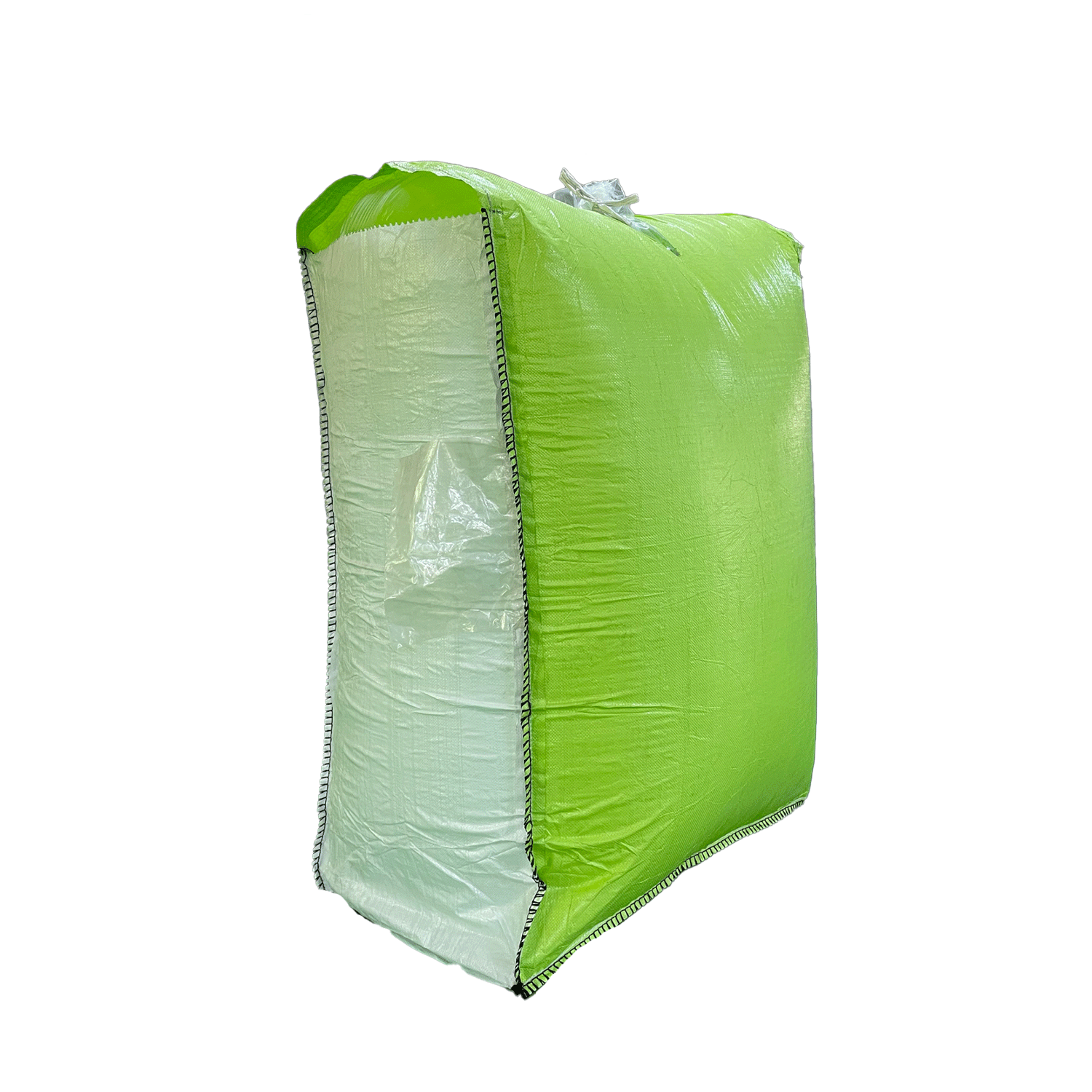 | FIBC Section Fertilizer Bag Range 1 & 2 Loop FIBC Bulk Bags Deccan Cans & Printers Pvt. Ltd. offers durable and cost-effective 1 & 2 Loop FIBC Bulk Bags, designed for the efficient... |
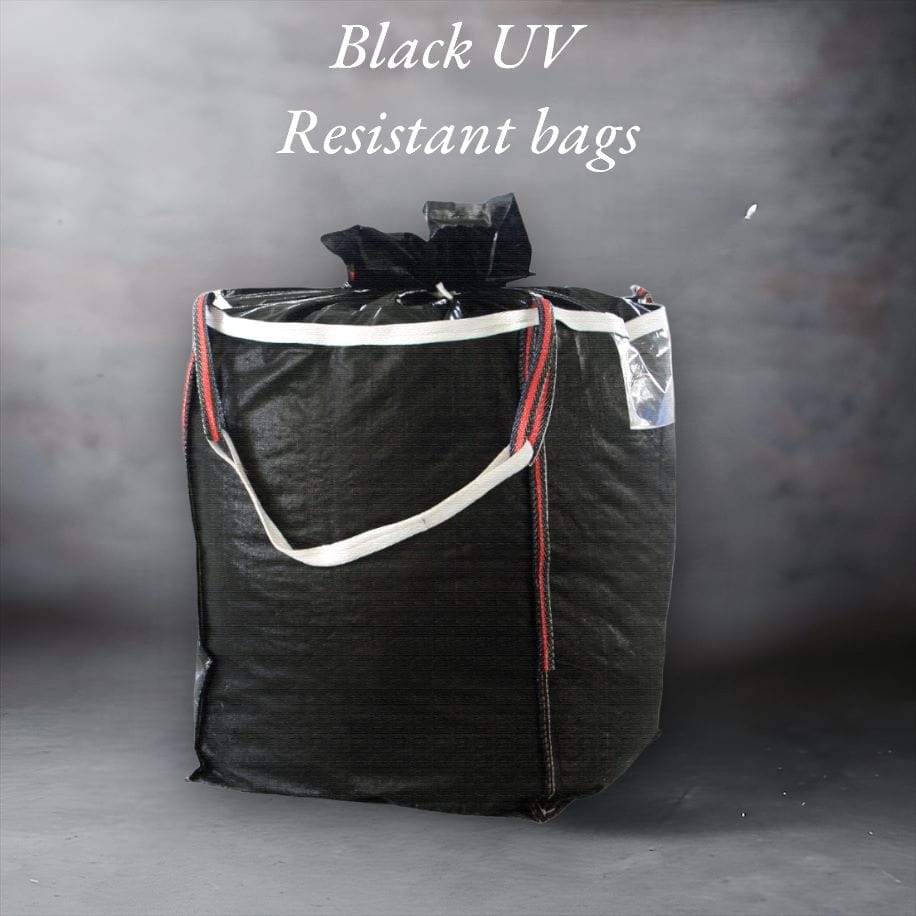 | FIBC Section Black Bags Black FIBC Bags – Enhanced UV Resistance & Extended Shelf Life UV exposure is one of the major challenges faced by the FIBC industry, as prolonged... |
Frequently asked questions
How do you define the capacity of a high-capacity FIBC?
Define capacity using the bag’s safe working load, material density and usable internal volume. Cubic metres alone do not determine the permitted filled weight.
How do you match FIBC construction to the material?
Specify the fabric, seam design, liner, lifting loops and discharge outlet according to the material’s density, flow, moisture sensitivity and transfer process.
How do you control static electricity when using FIBC bags?
Identify the required FIBC type, ground conductive components and follow a documented grounding procedure before filling and discharge, especially around combustible dust.
How should filled FIBC bags be protected during storage and transport?
Keep bags away from weather, inspect pallets and stacking arrangements, prevent contact with sharp edges, and reuse them only when their rating and inspection history permit it.
Related products
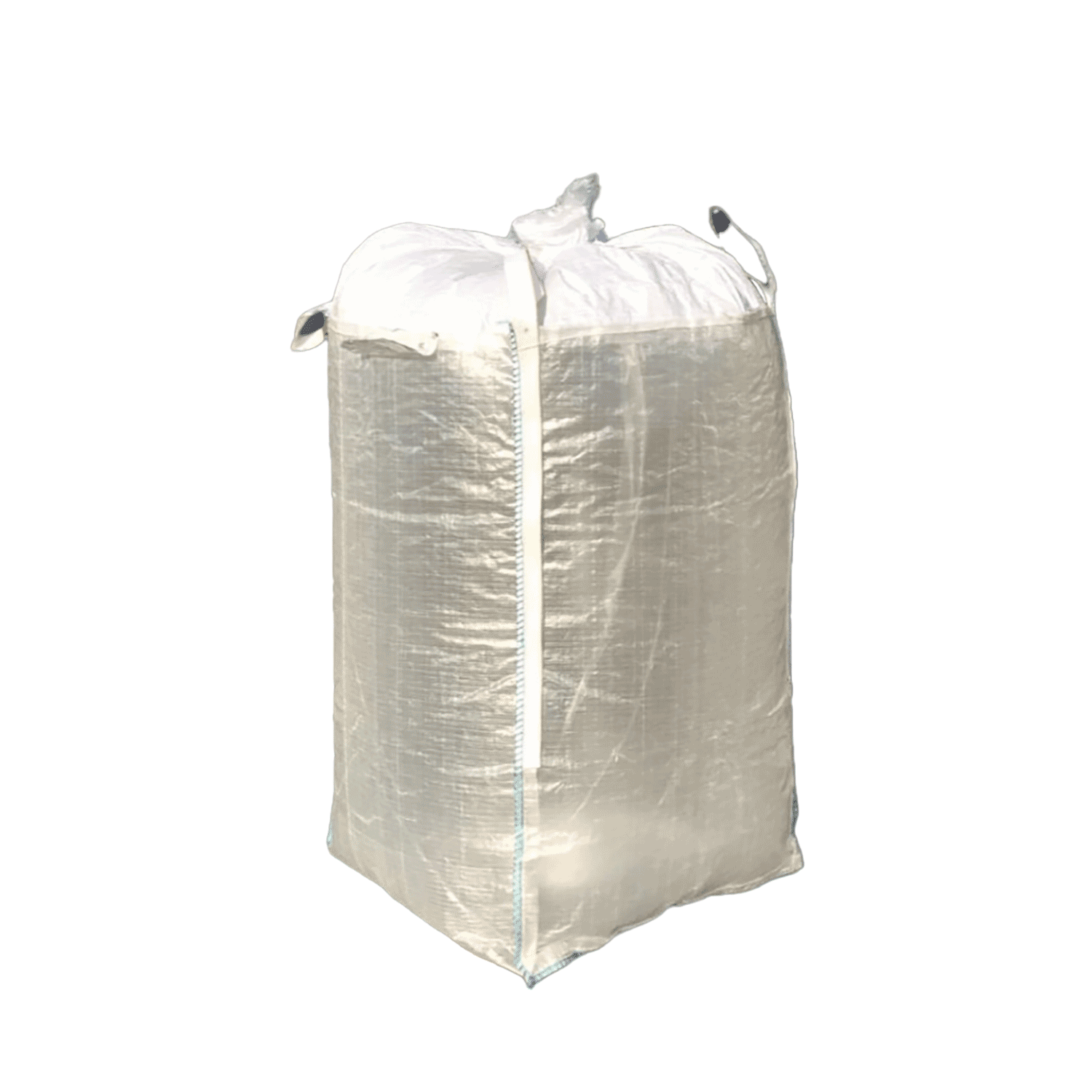 | FIBC Section Transparent Bags Transparent FIBCs – See-Through Bulk Bags Deccan Cans & Printers Pvt. Ltd. |
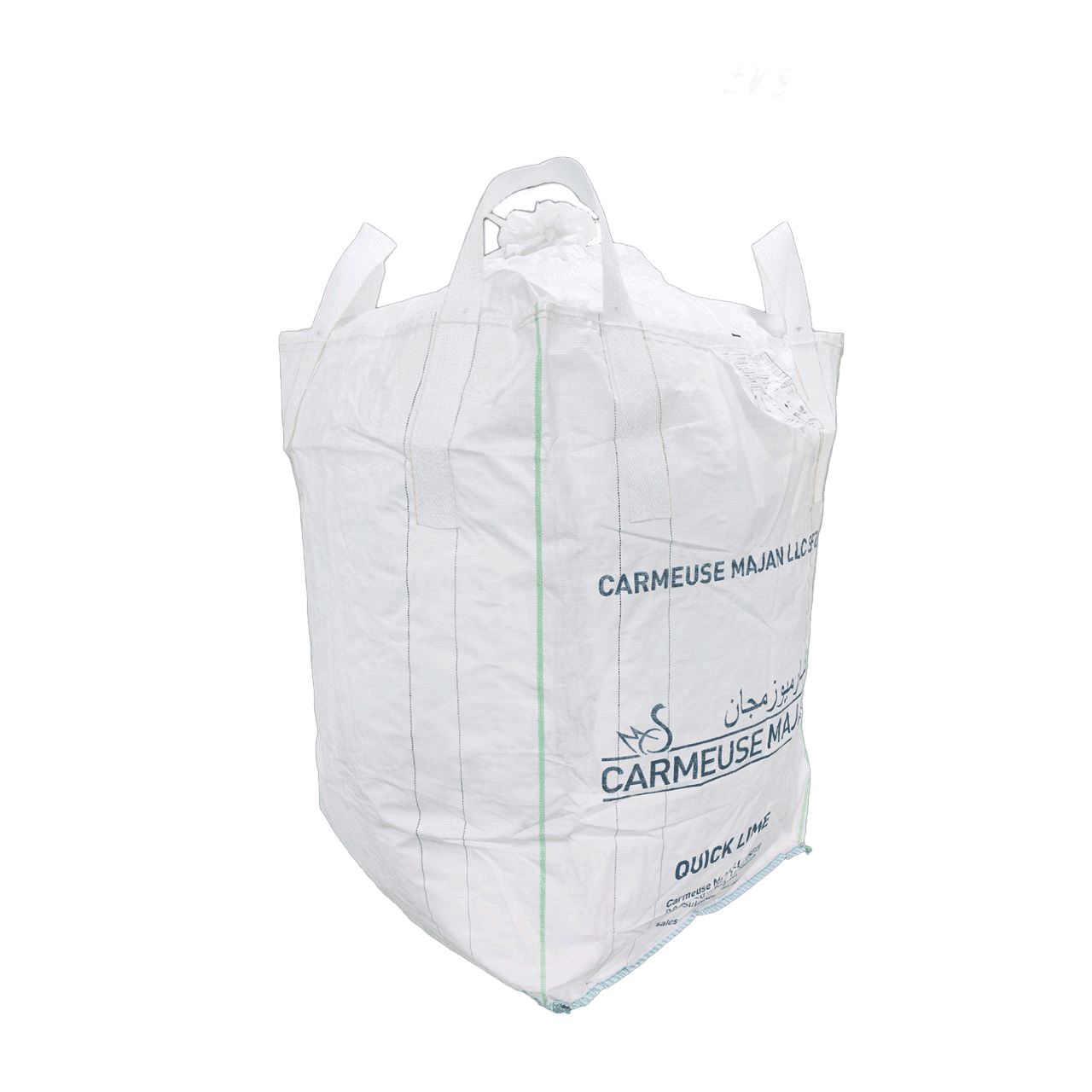 | FIBC Section Bags With Liners FIBC Liners – Bulk Bag Liners Deccan Cans & Printers Pvt. Ltd. |
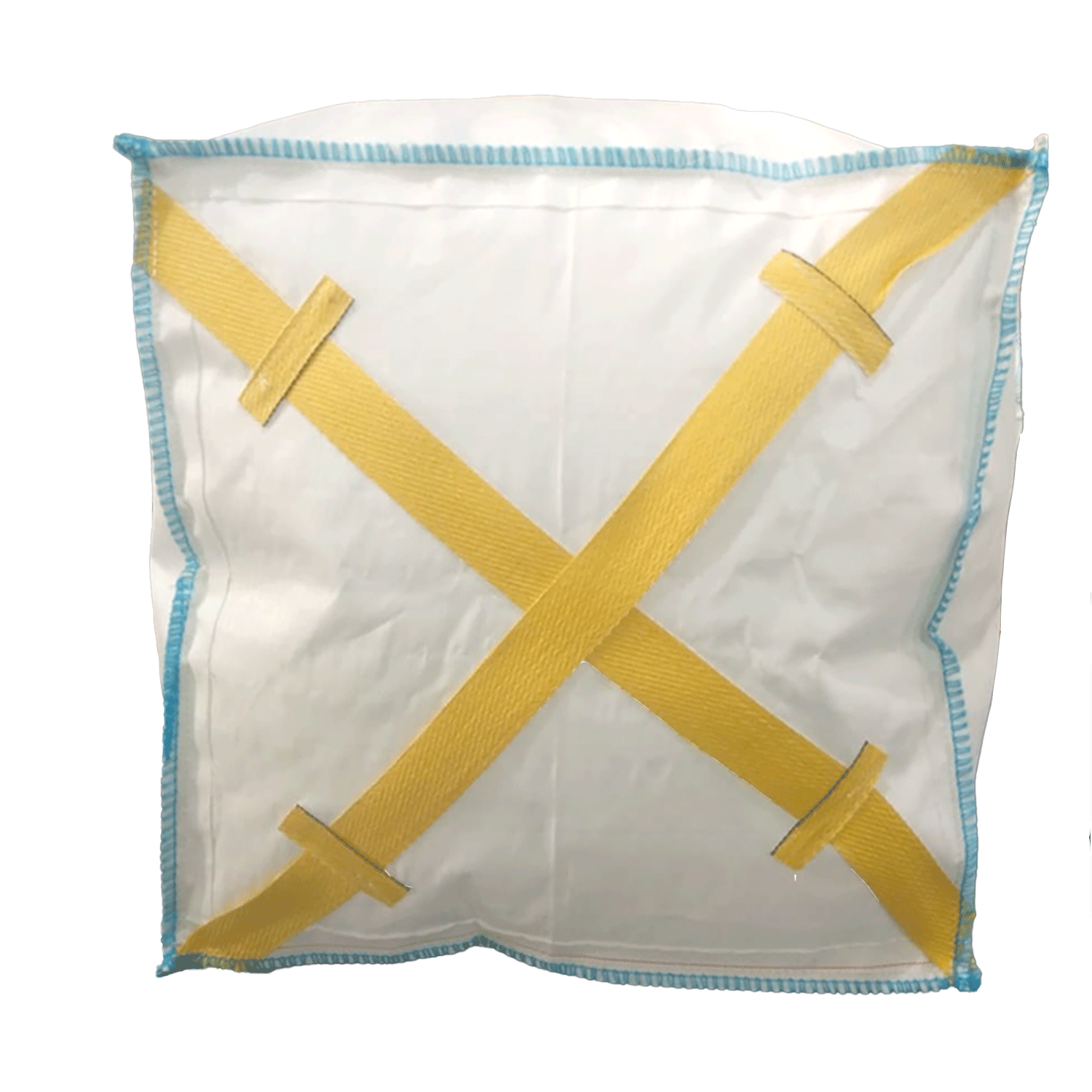 | FIBC Section Cross Bottom Sling Bags Cross Bottom Sling FIBCs – Bulk Bags Deccan Cans & Printers Pvt. Ltd. |
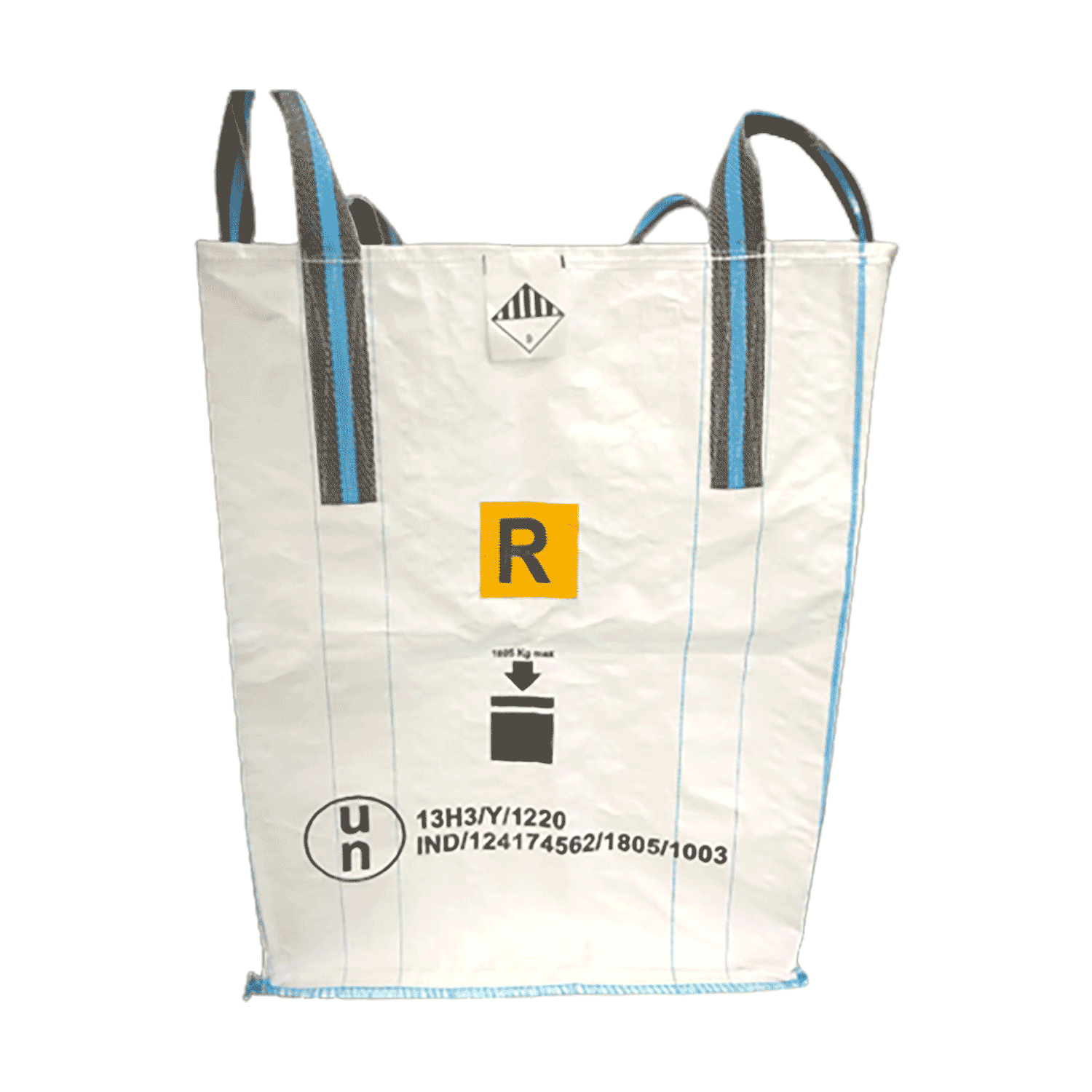 | FIBC Section Un Bags UN Certified Bulk Bags – Rigorous Performance Testing for Safety & Reliability Deccan UN Certified Bulk Bags are specially engineered for the safe... |