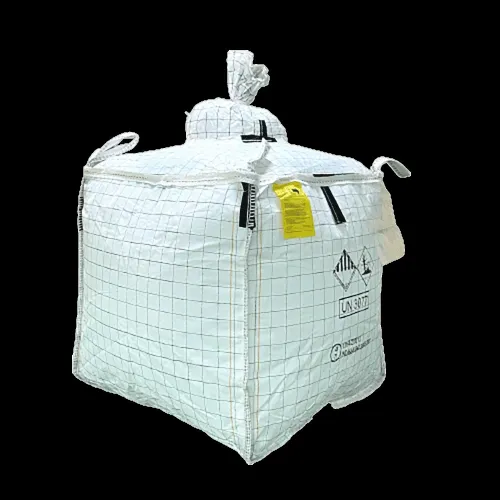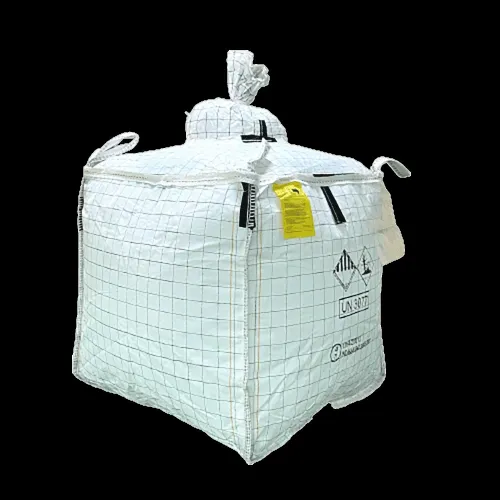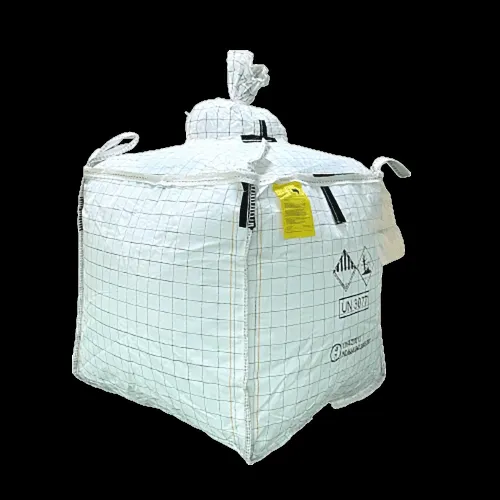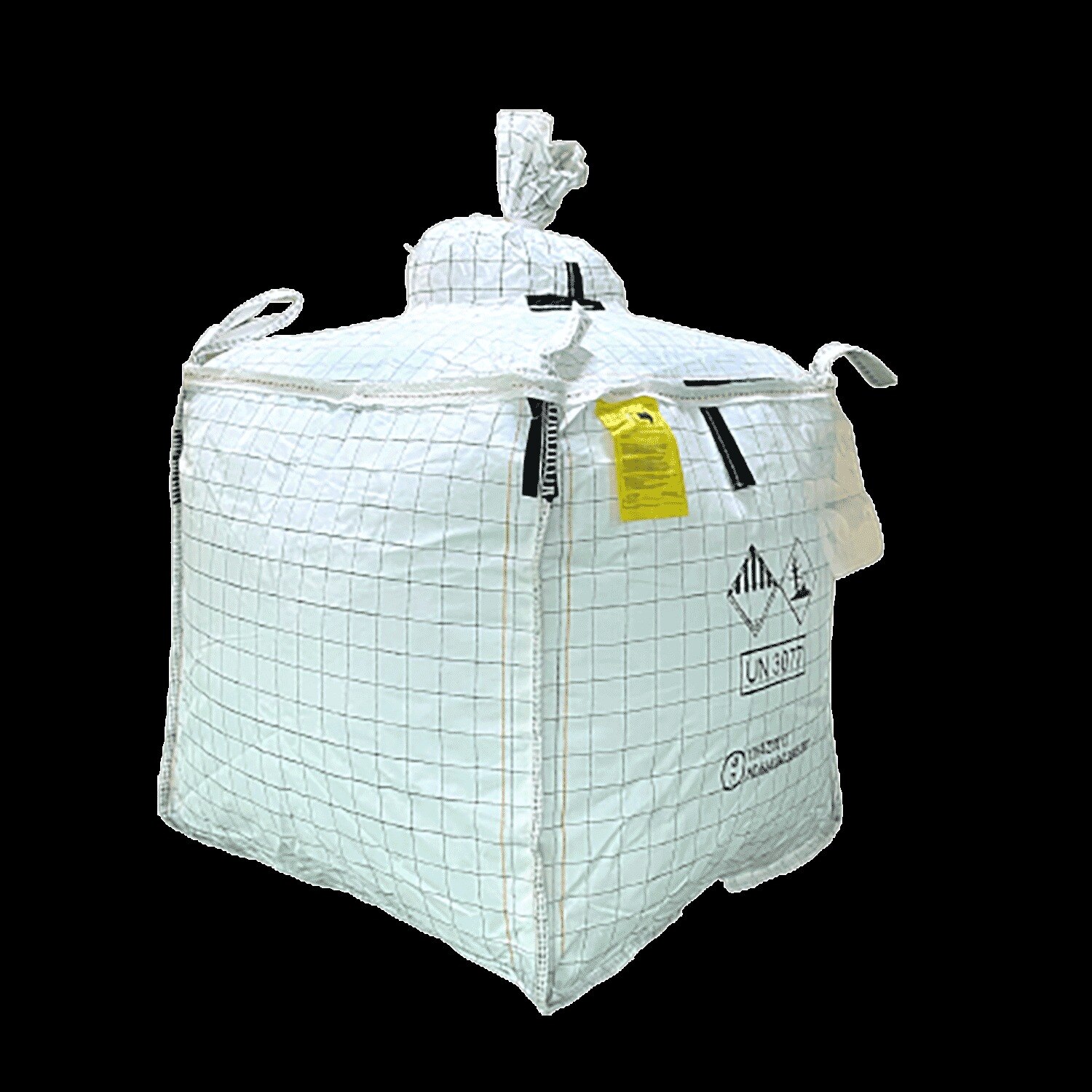
A chemical FIBC must match more than the product’s weight and volume: its construction, static-control class, UN approval, lifting system, and storage conditions all affect safety. By the end, you will be able to define a bag specification, set handling controls, and reject damaged or incompatible bags before they enter your process.
Key takeaways
- Match sift-proof seams and liners to fine powders, granules, moisture, and contamination risks.
- Confirm chemical compatibility and the exact UN packaging approval before purchase.
- Use the correct static-control FIBC for filling, discharge, and hazardous-area conditions.
- Inspect lifting loops, seams, liners, labels, and test documents before every use.
Match the FIBC construction to the chemical and its physical form
Chemical FIBC selection starts with particle behaviour and hazard, not bag capacity. Fine powders need sift-proof seams, a coated woven polypropylene body, and a fitted liner when contamination or moisture ingress matters. Granules usually suit an uncoated woven body with reinforced seams; add a liner when the product absorbs moisture or leaks through abrasion damage.
| Material form | Suitable construction | Specify |
|---|---|---|
| Fine powders | Coated woven polypropylene with sift-proof seams and a close-fitting liner | Powder storage, controlled discharge, and a closure that prevents leakage |
| Granules | Heavy-duty woven polypropylene, with optional liner | Granule storage, impact resistance, and a discharge spout matched to particle size |
| Corrosive solids | Chemically compatible coating or liner, verified with all seams and closures | Check concentration, temperature, contact time, and abrasion before approval |
| Hygroscopic materials | Heat-sealable multilayer or aluminium-barrier liner inside the FIBC | Define liner thickness, fit, seal method, and moisture-vapour performance |
| Dust-releasing chemicals | Dust-tight construction plus an FIBC static-control type selected from the ignition assessment | Control dust escape during filling and emptying |
A polyethylene liner is a moisture and contamination barrier, not automatic proof of chemical resistance. Check the woven fabric, coating, liner film, sewing thread, lifting loops, filling and discharge spouts, closures, and gaskets against the actual chemical. A dry solid and a hot, concentrated or solvent-wet product can require different materials.
For combustible or hazardous dust, specify sift-proof construction and engineered grounding or bonding; humidity does not make an unsuitable bag safe. Changing from an unlined bag to a lined bag can also change the certified packaging configuration, so confirm the complete design before purchase.
Verify chemical compatibility and the correct UN packaging approval
Start with the SDS, not the bag catalogue. Record the chemical’s concentration, moisture content, temperature, contact time, physical state, UN number, hazard class and packing group. A dry powder and a solvent-wet version of the same product are separate compatibility cases.
Confirm FIBC chemical compatibility for the complete assembly, not just the polypropylene body. Obtain written compatibility evidence for:
- Woven polypropylene fabric
- Coating and inner liner film
- Sewing thread and seams
- Filling and discharge spouts
- Closures and gaskets
- Lifting loops and antistatic yarn
Ask whether the evidence covers your actual concentration, maximum temperature, exposure duration, moisture and abrasion. A material that tolerates a dry inorganic powder may soften, swell or lose strength after contact with a hot, concentrated solution.
For a UN-certified FIBC, match the supplier’s certificate and marking to the approved configuration. The flexible-plastic UN packaging codes 13H1 13H2 13H3 13H4 identify these construction differences:
- 13H1: uncoated woven plastic, no liner
- 13H2: coated woven plastic, no liner
- 13H3: uncoated woven plastic, with liner
- 13H4: coated woven plastic, with liner
Also verify the marked performance level, packing group, maximum gross mass, test date or inspection requirement, closure design and liner specification. Changing the liner or coating can invalidate the tested configuration. The UN mark confirms tested dangerous-solid packaging performance; it does not prove chemical compatibility or unlimited storage life.
Choose the right static-control type for filling and discharge
A Type A FIBC is suitable only where the contents and atmosphere cannot form an ignitable dust cloud or flammable vapour. Choose the type from the chemical’s dust-explosion data, hazardous-area classification, filling equipment, and discharge method—not from humidity or bag capacity.
| Type | Static-control function | Use and limitation |
|---|---|---|
| Type A FIBC | No static-control protection | Non-combustible products in non-hazardous areas; never use where combustible dust or flammable vapour could ignite. |
| Type B FIBC | Limits propagating brush discharges but provides no grounding path | Selected for certain combustible powders with suitable minimum ignition energy; do not use where flammable vapour or gas is present. |
| Type C FIBC | Conductive yarns and groundable points carry charge to earth | Use for combustible powders or hazardous atmospheres when you connect a verified ground before filling and keep continuity through discharge. |
| Type D FIBC | Dissipative fabric controls charge without routine grounding | Use only where the tested bag, product, liner, and operating environment meet the manufacturer’s conditions; contamination or damage can defeat performance. |
Before filling a Type C FIBC, bond the filling equipment, connect the bag’s groundable point, and test continuity with an approved monitor. Keep the connection until emptying is complete.
Use conductive, approved liners as a tested bag-and-liner system; a loose insulating liner can charge, block flow, or tear, so never cut it with a knife during discharge. Control dust with closed transfer, extraction, and an interlock that stops filling when grounding fails.
Store, fill, move, and empty chemical FIBCs without creating a new hazard
Use a written FIBC storage procedure at every shift handover. Keep bags indoors on clean, dry, level pallets, away from rain, roof leaks, heat, sunlight, ignition sources, and incompatible chemicals. Leave aisles wide enough for the planned handling equipment and keep spill materials accessible.
1. Inspect the bag, liner, loops, seams, spouts, pallet, and label before filling. Reject any bag with cuts, abrasion, dampness, chemical staining, distorted corners, loose stitching, or a liner pulled from its intended position.
2. Fill on a level surface with the bag supported by all designated loops. Connect the approved filling equipment, close unused openings, control the filling rate, and use local extraction for dust control. Do not allow a nozzle, clamp, or pipe to puncture the fabric.
3. Apply FIBC grounding before transfer when the approved design requires it. Check the earth lead, grounding point, conductive stitching, and contact surfaces; for Type C systems, verify the specified resistance remains below 1.0 × 10^8 ohms using the applicable test method. Never rely on humidity.
4. Follow the supplier’s tested pattern and height for FIBC stacking. Do not stack on uneven pallets, wet floors, sharp rack members, damaged loops, or bags with bulging or collapsed bases.
5. Move bags slowly with designated lifting equipment; never drag, drop, push, or lift from tied spouts. During discharge, bond equipment as specified, control dust, and use the approved liner-discharge method. Never cut or tear a liner with a knife. Stop immediately for leakage, heat, instability, or unexpected powder flow.
Specify the bag, inspect it, and select a supplier that can prove compliance
Specify the chemical, capacity, FIBC safe working load, FIBC safety factor, lift cycles, filling density, discharge method, and stacking arrangement on the purchase order. A 5:1 or 6:1 label does not prove reusability; fabric, seams, lifting loops, spouts, and the inspection regime must support the stated service.
Ask the supplier for:
- A drawing and material specification covering polypropylene fabric, coating, liner, seams, filling and discharge spouts, lifting loops, and closures.
- Chemical-compatibility evidence for the exact concentration, temperature, and contact time.
- UN packaging approval documents and the matching UN mark when the classified chemical requires certified packaging.
- A stacking-test report or risk assessment stating the permitted pattern, height, pallet condition, and floor limits.
- Static-control test results. For Type C designs, verify the designated grounding point-to-conductive-element resistance is below 1.0 × 10^8 ohms under the stated test method.
- Manufacturing traceability, batch records, and inspection instructions.
Deccan Cans and Printers Pvt. Ltd. should be assessed by the same evidence standard as any Ankleshwar supplier, not by location or product photographs.
| Stage | FIBC inspection checklist | Reject or stop use when |
|---|---|---|
| Before each use | Check the batch identity, fabric, seams, loops, spouts, liner, closures, labels, moisture, contamination, and base distortion; confirm the bag suits the chemical and lifting equipment. | You find cuts, abrasion, broken stitching, chemical attack, a deformed base, wet fabric, missing labels, or an unapproved liner. |
| After forklift movement or transport | Reinspect all sides, loops, pallet contact points, seams, and discharge spouts; confirm the bag stayed upright and dry. | Fork tines struck it, loops stretched, the pallet is broken or uneven, the bag shifted, or contents leak. |
| Before stacking | Confirm the supplier-approved height and pattern, sound pallet, clear aisles, dry floor, and separation from incompatible chemicals. | The arrangement exceeds tested limits or the bag is damaged. |
Related products
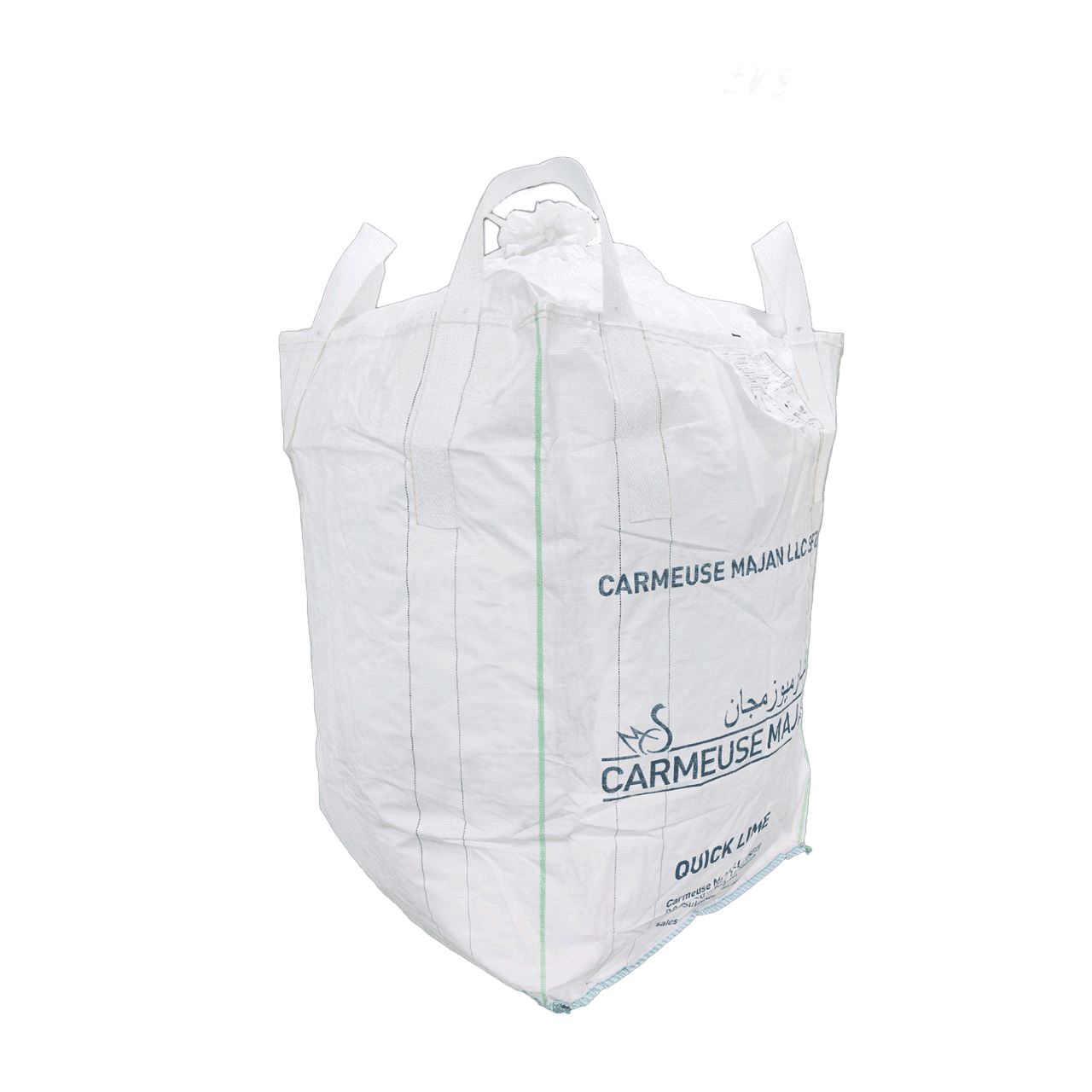 | FIBC Section Bags With Liners FIBC Liners – Bulk Bag Liners Deccan Cans & Printers Pvt. Ltd. |
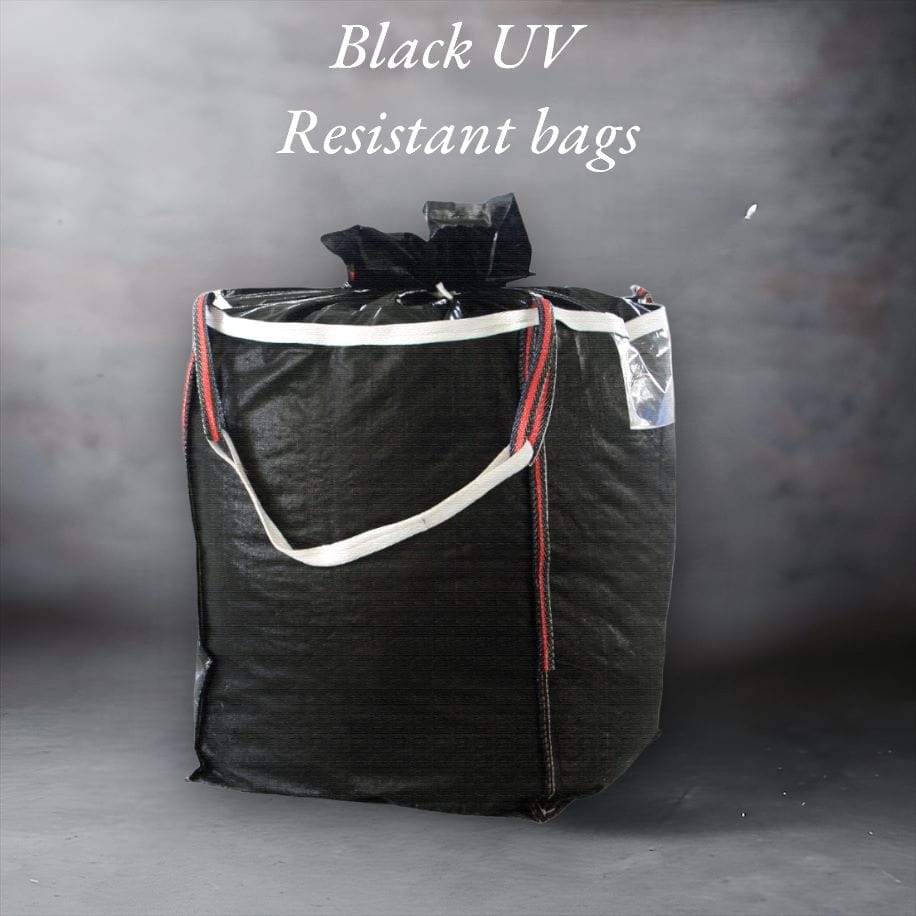 | FIBC Section Black Bags Black FIBC Bags – Enhanced UV Resistance & Extended Shelf Life UV exposure is one of the major challenges faced by the FIBC industry, as prolonged... |
Frequently asked questions
How do you match FIBC construction to a chemical product?
Choose sift-proof seams, coated polypropylene, and a liner for fine powders or moisture-sensitive products. Granules often suit uncoated woven polypropylene with reinforced seams.
How do you verify chemical compatibility and UN approval?
Check the chemical against the bag fabric and liner, then request the exact UN packaging approval and test documentation for the intended product and use.
Which static-control FIBC should you use?
Select the static-control type according to the product’s ignition risk, filling and discharge method, grounding arrangements, and the hazardous-area assessment.
How can you handle chemical FIBCs safely?
Inspect the bag before use, keep it dry and protected from damage, use suitable lifting equipment, control filling and discharge, and prevent unsafe static buildup.
Related products
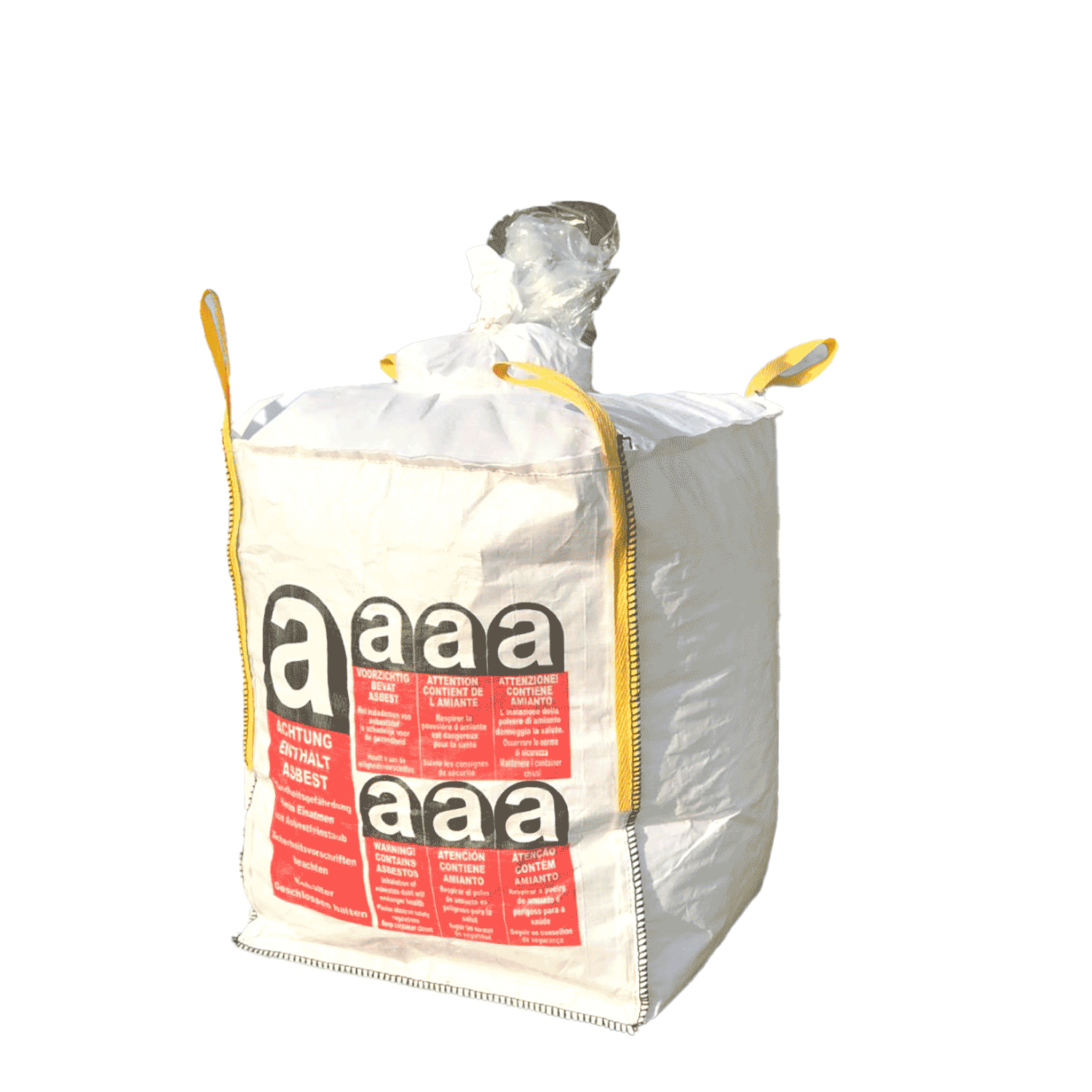 | FIBC Section Asbestos Bags & Platten Bag Range Platten & Asbestos Bags – Reliable Packaging for Asbestos Waste Disposal Deccan Platten & Asbestos Bags are specially designed for the safe handling,... |
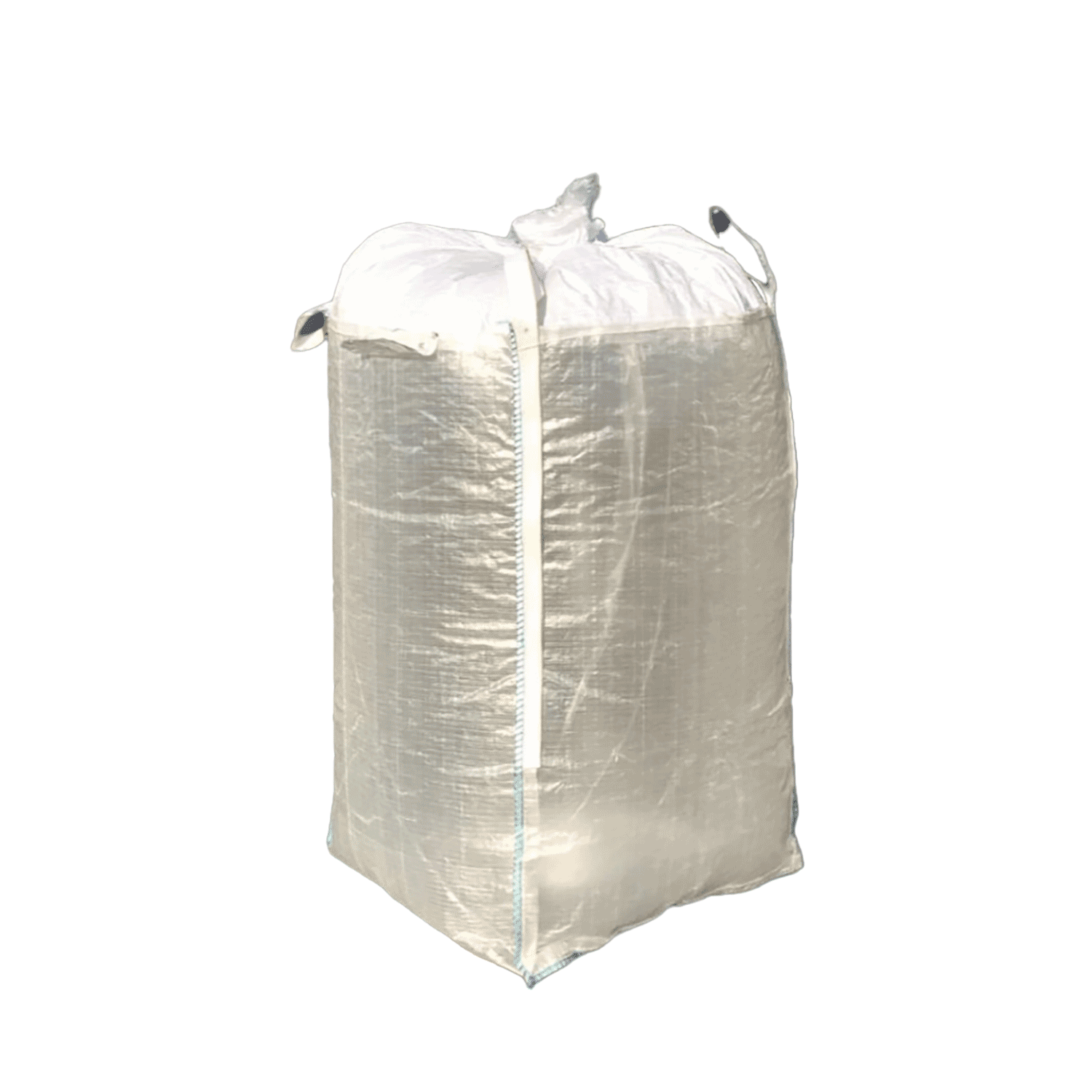 | FIBC Section Transparent Bags Transparent FIBCs – See-Through Bulk Bags Deccan Cans & Printers Pvt. Ltd. |
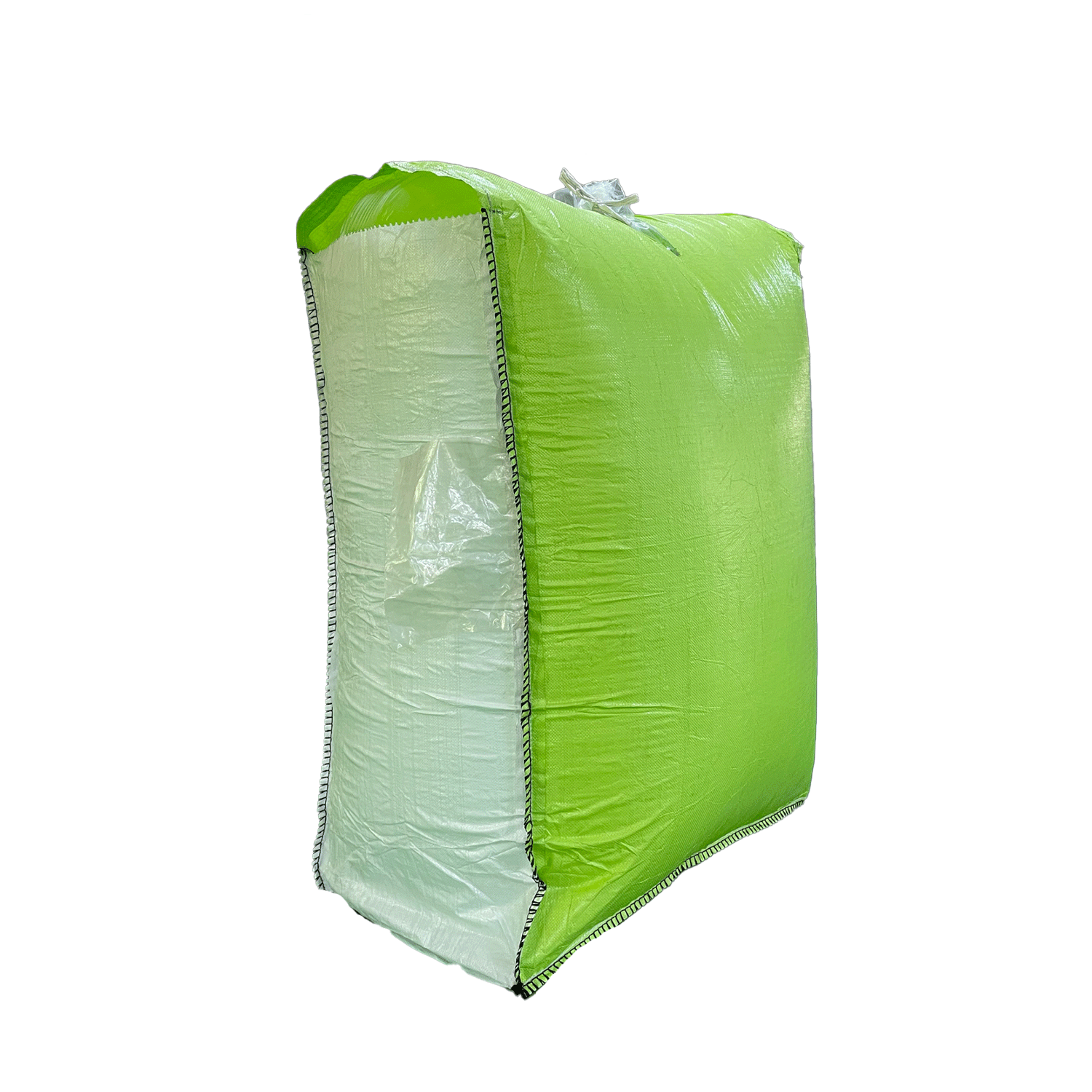 | FIBC Section Fertilizer Bag Range 1 & 2 Loop FIBC Bulk Bags Deccan Cans & Printers Pvt. Ltd. offers durable and cost-effective 1 & 2 Loop FIBC Bulk Bags, designed for the efficient... |
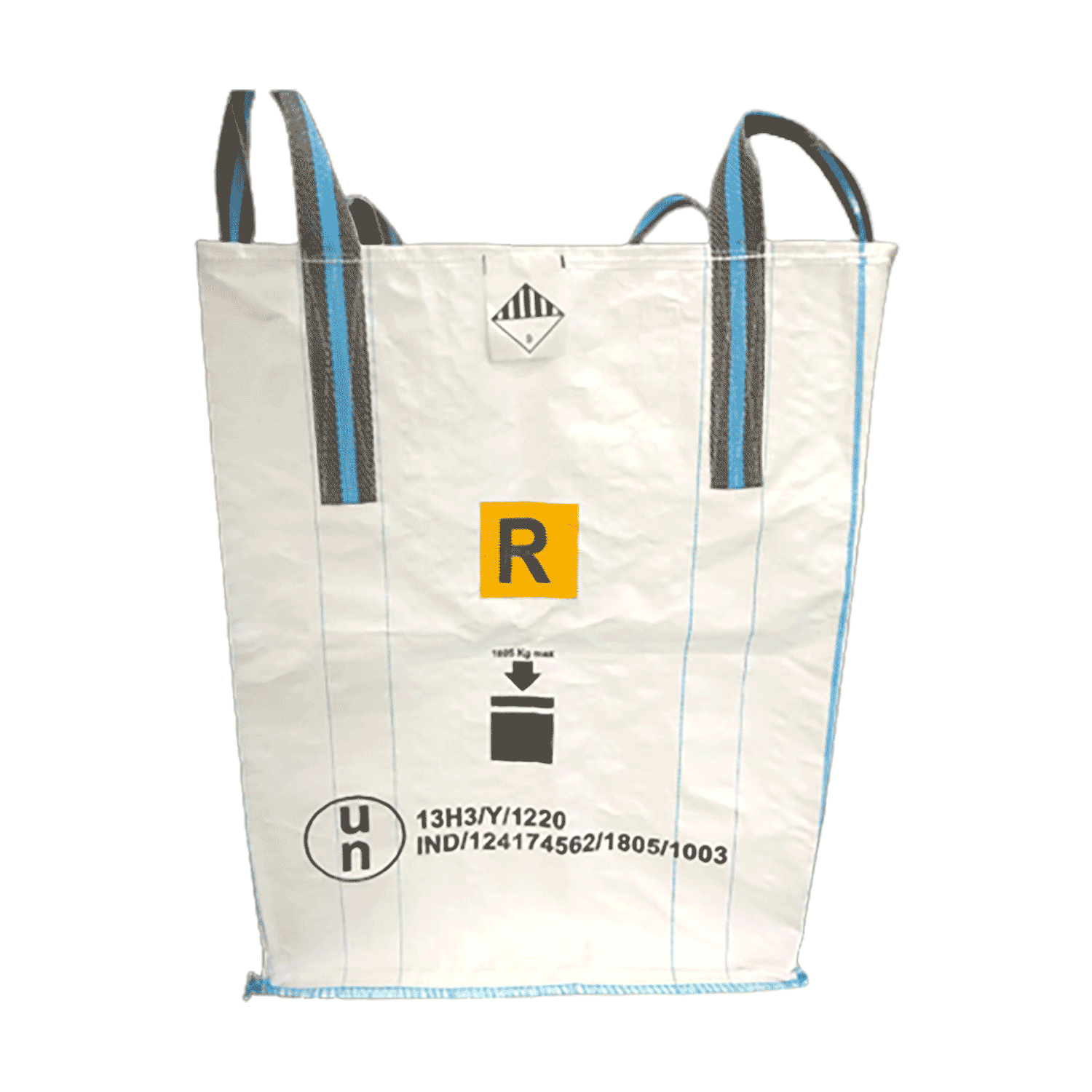 | FIBC Section Un Bags UN Certified Bulk Bags – Rigorous Performance Testing for Safety & Reliability Deccan UN Certified Bulk Bags are specially engineered for the safe... |