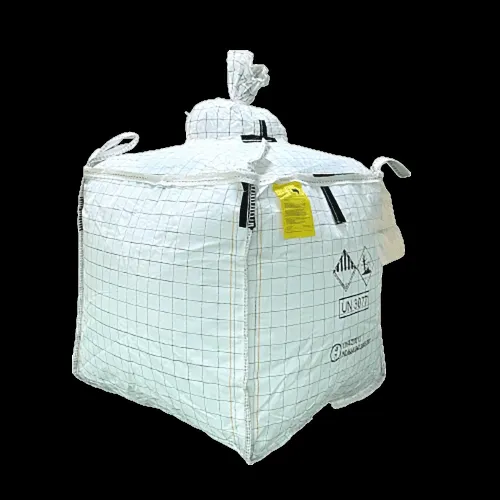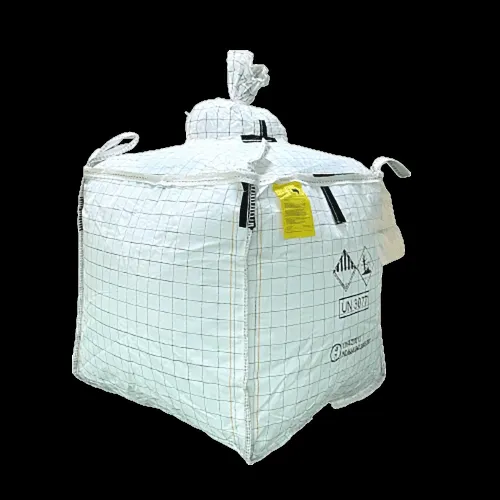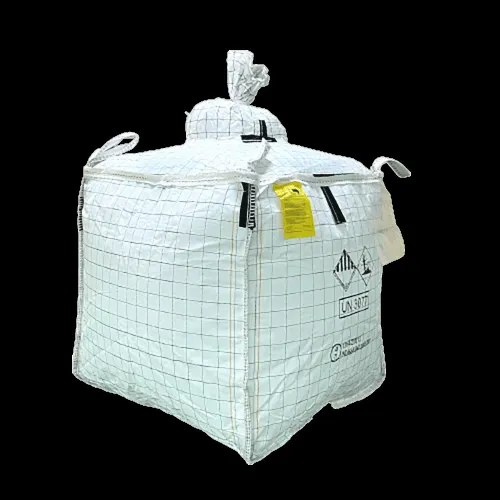

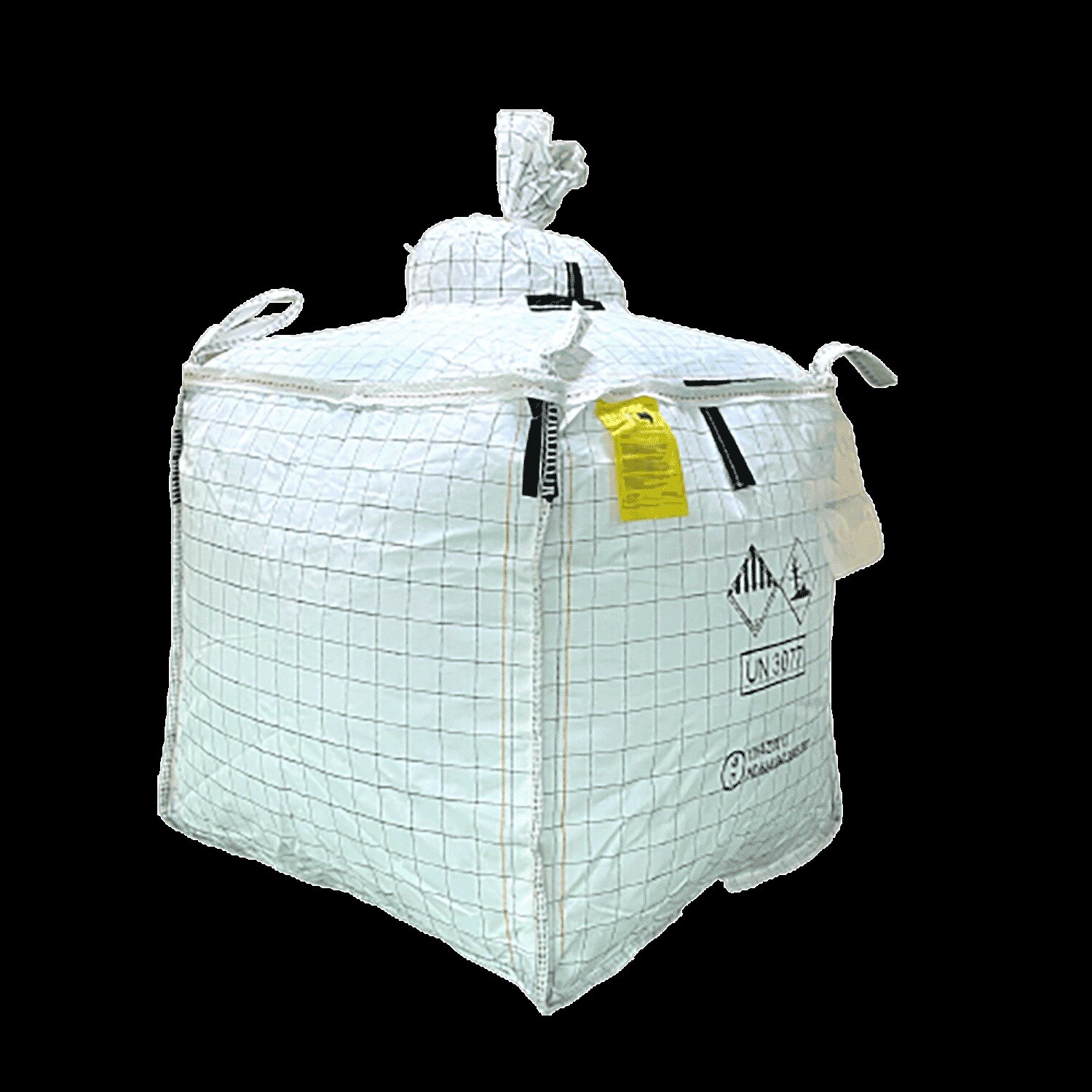
A white, new-looking FIBC or a bag with an inner liner is not proof that it is safe for direct food contact. You need to verify the materials, manufacturing controls, test evidence, construction and handling process before approving bags for ingredients or finished food products.
Key takeaways
- Request food-contact test reports for the complete finished FIBC construction.
- Match liner, fabric, discharge spout and dimensions to your product and filling line.
- Inspect packaging, seals and storage conditions before accepting each delivery.
- Keep food-grade bags segregated from chemicals, dust and damaged packaging.
What makes an FIBC genuinely food-contact suitable?
A clean-looking bulk bag is not automatically suitable for food. Food-grade FIBC bags need documented food-contact compliance for the finished construction, plus controls that prevent contamination during manufacture, packing and storage.
“Food grade” is not one universal certification. Check that the supplier’s declaration covers every part touching the product, not just the polypropylene resin:
- Woven polypropylene fabric
- Liner film and coating
- Sewing thread and lifting-loop cord
- Labels, inks, adhesives and closures
For bags supplied in India, the declaration should identify compliance with the Food Safety and Standards Authority of India requirements under the FSSAI Packaging Regulations 2018. Ask for migration evidence matching your food, temperature, contact time and storage conditions. A resin certificate alone does not prove that the converted FIBC complies.
Confirm whether the polypropylene is virgin or contains recycled material, then trace the material to batch numbers and the finished bag to a production lot. A lot-specific certificate of conformity should identify the construction, dimensions, safe working load, safety factor, test results, manufacturing date and release status.
ISO 21898 evidence helps establish lifting, seam and body performance; it does not prove food-contact safety or hygienic production. A bag can pass a lifting test and still transfer contaminants. Food-contact packaging also requires controlled manufacturing and segregation from industrial products, which a clean appearance cannot demonstrate.
Which documents prove food-contact compliance in India?
Approve a supplier only when the paperwork identifies the finished FIBC, its contact materials and its intended use. Check the food-contact declaration against India’s Food Safety and Standards (Packaging) Regulations, 2018; the regulation addresses packaging safety and migration, but does not prove hygienic manufacture of that specific bag.
Request these records for every production lot:
- A food-contact declaration covering woven polypropylene, liner film, coatings, thread, cord, labels, inks and adhesives. It should state whether each polymer is virgin or recycled and identify the legal basis for compliance.
- A migration test report using the intended food simulants and worst-case conditions: fat content, acidity, filling temperature, contact time and storage duration. A resin supplier’s report alone does not establish conformity after conversion into an FIBC.
- A lot-specific certificate of conformity or certificate of analysis linked to fabric and liner batch numbers, dimensions, safe working load, safety factor, test results, manufacturing date and release status.
- Resin traceability records linking the bag to resin manufacturer, grade, additive package and production batch.
| Document | What it proves | Check before approval |
|---|---|---|
| Food-contact declaration | Material compliance basis | Every product-contact component is named |
| Migration test report | Chemical release under stated conditions | Simulants and exposure match your product |
| Certificate of conformity | Finished-bag lot meets specification | Bag batch and test results are identifiable |
| Hygiene records | Controlled manufacture | Cleaning, pest control, foreign-material checks and sealed packaging are recorded |
Do not treat a UN mark as food-contact evidence. It concerns dangerous-goods transport, not food hygiene.
How should you specify the bag for your product and equipment?
Specify the FIBC from the product and the equipment backwards. A safe working load is not the same as usable fill weight: bulk density determines how quickly the rated mass is reached, while FIBC dimensions determine whether the bag becomes full first.
Set the safety factor after considering lifting method, stacking, impact, temperature and storage duration.
| Design choice | What it controls | Failure if mismatched |
|---|---|---|
| FIBC dimensions and fabric permeability | Fill volume, pallet fit and moisture or dust containment | Bulging, unstable stacks or product loss |
| Four lifting loops or a liftable construction | Hoist and forklift handling | Uneven loading can tear loops or distort the bag |
| Liner material and liner thickness | Food contact, barrier performance and discharge | Leaks, condensation, trapped product or liner rupture |
| Top inlet, bottom spout and closure | Filling speed and controlled emptying | Dust escape, bridging or a liner pulled into the outlet |
| Baffles or a form-stable body | Cubic utilisation and stack stability | Restricted flow, difficult liner fitting and retained product |
Give the supplier these operating details before approval:
- Product bulk density, particle size, fat or acid content, fill temperature and filling time.
- Required fill mass, stacking pattern, drop exposure and storage duration.
- Filling and discharge-machine dimensions, inlet and outlet connections, and closure method.
- Liner thickness, barrier requirement and tolerance for residual product after discharge.
- A lot-specific certificate linking construction, dimensions, safe working load, safety factor and test results to the intended bag.
What hygiene controls prevent contamination before filling?
Control contamination before filling by controlling the bag’s entire path, not just inspecting its appearance at delivery. Hygienic manufacturing must cover materials, people, equipment, storage and transport.
1. Manufacture food-contact FIBCs in a segregated clean production area or a controlled food-contact zone. Keep woven polypropylene, liner film, thread, cords, labels, inks and adhesives traceable to approved lots; record cleaning, foreign-material checks and inspection for oil or grease.
2. Apply documented pest control. Keep doors closed, exclude insects and rodents, and investigate damaged packaging, droppings or dead pests before releasing a production batch. Cross-contamination prevention fails if industrial fibres, chemicals or lubricants share open work areas.
3. Seal each finished bag in protective packaging immediately after inspection. Store it off the floor on clean pallets, away from sunlight, moisture, dust, chemicals and odours. Keep food-contact bags physically identified and separated from bags used for pigments, minerals, fertilisers or other industrial products.
4. Transport bags in clean, dry, enclosed vehicles. Do not load them beneath leaking cargo or beside chemicals, oils, waste or dusty materials. Retain lot numbers through dispatch so you can trace the resin, liner and production date.
5. Treat a UN mark as dangerous-goods performance evidence, not food hygiene evidence. ISO 21898 performance compliance also does not prove hygienic manufacture. Type C and Type D FIBC classifications address electrostatic control; neither replaces food-contact documentation, cleanliness records or sealed handling.
How should you receive and source food-grade FIBCs in Bengaluru?
Reject the consignment before unloading if the outer protective wrap is torn, wet, dusty or unsealed. Sealed transport protects the bags from road dust and moisture, but it does not prove food-contact suitability; use this FIBC receiving checklist at the dock.
1. Compare the purchase order with the bag construction: woven polypropylene, liner, thread, cord, coating, labels, ink and adhesive. Any unlisted material needs approval before use.
2. Inspect every sample for oil, grease, odour, stains, insects, loose fibres, damaged lifting loops, open seams and powder trapped in spouts or corners. Check liner seals and closures for punctures.
3. Record lot or batch identification, manufacturing date, dimensions, safe working load and safety factor. Photograph the labels and retain one sealed sample from each lot.
4. Quarantine bags with missing labels, broken protective packaging, unexplained construction changes or mixed lots. Do not release them because the fabric looks clean.
5. Ask the Bengaluru FIBC supplier to demonstrate traceability from the finished bag to the fabric, liner and resin records, and provide a lot-specific certificate of analysis or conformity with release status and test results.
Before release, request evidence of the controlled food-contact production area, documented cleaning, pest control, foreign-material checks and inspection for oil or grease. Ask how reusable bags are cleaned, dried, inspected and released; choose single-trip bags if that system is not validated.
If Deccan Cans & Printers Pvt. Ltd. is under consideration, ask it to show these records and a construction-matched sample rather than accepting a generic “food-grade” declaration. A UN mark alone proves dangerous-goods testing, not food hygiene.
Frequently asked questions
What makes an FIBC genuinely food-contact suitable?
The finished bag construction must use traceable materials suitable for food contact, including the fabric, liner, thread, coating, printing inks and any closure components. A clean appearance alone does not prove compliance.
Which documents prove food-contact compliance in India?
Ask for the supplier’s material specifications, batch traceability records, food-contact declarations and laboratory test reports. Check that testing covers the finished construction and aligns with India’s Food Safety and Standards (Packaging) Regulations, 2018.
How should you specify an FIBC for your product and equipment?
State the product’s bulk density, flow behaviour, moisture sensitivity, fill weight, liner needs, inlet and outlet dimensions, bag size, safe working load, safety factor and filling or discharge equipment clearances.
What hygiene controls prevent contamination before filling?
Keep bags sealed in their original protective packaging, store them off the floor and away from chemicals, inspect for tears or exposed fibres, and reject any bag with damaged packaging, stains, odour or unclear traceability.
How should you receive and source food-grade FIBCs in Bengaluru?
Audit the supplier’s manufacturing and packing controls, approve a representative sample, define inspection criteria in the purchase order, and verify documents, packaging condition and batch details at receipt.