
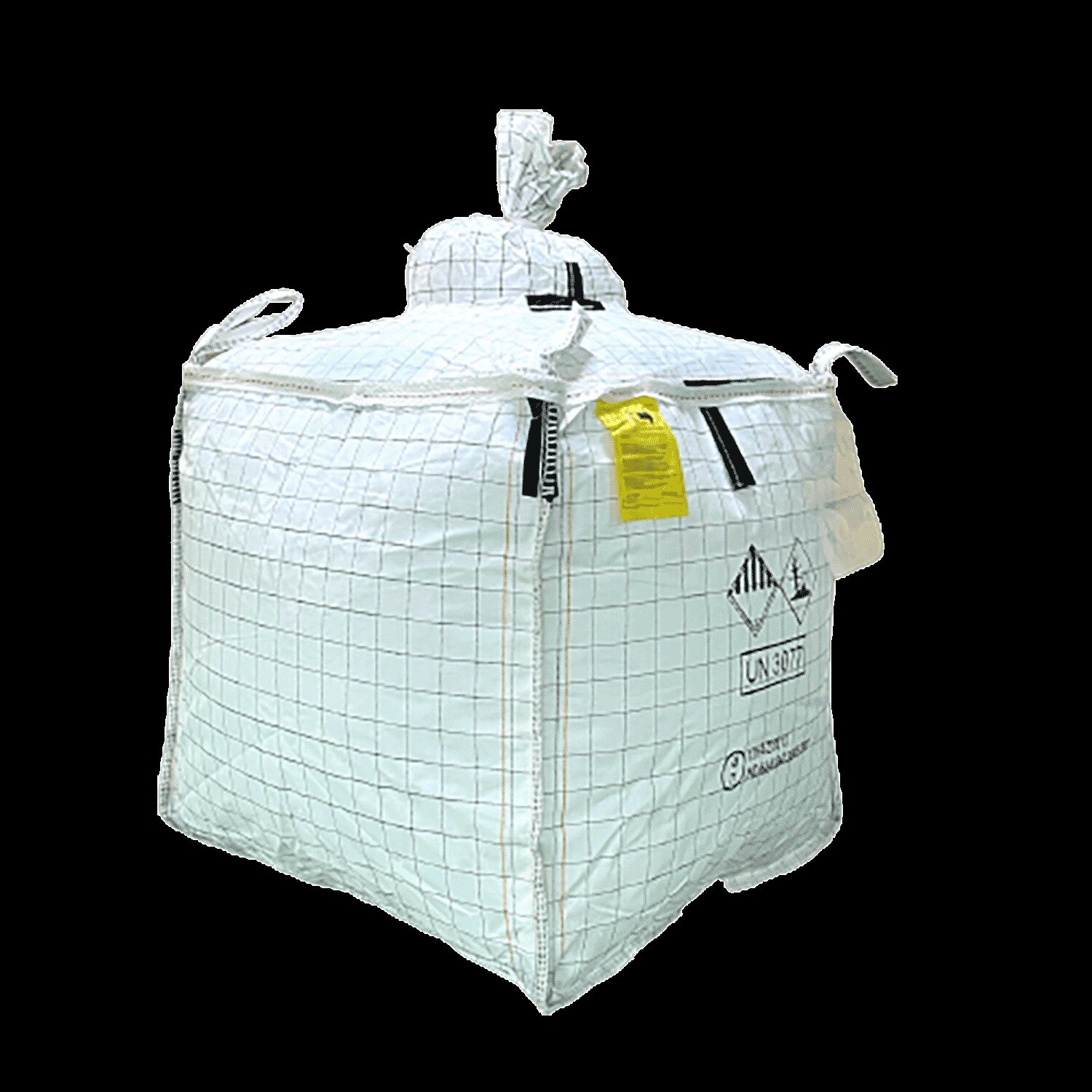
Choosing an FIBC jumbo bag involves more than matching a volume such as 1,000 litres: the product, filling line, lifting equipment, storage conditions and regulatory status all affect the correct specification. By the end, you will be able to compare construction, electrostatic control, UN requirements and handling risks before requesting a technically suitable bag.
Key takeaways
- Match bag construction to bulk density, particle size and discharge behaviour.
- Specify loops, liner, filling inlet and discharge outlet around your equipment.
- Use Type C or Type D FIBCs when combustible dust creates static risk.
- Verify UN approval against the chemical’s transport classification and packing group.
Match the FIBC to the bulk solid, not just the volume
A bag’s suitability depends on the solid and the process, not merely on a nominal 1,000-litre capacity. Bulk density determines the actual load; particle size and flow behaviour determine whether powders, granules, flakes and pellets discharge cleanly.
For FIBC jumbo bags in Bengaluru, chemical industry FIBCs and manufacturing industry bulk bags must also withstand the product’s temperature, moisture, abrasiveness and chemical contact.
Record these inputs before ordering:
- Product bulk density, maximum fill mass and required safe working load. SWL is not the bag’s volume; specify the design safety factor, such as 5:1 for single-trip service or 6:1 for reusable service.
- Particle size, shape and flow pattern. Fine powder can compact, bridge or generate more dust than pellets, while sharp granules can abrade fabric, seams and spouts.
- Moisture sensitivity and storage exposure. Use a suitable polyethylene liner or coated fabric for hygroscopic products, then protect the bag from rain, condensation, sunlight and floor moisture.
- Operating temperature, chemical compatibility and static risk. Rapid pneumatic filling, high-speed discharge, insulating liners and low humidity increase charge generation; assess the complete filling and emptying procedure.
| Material or condition | Main failure risk | Specification focus |
|---|---|---|
| Fine powder | Dust, compaction or electrostatic charge | Filtered filling, suitable liner and assessed static controls |
| Abrasive granules or flakes | Fabric and seam wear | Stronger fabric, reinforced seams and abrasion review |
| Liquid, solvent or corrosive chemical | Leakage or permeation | Use a rigid sealable container instead of an FIBC when dry-bulk compatibility is inadequate |
Specify the bag around your filling, lifting and discharge equipment
Confirm the bag against the equipment’s geometry, not its advertised litre rating. A nominal 1,000-litre FIBC can be unsafe or unusable if its filling height, loop spacing, fork-pocket height, pallet footprint, hopper throat or discharge-spout length does not match the line.
Specify these details on the purchase document:
- Product bulk density, target fill volume and required residual-product level
- Safe working load, lifting configuration and stacking condition
- Safety factor and design or test basis; 5:1 is common for single-trip bags, while 6:1 is used for reusable or multi-trip service
- FIBC dimensions, fabric weight, coating, seam construction and liner material
- Filling and discharge spouts, including diameter, length, closure and access clearance
- Loop type and spacing, corner-loop length, forklift access and whether the bag will be lifted from a frame or directly by a hoist
Match the construction to the handling task:
| Option | Confirm before ordering | Failure if mismatched |
|---|---|---|
| Four corner loops | Crane-frame spacing and loop length | Uneven loading can tilt or tear the bag |
| Forklift sleeves | Pocket height, width and entry clearance | Forks can damage fabric or fail to support the load |
| Top filling spout | Filler nozzle diameter and filling height | Powder escapes or the nozzle cannot seat |
| Bottom discharge spout | Hopper throat, valve and required clearance | Product bridges, spills or cannot fully empty |
Ask for a finished-bag specification, not a catalogue capacity. If the bag will be reused, require traceability and define inspection criteria for loops, seams, abrasion, liners and closures before each lift.
Control static electricity with the correct FIBC type
Choose the FIBC by the ignition scenario, not by colour or a supplier’s “antistatic” label. Fine powders, pneumatic filling, fast discharge, insulating liners and dry air all increase charge generation.
| Type | Construction and static behaviour | When it applies |
|---|---|---|
| Type A | Ordinary insulating fabric with no static-control performance | Use only where no flammable dust, vapour or gas can be present and static ignition is not a credible hazard. |
| Type B | Insulating fabric with controlled breakdown behaviour that limits propagating brush discharges | Suitable for combustible powders when no flammable vapour or gas surrounds the bag. It is not a substitute for grounding. |
| Type C | Conductive threads or panels interconnected through the bag and connected to earth | Use for powders where ignition risk is serious, including operations near flammable vapours, if the grounding path stays at no more than 1.0 × 10^8 ohms. |
| Type D | Dissipative fabric that releases charge without a user earth connection | Use where the supplier certifies the bag for the assessed powder and vapour environment. Keep its surface clean and undamaged. |
A conductive FIBC needs a verified grounding clamp on its designated conductive point. Paint, corrosion or an insulating coating on the equipment can break the path during filling or discharge.
“Antistatic FIBC” is not a sufficient specification. Confirm the IEC 61340-4-4 type, finished-bag test evidence and liner construction; black polypropylene or a visible conductive-looking thread proves nothing. Include the bag choice in the plant’s dust-explosion assessment.
Check UN approval against the chemical’s actual dangerous-goods classification
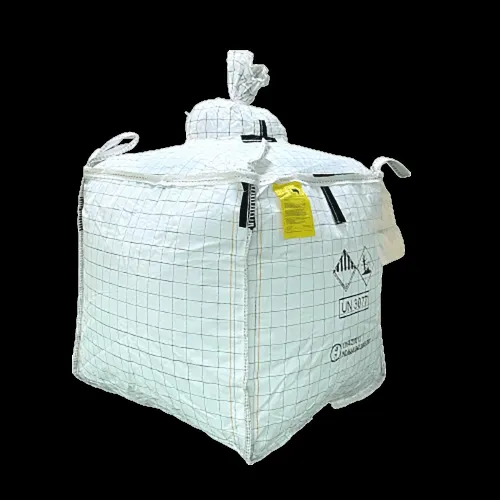
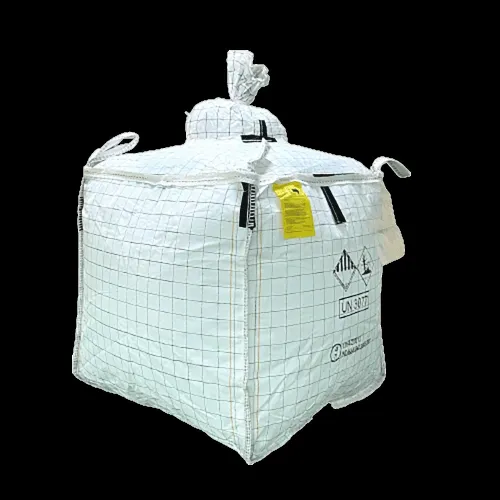
A chemical needs a UN FIBC when its dangerous goods classification identifies it as a regulated solid and the applicable transport rules and packing instruction permit FIBCs for that substance. A “heavy-duty” bag without documented performance testing is not enough.
Start with the Safety Data Sheet, Section 14. Confirm these details before ordering:
- UN number and proper shipping name
- Dangerous goods classification, including class or division and subsidiary risk
- Packing group: I, II or III
- Applicable transport mode and packing instruction
- Maximum net mass and any required inner packaging or liner
- Required marks, labels and transport documents
Packing group affects the required test severity. UN performance testing for dangerous solids includes drop, topple, righting, stacking and tear tests.
| Packing group | What to verify | Consequence |
|---|---|---|
| I | The approved design and highest applicable test level | A lower-rated bag is unsuitable |
| II | The certificate’s permitted design and test level | Do not substitute a general industrial FIBC |
| III | The certificate’s permitted design and test level | Confirm the packing instruction still allows an FIBC |
Read the UN marking and certification together. Check the code, such as 13H1 or another applicable FIBC design type, the X, Y or Z performance level, maximum gross mass, test details and certificate reference. Match the marking to the finished bag: fabric, liner, closure, dimensions and lifting arrangement.
Changing any of these can make the approval irrelevant. A liner also needs chemical-compatibility and antistatic verification; it does not automatically make the package leakproof.
Plan storage, reuse and supplier checks for Bengaluru conditions
Store FIBCs clean, dry, off the floor and away from direct sunlight; monsoon humidity can damage paper or film liners and cause hygroscopic powders to cake. Keep filling areas free of sharp projections, oil, debris and chemical residue. A UV-resistant black FIBC still needs covered storage because UV protection does not make polypropylene indefinitely weatherproof.
Before reuse, complete an FIBC reuse inspection and record the bag number, previous contents and exposure history. Reject any bag with cut or abraded fabric, damaged lifting loops, open seams, distorted corner joints, residue, a torn liner or a closure that no longer seals.
Chemical contact, heat, ultraviolet exposure and rough handling can reduce the original safe working load without leaving obvious damage.
Ask every supplier for these records:
- Safe working load, safety factor and manufacture date
- Fabric, seam and liner specifications, including chemical compatibility
- UV stabilisation details and storage instructions
- Traceability for each batch and evidence supporting any reuse limit
- FIBC classification under IEC 61340-4-4 when ignition risk exists
Whether the quote comes from Deccan Cans & Printers Pvt. Ltd. or another supplier, require these details in writing rather than accepting “heavy-duty” as a specification.
| Tin containers versus FIBCs | Best fit | Main check |
|---|---|---|
| Tin or steel containers | Liquids, solvents, small hazardous-chemical quantities | Seal, permeation resistance and UN performance |
| FIBCs | Dry powders, granules, flakes and high-volume handling | Moisture barrier, discharge equipment, SWL and reuse policy |
Related products
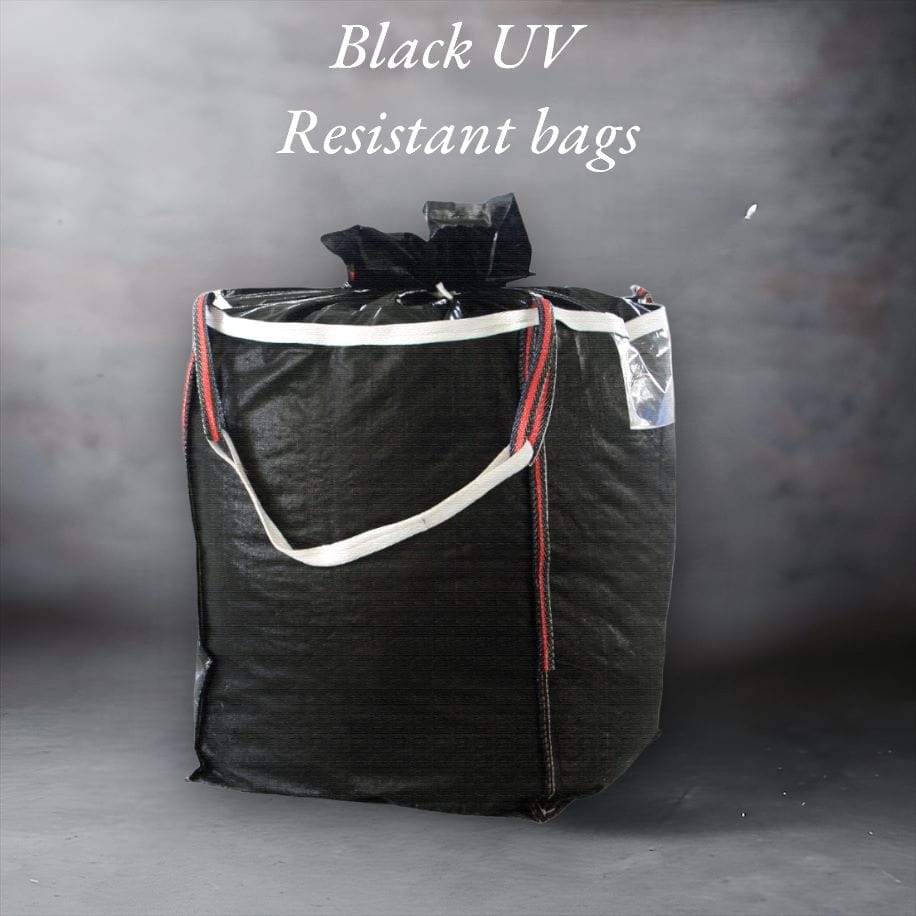 | FIBC Section Black Bags Black FIBC Bags – Enhanced UV Resistance & Extended Shelf Life UV exposure is one of the major challenges faced by the FIBC industry, as prolonged... |
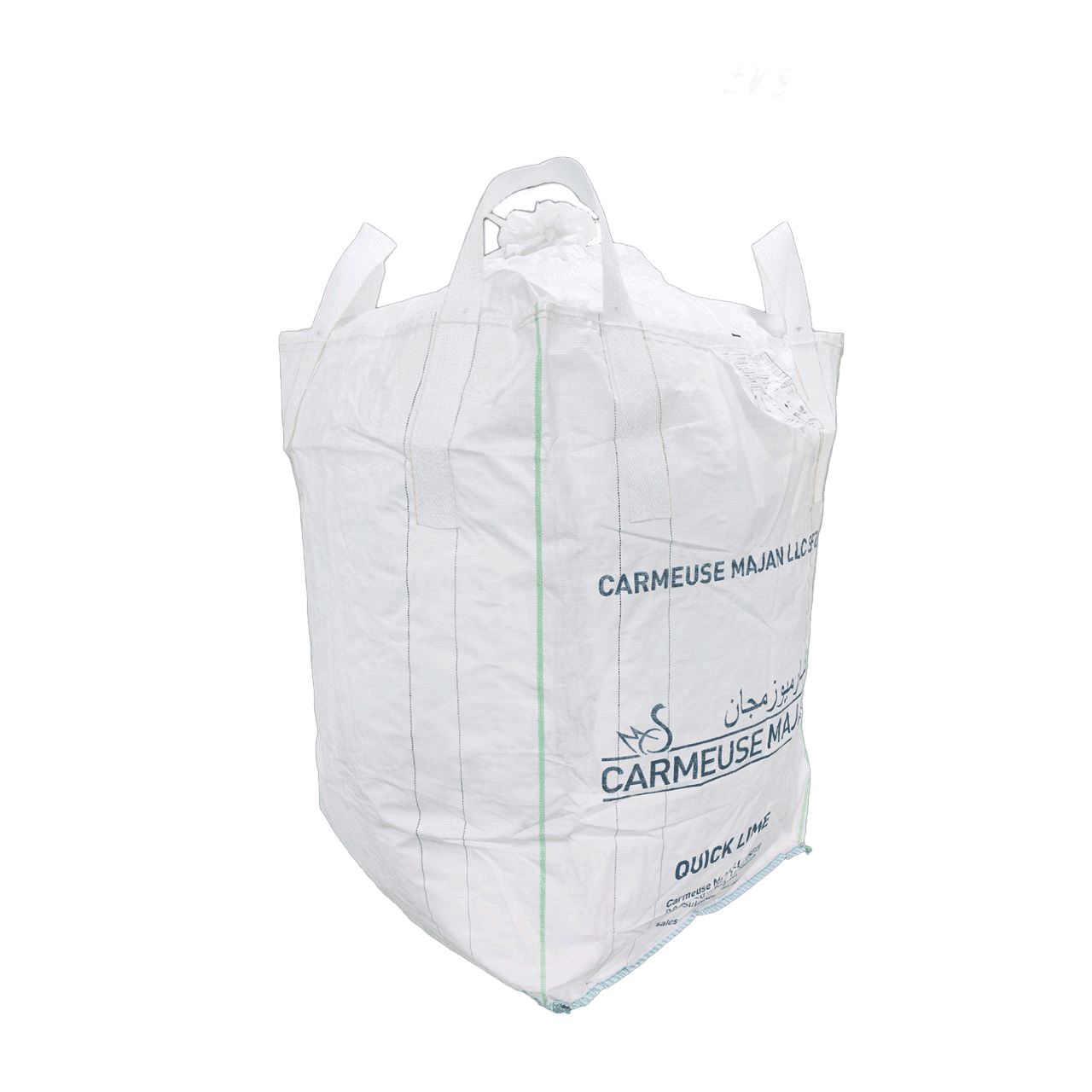 | FIBC Section Bags With Liners FIBC Liners – Bulk Bag Liners Deccan Cans & Printers Pvt. Ltd. |
Frequently asked questions
How do you choose an FIBC for a chemical or manufacturing material?
Match the bag to bulk density, particle size, flow behaviour, moisture sensitivity, liner needs and required load.
What FIBC features must match filling and discharge equipment?
Specify the inlet, outlet, liner, loop configuration, lifting method and dimensions around the connected equipment.
Which FIBC type controls static electricity?
Use Type C FIBCs with grounding or Type D FIBCs when the material and process create combustible-dust hazards.
Does every chemical FIBC need UN approval?
Check the chemical’s dangerous-goods classification, packing group and transport rules before selecting a UN-approved bag.
How should FIBCs be stored and checked in Bengaluru?
Keep bags dry and protected from sunlight, inspect seams and loops, and verify supplier documents before reuse or filling.
Related products
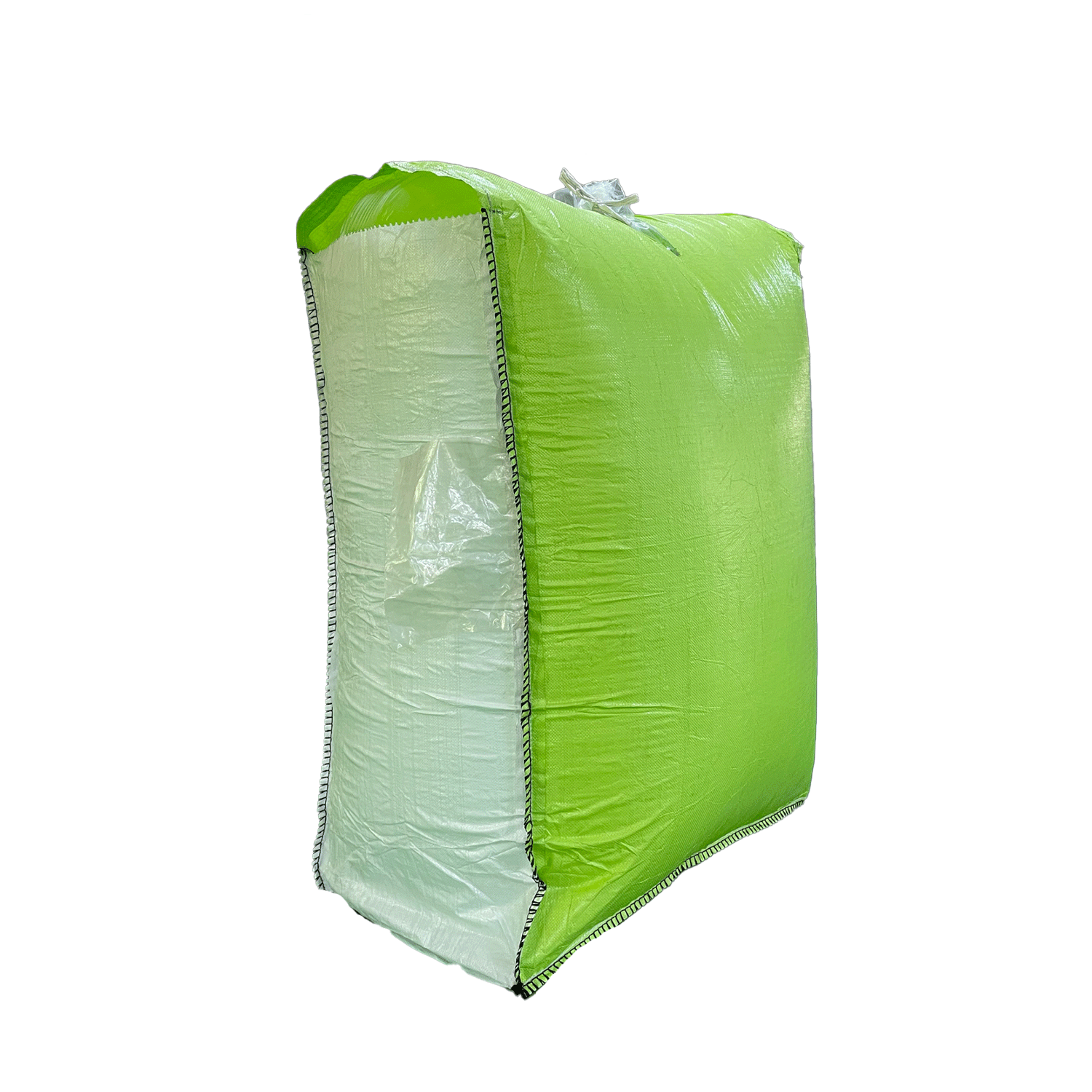 | FIBC Section Fertilizer Bag Range 1 & 2 Loop FIBC Bulk Bags Deccan Cans & Printers Pvt. Ltd. offers durable and cost-effective 1 & 2 Loop FIBC Bulk Bags, designed for the efficient... |
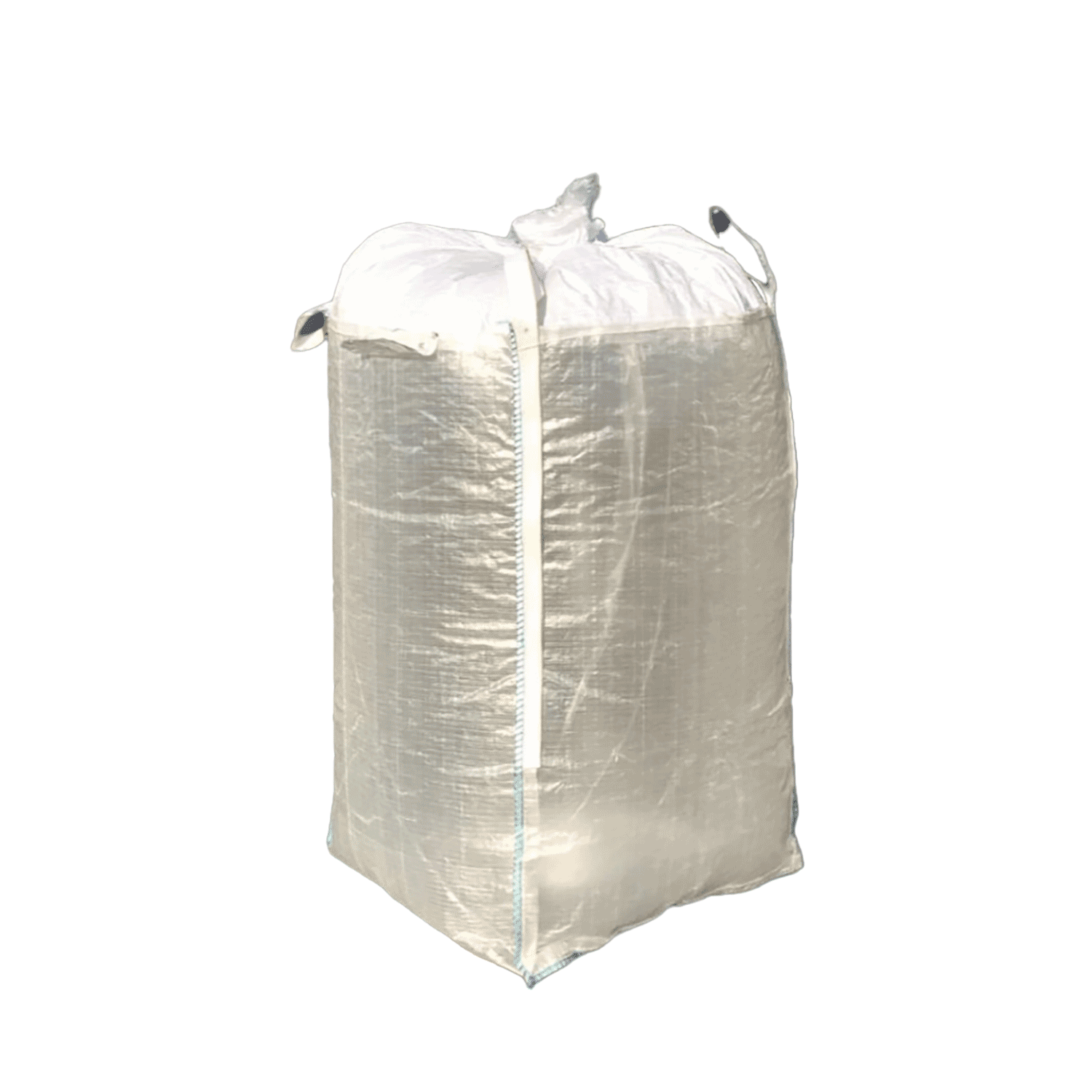 | FIBC Section Transparent Bags Transparent FIBCs – See-Through Bulk Bags Deccan Cans & Printers Pvt. Ltd. |
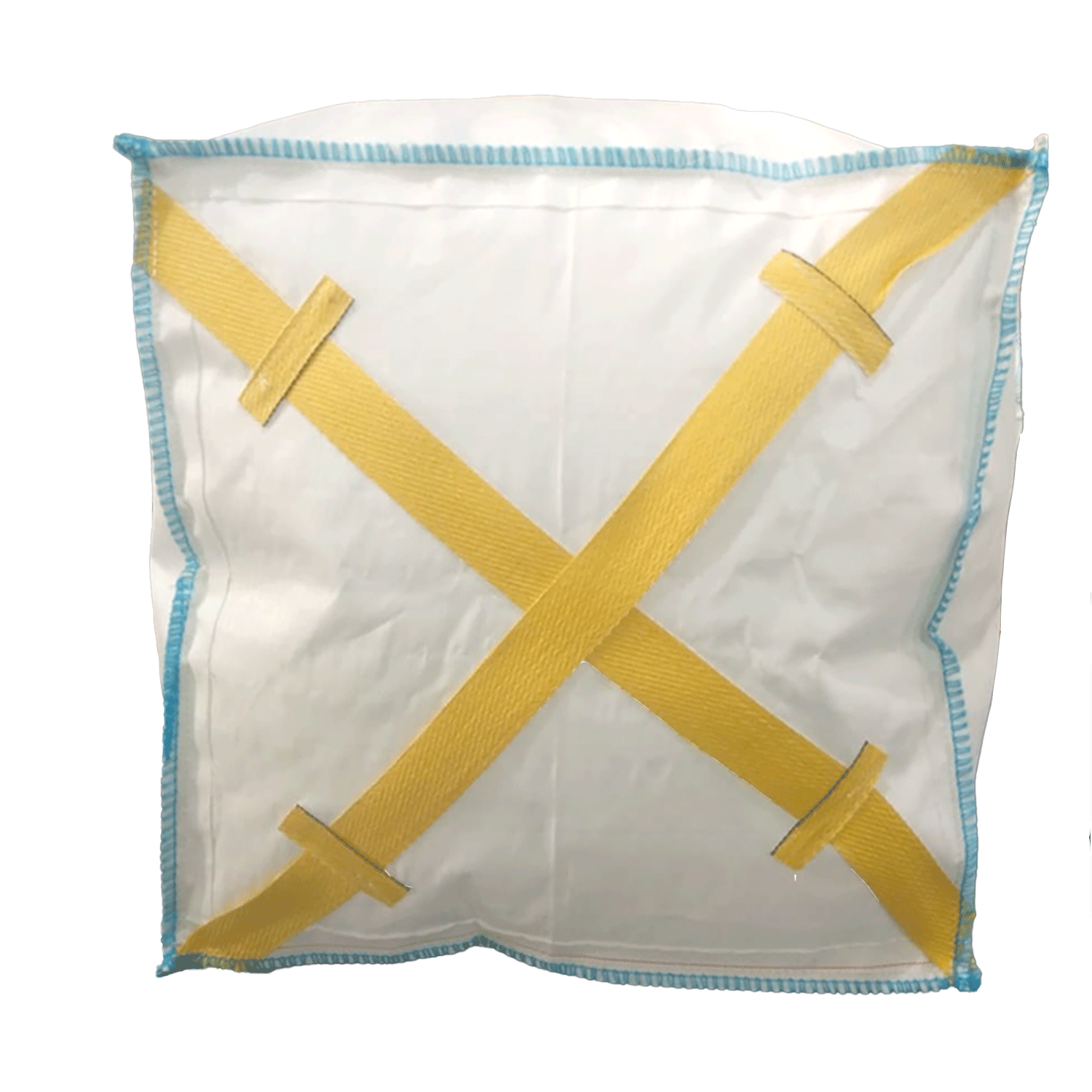 | FIBC Section Cross Bottom Sling Bags Cross Bottom Sling FIBCs – Bulk Bags Deccan Cans & Printers Pvt. Ltd. |
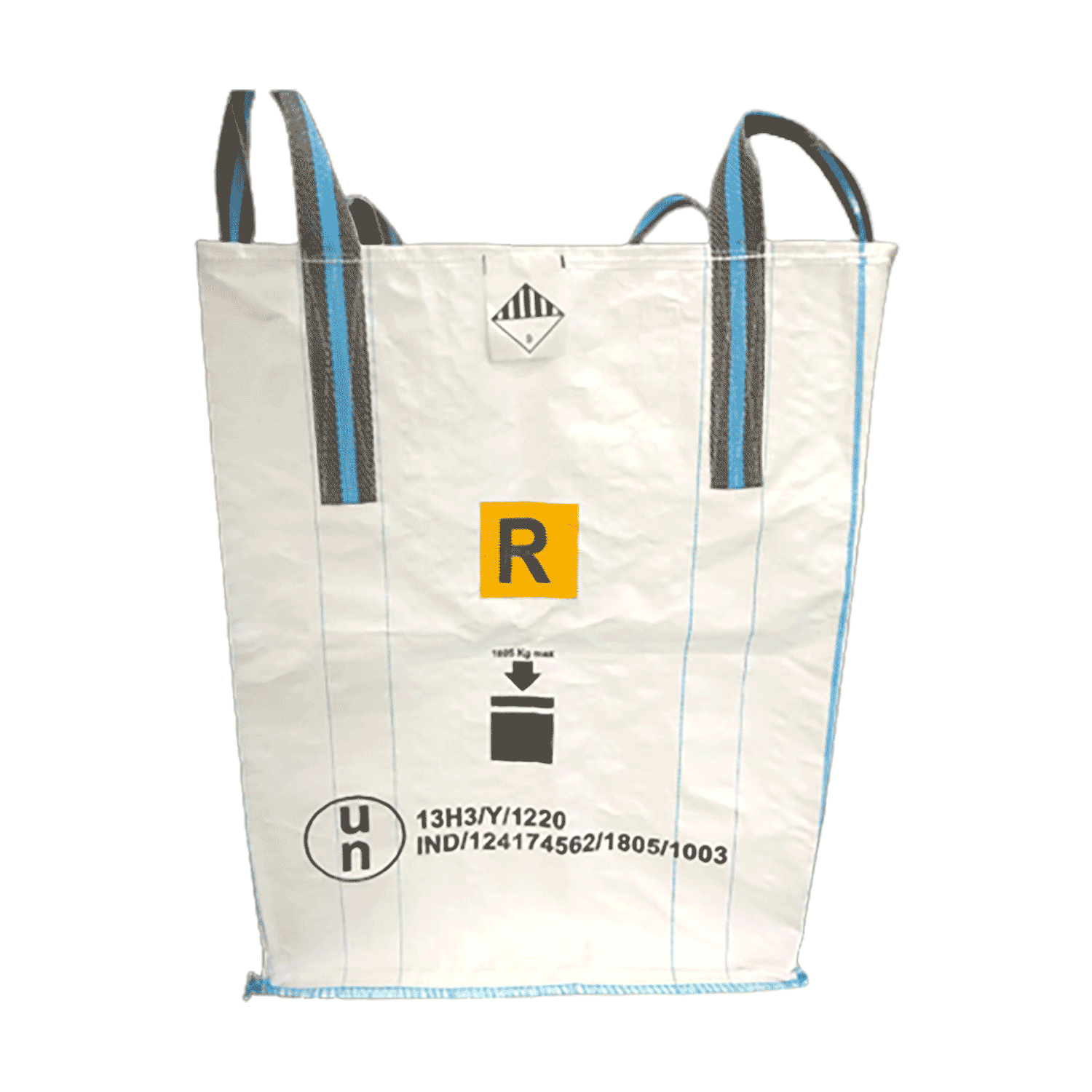 | FIBC Section Un Bags UN Certified Bulk Bags – Rigorous Performance Testing for Safety & Reliability Deccan UN Certified Bulk Bags are specially engineered for the safe... |