Choosing a tin container by nominal capacity alone can lead to lacquer failure, swelling, leakage, corrosion or an unsuitable dangerous-goods package. By the end, you will be able to match a container format and closure to your formulation, define the tests and drawings you need, and check whether the finished pack is suitable for storage and transport from Bengaluru.
Key takeaways
- Choose tin format by product behaviour and dispensing method.
- Confirm tinplate, lacquer and closure compatibility before production.
- Specify fill volume, headspace, closure and drawings in one document.
- Separate commercial tins from certified dangerous-goods packaging.
Match the tin format to the product you are filling
Choose the tin by product behaviour and dispensing method, then set the size by required fill volume and headspace. A 250 mL–1 L tin suits samples, touch-up coatings and specialty chemicals; 4–5 L suits workshop use; 15–20 L suits trade packs.
Do not fill to the nominal capacity without confirming the product’s expansion and evaporation needs.
| Format | Suitable contents | Size and closure considerations |
|---|---|---|
| Solvent-based paint tin containers | Enamels, primers and solvent-borne coatings | 250 mL–20 L; use a tight lid or screw closure matched to the solvent and gasket |
| Water-based paint packaging | Emulsions and water-dispersed coatings | 500 mL–20 L; allow room for agitation and choose an opening wide enough for stirring |
| Thinner containers | Thinners, reducers and volatile solvents | 250 mL–5 L; use a vapour-tight closure and leave specified headspace to limit pressure leakage |
| Resin tins for packaging | Resins, hardeners and viscous coating components | 500 mL–20 L; choose a wide opening for pouring or scraping and confirm the liner resists the formulation |
| Lever-lid or pour-spout tins | Grease, oils and lubricants | 1–20 L; select a spout for controlled dosing, or a lever lid for repeated access |
Treat acids, alkalis, amine-rich products and sulfur-containing lubricant packages as compatibility decisions, not ordinary tin applications. Tinplate, lacquer, seam, gasket and closure all need checking against the actual formulation at its intended storage temperature.
- Use separate tin specifications for liquid paints, chemicals and lubricants; do not substitute an ordinary dry-powder FIBC.
- Define net fill, brimful capacity, headspace, opening diameter and external dimensions together.
- Reject “heavy-duty tin” as a specification until thickness, coating system, closure and leak-test criteria are stated.
Check tinplate, lacquer and closure compatibility before production
A tin that looks sound after filling can still corrode, blister, swell or leak before the stated shelf life ends. Confirm compatibility with the finished formulation, not with water or one isolated solvent.
1. Obtain the exact product formula, including solvents, pigments, acids, alkalis, amines, sulfur compounds and preservatives. Record the intended shelf-life temperature, fill level and headspace.
2. Fill production-equivalent tins with the formulation and seal them using the proposed closure, gasket and seam. Include the actual tinplate and internal lacquer, because a substitute coating can produce a false result.
3. Run chemical compatibility testing for the full storage period at the intended temperature. Add an accelerated exposure condition only when its relationship to normal storage is documented. Examine the liquid and container at scheduled intervals for rust, pitting, staining, blistering, lacquer lifting, seam attack, swelling, odour, sediment and changes in viscosity or colour.
4. Test internal lacquer resistance against the product’s most aggressive ingredients. Check cut edges, seams, shoulder areas and the area below the liquid line; these locations often fail before the broad coated panel.
5. Inspect the closure after exposure for gasket softening, embrittlement, swelling, loss of elasticity and thread or lug damage. Repeat leak and opening tests after storage, not only on empty samples.
For acid and alkali containers, use the specific concentration and temperature sold. For lubricant packaging compatibility, test base oil, additives and grease thickener together. Approve production only when the tinplate, lacquer, closure and product all meet recorded acceptance criteria.
Specify closure, headspace, fill volume and dimensional drawings together
Define the closure, headspace, fill volume and dimensional drawing as one packaging specification. A nominal 1-litre tin does not define a safe 1-litre fill: solvent-based products need enough headspace to accommodate temperature-driven expansion, but excessive empty space increases oxidation, skinning or solvent loss.
State the net fill in millilitres and the target headspace or fill line.
| Closure | Leakage and dispensing implication | Specify when |
|---|---|---|
| RLT closure | Ring-lever opening gives fast access but depends on a correctly seated gasket and undamaged rim | Choose for frequent opening where a broad access opening helps pouring |
| EOE closure | Easy-open access improves convenience, but the scored end and seal need protection from impact | Choose when the user needs tool-free opening |
| Screw cap tins | Controlled torque prevents leakage or evaporation; excess torque can crush the gasket, distort the neck or make opening difficult | Use for resealing liquids and define torque for the exact cap, gasket and product |
| Lug closure | A short-turn metal lid gives resealing, but poor engagement can leak | Use where repeated opening matters |
| Lever lid and pour spout | A lever lid supports removal and resealing; a pour spout controls flow and reduces drips | Use for viscous paints, oils, greases or measured dispensing |
- Request a dimensioned drawing showing body diameter, height, neck, seam, lid, gasket seat, closure engagement and tolerances.
- Mark the fill line, headspace and gross capacity on that drawing.
- Specify the leak-test method, pressure or duration, acceptance limit and filled-pack transport simulation.
- If UN-marked packaging is involved, approve the exact body, closure and gasket combination; changing any of them can invalidate the approval.
Separate ordinary commercial tins from compliant dangerous-goods packaging
A tin needs UN performance testing when the filled product is classified as dangerous goods for transport and the applicable packing instruction requires a tested package. Flammable paints, thinners and solvent-based chemicals fall into this decision by their flash point, hazard class and packing group—not because the label says “paint”.
A standard commercial tin is not automatically flammable liquid packaging.
Ordinary commercial tin | UN-rated tin packaging Purpose | Retail, industrial use or local distribution where dangerous-goods packaging rules do not require UN approval | Transport of classified dangerous goods under the applicable road, sea or air rules Evidence | Product compatibility, closure specification and leak-test records | UN design-type approval, performance-test evidence and the exact approved body, closure, gasket and material Change control | Supplier drawing and inspection criteria | Any change in dimensions, lid, gasket or closure can invalidate reliance on the approval
For Indian retail packs, Legal Metrology Packaged Commodities declarations cover the manufacturer, packer or importer, generic product name, net quantity, month and year of packing, MRP and consumer-care details. Those declarations do not replace hazard labelling or transport approval.
Before dispatch, obtain the product’s Safety Data Sheet, UN number, proper shipping name, hazard class, packing group and the packaging approval reference. Prepare dangerous goods transport documentation required for the route and mode, including the consignor’s written information, emergency instructions and vehicle or carrier declarations under India’s motor-vehicle dangerous-goods rules.
Confirm the carrier’s requirements for sea or air freight separately. A visual check of an empty tin proves neither liquid tightness nor transport compliance; specify a leak test and inspect filled packs after transport simulation.
Turn the requirement into a Bengaluru-ready procurement specification
Reject specifications such as “heavy-duty tin” or “chemical-grade can.” Put numbers on the purchase order and make them match the approved sample.
1. Request a tin container specification sheet stating tinplate grade, thickness in millimetres, internal lacquer name and coat weight, body and seam construction, nominal capacity, working fill volume, empty weight, and tolerances for height, diameter and neck position.
2. Attach tin packaging supplier drawings showing every critical dimension, closure type, gasket material, gasket cross-section, cap or lever-lid fit, and torque range in N·cm. Set the approved fill level and headspace for the exact solvent, resin, oil or paint; do not approve nominal volume alone.
3. Define leak testing acceptance criteria: test method, pressure or vacuum, hold time, sample quantity, and zero visible leakage at the seam, closure and spout. Require filled-container inspection after vibration and transport simulation, not only visual checks on empty tins.
4. State delivery controls: batch identification, certificate of conformity, inspection sample size, rejection limits, pallet pattern, carton protection and maximum stacking height. Specify that no dented seam, damaged lacquer or distorted closure enters stock.
5. Add Bengaluru monsoon storage instructions: keep pallets off the floor, use dry covered storage, prevent condensation, and reject packs with wet or salt-contaminated outer surfaces. For a Bengaluru buyer comparing Deccan Cans & Printers Pvt. Ltd. with another supplier, issue identical drawings and acceptance tests to both.
Related products
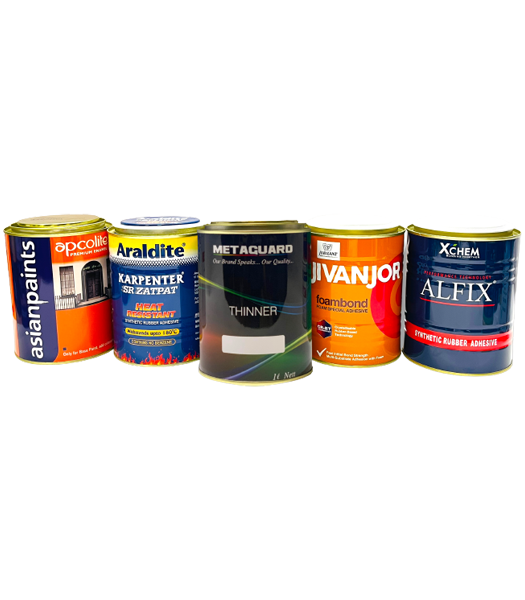 | Tin Containers Tin Containers Deccan Cans & Printers Pvt. Ltd. offers a robust range of Industrial Tin Containers, engineered to provide secure, durable, and... View product → |
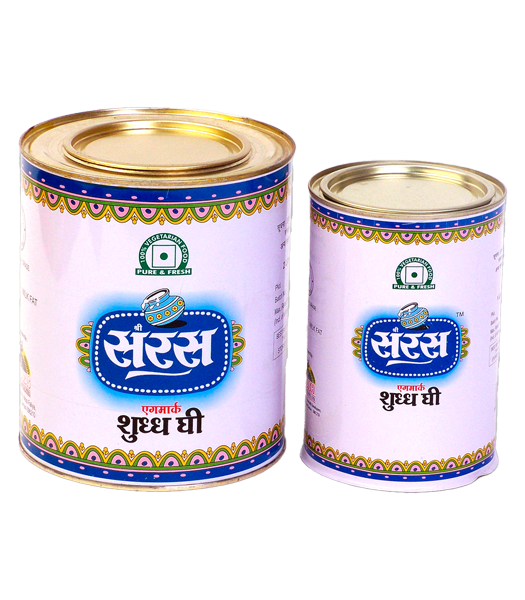 | Tin Containers RLT/EOE Tins Range Tin Containers Deccan Cans & Printers Pvt. Ltd. offers a versatile range of RLT/EOE tin containers, designed to provide durable, reliable, and... |
Frequently asked questions
How do you choose a tin format for paints, chemicals and lubricants?
Match the format to the product’s behaviour and dispensing method, then select size by required fill volume and headspace. Use 250 mL–1 L for samples and touch-up products, 4–5 L for workshop use, and 15–20 L for trade packs.
What compatibility checks are needed before ordering tin containers?
Check the tinplate, internal lacquer and closure against the specific paint, chemical or lubricant. Confirm that the materials withstand the product during storage and use before production.
What details belong in a tin-container procurement specification?
State the closure, headspace, fill volume and dimensional drawing together. Include the product, dispensing method and intended pack size so suppliers quote the same requirement.
Are ordinary commercial tins suitable for dangerous goods?
Not automatically. Separate ordinary commercial tins from packaging that meets the required dangerous-goods rules, and request the applicable test evidence or certification before shipment.
Related product
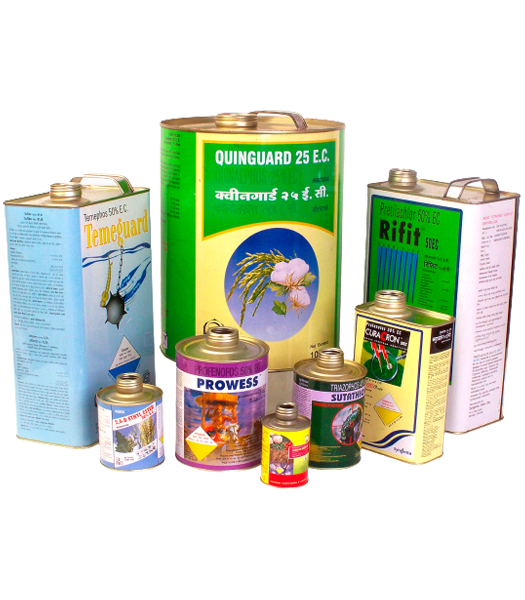 | Tin Containers Tin Containers Deccan Cans & Printers Pvt. Ltd. offers a durable range of Pesticide Tin Containers, designed for reliable packaging and storage of... View product → |