
Choosing a Bengaluru supplier requires more than comparing a catalogue: you need proof of local manufacturing, a container specification that matches the filling line, and evidence that the metal, lining and closure suit the contents. By the end, you will be able to shortlist manufacturers, request meaningful test records and decide when tinplate, a lined container or an FIBC is the safer packaging route.
Key takeaways
- Match container format to liquid viscosity, fill volume and pouring method.
- Ask for steel grade, thickness tolerance, lacquer type and seam details.
- Require leak checks, UN test evidence and a defined incoming inspection.
- Choose an FIBC when dry bulk handling suits the product better.
Match the industrial liquid to the right tin container format
Specify the product’s usable fill volume, viscosity, pouring method and closure before choosing among industrial tin containers. Nominal capacity is not enough: leave headspace for thermal expansion, then confirm the steel substrate, thickness tolerance, internal lacquer, seam construction and lid fit.
| Format | Capacity to specify | Closure | Best fit |
|---|---|---|---|
| Round cans | 0.5–5 L usable fill | Screw cap, plug or lever lid | Solvents, oils, coatings and liquids poured by hand |
| Rectangular cans | 1–20 L usable fill | Screw cap, plug or hinged or lever lid | Stackable liquids, cleaners and products needing a broad label panel |
| Pails | 5–25 L usable fill | Lever lid with gasket, or screw lid | High-viscosity coatings, adhesives, greases and products dispensed with a scoop or pump |
Choose a round can when controlled pouring and compact handling matter. Choose a rectangular can when pallet efficiency and front-facing identification matter. Use pails when the product is thick or the operator needs a wide opening; a narrow neck can trap residue and slow cleaning.
Put these details in the quotation:
- Product name, viscosity and specific gravity
- Usable fill and maximum gross weight
- Required headspace and pour direction
- Closure type, gasket material and opening tool
- Tinplate thickness, internal lacquer and seam type
For flammable or dangerous goods, specify the complete container-and-closure design and request the applicable UN design-type evidence. A metal can is not automatically UN-approved because it is metal.
How to verify a Bengaluru manufacturer rather than a local distributor
A Bengaluru address proves presence, not manufacture. Record the legal entity name, GSTIN, factory address, named contact, company email, phone number and the date you verified each detail before treating a listing as one of the tin container manufacturers in Bengaluru.
Ask for these records before requesting a quotation:
- GST registration showing the Bengaluru premises as the principal or additional place of business.
- A factory visit, live video walkthrough or dated photographs showing sheet cutting, printing or coating, forming, seaming and final inspection.
- A sample container bearing the manufacturer’s batch or lot identification, plus the stated capacity, metal thickness and closure type.
- A current product drawing, process capability statement and inspection report for the format you need.
- An invoice or dispatch document that identifies the same legal entity as the factory operator.
Use this comparison to separate a maker from a reseller:
| Evidence | Bengaluru manufacturer | Local distributor |
|---|---|---|
| Registered address | Factory premises in Bengaluru | Office, warehouse or sales address |
| Production proof | Machines, operators and in-process checks visible | Catalogues, stock photos or another maker’s name |
| Sample traceability | Batch-linked sample and inspection records | Supplier sample without production records |
| Quotation issuer | Same entity as the manufacturing site | Trading entity buying elsewhere |
| Technical answers | Explains seams, lacquer, tolerances and tooling | Refers questions to an unnamed supplier |
Search results for “tin can manufacturers Bengaluru” also include traders. Industrial packaging suppliers should therefore be checked by evidence, not by their category label. Deccan Cans & Printers Pvt. Ltd. should be assessed using this same factory, traceability and contact-record checklist before comparison with other quotations.
Related products
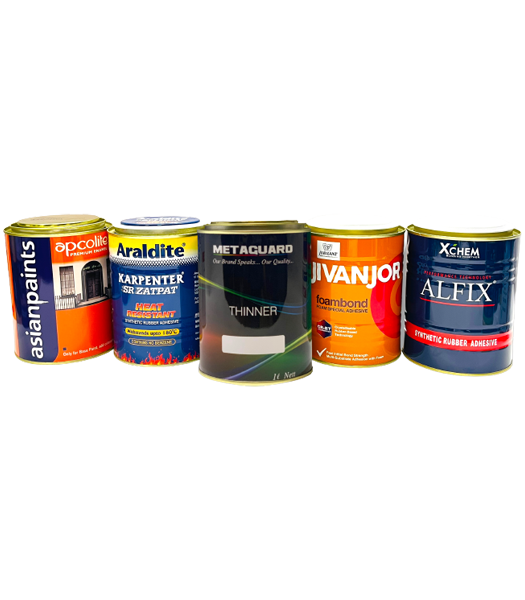 | Tin Containers Tin Containers Deccan Cans & Printers Pvt. Ltd. offers a robust range of Industrial Tin Containers, engineered to provide secure, durable, and... View product → |
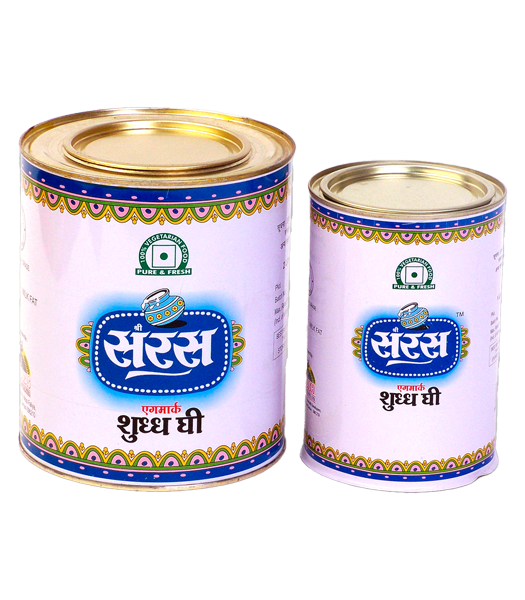 | Tin Containers RLT/EOE Tins Range Tin Containers Deccan Cans & Printers Pvt. Ltd. offers a versatile range of RLT/EOE tin containers, designed to provide durable, reliable, and... |
Check tinplate, lacquer and chemical compatibility before ordering
Bare tinplate suits dry, non-corrosive products such as mineral oils, lubricants and some solvent-based formulations, but it is not a universal barrier. Water, oxygen, acids, alkalis, salts and surfactants can attack exposed steel at scratches, seams or pinholes, making tinplate chemical compatibility a formulation-specific decision.
| Product or chemistry | Main risk to bare tinplate | Pack decision |
|---|---|---|
| Mineral oil or hydrocarbon solvent | Usually low corrosion risk; solvent may attack coatings or gaskets | Test bare tinplate and closure materials |
| Acidic or alkaline liquid | Corrosion, staining, hydrogen generation or seam attack | Specify an internal lacquer or liner |
| Water-based salt or surfactant formulation | Corrosion and coating delamination | Use lined metal containers after testing |
| Fatty, aromatic or aggressive solvent product | Softening, swelling, blistering or product contamination | Select a compatible industrial can lacquer |
Require the supplier to identify the steel substrate, nominal thickness, metallic coating, seam construction, internal lacquer, liner and closure. “Tin container” means tinplate or tin-free steel, not solid tin.
Before a production order, test the complete pack with the actual formulation:
- Fill production-intent containers at the real temperature, then store them for the planned duration with the intended headspace.
- Inspect liquid colour, odour, viscosity and metal contamination alongside corrosion, staining, blistering, softening and delamination.
- Check lacquer coverage and adhesion at seams, corners and forming points.
- Repeat leak, closure-fit and gasket checks after conditioning.
Use an unlined sample as a control. If it fails, qualify the lined construction rather than assuming any lacquer will solve chemical packaging problems.
Specify leak performance, UN testing and incoming inspection
Set a leak acceptance limit before production, then test seams, lids, closures and welded or soldered joints against it. Leak testing tin containers must define the method, test medium, pressure or vacuum, hold time and allowable leakage; a visual check alone will miss a pinhole in a side seam or a distorted lid.
Use a documented incoming-inspection plan for every delivery. Sample each lot for:
- Side-seam and bottom-seam integrity, including weld or solder continuity
- Lid fit, gasket condition and closure torque where a torque specification applies
- Internal lacquer coverage, exposed steel, scratches and blistering
- Dents around the chime, neck, seam and closure
- Leak performance using the agreed pressure, vacuum or immersion method
- Container dimensions, wall thickness, lot number and traceability
Record the sample size, results, failures and disposition. Reject or investigate a lot when leakage, poor closure fit or exposed steel exceeds the agreed limit; do not release it because its dimensions are correct.
UN approved metal cans are not automatically suitable for dangerous goods. UN packaging testing applies to the complete design: body, closure, seam, gasket, capacity and construction. Request the design-type test report and certificate for the exact version purchased, covering drop, leakproofness, stacking and applicable hydrostatic-pressure tests.
Also verify the UN mark on the container and match its packaging code, capacity and closure to the dangerous-goods classification and packing instruction. A generic “UN certified” claim is insufficient.
Account for Bengaluru storage conditions—and know when an FIBC fits better
Condensation forms when loads move between humid docks, air-conditioned warehouses and warm trucks. Keep tin containers under cover on pallets, away from wet floors, and use ventilation or desiccants inside enclosed storage. Inspect for rust at seams, lids and damaged lacquer; a dry exterior alone does not prove the container stayed protected.
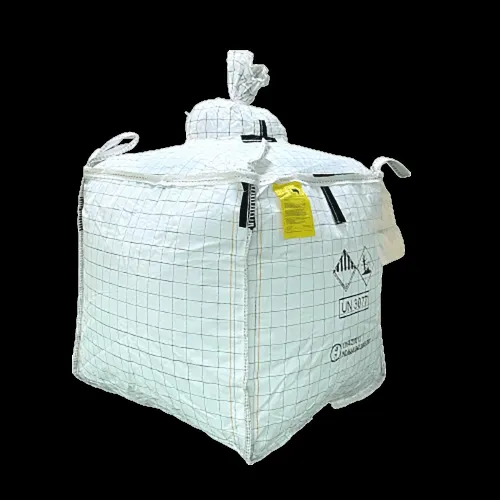
FIBC bags Bengaluru buyers specify need the same discipline. Keep them off the floor, under a roof, sealed against rain and away from sharp edges, sunlight and fuel or chemical spills. Define the maximum outdoor exposure period; “UV stabilised” does not mean indefinitely weatherproof.
Choose among FIBC Type A, Type B, Type C and Type D according to the powder’s ignition risk and your handling controls.
| Type | Charge behaviour | Essential control |
|---|---|---|
| Type A | No electrostatic protection | Keep away from flammable atmospheres |
| Type B | Limits propagating brush discharges | Control ignition sources and use compatible equipment |
| Type C | Conductive construction | Ground the bag before filling and discharge |
| Type D | Dissipates charge without a grounding connection under specified conditions | Follow the supplier’s handling and ignition-control limits |
For a bulk bag, specify the FIBC SWL, tare, loop design, fabric weight, seam strength and single-trip or reuse status. Also define filling and discharge-spout diameters, closure style, sift-proof performance, residual-product target and liner attachment.
A bulk bag liner protects hygroscopic powder from humidity, but a standard bottom spout can still bridge cohesive or electrostatic material. Choose an FIBC when the product is a dry powder or granule and mechanised filling, storage or discharge outweighs the moisture and handling protection of cans.
Frequently asked questions
How do I choose the right tin container for an industrial liquid?
Compare usable fill volume, viscosity, pouring method, closure type and required headspace before selecting the format.
How can I verify a Bengaluru tin container manufacturer?
Inspect the manufacturer’s facility, request its legal and quality documents, and confirm that it makes the containers rather than reselling them.
What tin container specifications affect chemical compatibility?
Check the tinplate steel substrate, thickness tolerance, internal lacquer, seams and closure against the liquid’s chemistry and storage conditions.
When should I choose an FIBC instead of a tin container?
Choose an FIBC for compatible dry bulk solids when efficient handling and larger-volume transport matter more than liquid containment.