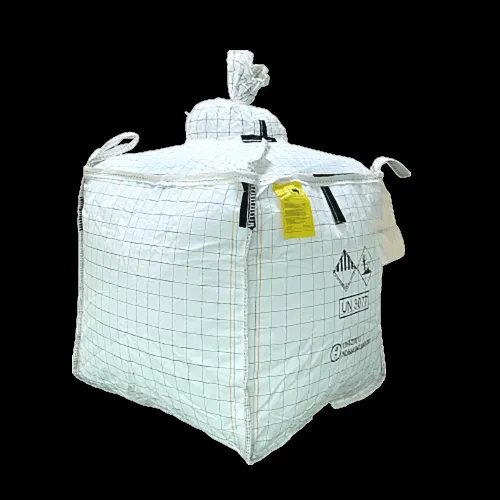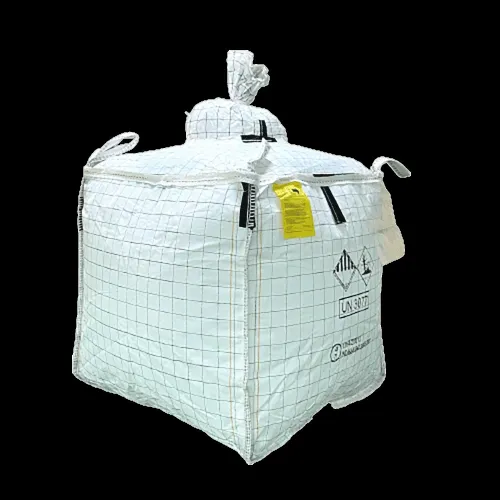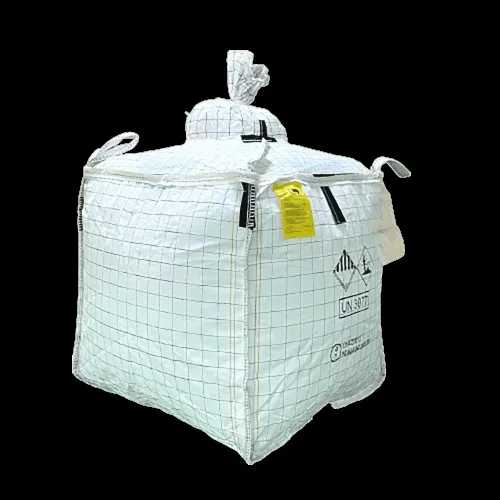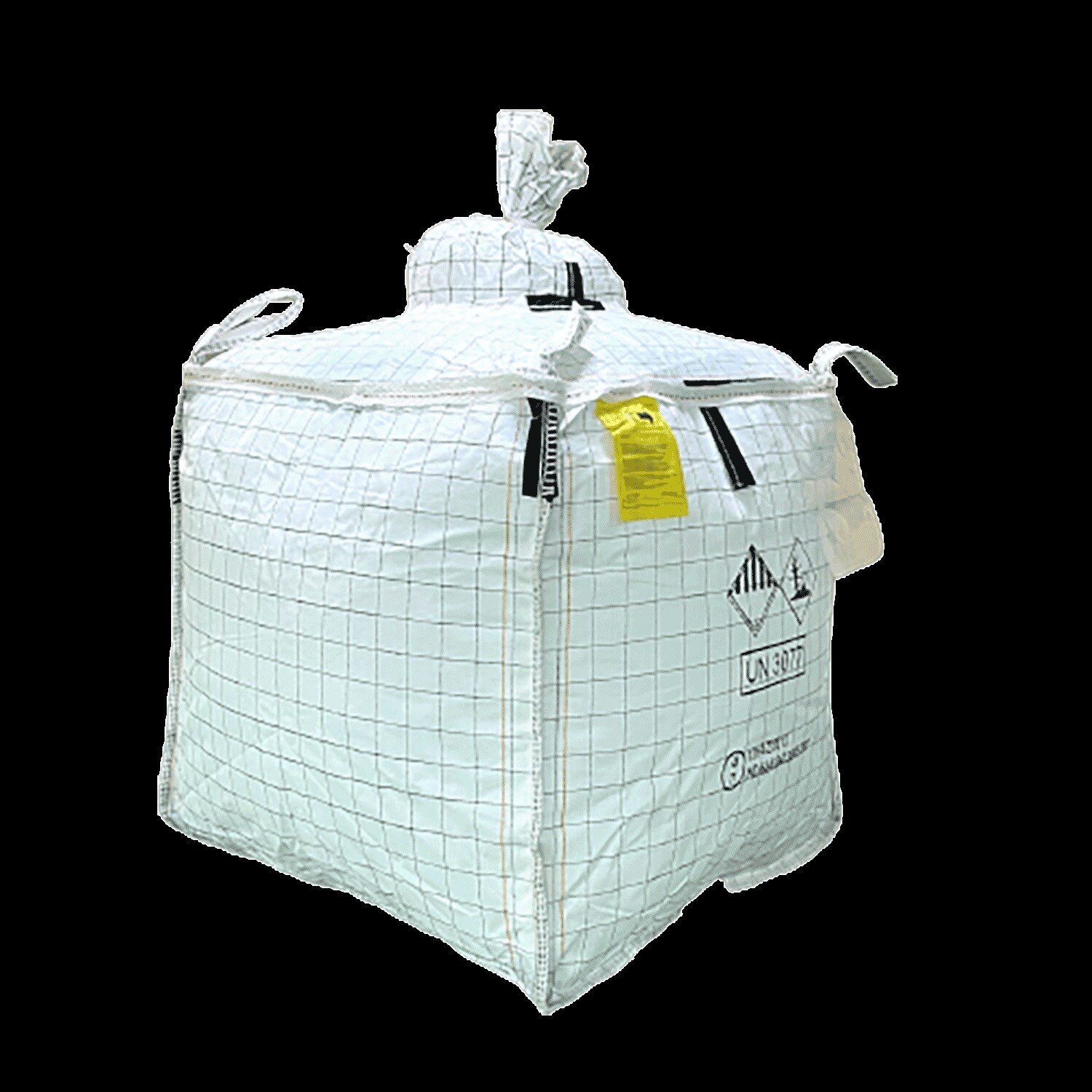
Choosing an FIBC by size or printed safe working load alone can create filling delays, dust leaks, unsafe discharge and wasted warehouse space. By the end, you will be able to match bag construction to your material, calculate a workable capacity, specify electrostatic controls and compare the total operating effort against alternative packaging.
Key takeaways
- Match bag fabric and discharge design to material flow and handling equipment.
- Confirm safe working load, safety factor, dimensions and lifting-loop configuration before ordering.
- Use Type C or Type D when static-control requirements make Type A or B unsuitable.
- Specify liner, coating, tests and acceptance criteria in the purchase brief.
How do you match FIBC construction to the material and handling route?
Match the FIBC to the material’s physical behaviour and handling route, not to its industry label. This FIBC selection guide covers the main construction choices:
| Material | Construction focus | Failure to prevent |
|---|---|---|
| Granules and pellets; fertilizers | Standard woven polypropylene, sound seams and a suitable discharge spout | Product escaping through weak seams or uncontrolled discharge |
| Fine powders | Coated fabric, seam taping, liner, baffle design or welded liner, selected after checking particle size, aeration and dust generation | Powder escaping through fabric pores, seams and needle holes |
| Flakes | Generous top opening and clear discharge path | Bridging above a restricted outlet |
| Minerals and production waste | Abrasion-resistant fabric, contamination control and lifting gear for rough handling | Fabric wear, punctures or load failure |
| Chemicals | Compatibility checks for fabric, coating, liner and closure; applicable UN approval for regulated transport | Chemical attack or illegal shipment in an ordinary bulk bag |
Fine powders require more than adequate tensile strength. A liner marked “moisture proof” is not automatically hermetic, so specify its polymer, thickness, seals and leak test when moisture matters.
Reject transparent fabric where sunlight, UV exposure or confidentiality is a concern. Reject black fabric when operators need visual inspection or heat absorption could disrupt the process.
A cross-bottom bag is a poor fit for equipment that needs a controlled bottom outlet. Choose loop construction only after confirming whether forklifts, crane hooks, stevedore straps or a lifting frame will carry the filled bag; each creates a different load path.
Which FIBC specifications prevent capacity and lifting mistakes?
Do not order a “1,000 kg bag”: give the supplier a complete capacity and lifting brief. State the FIBC safe working load, target fill weight, bulk density, required headspace, filling height, and available forklift or hoist clearance.
Estimate product volume as target fill weight ÷ bulk density, then add allowance for settling, liner displacement, headspace and safe closure. Confirm the filled height fits beneath the filling equipment and inside the storage bay.
A 5:1 or 6:1 safety factor cannot transfer between designs without checking the test method, filling density, lifting arrangement and reuse criteria.
- Specify FIBC dimensions: bag length, width and filled height, plus the target capacity after allowances.
- State the top construction—duffle, filling spout or open top—and the bottom construction—plain, discharge spout, full-opening or iris closure.
- Record spout diameter, product flowability, target discharge time and closure sequence. A large opening can empty powder too quickly; a plain outlet can retain it.
- Specify loop count, loop length, corner configuration, fabric GSM, coating, liner requirement and lifting method.
| Lifting arrangement | Load path to confirm | Do not assume |
|---|---|---|
| Four loops | Four corner loops and their attachments | Suitable for a crane frame |
| Forklift sleeves | Sleeve seams and fork support | Equivalent to loop lifting |
| Stevedore straps | Strap attachment and hook loading | Equivalent to four-loop lifting |
| Crane frame | Frame contact points and bag suspension | Covered by the printed SWL alone |
When do Type A, Type B, Type C or Type D FIBCs become necessary?
Type A, Type B, Type C or Type D FIBCs become necessary when the product and handling route create an electrostatic ignition risk, not simply because the bag is made from polypropylene.
1. Classify the product and atmosphere first. Use a Type A FIBC only for non-combustible products where no flammable atmosphere is present; it provides no electrostatic control. For combustible powders, identify the dust ignition risk and assess whether filling can create a flammable dust cloud or solvent-vapour hazard.
2. Match the bag to the control needed. A Type B FIBC limits propagating brush discharges but does not provide reliable grounding. A Type C conductive FIBC uses conductive yarns or components and must connect to ground before filling, throughout filling and during discharge.
A Type D dissipative FIBC dissipates charge without a dedicated ground connection under its qualification conditions, but still requires control of the surrounding process.
3. Verify Type C performance before use. Require a documented continuity check and a stated maximum resistance criterion, not just a Type C label. A damaged grounding tab, broken conductive yarn or interrupted continuity path makes the bag unsafe.
4. Control the complete operation. Bond nearby conductive equipment, ground the filling nozzle, hopper, discharge equipment and Type C bag, and control transfer speed and dust release before opening the product path. Stop work if the ground monitor shows a failed connection.
An ordinary polypropylene FIBC is not an acceptable substitute when electrostatic discharge could ignite dust or solvent vapour.
Should you use a liner, coated fabric or another packaging format?
Choose a liner when moisture or contamination threatens the product; do not confuse that decision with outer-fabric performance. A liner is an internal polymer barrier, so specify its polymer, thickness, fit, neck and bottom construction, heat-seal method, leak or pressure test, and whether it remains sealed after filling. “Moisture proof” does not automatically mean hermetic.
The FIBC liner versus coated fabric decision matters for fine powders and hygroscopic goods. A coated or laminated FIBC changes surface protection, seam behaviour, discharge friction and recyclability, but it cannot replace a correctly sealed liner. Check whether the coating traps material at the outlet or changes static-control performance.
- Ask for the liner polymer, thickness, seal method, leak-test result and closure design.
- Confirm that the liner remains attached and sealed through filling, lifting and discharge.
- Treat a moisture barrier as a product-protection feature, not proof of hermetic packaging.
| Format | Strength | Limitation |
|---|---|---|
| FIBC | Fewer handling touches and less storage footprint when moved full mechanically | Needs inspection, controlled emptying and suitable lifting equipment |
| Woven sacks | Lower fill weights and simple handling | More units and greater manual handling |
| Rigid IBCs or drums | Better shape retention; drums protect some liquids and hazardous products | Higher return, cleaning and storage burden |
| Palletised cartons | Protect smaller units | More packaging and pallet labour |
Compare the complete route: cleaning, return logistics, inspection, storage, damaged-bag disposal, emptying speed and total operating cost. Choose a liner only when its protection outweighs added fitting, waste and discharge effort.
What should a Chennai manufacturer include in the purchase and acceptance brief?
1. Put the operating facts on page one so a Chennai packaging manufacturer can quote the correct bag without guessing: material name, bulk-density range, particle size, moisture sensitivity, product temperature, flowability, target fill weight, storage duration, and indoor or outdoor exposure.
2. State the standard and transport status. Specify an ISO 21898 FIBC for non-dangerous solid goods. For dangerous goods, specify the applicable UN approval and marking; adding a liner to an ordinary bag does not make it UN-compliant.
Check the code marked on a UN FIBC 13H1 13H2 13H3 13H4: these identify woven-plastic bags with or without coated fabric and liner in defined combinations.
3. Define acceptance before ordering. Require lot traceability and a FIBC quality inspection record covering fabric GSM and thickness, dimensions, seam strength, loop attachment strength, SWL proof testing, liner leak testing, closure fit, coating adhesion, and visual contamination. Record the acceptance limits, not merely “tested.”
4. For a food-contact FIBC, assess the complete system: fabric, coating, liner, sewing thread, inks, pigments, lubricants, ties, and closures. Polypropylene approval alone does not establish finished-pack compliance.
5. Specify covered, dry, off-floor UV storage for finished bags; Chennai heat, humidity, and sunlight accelerate damage. Deccan Cans & Printers Pvt. Ltd. can support a production-sample trial against your actual filling, lifting, discharge, and storage route before repeat purchasing.
Related products
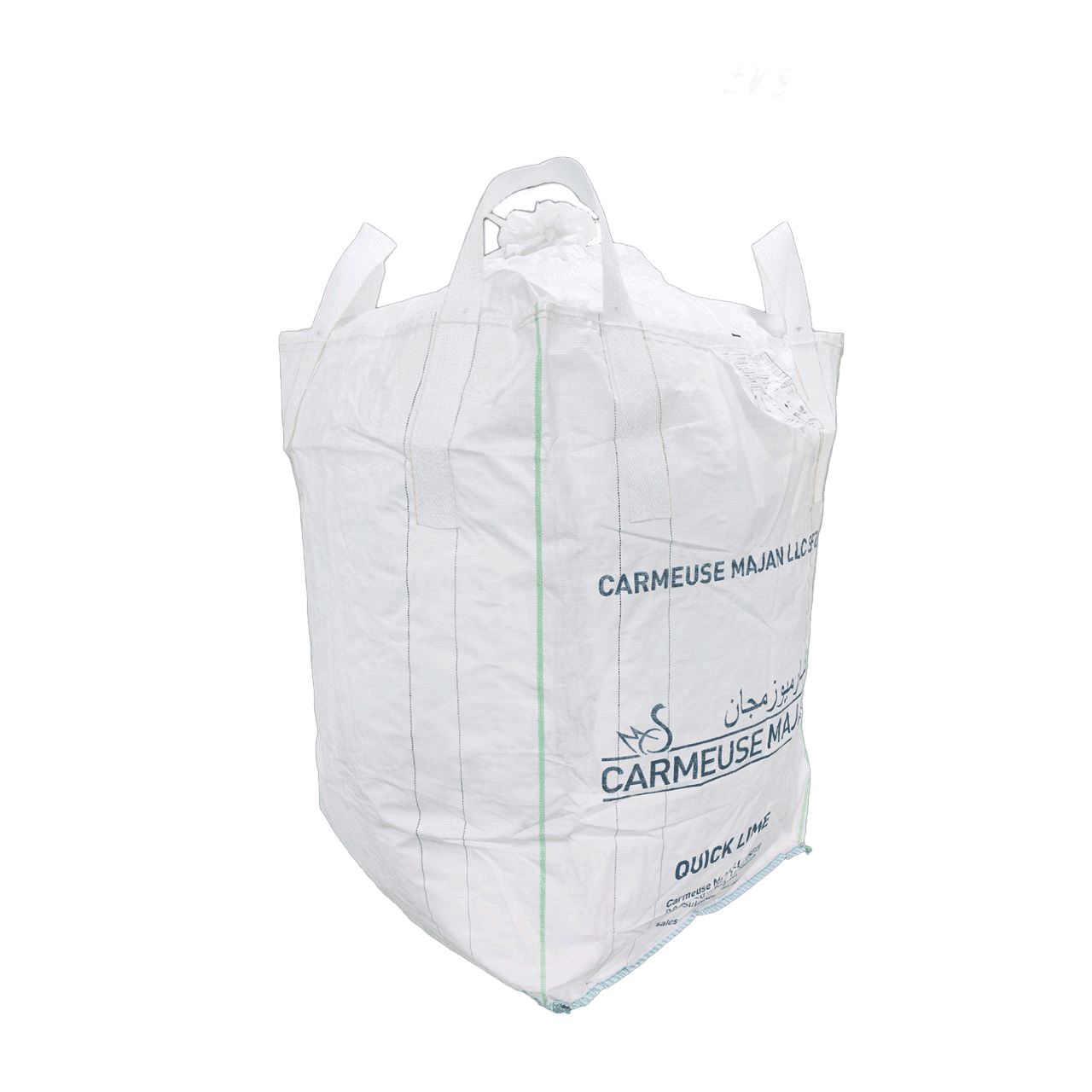 | FIBC Section Bags With Liners FIBC Liners – Bulk Bag Liners Deccan Cans & Printers Pvt. Ltd. |
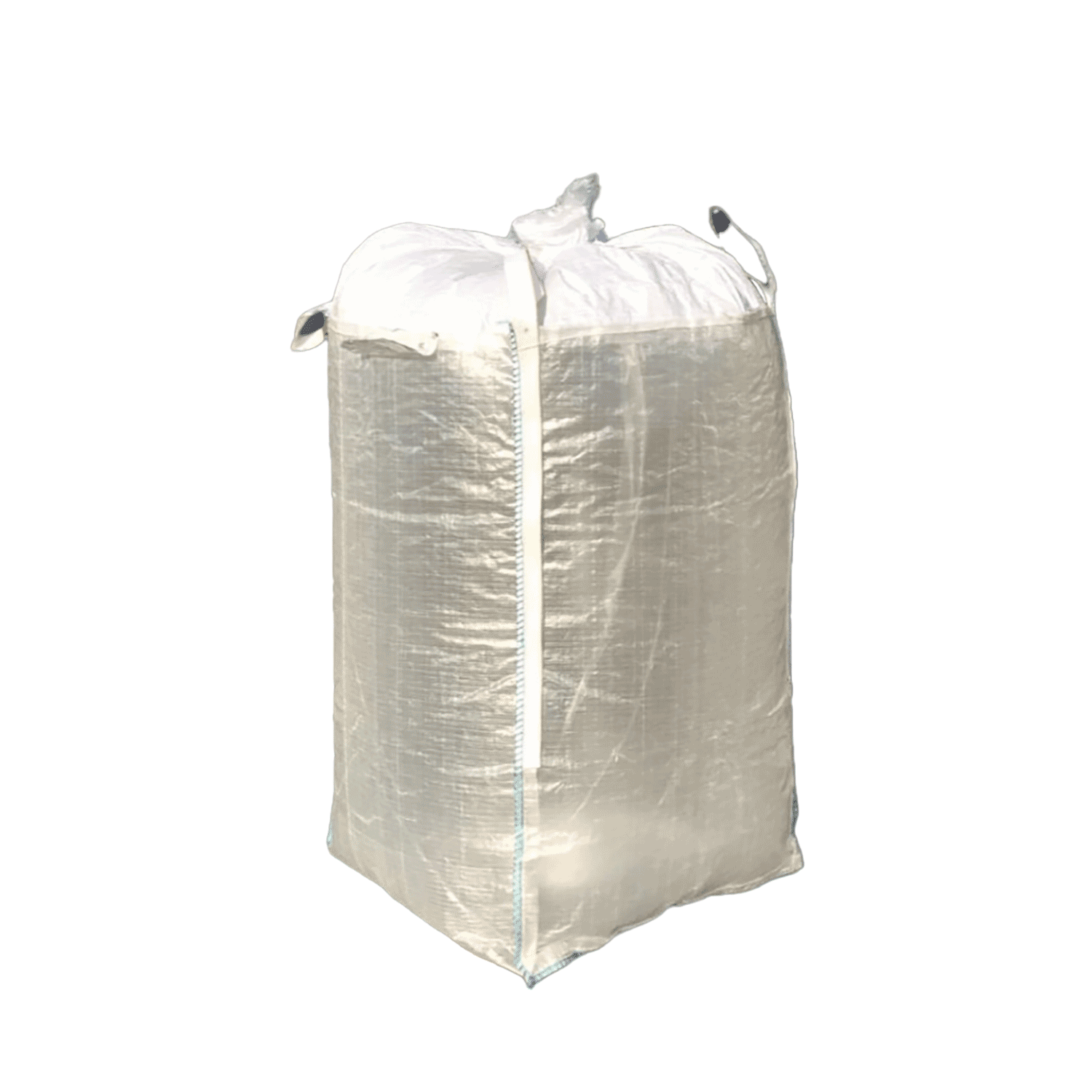 | FIBC Section Transparent Bags Transparent FIBCs – See-Through Bulk Bags Deccan Cans & Printers Pvt. Ltd. |
Frequently asked questions
How do you match FIBC construction to the material and handling route?
Assess particle size, bulk density, flowability, moisture sensitivity, dust risk and discharge method. Then match the fabric, seams, lifting loops, top, bottom and liner to filling, storage, forklift handling and discharge equipment.
Which FIBC specifications prevent capacity and lifting mistakes?
State the safe working load, safety factor, bag dimensions, filling volume, lifting-loop arrangement, top and bottom construction, fabric type and test requirements. Check that the filled bag fits pallets, racks, truck space and lifting equipment.
When do Type A, Type B, Type C or Type D FIBCs become necessary?
Type A suits non-flammable materials where static control is not required. Type B suits flammable powders with controlled ignition risks. Type C uses conductive yarns and grounding during filling and discharge. Type D dissipates static without a grounding connection when its specified conditions are met.
Should you use a liner, coated fabric or another packaging format?
Choose a liner for fine powders, moisture barriers or product cleanliness; choose coated fabric for surface protection and limited moisture resistance. Compare both with woven bags, rigid containers or smaller packs when discharge control, stacking, contamination risk or handling volume makes an FIBC unsuitable.
What should a Chennai manufacturer include in the purchase and acceptance brief?
Include the material description, bulk density, capacity, dimensions, safe working load, safety factor, bag type, liner or coating, filling and discharge design, lifting arrangement, test documents, marking, sample approval and rejection criteria.
Related products
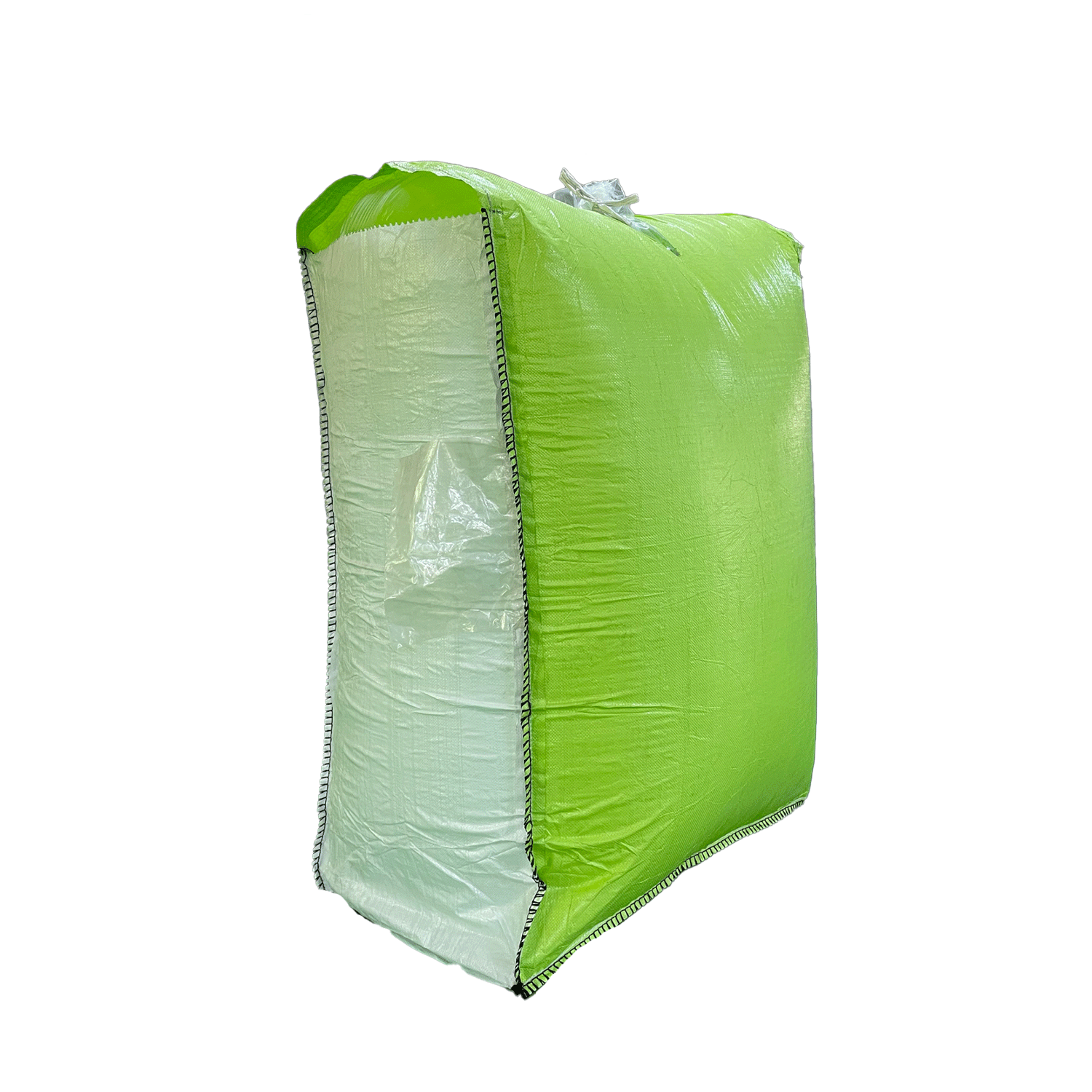 | FIBC Section Fertilizer Bag Range 1 & 2 Loop FIBC Bulk Bags Deccan Cans & Printers Pvt. Ltd. offers durable and cost-effective 1 & 2 Loop FIBC Bulk Bags, designed for the efficient... |
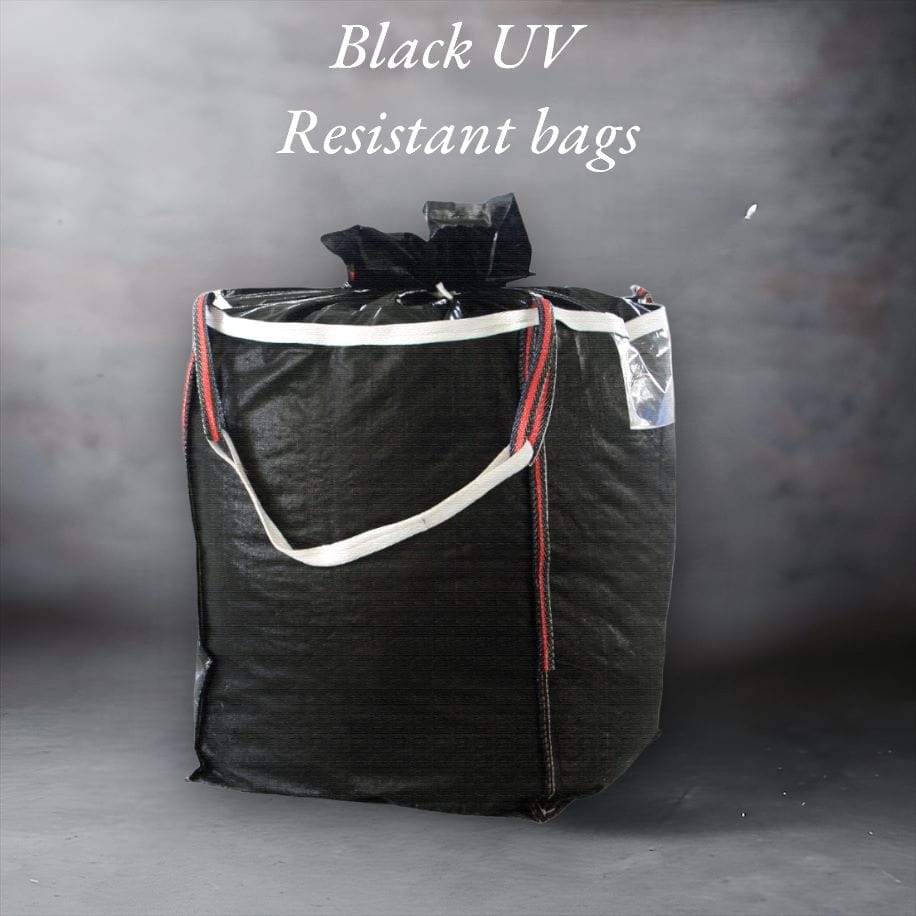 | FIBC Section Black Bags Black FIBC Bags – Enhanced UV Resistance & Extended Shelf Life UV exposure is one of the major challenges faced by the FIBC industry, as prolonged... |
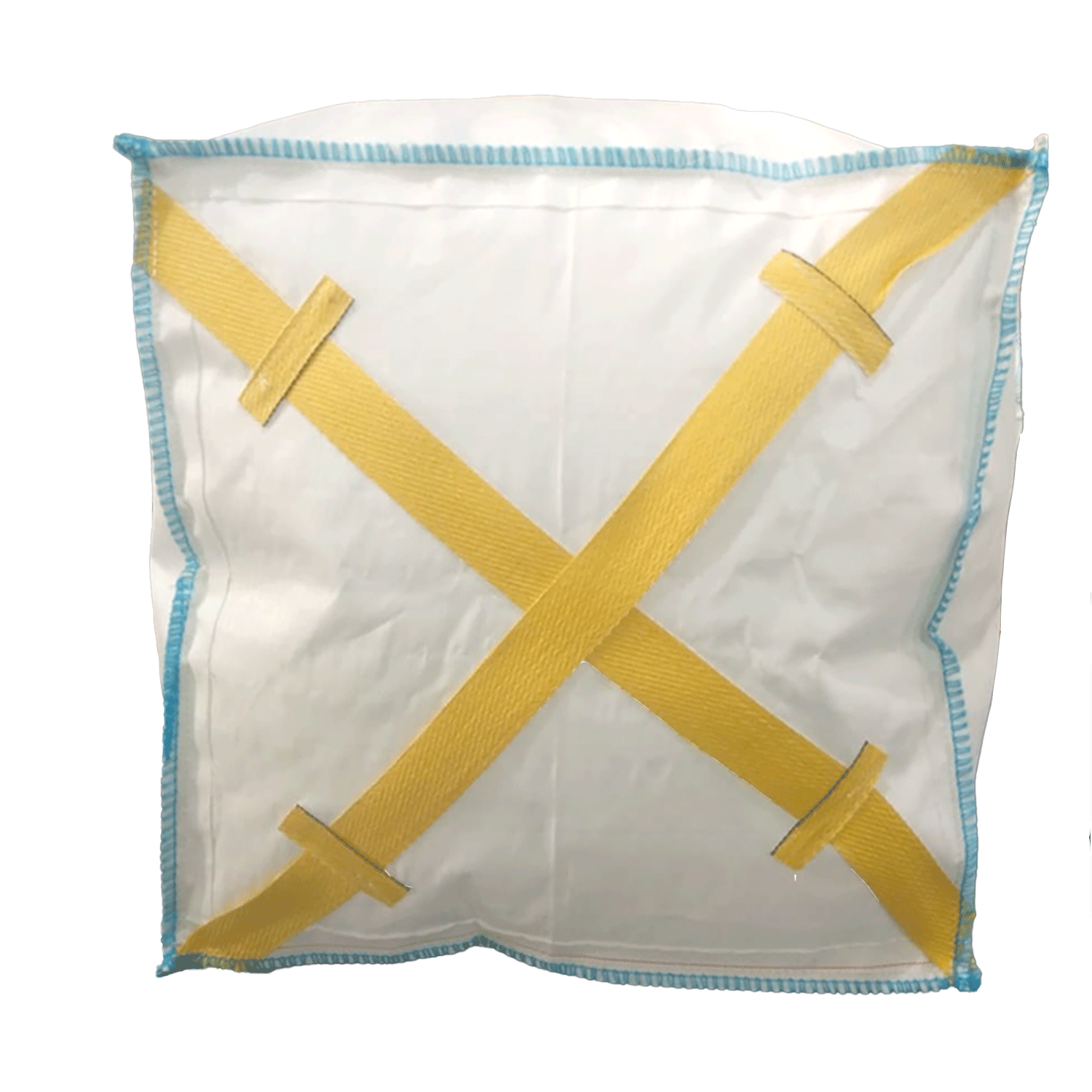 | FIBC Section Cross Bottom Sling Bags Cross Bottom Sling FIBCs – Bulk Bags Deccan Cans & Printers Pvt. Ltd. |
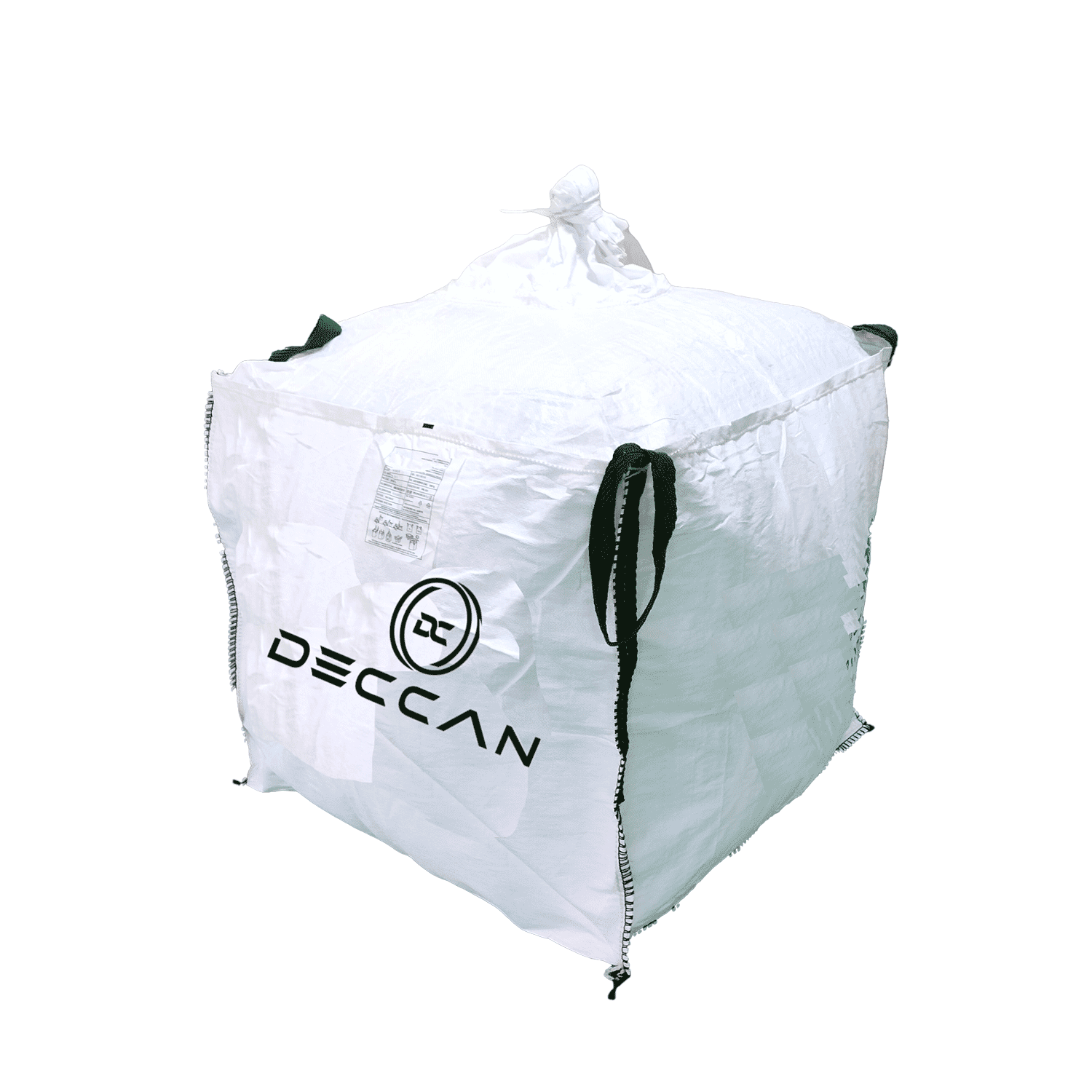 | FIBC Section Polyester Loop Bags/Multifilament Loops Polyester / Multifilament Loop FIBC Bags Deccan Cans & Printers Pvt. Ltd. |