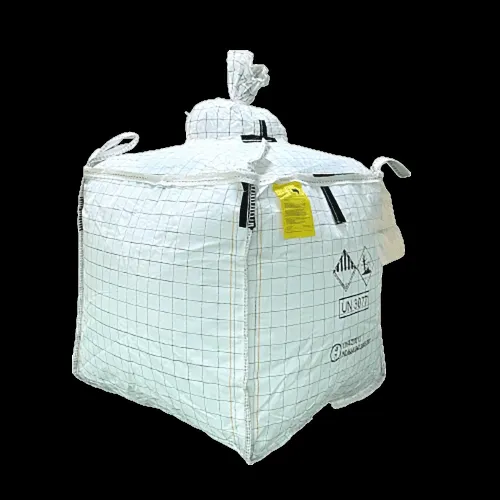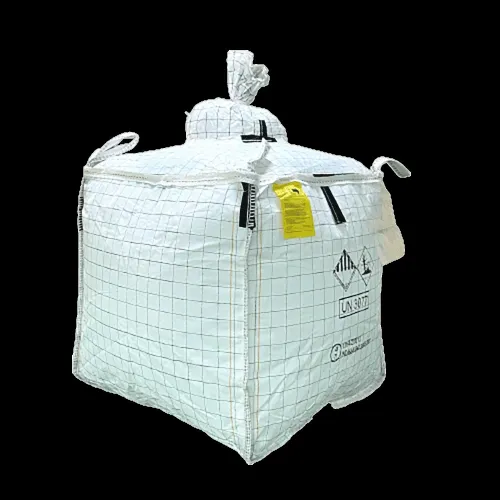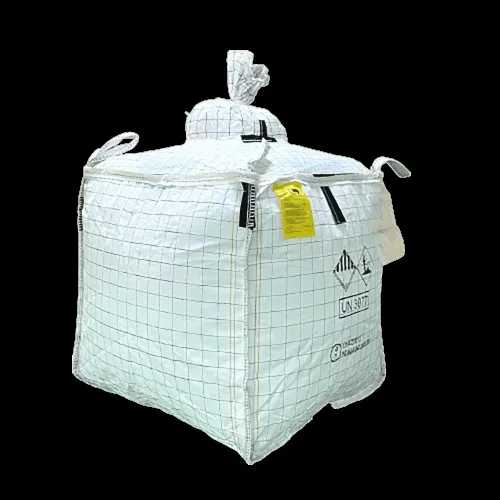

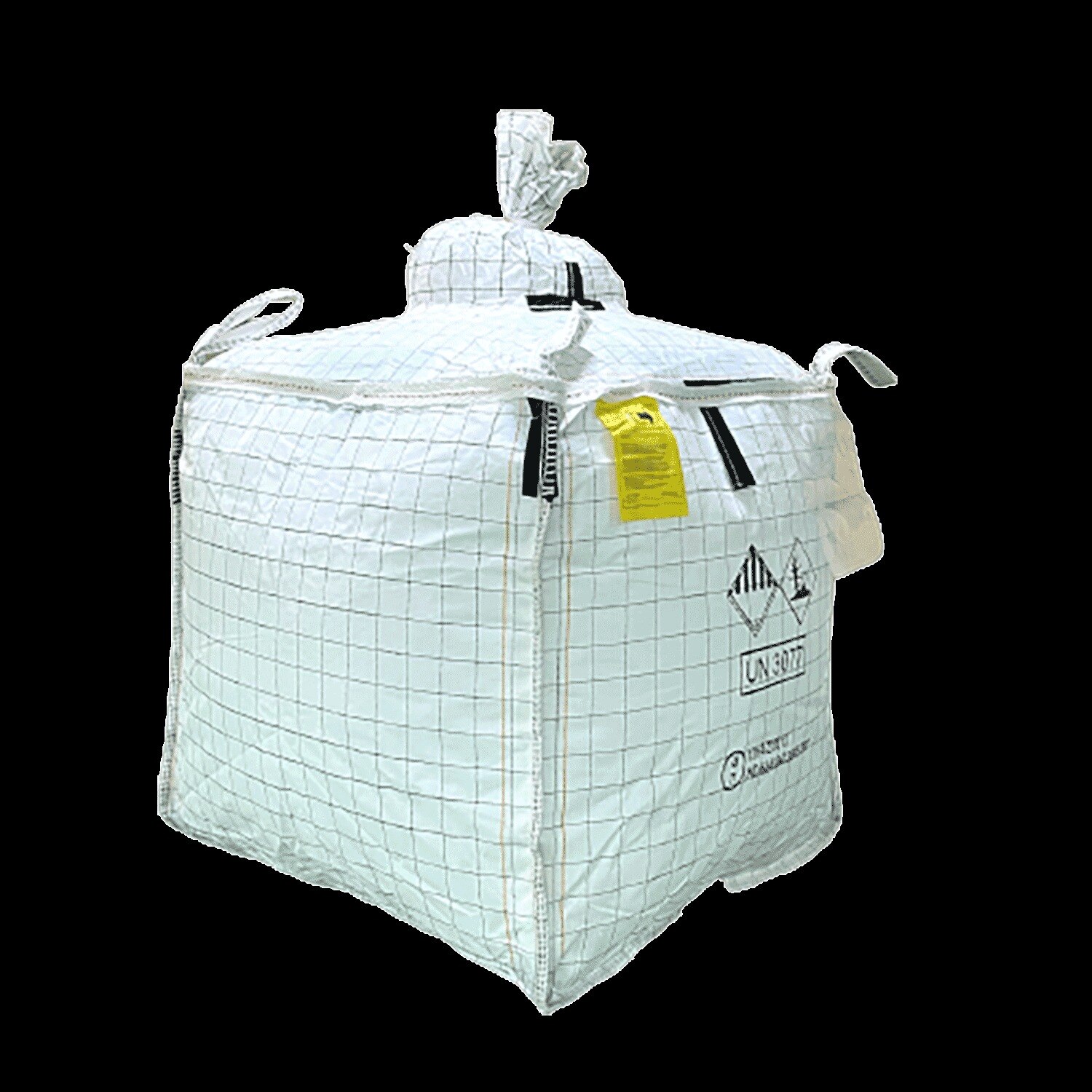
A bulk bag is safe only when its construction, payload, lifting method, discharge system, liner, and storage conditions match the material and handling equipment. By the end, you will be able to write a purchase specification, check a delivered lot, and choose an FIBC design that protects both the product and the people moving it.
Key takeaways
- Calculate bag volume from filled weight and bulk density.
- Check SWL, safety factor, and lifting markings before handling.
- Match loops, discharge spouts, and liners to your equipment and material.
- Keep bags dry, covered, inspected, and away from heat and sharp edges.
Match bag volume and construction to the material
Start with the load, not the catalogue size. Calculate required volume by dividing the filled weight by the material’s bulk density: 750 kg at 600 kg/m³ needs 1.25 m³ before allowing space for safe filling.
Then check the proposed bag’s dimensions against hopper openings, warehouse racking, vehicle height, and the marked SWL; bag volume in litres does not establish its safe payload.
Choose the FIBC construction around how the product enters, leaves, and stresses the bag:
- Woven polypropylene body: provides the main load-bearing structure.
- Lifting loops: match the available forklift, crane, or frame attachment.
- Top inlet: match the filling hose and required closure.
- Bottom discharge: match the receiving equipment and required flow control.
- Seams and panels: suit the filled weight, geometry, and handling frequency.
- Optional liner: protects moisture-sensitive material or controls contamination.
Specify both nominal volume and required filled weight. A tall, narrow bag may fit a loading bay but become unstable during handling; a wide bag may exceed pallet or vehicle clearance even when its volume is correct.
Do not treat tare weight as payload: tare is the empty bag’s mass, while filled weight is the product plus bag.
For fine combustible powders or solvent-contaminated products, select electrostatic control for the complete supplied bag-and-liner configuration. A laminated woven polypropylene body is not automatically waterproof; specify liner fit and closure when moisture exposure or hygroscopic material makes contamination or caking a risk.
Read the SWL, safety factor, and handling markings before use
Confirm safe lifting from the bag’s label and handling instructions, not from its litre capacity. The marked safe working load (SWL) must cover the actual filled weight: product mass plus tare weight. Calculate product mass from bulk density and intended fill level, then compare it with the SWL in kilograms.
1. Read the label for the SWL, safety factor, bag identification, and lifting instructions. Stop if the SWL is missing, unreadable, or lower than the planned filled weight.
2. Check the safety factor and intended service. A 5:1 safety factor usually identifies a single-trip design; a 6:1 reusable FIBC is intended for controlled reuse. The ratio has meaning only when the manufacturer states the test method, inspection criteria, and permitted reuse conditions. A 6:1 marking does not allow indefinite reuse.
3. Engage every designed lifting loop or strap symmetrically. Use forklift tines long and widely spaced enough to support the complete loop set without cutting or pinching fabric. Never drag the bag, lift from one loop, or stand beneath a suspended load.
4. Inspect the body, seams, loops, inlet, and discharge spout before filling. Reject cuts, stretched loops, damaged stitching, contamination, or an altered construction.
5. If it is a Type C FIBC, test grounding continuity before filling and keep it connected to verified earth during filling, discharge, and other charge-generating work. A label alone proves nothing.
ISO 21898 applies to FIBCs for non-dangerous goods; it is not proof of UN approval for hazardous-material transport. Ask for separate approval documents when the load requires them.
Choose lifting, filling, and discharge arrangements for your equipment
Choose the lifting arrangement that matches your hoist or forklift, then match the inlet and outlet to your filling and discharge equipment. A bag that needs two operators to hold an unstable top spout wastes time and increases pinch, dust, and spill risks.
| Arrangement | Handling advantage | Choose it when |
|---|---|---|
| 1-loop FIBC | Single lifting point for compatible hooks or frames | Your lifting equipment is designed for one central loop and the load remains stable |
| 2-loop FIBC | Two-point support with simpler access than four loops | Your equipment has two hooks or a two-point lifting frame |
| 4-loop FIBC | Balanced support at four corners | You use a forklift frame, crane frame, or routine industrial handling |
| Cross-corner loops and sleeves | Corner loops support lifting; sleeves guide forklift tines | Forklift handling needs protected, correctly spaced tine entry |
Engage every designed loop symmetrically. Do not drag the bag, lift it from one loop, or stand beneath it. Forklift tines must support the complete loop set without cutting, pinching, or bending the fabric.
Select a filling inlet that fits the hose and controls dust: a spout gives contained connection, while a duffle top suits open or flexible loading. Specify the diameter, closure, and liner attachment.
For discharge, use a bottom spout with a tie or iris closure when you need controlled flow; choose a full-opening outlet only when rapid emptying is safe for the receiving equipment. Keep the outlet closed during movement, and never cut the fabric to empty a bag.
Specify liners and electrostatic controls for sensitive materials
Choose an unlined FIBC for dry, non-hygroscopic material when contamination and moisture ingress are not concerns. Add a polyethylene liner for hygroscopic powders, monsoon-season transport, or tighter product-contact control; laminated fabric alone does not seal seams, stitching, spouts, or damaged coating.
| Option | What it means | When it applies |
|---|---|---|
| Unlined | Woven polypropylene body with no inner film | Dry, stable powders or granules where breathability and lower cost matter |
| Polyethylene liner | Separate PE film barrier inside the bag | Moisture-sensitive, dusty, or contamination-sensitive products; specify thickness, closure, and product-contact declaration |
| Form-fit liner | A shaped liner matched to the bag’s dimensions and corners | Powders that bridge, leave residues in loose liners, or need cleaner discharge and better volume use |
| Conductive liner | Electrically dissipative or conductive liner connected to the bag’s control system | Fine combustible powders or solvent-contaminated products where charge control is part of the ignition-risk assessment |
Select the electrostatic class with the liner installed, not from the unlined body’s label. Type A offers no electrostatic control. Type B limits propagating brush-discharge risk but does not replace grounding. Type C requires a verified earth connection before filling and throughout filling and discharge; check continuity first.
Type D uses dissipative construction without a mandatory grounding lead. Never assume a conductive liner makes an ordinary bag safe: specify the complete bag-and-liner classification, grounding method, closure, and cleanliness controls. For food or pharmaceutical powders, obtain declarations covering fabric, coating, thread, liner, inks, and processing aids; virgin polypropylene alone proves nothing.
Set storage, transport, inspection, and supplier requirements in Chennai
A wet, sun-exposed FIBC can lose strength before its contents move. Set written controls for storage, loading, inspection, and purchasing rather than relying on the bag’s appearance.
1. Store bags covered, dry, off the floor, and away from heat, sharp projections, standing water, condensation, and direct sunlight. Rotate stock by manufacture date. UV-stabilised polypropylene slows degradation; it does not make outdoor storage indefinite.
2. Set the FIBC stacking height only from the supplier’s documented compression or stacking test. Filled shape, product flowability, pallet support, and stack pattern affect stability. If no approved limit exists, store bags single-tier.
3. Before each lift, check the label, SWL, manufacture date, seams, lifting loops, spouts, coating, and liner. Reject a bag with cuts, pulled stitching, chemical damage, wet contamination, or a distorted loop. Engage every designed loop symmetrically, keep people out from beneath suspended bags, and prevent forklift tines from cutting or pinching the fabric.
4. Require the carrier to keep bags upright, restrained without crushing, and protected from rain and road dirt. A laminated fabric is not automatically waterproof; specify liner material, fit, closure, and antistatic provisions for hygroscopic powders or monsoon transport.
5. Give the purchaser both nominal volume and required payload in kilograms. Request SWL, safety factor, construction, filling and discharge details, ISO 21898 evidence, and any required UN-marked FIBC approval; ISO 21898 alone covers non-dangerous goods and does not prove hazardous-goods approval.
When comparing Deccan Cans & Printers Pvt. Ltd. with another Chennai FIBC supplier, send both the same specification and demand the test report, label artwork, and inspection acceptance criteria before ordering.
Related products
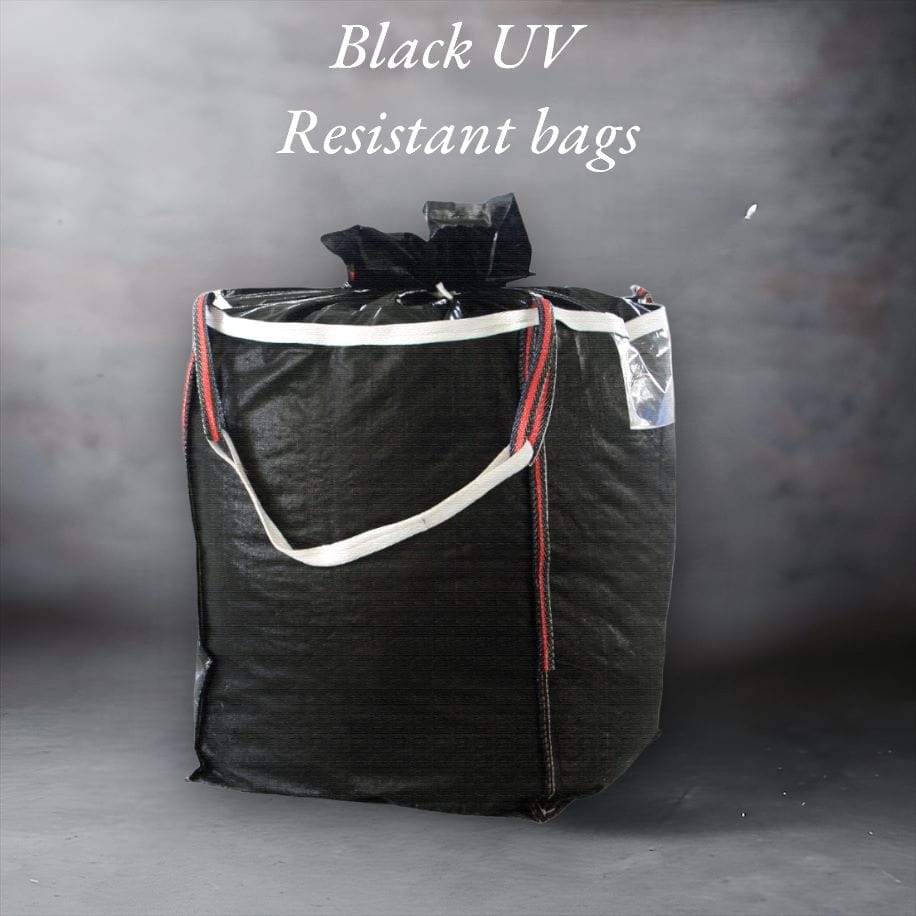 | FIBC Section Black Bags Black FIBC Bags – Enhanced UV Resistance & Extended Shelf Life UV exposure is one of the major challenges faced by the FIBC industry, as prolonged... |
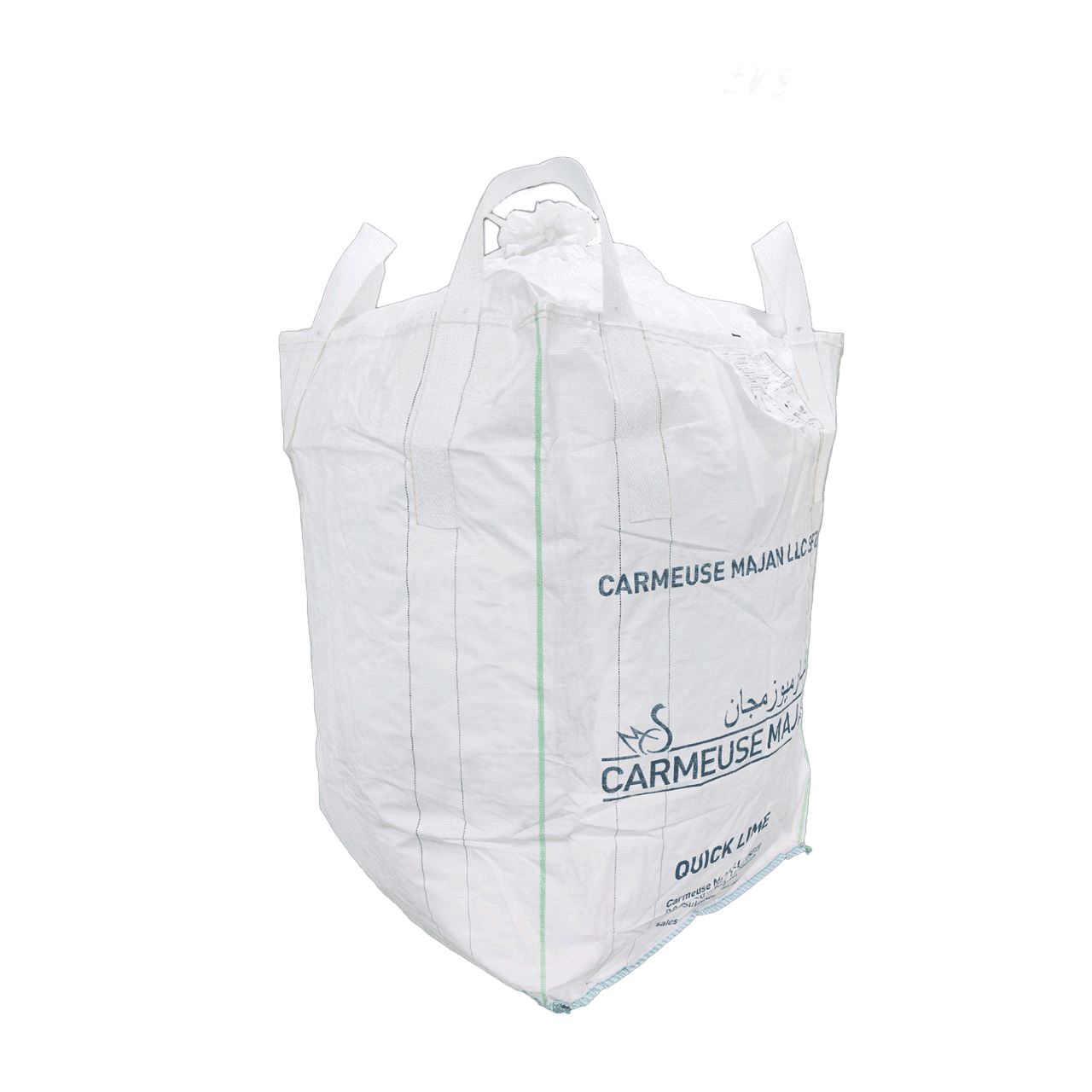 | FIBC Section Bags With Liners FIBC Liners – Bulk Bag Liners Deccan Cans & Printers Pvt. Ltd. |
Frequently asked questions
How do you calculate the required FIBC bag volume?
Divide the filled weight by the material’s bulk density, then allow space for safe filling. For example, 750 kg at 600 kg/m³ requires 1.25 m³ before that allowance.
What do SWL and safety factor mean on an FIBC bag?
SWL is the maximum safe working load for the stated handling method. The safety factor compares the bag’s breaking strength with its rated load; confirm both before use.
Which FIBC lifting and discharge arrangements should you specify?
Match the loop configuration to your forklift, hoist, or filling frame, and select a top inlet and bottom discharge spout that fit your equipment and unloading process.
When do you need an FIBC liner or electrostatic control?
Specify a liner for fine, moisture-sensitive, or contamination-sensitive materials. Use the correct electrostatic-control construction when powders, flammable atmospheres, or ignition risks are present.
How should FIBC bags be stored and inspected in Chennai?
Store bags under cover, dry, away from sunlight, heat, sharp edges, and chemicals. Inspect fabric, seams, loops, lifting points, liner, and discharge spout before each use.
Related products
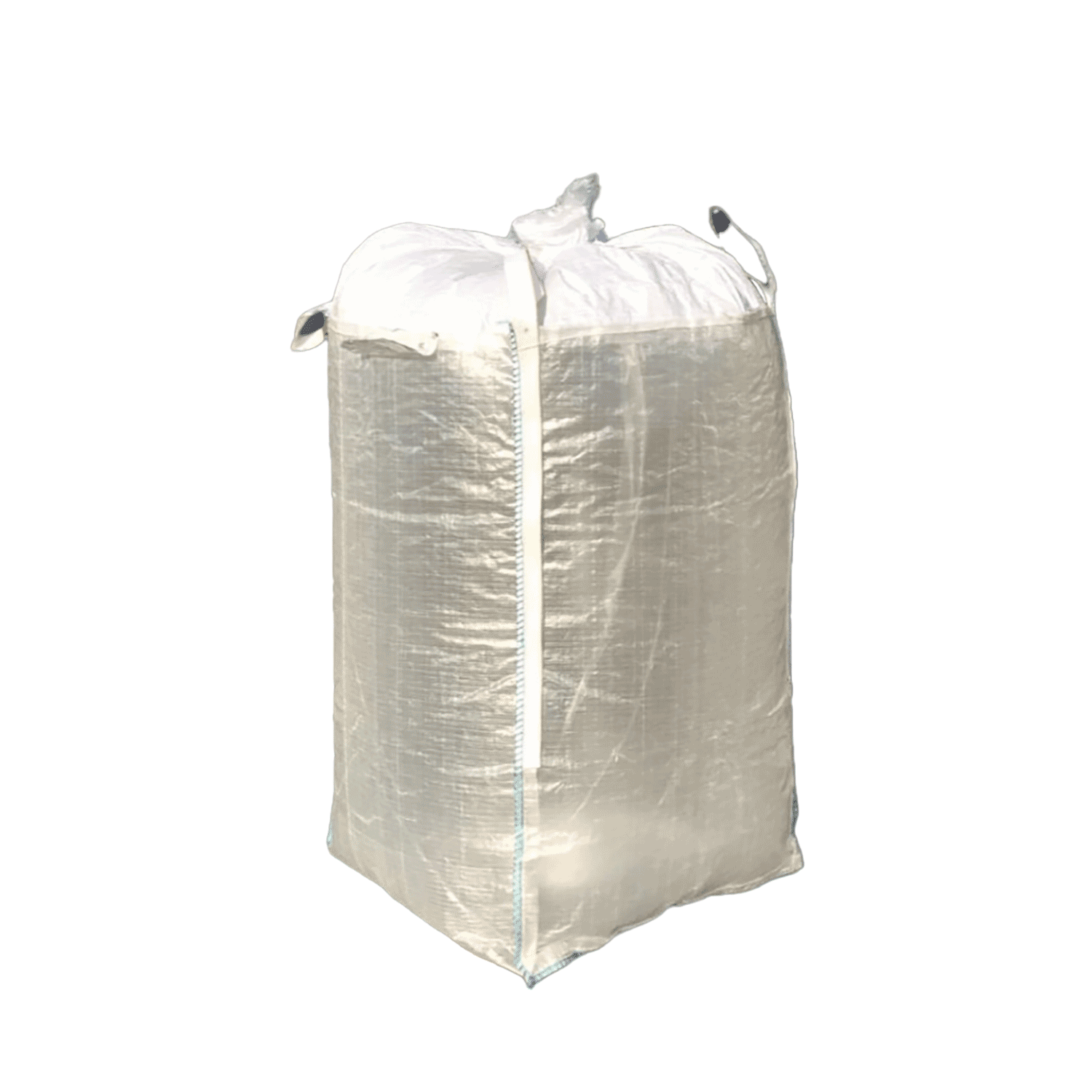 | FIBC Section Transparent Bags Transparent FIBCs – See-Through Bulk Bags Deccan Cans & Printers Pvt. Ltd. |
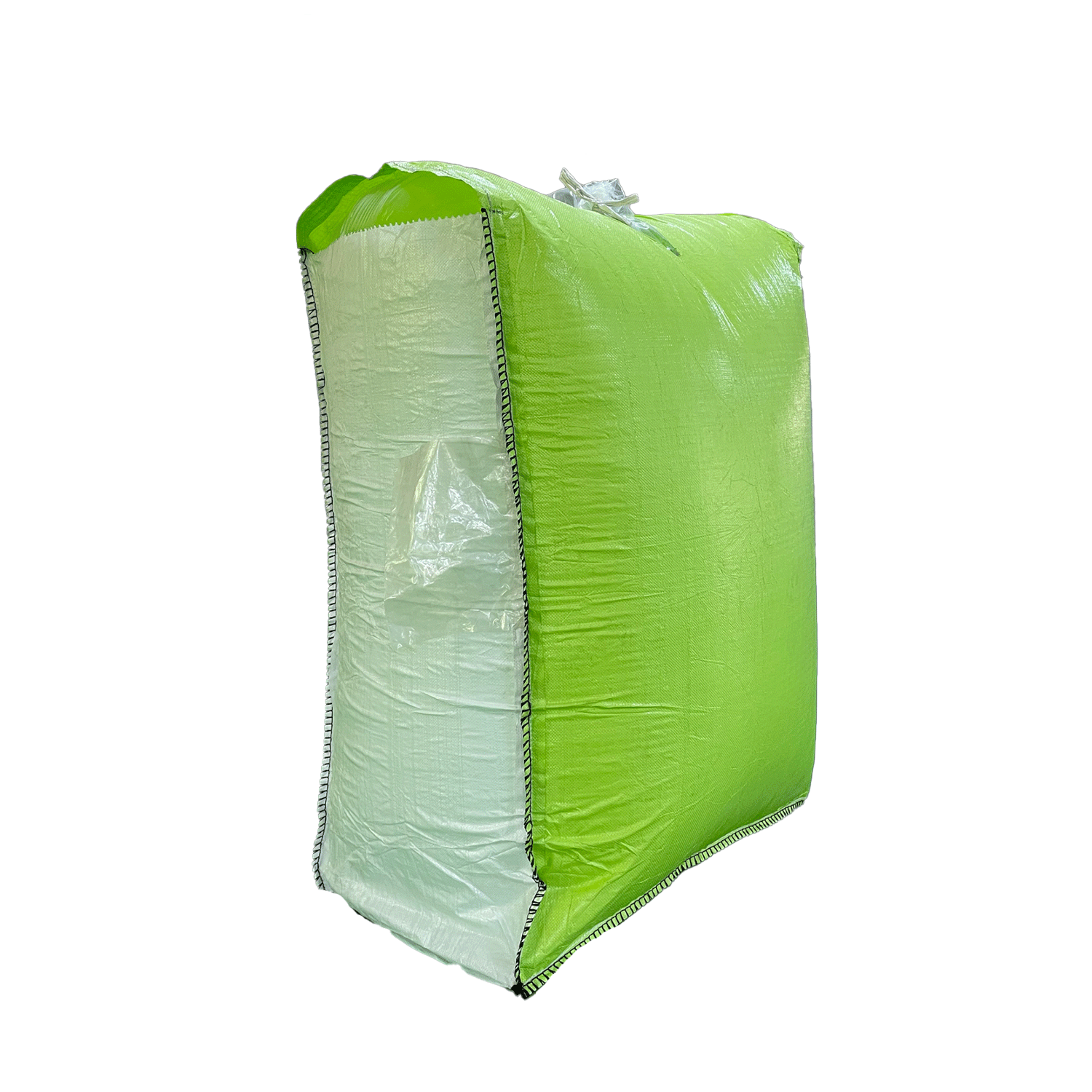 | FIBC Section Fertilizer Bag Range 1 & 2 Loop FIBC Bulk Bags Deccan Cans & Printers Pvt. Ltd. offers durable and cost-effective 1 & 2 Loop FIBC Bulk Bags, designed for the efficient... |
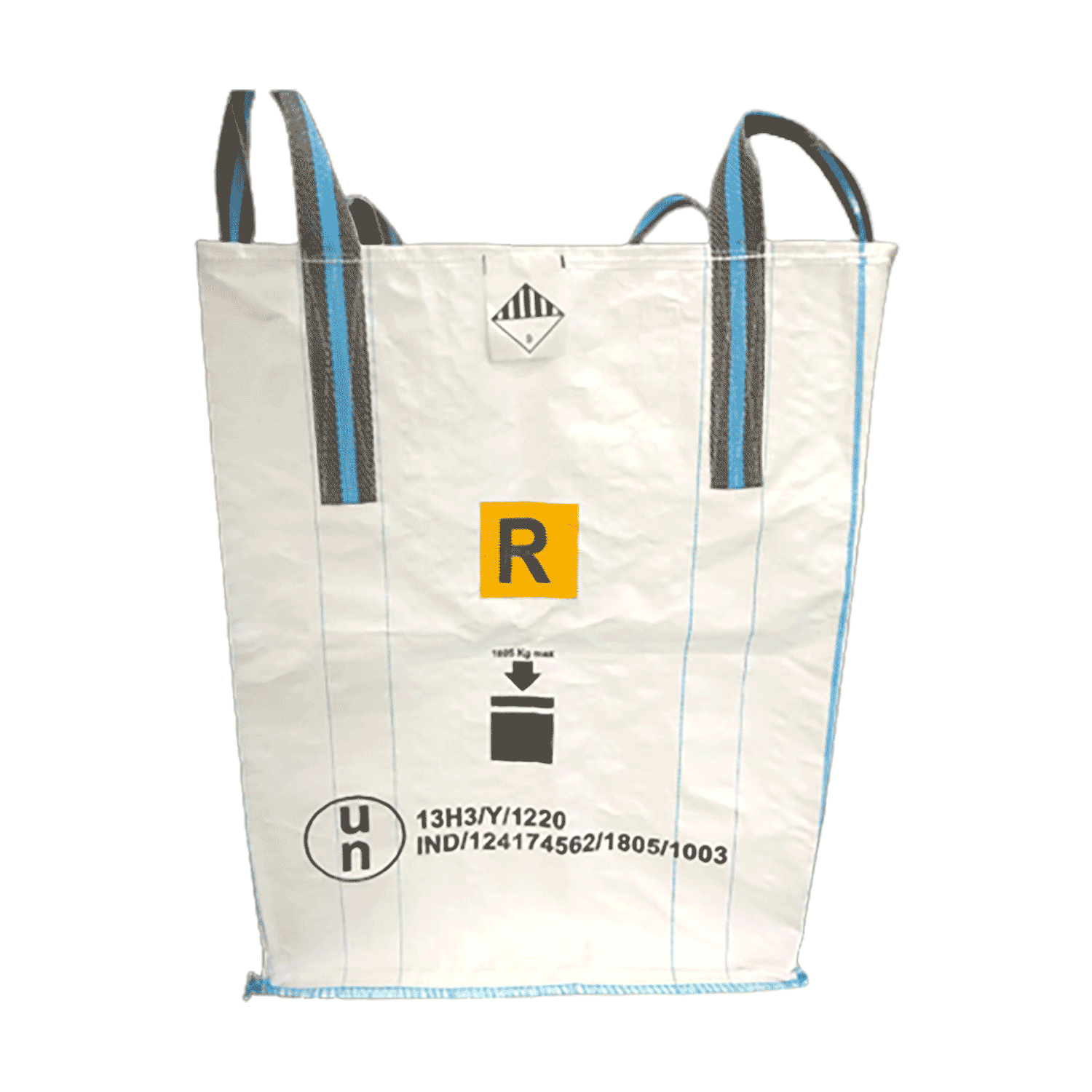 | FIBC Section Un Bags UN Certified Bulk Bags – Rigorous Performance Testing for Safety & Reliability Deccan UN Certified Bulk Bags are specially engineered for the safe... |
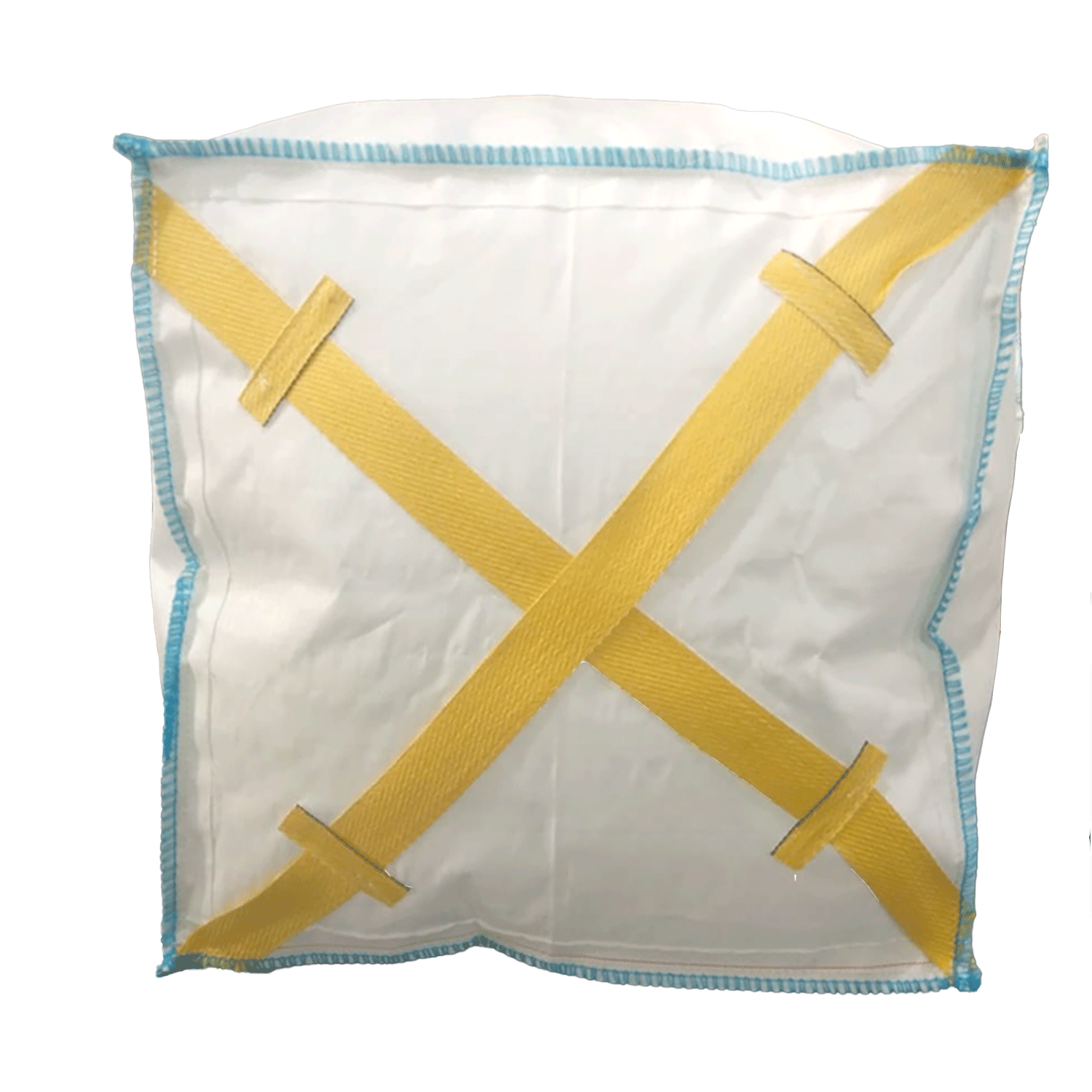 | FIBC Section Cross Bottom Sling Bags Cross Bottom Sling FIBCs – Bulk Bags Deccan Cans & Printers Pvt. Ltd. |