
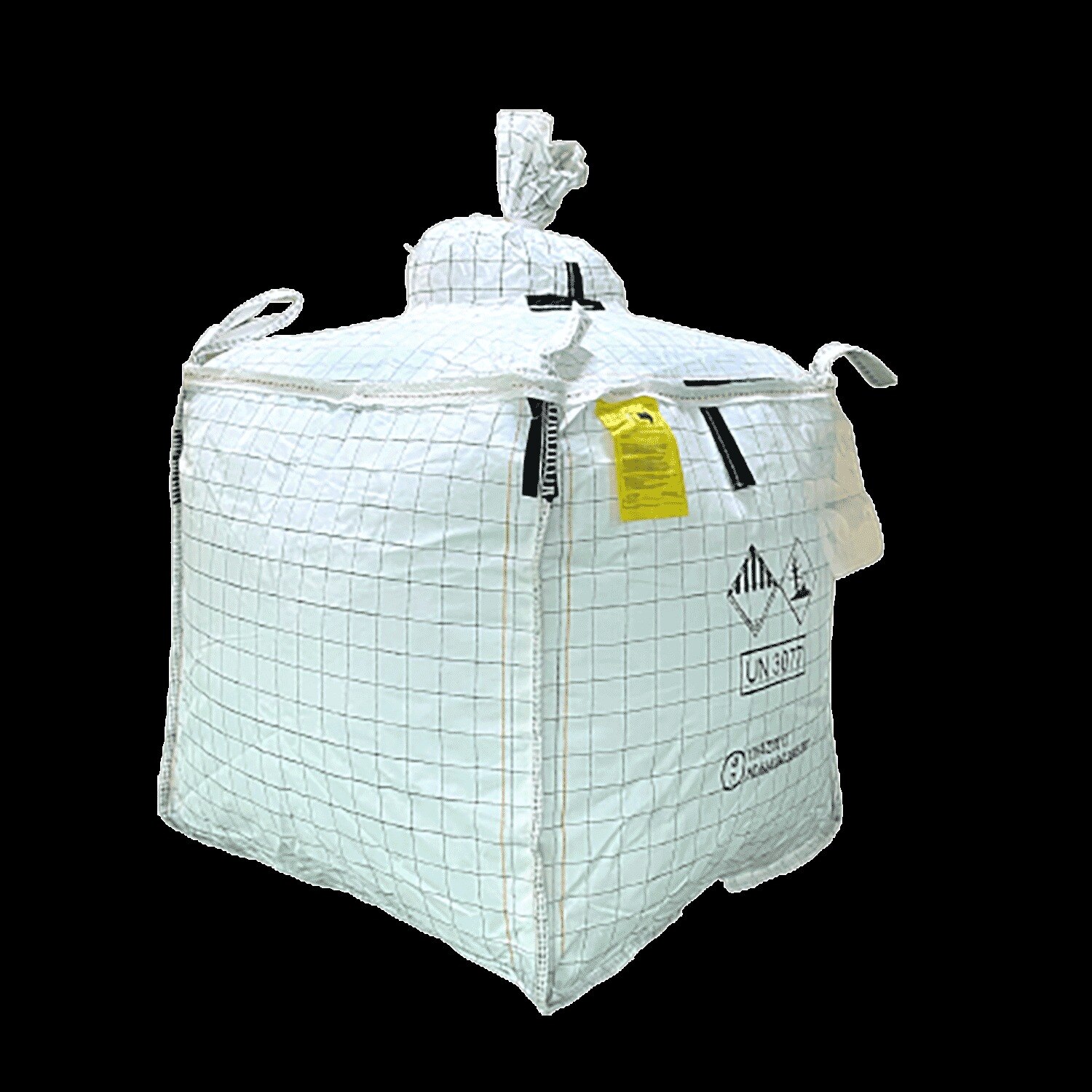
A clean-looking bulk bag is not automatically suitable for direct food contact. You need evidence about its materials, manufacturing controls, migration performance, traceability, handling method and storage conditions before releasing it for food ingredients. By the end, you can write a purchase specification, inspect incoming bags and compare Chennai suppliers on evidence rather than labels.
Key takeaways
- Ask for a signed declaration covering the actual FIBC and liner.
- Specify product, liner material, safe working load and filling conditions.
- Check batch traceability, hygiene controls and foreign-material prevention.
- Inspect, store, fill and discharge bags without exposing contents to contamination.
What evidence proves that an FIBC is suitable for food contact?
A signed food-contact declaration for the actual FIBC and liner is stronger evidence than a seller’s “food grade” label. Food grade FIBC is not a single performance rating: it describes suitability for a stated product, market, material combination and use.
Request documents that identify every food-contact component, including woven polypropylene, coating, sewing thread, liner film, inks and additives. For India, the declaration should state compliance with the FSSAI Packaging Regulations, 2018.
For EU supply, request the basis under Regulation (EC) No 1935/2004 and Regulation (EU) No 10/2011; EU Regulation 10/2011 guidance for FIBC materials should cover the relevant plastic components and intended conditions of use. For US supply, ask for the applicable FDA basis, such as 21 CFR §177.1520 for polypropylene.
Ask for:
- A signed food-contact declaration naming the bag and liner materials, food types and temperature or contact limits.
- A migration-test report covering the intended material and use, not a generic polymer certificate.
- A certificate of analysis or conformity for the supplied resin or finished lot.
- Batch traceability linking the declaration and test reports to the ordered bags.
BRCGS Packaging Materials or FSSC 22000 certification supports factory control, but it does not replace product-specific evidence. Check that the supplier also documents segregation from non-food bags, cleaning, foreign-body control and release inspection. An uncertified liner, even inside clean woven fabric, breaks the evidence chain.
How should you specify the bag, liner and safe capacity?
Specify the FIBC against the product’s bulk density, filling method, discharge arrangement and handling cycle—not as a “one-ton bag.” State virgin polypropylene, any recycled content, fabric coating, thread and additives that contact the food, then cite ISO 21898:2024 FIBC standard for design, testing and marking.
1. Record the product’s minimum and maximum bulk density, target mass, maximum fill level and required bag dimensions. Check both limits: a low-density powder can fill the volume before reaching 1,000 kg, while a dense ingredient can overstress fabric and lifting loops. State the tested SWL, not just the intended kilograms per bag.
2. Define the FIBC liner material, resin, thickness or mass per area, fit and closure. Specify a form-fit or tie arrangement, seal method, leak-test requirement and controlled liner-insertion step. An uncertified liner can compromise food contact and contaminate a clean woven polypropylene bag.
3. State the handling cycle: single trip or reuse, filled and empty lifts, forklift movement, stacking and discharge frequency. Match the bag design and SWL to every lift; a bag that survives filling can fail during repeated handling.
4. Select the electrostatic class separately from hygiene. Use Type C only with verified grounding during filling and discharge; use Type D where its specified dissipative performance suits the process. Type A and Type B controls differ, and a food-contact declaration does not make any type safe for combustible dust.
Record all four decisions on the purchase specification and test the filled bag with the actual product.
Which factory controls make a food-contact FIBC credible?
A clean-looking bag proves almost nothing: credibility comes from controls that prevent contamination and trace failure to a production lot. The factory should control virgin polypropylene, thread, coating, additives and liner film at receipt, then segregate them from non-food materials.
| Control | Controlled food-contact practice | Warning sign |
|---|---|---|
| Raw materials | Approved suppliers, identified batches and a food-contact declaration for every contacting component | Unidentified resin, recycled content or liner |
| Hygiene | Documented cleaning, pest control, personnel hygiene and foreign-body prevention | Cleaning described only as “the bags are kept clean” |
| Production | Segregated manufacture, controlled liner insertion, sealed packaging and inspection for fibres, holes and loose threads | Food and industrial orders share open work areas |
| Testing and release | Seal integrity, dimensions, SWL, safety factor and visual results recorded before release | No lot-specific inspection record |
| Traceability | Bag batch linked to fabric, liner, date, operator and retention sample | Supplier cannot trace a complaint beyond the invoice |
BRCGS Packaging Materials and FSSC 22000 certification shows that a site operates an auditable management system; it does not replace the declaration for the actual bag and liner. For powders, verify the liner resin, thickness, fit, seal and insertion controls. An uncertified liner defeats a suitable woven bag.
Request these records before approval:
- A certificate of analysis FIBC record or equivalent lot-specific test report.
- A certificate of conformity naming the batch, materials and intended use.
- Cleaning and release records, plus the retention-sample period.
- Separate IEC 61340-4-4 electrostatic classification; food-contact status does not make a bag safe for combustible dust.
How should you receive, store, fill and discharge the bags?
Release an incoming lot only after the FIBC receiving inspection connects the bags to a traceable production record. Do not issue bags with wetting, punctures, torn outer packaging, odour, visible soil or missing identification.
1. Check the certificate of conformity, bag batch, woven fabric and liner materials, production date, dimensions, SWL, safety factor, closure and discharge style. Keep the inspection result and a retention sample, or record a defined retention period.
2. Apply FIBC storage conditions that protect the packaging from Chennai’s rain, condensation, pests, chemicals and direct sunlight. Keep sealed bags off the floor on clean pallets; polypropylene fabric does not block moisture or odours. Open outer packaging only in the filling area.
3. Follow a documented FIBC filling procedure: inspect the liner and closures, clean the filling equipment, prevent the bag or liner from touching dirty surfaces, and stop at the marked SWL. Confirm electrostatic controls separately from food-contact status.
Ground a Type C bag before filling; use a Type D bag only as specified by its manufacturer.
4. Make FIBC discharge safety part of the work instruction. Secure the bag, control the outlet gradually, keep people clear of suspended loads and ground Type C bags before emptying. For reuse, reject any bag with cuts, seam damage, worn loops, deformation, residue, odour, pest evidence or a failed inspection.
Do not call it washable without validated cleaning and drying for its fabric, liner and closures. A 5:1 or 6:1 safety factor alone does not prove reusability.
How can you compare Chennai suppliers before placing an order?
A low price is not a useful comparison until every supplier quotes the same construction, capacity and evidence. Ask for a sample bag, liner and document pack before approving a food packaging supplier in Chennai.
| Check | Strong evidence | Warning sign |
|---|---|---|
| Material | Virgin polypropylene, liner film and additives are named; food-contact declaration cites FSSAI, EU Regulation (EU) No 10/2011 or FDA 21 CFR §177.1520 | “Food grade” appears without a material basis |
| Hygiene | Segregated production, cleaning records, pest control and release inspection are documented | The factory only says the bags look clean |
| Performance | SWL, product bulk-density range, dimensions and electrostatic Type A, B, C or D are stated | Capacity is given only as “1,000 kg” |
| Traceability | Lot number links the bag, liner, raw materials, test results and dispatch record | No FIBC batch traceability exists |
Send the same checklist to every shortlisted supplier of FIBC bags in Chennai:
- Request three production samples, not a hand-picked showroom sample.
- Inspect seams, lifting loops, liner fit, stitching, odour, punctures and sealed outer packaging.
- Ask for migration testing, certificate of analysis, UV-resistance evidence and the latest release inspection.
- Record supplier name, specification revision, batch number, quantity, SWL, liner type and delivery condition on the purchase order.
- State covered storage, transport protection and grounding instructions where Type C applies.
Deccan Cans & Printers Pvt. Ltd. can support a documented decision when its quotation is matched with these records rather than accepted as a product claim. Recheck the same evidence for each delivered lot.
Related product
 | FIBC Section Bags With Liners FIBC Liners – Bulk Bag Liners Deccan Cans & Printers Pvt. Ltd. |
Frequently asked questions
What evidence proves that an FIBC is suitable for food contact?
Request a signed food-contact declaration for the specific FIBC fabric, thread, coating, liner and intended product. Check that it identifies materials, migration or compliance testing, manufacturing site, batch traceability and the destination market’s rules. A “food grade” label alone does not prove suitability.
How should you specify the bag, liner and safe capacity?
State the product, bulk density, moisture and temperature, filling and discharge method, dimensions, fabric construction, liner material and liner fit. Specify the safe working load, safety factor, lifting configuration and whether the bag requires antistatic or conductive controls. Do not select capacity from volume alone.
Which factory controls make a food-contact FIBC credible?
Look for controlled raw-material identification, clean production areas, documented line clearance, pest and foreign-material controls, calibrated inspection equipment, batch records, complaint procedures and traceability from resin or fabric to finished bag. Ask for audit evidence and representative inspection records.
How should you receive, store, fill and discharge food-grade FIBCs?
Inspect packaging, seams, lifting loops, liner, labels and seals before acceptance. Keep bags sealed, dry, off the floor and away from chemicals, pests and direct sunlight. Use clean equipment, prevent liner damage during filling and discharge, and ground or bond equipment when the product and bag require static control.
How can you compare Chennai suppliers before placing an order?
Compare suppliers against the same written specification, declaration scope, test documents, sample inspection results, minimum order quantity, lead time, batch traceability, quality agreement and corrective-action process. Confirm whether manufacturing, liner insertion, printing and final packing occur under the controls your product requires.