A tin can is suitable for some paints, chemicals and lubricants but unsafe for others, even when the products look similar. By checking the formulation, SDS, lining, closure, dimensions and test evidence, you can specify a package that protects the contents and survives filling, storage and transport.
Key takeaways
- Start with solvent, acidity, viscosity and flash point—not the product label.
- Use SDS Sections 2, 9 and 14 to assess lining and transport needs.
- Test the closure, seam, lining and filled pack as one complete package.
- Specify storage temperature, filling line speed and delivery conditions to suppliers.
Start with the formulation, not the product name
A tin container suits a formulation only after you check its chemistry, physical properties and transport classification. Solvent-based paint and related materials are commonly classified as UN 1263, but flash point, viscosity and packing group determine the transport requirement; the word “paint” does not. Thinners can attack unsuitable internal coatings or build vapour pressure.
| Formulation | Tin-container decision | Main risk to check |
|---|---|---|
| Solvent-based paint, UN 1263 materials and thinners | Use lacquered tinplate only with compatibility evidence | Coating attack, vapour pressure, flash point, viscosity and packing group |
| Water-based paint | Use protected tin only after corrosion testing | Water, dissolved salts, amines and residual oxygen can rust the interior |
| Cleaning chemicals, acids and alkalis | Select tin, HDPE, fluorinated plastic or stainless steel from the chemistry | Corrosion, especially with strongly alkaline or reactive formulations |
| Cutting fluids, engine oil, gear oil, grease and hydraulic fluid | Tin is often workable, subject to a long-term trial | Additives, water content, sludge formation and seal compatibility |
Water-based paint’s low odour does not make it gentle on tin. Solvent-rich, highly corrosive or strongly alkaline products are better candidates for HDPE, fluorinated plastic or stainless steel when tinplate or its coating cannot withstand the formulation.
Check the SDS, especially Section 7 for storage and Section 10 for stability, reactivity and incompatible materials, alongside the technical data sheet. Approve the complete package only after testing the actual concentration, temperature and shelf life; never approve a can from the product name alone.
Use the SDS to choose the internal lining
Choose the lining from the liquid’s chemistry, not from the word “paint.” Read SDS Section 7 for handling and storage instructions, SDS Section 10 for stability, reactivity and incompatible materials, then the technical data sheet for concentration, shelf life and temperature limits. Flag these constituents before choosing the coating:
- Aromatic solvents, ketones, esters and aggressive additives
- Amines, acids, alkalis and oxidisers
- Water, dissolved salts and residual oxygen
| Option | What it means | When it applies |
|---|---|---|
| Plain tinplate | Product contacts metal directly; simplest and least protective choice | Compatible, non-corrosive formulations with demonstrated shelf-life performance |
| Internally lacquered tinplate | A selected lacquer separates the formulation from the tinplate | Solvent-based paints, oils or chemicals that need protection from metal contact |
| Epoxy-phenolic lining | A tougher barrier system with broader chemical resistance than many general-purpose lacquers | Formulations containing demanding solvents, water, salts or additives, after formulation-specific testing |
“Corrosion resistant” is not a compatibility result. An unsuitable lining can soften, swell, allow extraction of coating components or delaminate; plain tinplate can corrode at cut edges and seams. Require evidence using the actual formulation, concentration, storage temperature and intended shelf life—not a test with an unrelated solvent.
For water-based coatings, specify the lacquer, seam compound and exposed-edge protection as one system. Low odour does not reduce corrosion risk from water, salts, amines or oxygen. Reject any coating choice without records showing appearance, adhesion, leakage and corrosion performance after the planned storage period.
Match the closure and can geometry to use
Choose the closure before the can size: an RLT closure suits controlled opening and repeated use, while an EOE closure suits quick, tamper-evident access. Match the capacity and geometry to net quantity, viscosity, filling equipment, dispensing method, stacking pattern, required headspace and headspace vapour pressure.
| Closure | Opening tool | Resealing, pouring and tamper evidence | Compatibility and transport risk |
|---|---|---|---|
| RLT closure | Ring-lever opener or lever | Better resealing and controlled pouring when fitted with the specified plug; tamper evidence depends on the design | Verify gasket compatibility, compound and torque; a poor seal leaks under vibration |
| EOE closure | Integrated pull ring; no separate opener | Fast opening and strong visible tamper evidence, but limited resealing and less controlled pouring | Confirm compound and gasket compatibility; a damaged scored end raises leakage risk |
For hazardous liquids, the closure, gasket, plug, bung and torque setting must match the tested package design. Obtain filling-temperature, warehouse-temperature, vapour-pressure and liquid-expansion limits from the container specification and the product SDS or technical data sheet; road temperature and pressure changes can expose an unsuitable tin.
Specify body, end and lid gauges separately: the lightest tinplate may pass a static test yet dent during pallet movement, clamp handling or vibration.
Approve the complete package, not just the can body
A sound can body does not prove a sound package. Approve production only after inspecting each potential leak path and reviewing construction-specific evidence.
1. Inspect the side seam, bottom seam, top double seam and closure separately. Request seam teardown measurements, including hook lengths, overlap, tightness and seam thickness. Verify compound application and closure torque; a visual check cannot prove seam integrity.
2. Require leak testing on production-representative cans. Check lid fit, gasket condition, coating continuity, dent resistance and corrosion resistance. Record body, end and lid gauges because a light gauge can survive a static test yet fail during stacking, clamp handling or transport vibration.
3. For hazardous liquids, match the UN packaging mark, certificate and test report to the actual can construction, closure arrangement, internal coating, filling method and dangerous good. UN 1263 identifies a transport entry for certain paints; it does not approve every paint.
Changing the cap, gasket or torque setting makes the UN mark non-transferable unless that configuration is covered by the approval.
4. Run filled trials at the intended fill temperature, storage duration and transport orientation. Afterward, inspect for leakage, swelling, coating damage and external rust.
Keep the trial records with the approved drawing, closure specification, torque range, lining details and test results. Reject any supplier that offers only a clean sample and a generic UN certificate; the evidence must identify the exact package you will fill.
Specify a Chennai supplier around your operating conditions
Give a Chennai manufacturer a written pack brief, not a request for a “5-litre tin.” Include:
- Formulation and SDS
- UN classification and packing group
- Net quantity, filling temperature and storage temperature
- Required headspace, closure type and lining system
- Separate body, end and lid gauges
- Side-seam, double-seam and leak-test requirements
- Pallet pattern and transport route
Material choice must follow compatibility, not price alone.
| Option | Use when | Main check |
|---|---|---|
| Tinplate | The formulation is compatible with tin | Gauge, lining and seam evidence |
| HDPE or fluorinated plastic | The product attacks tin or its coating | Permeation, swelling and chemical resistance |
| Stainless steel | Chemical severity and service life justify it | Grade, welds and total handling cost |
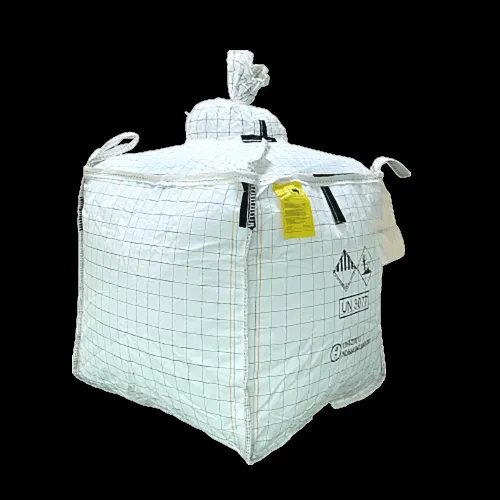
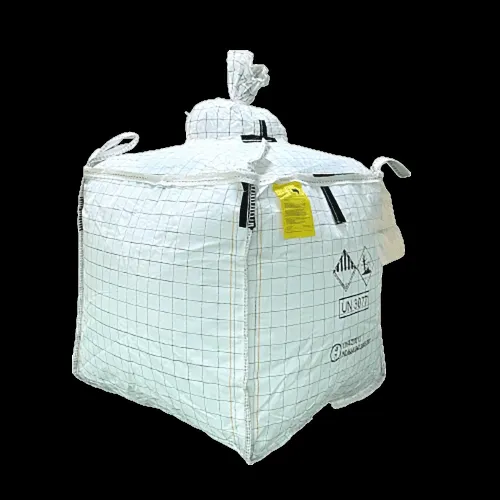
| FIBC | Compatible dry bulk solids only | Electrostatic type and dangerous-goods approval |
Chennai humidity, heat and salt-influenced air make warehouse controls part of the specification. Require dry, ventilated storage, pallet clearance, protection from rain splash and inspection for external rust. Check damaged external lacquer, cartons and shrink film for trapped condensation.
A manufacturer such as Deccan Cans & Printers Pvt. Ltd. becomes useful when it compares RLT and EOE options, supplies construction-specific samples and coordinates lining, gauge and seam evidence instead of quoting a generic tin.
Do not use an FIBC for solvent or lubricant liquids. For powders, specify the correct electrostatic type and applicable UN dangerous-goods approval; ISO 21898 covers non-dangerous goods and is not that approval.
Related products
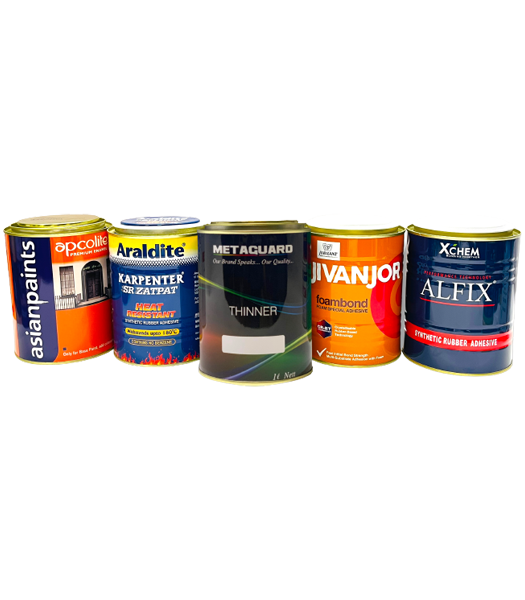 | Tin Containers Tin Containers Deccan Cans & Printers Pvt. Ltd. offers a robust range of Industrial Tin Containers, engineered to provide secure, durable, and... View product → |
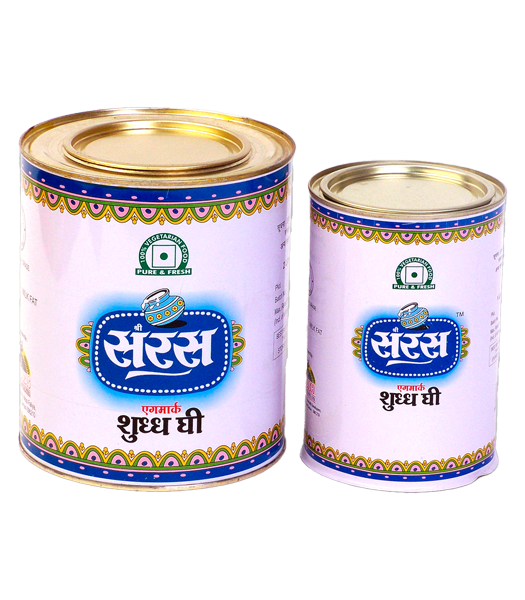 | Tin Containers RLT/EOE Tins Range Tin Containers Deccan Cans & Printers Pvt. Ltd. offers a versatile range of RLT/EOE tin containers, designed to provide durable, reliable, and... |
Frequently asked questions
Why should formulation properties be checked before choosing a tin container?
The formulation determines compatibility, vapour pressure, corrosion risk, viscosity and transport classification. A product called paint or lubricant does not identify the correct container by itself.
Which parts of the SDS help select a tin container?
Review Section 2 for hazards, Section 9 for physical and chemical properties, and Section 14 for transport information. Check the product’s solvents, flash point, viscosity and corrosive properties against the proposed container.
How do you choose the right closure for paints, chemicals and lubricants?
Match the closure to filling speed, dispensing method, leak risk, vapour control and the product’s viscosity. Confirm that the cap, gasket, opening and can geometry work together during filling, storage and use.
Why must the complete package be approved instead of only the can body?
The body, internal lining, seams, closure, gasket, label and outer handling system all affect compatibility, leakage and transport performance. Approve filled samples after storage and handling tests, not just an empty can.