The right FIBC depends on the product’s density, flow behaviour, moisture sensitivity, lifting method and storage environment—not on a generic “one-ton bag” label. By the end, you can compare bag formats, calculate a workable specification, verify construction and reject unsafe bags before filling or lifting them.
Key takeaways
- Calculate fill weight from bulk density before choosing bag volume.
- Confirm SWL, safety factor and lifting equipment match the handling route.
- Specify fabric, seams, closures and liners for the product inside.
- Inspect bags, labels and lifting loops before approving the first fill.
Match the FIBC format to the product and handling route
Choose the bag from bulk density and the handling route, not from a label such as “one-ton bag.” A full mineral or fertilizer bag can exceed its safe working load (SWL) long before a lighter seed or polymer bag reaches the same volume.
| Format | Handling route | Product fit |
|---|---|---|
| 1-loop FIBC | One central lifting loop; suited to compatible hooks and simple loading lines | Fertilizer, grain and animal feed where the lifting frame matches the loop |
| 2-loop FIBC | Two lifting points; plan 2-loop FIBC bags recovery around a two-hook frame or controlled sling operation | Seed, feed and lighter agricultural loads with dedicated handling equipment |
| four-loop FIBC | Forklift tines or a four-point lifting frame; stable for stacking and repeated bulk bag handling | Polymers, minerals, fertilizer and dense manufacturing products |
| sling-style FIBC | Integrated lifting straps distribute load across the bag; requires clearance for the straps | Chemicals, powders and manufacturing FIBC bags moved by crane or forklift |
Agricultural FIBC bags for flour-like feed, seed treatment powder or fine fertilizer need sift-resistant seams, such as folded or tape-covered seams. Add a coated fabric or liner when moisture separation matters, but check condensation and static-control consequences.
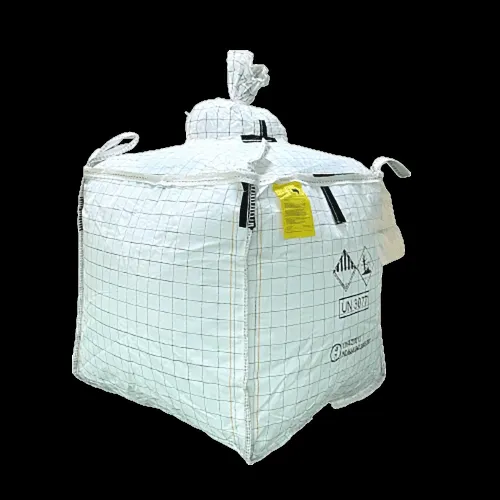
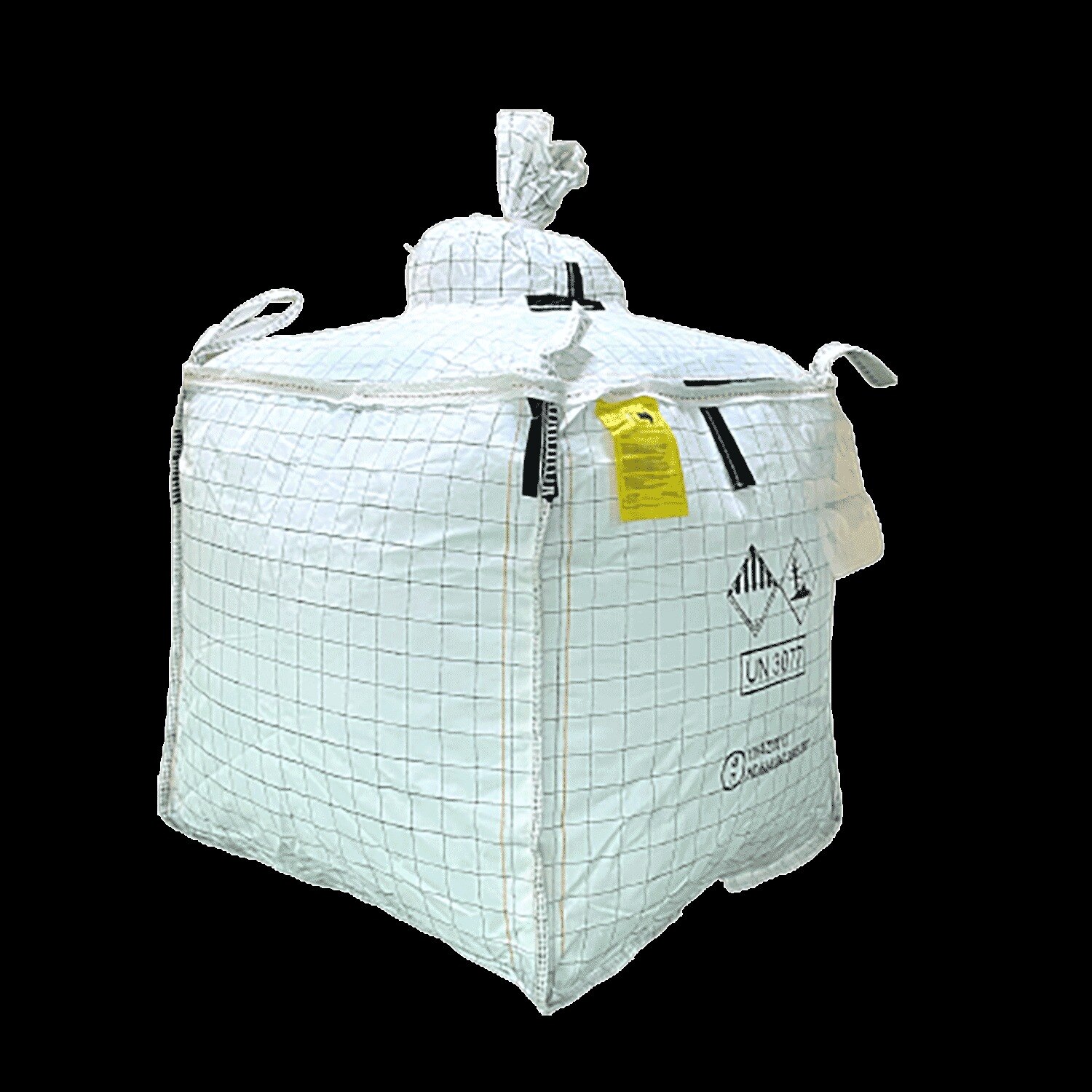
For combustible dust, solvents or flammable atmospheres, specify the IEC 61340-4-4 classification. Type C requires conductive elements and a verified earth connection during filling and discharge; test the bag, clamp and plant earth path together.
A chemical regulated as dangerous goods needs the correct UN packaging instruction, packing group, design type and certification marking. An ordinary unmarked bag is not automatically UN-approved.
Size the bag from density, SWL and the equipment around it
Calculate required volume as product mass divided by bulk density, then select a bag whose usable volume accommodates that result at the specified fill ratio. A 1,000 kg load at 650 kg/m3 needs 1.54 m3 before headspace; confirm the permitted fill ratio with the inlet, aeration and discharge equipment.
Bulk density and FIBC volume, not a “one-ton bag” label, determine capacity.
Set the safe working load below the certified rating, not below the bag’s breaking load. Request the intended trip classification and test certificate: single-trip FIBCs commonly use a 5:1 FIBC safety factor, while reusable bags commonly use 6:1. Do not infer reuse capability from fabric GSM.
| Lifting configuration | Handling choice | Check before approval |
|---|---|---|
| 1-loop | One compatible hook or lifting point | Confirm the hook and filling frame suit the loop |
| 2-loop | Two-point lifting with matched equipment | Prevent uneven loading or loop twisting |
| Four-loop | Forklift or four-hook lifting | Keep all loops engaged and tines clear of fabric |
| Sling-style | Sling or lifting-frame handling | Verify sling angle, rated points and discharge access |
Specify the bag dimensions around the process, not after it:
- Leave forklift clearance around tines, wheels and pallet edges; never drag the bag.
- Measure filling-head height, discharge clearance and storage height before fixing bag height.
- Keep the planned load below SWL after considering product variation, impact during filling and stacking forces.
- For Type C bags, test the grounding lead, clamp and plant earth path as one system before filling.
Specify fabric, seams, closures and liners for the material
Leakage, moisture, static and equipment damage are controlled by the bag’s fabric, seams, closures and liner—not by capacity alone. Specify polypropylene fabric GSM and FIBC weave against the product’s particle size and handling route.
| Construction choice | What it controls | Specification to request |
|---|---|---|
| Uncoated woven fabric | Air exchange, but limited moisture and fine-powder containment | Use a tighter FIBC weave and sift-resistant seams for powders |
| Coated FIBC fabric | Sift resistance and separation from external moisture | Confirm coating coverage; trapped moisture can increase condensation inside the bag |
| Polyethylene liner | Moisture, dust and food-contact separation | Choose a loose liner for simple insertion or a form-fit liner for clean filling and discharge |
| Type C FIBC | Static control around combustible dust, solvents or flammable atmospheres | Require conductive elements, a grounding lead and an IEC 61340-4-4 earth-continuity check before filling and discharge |
| UV-stabilised fabric | Strength during outdoor exposure | Specify UV stabilisation and define the maximum storage exposure; ordinary polypropylene degrades in sunlight |
| Food-contact construction | Product safety | Obtain declarations for fabric, coating, liner, thread, inks and processing aids; “virgin polypropylene” alone proves nothing |
Match the top inlet diameter and attachment to the filling nozzle, then match the bottom discharge diameter and length to the receiving hopper. Choose a spout closure for controlled emptying or a duffle closure for wider access; an incompatible outlet causes bridging, dust release or unsafe cutting.
Specify loop spacing, lifting method and pallet compatibility with the forklift and pallet edges. Add a document pocket outside the product-contact area so batch papers stay accessible without piercing the liner.
Prevent damage from filling, lifting, stacking and weather
Stop filling at the bag’s rated SWL and specified fill height. FIBC overfilling can break seams or lifting loops even when the container looks stable. Keep the filling inlet centred and control the product flow; uneven loading shifts the centre of gravity and creates a dangerous swing during lifting.
- Lift only from the designed loops or sling points, using every loop required by the manufacturer. Stop immediately if you find damaged lifting loops.
- Set forklift tine spacing and length to support the bag without touching its fabric. Forklift tine damage can start as a small puncture and become a bottom-panel failure.
- Do not drag bulk bags across concrete, truck beds or pallets. Move them with a compatible forklift, hoist or pallet base.
- Place bags on a flat, clean surface with no exposed nails, broken boards or sharp pallet edges.
- Define FIBC stacking by the supplier’s tested height and load arrangement. Keep each bag upright; a leaning stack can collapse or crush the lower bags.
For combustible dust, solvents or flammable atmospheres, follow the bag’s IEC 61340-4-4 classification. A Type C FIBC needs a verified earth connection before filling and discharge; the bag alone is not the control measure.
Provide rain protection immediately after filling, while leaving ventilation that prevents condensation. Observe the stated UV exposure limits rather than storing polypropylene bags in direct sunlight. Treat FIBC reuse as a controlled process: inspect every returned bag, retain its identification and reject it after any damage or contamination.
Cleaning does not restore its tested safety factor.
Use a receiving checklist before approving the first fill
Approve the first fill only after the delivered bags pass an FIBC inspection checklist and their paperwork matches the purchase order. A clean appearance does not prove load capacity, food-contact compliance or suitability for repeated use.
1. Count the bags and compare the label with the order: dimensions, top and bottom closures, loop configuration, liner, SWL, intended trip classification and batch identification. Reject bags with cuts, broken or distorted loops, exposed seams, contamination, wetness, damaged liners or unreadable labels.
2. Request an FIBC test certificate stating the test standard, SWL, construction and result. The purchase specification should cite ISO 21898, not “industrial quality” alone. Confirm whether the bag is single-trip with a 5:1 safety factor or reusable with a 6:1 safety factor; fabric GSM cannot establish reuse capability.
3. For grain, seed, feed or other food-contact agricultural products, request a food-contact declaration plus migration and compliance documents covering fabric, coating, liner, thread, inks and processing aids. “Virgin polypropylene” alone is insufficient.
4. For regulated chemicals or powders, match the product and packing group to the UN packaging instruction, design type and certification marking. Do not treat an ordinary bag as UN-approved.
5. Record the supplier and batch before filling. For an FIBC supplier Coimbatore purchase, Deccan Cans & Printers Pvt. Ltd. should provide traceable documents for the delivered lot, not a generic brochure. Keep the approved record with the receiving log.
Related products
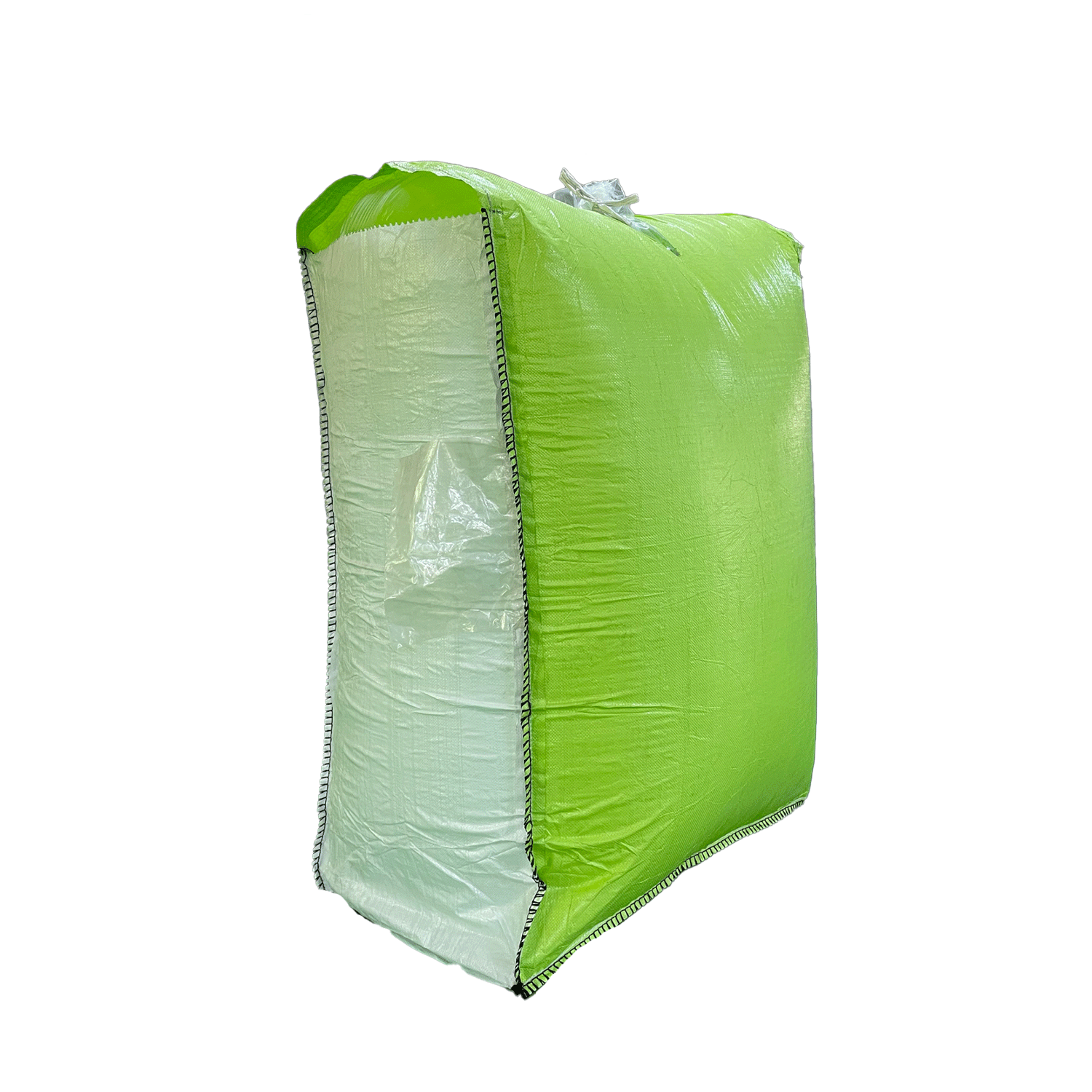 | FIBC Section Fertilizer Bag Range 1 & 2 Loop FIBC Bulk Bags Deccan Cans & Printers Pvt. Ltd. offers durable and cost-effective 1 & 2 Loop FIBC Bulk Bags, designed for the efficient... |
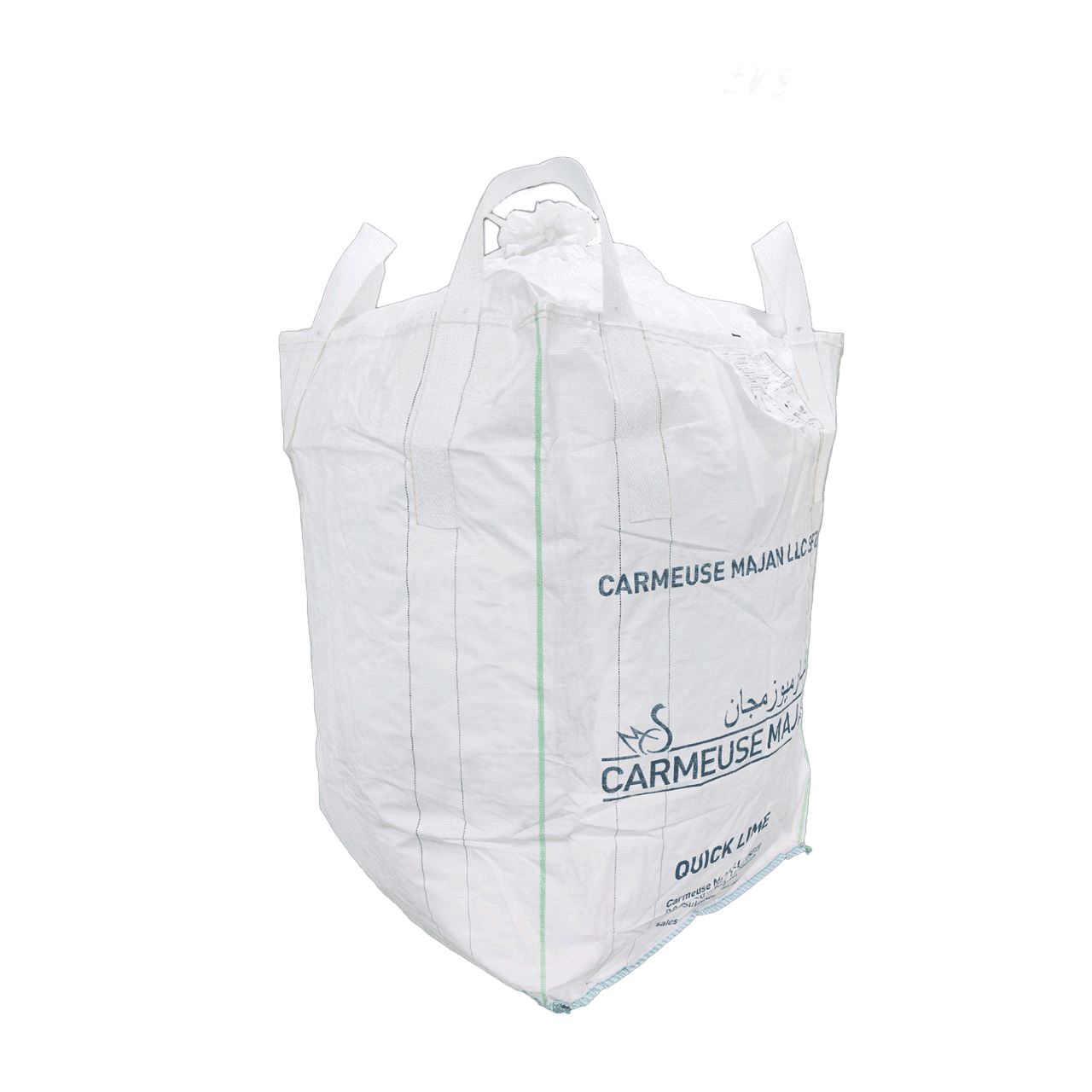 | FIBC Section Bags With Liners FIBC Liners – Bulk Bag Liners Deccan Cans & Printers Pvt. Ltd. |
Frequently asked questions
How do you choose the right FIBC format?
Match the bag construction and discharge style to the product, filling method, lifting equipment and delivery route.
How do you calculate the correct FIBC size?
Use the product’s bulk density to calculate fill weight, then check that the bag’s SWL and dimensions suit the equipment and stacking plan.
What FIBC specifications matter for agricultural and manufacturing products?
Specify fabric strength, seam construction, top and bottom closures, and a liner when the product needs moisture, dust or contamination control.
How can you prevent FIBC damage during handling and storage?
Keep lifting loops aligned, avoid dragging and sharp edges, control filling speed, stack within the approved limit, and protect bags from weather.
What should you check before the first fill?
Verify the label, SWL, safety factor, dimensions, lifting loops, seams, closures, liner, cleanliness and visible damage.
Related products
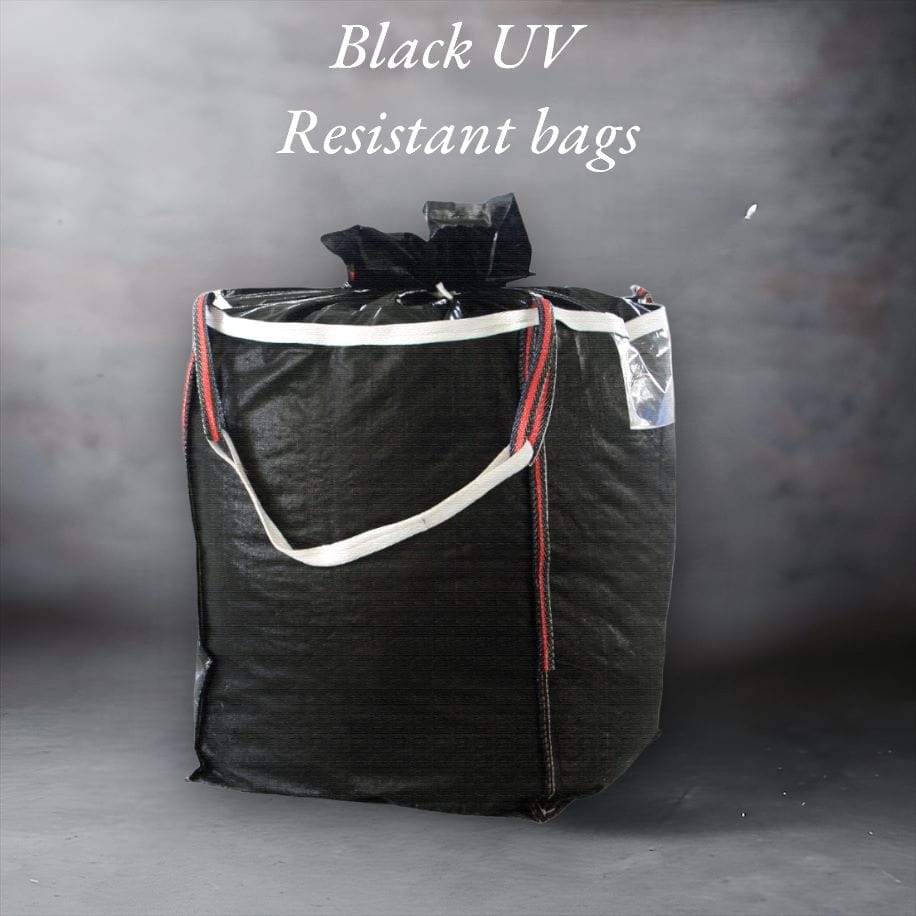 | FIBC Section Black Bags Black FIBC Bags – Enhanced UV Resistance & Extended Shelf Life UV exposure is one of the major challenges faced by the FIBC industry, as prolonged... |
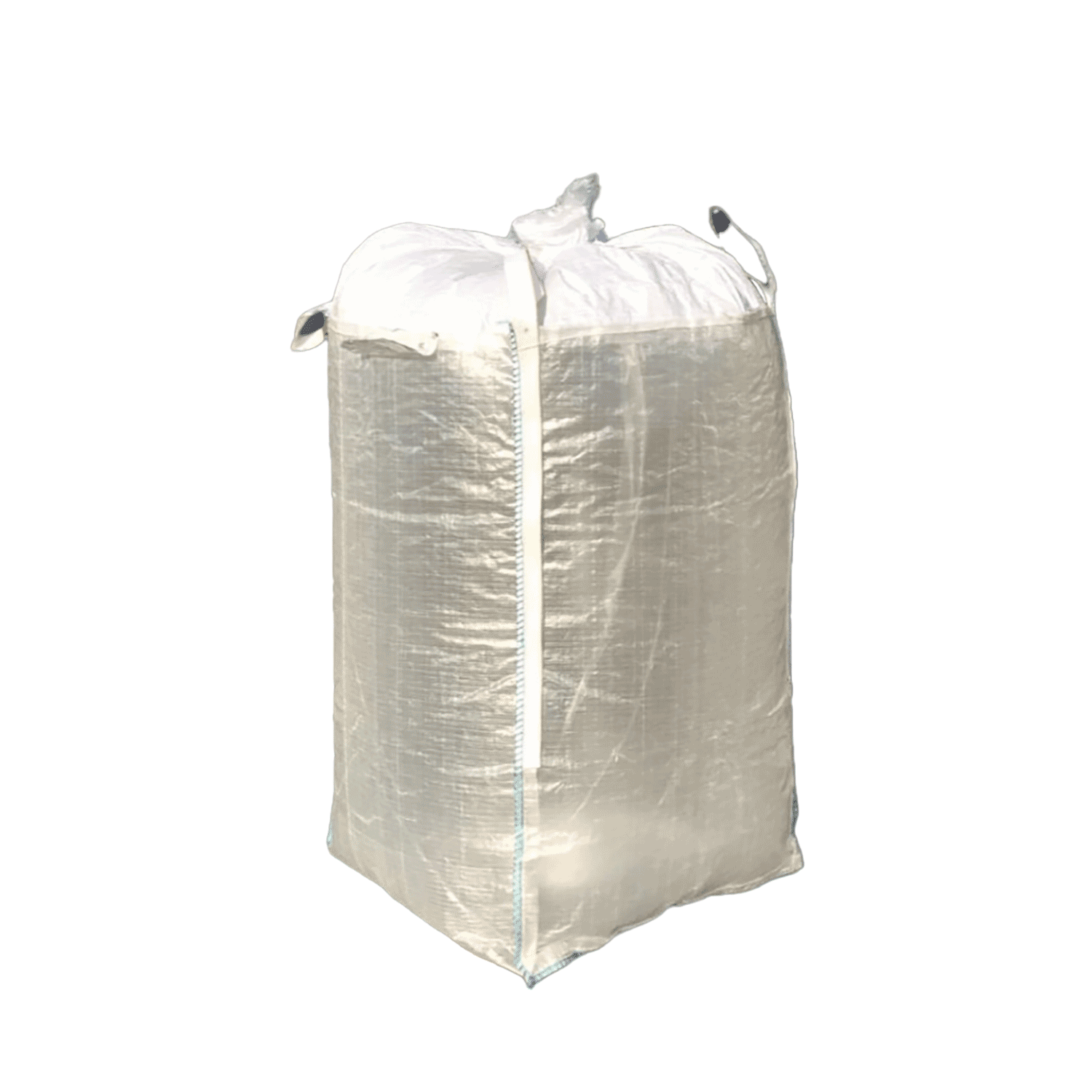 | FIBC Section Transparent Bags Transparent FIBCs – See-Through Bulk Bags Deccan Cans & Printers Pvt. Ltd. |
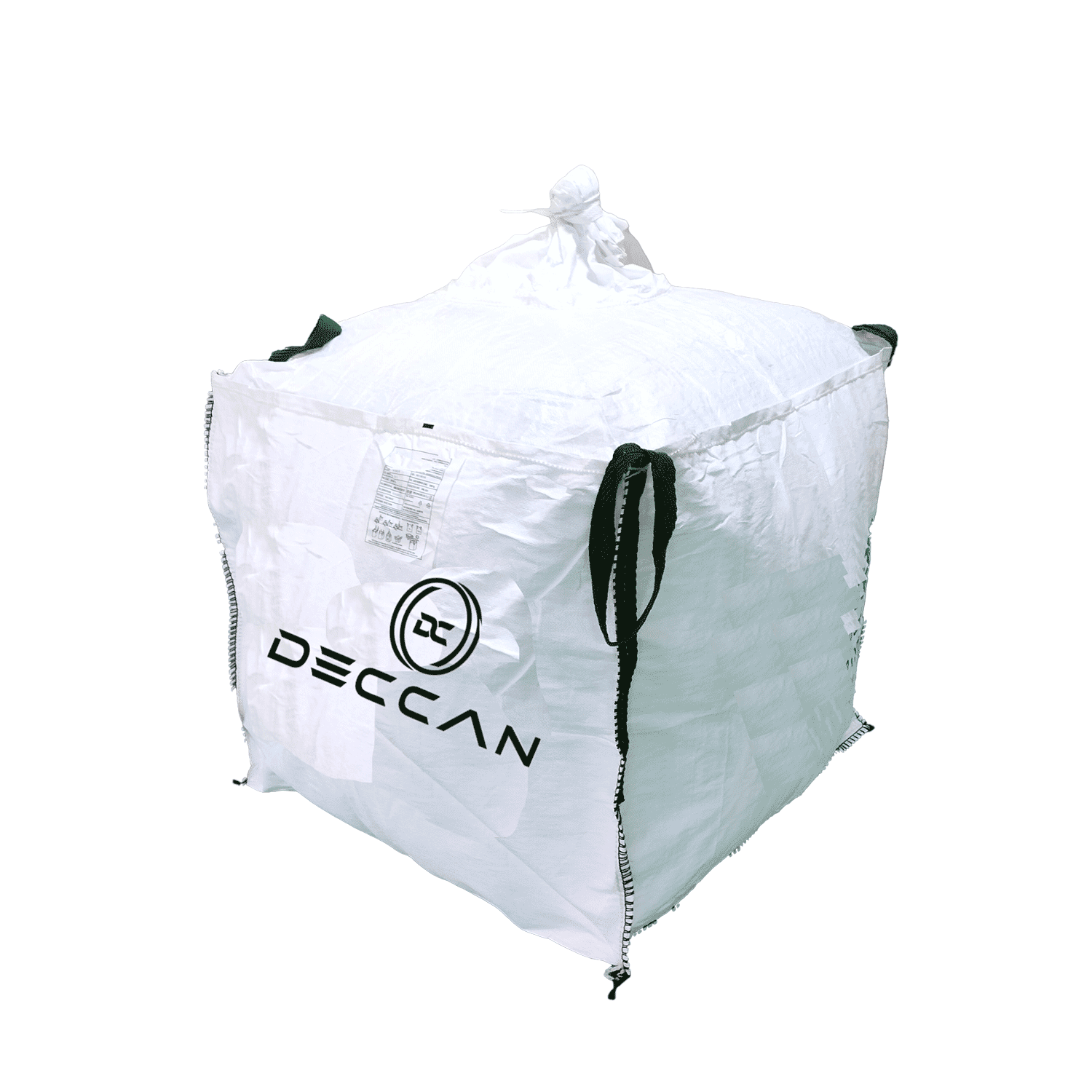 | FIBC Section Polyester Loop Bags/Multifilament Loops Polyester / Multifilament Loop FIBC Bags Deccan Cans & Printers Pvt. Ltd. |
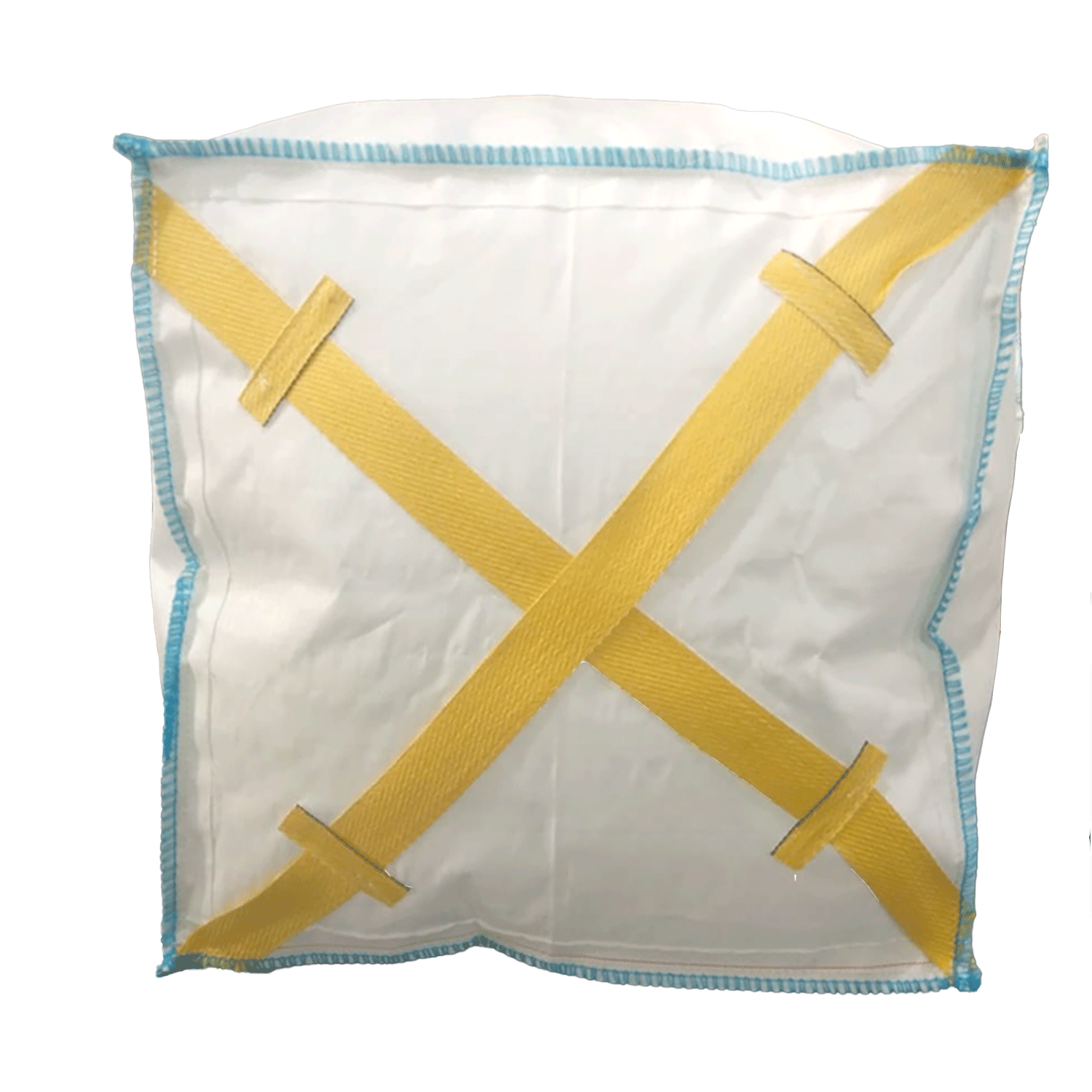 | FIBC Section Cross Bottom Sling Bags Cross Bottom Sling FIBCs – Bulk Bags Deccan Cans & Printers Pvt. Ltd. |