The right tin container depends on the formulation, not just the product name: water-based paint, thinner, acid and gear oil place different demands on the steel, coating, closure and gasket. By the end, you will be able to define a container specification, identify the compatibility evidence to request, and check whether the pack is suitable for storage and dangerous-goods transport.
Key takeaways
- Use wide openings for thick products and narrow necks for controlled pouring.
- Check lacquer, seams and gaskets against the product formulation before filling.
- Specify capacity, headspace and RLT or EOE closure requirements.
- Request dangerous-goods approval before using containers for regulated products.
Match the container format to the product and dispensing method
Match viscosity and pour rate to the dispensing method. A wide opening supports mixing and stirring, brush loading, or scooping; a narrow neck gives a cleaner pour but restricts thick products.
| Product | Suitable format | Dispensing match |
|---|---|---|
| Solvent-based paint | Solvent-based paint tin with a wide opening and compatible internal lacquer | Stirring, brush loading, or controlled pouring |
| Water-based paint | Water-based paint container with corrosion-resistant internal coating | Wide opening for stirring and roller or brush filling |
| Varnish | Varnish tin with a clean-pour neck and tight closure | Slow pouring without exposing the full surface |
| Thinner | Thinner canister adaptation to tin container format with a narrow opening and solvent-resistant seal | Controlled decanting |
| Adhesive | Adhesive container sized for its viscosity, with a wide mouth for thick grades or nozzle for liquid grades | Pouring, nozzle application, or scooping |
| Acid and alkali packaging | Lined tin only after formulation compatibility testing; aggressive grades may need another material | Secure closure and upright handling |
| Detergent | Detergent tin with a lacquered interior and pour opening | Measured pouring |
| Coolant | Coolant can with a sealed cap and corrosion-resistant lining | Pouring into a reservoir |
| Gear oil and engine oil can | Gear oil and engine oil can with a spout or controlled-pour opening | Clean transfer |
| Grease | Grease container with a wide mouth and reinforced lid | Scooping or grease-gun loading |
Do not select plain tinplate by product name alone. Check the complete filled container—coating, seam, gasket and closure—at the intended temperature and storage period, especially when viscosity or additive chemistry changes.
Check tinplate, lacquer, seams and gaskets against the formulation
A tin container passes only when the actual formulation remains stable and the package remains intact for the planned storage period. Compare plain tinplate, lacquered tinplate and the internal coating with the product’s water content, acids, salts, sulfur compounds, solvents, hydrocarbons, concentration, temperature and storage-life target.
Use this compatibility checklist:
- Expose the complete filled package to the product: steel, coating, exposed edges, seams, soldered joints, gasket material, closure and sealant. Record blistering, rust, staining, softening, swelling, leakage, odour transfer and changes in product viscosity or colour.
- Specify chemical compatibility testing at the intended temperature and duration. Include solvent extraction testing, because solventborne paint, thinner and aggressive chemicals can extract lacquer or gasket constituents without visibly attacking the tinplate.
- Treat water-based paint corrosion as a separate risk. Water, dissolved oxygen and ionic additives can corrode scratches, seams and cut edges, so require an internal coating rather than relying on a visual coating certificate.
- Require seam qualification for the finished body and bottom seam, including soldered joints where used. Test filled containers for pressure, vacuum and leakage after storage and handling.
- Identify the gasket material, closure compound, torque or crimp requirement and leak-test method. Requalify the system after changing an oil additive package, solvent blend or storage temperature.
- Demand storage-life evidence; use an accelerated compatibility test to screen alternatives, then confirm the result with real-time storage at the intended conditions.
A coating supplier’s approval alone is not enough: qualification belongs to the complete container system and the named formulation.
Specify capacity, headspace and the right RLT or EOE closure
Nominal tin container capacity is not the safe fill volume. Specify the product quantity, density range, container dimensions, sheet thickness, neck size and opening size together; a large panel or narrow opening changes handling and stacking performance.
- State the safe fill volume in litres or kilograms, then reserve headspace for thermal expansion during storage and transport. Do not fill to the shoulder: warming can bulge panels, stress seams and force leakage through the closure.
- Request the sheet thickness in millimetres, not merely “heavy gauge”, and match it to container size, stacking load and handling method.
- Identify the closure and its test requirement: an RLT end with a press-on or lever lid supports resealing; an EOE end uses a scored panel and pull ring for quick, usually one-time opening.
- Specify whether dispensing needs a screw cap, plug or pour spout. For lubricants, name the gasket material, crimp or torque requirement and leak-test method; these details control leak prevention more than tinplate thickness alone.
| RLT end | Reusable round-lug closure with lid and gasket | Paints, oils and products needing resealing |
|---|---|---|
| EOE end | Scored easy-open panel with pull ring | Products prioritising rapid opening over resealing |
| Screw cap or plug | Threaded or fitted secondary closure | Controlled pouring and repeated use |
| Pour spout or lever lid | Dispensing aid or removable access lid | Viscous products, oils and larger openings |
Confirm dangerous-goods approval before filling regulated products
Establish suitability by matching the product’s dangerous-goods classification and packing group to a UN packaging approval for the exact container design. Tinplate alone does not qualify a package for flammable liquids, corrosive substances or other hazardous chemicals.
1. Complete an SDS review. Use Section 14 of the Safety Data Sheet to record the UN number, proper shipping name, hazard class, packing group and any special transport instructions.
2. Give those details to the supplier and request the proposed container’s UN marking, approval certificate and test report. Check the marking against the nominal capacity, shape, internal coating, closure, gasket and intended packing group.
3. Confirm that the evidence covers the exact packaging configuration you will fill. A supplier’s statement that a container is “UN tested” is insufficient if the closure, liner, capacity or coating differs.
4. Check the performance evidence. Depending on the approval, it should address a drop test, leakproofness test, hydrostatic pressure test, stacking test and permeability or internal-pressure testing where specified.
5. Control changes after approval. Closure substitution, a different gasket, a new lacquer or a changed capacity can invalidate the qualification and require fresh testing.
Do not treat the nominal capacity as the permitted fill. Specify the actual fill quantity, product density range, headspace, thermal expansion allowance and transport orientation; overfilling can cause bulging, seam stress and leakage. Retain the SDS review, UN marking photographs, approval documents and test reports with the filling specification.
Turn the requirement into a Coimbatore supplier specification
Send a one-page brief to a tin container supplier in Coimbatore before requesting a quotation. Your paint packaging specification or chemical packaging procurement brief must identify the formulation, concentration, product temperature, fill quantity, density, headspace, closure, gasket, orientation during transport, and storage temperature.
For lubricant packaging, add the oil additive package, gasket material, closure torque or crimp requirement, and leak-test criteria.
Include these decision inputs:
- State the maximum storage period and whether monsoon humidity, warehouse condensation, or standing water could contact the outer container.
- Describe road handling: stacking height, vibration, loading equipment, route duration, and exposure to rain.
- Specify secondary protection, such as cartons, shrink wrapping, pallets, or overpacks, when abrasion and external corrosion are concerns.
- Request supplier documentation covering steel grade, internal coating, closure components, test results, dimensions, fill limits, and dangerous-goods approval where applicable.
| Requirement | What to state | Coimbatore decision |
|---|---|---|
| Environment | Storage temperature and duration | Keep tins off floors; control condensation and standing water |
| Handling | Road handling and stacking | Add secondary protection against dents and abrasion |
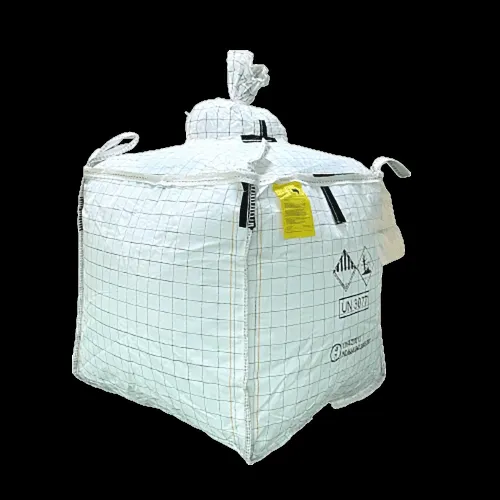
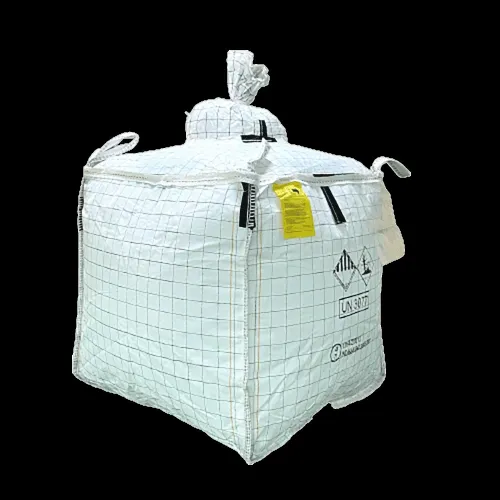
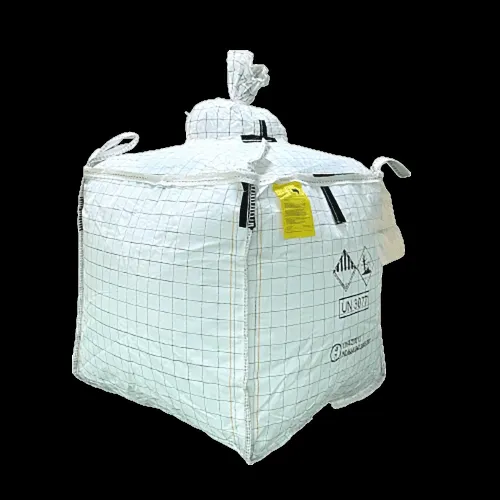
| FIBC use | ISO 21898 design and marking | Store under cover; protect lifting loops from sharp projections |
| Records | Supplier documentation | Match the approved design to the actual closure and liner |
Deccan Cans & Printers Pvt. Ltd. belongs on the comparison list when its proposed specification answers these points rather than merely naming a container range.
Related products
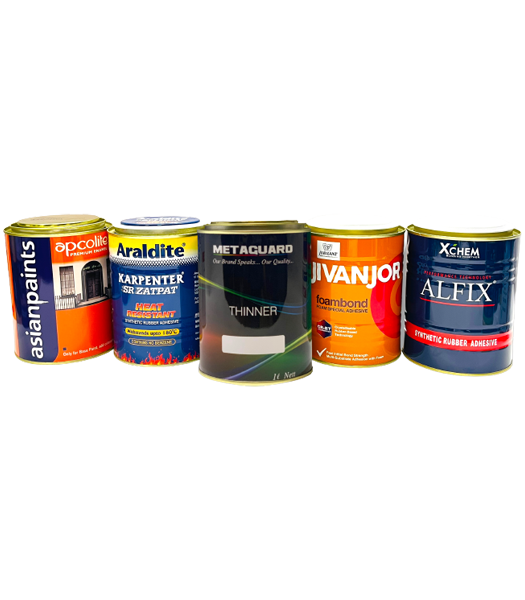 | Tin Containers Tin Containers Deccan Cans & Printers Pvt. Ltd. offers a robust range of Industrial Tin Containers, engineered to provide secure, durable, and... View product → |
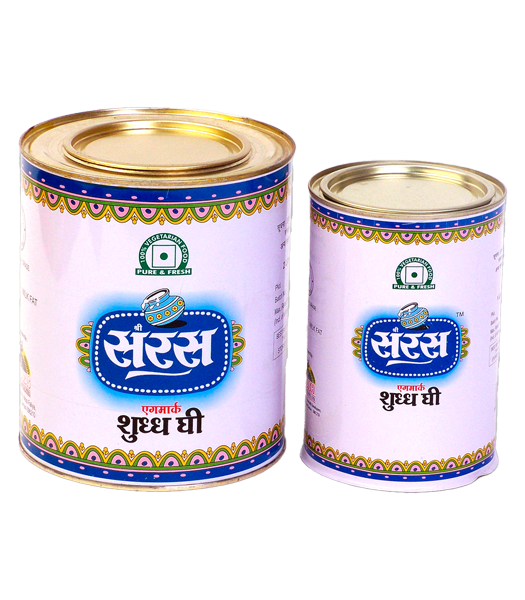 | Tin Containers RLT/EOE Tins Range Tin Containers Deccan Cans & Printers Pvt. Ltd. offers a versatile range of RLT/EOE tin containers, designed to provide durable, reliable, and... |
Frequently asked questions
How do you match a tin container to the product?
Match viscosity and dispensing method first: wide openings suit mixing, stirring, brush loading and scooping, while narrow necks support cleaner pouring.
What container features must you check against a formulation?
Check tinplate, internal lacquer, seams and gasket materials for compatibility with the paint, chemical or lubricant.
What should a container specification include?
State the nominal capacity, required headspace, opening size, closure type and whether you need an RLT or EOE closure.
Do all tin containers qualify for dangerous-goods packaging?
No. Confirm the container has the required dangerous-goods approval before filling and transporting a regulated product.
Related product
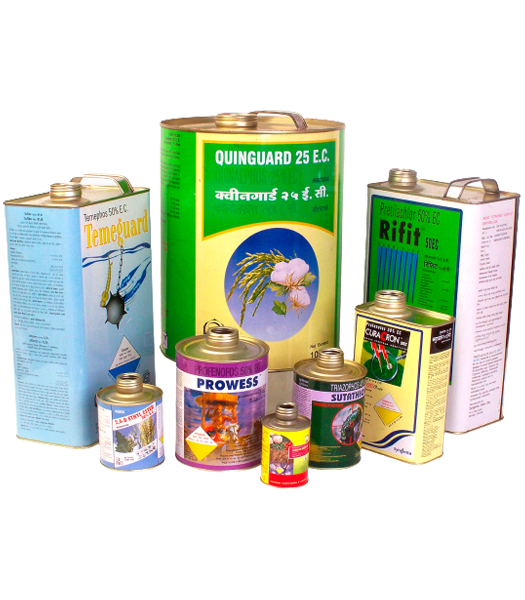 | Tin Containers Tin Containers Deccan Cans & Printers Pvt. Ltd. offers a durable range of Pesticide Tin Containers, designed for reliable packaging and storage of... View product → |