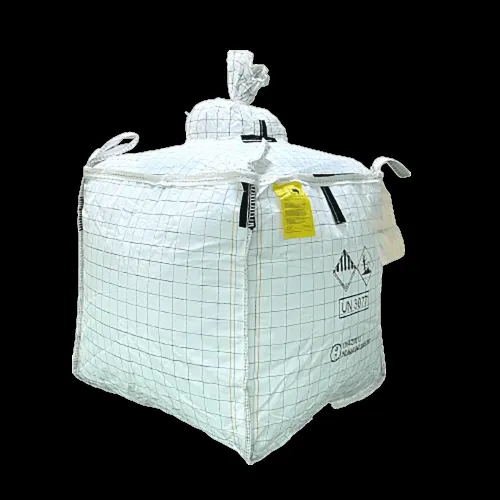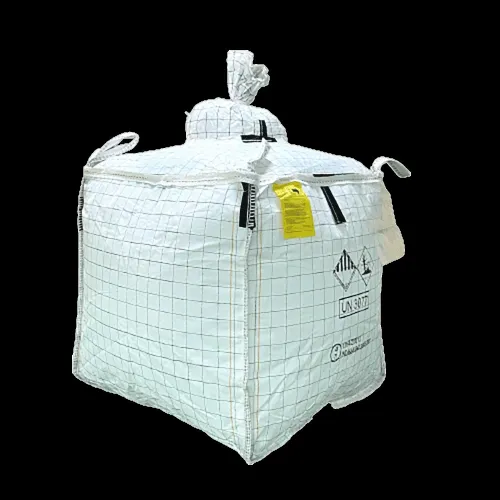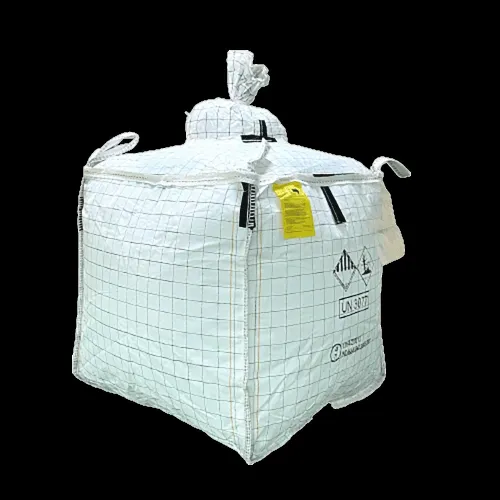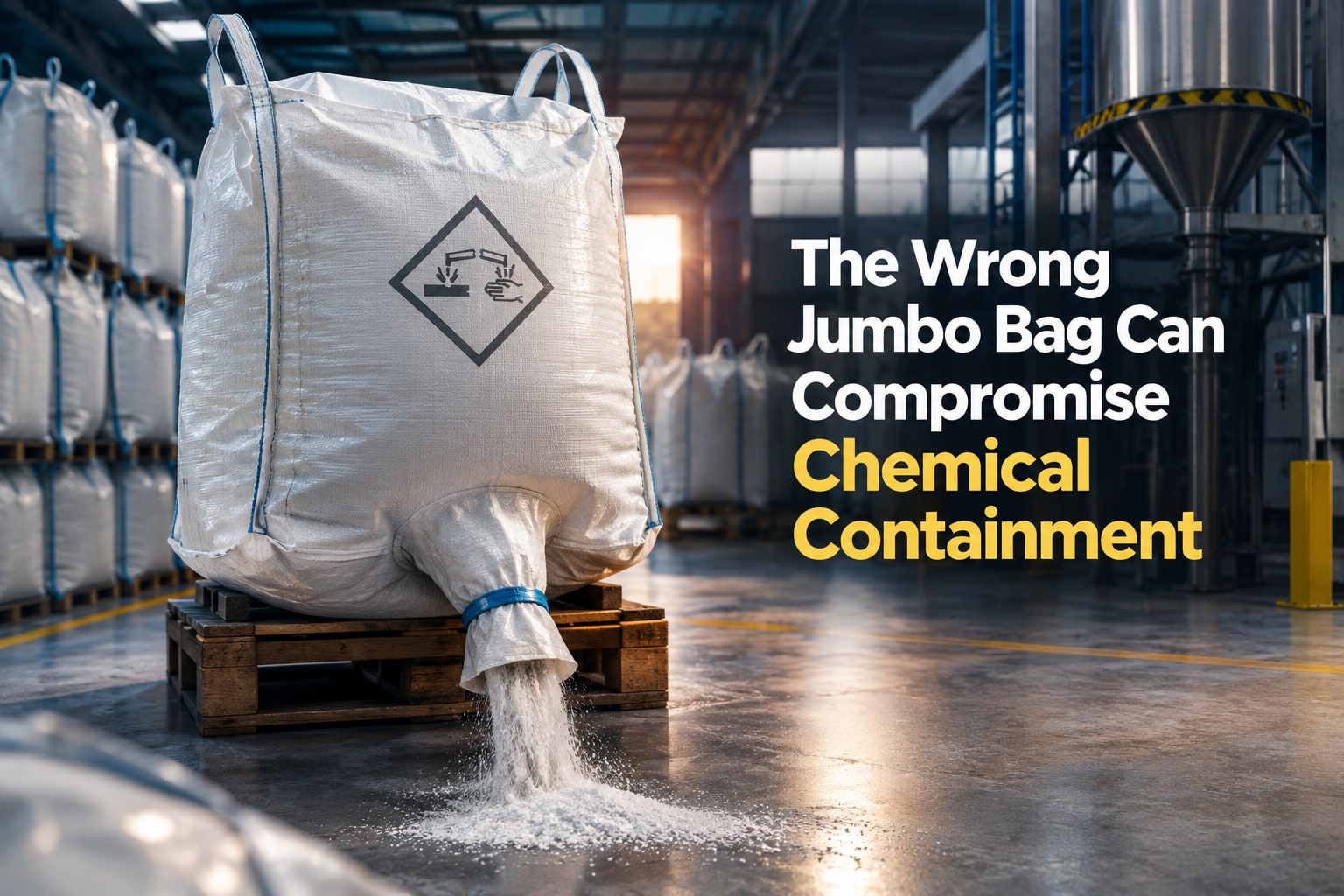
Choosing a jumbo bag for chemicals requires more than matching capacity to product name. You need to verify chemical compatibility, UN transport status, electrostatic control, process dimensions, storage conditions and traceability before approving a bag for use in Dahej. By the end, you will have a specification and inspection framework for comparing FIBCs with drums, rigid containers and tank systems.
Key takeaways
- Match fabric, coating, liner and seams to the chemical and containment duty.
- Confirm the UN packaging designation and electrostatic classification before ordering.
- Specify filling, discharge, lifting, stacking and process connections in the purchase order.
- Request test certificates, drawings, batch traceability and reuse instructions from the supplier.
Match the FIBC to the product, hazard and containment duty
An FIBC suits dry, free-flowing solids when chemical compatibility with the fabric, coating, liner and sewing materials has been confirmed. The required safe working load depends on bulk density, fill level, aeration, filling impact, lifting method and stacking—not the stated litre capacity.
| Material | FIBC fit | Safer alternative or extra control |
|---|---|---|
| Powders | Fine chemicals, carbon black and some additives need sift-proof seams, a compatible liner and flow-assistance features. | Use drums when the powder is highly toxic, moisture-reactive, dust-explosive or difficult to discharge cleanly. |
| Pellets and granules | Polymer pellets, petrochemical products and finished resins suit abrasion-resistant fabric with a reliable discharge spout. | Use rigid containers when sharp particles damage the bag or repeated handling risks puncture. |
| Flakes, catalysts and resins | Flakes and finished resins can use a tailored FIBC; catalysts require compatibility, contamination control and protection from moisture. | Choose sealed drums when catalyst activity, toxicity or moisture sensitivity makes exposure unacceptable. |
| Contaminated waste | Use an FIBC only after identifying the residue, contamination level and liner requirement. | Choose closed, approved drums when the contents are mixed, leaking, chemically uncertain or classed as dangerous goods. |
A standard bulk bag versus drums is a containment decision, not only a cost comparison. Drums provide rigid walls and a defined closure for liquids, solvents, slurries and waste that could leak or react.
A UN mark confirms a tested packaging design, not universal approval: verify the product, packing group, filling mass, closure and transport conditions before shipment.
Select the correct UN and electrostatic classification
Start with the cargo’s UN number, packing group and transport mode. For dangerous goods transport by road, sea or rail, check the applicable substance-specific packaging instruction before choosing the bag. A UN packaging designation identifies a tested design, not universal approval for every chemical.
Match the product and instruction to the permitted FIBC construction:
| Designation | Construction |
|---|---|
| 13H1 | Woven plastics, uncoated |
| 13H2 | Woven plastics, coated |
| 13H3 | Woven plastics with liner |
| 13H4 | Woven plastics, coated and with liner |
Confirm the marked bag’s filling mass, closure, liner, compatibility and permitted packing group. A standard FIBC can suit non-regulated storage, but it is not automatically a UN package.
Electrostatic choice depends on the ignition hazard and the complete installation:
| FIBC type | Protection | Decision |
|---|---|---|
| Type A, standard | No deliberate electrostatic protection | Use only where no flammable atmosphere or ignition hazard exists |
| Type B, antistatic | Limits propagating brush discharges but does not safely dissipate charge | Use only after assessing powder ignition sensitivity and equipment |
| Type C, conductive | Conducts charge to earth | Ground the bag before filling and keep grounding continuous during discharge |
| Type D, dissipative | Discharges charge without a separate earth connection under specified conditions | Maintain the approved bag surface, cleanliness and operating limits |
Do not accept an “antistatic” claim without evidence covering fabric, coating, sewing thread, lifting loops, liner and grounding components. A polyethylene liner can electrically isolate the product from a conductive outer bag.
Specify the construction and process connections before ordering
A litre rating does not size an FIBC for a chemical process line. Specify the product’s bulk density, filling ratio, aeration, required headspace, and settled weight, then set the safe working load (SWL) from those conditions rather than volume alone.
1. Record the bag’s external length, width and height, inlet dimensions, discharge spout diameter and length, and outlet closure type. Match the inlet to the filling head, leave headspace for expansion, and position the outlet above the receiving valve or hopper. A short, inaccessible spout creates manual handling and leakage risks.
2. State the SWL, permitted trips, stacking load and forklift lifting method separately. Require top-lift and compression testing, drop testing, seam and loop assessment under ISO 21898, and confirmation that the 5:1 safety factor is a design and test ratio—not permission to load five times the SWL.
3. Choose liner construction from the material and containment target. Fine powders need sift-proof stitching, sealed liner tie-offs and a closure that matches the discharge spout. Specify polyethylene for basic product separation; use an aluminium-barrier liner for moisture or oxygen control.
A form-fitted liner reduces folds and hold-up, while a loose liner can complicate filling and discharge.
4. Match the body and outlet to the product: abrasion-resistant construction for pellets, and a conical or baffled discharge for powders prone to rat-holing. If static control requires an antistatic or conductive liner, specify continuity and grounding connections with the bag—not merely the fabric label.
Control filling, discharge, storage and reuse risks
Connect the grounding lead and clamp to a verified earth before product flow starts. Check grounding continuity through the complete Type C bag, including its liner, sewing thread and lifting loops, then maintain that connection during filling and discharge.
Flammable powders and solvent vapours require an assessed installation; liner isolation can defeat an otherwise conductive outer bag.
Control the process, not just the bag:
- Set filling speed and discharge speed to prevent dust clouds, surging and static generation. Confirm valve compatibility before connecting the outlet.
- Close the outlet tie, iris closure or valve fully after filling and before movement. Sift-proof seams, a correctly fitted liner and sealed liner tie-offs prevent powder leakage.
- Use supported discharge equipment and keep people clear of suspended loads. Never drag a filled bag, lift it with damaged loops or allow forklift tine damage.
- Store bags under cover, off the ground on pallets, away from standing water, UV, heat and condensation. Dahej monsoon conditions make outdoor staging especially risky; fabric UV stabilisation does not make the product or liner weatherproof.
- Keep chemicals away from incompatible residues. Do not reuse a bag until inspection confirms clean seams, loops, outlets and liner condition; cleaning must suit the previous product and the liner material.
- Record each inspection, reject contaminated or damaged bags, and set a defined retirement point rather than relying on appearance.
A bag that passes a visual inspection but has lost grounding continuity, closure integrity or cleanability has reached retirement.
Build a Dahej procurement and documentation plan
Before committing, make the supplier prove that the proposed FIBC matches your product, transport route and Dahej site controls—not just that it carries a UN mark.
1. Send the SDS for review, including flash point, flammability classification, dust-explosion data, moisture sensitivity, bulk density, particle-size distribution and filling temperature. Ask for compatibility testing against the fabric, coating, liner and sewing thread.
2. Request the UN mark, batch identification, certificate of test and certificate of conformity. Check the UN number, packing group, FIBC design, filling mass, closure configuration and intended road, sea or rail transport; a UN mark does not approve every chemical.
3. Freeze the physical specification: dimensions, safe working load, loops, inlet and outlet, liner fitting, discharge method and electrostatic type. For Type C, confirm the grounding equipment, lead, clamp and continuity-verification method; a disconnected lead provides no protection.
4. Approve product trials before volume ordering. Test filling, discharge, liner fit and handling with your actual powder or granules, then record acceptance criteria and traceability for every batch.
5. Confirm delivery lead time, tanker and truck access, unloading equipment and covered warehouse storage. Define protection from standing water, heat and UV, plus the maximum staging period.
6. Agree on dedicated storage, disposal and contaminated-bag management. Deccan Cans & Printers Pvt. Ltd. can be evaluated as an FIBC supplier in Dahej when its documentation and trial results match these controls.
Related products
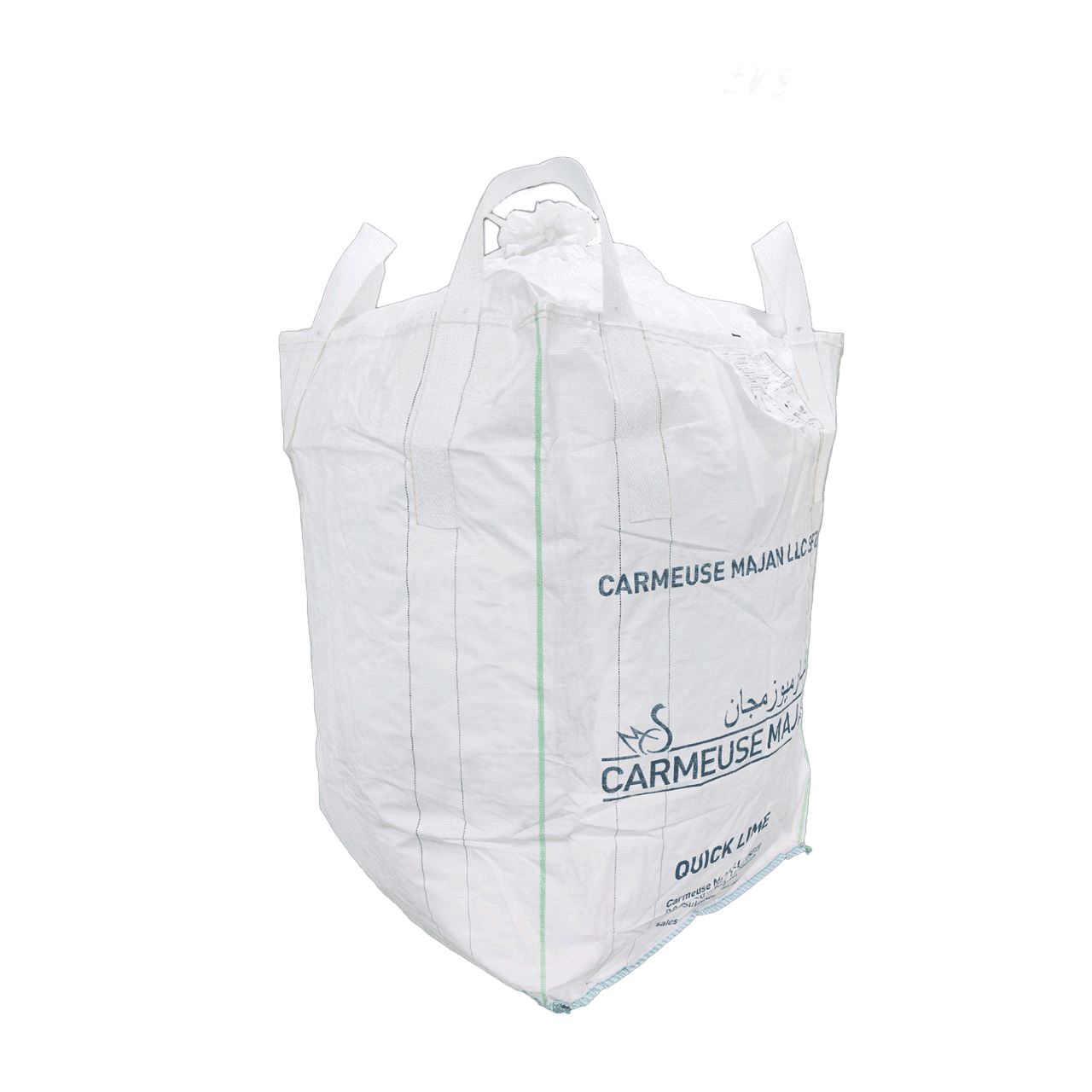 | FIBC Section Bags With Liners FIBC Liners – Bulk Bag Liners Deccan Cans & Printers Pvt. Ltd. |
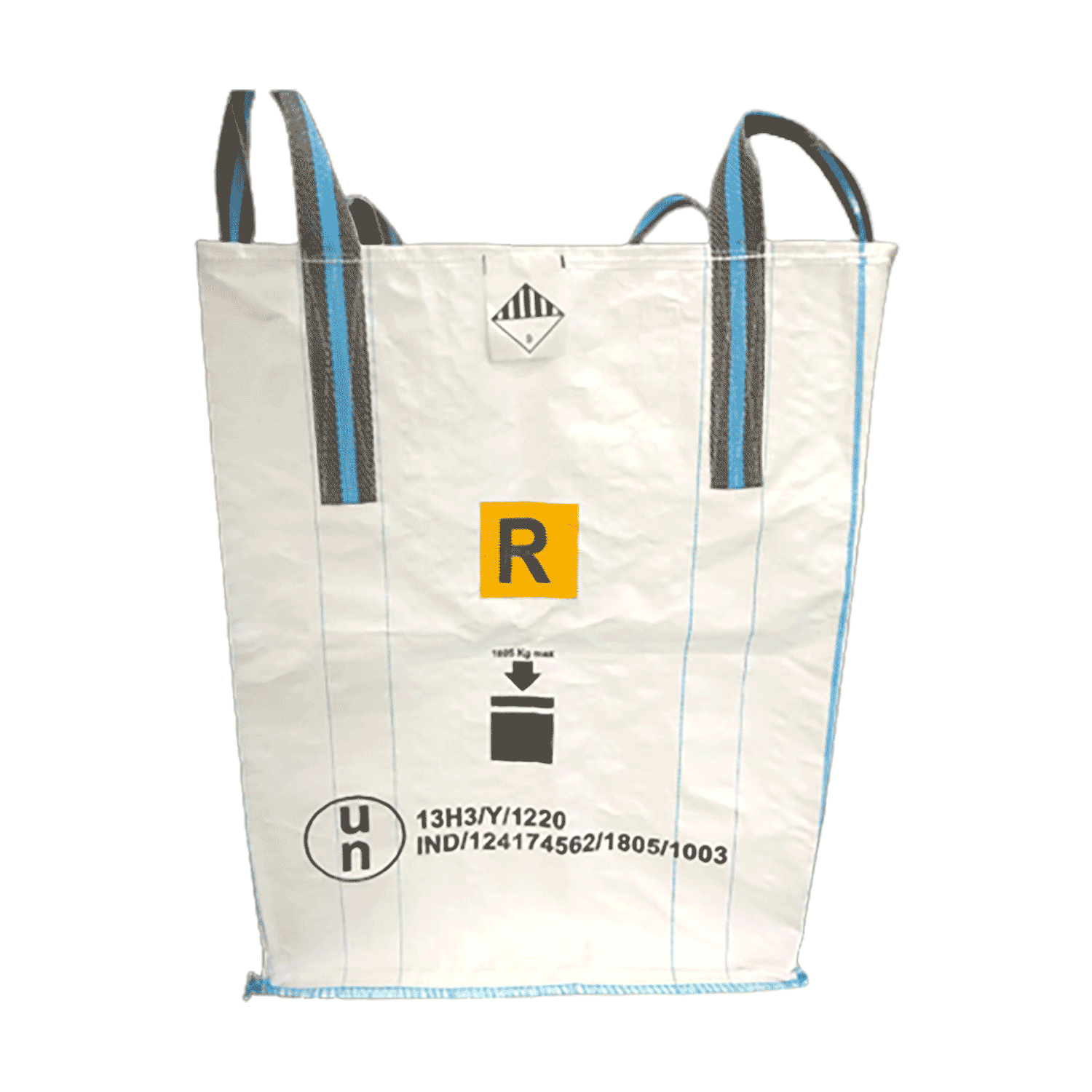 | FIBC Section Un Bags UN Certified Bulk Bags – Rigorous Performance Testing for Safety & Reliability Deccan UN Certified Bulk Bags are specially engineered for the safe... |
Frequently asked questions
How do you match an FIBC to a chemical or petrochemical product?
Check compatibility for the fabric, coating, liner and sewing materials, then size the bag for bulk density, fill level, aeration, impact, lifting and stacking conditions.
Which UN and electrostatic classifications should you specify?
Confirm the required UN packaging designation for the product and choose the FIBC electrostatic type based on dust risk, flammable atmospheres, grounding and the filling and discharge process.
What construction details belong in an FIBC purchase specification?
State the safe working load, dimensions, lifting-loop design, liner, coating, seams, inlet, outlet, closures, sift-proofing and every process connection before ordering.
How can you reduce FIBC risks during filling, discharge, storage and reuse?
Control filling impact and aeration, ground the equipment when required, use the specified discharge method, protect bags during storage and reuse only when inspection and approval permit it.
What documents should you request when procuring FIBCs in Dahej?
Request a technical drawing, material and compatibility information, UN test documentation when required, electrostatic test evidence, safe working load details, batch traceability and handling instructions.