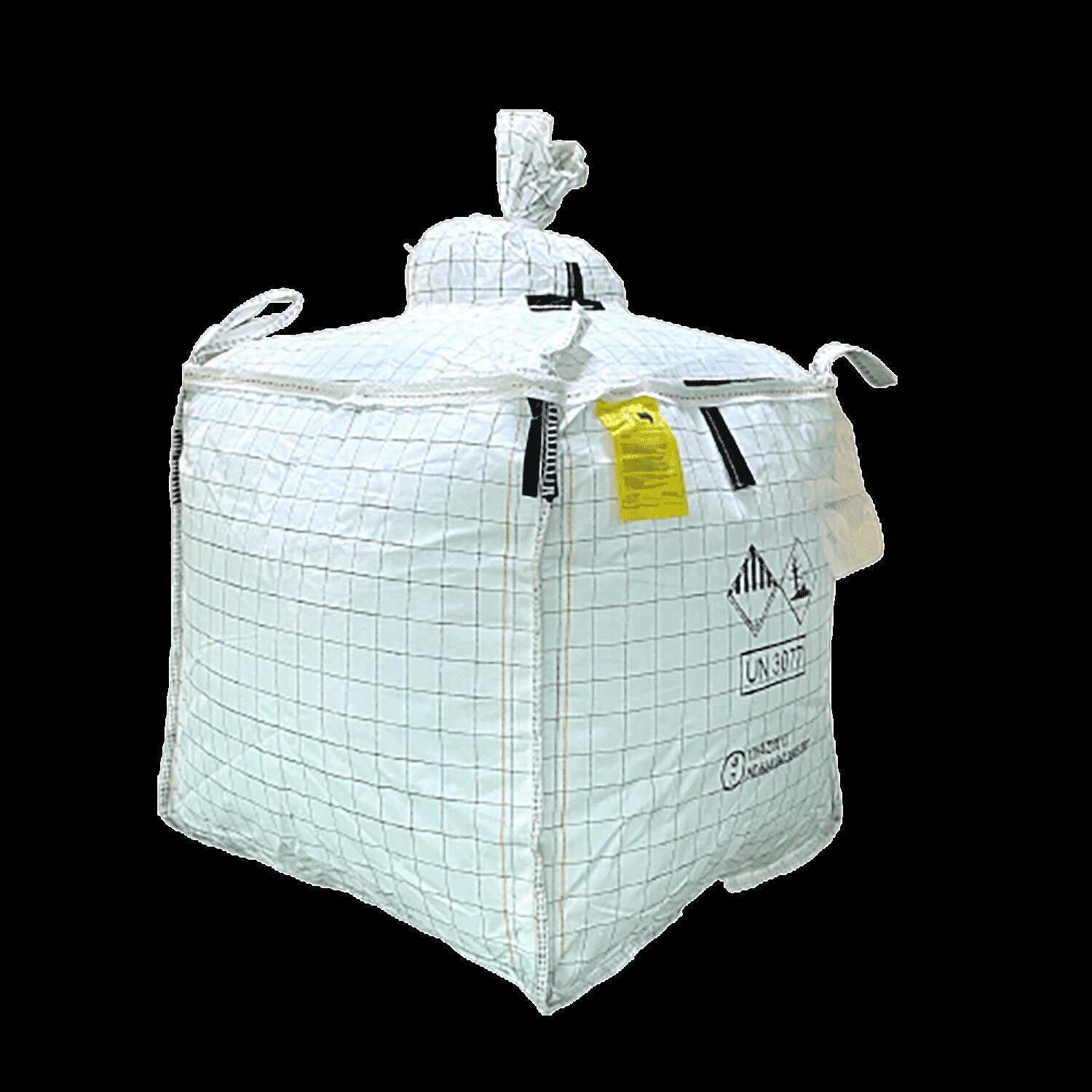
A heavy-duty FIBC is not defined by a large-looking bag or a one-tonne label. You need to match its SWL, safety factor, fabric and seam construction, lifting geometry, discharge design, and electrostatic classification to the raw material and handling cycle. By the end, you will have a practical specification for comparing bags, equipment, storage conditions, and suppliers in Dahej.
Key takeaways
- Specify SWL above the filled load and account for bulk density.
- Choose bag construction and lifting loops for the handling cycle.
- Use Type C or Type D FIBCs for defined static-control risks.
- Compare reusable FIBCs with rigid containers by total handling cost.
Specify the bag by load rating, construction, and service life
A genuinely heavy-duty FIBC is defined by its rated load, engineered construction, and verified handling life—not by the label alone. Specify the safe working load (SWL) for the filled bag, then match it to the material’s bulk density, centre of gravity, filling height, and lifting method.
A bag that carries its marked SWL can still fail in unstable stacking or poor discharge service.
Put these details on the purchase specification:
- SWL in kilograms, with a 5:1 safety factor for single-trip use or a documented 6:1 design for approved reusable service
- Bag dimensions, fabric weight, coating or lamination, and corner or base protection
- Seam construction, top-lift arrangement, and the compatible crane hook, spreader, or forklift attachment
- Intended handling cycles, stacking conditions, storage duration, and exposure to abrasion, ultraviolet light, moisture, or heat
- Liner gauge, filling-temperature limit, discharge-spout design, and whether the contents are hazardous, combustible, dusty, or moisture-sensitive
Fabric weight alone does not make heavy-duty FIBC bags durable. Abrasive minerals, sharp-edged material, and hot product can damage seams, liners, or coated fabric; require representative lift, drop, and handling tests.
Treat the SWL as a lifting rating, not permission to reuse the bag. Reuse requires inspection records showing sound loops and seams, no serious abrasion or UV damage, and approval for the actual service.
ISO 21898 covers design, testing, and marking for non-dangerous goods, but it does not make every FIBC suitable for every raw material.
Match the FIBC to the material and calculate its working capacity
Calculate the load from bulk density before choosing a nominal “one-tonne” bag. FIBC capacity calculation is mass = bulk density × internal volume: 0.8 t/m³ in a 1.2 m³ bag equals 0.96 tonnes before allowing for headspace, filling variation, and the marked SWL.
Check the filled height against warehouse clearances, pallet dimensions, forklift access, and the receiving hopper.
Match construction to the material’s behaviour, not just its weight. Abrasive sand and minerals need robust woven polypropylene fabric and reinforced seams; moisture-sensitive fertilizer needs a coated fabric or FIBC liners; fine powders need dust-tight seams and a liner that will not collapse into the outlet.
Confirm chemical compatibility for the actual substance, concentration, and storage temperature.
Specify the discharge spout to suit the receiving equipment. A fine powder may need a larger bottom spout, liner attachment, mass-flow design, or agitation aid to prevent bridging, rat-holing, surging, and retained product.
- Use a liner only after checking electrostatic compatibility; an insulating polyethylene liner can change the behaviour of a Type C or Type D bag.
- Select a top inlet that matches the filling nozzle and a bottom closure that operators can reach without standing below a suspended bag.
- Check whether granules and pellets need a controlled-flow spout, while free-flowing minerals may use a simpler closure.
| Material | Fabric and liner choice | Discharge focus |
|---|---|---|
| Fertilizer | Coated fabric or liner for moisture control | Controlled outlet |
| Minerals or sand | Abrasion-resistant woven fabric | Wide spout and reinforced seams |
| Powders | Dust-tight construction with compatible liner | Anti-bridging design |
| Chemicals | Chemically compatible fabric, seams, and liner | UN specification if regulated |
| Granules or pellets | Strong fabric with product-specific liner | Controlled-flow outlet |
Choose lifting geometry and control the handling cycle
An uneven lift can tear a seam even when the filled bag weighs less than its marked safe working load (SWL). Match the attachment to the bag’s lifting geometry, engage every designated point, and keep the load vertical; never drag a filled FIBC, fork beneath its fabric base, or lift it by a discharge spout.
| Configuration | Required attachment | Handling use |
|---|---|---|
| One-loop FIBC | Rated single hook or compatible lifting frame | Crane lifting where one-point suspension is specified |
| Two-loop FIBC | Twin-hook beam or approved two-point attachment | Controlled crane lifting with both loops loaded evenly |
| Four-loop FIBC | Four-hook spreader beam or rated four-point forklift attachment | Stable lifting, stacking, and repeated warehouse movement |
| Cross-corner loops | Four-point beam or attachment that reaches each corner | Keeps the bag square during lifting; do not gather all loops on one hook |
| Forklift sleeves | Correctly spaced, fully inserted tines with no sharp edges | Forklift movement without placing forks under the bag |
| Lifting straps | Rated spreader beam or dedicated strap hooks | Use only when the straps are designed as load-bearing points |
Select sleeve dimensions for the actual forklift tines and confirm tine length supports the full sleeve. A spreader beam prevents loops from pulling inward and reduces seam stress during crane lifts.
For stacking, specify the permitted stack height and test the filled bag’s base stability; a tall, flexible bag can lean or crush lower bags. Repeated handling requires a stated cycle count, inspection after abrasion or impact, and removal for cuts, exposed seams, damaged loops, or UV embrittlement.
A 5:1 factor does not authorise reuse; reusable service needs a documented inspection regime and approved conditions.
Control static, moisture, UV exposure, and dangerous-goods risk
Before loading in Dahej, confirm that the FIBC matches the process hazard, storage environment, and legal classification of its contents—not merely the product name.
1. Assess ignition risk from dust, vapour, filling speed, humidity, and nearby equipment against IEC 61340-4-4. Choose a Type C FIBC when the operation can provide a verified earth path; choose a Type D FIBC only when its dissipative design suits the assessed process. Include the liner, laminate, and product dust in that assessment.
2. For a Type C FIBC, inspect the grounding tab, conductive threads, seams, and continuity before use. Keep the earth point accessible, connect it before filling or discharge, and use an interlock or written step that prevents operation first. Grounding the filling machine alone does not ground the bag.
3. Protect moisture-sensitive powders from monsoon rain, condensation, and salt-laden coastal air. Store bags on pallets under a roof, close filling and discharge spouts fully, and specify a compatible liner or laminated fabric; a liner cannot correct an open spout or wet storage floor.
4. Record the UV exposure limit and storage duration for the fabric. Keep unused bags covered because prolonged sunlight weakens polypropylene even when the bag appears clean and dry.
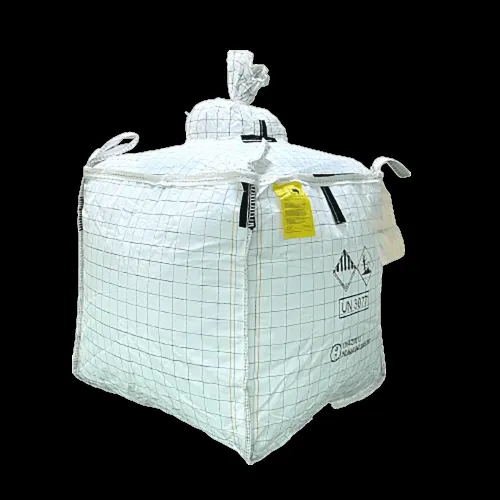
5. If the material is dangerous goods, order UN-certified FIBC bags with the correct design type, performance tests, marking, and packing-group suitability. Check chemical compatibility for the fabric, seams, and liner, and retain the test certificate; “heavy-duty” or “antistatic” is not UN approval. For non-dangerous goods, verify design and marking against ISO 21898.
Compare FIBCs with rigid containers and build a Dahej purchasing checklist
Choose an FIBC when you need to move roughly 500–2,000 kg without the labour, pallet space, and disposal burden of many smaller packages. It is the better choice for dry, flowable solids handled by forklift or crane, especially when batch sizes change and tanker access is unavailable.
FIBC comparison
| Option | Strength | Choose an FIBC instead when |
|---|---|---|
| Woven polypropylene sacks | Low unit weight and flexible small quantities | Manual handling of many sacks would slow filling, counting, or transfer |
| Rigid IBC | Stackable protection and fixed shape | You need lower tare weight, compact empty storage, or flexible discharge |
| Steel drums | Impact resistance and containment for liquids or hazardous materials | The product is a dry solid and drum handling, cleaning, or disposal adds cost |
| Bulk tanker | Efficient for continuous, high-volume transfer | You handle separate batches, lack silo unloading equipment, or need packaged inventory |
Do not treat nominal tonne capacity as proof of suitability. Confirm that the filled centre of gravity, bag height, stack plan, and discharge method work in your warehouse; a compliant SWL does not prevent bridging, liner collapse, or unstable stacks.
Ask a Dahej supplier to document:
- SWL, dimensions, fabric weight, seam construction, safety factor, and intended handling cycles
- Filling and discharge-spout drawings, liner or laminate specification, and fill-density limits
- ISO 21898 test and marking records for non-dangerous goods, or UN certification for regulated hazardous contents
- Type C or Type D electrostatic design, including liner compatibility, for combustible powders
- UV exposure limits and storage instructions covering rain, condensation, salt air, and uncovered staging
Deccan Cans & Printers Pvt. Ltd. should be assessed against these documents rather than the label “heavy-duty” alone.
Related products
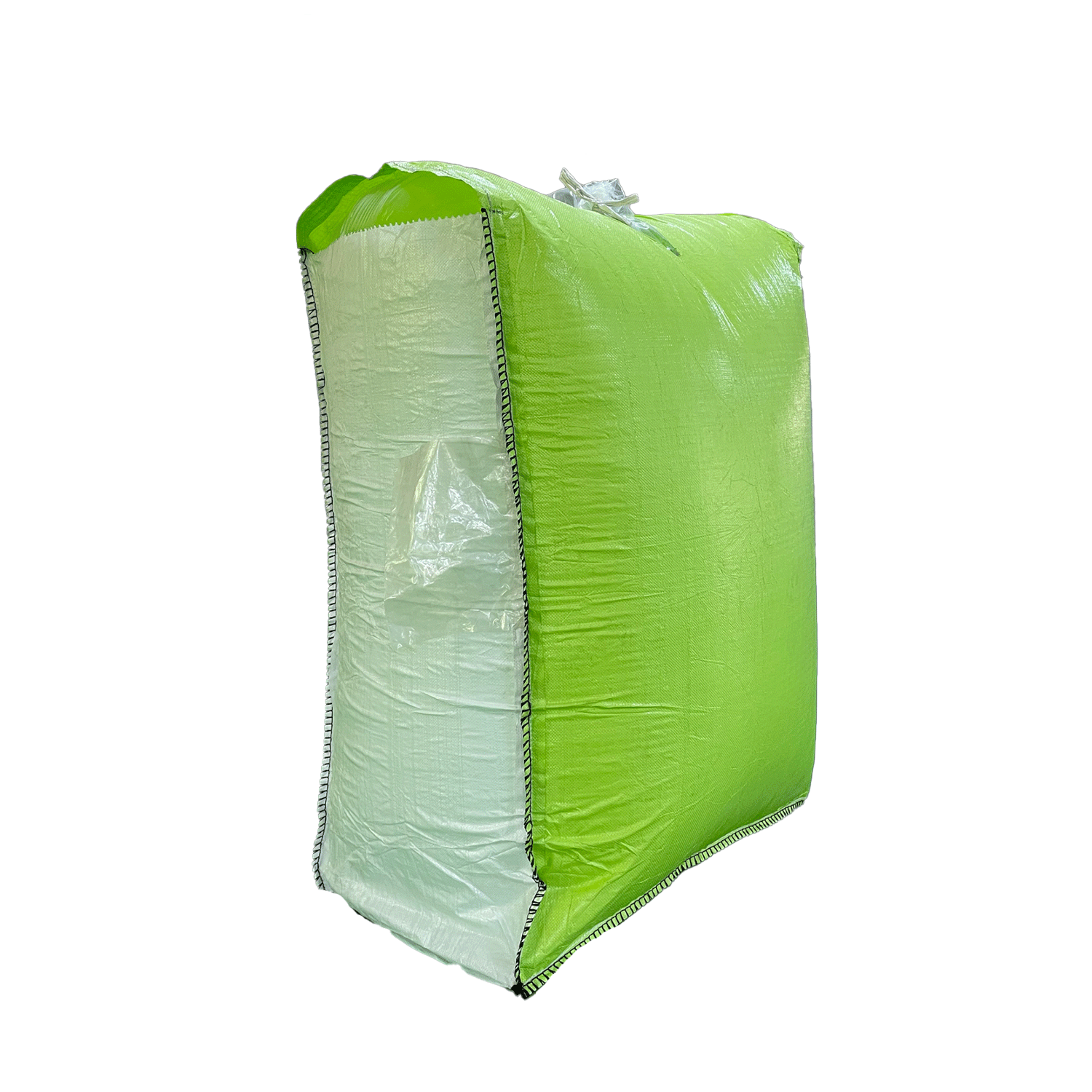 | FIBC Section Fertilizer Bag Range 1 & 2 Loop FIBC Bulk Bags Deccan Cans & Printers Pvt. Ltd. offers durable and cost-effective 1 & 2 Loop FIBC Bulk Bags, designed for the efficient... |
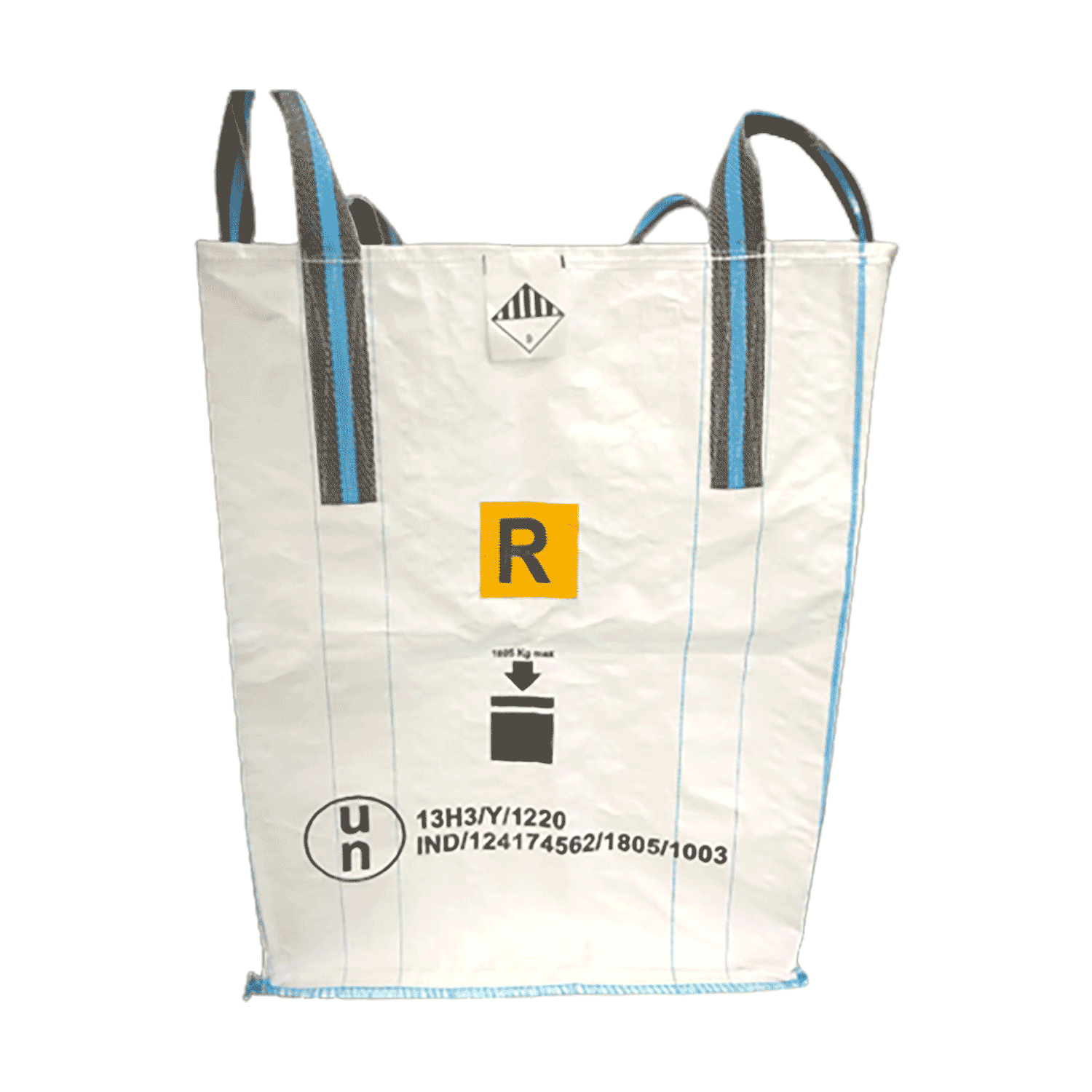 | FIBC Section Un Bags UN Certified Bulk Bags – Rigorous Performance Testing for Safety & Reliability Deccan UN Certified Bulk Bags are specially engineered for the safe... |
Frequently asked questions
How do you specify a heavy-duty FIBC?
Specify the safe working load, construction, lifting geometry, filling and discharge design, and required service life. Confirm the rating applies to the intended handling cycle.
How do you calculate an FIBC’s working capacity?
Divide the bag’s safe working load by the material’s bulk density to estimate volume, then check filling height, centre of gravity, headspace, and equipment limits.
Which FIBC is suitable for static-sensitive or flammable materials?
Select Type C when grounding is available and required, or Type D when the design controls electrostatic discharge without a grounding connection. Confirm the material hazard assessment and supplier documentation.
When should you choose an FIBC instead of a rigid container?
Choose an FIBC when collapsible storage, lower tare weight, and efficient empty-bag transport matter. Choose a rigid container when frequent washing, high impact resistance, or fixed stacking geometry dominates.
Related products
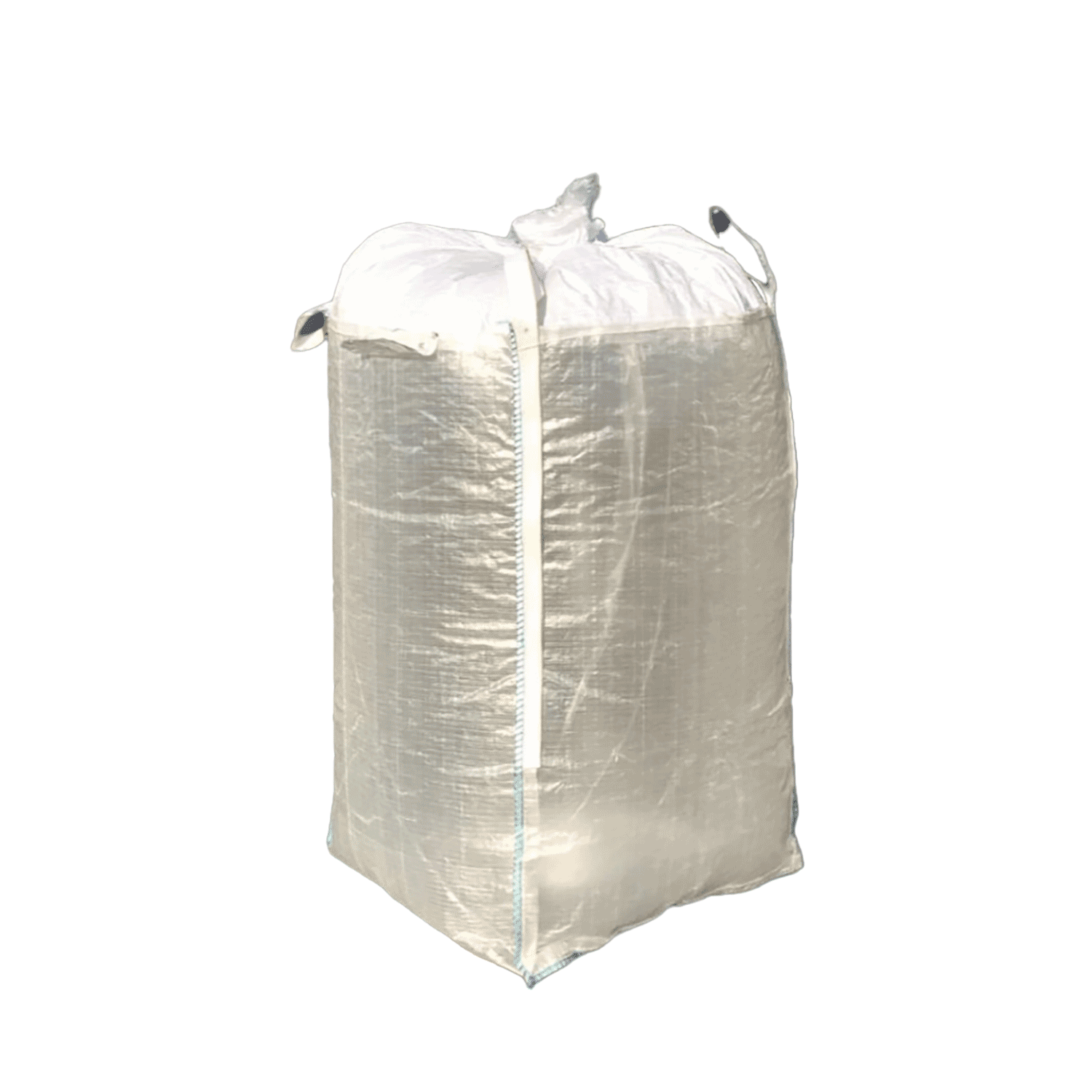 | FIBC Section Transparent Bags Transparent FIBCs – See-Through Bulk Bags Deccan Cans & Printers Pvt. Ltd. |
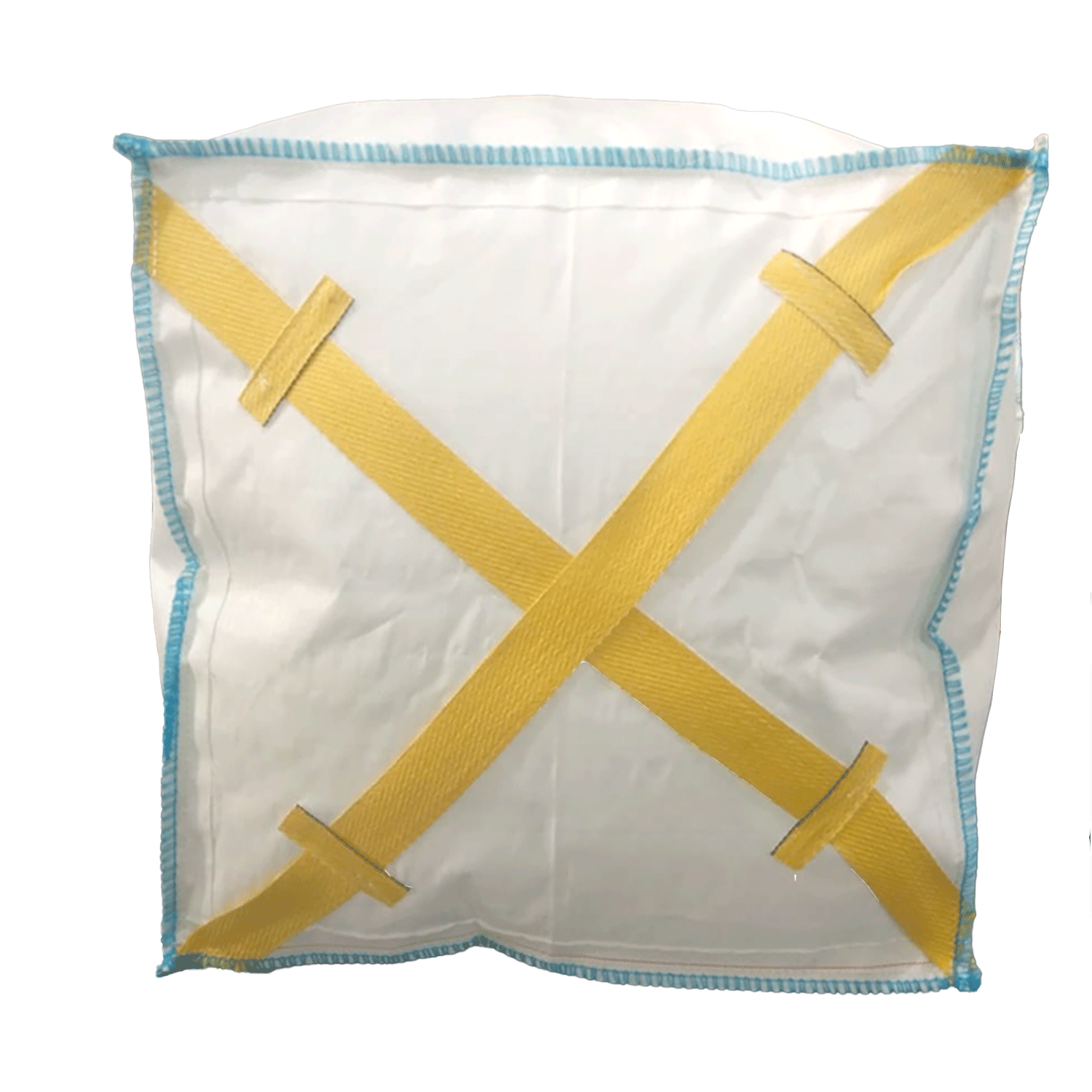 | FIBC Section Cross Bottom Sling Bags Cross Bottom Sling FIBCs – Bulk Bags Deccan Cans & Printers Pvt. Ltd. |
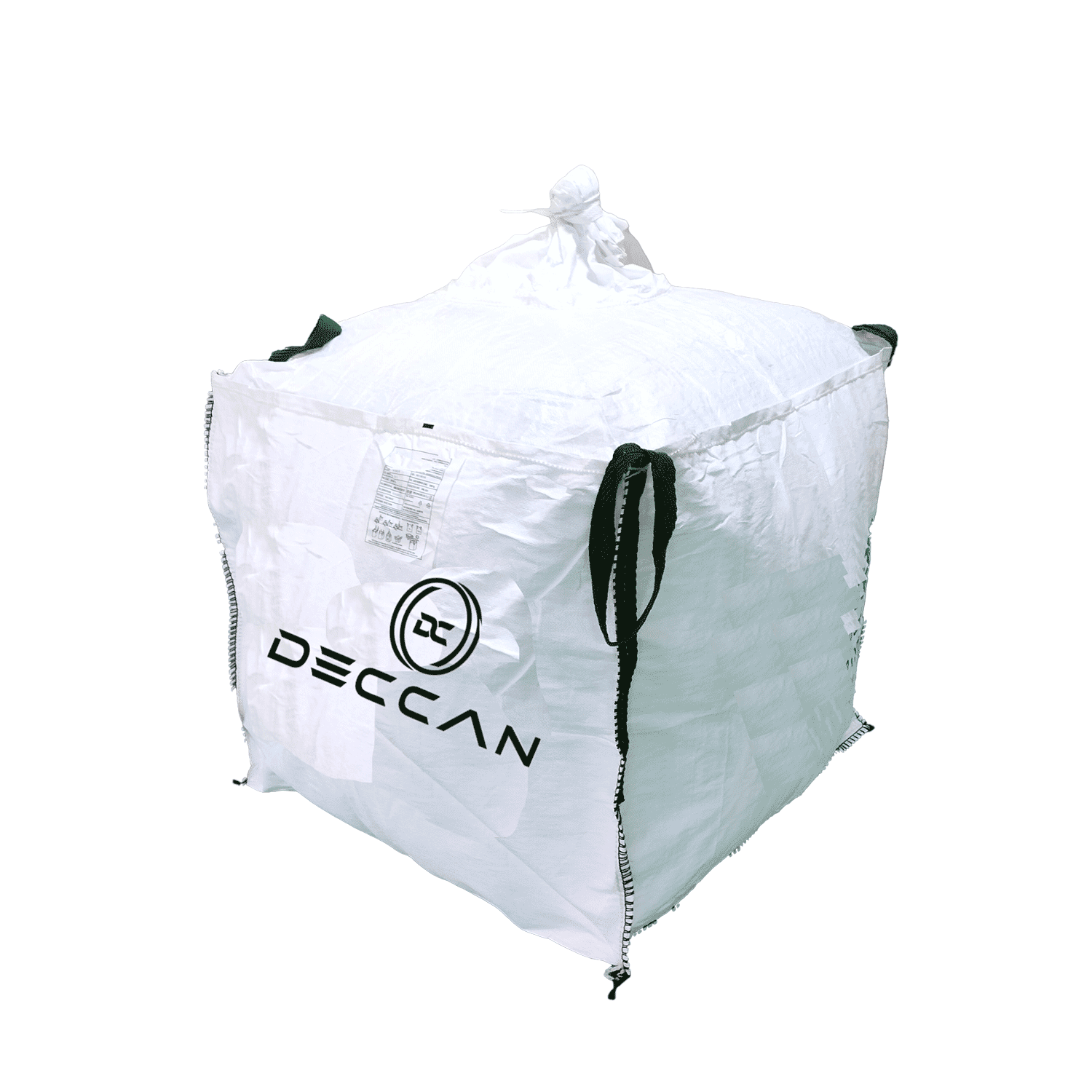 | FIBC Section Polyester Loop Bags/Multifilament Loops Polyester / Multifilament Loop FIBC Bags Deccan Cans & Printers Pvt. Ltd. |
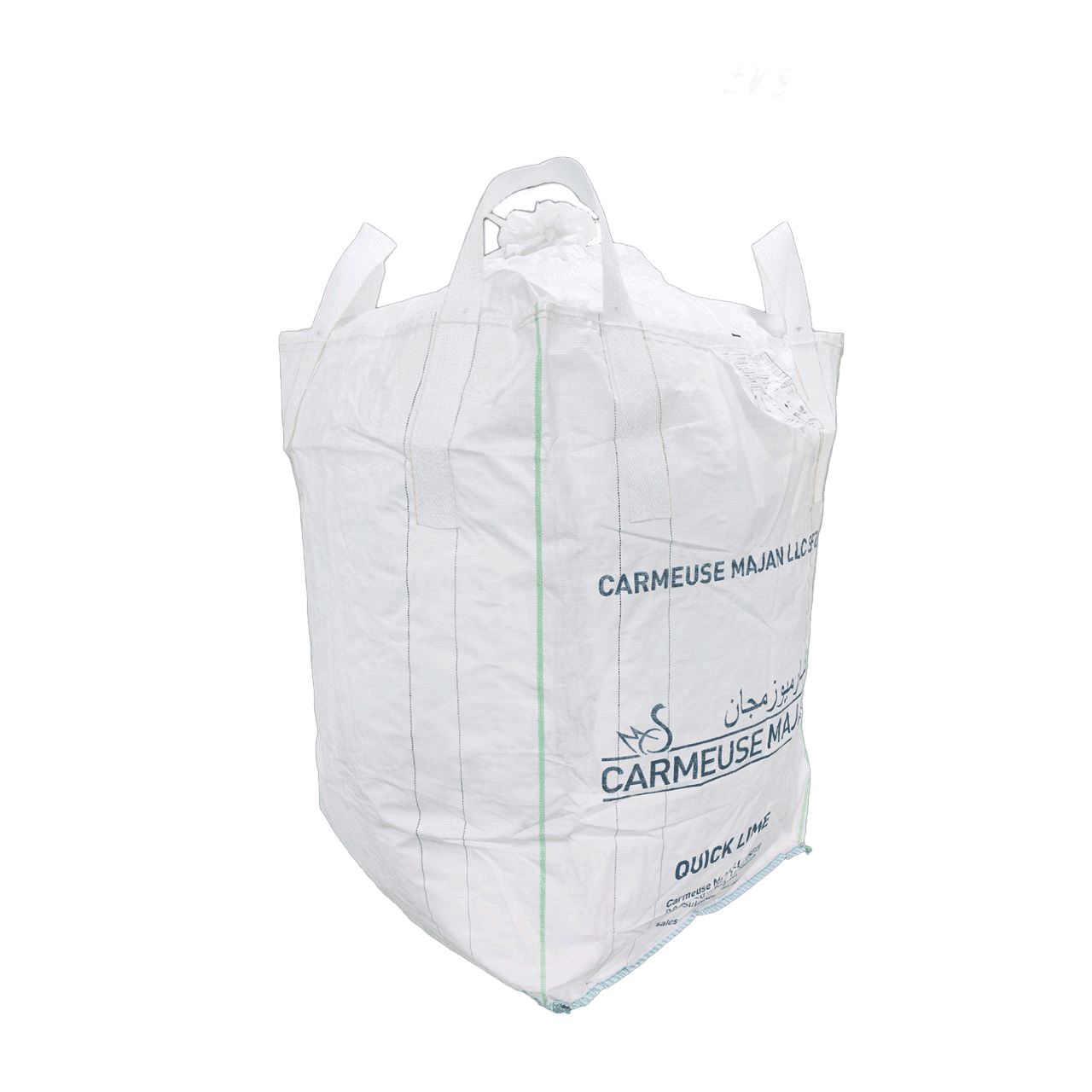 | FIBC Section Bags With Liners FIBC Liners – Bulk Bag Liners Deccan Cans & Printers Pvt. Ltd. |