Leaks, corrosion, dented seams and failed closures often begin with a mismatch between the formulation and the package, not with rough handling alone. You will learn how to qualify the container system, control filling and distribution, investigate damage, and select a supplier using evidence rather than generic claims such as “leak-resistant.”
Key takeaways
- Test the finished formulation against steel, lacquer, seams, closures and gaskets.
- Inspect coatings, seams and closures before filling each production batch.
- Control fill levels, sealing force, stacking height and transport handling.
- Record batch checks, incidents and disposal steps for every container type.
Match the Container to the Finished Formulation
Select agrochemical metal containers by testing the finished formulation, not by choosing metal alone. Record the solvent system and pH, then identify ingredients that can attack tinplate, lacquer, seam compound or gasket. Evaluate the container steel, internal coating, seams, closure and seal as one system.
| Formulation | Main compatibility risk | Check before approval |
|---|---|---|
| EC chemical containers | Hydrocarbon solvents and surfactants can soften lacquer or swell gaskets | Inspect for corrosion, blistering, odour transfer and leakage |
| SL | Water, acids, salts or amines can attack exposed steel and seams | Confirm coating coverage and test concentrate contact |
| SC | Water, suspended solids and surfactants can promote corrosion or abrasion | Check settling, agitation effects and coating adhesion |
| WP | Dry powder absorbs moisture through poor closures and contaminates seams | Verify moisture barrier, closure seal and clean emptying |
| WG | Granules can abrade coatings; humidity can cause caking | Test drop, vibration and moisture exposure |
| Seed treatment | Dyes, polymers, solvents and biological additives can stain or degrade seals | Test the complete treated formulation and repeated opening |
Run container-specific storage tests alongside CIPAC MT 46.3 screening at about 54 °C for 14 days. That screen does not prove shelf life. A UN mark confirms transport-test performance within its approval scope, not pesticide compatibility; request both documents and filled-pack corrosion, lacquer, gasket and closure results.
Find Coating, Seam and Closure Failures Before Filling
Inspect every empty container under bright light before production: reject dents, scratches, exposed cut edges, rust spots, distorted double seams, lacquer blisters, peeling, pinholes and foreign odours. Corrosion often begins where forming damages tinplate or the internal lining, especially at the seam and closure interface.
A chemical container manufacturer should specify the steel grade, tin coating, passivation, internal lacquer, minimum dry-film thickness, cure conditions, seam-coating coverage, holiday inspection and adhesion test.
- Wipe the interior and exterior with a clean, lint-free cloth; investigate metallic dust, oily residue or colour transfer.
- Check the double seam for uniform compression, open hooks, sharp edges and gaps. Examine the neck, cap threads, gasket and venting feature for distortion.
- Establish application-torque and removal-torque limits using the production cap, gasket and container. Low torque leaks; high torque cuts the gasket or damages the neck.
- Retain filled samples from every material or coating change. Inspect at defined intervals for leakage, mass loss, internal rust, blistering, cap swelling, gasket hardening and dimensional change.
| Defect or variable | Failure created | Pre-fill decision |
|---|---|---|
| Internal pinhole or thin coating | Product-driven corrosion or contamination | Reject after holiday inspection |
| Open seam or damaged gasket | Leakage, solvent loss or moisture ingress | Reject and investigate seam settings |
| Incorrect closure torque | Leaks or permanent gasket damage | Adjust and recheck torque |
| Adverse filled-sample change | Vapour attack or formulation incompatibility | Stop release and test the complete container system |
Control Filling, Sealing, Stacking and Transport Damage
Fill each agricultural chemical container to a validated net mass, leaving the specified headspace for thermal expansion. Check fill weight at line speed, and do not seal product that is hotter than the approved filling temperature; trapped heat can create pressure, bulge the body, or force leakage through the seam and closure.
Use a controlled handling sequence:
- Set application-torque and removal-torque limits with the production cap, gasket and can neck. Low torque leaks; excessive torque cuts or permanently flattens the gasket.
- Keep the seam and neck clear of product before closing. Wipe contamination away rather than tightening over it.
- Use guides and a soft-contact conveyor. Reject containers struck by star wheels, clamps or transfer points.
- Build pallets on a flat base with aligned layers, separators and no overhang. Keep straps off caps, and use corner protection so restraint does not crush the top row.
- Set the stack height from the filled-container compression limit, not the empty-can strength. Do not stack dented cans or place heavy pallets on uneven floors.
- Prevent fork tines, nails and broken pallet boards from puncturing bodies. Secure the load against sliding without crushing it.
- Protect pallets from direct sun, rain and rapid temperature swings; inspect after vibration, drops or pressure changes during shipment.
A laboratory drop result on an empty or underfilled pack does not predict seam survival at production fill weight. Test the filled package in its actual pallet and restraint configuration.
Validate Performance and Control Every Batch
A UN performance mark proves that a package passed transport tests for its specified packaging instruction; it does not prove formulation compatibility, shelf life, solvent resistance, or repeated-opening performance. Request the approval scope and compatibility evidence together.
Validate a filled pack at production weight, not as an empty shell. Your protocol should include:
- Drop, stacking or compression, vibration, temperature cycling, pallet restraint and pressure-change challenges that represent the route.
- CIPAC MT 46.3 screening at approximately 54 °C for 14 days, followed by checks for corrosion, lacquer adhesion, blistering, pinholes, odour transfer and closure leakage.
- Real-time retained samples through the claimed shelf life, with inspections at defined intervals.
- A written sampling plan for every production lot, stating lot size, sample count, critical defects, acceptance numbers and actions for failures. ISO 2859-1 can provide the attribute-sampling framework.
| Evidence | Proves | Does not prove |
|---|---|---|
| UN mark and approval scope | Specified transport performance | Chemical compatibility or shelf life |
| Filled-pack transport test | Survival at tested weight and conditions | Performance outside that distribution profile |
| 54 °C formulation screen | Short-term formulation stability | Container durability for the full shelf life |
| Batch record | Traceability of metal, lining, closure, fill weight and test results | That an untested batch is equivalent |
Keep signed release records, test photographs, laboratory results, batch numbers and deviation investigations.
Choose the Right Package and Supplier
Choose the material against the finished formulation, not the product label. A solvent-rich EC can attack lacquer, gasket and seam compound; an SL containing acids, salts or amines can corrode unlined metal. Demand evidence for the complete container-closure system.
| Option | Choose it when | Do not accept without |
|---|---|---|
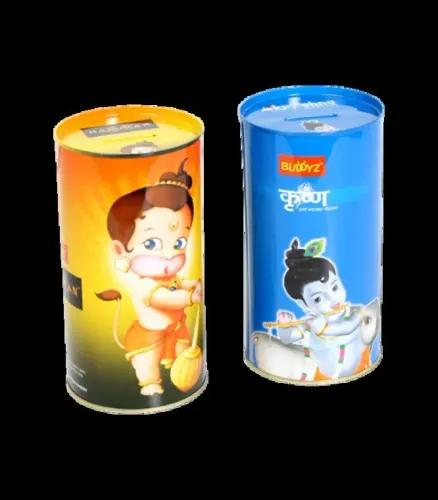
| Tinplate | You need a rigid, stackable pack for compatible liquids | Steel grade, tin coating, passivation, lacquer, cure, seam compound and exposed-edge controls |
| HDPE | The formulation is compatible with polyethylene and impact resistance matters | Permeation, stress-cracking and closure compatibility data |
| Fluorinated HDPE | Solvents or aggressive ingredients would permeate untreated HDPE | Fluorination specification, treatment coverage and shelf-life evidence |
| Aluminium | Low weight or strong barrier performance justifies its cost | Compatibility testing for corrosion, lining, closure and galvanic effects |
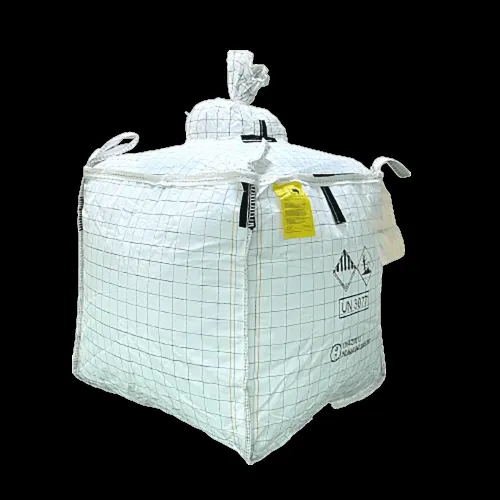
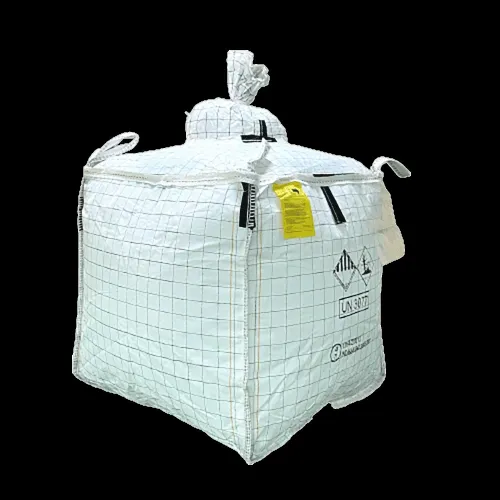
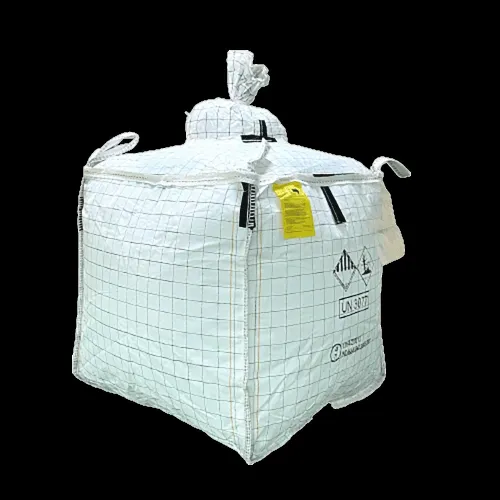
| Qualified FIBC | The product is a dry powder or granule and controlled handling is available | Tested liner, grounding, dust control, leak performance and stacking results |
Ask an insecticide container manufacturer for the UN approval scope, formulation-specific compatibility results, retained samples and batch inspection records. A UN mark proves performance for its stated transport instruction, not chemical compatibility or shelf life. Deccan Cans & Printers Pvt.
Ltd. should provide a specification identifying the substrate, lining, seam and closure rather than calling the pack simply “tin.”
Related product
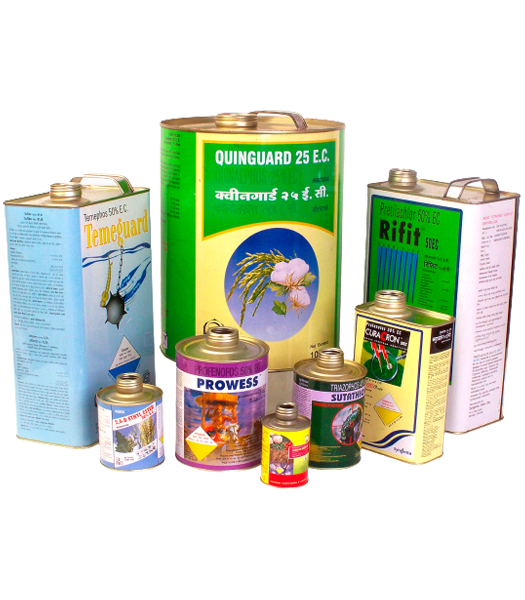 | Tin Containers Tin Containers Deccan Cans & Printers Pvt. Ltd. offers a durable range of Pesticide Tin Containers, designed for reliable packaging and storage of... View product → |
Use a Receiving, Incident and Disposal Checklist
Stop the receiving line and move the suspect consignment to a marked quarantine area; do not open, puncture, roll or stack a swollen, leaking or badly dented container.
1. Put on the PPE specified by the formulation’s Safety Data Sheet: chemical-resistant gloves, coveralls, eye or face protection, and respiratory protection where the exposure assessment requires it. Keep ignition sources away from solvent-based products.
2. Inspect without handling more than necessary. Treat active leakage, bulging, heavy rust, a split seam, wet staining, chemical odour or unknown residue as a hazardous incident. Keep people away and contain the spill with compatible absorbent; never wash pesticide into a drain.
3. Photograph the damage and record the supplier, delivery date, container identification, batch number, UN packaging mark, quantity, location and suspected formulation. Notify the site supervisor, supplier and emergency contact named in the SDS.
4. Segregate leaking or contaminated packages from sound stock in a bunded, ventilated area. Keep incompatible chemicals apart, retain labels, and use a compatible overpack only when trained personnel and the SDS permit it.
5. Do not return damaged containers to stock or transfer their contents into unapproved packaging. Arrange collection by an authorised hazardous-waste contractor under local rules; do not burn, bury, reuse or discard contaminated metal as scrap.
Frequently asked questions
How do you match an agrochemical metal container to a formulation?
Record the solvent system and pH, then test the finished formulation against the container steel, internal coating, seam compound and gasket.
Which container defects should you find before filling?
Inspect the internal coating, welded or soldered seams, closure threads, gasket and seal for pinholes, cracks, distortion or contamination.
How can filling, sealing, stacking and transport cause product damage?
Incorrect fill levels, excessive sealing force, unstable stacking and impact during handling can deform containers, damage closures or create leaks.
What records help control agrochemical container performance?
Keep formulation compatibility results, incoming inspection records, filling and sealing checks, batch numbers, incident reports and disposal documentation.