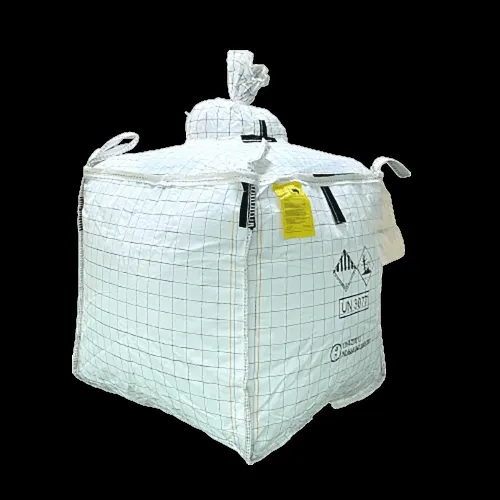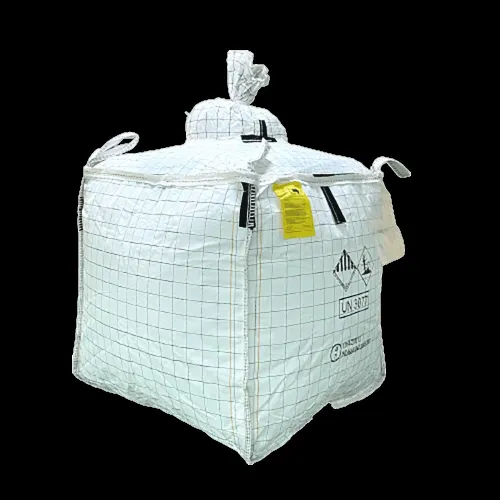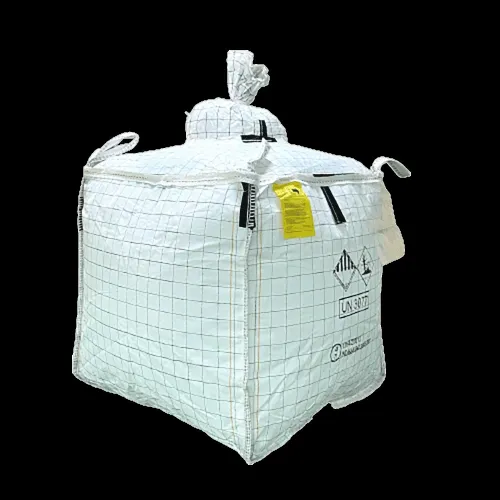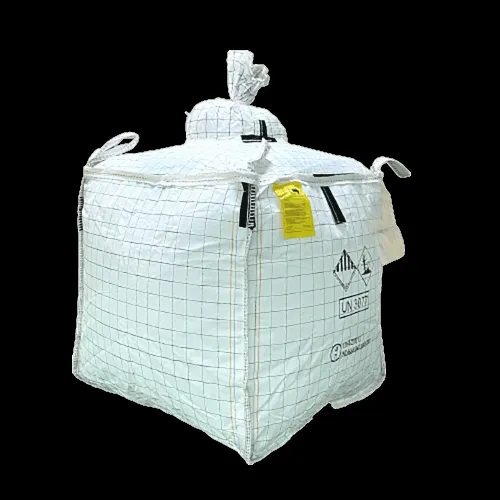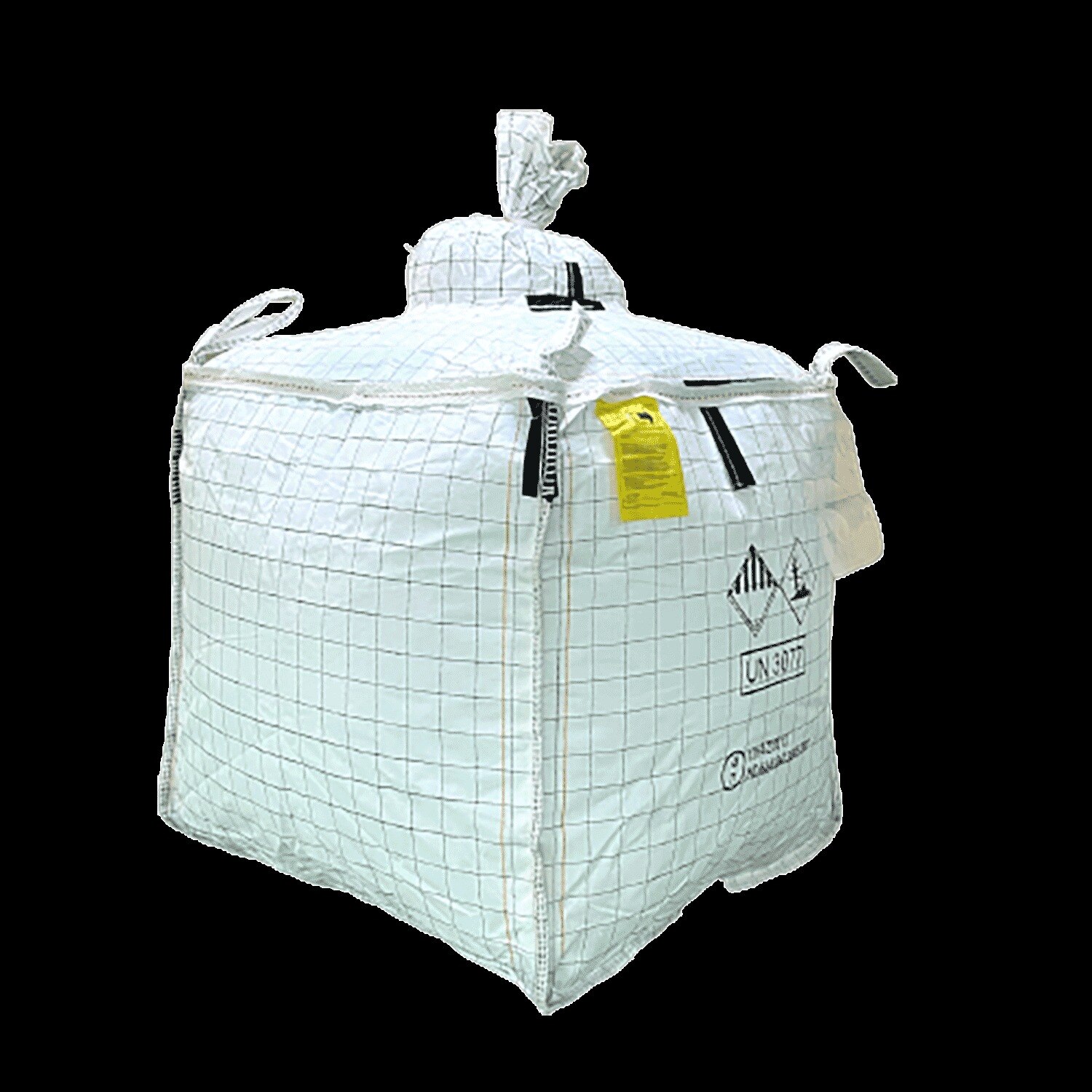
The right FIBC depends on more than whether a material weighs 500 or 1,000 kilograms: powder dust, electrostatic ignition risk, bulk density, discharge behaviour and handling equipment all change the specification. By the end, you will be able to define the bag’s capacity, construction, lifting system, liner, safety evidence and Helsinki delivery requirements before requesting quotations.
Match the FIBC to the material and its electrostatic hazard
Choose a standard FIBC only when the material and process present no electrostatic ignition hazard. Minimum ignition energy, combustible dust, flammable gas or vapour, pneumatic conveying and high-speed filling matter more than weight alone because charge can ignite a dust cloud or vapour before the bag reaches its safe working load.
| Type | Electrostatic behaviour | Selection point |
|---|---|---|
| FIBC Type A | Provides no electrostatic control | Use only where no explosive atmosphere or sensitive ignition hazard exists |
| FIBC Type B | Limits propagating brush discharges | For dry powders with low minimum ignition energy only after a documented risk assessment |
| FIBC Type C | Conductive; requires bonding and grounding | Bond the bag, filling equipment and discharge equipment to earth |
| FIBC Type D | Dissipates charge without a dedicated earth connection | Use only within the manufacturer’s specified conditions and with compatible materials and equipment |
In Helsinki-area operations, the employer must assess explosive dust atmospheres, classify hazardous zones and control ignition sources under the EU workplace ATEX framework. Equipment placed on the market for explosive atmospheres falls separately under Directive 2014/34/EU.
For a FIBC Type C, check grounding continuity before every use. Follow the conformity document’s test method and acceptance limit; a commonly specified conductive path limit is below 1 × 10^8 ohms. Also assess plastic liners, insulated product, metal parts, extraction and discharge equipment as one electrical system.
If the risk assessment cannot justify Type A or Type B, specify Type C or FIBC Type D against documented conditions.
Calculate capacity, load and lifting compatibility before ordering
1. Start with the FIBC capacity calculation: required volume = mass ÷ bulk density. For 1,000 kg at 0.45 t/m³, specify about 2.2 m³ before headspace, settling and filling geometry; at 0.80 t/m³, the same mass needs 1.25 m³. State both figures across the product’s bulk-density range.
2. Do not equate a nominal 1 m³ bag with a 1,000 kg bag. A low-density powder can exceed the bag’s physical volume, while a high-density material can reach the safe working load before the filling equipment reaches its target level. Confirm filled dimensions, filling level, pallet support, eccentric loading, discharge-spout loads and forklift lifting.
3. Put these details in the purchase specification:
- Safe working load, safety factor, one-trip or reusable status, lifting method and required drop or hoist test evidence.
- FIBC lifting loops matched to the equipment: 1-loop and 2-loop designs for compatible forklift tines or filling frames; four-loop designs for four crane hooks or a forklift frame; cross-corner loops for corner hooks, forklift handling and pallet transfer; cross-bottom designs for bottom-support frames at discharge stations.
- Loop geometry, load distribution and the exact filled dimensions.
An SWL printed on a label is not proof of suitability. Require test evidence for the exact construction, lifting method and loop arrangement, including the effects of off-centre loading and repeated handling. A bag that passes a vertical lift can still deform, overload its loops or foul a filling or discharge station.
Specify powder containment, liner performance and discharge behaviour
Particle size, flowability, dust generation, moisture sensitivity and residual product determine the containment design. Fine powders need sift-proof seams, controlled filling and a discharge outlet matched to flowability; cohesive material may bridge in a narrow spout, while free-flowing granules empty quickly. Residual product also affects contamination and cleaning cost.
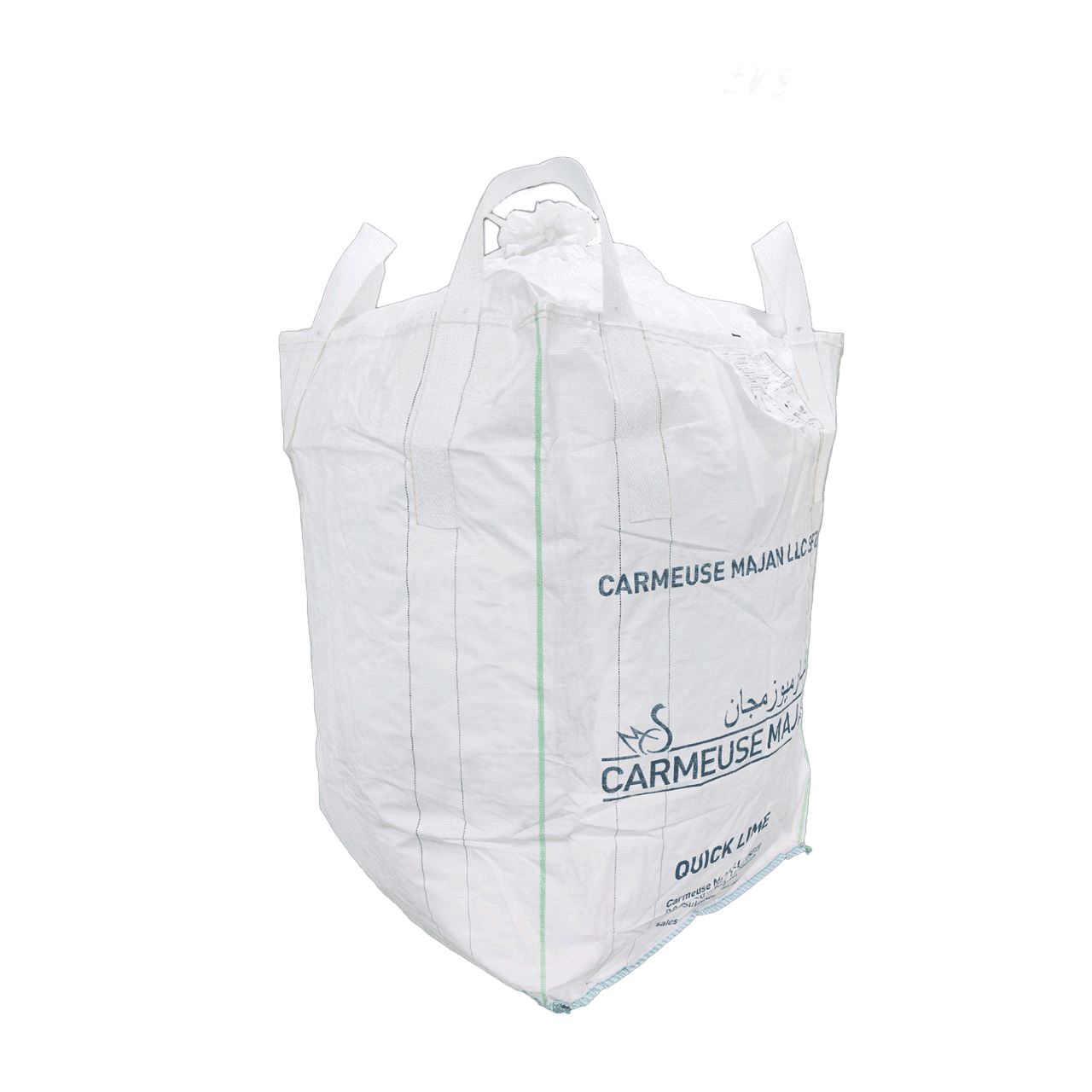
A liner can reduce dust leakage but increase friction, static generation, trapped product and emptying time. In your FIBC liner specification, request the polymer, thickness, dimensions, fit, attachment method, top and bottom sealing method, and whether it is loose, form-fitted or integrated.
Treat an anti-static liner or conductive liner as one part of the complete electrical system, including the bag, product, equipment and grounding path.
Laminated fabric or a liner is not automatically waterproof. Ask for confirmed liquid-water and water-vapour performance, then plan roofed storage, pallet clearance, protective overcovers and controlled handling when moving bags from heated warehouses into Finnish cold conditions.
Request these documents and checks:
- For food or pharmaceutical materials, obtain complete contact documentation for fabric coating, liner, inks, thread and processing aids under Regulation (EU) No 10/2011 and Regulation (EC) No 1935/2004.
- Confirm the outlet size and closure against actual flow behaviour.
- Run a filling, discharge and residue trial using the actual powder.
- Record dust leakage, emptying time, liner damage and remaining product before approving the design.
Verify construction, certification and fitness for repeated handling
1. Before ordering, request the technical data sheet, batch or identification number, SWL, safety factor, filled dimensions, construction drawing, stitching specification, loop-strength evidence and an FIBC test certificate matching the exact design. Specify the lifting method and require drop or hoist test evidence, not only an SWL printed on the label.
2. Treat UN-marked bags as a separate approval, not as ordinary bulk bags. For UN FIBC 13H1, 13H2, 13H3 or 13H4, verify the exact designation, closure, liner or coating, packing group, approved substance and ADR transport route; ADR bulk bags require the certificate for that construction and use.
3. At receiving, compare the identification number and label with the purchase specification, then check correct dimensions, stitching, loops, filling inlet and discharge closure. Reject a bag with cuts, seam damage, contamination, illegible markings, degraded loops or other visible damage.
4. For reusable bags, require a documented reusable FIBC inspection and cleaning regime covering fabric, seams, contamination, labels and electrostatic performance. Set a requalification interval and written reject criteria; retire bags early when UV exposure, chemicals or abrasive forklift handling weaken them.
5. Before every use, confirm the bag is filled within its specified level, the load remains balanced, lifting equipment matches the loop design and discharge closures are intact. For conductive designs, test grounding or electrostatic continuity using the conformity document’s method and limit; do not rely on the label alone.
Plan Helsinki delivery, storage and supplier documentation
A technically suitable bag still fails if Helsinki handling has nowhere to put it. Ask separately for production lead time and seasonal FIBC delivery in Finland, then calculate trailer or container cube, pallet footprint, stack height and unloading equipment. Empty FIBCs occupy substantial space despite their low mass.
| Supply choice | Check before ordering | Main risk |
|---|---|---|
| Palletised trailer | Pallet count, stack height, forklift access | Cube limits delivery quantity |
| Container | Internal cube, loading pattern, moisture protection | Unloading delays or trapped condensation |
| Local buffer stock | Dry, roofed space and pallet clearance | Storage cost and ageing |
Do not assume standard polypropylene suits prolonged outdoor storage. Specify a UV-stabilised FIBC, roofed storage, protection from direct daylight, snow and moisture, plus overcovers and floor clearance. A heated warehouse-to-cold-yard move can create condensation inside the packaging.
Put one FIBC purchasing specification in front of every FIBC supplier Helsinki buyers compare. Include:
- Material name and bulk-density range
- Electrostatic classification; capacity in m³ and kg; SWL; safety factor; one-trip or reusable status
- Filled dimensions, loop arrangement, lifting method, inlet and outlet
- Liner polymer, thickness, fit and attachment method
- Test evidence, including drop or hoist tests, and delivery packaging
Involve Deccan Cans & Printers when the bag must match a Finnish filling frame, forklift route, discharge station or raw-material process. Compare trial-bag performance, documentation completeness, repeatability and delivered handling cost—not price alone.
Related products
 | FIBC Section Bags With Liners FIBC Liners – Bulk Bag Liners Deccan Cans & Printers Pvt. Ltd. |
 | FIBC Section Transparent Bags Transparent FIBCs – See-Through Bulk Bags Deccan Cans & Printers Pvt. Ltd. |
Related products
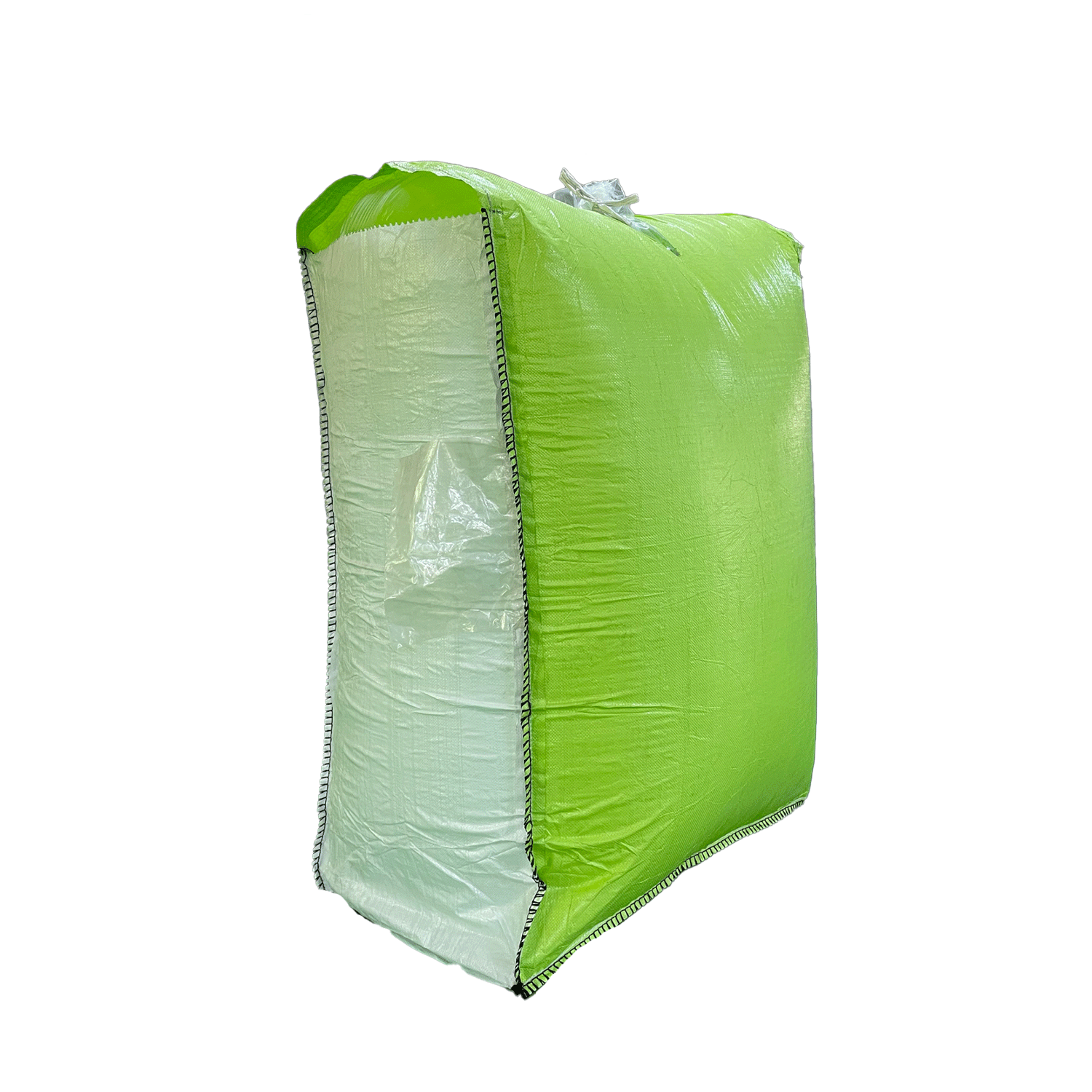 | FIBC Section Fertilizer Bag Range 1 & 2 Loop FIBC Bulk Bags Deccan Cans & Printers Pvt. Ltd. offers durable and cost-effective 1 & 2 Loop FIBC Bulk Bags, designed for the efficient... |
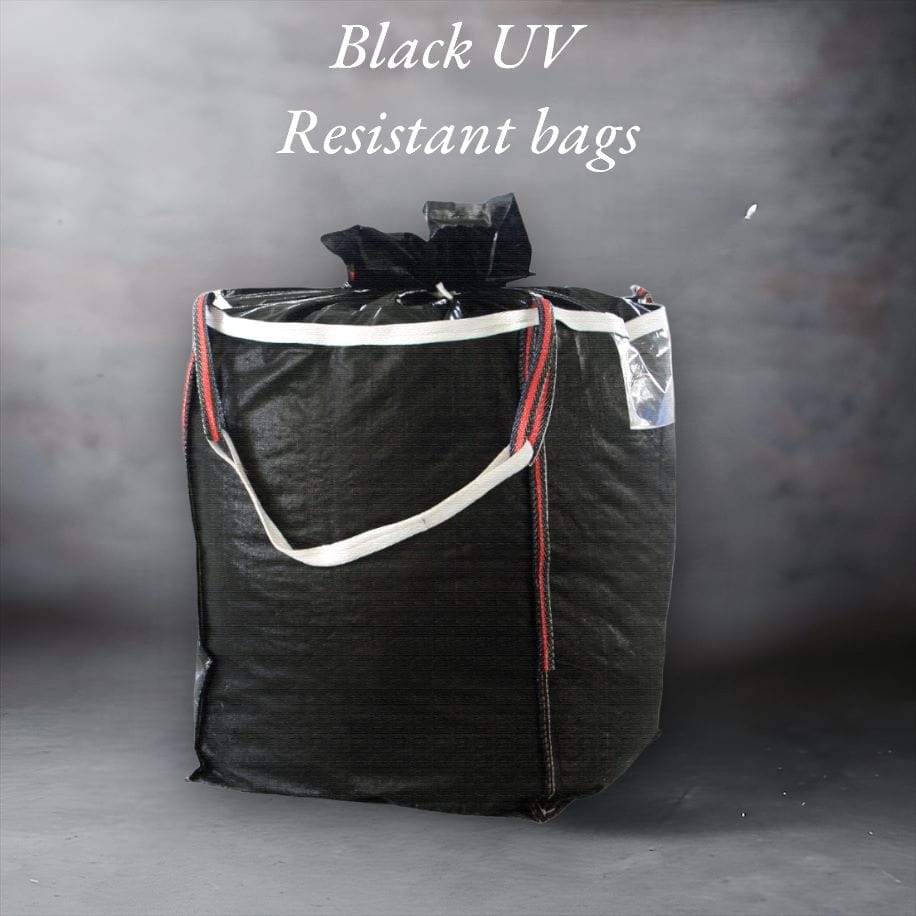 | FIBC Section Black Bags Black FIBC Bags – Enhanced UV Resistance & Extended Shelf Life UV exposure is one of the major challenges faced by the FIBC industry, as prolonged... |
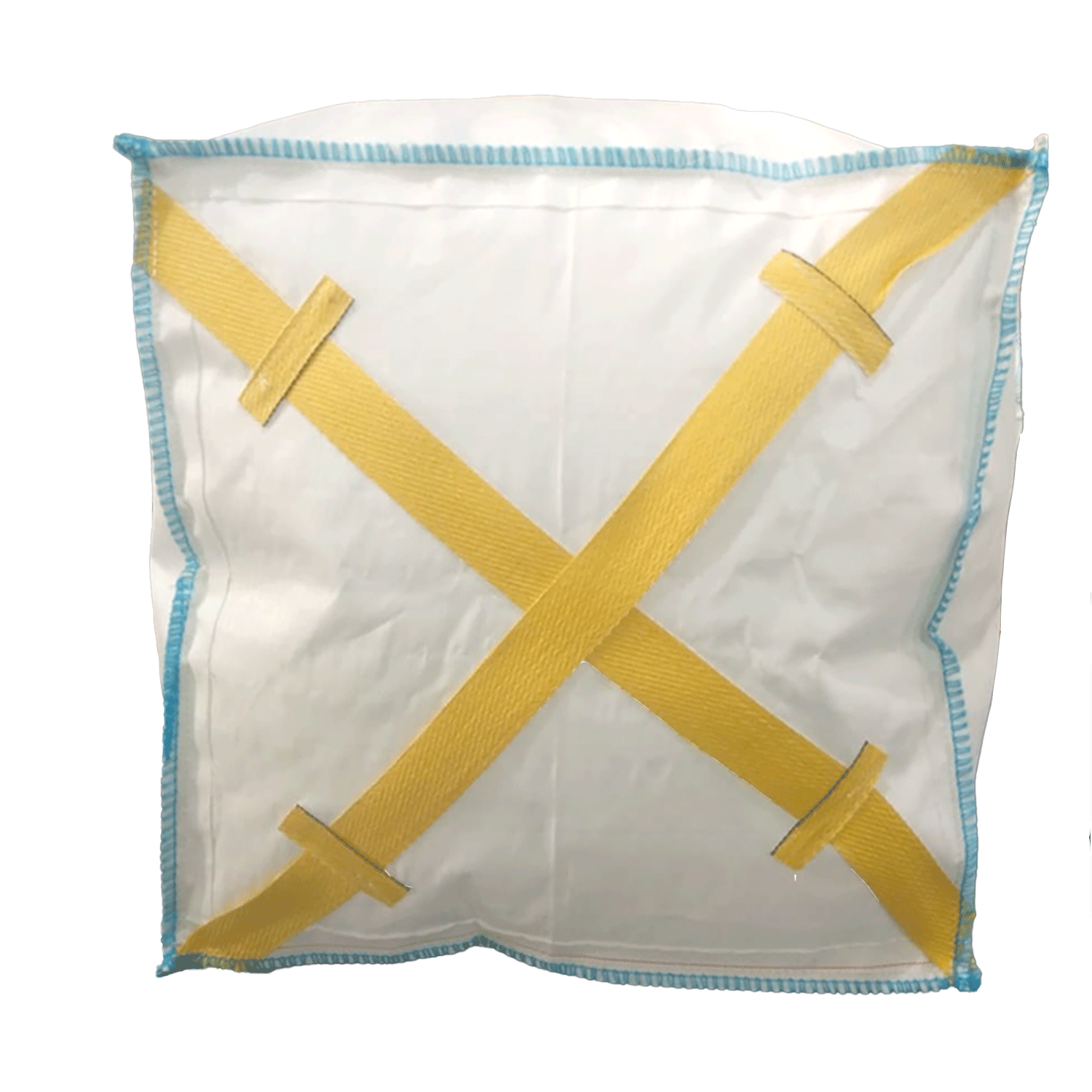 | FIBC Section Cross Bottom Sling Bags Cross Bottom Sling FIBCs – Bulk Bags Deccan Cans & Printers Pvt. Ltd. |
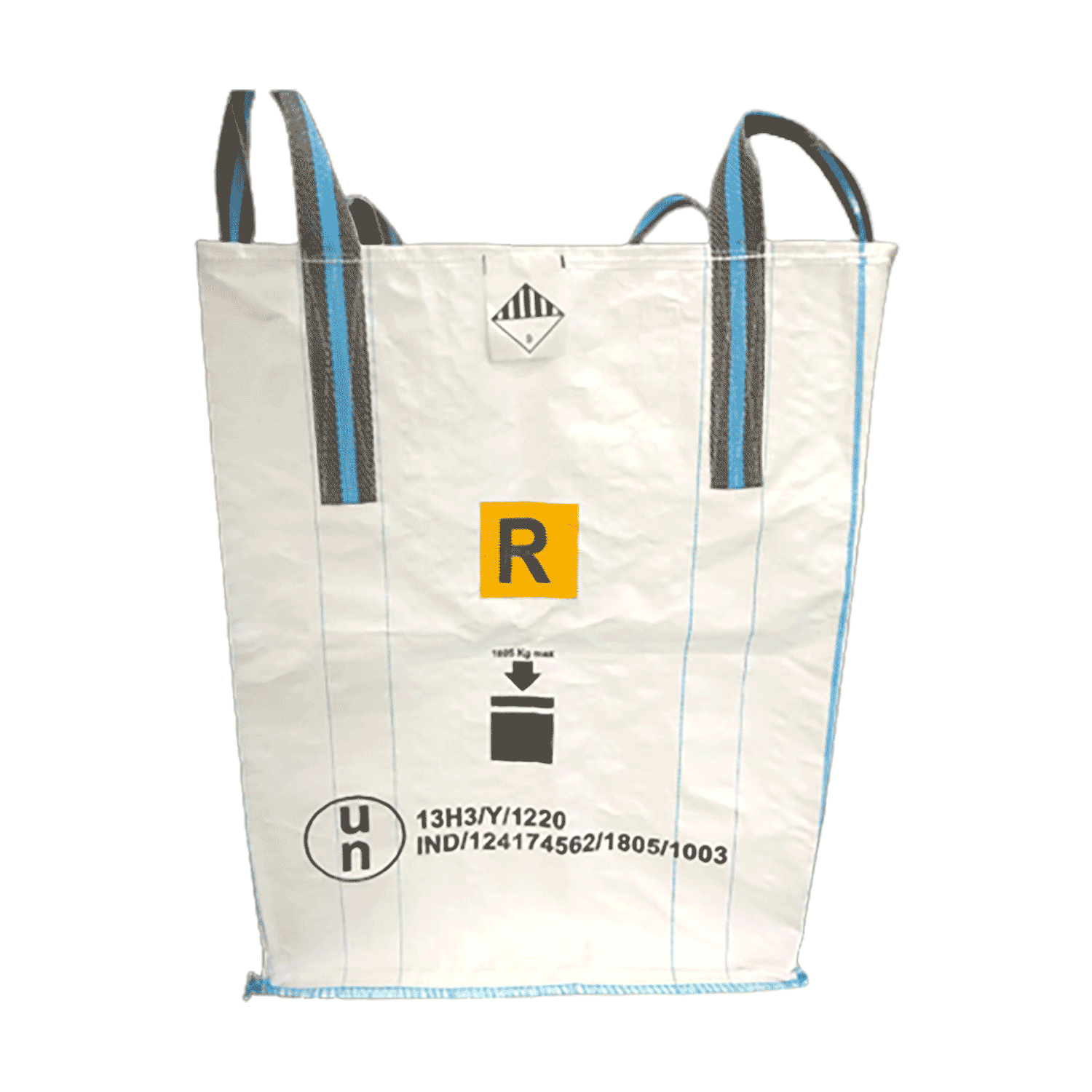 | FIBC Section Un Bags UN Certified Bulk Bags – Rigorous Performance Testing for Safety & Reliability Deccan UN Certified Bulk Bags are specially engineered for the safe... |