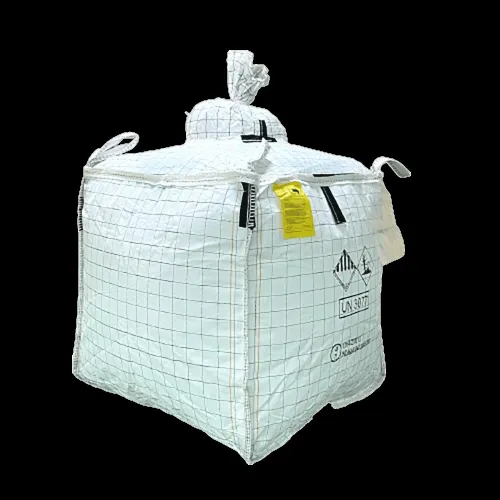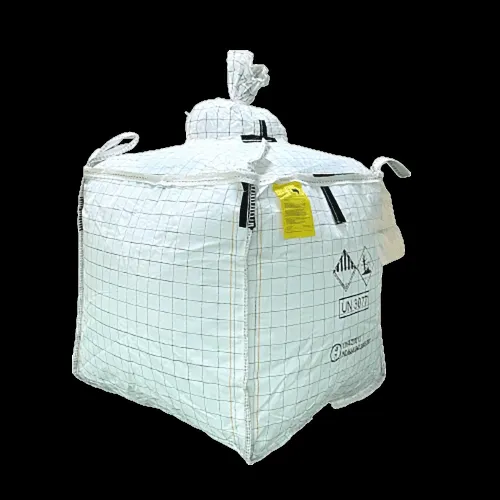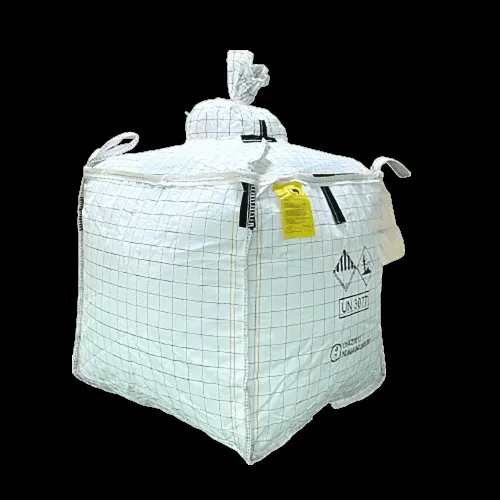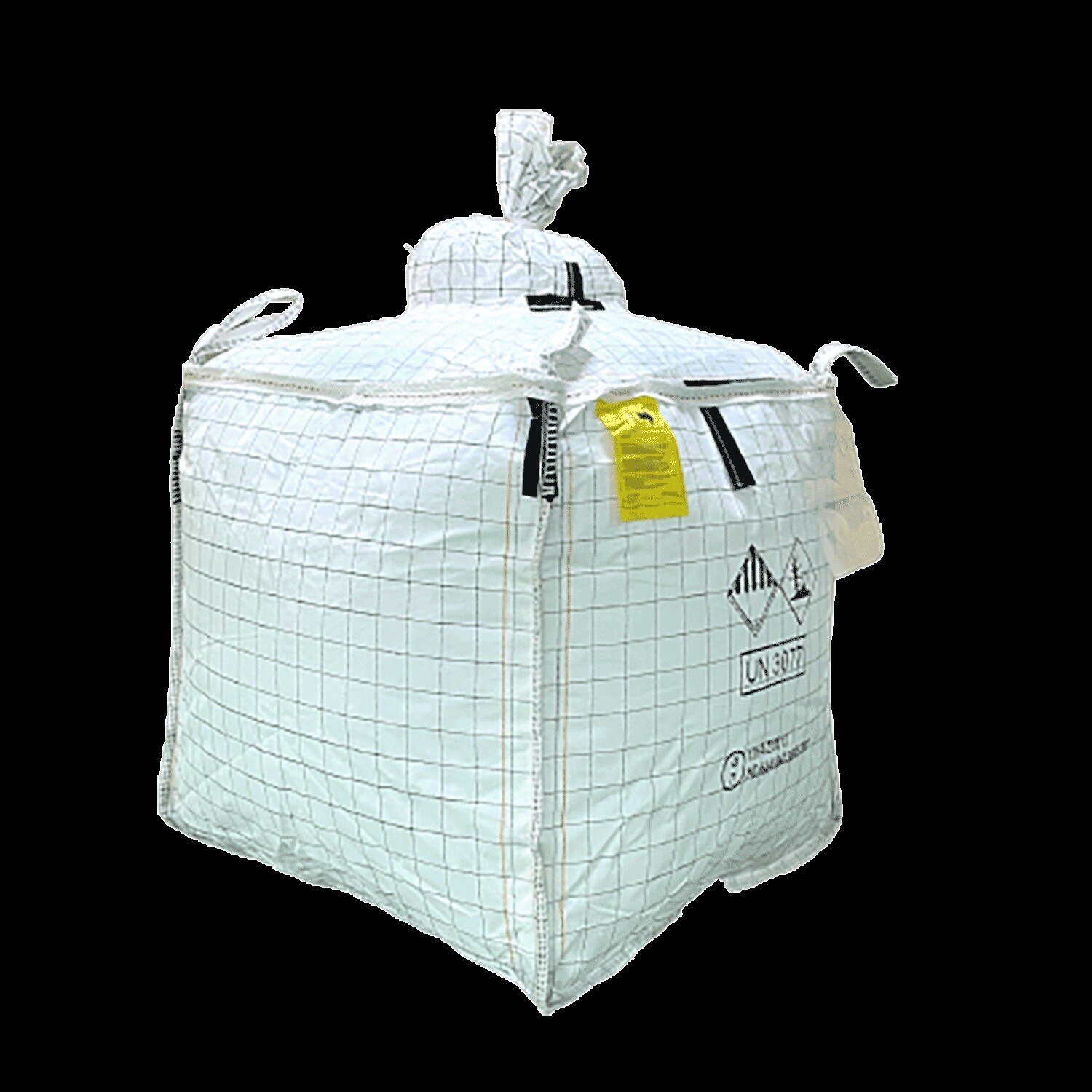
A bag described only as “conductive” does not tell you whether it controls electrostatic charge safely around combustible powders, flammable vapors, or sensitive processing equipment. By the end, you will be able to identify the correct FIBC type, specify grounding and testing requirements, and decide when a conductive bag is inadequate for your Houston operation.
Key takeaways
- Use Type A only when static ignition hazards are absent.
- Match Type C or Type D to the powder, vapor, and process hazard.
- Record grounding checks, bag testing, batch details, and operator training.
- Control liners, conveyors, filling equipment, reuse, and damaged bags together.
Start with the FIBC electrostatic classification, not the word “conductive”
Type C FIBC bags or Type D FIBC bags match materials that could ignite from static discharge; Type A FIBC bags provide no electrostatic protection. Do not treat “conductive FIBC” as a complete specification. Ask which construction and classification the supplier has tested.
| Type | What it means | When it applies |
|---|---|---|
| Type A FIBC bags | Ordinary insulating fabric with no static-control design | Noncombustible materials and processes with no flammable vapor or dust hazard |
| Type B FIBC bags | Fabric limits propagating brush discharges but provides no grounding path for accumulated charge | Selected combustible powders when controlled dissipation from the bag, product, or liner is not required |
| Type C FIBC bags | Interconnected conductive yarns or threads connect to a designated grounding point | Combustible powders, solvent-wetted solids, or vapor-risk processes requiring charge dissipation through a verified ground |
| Type D FIBC bags | Special dissipative fabric releases charge without a plant grounding connection | Approved applications where grounding is impractical and the bag’s specified operating conditions are maintained |
A dissipative FIBC or antistatic FIBC label does not identify Type C or Type D performance by itself. A conductive liner also does not automatically make the complete bag Type C; confirm the tested assembly, including liner and filling conditions. Type C grounding must connect before filling and remain effective through filling and discharge.
UN packaging approval addresses dangerous-goods containment, not electrostatic classification, combustible-dust compatibility, or flammable-vapor-area suitability. Bond metal hoppers, drums, tins, conveyors, and filling equipment into the same verified grounding system; paint, polymer gaskets, wheels, and coated floors can isolate them. A bag is not explosion-proof equipment.
Match the bag type to the powder, vapor, and process hazard
A product name such as “resin” or “powder” does not identify the ignition risk. Obtain the material’s combustible-dust and flammable-vapor data, then match it to the process that fills, transfers, and empties the FIBC.
1. Record the powder’s minimum ignition energy, maximum explosion pressure, Kst, minimum explosible concentration, powder resistivity, particle size and moisture content. These values change as material dries, becomes finer, or blends with another powder.
2. Identify whether the load is a combustible dust, a conductive powder, a solvent-wetted solid, a hybrid mixture, or material that releases flammable vapor. Residual solvent in a liner or container can create a vapor hazard even when the bulk product is a powder.
3. Map every charge-generating step: pneumatic conveying, screw feeding, high-speed filling, sieving, blending, liner removal, discharge rate, and dust-collector connection. Note whether conductive product, a conductive liner, or connected equipment needs a controlled path to earth.
4. Choose Type C when the qualified bag construction provides conductive yarns, grounding threads, or a conductive liner that the process can keep connected to verified earth. Choose Type D only when its tested dissipative construction suits the powder, vapor atmosphere, and handling conditions without relying on a ground lead.
5. Reject assumptions based on UN approval or a conductive-looking outer fabric. Neither proves electrostatic suitability, and Type B does not provide the grounding path required for Type C operation.
Have the combustible-dust assessment, vapor classification, and supplier test data reviewed together before specifying the bag.
Make Type C grounding a documented operating step
Connect the Type C FIBC to a verified earth ground before filling it or attaching process equipment. Keep the connection intact while the bag is filled, connected to transfer lines, and discharged. Remove it only after the bag is closed and taken out of the hazardous operation.
- Locate the bag’s designated grounding tab or grounding point. Attach the approved grounding lead there; do not clip onto a random conductive yarn, seam, lifting loop, or metal frame.
- Inspect the lead, clamp, and contact surface for breaks, contamination, paint, or corrosion. Bond the filling and discharge equipment to earth separately under your plant electrical-safety procedure.
- Verify continuity from the actual grounding tab to the verified earth ground before opening the bag or starting product flow. Record the check, operator, equipment identity, and result.
- Keep the lead attached throughout filling and discharge. Stop the operation if the clamp loosens, the lead is damaged, or continuity fails; do not rely on a second pass after an ungrounded transfer.
- Close the FIBC and remove it from the hazardous area before disconnecting the grounding lead. Document the time and any fault or corrective action.
Your Type C grounding requirements should also identify the bag’s test evidence. The supplier certificate should show IEC 61340-4-4 resistance below 1.0 × 10^7 ohms from conductive components to the grounding point, plus the test method, measured resistance, construction, and lot or batch. "Conductive" alone proves too little.
Specify construction, testing, and records before buying
A purchase specification must name the FIBC electrostatic type, construction, acceptance limit, inspection routine, and records you will receive. “Conductive” alone proves nothing about classification or a usable ground path.
1. Identify the construction: conductive yarn, interwoven grounding threads, designated grounding tab, and any conductive liner. For a lined Type C bag, require evidence that the liner and its attachment remain part of the qualified grounding system; plastic film, stitching, dust, or abrasion can interrupt continuity.
2. Set the Type C acceptance limit at less than 1.0 × 10^7 ohms from each conductive component to the specified grounding point, using the test method applied under IEC 61340-4-4. Require the supplier’s certificate of conformity and test report to state the measured resistance, method, construction, and lot or batch number.
3. Require documented pre-use inspection and periodic testing for continuity, damaged grounding tabs, broken conductive threads, seam damage, contamination, and liner integrity. Define rejection criteria before delivery, not after a failed discharge.
4. Specify the records supplied with each lot: construction drawing or material description, test date, instrument identification, results, and traceability to the bag or batch. Do not accept a statement that the fabric is conductive.
Deccan Cans & Printers Pvt. Ltd. can be evaluated against this specification when you compare lined or other FIBC options, rather than selecting a bag from its appearance or product name.
Reuse requires a fresh decision: flexing, forklift contact, ultraviolet exposure, chemicals, and repeated filling can change resistance even when the bag looks serviceable.
Control the whole Houston handling system, including reuse and equipment
A single loose grounding tab can turn a compliant Type C FIBC into an unverified system. Before each use, confirm the earth connection point is intact and test the bag and ground lead against the site’s written resistance limit.
Keep the connection in place from setup through filling and discharge until the closed bag leaves the hazardous operation.
Make pre-use and scheduled periodic checks recordable:
- Inspect grounding tabs, leads, and designated connection points for damage or looseness.
- Check conductive threads and seams for breaks, abrasion, or separation.
- Examine the liner for tears, displacement, or loss of electrical continuity.
- Remove bags with embedded powder, chemical residue, or other contamination that affects contact.
- Re-test bags after repeated filling, forklift handling, UV exposure, flexing, or chemical contact; appearance alone does not approve reuse.
Include bonding and grounding metal containers in the same procedure. Paint, polymer gaskets, wheels, and coated floors can isolate a drum, hopper, or packaging line, so verify continuity across each connection.
Assess filling equipment, dust collection, conveyors, and electrical equipment under OSHA hazardous locations rules; a bag does not make an area nonhazardous or provide explosion protection. Use NFPA 652 for combustible-dust hazard assessment and NFPA 77 for static-control practices.
Frequently asked questions
Which FIBC classification should you use for sensitive industrial materials?
Use Type A when no flammable dust, gas, vapor, or solvent hazard exists. Use Type C when the bag can be grounded during filling and discharge. Use Type D when grounding cannot be assured and the tested bag provides protection without a ground connection.
What must a Type C FIBC grounding procedure include?
Specify the grounding point, connection method, inspection frequency, acceptable continuity result, operator responsibility, and action when the connection fails. Confirm the bag remains grounded before filling and until empty.
What should you specify before buying conductive FIBC bags?
Specify the electrostatic type, powder and vapor hazard, construction, liner requirements, safe working load, filling and discharge equipment, testing method, test records, batch identification, and reuse limits.
How do you control electrostatic risk across a Houston FIBC handling system?
Assess the bag, liner, filling machine, conveyors, clamps, ducts, grounding points, humidity, cleaning process, and nearby equipment as one system. Remove damaged bags and document inspections before reuse.