
Export-ready FIBC selection depends on more than bag volume or a quoted safe working load. You need to match the cargo, handling equipment, container plan, electrostatic controls, documentation and destination rules before production begins; the sections below provide a practical specification framework for doing that.
Key takeaways
- Match bag construction to powder flow, moisture, temperature and combustible-dust hazards.
- Request test evidence covering safe working load, safety factor and seam performance.
- Calculate filled dimensions and weight before confirming pallet, trailer or container capacity.
- Specify loops, spouts, liners and grounding controls around your actual handling process.
Match the FIBC construction to the cargo and hazard profile
A one-cubic-metre FIBC is not suitable for every one-cubic-metre load. FIBC cargo selection starts with bulk density, particle size and flow characteristics, then accounts for moisture, temperature, static and combustible-dust risk. Cohesive powder may bridge or aerate; free-flowing granules may need only a standard discharge spout.
| Construction | Suitable cargo or hazard | Key requirement |
|---|---|---|
| 13H1 | Dry, free-flowing granules without sift risk | Uncoated woven fabric |
| 13H2 | Granules or powders needing stronger containment | Coated woven fabric and sift-proof seams |
| 13H3 | Fine, dusty or moisture-sensitive powder | Woven fabric with an internal liner |
| 13H4 | Fine powder needing maximum containment | Coated fabric plus internal liner |
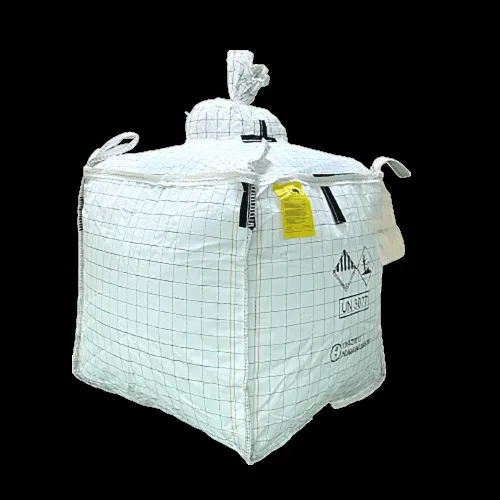
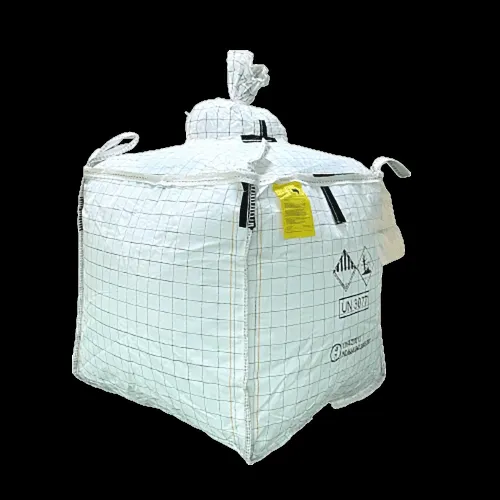
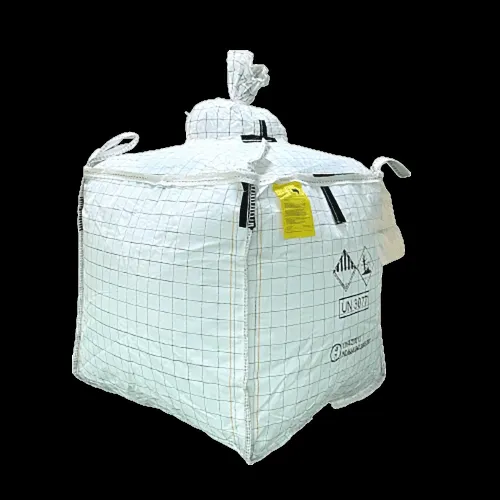
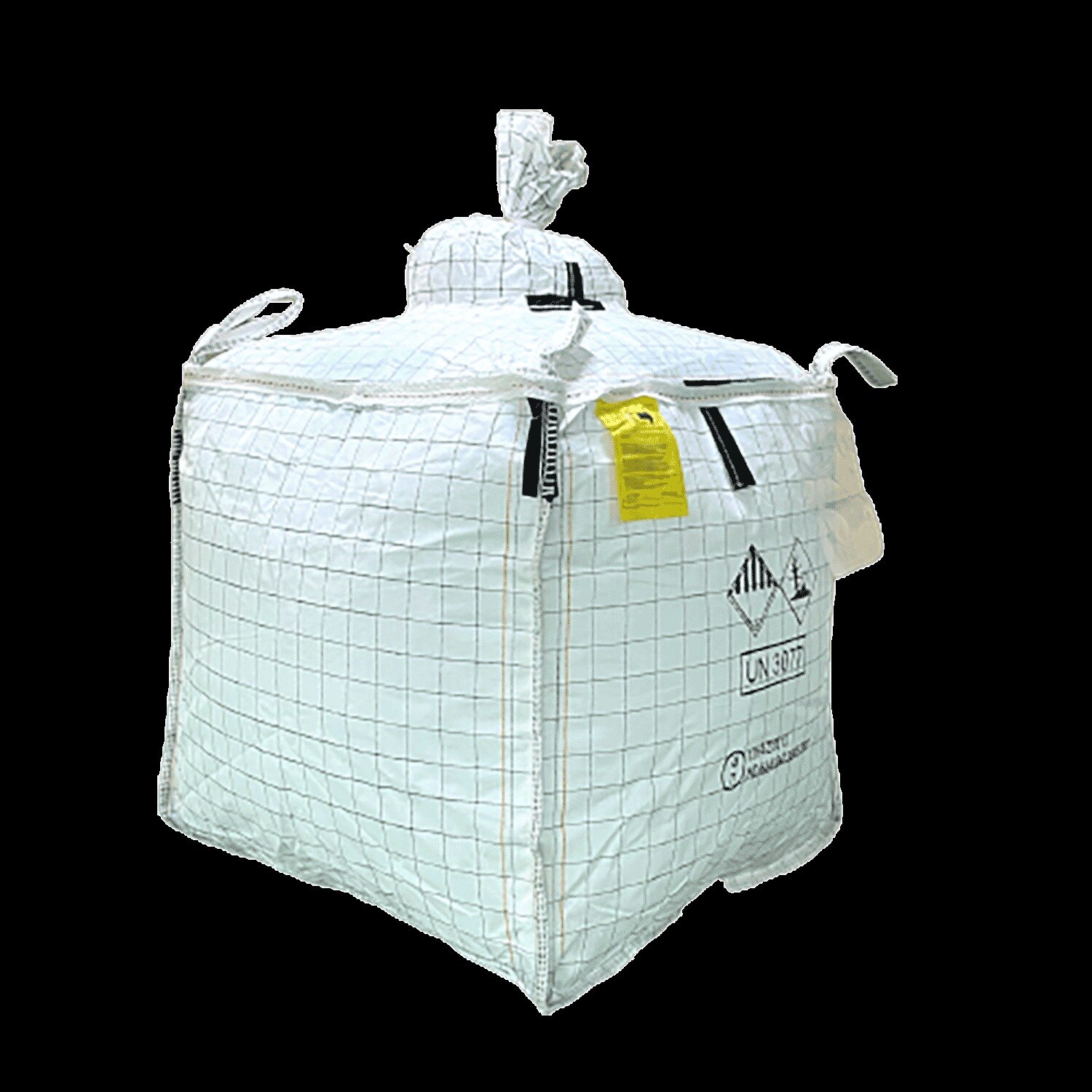
For combustible powders, coordinate a conductive or static-dissipative design with the facility’s hazardous-area assessment, powder minimum ignition energy, bonding-and-grounding procedure and transfer equipment. A conductive FIBC does not control an ungrounded conveyor, clamp, liner or operator.
For dangerous-goods exports from Houston, specify the tested UN flexible-IBC design type—13H1, 13H2, 13H3 or 13H4—not merely “UN bag.” Confirm the prescribed UN marking matches the tested material and performance level. ISO 21898 provides a construction and testing basis for ordinary FIBCs, but it does not replace dangerous-goods, food-contact or pharmaceutical approval.
If the load travels on a wooden pallet or skid, specify ISPM 15 treatment and marking for the solid wood packaging. For EU-bound food or pharmaceutical cargo, request EU food-contact compliance and traceability for the complete material combination; US FDA status alone is insufficient.
Specify the bag so the quotation describes a tested package
Do not approve an FIBC quote that says only “bulk bag” or “UN bag.” Require the bag’s safe working load, finished dimensions, empty weight, fabric construction, coating, seam type, lifting-loop arrangement, filling spout and discharge spout, liner attachment, and closure method.
- State the test standard: ISO 21898 for construction, testing and marking. Treat it as the technical baseline, not proof of dangerous-goods, food-contact or customer-specific approval.
- For regulated cargo, name the UN flexible IBC design type: 13H1, 13H2, 13H3 or 13H4. Require the prescribed UN marking for that tested design, material and performance level.
- Record the 5:1 and 6:1 safety factor, test basis, intended reuse cycle, tested stacking load and permitted storage duration. Do not treat either ratio as automatic permission to stack filled bags.
- Specify pallet or skid material, footprint, blocking and container clearances. Solid-wood components for export need ISPM 15 treatment and marking.
- For combustible powder, document fabric conductivity, liner type, bonding and grounding points, and compatibility with the filling and discharge equipment.
| Safety factor | What the quotation must state | What it does not prove |
|---|---|---|
| 5:1 | Reuse cycle and test report | Unlimited reuse or stacking |
| 6:1 | Single-trip design basis and test report | Safe handling after damage or extended storage |
| Either | Safe working load and tested load | Stability of the filled product |
Reject a woven-polypropylene bag for liquids unless a qualified liner and outer system has separate hydrostatic, leakage, compatibility and transport evaluations.
Calculate capacity, fill weight and container fit before production
Start with the cargo’s target mass and measured bulk-density range, not the bag’s advertised cubic capacity. The FIBC capacity calculation is target mass divided by the lowest expected bulk density, with headspace and density variation reserved for settling, aeration, and filling tolerances. Then check the result against the bag’s safe working load.
1. Record the product’s minimum, typical, and maximum bulk density in kilograms per cubic metre. Calculate the filled volume at each value and reject any design that exceeds the bag’s safe working load or leaves too little headspace for closure and handling.
2. Add the actual bag dimensions, including top and bottom spouts, liner folds, loops, and closure hardware. Confirm the compressed or folded shipping dimensions before production; a one-cubic-metre bag can require more clearance than its volume suggests.
3. Draw the pallet pattern and check the pallet footprint and weight distribution. Keep the centre of gravity stable, prevent bags from overhanging the pallet, and verify the maximum loaded height against warehouse doors, truck decks, rail equipment, and port handling limits.
4. Test the loading plan in both 20-foot and 40-foot containers. Confirm the number of pallets or bags per row, door clearance, roof clearance, blocking, dunnage, and forklift access. Include the discharge-spout clearance needed at destination.
For international shipments, specify treated and ISPM 15-marked solid-wood pallets, blocking, and dunnage. A woven-polypropylene FIBC is for dry solids; liquid or semi-liquid cargo needs a qualified liner and outer-package design reviewed for hydrostatic load, leakage, compatibility, filling temperature, and transport rules.
Coordinate loops, spouts, liners and electrostatic controls with handling
A four-loop FIBC suits forklifts, hoists and container loading when all four loops remain accessible. Confirm the rated safe working load, loop length, lifting angle and the bag’s folded dimensions before approving a pallet pattern; a loop that catches on a truck roof or railcar door can delay unloading.
| Feature | Specify | Best fit or failure to avoid |
|---|---|---|
| Lifting | Four-loop FIBC with reinforced corner loops; multifilament loops for repeated handling | Warehouse forklifts, port cranes and receiving equipment with four-point lifting |
| Lifting | One-loop and two-loop bags | Dedicated hooks or simpler transfer routes; avoid mismatching loop spacing with the lifting frame |
| Sling arrangement | Cross-corner or cross-bottom sling | Cross-corner suits standard four-point lifting; cross-bottom supports heavier loads when the equipment is designed for it |
| Discharge | Top fill and bottom discharge spouts, closure type, outlet diameter and required clearance | Match the outlet to the receiving hopper, truck, rail or port equipment; a long spout can block container loading |
| Liner | Film type, fit, closure, attachment and permeability | Use a liner for containment or moisture control; do not call standard polyethylene hermetic or an oxygen barrier |
| Electrostatics | Type C with a verified ground connection; Type D with uncontaminated specified fabric; Type A provides no protection | For combustible powders, coordinate the bag with the hazardous-area assessment, personnel grounding, clamps and transfer equipment |
A conductive FIBC does not ground an unbonded conveyor or filling nozzle. For cohesive powder, specify sift-proof seams, baffles, aeration or a liner only after checking flow and discharge clearance. Reusable bags also need inspection criteria covering abrasion, ultraviolet damage, chemical attack, seam damage, stretched loops and forklift contact.
Turn the logistics plan into a supplier-ready Houston specification
Choose a Houston FIBC supplier by comparing documented performance, not sample appearance or the label “food grade.” Request the same construction dossier from each bidder, including ISO 21898 test evidence, safe working load, safety factor, stacking test, dimensions, lot traceability and intended service life.
Supplier comparison
| Criterion | Supplier A | Supplier B |
|---|---|---|
| Technical proof | ISO 21898 test report and construction drawing | Certificate without test conditions |
| Food contact | Food-contact declaration naming resin, liner, coating and colorants | “Food grade” statement only |
| Export packaging | ISPM 15 pallets and dunnage identified on the quotation | Pallet compliance left to the buyer |
| Reuse control | FIBC inspection and reuse criteria, cleaning rules and rejection limits | Reuse based on visual judgment |
| Destination file | EU declaration and traceability documents for EU food or pharmaceutical cargo | US FDA documents only |
Write acceptance conditions into the purchase order. Require the supplier to state the tested stacking load, storage duration, filling temperature, UV exposure limits and permitted reuse cycles; a 5:1 or 6:1 safety factor alone does not authorize stacking or reuse. Ask Deccan Cans & Printers Pvt.
Ltd. for this same evidence if it is under consideration, rather than accepting a product name as the specification.
Add these shipment controls:
- Identify the destination’s dangerous-goods, food-contact and labeling rules.
- Require batch numbers, inspection records and a certificate of conformity.
- Specify cleaning or decontamination, quarantine and rejection procedures.
- Confirm that wood pallets, blocking and dunnage carry the ISPM 15 mark.
Related products
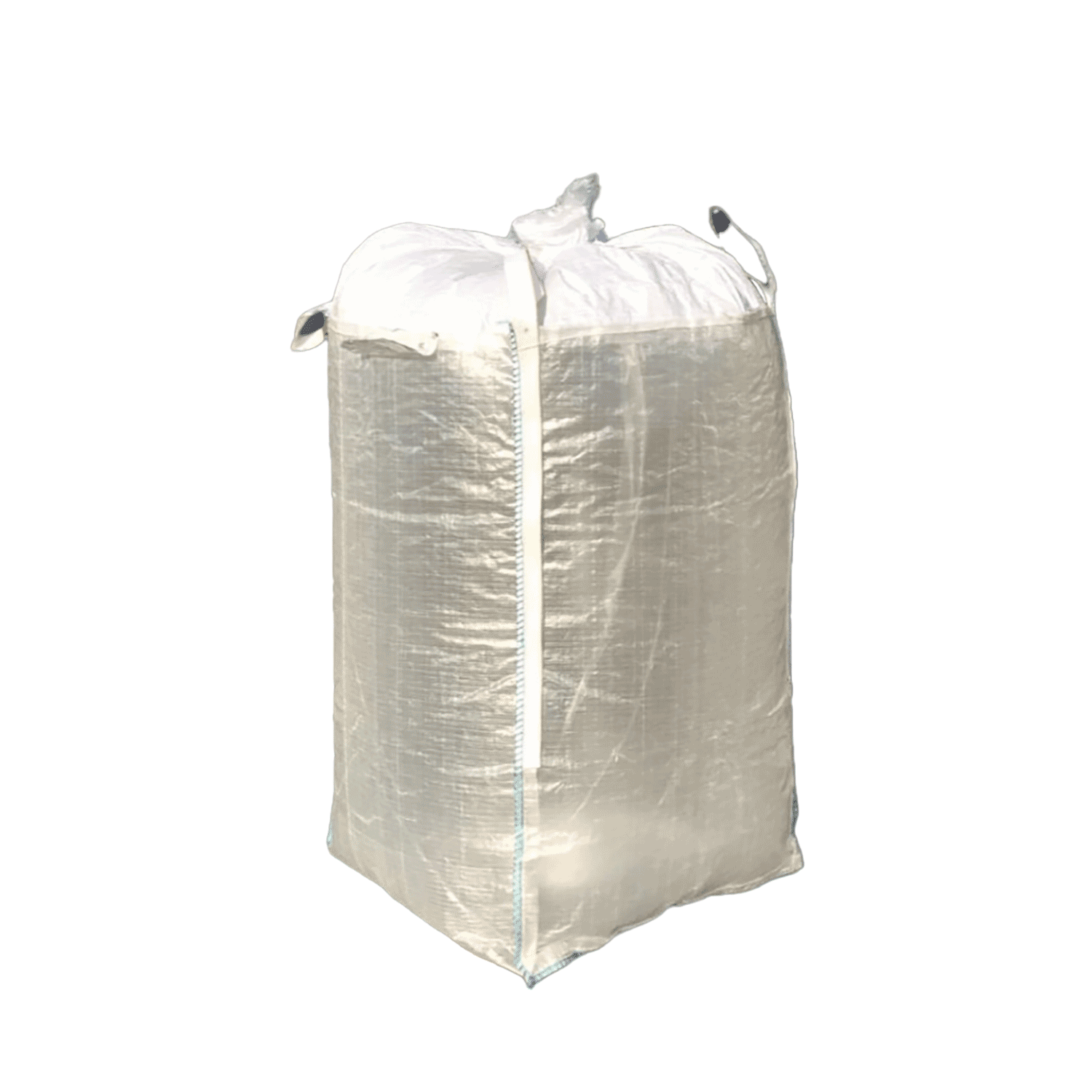 | FIBC Section Transparent Bags Transparent FIBCs – See-Through Bulk Bags Deccan Cans & Printers Pvt. Ltd. |
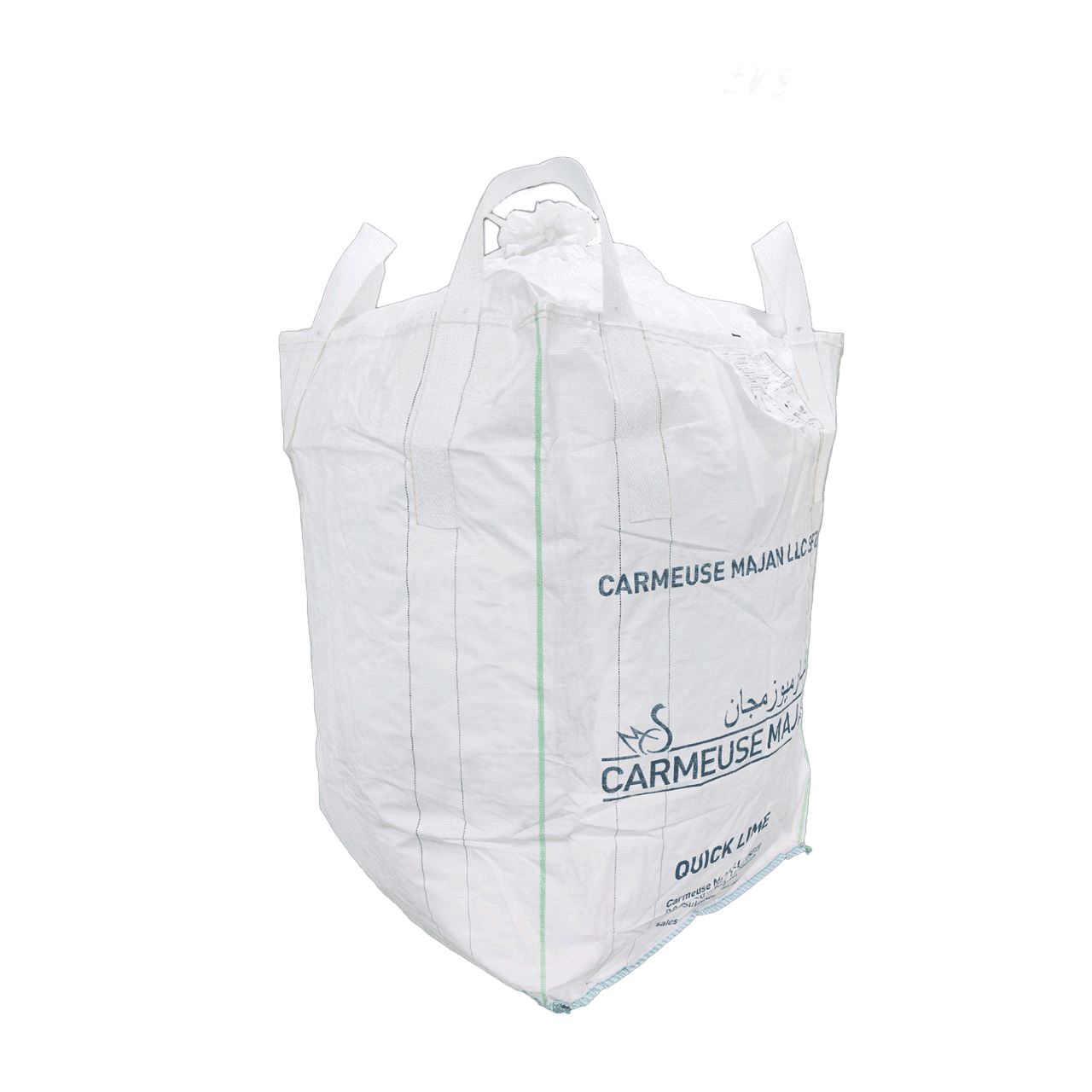 | FIBC Section Bags With Liners FIBC Liners – Bulk Bag Liners Deccan Cans & Printers Pvt. Ltd. |
Frequently asked questions
How do you match FIBC construction to the cargo?
Assess bulk density, particle size, flow behaviour, moisture, temperature and static or combustible-dust risk. Cohesive powders may need a more controlled discharge design than free-flowing granules.
What should an FIBC quotation specify?
Request the bag dimensions, safe working load, safety factor, fabric and seam details, top and bottom construction, liner requirements, test evidence and handling instructions.
How do you calculate FIBC capacity and container fit?
Use bulk density and the target fill weight to calculate volume, then check the filled bag’s actual length, width and height against pallet positions, trailer clearance and shipping-container dimensions.
When do FIBC bags need liners or electrostatic controls?
Choose a liner when the cargo needs moisture, contamination or sift protection. Specify a static-control type and grounding procedure when the product or environment creates an electrostatic ignition risk.
What belongs in a Houston supplier-ready FIBC specification?
Include cargo data, target weight, bag dimensions, lifting method, discharge equipment, liner, fabric, loop arrangement, testing, marking, export documents and delivery requirements.
Related products
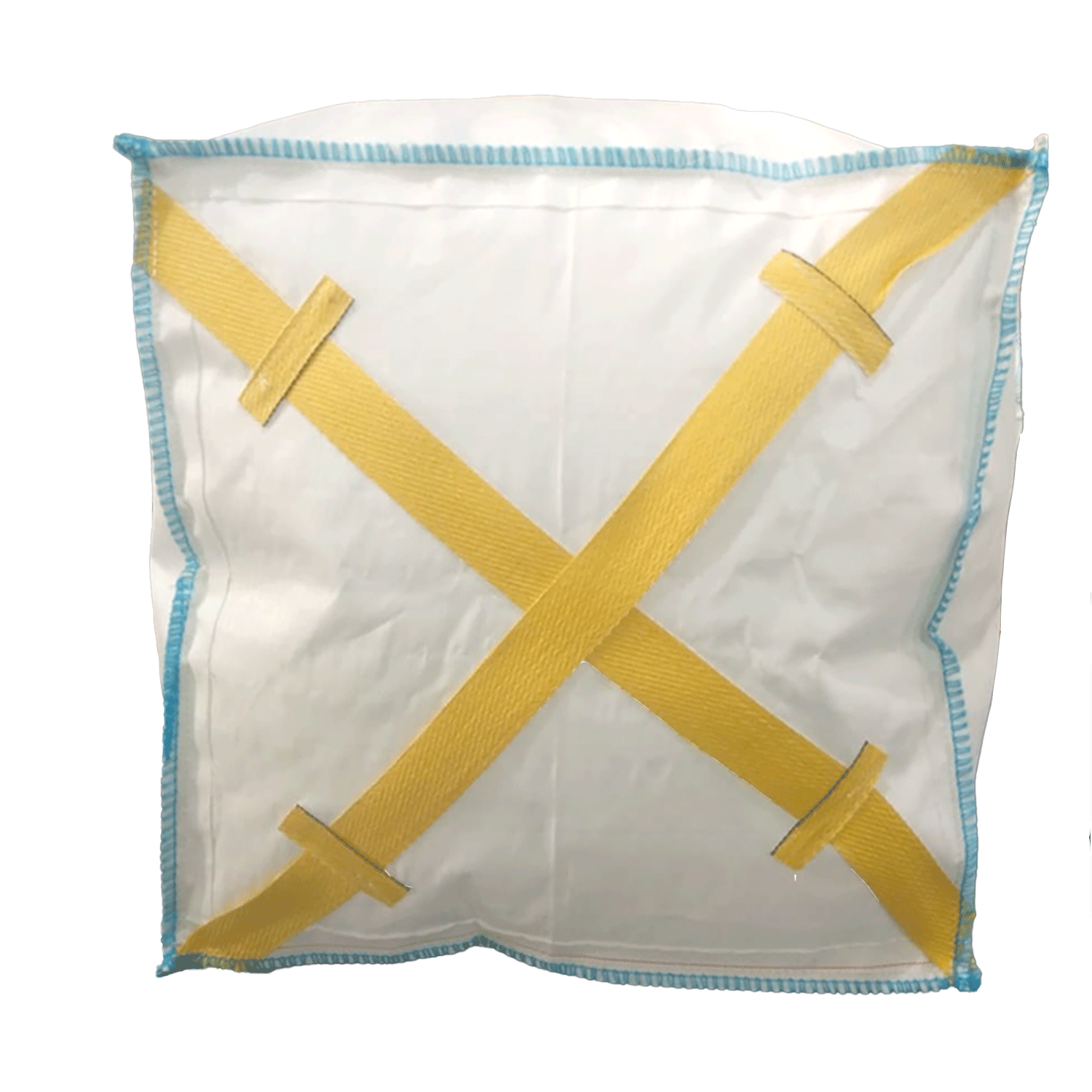 | FIBC Section Cross Bottom Sling Bags Cross Bottom Sling FIBCs – Bulk Bags Deccan Cans & Printers Pvt. Ltd. |
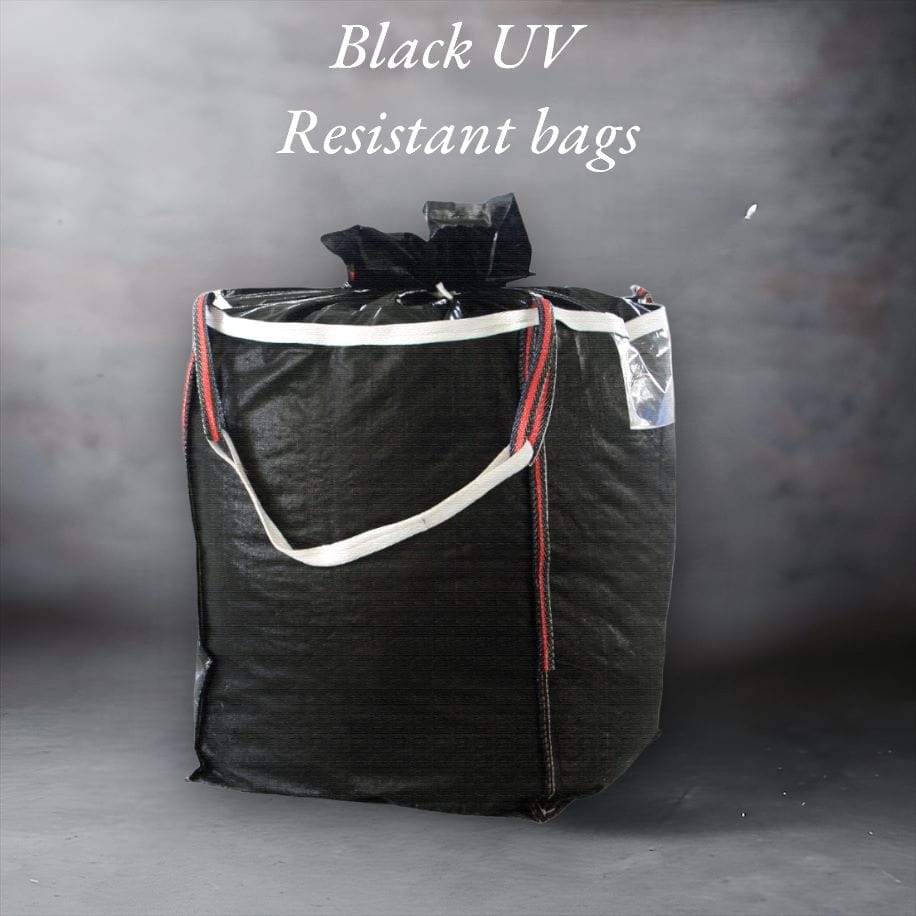 | FIBC Section Black Bags Black FIBC Bags – Enhanced UV Resistance & Extended Shelf Life UV exposure is one of the major challenges faced by the FIBC industry, as prolonged... |
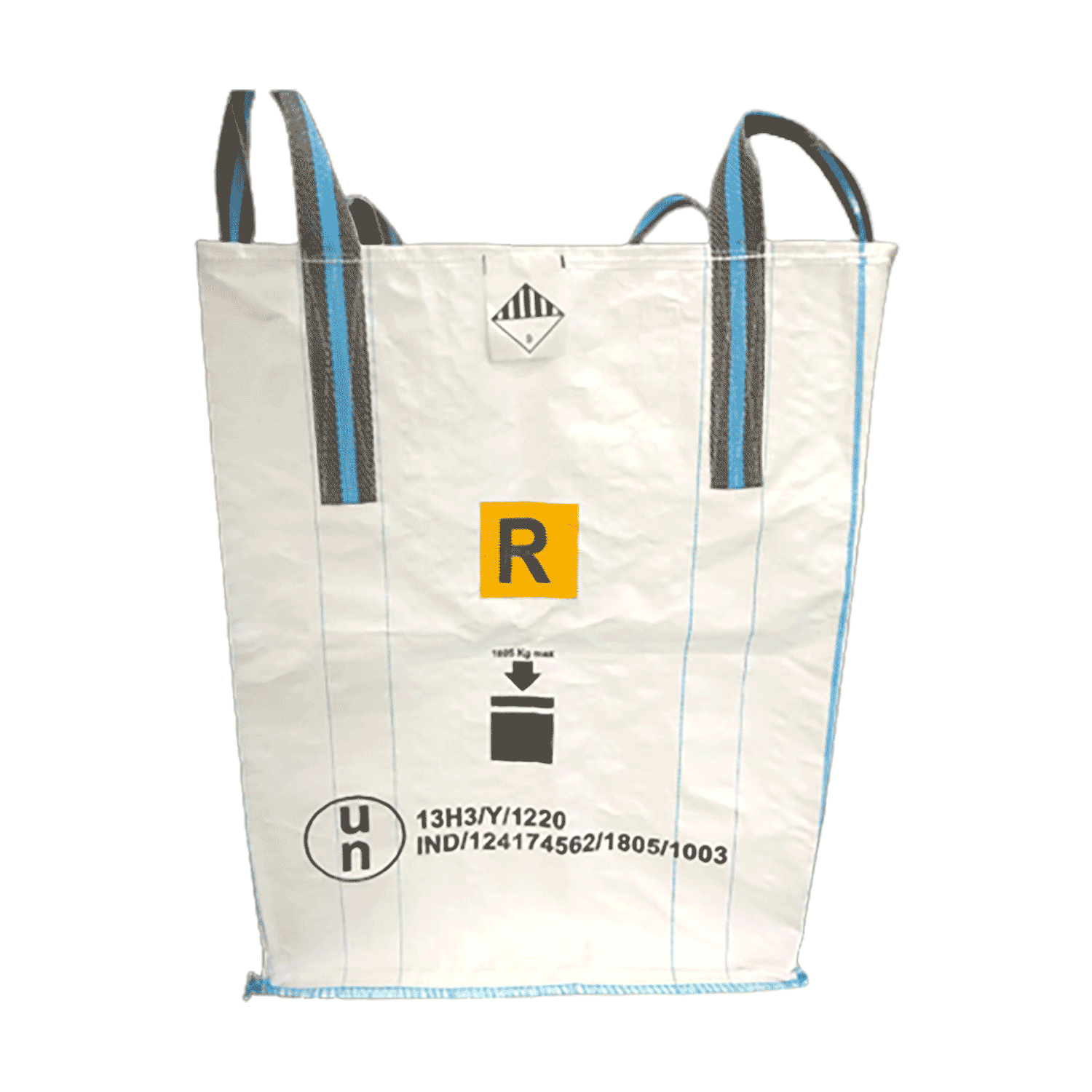 | FIBC Section Un Bags UN Certified Bulk Bags – Rigorous Performance Testing for Safety & Reliability Deccan UN Certified Bulk Bags are specially engineered for the safe... |
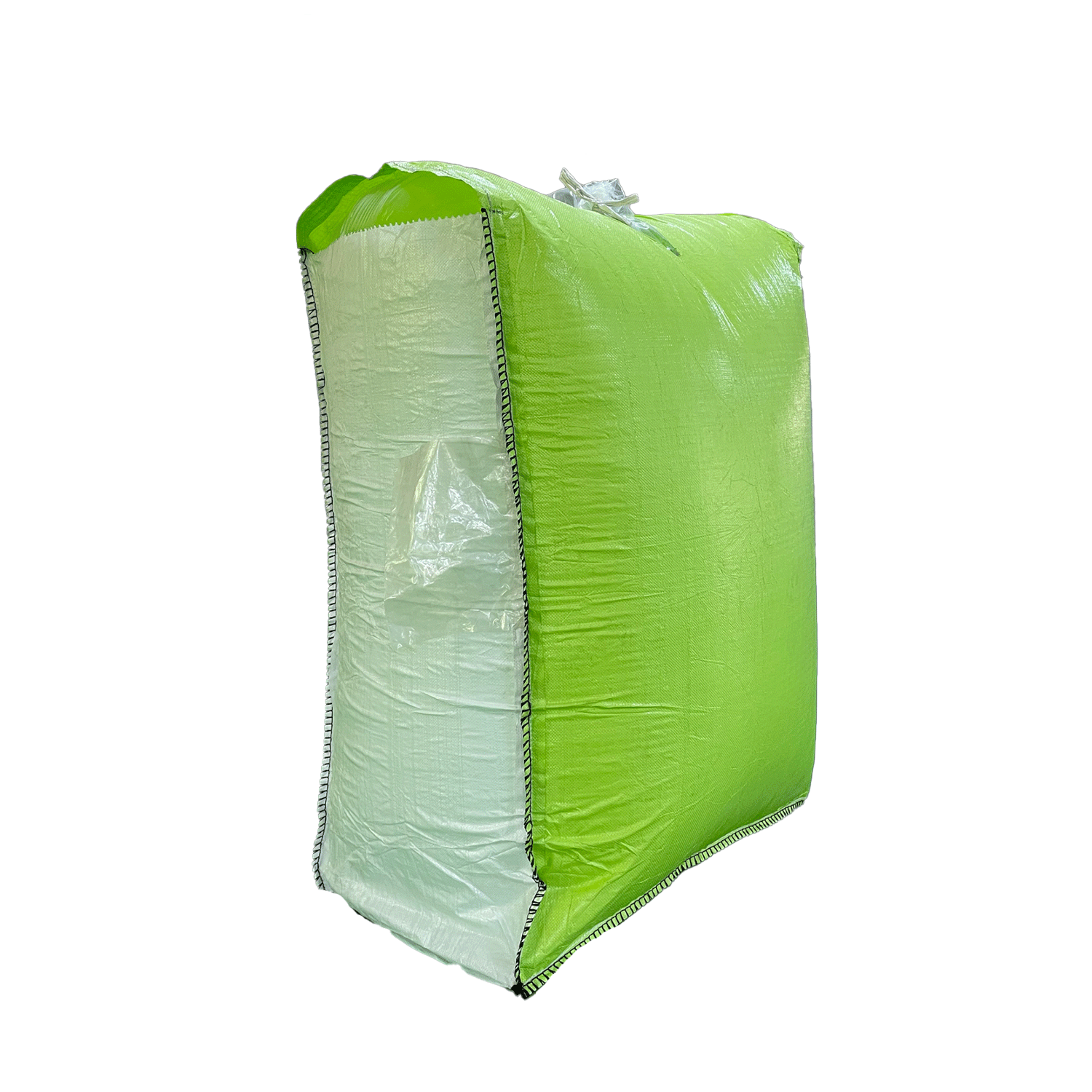 | FIBC Section Fertilizer Bag Range 1 & 2 Loop FIBC Bulk Bags Deccan Cans & Printers Pvt. Ltd. offers durable and cost-effective 1 & 2 Loop FIBC Bulk Bags, designed for the efficient... |