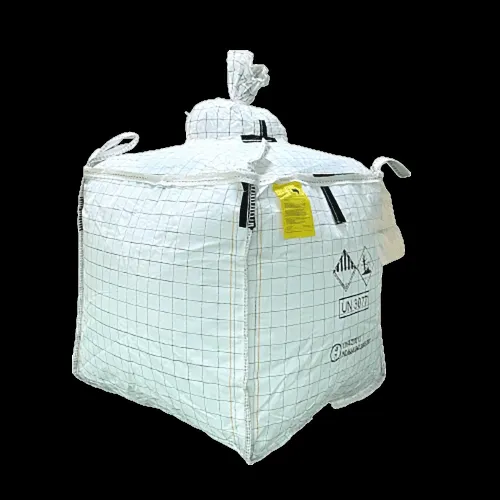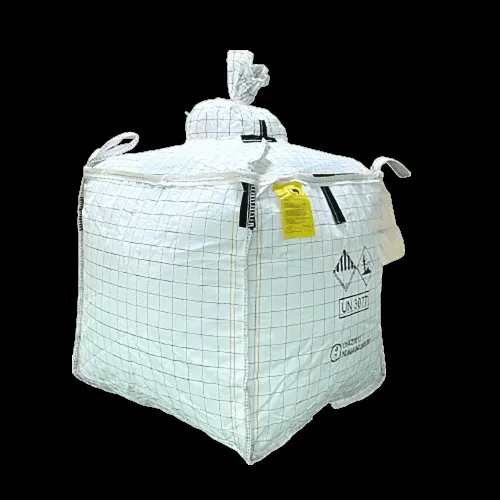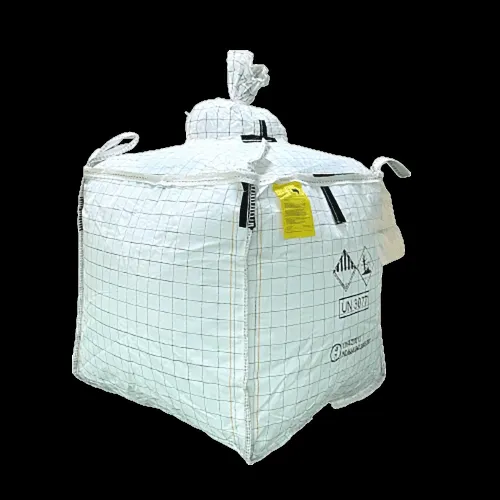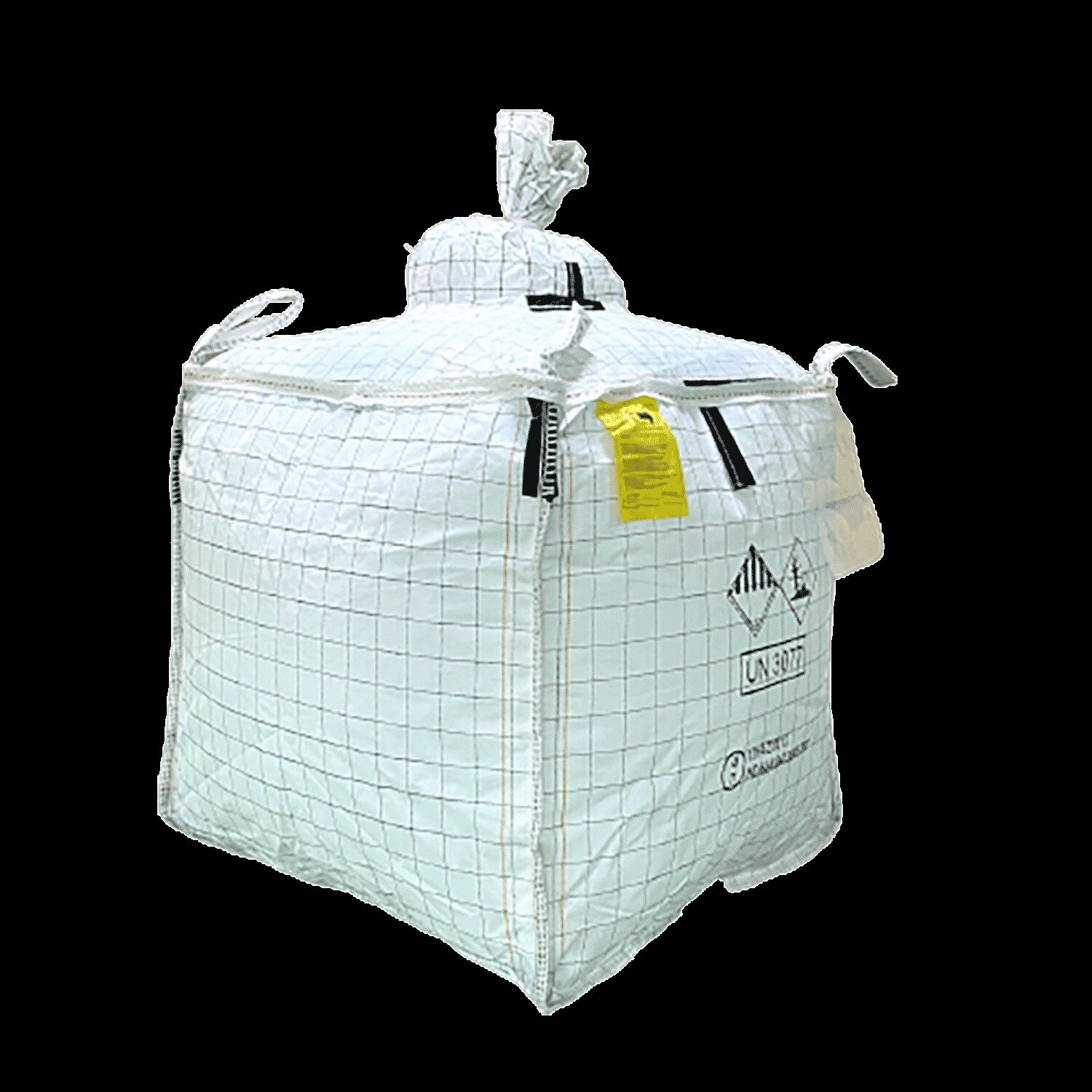
The right FIBC depends on more than whether the product is called fertilizer, seed, grain, or feed: composition, bulk density, moisture behavior, dust, lifting equipment, and transport classification all affect the specification. By the end, you will be able to define the bag construction, capacity, liner, outlet, electrostatic controls, storage method, and inspection evidence your Houston operation needs.
Key takeaways
- Match woven polypropylene construction to moisture, dust, abrasion, and static risks.
- Specify capacity, dimensions, lifting loops, filling, and discharge before requesting quotes.
- Use liners, coatings, closures, and electrostatic controls only where product risks require them.
- Verify SWL, safety factor, certification, and transport records before loading bags.
Match the FIBC construction to the agricultural product
A dry, free-flowing granular fertilizer, seed, or grain suits an uncoated woven polypropylene FIBC when the product is non-corrosive and the bag stays dry. Start by identifying bulk density, moisture uptake, caking, dust, abrasion, chemical reactivity, static sensitivity, and transport classification; these hazards determine construction before capacity or price.
| Construction | Suitable contents | Hazard or limitation |
|---|---|---|
| Uncoated woven polypropylene | Granular fertilizer, seed, feed and grain bags, dry soil amendments | Use only for dry, compatible products; fabric alone does not block humidity or fine dust. |
| Coated polypropylene or polyethylene-lined FIBC | Hygroscopic fertilizer, caking-prone fertilizer, powdered fertilizer, dusty lime or soil amendments | Specify liner material, thickness, sealed seams, and a closure that prevents moisture or powder escape. |
| Heavy-duty fabric with reinforced seams | Abrasive minerals, seed treatments, dense granular fertilizer, rough-handled soil amendments | Match the tested SWL to bulk density; abrasion can expose seams or weaken lifting loops. |
| Type C conductive FIBC | Static-sensitive fertilizer or dusty product handled where ignition risk is controlled | Ground the bag during filling and discharge, maintaining less than 1.0 × 10^7 ohms to ground under IEC 61340-4-4. |
| Type D dissipative FIBC | Static-sensitive product where a verified Type D system is specified | Keep conductive surfaces and the operating environment within the manufacturer’s stated conditions. |
Do not assume a one-ton bag is suitable: the same volume can produce different lifting loads. Specify the exact product, density range, liner and outlet arrangement, then confirm chemical compatibility and whether the product is regulated for transport. Never cut an outlet or stand beneath a suspended bag.
Specify capacity, dimensions, loops, and discharge before ordering
Start with mass, not the phrase “one-ton bag.” Calculate required volume from the product’s loose bulk density, filling condition, and expected settlement, then keep the filled mass below the marked safe working load. Two fertilizers that fill one cubic metre can create very different lifting loads.
1. Give the supplier the product’s bulk density range, target fill mass, and settlement behavior. Specify bag dimensions by base length, base width, and height so the footprint fits your filling line, warehouse bays, rack spacing, and stacking plan. Do not use lifting loops as pallet or bottom support.
2. Match the loop pattern to your equipment. Choose one- or two-loop bags when your filling machine and lifting frame accept those points; choose cross-bottom sling bags for compatible forklift or sling handling; choose four-loop FIBCs when four-hook lifting equipment and greater control during movement justify them.
Confirm the loop length and clearances against forklift tines, hooks, and the lifting frame.
3. State the filling method and top construction together. A filling spout, duffle top, or open top must align with the filler, dust-control equipment, and required closure. Allow headspace where the product settles, or the machine may overfill a bag that meets the nominal dimensions.
4. Define discharge before production: bottom spout diameter, outlet length, flap or iris closure, and whether the bag must discharge into a hopper, conveyor, or mixer. Check that the outlet clears the receiving vessel and that operators can open it without standing beneath a suspended load.
Choose liners, coatings, closures, and electrostatic controls by risk
A plain woven polypropylene body does not stop water vapour or fine powder. Choose the barrier and closure from the product’s failure mode, then confirm chemical compatibility against the fertilizer SDS.
| Risk | Specify | If omitted |
|---|---|---|
| Moisture or caking | FIBC liners, polyethylene-coated fabric, sealed seams, and a closed top or outlet for hygroscopic fertilizer | Humidity enters, fertilizer cakes, and discharge blocks |
| Dust or powder loss | A fitted liner, fine-powder seam construction, and an iris or liner-integrated outlet | Powder escapes through weave or seams |
| Abrasion | Abrasion-resistant fabric, reinforced lifting areas, and protected outlet seams | Handling wears holes into the body or discharge spout |
| Corrosion or chemical reactivity | A liner or coating made from a polymer confirmed compatible with the exact product | The barrier embrittles, swells, or contaminates the fertilizer |
| Contamination | A clean, dedicated liner and sealed filling and discharge closures | Residue, moisture, or foreign material reaches the load |
| Static ignition risk | Type C conductive FIBC with a verified ground connection, or Type D FIBC where its certified construction fits the process | Charge accumulates at the product interface |
A Type C conductive FIBC must measure below 1.0 × 10^7 ohms to ground under IEC 61340-4-4 and remain grounded during filling and discharge. Ground the liner, filling equipment, transfer hose, and receiving vessel as the system requires; an isolated liner defeats a grounded bag.
Type D FIBC dissipates charge through engineered fabric without a grounding connection, but an unapproved liner, contamination, humidity, or fabric damage can invalidate its tested performance. Never substitute it for Type C. Specify the correct standard spout, conical outlet, iris closure, or liner-integrated outlet; cutting the bag creates a dust and spill hazard.
Protect filled bags from Houston weather and handling damage
Keep filled FIBCs under a roof in weatherproof storage, on a dry, level surface, with airflow around the bags. Avoid outdoor storage and direct sunlight; Houston’s heat and ultraviolet exposure can embrittle polypropylene even when the fabric has UV resistance.
Prevent rain entry, standing water, and condensation, which can wet fertilizer, cause caking, and change the bag’s shape.
Before moving or stacking fertilizer bags, inspect each one for:
- Chalking or faded fabric
- Brittle, torn, or abraded panels
- Open seams or damaged closures
- Cut, stretched, or chemically stained lifting loops
- Moisture damage, bulging, or distorted bases
Stack only to the height supported by the FIBC’s tested stability, base dimensions, deformation limits, and the condition of the bottom bag. Do not use lifting loops as a pallet or bottom support. Moisture-absorbing fertilizer can gain weight, cake, and shift its center of gravity, making a previously stable stack unsafe.
Move bags with a suitable pallet, forklift attachment, or certified lifting frame. Keep forks from puncturing the fabric, lift smoothly, and never drag a bag across concrete. Do not leave a filled FIBC suspended while unattended, and keep people clear beneath it during lifting or discharge.
Reinspect bags after severe weather, long storage, or any impact.
Verify SWL, safety factor, certification, and transport evidence
Approve the bag against mass, not nominal volume. Check the product’s loose bulk density, filling condition, settlement, and marked safe working load and safety factor; two fertilizers that fill the same one-cubic-metre bag can create different lifting loads.
Request these records before filling:
- An ISO 21898 test report stating rated SWL, bag factor, lifting and toppling results, compression or cyclic testing, and intended-use classification.
- A specification naming the fertilizer, bulk-density range, dimensions, liner, seams, closures, electrostatic type, UV requirement, and filling and discharge configuration.
- The current SDS and transport decision identifying the UN number, packing group, hazard division, and packing instruction. Ammonium-nitrate-based fertilizer can be UN 2067, but composition determines the applicable entry.
- For international shipments, evidence that any solid-wood pallet or board carries the ISPM 15 treatment mark. The rule applies to wood packaging, not woven polypropylene.
Inspect the label, stitching, seams, liner, discharge outlet, and lifting-loop inspection points before use. Reject a bag with cuts, pulled stitches, chemical attack, dampness, contamination, UV brittleness, or distorted loops.
A 5:1 or 6:1 safety factor does not increase the marked SWL. A 6:1 bag is not automatically reusable; reuse requires the manufacturer’s stated service conditions and a documented inspection after each cycle. Deccan Cans & Printers Pvt. Ltd. can be asked for this evidence against the exact bag construction, not a generic fertilizer-bag claim.
Related product
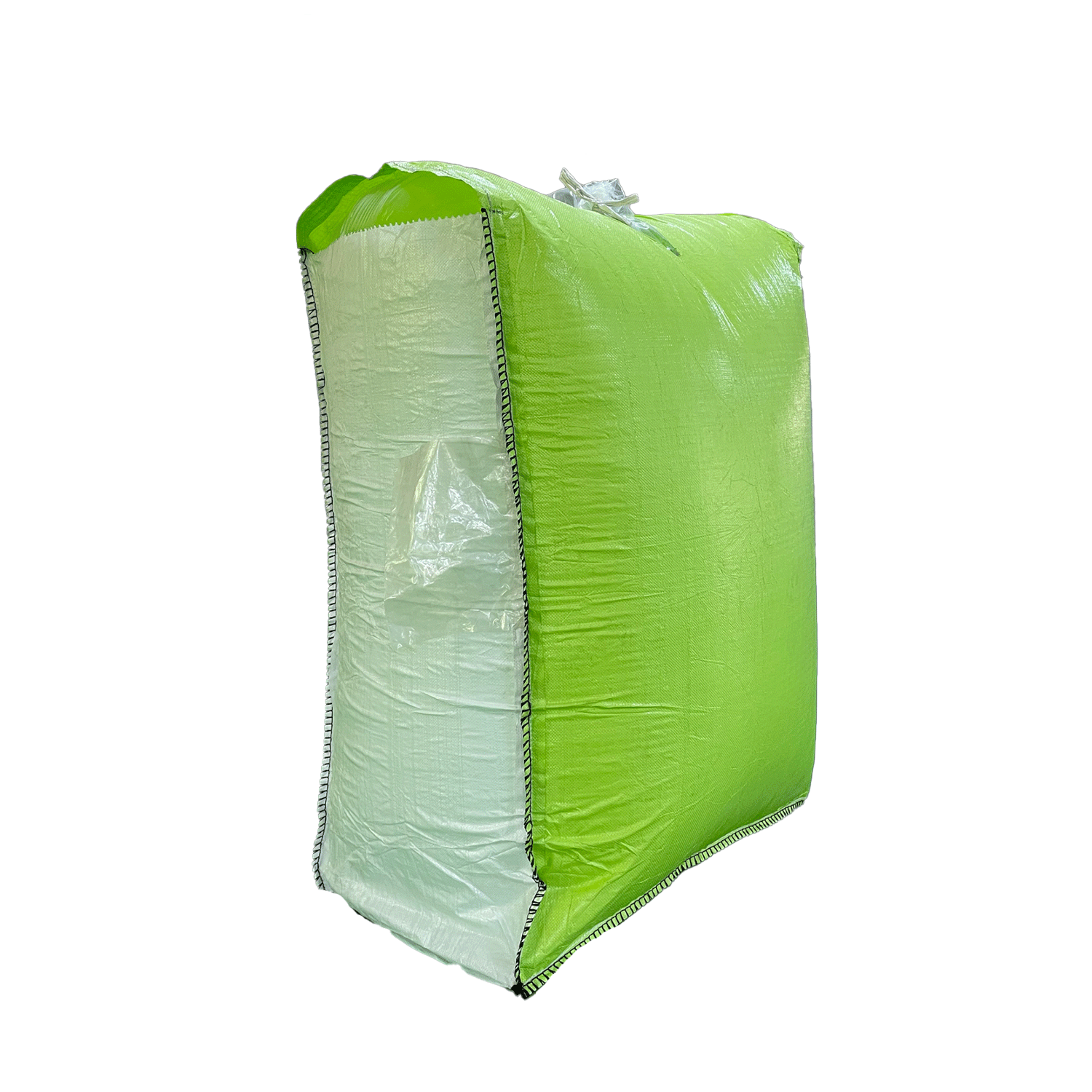 | FIBC Section Fertilizer Bag Range 1 & 2 Loop FIBC Bulk Bags Deccan Cans & Printers Pvt. Ltd. offers durable and cost-effective 1 & 2 Loop FIBC Bulk Bags, designed for the efficient... |
Frequently asked questions
Which FIBC construction suits fertilizer, seed, and grain?
Use an uncoated woven polypropylene FIBC for dry, free-flowing, non-corrosive products that remain dry. Choose construction based on bulk density, moisture uptake, caking, dust, abrasion, chemical reactivity, and static sensitivity.
What specifications must you provide before ordering an agricultural FIBC?
Provide filled capacity, dimensions, bulk density, lifting-loop style, filling method, discharge method, closure type, and any liner or coating requirements.
When does an agricultural product need an FIBC liner or coating?
Use a liner for moisture protection, contamination control, fine powders, or improved product recovery. Specify a coating when the woven fabric needs added resistance to dust or moisture ingress.
How should filled FIBC bags be protected in Houston weather?
Keep bags under cover on a dry, level surface, protect them from rain and direct sunlight, and prevent contact with sharp edges, standing water, and damaged pallets.
What safety and transport evidence should you verify?
Check the safe working load, safety factor, test or certification documents, batch identification, handling instructions, and transport records before filling and shipping.