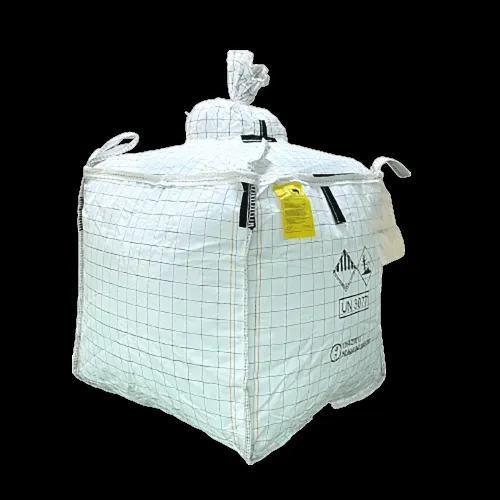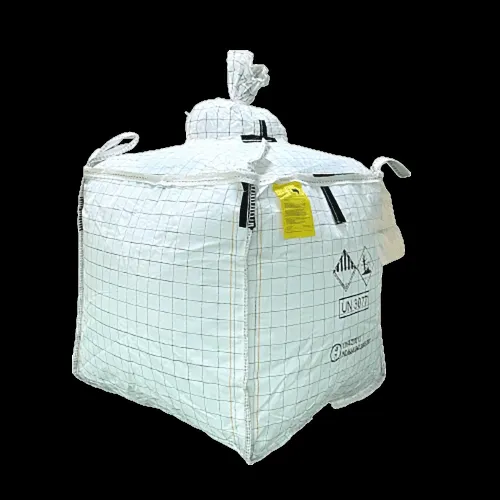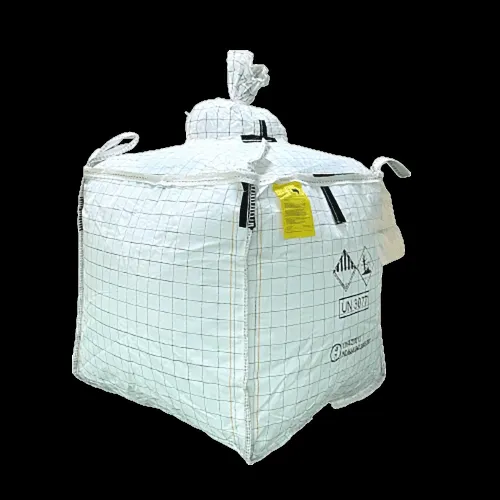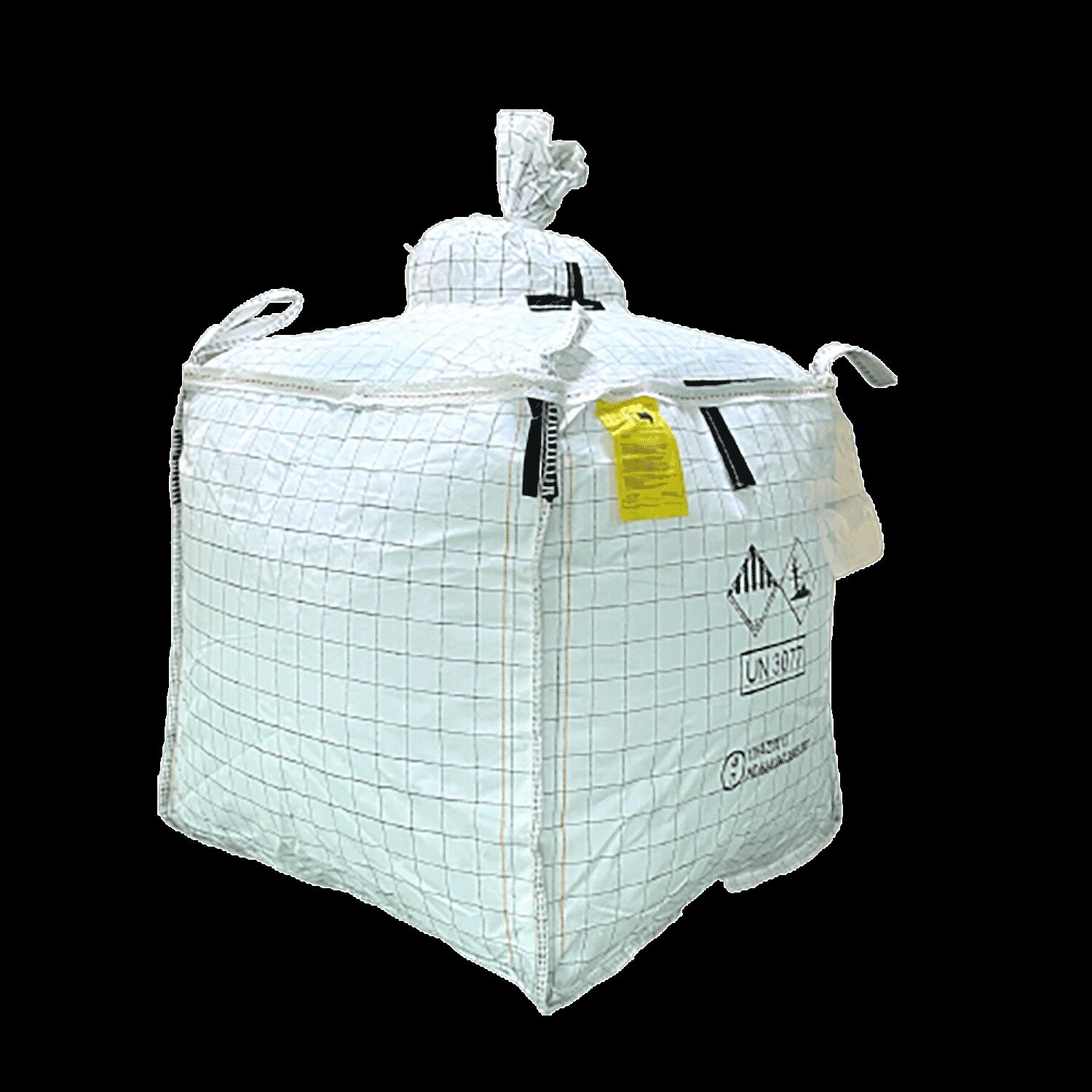
An FIBC described as “anti-static” does not tell you whether it can control ignition risk during filling, discharge or transport. By the end, you will be able to match Type A, B, C or D construction to your powder and process, specify grounding and testing requirements, and reject designs that lose protection through liners, damage or contamination.
Key takeaways
- Match Type A, B, C or D to the powder, atmosphere and handling method.
- Specify fabric, liners, seams, lifting loops, grounding points and the complete bag assembly.
- Ground Type C bags before filling, discharge and product transfer.
- Reject bags that fail documented continuity, construction or identification checks.
Choose the IEC 61340-4-4 FIBC type for the hazard
“Anti-static FIBC” is not a technical specification. Select an IEC 61340-4-4 classification—Type A, B, C or D—against the powder, atmosphere, filling and discharge method, and hazardous-area assessment.
| Type | Construction and control | Appropriate decision |
|---|---|---|
| Type A FIBC | Ordinary fabric with no electrostatic-control provisions | Do not use where combustible dust, flammable powder or flammable vapour may be present during filling, handling or emptying. |
| Type B FIBC below 6 kV breakdown voltage | Insulating fabric designed to limit propagating brush discharges, but with no controlled grounding path | Consider only after assessing the dust hazard; it is not a substitute for grounded Type C where grounding is required. |
| Type C FIBC | Interlinked conductive yarns or tapes that require connection to earth | Use where accumulated charge must be drained during pneumatic or rapid filling and discharge, especially with flammable powders or combustible-dust clouds. |
| Type D FIBC | Static-dissipative construction designed to control incendive discharges without a separate earth connection | Use only when its specified fabric and construction suit the assessed atmosphere and remain clean and undamaged. |
For powder with a minimum ignition energy below 3 mJ, flammable vapour, or a hybrid dust-gas mixture, obtain a competent hazardous-area assessment before choosing Type B, C or D. Type C is the controlled choice where grounding is required; Type D can fit only where its performance is validated for the complete operation.
Evaluate dust-cloud concentration, filling rate, pneumatic conveying, discharge equipment and liner arrangement—not the product name alone.
Specify the complete bag assembly, not just conductive fabric
A conductive FIBC is not defined by conductive fabric alone: charge control depends on the bag, liner, seams, lifting loops, spouts and earth path as one assembly. A static-dissipative FIBC limits charge accumulation; grounding-enabled construction conducts charge to earth. A bag that merely reduces dust cling or static attraction offers no verified discharge route.
Dry powder, pneumatic conveying, high transfer rates, sieving, vibration and sliding contact generate more charge than slow gravity filling. Isolated charged surfaces can spark when a metal probe, pipe or person approaches. That creates insulating liner electrostatic risk: the liner can interrupt the fabric path or become charged itself.
- Require the supplier to state how conductive grids, lifting loops, seams, fill and discharge spouts, and any conductive liner connect into one continuous, usable path.
- Specify and test the complete bag-and-liner assembly. A conventional insulating liner can defeat a Type C path; a conductive liner still fails if it is torn, detached or poorly bonded.
- Inspect printed coatings, moisture, contamination, abrasion, folded fabric and stitching. Each can cover, isolate, break or increase resistance in conductive yarns, tapes and contacts.
- Treat a damaged grid, seam or liner as a construction failure, not a cosmetic defect. Re-test after repairs or design changes.
- Do not use humidity as a substitute for the correct FIBC type. Dry conditions increase charge retention, while hydrophobic powders and polymer liners remain poor charge paths even at higher humidity.
Ground and operate a Type C bag before product transfer
A Type C FIBC grounding procedure starts before the fill spout opens. The bag’s conductive yarns, seams, lifting loops and approved liner must form one continuous path to earth; fabric that merely looks conductive proves nothing.
1. Inspect the designated grounding tab or point. Check for broken stitching, corrosion, paint, contamination and mechanical damage. Confirm that the installed liner and transfer equipment match the approved assembly.
2. Attach the earth clamp to clean, exposed conductive material at that designated point. Do not clamp over powder, paint, rust or a contaminated surface. Connect the clamp to a verified plant earth, not an untested pipe, frame or isolated metal object.
3. Test continuity before opening the fill spout or starting transfer. Under IEC 61340-4-4, measure resistance-to-ground and require below 1.0 × 10^7 ohms, unless your site specifies a tighter limit. A visual clamp check cannot reveal an open conductive grid or excessive contact resistance.
4. Use a monitored grounding clamp or grounding clamp interlock so filling cannot start unless the measured resistance is within the site limit. If continuity fails, stop, isolate the transfer, clean or repair the connection, and retest; never bypass the interlock.
5. Maintain Type C FIBC grounding throughout filling, movement and discharge. Keep personnel grounded, prevent isolated probes, pipes or people from approaching charged product or a liner, and close the discharge spout before forklift movement. This sequence is the FIBC filling and discharge procedure, not an optional final check.
Set acceptance tests and rejection criteria for delivered bags
Accept a delivered FIBC only against recorded electrostatic and mechanical evidence. IEC 61340-4-4 testing does not prove safe working load, top-lift strength, seam strength, drop performance or stacking suitability; verify those requirements separately under ISO 21898.
| Test area | Acceptance record |
|---|---|
| Electrostatic | IEC 61340-4-4 classification; resistance-to-ground, surface resistance, leakage resistance, charge decay testing and continuity results |
| Mechanical | ISO 21898 safe working load, top-lift, seam, drop and stacking results |
| Assembly | Bag, conductive grid, seams, loops, liner and grounding point identified as the tested configuration |
| Conditions | Temperature, relative humidity, conditioning time, test voltage, instruments and test date recorded |
Require the supplier to identify the complete bag-and-liner assembly tested. A Type C bag fails its purpose if broken yarns, stitching, loops, liner or grounding point interrupt the path.
At receipt, inspect every batch and retain the certificate, batch number and construction drawing. Check the designated grounding point, conductive grid, seams, spouts, liner and labels; measure continuity and resistance before use. Repeat verification at the site-defined interval and after cleaning, repair, long storage or an incident.
Reject a bag for any of these findings:
- Continuity failure or resistance above the site limit
- Unapproved, substituted or damaged liner
- Broken conductive yarns, damaged grid, seam damage or unauthorised repair
- Corroded or painted-over grounding point, or failed clamp connection
- Contamination, abrasion or ageing that changes the measured result
- Any fabric, liner, stitching, spout or grounding construction change without retesting
A visual check cannot detect excessive contact resistance or an open conductive path.
Write a procurement specification that suppliers can actually fulfil
Put the process data in the enquiry before you compare prices; “anti-static FIBC” is not a fulfilment specification.
1. Identify the hazard: state the dust’s minimum ignition energy, explosibility data, moisture content, bulk density, dust-cloud conditions, vapour or gas hazards, hybrid-mixture risk and hazardous-area classification. Add filling and discharge rates, gravity or pneumatic-transfer details, conveying air velocity or pressure, sieving, vibration and sliding-contact conditions.
2. Name the construction: specify IEC 61340-4-4 Type A, B, C or D, not “anti-static.” State the liner material, whether it is bonded or removable, fill and discharge-spout design, conductive yarn or tape arrangement, grounding point and grounding method. Require the supplier to confirm whether the liner is included in the tested bag assembly.
3. Define measurable acceptance criteria. For a Type C design, require resistance to ground below 1.0 × 10^7 ohms, tested under IEC 61340-4-4 with the complete bag-and-liner assembly and stated conditioning conditions. Record the required surface or leakage-resistance result and continuity method.
Separately specify ISO 21898 FIBC requirements: safe working load, top-lift and seam strength, drop performance, stacking and product compatibility.
4. State incoming and periodic inspection frequency, including grounding-point, conductive-grid, seam and liner checks, and rejection after failed continuity, resistance above the site limit or unapproved construction change. A manufacturer such as Deccan Cans and Printers Pvt.
Ltd. can convert these inputs into a custom conductive FIBC or grounding-enabled FIBC design, but you remain responsible for site hazard assessment, grounding controls and acceptance checks.
Frequently asked questions
How do you choose an IEC 61340-4-4 FIBC type?
Select Type A, B, C or D against the powder, surrounding atmosphere, filling process, discharge method and hazardous-area assessment.
What should an FIBC procurement specification include?
Define the complete assembly: fabric, liner, seams, lifting loops, grounding points, closures, dimensions, identification and acceptance tests.
How should you operate a Type C FIBC?
Connect the bag to a verified ground before filling, product transfer or discharge, and maintain that connection throughout the operation.
What should cause delivered FIBC bags to be rejected?
Reject bags that fail the specified electrical or construction tests, lack required identification, or arrive with damaged fabric, seams, loops, closures or grounding features.