An FIBC that suits rice may fail as a urea or micronutrient powder bag because bulk density, moisture, flow behaviour, static risk and discharge requirements differ. By the end, you will be able to write a purchase specification, calculate the required capacity, select the lifting construction and reject bags that are unsafe for filling, storage or export.
Key takeaways
- Give suppliers minimum and maximum bulk density, target mass and a filled trial.
- Use liners, coated fabric or barrier films to control moisture and fertilizer caking.
- Select Type C or Type D FIBCs for defined static-control risks.
- Match SWL, lifting loops and discharge outlets to your handling equipment.
Match the FIBC to the agricultural commodity, not just the bag size
Choose the FIBC by bulk density, moisture, flowability and handling damage risk—not by empty-bag dimensions alone. A filled bag’s capacity changes with settlement, fill level, liner shape and panel construction, so give the supplier your product’s minimum and maximum bulk density and target net mass, then approve a filled trial.
| Commodity | FIBC choice | What to confirm |
|---|---|---|
| Grain and pulses | Durable woven polypropylene grain bags with a suitable discharge outlet | Bulk density, dust control, moisture exposure and whether the product bridges during discharge |
| Seeds | Clean seed bags with a liner when moisture or contamination threatens germination | Food-contact suitability, liner sealing, gentle filling and protection from abrasion |
| Rice | Rice FIBC bags with controlled dimensions and dust-resistant seams | Target mass after settlement, moisture barrier needs and outlet compatibility |
| Animal feed | Strong, clean construction matched to pellet or meal flowability | Fines, odour transfer, humidity and discharge blockage |
| Fresh produce | Ventilated construction for commodities that need airflow | Product bruising, ventilation, hygiene and whether stacking will crush the contents |
Do not assume a larger bag holds more product safely. Ask for:
- Minimum and maximum bulk density, moisture content and particle size
- Required net mass after settling, not just nominal volume
- Filling method, forklift or crane arrangement, and discharge equipment
- A food-contact or cleanliness document when the commodity enters the food chain
A sealed liner protects dry grain or rice from external humidity, but it can trap condensation. Produce that needs respiration requires a different construction, and a standard sealed FIBC can accelerate spoilage.
Specify fertilizer compatibility, moisture control and caking protection
Woven polypropylene is chemically compatible with many fertilizers, but it is not a moisture barrier. Match the construction to hygroscopicity, particle size and storage time; extra tensile strength alone will not stop caking.
| Fertilizer | Suitable construction | Moisture and caking specification |
|---|---|---|
| Urea | Coated fabric with a sealed PE liner | Specify sealed liner neck and base, tight closure, low-moisture filling and limited stacking time. Urea bags need protection from humid air and condensation. |
| DAP | Coated fabric plus sealed liner | DAP bags need moisture exclusion because absorbed water promotes caking. Control fill compaction and avoid prolonged pressure in tall stacks. |
| MAP | Coated fabric plus sealed liner | MAP bags require the same sealed construction where humidity, long transit or storage is expected. Check liner compatibility with the formulation. |
| NPK blends | Coated fabric with liner, selected after a product trial | Blends vary in hygroscopicity and particle size. Approve filled bags for segregation, settlement and caking before export. |
| Potash | Uncoated fabric for dry, short-term service; coated fabric or liner for humid storage | Potash can cake after moisture exposure. Use sealed closures when warehouses or sea freight are humid. |
| Ammonium sulfate | Coated fabric and sealed liner for extended storage | Limit moisture ingress and stack compression, particularly with fine or dusty grades. |
| Micronutrient powders | Coated fabric with fine-powder liner and dust-tight seams | A liner prevents powder loss through the weave and reduces moisture entry. |
Specify the exact design code when UN packaging applies: 13H1 is uncoated without a liner, 13H2 coated without a liner, 13H3 uncoated with a liner, and 13H4 coated with a liner. Confirm the filled trial, because particle size, settlement, temperature and compaction determine delivered capacity and caking risk.
Choose the right FIBC type for static, hazardous and food-contact risks
Select the bag from the hazard assessment, not from the product name alone. Standard uncoated FIBCs suit dry, non-hazardous goods with no static-control requirement. Coated or laminated fabric adds resistance to moisture and powder migration, but neither construction automatically proves food-contact compliance; obtain a declaration covering the fabric, coating, liner, thread and intended food.
| Option | What it means | When it applies |
|---|---|---|
| Standard or Type A | Woven polypropylene with no deliberate electrostatic control | Dry, non-flammable products where static ignition is not a risk |
| Antistatic | Surface-treated or dissipative material | Static reduction is needed, but the site does not require a grounded conductive system; verify the specified resistance |
| Type B | Controlled breakdown characteristics | Combustible dust handling where no flammable gas or vapour atmosphere is present |
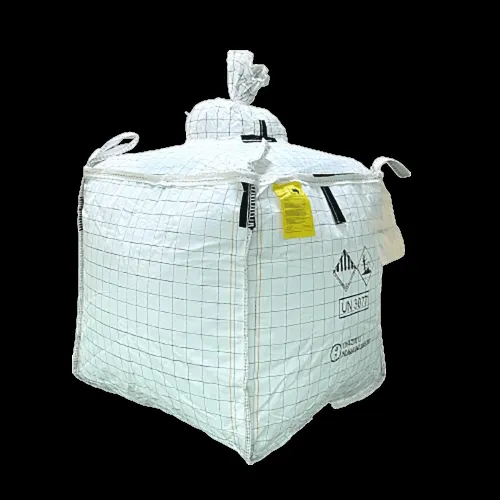
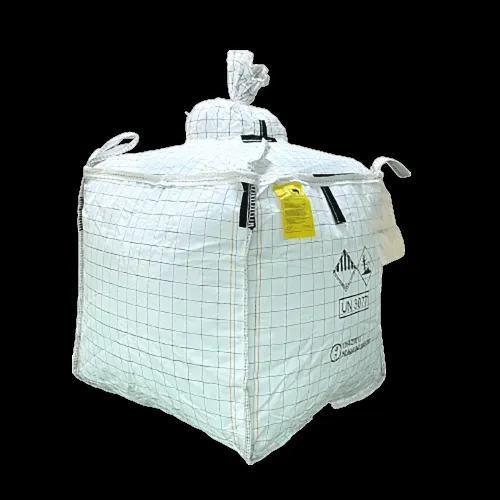
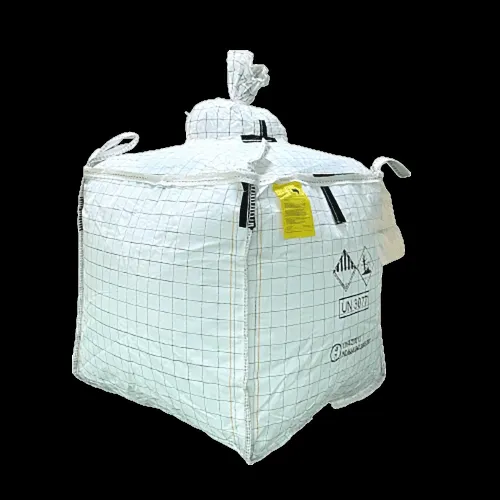
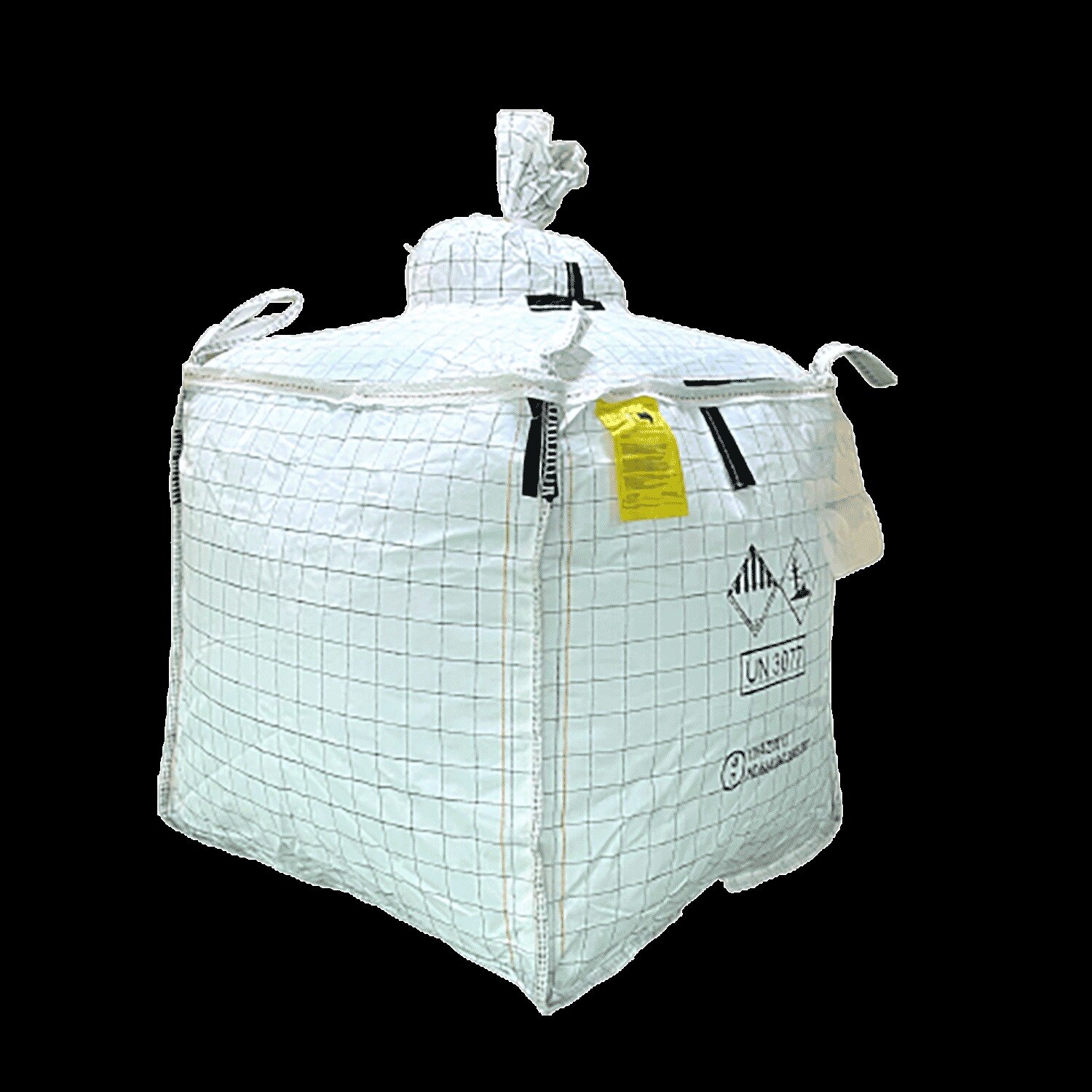
| Type C FIBC | Interconnected conductive threads and groundable points | Use when grounding is required; test continuity, stitching, conductive yarn and groundable tab before every filling operation |
| Type D FIBC | Charge dissipates without a user earth connection under specified conditions | Use only where the manufacturer’s conditions match the dust and vapour assessment |
| Conductive FIBC bags | A construction requiring a reliable conductive path | Static-sensitive filling and discharge, with Type C grounding procedures where specified |
For export, request the exact UN design code, not merely “UN bag”: 13H1, 13H2, 13H3 or 13H4. Verify the UN mark, packing instruction, packing group and certificate for the intended substance; changing a liner, closure or dimensions can invalidate approval. Check food-contact documents and ensure wooden pallets or dunnage carry separate ISPM 15 compliance.
Calculate SWL and match the bag to lifting and discharge equipment
Lift an FIBC only when its printed FIBC safe working load exceeds the filled mass and its loops match the lifting equipment. Do not calculate SWL from bag volume, fabric denier or dimensions; require the manufacturer’s design and test basis under ISO 21898 or the applicable UN design-type regime.
Calculate the filled mass as target volume multiplied by the commodity’s bulk density, then allow for settlement and the approved fill level. Dimensions predict capacity poorly because grain, fertilizer and powders form different shapes inside the panels and liner. Run a filled trial using the minimum and maximum bulk densities before approving production.
A 5:1 or 6:1 FIBC safety factor is a design classification, not permission to load beyond SWL. Reusable bags need declared reuse conditions and higher suitability controls; treat a single-trip bag as non-reusable unless the manufacturer states otherwise.
Match the load path, not just the hook count:
- A 1-loop FIBC or 2-loop FIBC requires equipment designed for that exact loop arrangement.
- Four loops do not automatically permit four separate hooks; confirm hook geometry, lifting angle and any spreader-bar requirement.
- Never lift from the liner, drag a filled bag or use one loop unless its design permits it.
- Check that the discharge spout, valve, outlet length and clearance fit the hopper or dosing machine without pulling the bag sideways.
For Type C bags, verify grounding-tab, conductive-thread and continuity checks before lifting or filling; grounding the machine alone is insufficient.
Inspect, store and approve FIBCs before filling or export
Reject an FIBC with torn fabric, broken lifting loops, open seams, damaged closures, contamination, or distorted panels. A sound-looking Type C bag can still be unsafe if its conductive yarn, grounding tab, or stitching has lost continuity.
Use this FIBC inspection checklist before approval:
1. Confirm the label shows SWL, safety factor, bag type, production batch, dimensions, liner and closure details. For a Type C bag, test continuity and record the result; ground the bag itself, not only the filling equipment.
2. Inspect reusable FIBC bags for the previous product, stains, odour, moisture, insects, abrasion and unauthorised repairs. Reuse only after documented cleaning, drying and examination; never place a wet or chemically contaminated bag back into service.
3. Control FIBC moisture protection with a correctly sealed liner, dry loading conditions, covered storage and pallets that keep bags off the floor. For fertilizer, approve the liner seal, product temperature, compaction and planned stacking time; extra fabric strength alone will not prevent caking.
4. For dangerous goods, verify the UN FIBC mark and design code, such as 13H1, 13H2, 13H3 or 13H4, against the product, packing group and packaging instruction. Request the certificate or test report; changing the liner, coating, dimensions or filling method can invalidate the approval.
5. Attach the commercial invoice, packing list, bill of lading, certificate of origin, safety data sheet and dangerous-goods declaration when applicable. State net and gross mass, bag count, batch number, dimensions, liner, pallet material and marks; specify ISPM 15-compliant wood separately.
Deccan Cans & Printers Pvt. Ltd. can use these recorded checks to match its bags and liners to the buyer’s filled trial, export documents and handling equipment.
Related products
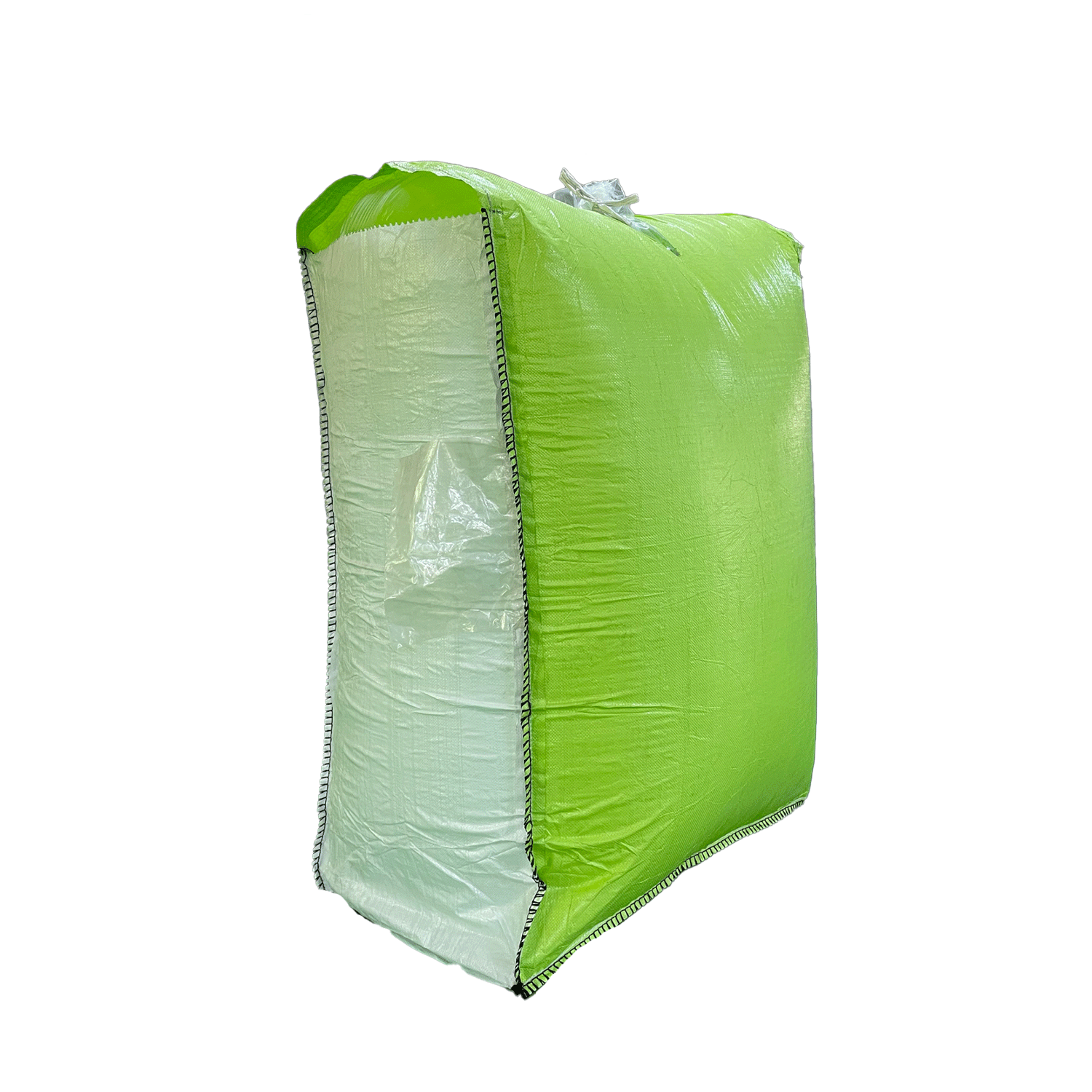 | FIBC Section Fertilizer Bag Range 1 & 2 Loop FIBC Bulk Bags Deccan Cans & Printers Pvt. Ltd. offers durable and cost-effective 1 & 2 Loop FIBC Bulk Bags, designed for the efficient... |
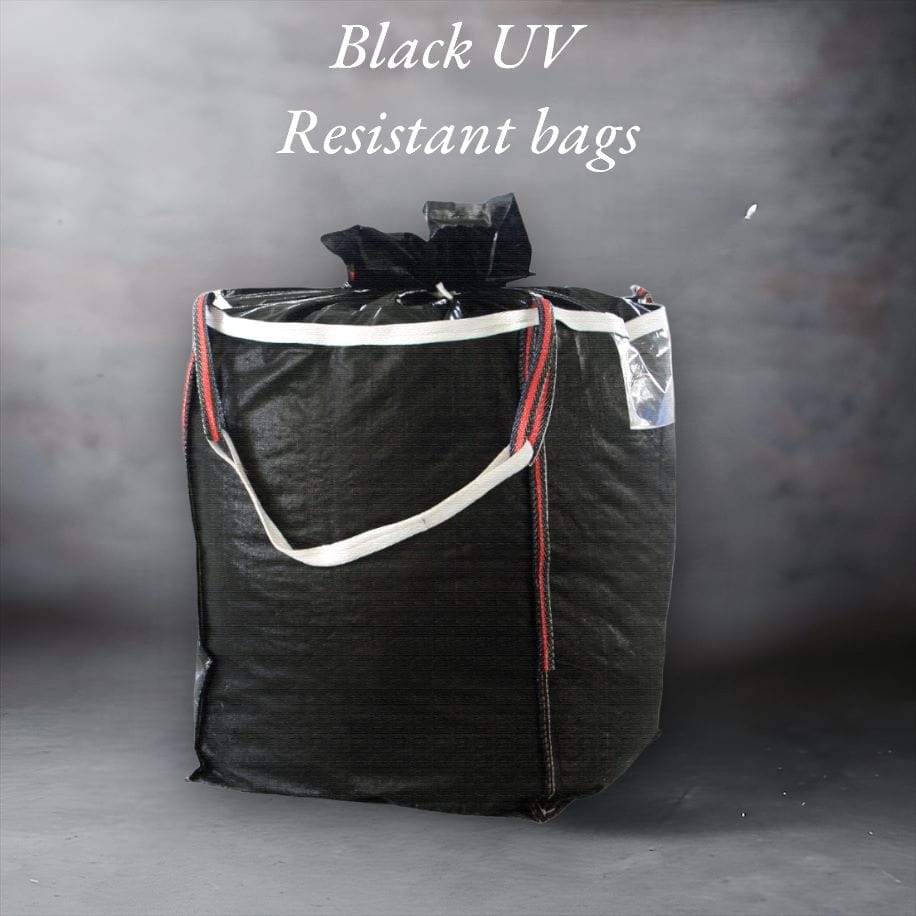 | FIBC Section Black Bags Black FIBC Bags – Enhanced UV Resistance & Extended Shelf Life UV exposure is one of the major challenges faced by the FIBC industry, as prolonged... |
Frequently asked questions
How do you match an FIBC to an agricultural commodity?
Compare the commodity’s bulk density, moisture sensitivity, flowability and risk of abrasion or handling damage, then confirm capacity with a filled trial.
How can an FIBC protect fertilizer from moisture and caking?
Specify a compatible liner, coated fabric or barrier construction after checking the fertilizer’s chemical properties, moisture sensitivity and required storage period.
Which FIBC type is suitable for static or hazardous risks?
Choose the FIBC category from the assessed static risk: Type B limits incendive brush discharges, while Type C and Type D provide defined grounding or dissipative protection.
How should you calculate FIBC SWL and equipment compatibility?
Keep the filled bag’s total mass within its SWL and verify that lifting loops, forklift handling and discharge equipment match the bag design.
What should you inspect before filling or exporting an FIBC?
Check fabric, seams, loops, closures, liner, labels and cleanliness; confirm the bag’s SWL, construction, batch traceability and required export documents.
Related products
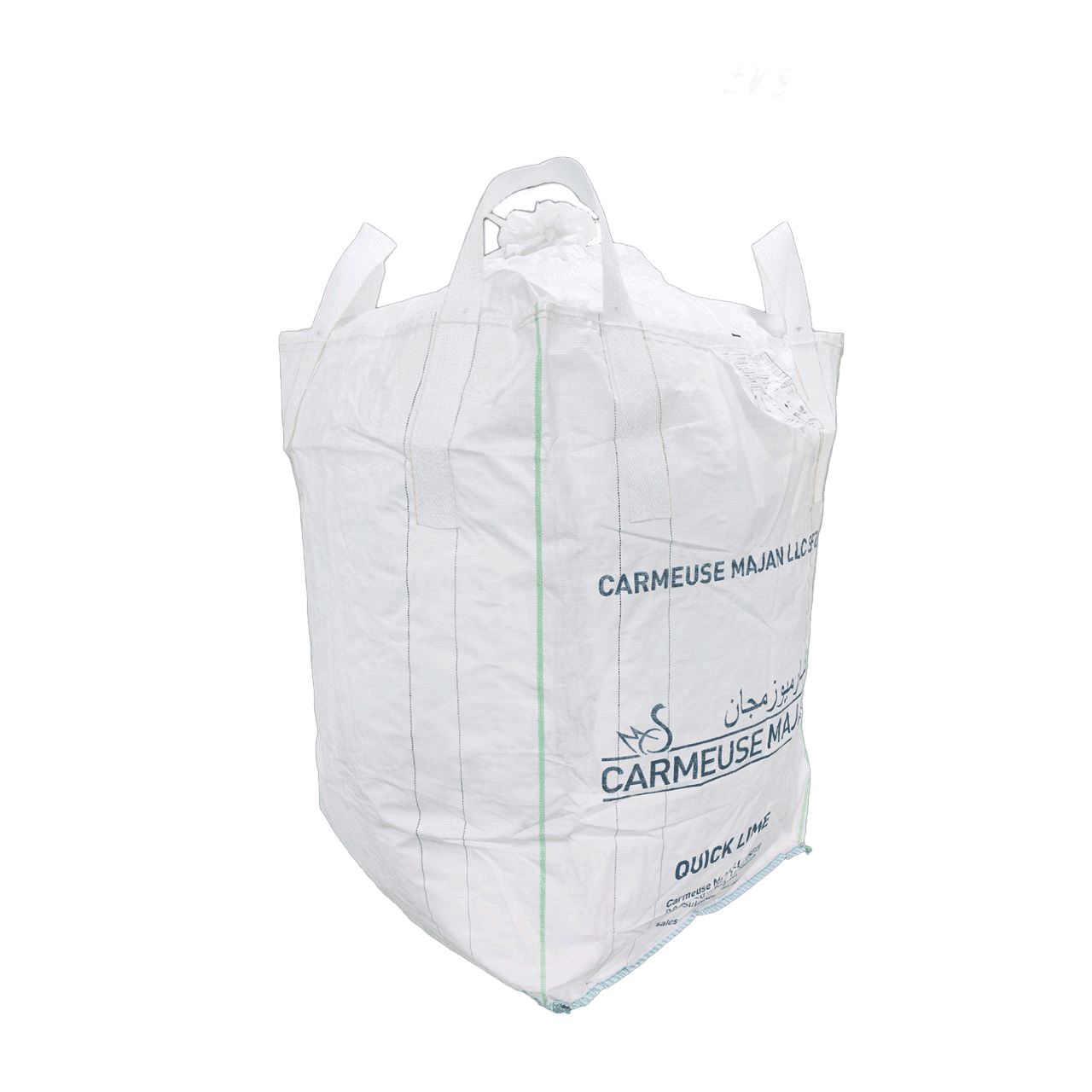 | FIBC Section Bags With Liners FIBC Liners – Bulk Bag Liners Deccan Cans & Printers Pvt. Ltd. |
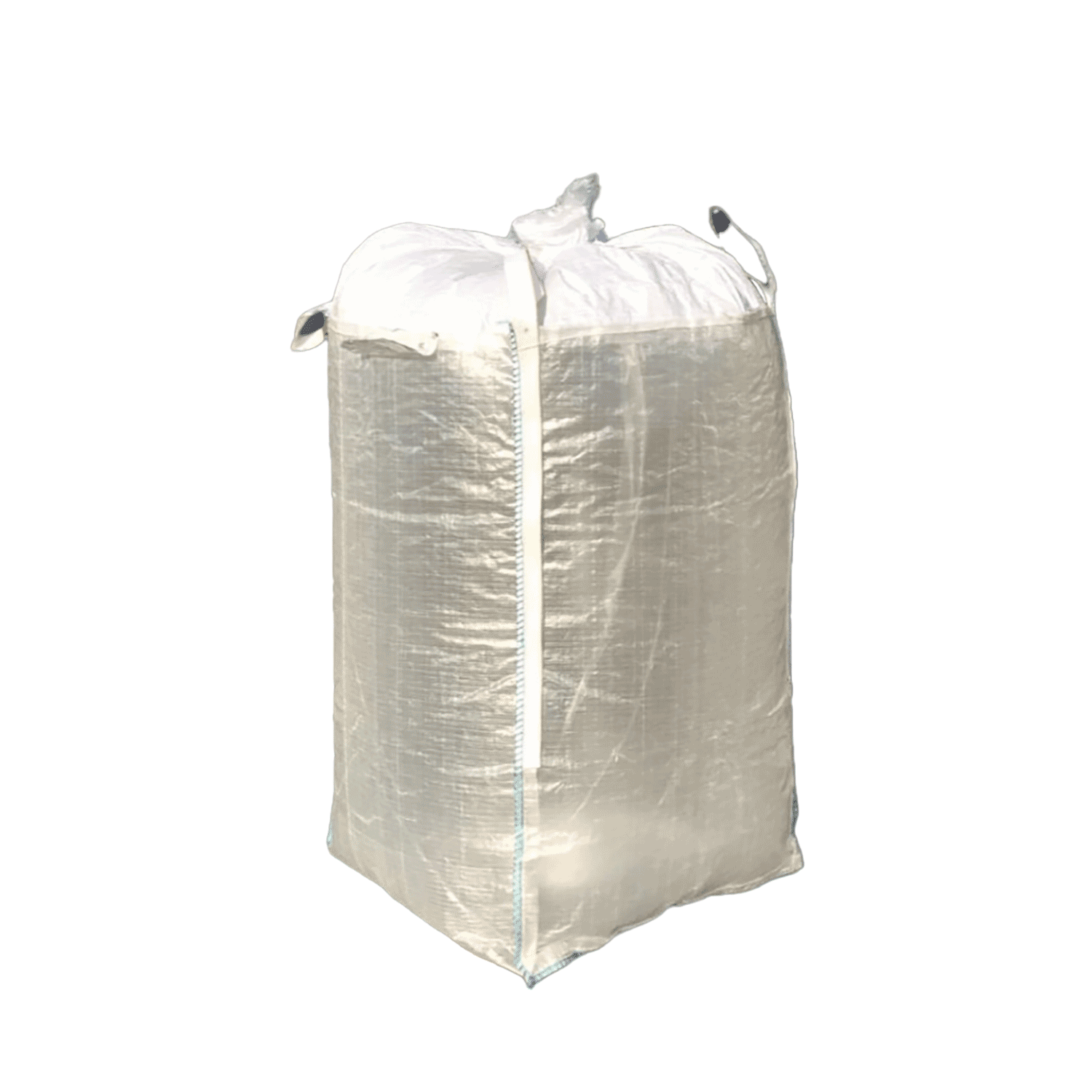 | FIBC Section Transparent Bags Transparent FIBCs – See-Through Bulk Bags Deccan Cans & Printers Pvt. Ltd. |
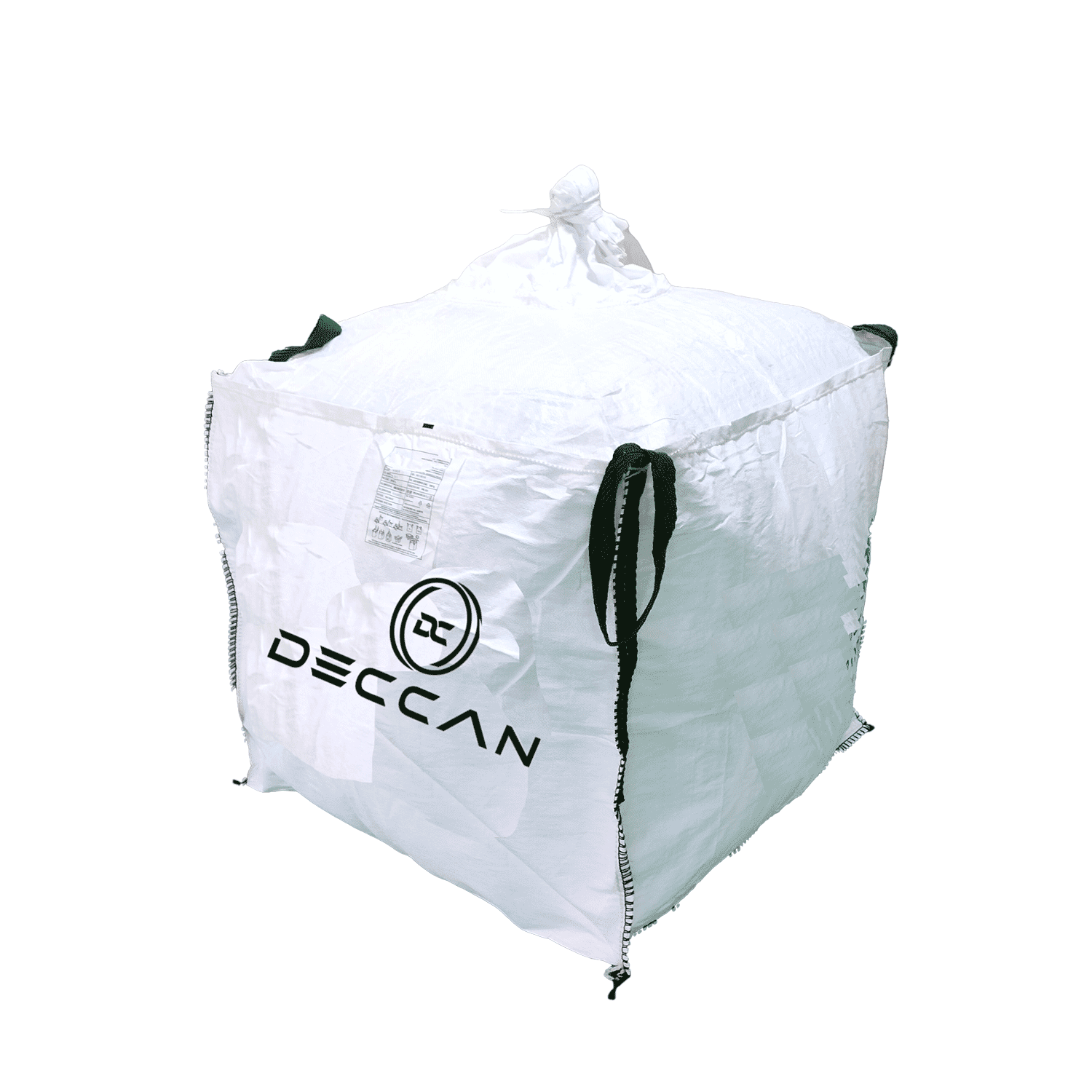 | FIBC Section Polyester Loop Bags/Multifilament Loops Polyester / Multifilament Loop FIBC Bags Deccan Cans & Printers Pvt. Ltd. |
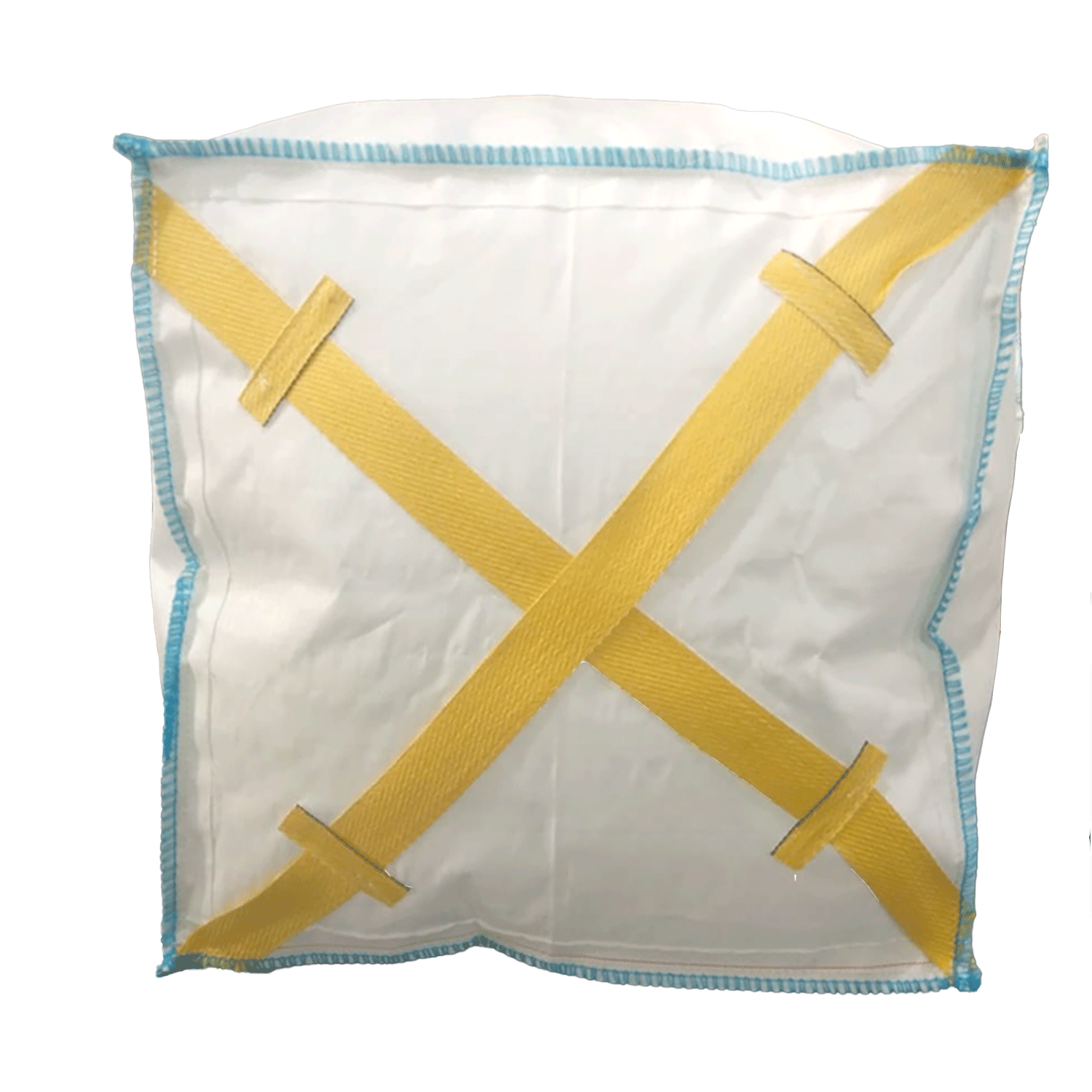 | FIBC Section Cross Bottom Sling Bags Cross Bottom Sling FIBCs – Bulk Bags Deccan Cans & Printers Pvt. Ltd. |