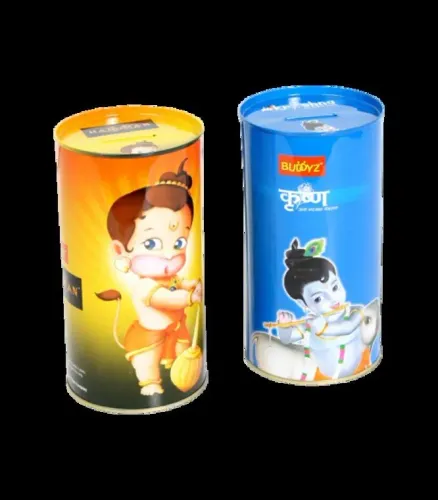

Choosing a Pune supplier requires more than comparing catalogue sizes or a claim of leak resistance. You need to verify the manufacturer’s location, production capability, steel and lacquer specification, chemical compatibility, closure performance, UN approval, and service conditions before placing an industrial packaging order.
Key takeaways
- Ask for the factory address, production capacity, and manufacturing location.
- Match steel thickness, internal lacquer, closure, and can size to the product.
- Request test reports for seam strength, leakage, stacking, and drop performance.
- Check the UN approval mark and certificate before shipping dangerous goods.
How to compare tin container manufacturers serving Pune and Maharashtra
Compare tin container manufacturers in Pune using the same supplier information, not brochures with different specifications. Ask every shortlisted company for its factory address and production capacity, then confirm whether it manufactures locally or resells cans from another plant.
- Legal manufacturer name, factory address, years in operation, Pune delivery coverage, and Maharashtra service area.
- Monthly capacity by container size, minimum order quantity, standard lead time, tooling charges, and emergency replenishment capacity.
- Steel grade, nominal thickness, temper, tin-coating designation, internal lacquer system, dimensions, closure, opening size, and empty-container weight.
- Recent inspection records showing seam checks, leakproofness tests, hydrostatic test pressure, test duration, and failure criterion for liquid containers.
- UN approval certificate and test report for the exact body dimensions, steel thickness, closure, gasket, liner, and manufacturing process you will purchase.
- Storage and dispatch controls covering condensation, wet floors, chloride-contaminated air, monsoon transport, and external rust prevention.
| Supplier information | What it reveals | Evidence to request |
|---|---|---|
| Factory and capacity | Whether output can support your schedule | Site address, production figures, machine list, plant visit |
| Product suitability | Whether the can matches your liquid | Technical drawing, steel and lacquer specification, compatibility statement |
| Quality and compliance | Whether claims apply to your exact design | Test reports, batch records, UN certificate where required |
Use the same request with tin can manufacturers Maharashtra and industrial packaging suppliers Pune. Reject comparisons based only on “food grade,” “epoxy coated,” or gauge; those descriptions do not identify corrosion performance or forming behaviour.
Match the steel, lacquer and can specification to your product
A liquid can fail through corrosion, swelling, leakage or seam stress even when its nominal capacity looks correct. Specify the metal and coating separately; a gauge number alone does not identify forming behaviour or chemical resistance.
| Material | Specify on the quotation | Why it matters |
|---|---|---|
| Tinplate | Steel grade, nominal thickness, temper, tin-coating designation and lacquer system | Temper affects forming; tin coating and lacquer affect corrosion protection |
| Tin-free steel | Steel grade, nominal thickness, temper, chromium/chromium-oxide coating and lacquer system | It is not tin-coated, so the lacquer system carries more of the corrosion barrier |
| Either material | Standard, dimensions, opening, closure and empty weight | These determine filling, stacking, handling and sealing performance |
Ask the manufacturer to identify ASTM A623/A623M compliance for the tin mill product, then record:
- Internal and external body diameter, height, nominal capacity, usable fill volume and headspace
- Sheet thickness by component, body construction, neck or opening diameter, closure type and gasket material
- Product density, viscosity, solvent content, acidity or alkalinity, water content and sulfur-containing ingredients
- The lacquer resin, cured-film specification, test basis and internal lacquer compatibility evidence
“Epoxy coated” or “food grade” does not prove suitability for industrial liquids. Oils, solvents, acids and water-based formulations can cause taint, delamination or pinhole corrosion in different coatings. Request immersion or migration data using your actual product, temperature and storage duration before approving the can.
Choose the construction, closure and tests for a reliable filled can
Choose the construction around the filling line and transport load, not the empty-can price. RLT tin containers suit repeat opening where a levered lid and gasket must reseal; EOE tin containers suit quick opening but are a poor choice when controlled resealing matters.
Welded tin cans provide a continuous body seam, while seamed cans simplify high-volume production and replacement.
| Construction | Filling and transport implication | Checks before approval |
|---|---|---|
| RLT tin containers | Removable lid supports repeated access; gasket condition controls leakage | Confirm lid retention, gasket material, closure force and stack load |
| EOE tin containers | Easy opening speeds use; the scored end is not a resealable closure | Check product pressure, opening safety and secondary sealing method |
| Welded tin cans | Welded side seams resist leakage and handling impact | Inspect weld continuity, internal lacquer coverage and dimensional consistency |
| Seamed cans or other closures | Production speed and tooling vary; seam damage can cause leaks | Request seam specifications, overlap data and closure instructions |
Match the closure and gasket compatibility to the product’s solvent, acidity, temperature and vapour pressure. Ask for the gasket polymer, liner, cure conditions and chemical-resistance evidence; a visually sound lid can swell, harden or lose compression.
Require production samples filled with the actual product. Test leakproofness, seam or weld integrity, closure retention, hydrostatic pressure, drop resistance and compression or stacking performance. Record test pressure, duration and failure criterion rather than accepting “passed” on an inspection sheet.
Keep finished cans dry, off wet floors and away from chloride-contaminated air. Monsoon condensation can rust the exterior before delivery.
Verify UN approval before using cans for dangerous goods
A complete UN test report and approval record—not a photograph of the UN mark—proves that a tin container is suitable for dangerous goods. The evidence must identify the exact tested design, because a UN packaging mark applies to defined dimensions, steel thickness, closure, gasket, liner and manufacturing controls.
Ask the supplier for these documents before filling:
1. The full UN test report naming the packaging code, such as 3A1 for a non-removable-head steel drum, the permitted packing group, gross mass and liquid capacity.
2. The approval details and a clear image of the UN packaging mark stamped on the container. Check that the mark corresponds with the supplied body, closure, liner and gasket; a changed diameter, thickness or closure can invalidate the approval.
3. The closure instructions, including tightening method or torque, gasket specification and any liner requirement. Follow these instructions during production, not an improvised sealing method.
4. The leakproofness test and hydrostatic-pressure test results. Request the actual pressure, test duration, product or vapour-pressure basis and failure criterion.
5. The test date, laboratory or competent authority, manufacturing site and permitted gross mass. Confirm that the approval covers your intended packing group and transport mode.
Do not treat “UN certified tin containers” as a product-wide claim. Verify the approval for your exact can and product, especially with flammable solvents, corrosives and pesticides. A lacquer described only as “epoxy” also needs product-compatibility evidence.
Decide when tin cans or FIBCs fit the handling and transport system
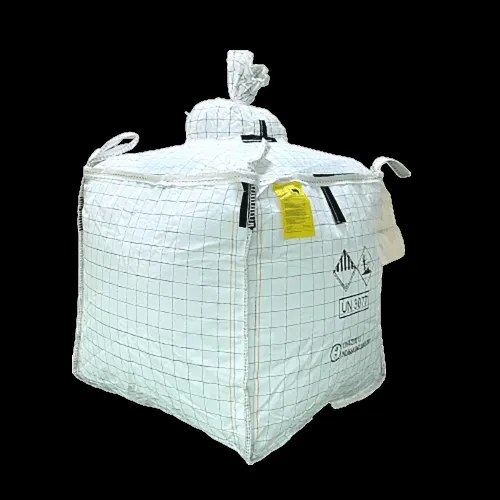
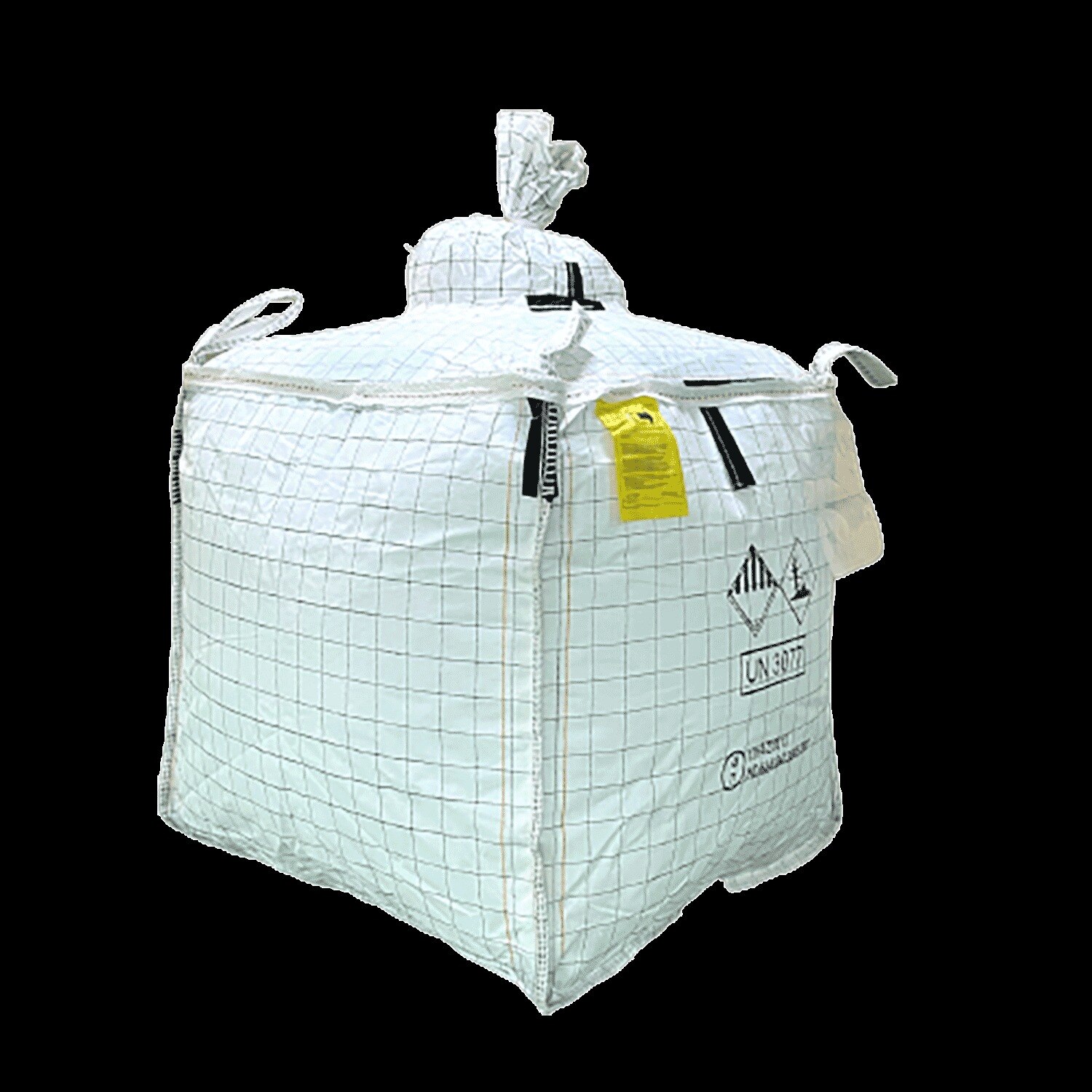
Select tin containers when the product needs rigid protection, a sealed liquid pack, stacking stability, or frequent individual-unit handling. Select FIBCs when dry powders or granules move in pallet-scale quantities through forklifts, hoppers, or discharge stations.
| Option | Handling and transport fit | Main limitation |
|---|---|---|
| Tin containers | Individual lifting, liquid filling, repeated warehouse moves, and tighter protection from puncture | More units, tare weight, and manual or pallet handling |
| FIBCs | Bulk loading, forklift lifting by loops, gravity discharge, and lower packaging weight | Requires dry storage, controlled lifting, and equipment matched to the discharge design |
Pune’s monsoon adds a storage decision. Keep tinplate and finished cans off wet floors and away from condensation and chloride-contaminated air, or external rust can appear after a satisfactory factory inspection. Store polypropylene FIBCs clean and dry, away from ultraviolet exposure and heat; moisture, contamination, and sunlight can reduce bag strength.
Ask an FIBC manufacturer Pune buyers are considering to document:
- Safe working load, maximum gross mass, and safety factor as separate fields; a 5:1 or 6:1 rating alone does not prove suitability for repeated lifts.
- ISO 21898 compliance, which covers non-dangerous goods and does not establish UN FIBC approval.
- Whole-bag test results for top lift, drop, tear, stacking, seam strength, UV exposure, and electrostatic behaviour where applicable.
- Reuse qualification and inspection intervals if the bag is marketed for repeated handling.
Deccan Cans & Printers Pvt. Ltd. can be asked to confirm where its tin containers fit beside an FIBC system, rather than treating either pack as a universal replacement.
Related product
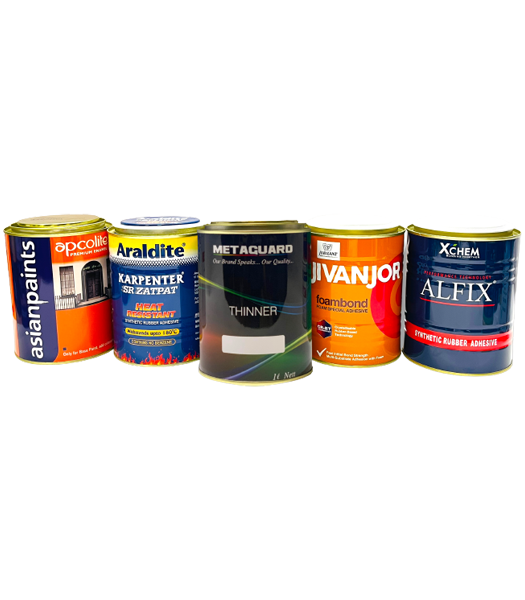 | Tin Containers Tin Containers Deccan Cans & Printers Pvt. Ltd. offers a robust range of Industrial Tin Containers, engineered to provide secure, durable, and... View product → |
Frequently asked questions
How should you compare tin container manufacturers serving Pune and Maharashtra?
Request the same information from each supplier: factory address, production capacity, manufacturing location, can specifications, test reports, lead time, and quality documents.
How do you match steel, lacquer, and can specifications to a product?
Check the product’s chemical compatibility, viscosity, filling temperature, storage conditions, required steel thickness, internal lacquer, capacity, and opening before selecting a can.
Which construction, closure, and tests help produce a reliable filled can?
Evaluate the body and seam construction, closure type, gasket or seal, and evidence of leakage, seam, drop, stacking, and pressure testing.
How do you verify UN approval for cans used with dangerous goods?
Match the UN mark and packaging code on the can to the certificate, product classification, capacity, packing group, and permitted transport conditions.
When do tin cans or FIBCs suit an industrial handling system?
Choose tin cans for protected, portioned, stackable contents and controlled dispensing; choose FIBCs for dry bulk materials moved by forklift, pallet, or lifting loops.