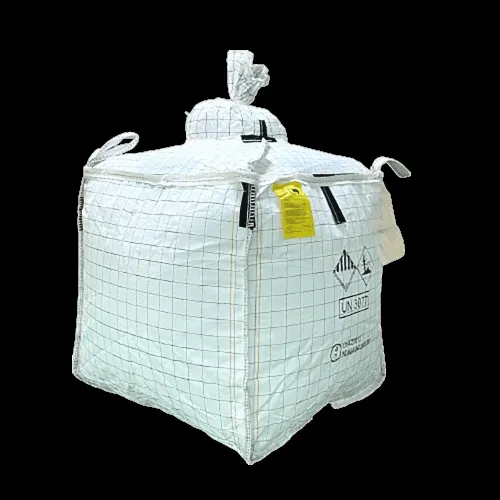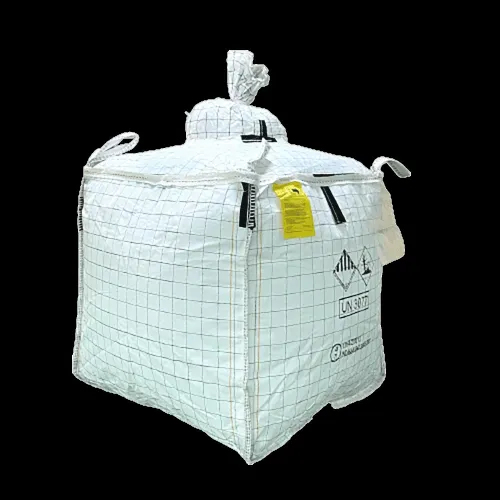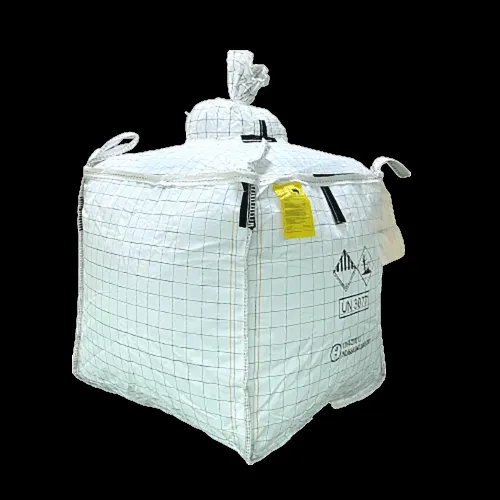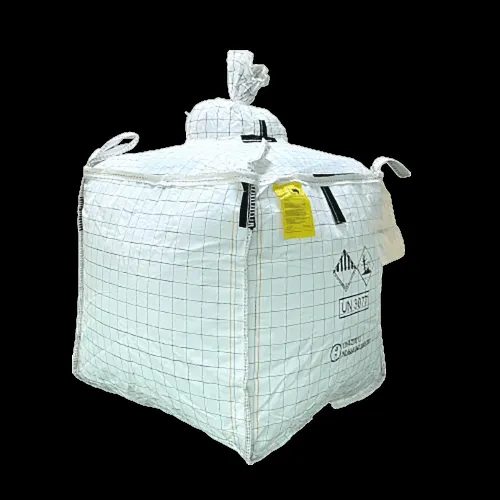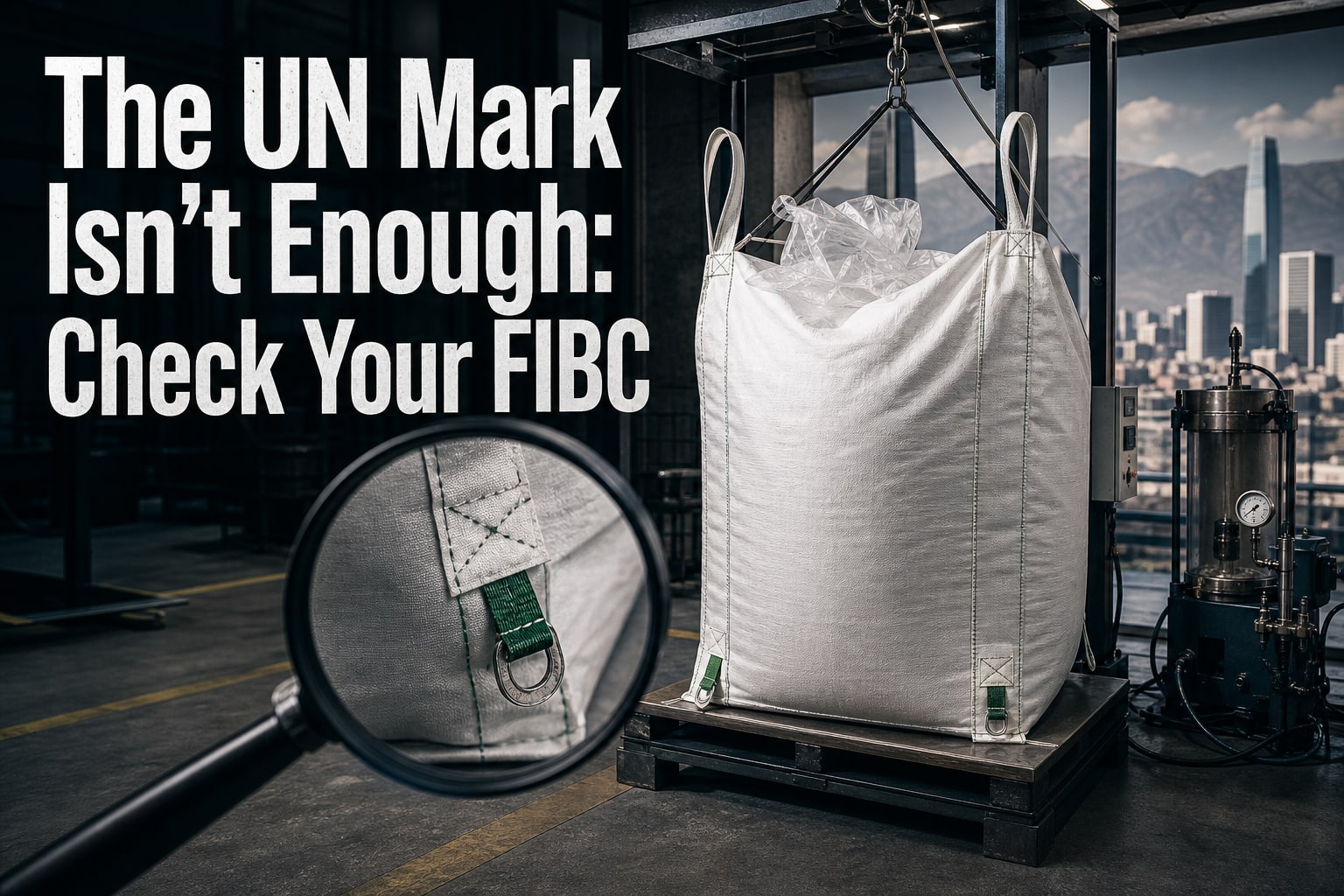
A UN logo does not authorise every chemical, every filling method or every journey. You need to match the dangerous-goods entry, packing group, FIBC design, certificate, Chilean transport rules and Santiago storage conditions before filling or dispatching a bag.
Key takeaways
- Classify the material using its SDS, UN number, hazard class and packing group.
- Match the bag’s UN mark to its approved design type and packing group.
- Check liner, lifting-loop, discharge and static-control requirements before filling.
- Use another package when the material, damage risk or transport rules exceed the bag’s limits.
Which materials and shipments require a UN-rated FIBC?
A powder, granule, chemical product, contaminated solid or hazardous waste needs classification before you choose a bag. Read the safety data sheet, then confirm the UN number, proper shipping name, primary hazard class, subsidiary risk and packing group. “Chemical” alone is not a transport specification.
Use hazardous material bulk bags only when the dangerous-goods entry and packing instruction permit an FIBC. An ordinary FIBC is insufficient when the entry, carrier or disposal facility demands a UN performance-tested package, specified 13H, 13L or 13M design, packing-group level or maximum gross mass.
A UN-rated FIBC generally covers dangerous solids, powders and granules, not liquids.
Mode changes the approval context:
| Mode | What to verify | Why one approval is not universal |
|---|---|---|
| Road in Chile | Transport document, vehicle, placarding and carrier conditions under Decreto Supremo No. 298 | Chilean road controls apply alongside the UN package approval |
| Sea | IMDG Code entry, packing instruction, stowage and carrier acceptance | Maritime documentation and stowage rules differ |
| Air | Applicable IATA Dangerous Goods Regulations, packing instruction and operator acceptance | Air limits and packaging instructions are stricter |
For Santiago warehouses, transport approval does not settle segregation, fire protection, spill control, ventilation, inventory or authorization. Confirm site conditions with the relevant SEREMI de Salud and facility operator before receiving bulk bags for regulated materials.
The shipper remains responsible for classification, package selection, closure and destination compliance. Get written carrier and disposal-facility requirements before filling.
How do you read the UN mark and verify the approved design?
A UN mark is evidence of a tested design, not a generic quality claim. Read the complete sequence: the UN symbol; packaging code; performance level X, Y or Z; maximum gross mass or applicable test load; the letter S for solids where used; manufacturing year; country; and manufacturer or approval identifier.
A mark showing only “UN” or “UN approved” is incomplete.
For woven-plastic FIBCs, 13H identifies the family: 13H1 is uncoated fabric, 13H2 coated fabric, 13H3 uncoated fabric with a liner, and 13H4 coated fabric with a liner. 13L and 13M identify different FIBC material families, so confirm their precise construction in the approval.
X covers packing groups I, II and III; Y covers II and III; Z covers III. A Y bag is not approved for a Group I substance.
The marked maximum gross mass includes the product, liner and attached components. Changing dimensions, liner, closure, lifting loops, filling ratio or discharge arrangement can invalidate the match.
For un certified FIBC bags in Santiago, request these records before purchase:
- The actual design-type approval and UN test report or certificate
- A photograph showing the complete marking
- Manufacturer, batch or serial details linking the bag to that approval
- The approved dimensions, construction, liner, closure, gross mass and test load
- Traceability records covering manufacture and inspection
Apply the same evidence standard to UN rated bulk bags in Santiago; local availability does not prove approval.
Which construction, liner and static-control features fit the material?
Match chemical bulk bags in Santiago to the substance, concentration, temperature, contact time and permeation risk—not to the UN mark alone. Specify uncoated or coated polypropylene fabric, polyethylene liner thickness and seal, closure, sewing thread and lifting loops separately: acids, solvents, oxidizers and moisture can attack each component differently. Confirm compatibility in writing.
UN-rated FIBCs address dangerous solids, powders and granules; a liner does not make an FIBC an approved liquid package. Use the rigid or composite liquid packaging required by the dangerous-goods packing instruction.
Choose electrostatic control separately from mechanical UN performance:
- Type B suits specified combustible-dust conditions but not flammable vapour atmospheres; control dust clouds and ignition sources.
- Type C requires a conductive bag, intact grounding lead, verified discharge connection and continuity throughout filling and emptying. A nonconductive liner, paint, contamination or broken lead can defeat grounding.
- Type D depends on its dissipative construction and stated operating conditions; moisture, contamination, bonding and process changes can invalidate the protection. A UN mark certifies neither explosion protection nor electrostatic performance.
| Package | Containment and contamination | Stacking, handling and end-of-life |
|---|---|---|
| FIBC | Fast filling and controlled discharge; moderate containment; single-use disposal or documented reuse | Efficient stacking with suitable equipment |
| Drum | Strong containment, low contamination; slower filling and manual handling | Robust stacking; costly disposal |
| Rigid IBC | Better liquid containment and stacking | Forklift handling; cleaning and reuse require records |
| Sack or lined bag | Lower containment and weaker stacking | Simple filling; higher spill and contamination risk |
| Specialist asbestos packaging | Sealed, controlled containment for asbestos waste | Follow licensed handling and disposal procedures, not ordinary reuse |
What must happen before filling, lifting, storing and dispatching?
Before a bag enters the filling area in Santiago, match the certificate to the actual design and chemical. Local availability does not prove approval.
1. Inspect the UN certificate, complete mark, batch or serial traceability, safe working load, safety factor, filling ratio and maximum gross mass. Confirm that dimensions, 13H, 13L or 13M construction, lifting configuration, closure and discharge design match the approved test configuration.
2. Check the liner material, seal and closure method against the chemical’s concentration, temperature and contact time. A damaged seal, incompatible polyethylene liner or uncontrolled discharge can cause leakage or a dangerous dust cloud.
3. At receiving, record the certificate, batch, inspection result and condition. Before filling, verify loops, seams, fabric, liner and grounding continuity where required. Keep ignition sources away from combustible dust, and reject a bag with residue, abrasion, UV damage, stitching defects, distorted loops or an unknown history.
4. During handling, keep bags away from rain, standing water, sharp edges, heat, ultraviolet exposure, incompatible chemicals and forklift contact. Never exceed rated mass, drag a filled bag or lift damaged loops. Use only the specified lifting configuration, stacking method and discharge connection.
5. Record filling, grounding, stacking, inspections and dispatch, including dangerous-goods paperwork and carrier acceptance. Reuse only an identified reusable design with documented cleaning, inspection, traceability and rejection criteria; passing the original test does not authorise reuse.
The business can help match construction, liner and handling features, but confirm approval independently. Budget for compatibility testing, certificate matching, grounding, training, inspection, carrier acceptance and disposal. These controls determine whether un certified FIBC bags in Santiago are suitable bulk bags for regulated materials.
Related product
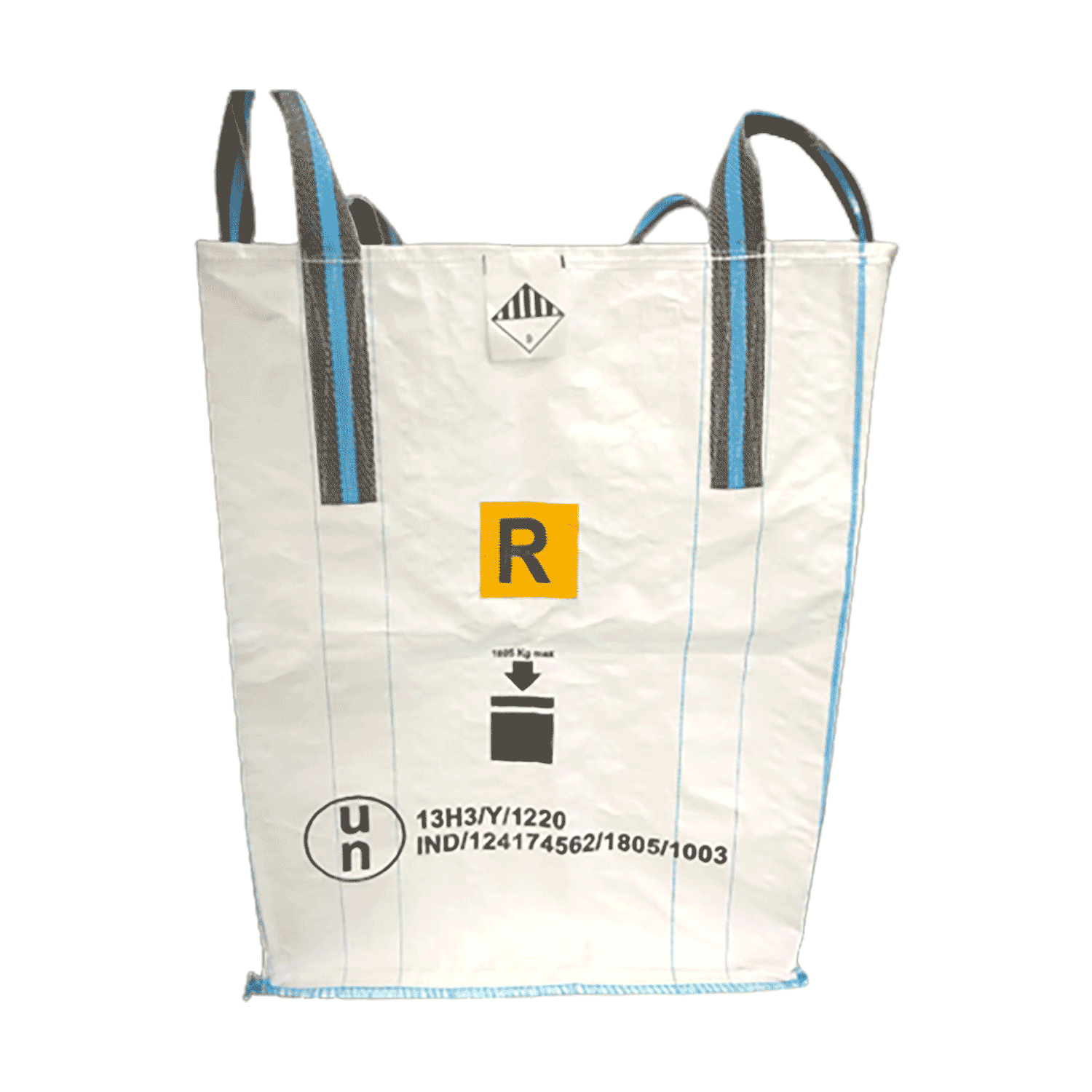 | FIBC Section Un Bags UN Certified Bulk Bags – Rigorous Performance Testing for Safety & Reliability Deccan UN Certified Bulk Bags are specially engineered for the safe... |
What should you request, and when is another package safer?
Request a written specification before approving un rated bulk bags in Santiago.
State the substance name, UN number, proper shipping name, packing group, physical form, bulk density, net and gross mass, bag dimensions, 13H, 13L or 13M design, liner specification, closure, filling and discharge method, lifting equipment, electrostatic type, transport mode, storage duration, Santiago delivery conditions, and single-use or reusable status.
Also request:
- SDS review, UN test report or certificate, design-type approval, marking photograph, technical data sheet, inspection records, batch traceability and a compatibility statement covering concentration, temperature and contact time.
- Carrier acceptance, transport documents, and warehouse or disposal-facility requirements before purchase.
| Packaging choice | Advantage | Safer alternative trigger |
|---|---|---|
| Standard FIBC | Lower operational burden | Never use for a regulated entry requiring tested performance |
| UN FIBC | Tested solids containment | Reject for liquids, hermetic containment or uncontrolled combustible dust |
| Drum or rigid IBC | Stronger containment | Prefer when stacking, leakage control or liquid packaging instructions dominate |
| Specialist packaging | Purpose-built control | Use for severe exposure, contaminated waste or authority-specific requirements |
Choose drums, rigid IBCs or specialist packaging when the material attacks polypropylene, outdoor exposure is severe, the bag is damaged or uncertified, or a destination authority requires another package. Compare filling, discharge, grounding, inspection, disposal and total handling cost before approving chemical bulk bags in Santiago.
“Release only after every document, design detail and acceptance condition matches the shipment.”
- Confirm carrier, warehouse and disposal release.
- Confirm mark, batch traceability, compatibility and inspection status.
- Confirm mass, closure, lifting and electrostatic controls.
Frequently asked questions
Which materials require a UN-rated FIBC?
Use a UN-rated FIBC when the classified material is a dangerous good approved for transport in that packaging type. Confirm the UN number, proper shipping name, hazard class, subsidiary risk and packing group from the safety data sheet and transport documentation.
How do you verify a UN-certified FIBC design?
Read the complete UN packaging mark, including the packaging symbol, design type, packing group, maximum gross mass or specific gravity, test pressure where shown, manufacture date, approval code and manufacturer identification. Compare it with the bag’s certificate, test report and intended material.
Which FIBC construction and static controls fit chemical products?
Select the body fabric, liner, seams, closures and discharge features for the material’s compatibility, particle size, moisture sensitivity and filling method. Choose Type B, C or D static-control construction when ignition risk requires it, and use grounding procedures for conductive Type C bags.
When is another package safer than a UN-rated FIBC?
Choose another package when the substance is incompatible with the liner or fabric, the bag cannot control electrostatic ignition risk, the load exceeds its tested limits, the bag is damaged, or the transport approval does not cover the shipment.