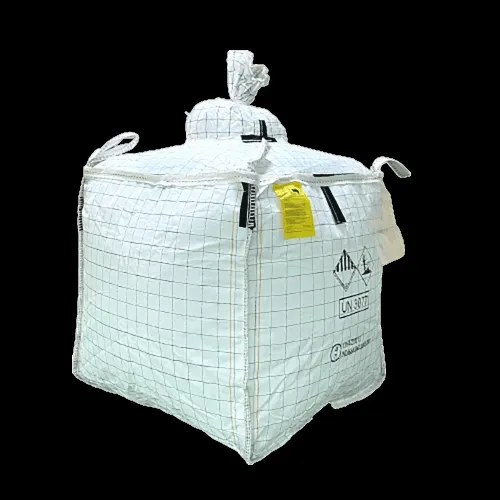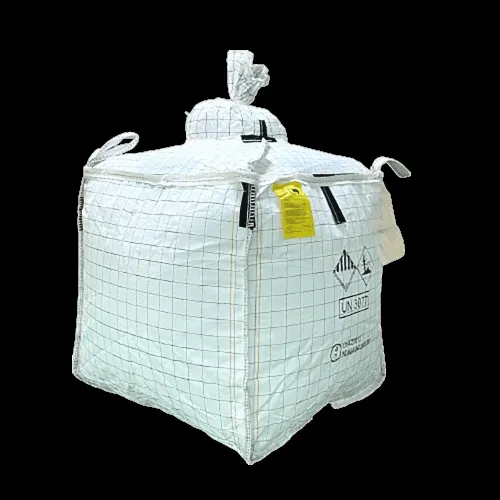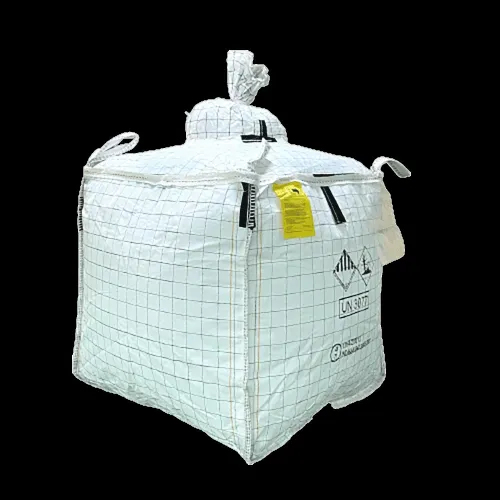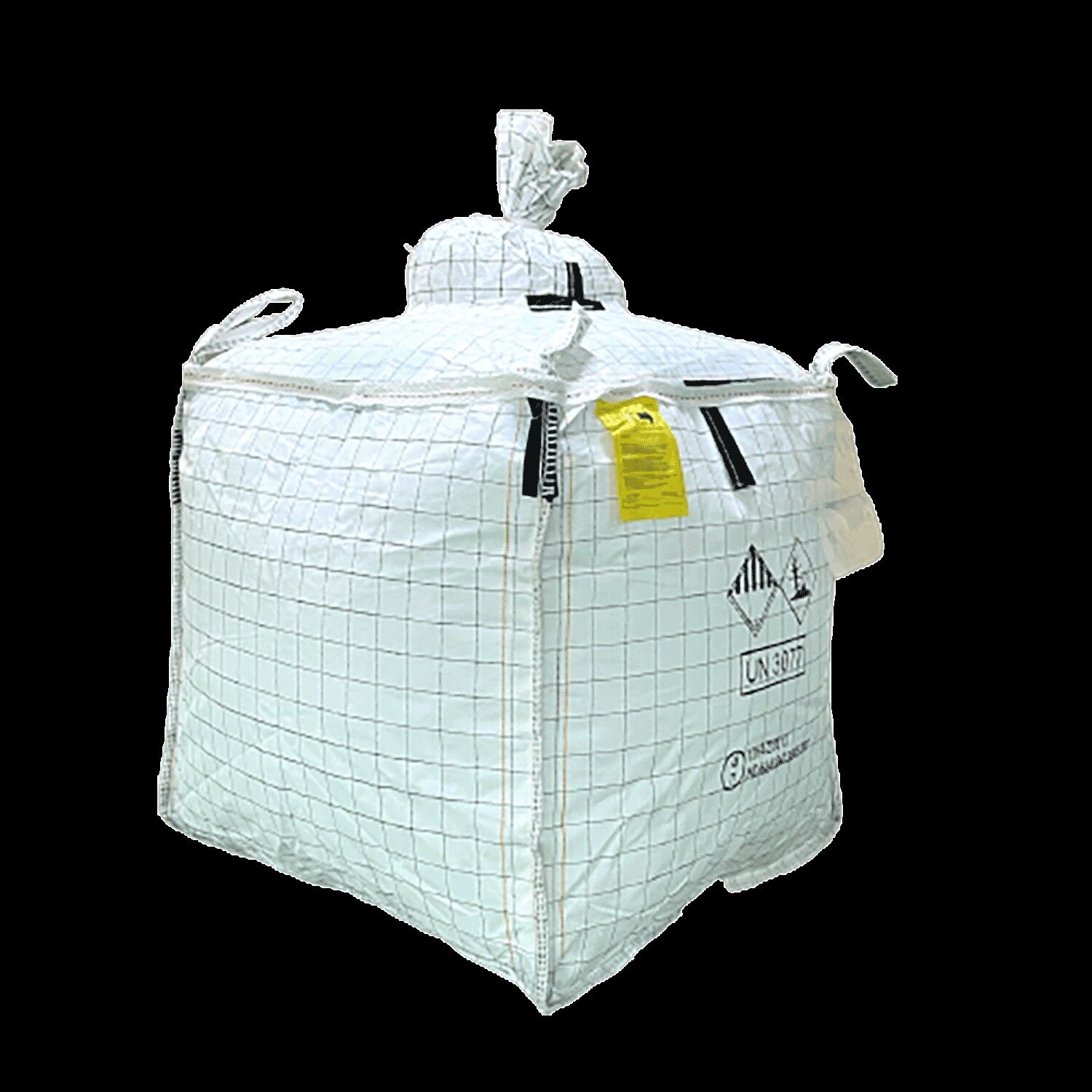
A food-contact FIBC is not proven safe by the words “food grade” or by a polypropylene specification alone. You will be able to define the food-contact path, request evidence against Chilean requirements, choose the right liner and handling system, and decide when an FIBC is unsuitable for your product or process.
Key takeaways
- Check compliance with Chile’s Reglamento Sanitario de los Alimentos, Decreto Supremo N.º 977/1996.
- Request a declaration of compliance, migration test results, and material traceability records.
- Specify the liner resin, filling method, discharge design, and every product-contact surface.
- Protect bags from moisture, punctures, dust, pests, and contaminated handling after manufacture.
What makes an FIBC suitable for direct food contact in Chile?
Direct food contact in Chile starts with the Reglamento Sanitario de los Alimentos, Decreto Supremo N.º 977/1996. A food grade FIBC Chile buyer must confirm that the bag does not transfer substances that endanger health, unacceptably alter the food, or adversely affect its composition or organoleptic properties.
Treat every part touching the product as food-contact material, not just the main fabric: woven polypropylene fabric, coating, polyethylene liner, sewing thread, lifting loops, filling and discharge spouts, closures, printing inks, pigments, and antistatic additives. “Polypropylene” alone proves nothing.
- Require a documented resin source identifying virgin polypropylene resin, recycled resin, or a controlled blend.
- Require a controlled formulation covering additives, pigments, coatings, inks, and antistatic masterbatch.
- Match each component to food-contact-grade polypropylene or another documented food-contact material, rather than assuming polypropylene is food-safe.
- Record the intended food, contact temperature, contact duration, and single-use or repeated-use status.
Virgin resin offers clearer origin control; recycled resin requires evidence of suitable processing and contamination control. A controlled blend needs documented proportions and traceability. Without those records, hygienic suitability remains an assertion.
For international procurement, EU Regulation (EC) No. 1935/2004 and EU Regulation (EU) No. 10/2011 provide useful documentary and migration-testing benchmarks. FDA 21 CFR 177.1520 applies to specified olefin polymers under stated conditions; it does not automatically cover the complete FIBC, its liner, ink, thread, or closure.
Which documents prove food-contact suitability?
Ask for a declaration of compliance FIBC, not a catalogue claim. It must name every food-contact component: polymer, additive, pigment, coating, ink, sewing thread, liner, and closure, plus intended food types, maximum contact temperature, contact time, and single-use or repeated-use status.
Match that declaration against these records:
- A certificate of analysis for the supplied resin or finished bag, with resin identification and production lot number.
- Migration testing or extractables results using the actual food or a justified simulant, contact surface, temperature, and duration.
- A traceability record linking each component and lot to the delivered bags.
“FDA compliant” alone proves little. Request the applicable U.S. regulation, resin and additive identities, use limitations, and supporting results; 21 CFR 177.1520 covers specified olefin polymers under stated conditions, not every FIBC component. EU Regulations 1935/2004 and 10/2011 are useful benchmarks, but testing must match your product and process.
| Evidence or standard | What it establishes | What you must still specify |
|---|---|---|
| ISO 21898 | Construction, performance, testing, and marking for non-dangerous-goods FIBCs | Dimensions, bulk density, filling and discharge arrangement, SWL, lifting method, and permitted trips |
| Migration report | Transfer under tested conditions | Food, temperature, duration, and contact surface |
Quarantine bags immediately if lot identification is missing, protective wrap is damaged, or documents do not match delivered components. Label the pallet “HOLD,” segregate it from approved stock, photograph the discrepancy, and release it only after supplier reconciliation and documented quality approval.
How should you specify the liner and product interface?
Flour, starch and powdered milk need dust control and sift-proof seams; sugar needs leakage control; grains need pest protection; spices need aroma retention; hygroscopic ingredients need water-vapour resistance. Specify oxygen protection too when oxidation matters. Woven polypropylene alone provides none of these barriers.
FIBC liner selection must match the food and storage period. For polyethylene liner food packaging, state polymer grade, gauge, length, width, gusset, fit, barrier performance, antistatic treatment, sealing method, and whether the liner is removable or permanently attached.
A liner can reduce usable volume, fold into the discharge spout, trap powder, tear during handling, or generate static.
Specify the complete product interface:
- Use a dust-containing filling spout with a tie or clamp closure, sift-proof seams, and a discharge spout designed for controlled bulk powder discharge and low residue.
- Require a liner that reaches the spout without tension, remains sealed during storage, and does not obstruct filling or emptying.
- Before insertion, clean and inspect the bag, liner, seams, spouts, and closures; verify the correct lot and allergen status.
- Insert without dragging the liner across dirty surfaces, align every opening, and seal the liner before closing the outer spout.
- During discharge, support the liner so it cannot collapse into the outlet; close both closures before moving the empty bag.
- Remove the liner intact, inspect for tears or retained powder, and discard it under your food-waste or contaminated-packaging procedure; never leave loose film where it can become foreign material or an allergen source.
What hygiene and handling controls protect the bag after manufacture?
Clean is not sterile. A food-contact FIBC is not automatically sterile, low-bioburden, or allergen-controlled. Define FIBC hygiene controls separately, including the manufacturing environment, release evidence, and handling after delivery.
1. Require manufacture in a controlled area with foreign-material prevention, pest control, moisture control, and segregation from chemicals and non-food materials. Specify vacuuming or visual inspection, sealed protective packaging, and lot-release records covering cleanliness and conformity.
2. At a Santiago warehouse, inspect the outer wrap, fabric, seams, filling and discharge spouts, liner, and closures. Reject any bag that is dust-covered, wet, odorous, oily, punctured, or previously opened. Retain the lot number after removing the outer packaging.
3. Store bags off the floor, protected from rain, condensation, sunlight, pests, dirty pallets, and chemicals. Unprotected storage can undo controls applied at the manufacturing plant.
4. Choose new single-use food-grade bulk bags as the safer default. Reuse only under a written FIBC reuse inspection protocol that records previous cargo, residues, odour, liner damage, seam integrity, cleaning validation, and traceability; reject any bag that fails one check.
5. Match electrostatic control to the hazard. Type C FIBC grounding requires continuous grounding and continuity checks before and during filling and discharge. Type D uses dissipative fabric without a grounding lead. Type A is not a default where combustible dust or solvent vapour exists.
How do you compare an FIBC with other bulk-packaging options?
Compare the FIBC total cost of ownership, not the empty-bag price. A food-grade FIBC usually saves storage space and pallet weight, while a rigid container offers stronger protection and repeat sanitation.
| Option | Cost, volume, storage | Handling, discharge, cleaning |
|---|---|---|
| Food-grade FIBC | Low purchase cost; high usable volume; compact empty storage; pallet usually required | Fast filling with suitable top; bottom design controls residue and discharge reliability; sanitation between batches requires validation |
| Rigid food-grade container | Higher cost; lower usable volume; large return-storage footprint | Needs rigid loading equipment; slower handling; reliable discharge; easier validated cleaning and repeated use |
| Paper bulk bag | Low cost; good volume; limited moisture resistance; flat storage | Fast filling; weaker seams can leak fine powder; residual product and cleaning are difficult; usually disposable |
| Standard FIBC plus liner | Moderate cost; liner reduces usable volume; compact storage | Existing equipment may work; liner improves hygiene but can tear, trap residue, or slow discharge; disposal is two-part and sanitation remains limited |
A safety factor is not the safe working load FIBC. For a 1,000 kg SWL marking, confirm the test basis, lifting arrangement, permitted trips, storage method, bottom discharge, and full-bag transport on a pallet.
Choose another system for aseptic or sterile products, validated oxygen or moisture barriers, temperature-controlled goods, strict allergen segregation, or sanitation between batches.
For hygienic bulk packaging Santiago purchases, ask for:
- Food-contact dossier, liner polymer and barrier data
- Top and bottom configuration, sift-proof seams, electrostatic type
- SWL, lifting method, number of trips, and ISO 21898 evidence
- Sealed delivery, lot traceability, and post-delivery storage instructions
Deccan Cans & Printers Pvt. Ltd. should be assessed on those records and process controls, not fabric weight alone.
Frequently asked questions
What makes an FIBC suitable for direct food contact in Chile?
The bag and every food-contact component must avoid transferring harmful substances, unacceptable odours or tastes, or substances that alter the food. Assess the fabric, liner, threads, coatings, closures, labels, and any additives against Chile’s Reglamento Sanitario de los Alimentos, Decreto Supremo N.º 977/1996.
Which documents prove food-contact suitability?
Ask for a signed declaration of compliance identifying the materials and intended food use, migration test reports for the finished food-contact configuration, raw-material traceability, and manufacturing hygiene records. Match the documents to the exact liner, fabric, closure, and production specification you will buy.
How should you specify the liner and product interface?
Name the liner resin, thickness, dimensions, filling and discharge openings, closure style, seam construction, and whether the food contacts the woven fabric or only the liner. Check compatibility with the product’s temperature, moisture, fat content, acidity, flow behaviour, and cleaning or sealing process.
What hygiene and handling controls protect the bag after manufacture?
Store FIBCs sealed, dry, off the floor, and away from chemicals, pests, dust, rain, and direct sunlight. Inspect packaging for punctures, broken seals, stains, odours, and wetness before use, then control forklift handling, pallet condition, filling equipment, and traceability.
How do you compare an FIBC with other bulk-packaging options?
Compare FIBCs with paper sacks, rigid bins, drums, and smaller bags using product protection, liner requirements, filling and discharge equipment, warehouse space, return or disposal needs, lifting safety, contamination risk, and total handling effort.