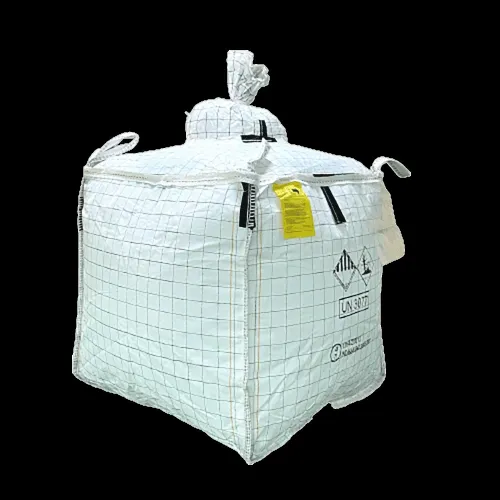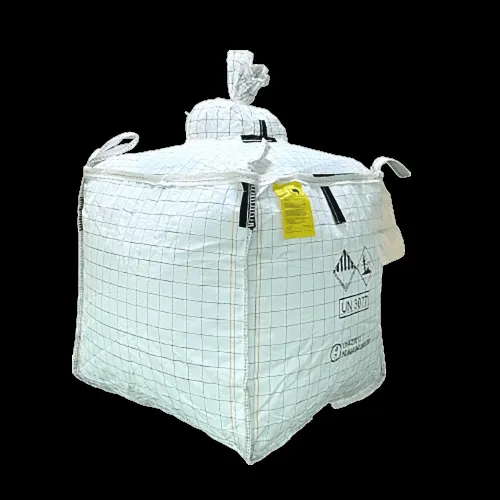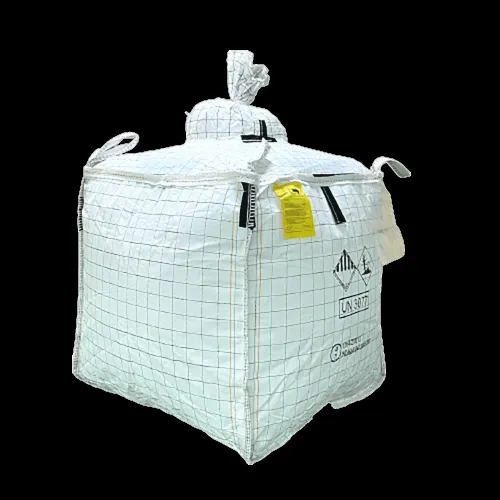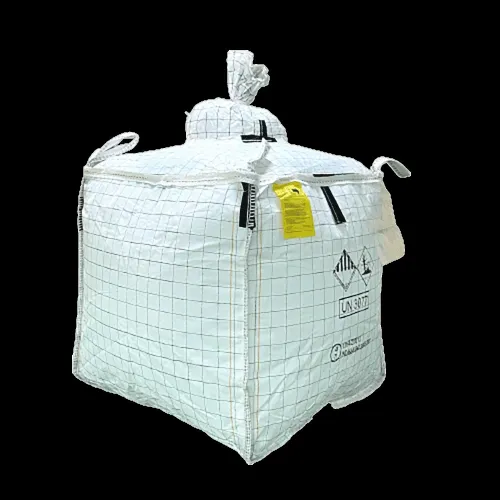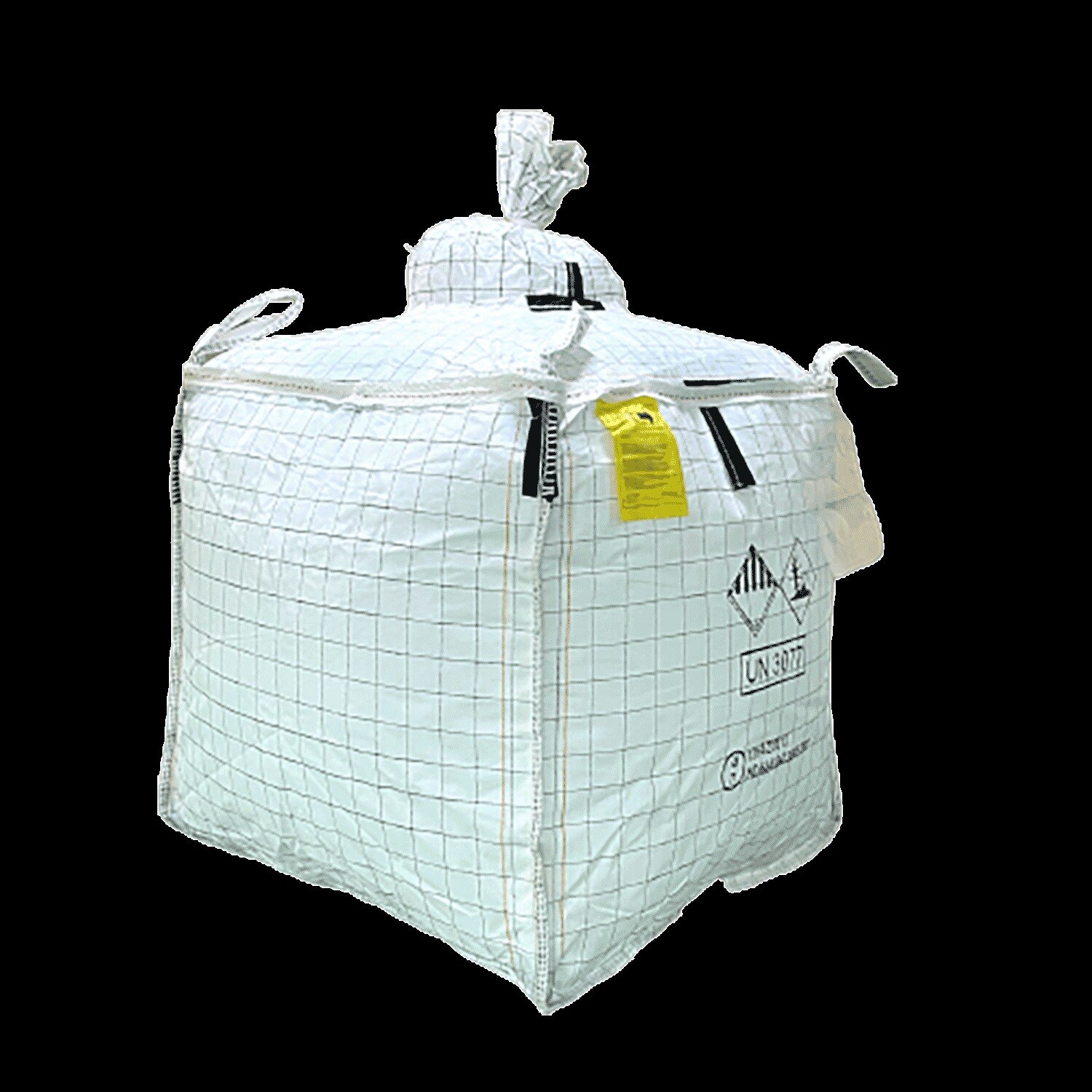
Choosing an FIBC for a chemical powder, resin pellet or manufacturing raw material requires more than matching a bag to its advertised capacity. By the end, you will be able to calculate the required fill mass, match the bag to your handling equipment and material hazards, and specify the documents and lot checks needed before a delivery enters production.
Key takeaways
- Use FIBCs for dry powders, granules, pellets, resins and fertilizers—not liquids.
- Match bag capacity and loop design to material density and lifting equipment.
- Specify fabric, seams, liner and discharge outlet before requesting quotations.
- Confirm static-control requirements and UN approval before shipping dangerous goods.
Match the FIBC to the Material and Required Capacity
Choose an FIBC for dry, flowable solids, not liquids. Suitable chemical and manufacturing materials include powders, granules and pellets, resins and pigments, and fertilizers. A standard woven-polypropylene bag is not a liquid container; use a separately qualified inner vessel or UN-approved packaging for liquids.
| Material | Suitable FIBC specification | Main check |
|---|---|---|
| Powders | Coated fabric, sift-proof seams and a compatible liner | Prevent dust escape through needle holes, spouts and drawcord channels |
| Granules and pellets | Uncoated or coated woven polypropylene | Confirm particle size, flowability and abrasion resistance |
| Resins and pigments | Liner or coated fabric with controlled discharge | Check caking, moisture sensitivity and static-charge risk |
| Fertilizers | UV-stabilized fabric with compatible coating or liner | Confirm chemical compatibility and storage humidity |
| Hazardous solids | Correct UN-marked design, such as 13H1, 13H2, 13H3 or 13H4 | Match the UN code, packing group and maximum gross mass |
Calculate capacity from the material’s bulk density, not its true density. Required bag volume equals target fill mass divided by bulk density, then divided by the specified filling ratio. For example, 750 kg at 500 kg/m³ with an 85% filling ratio requires about 1.76 m³.
Keep the target fill mass below the bag’s safe working load (SWL); SWL is the complete bag’s rated working load, not the fabric’s tensile strength. Overfilling strains seams, liners and discharge spouts, while underfilling can leave the bag unstable during lifting. Confirm the dimensions, filling ratio and lifting method together.
Choose the Loop Design for Your Lifting Equipment
A loop pattern determines how the load reaches the lifting equipment. Match the bag to the attachment before filling it; forcing a 2-loop FIBC onto four forklift tines can twist the seams and tear the lifting points.
| Design | Practical difference | Required lifting method |
|---|---|---|
| 1-loop FIBC | One central loop carries the suspended load. It suits controlled single-point handling, not ordinary fork tines. | Use a rated crane hook, hoist, or single-point forklift attachment approved for the loop. |
| 2-loop FIBC | Two loops balance the bag across two lifting points but require synchronized support. | Use a two-hook lifting beam, twin-arm crane attachment, or two-point forklift attachment. |
| four-loop FIBC | Four separate loops distribute weight and reduce tilting during movement. | Use four hooks on a spreader frame or a forklift attachment with four correctly spaced tines. |
| sling-loop FIBC | Integral sling loops form extended lifting straps, giving the operator more clearance from the bag body. | Use a rated crane sling or the manufacturer-specified forklift attachments; never choke the loops around bare forks. |
Check the bag dimensions and volume against the equipment’s clearance, hook spacing, and rated capacity. Confirm that the safe working load (SWL), safety factor, fill mass, and lifting method were tested together, because fabric strength alone does not validate the complete bag.
Keep the discharge outlet clear of the lifting arrangement. A loop configuration that works overhead can obstruct bottom discharge or make the bag unstable above a receiving hopper.
Specify Fabric, Seams, Liners and Discharge Performance
Specify woven polypropylene tape construction by fabric weight in g/m², tape width, weave, coating material and coating thickness. A coated FIBC is not automatically liquid-tight. Compare supplier tensile and tear results with the required SWL, but remember that fabric strength does not prove seam or discharge-spout capacity.
- State the seam construction, stitch density and thread material. Require sift-proof seams where fine powder could escape through needle holes, drawcord channels or spout closures, and define an allowable dust-leakage result or residual-dust limit.
- Select the liner by chemical compatibility, not resin name alone. A polyethylene liner, polypropylene liner or aluminum-laminated film can change permeation, vapour retention, discharge behaviour and grounding performance.
- Test the filled liner at the actual chemical concentration, temperature and residence time. Inspect liner welds for peeling, pinholes, swelling and brittleness after exposure.
- Ask for a production sample or lot test covering fabric weight, dimensions, seam integrity and liner weld quality. Do not treat a clean visual appearance as proof of containment.
Specify outlet diameter, spout length, closure method and liner attachment for the material’s flow behaviour. A conical discharge can improve emptying of cohesive powders, but test it with the actual product at target fill mass and record residual material. Standard FIBCs are for dry solids, not liquids.
Choose a reusable FIBC only with repeated-cycle inspection records; choose a single-trip FIBC when contamination, abrasion or chemical exposure makes reuse unsafe.
Control Static and Confirm Dangerous-Goods Approval
A standard Type A FIBC is unsuitable for combustible dust, solvent-contaminated powder, or any operation with a flammable atmosphere because its fabric provides no electrostatic dissipation. Static control also does not prevent a dust explosion. Obtain the powder’s minimum ignition energy, maximum explosion pressure and dust-explosion index, then control ignition sources, dust release and ventilation.
A Type C FIBC uses conductive threads and requires grounding and bonding before filling, throughout transfer and during emptying. Test the earth lead, clamp, contact point and bag continuity at the point of use; IEC 61340-4-4 uses 1.0 × 10^8 ohms as the relevant resistance-to-ground limit. A defective lead makes a nominally conductive bag unsafe.
A Type D FIBC dissipates charge without a separate earth connection under its specified conditions. Keep its approved fabric, seams and handling conditions intact; contamination, damage or an unapproved liner can defeat the control. Neither type replaces combustible-dust protection.
For hazardous solids, match the UN code, Packing Group, maximum gross mass, test pressure and closure to the transport classification:
| UN designation | Construction | Confirm |
|---|---|---|
| UN 13H1 | Uncoated woven fabric | No liner |
| UN 13H2 | Coated woven fabric | No liner |
| UN 13H3 | Uncoated woven fabric | Liner fitted |
| UN 13H4 | Coated woven fabric | Liner fitted |
In Seoul, verify K-REACH registration or exemption and Chemicals Control Act duties for classification, handling, labeling, storage and transport. Local purchase does not transfer those obligations to the bag manufacturer. Never substitute a Packing Group III bag for a Packing Group II application.
Build a Seoul-Area Purchasing and Incoming-Quality Plan
Put the route and release criteria in the purchase specification, not in a vague “Seoul delivery” note. Name the actual filling site, warehouse, carrier loading method and receiving equipment so the FIBC suits every transfer point in your Seoul logistics chain.
Specify:
- FIBC technical data sheet showing design type, dimensions, SWL, safety factor, target fill mass, bulk density, fabric, liner, seam construction and closure configuration.
- UN certificate, UN code, packing-group rating, maximum gross mass and test pressure when transporting regulated hazardous solids. A Packing Group III approval does not cover a Packing Group II application.
- Electrostatic type under IEC 61340-4-4, plus the required grounding procedure for Type C bags. Record the earth continuity test before filling and emptying.
- Traceability fields: supplier, production date, batch or lot number, bag serial number and certificate reference.
- Acceptance criteria for lot testing: dimensions, liner welds, seam appearance, sift-proof performance, residual dust, closure operation and supplier top-lift test records.
At the filling site, verify the bag fits the filling head, clamp, weighing system and discharge arrangement; never let a liner or spout carry unintended lifting load. Inspect every incoming lot for torn fabric, contamination, wetness, distorted loops, damaged seams and missing labels. Quarantine failures before warehouse stacking or carrier loading.
Deccan Cans & Printers Pvt. Ltd. can be evaluated against this same checklist: compare its submitted data and samples with your receiving equipment, chemical classification and documented release limits rather than relying on a product name.
Related products
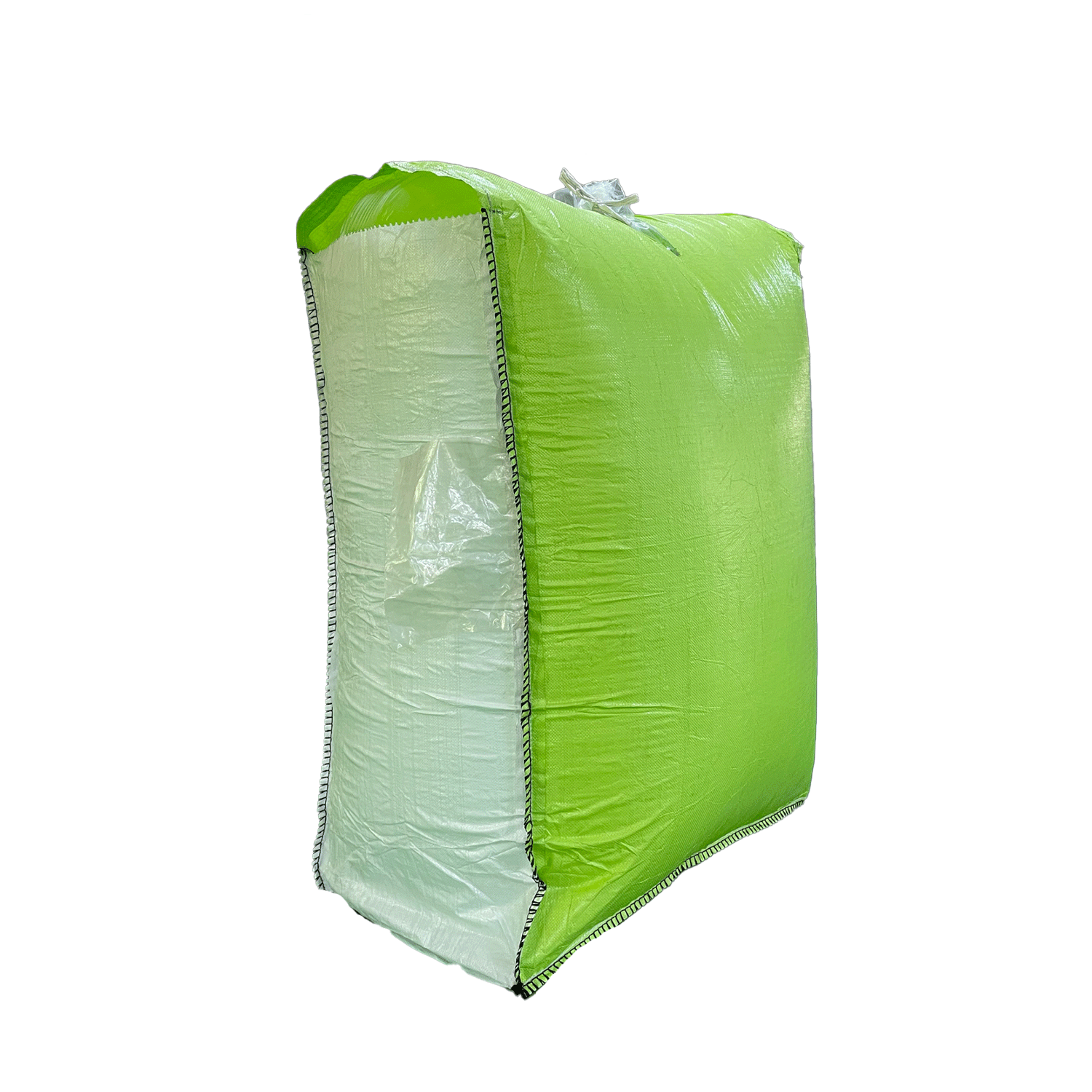 | FIBC Section Fertilizer Bag Range 1 & 2 Loop FIBC Bulk Bags Deccan Cans & Printers Pvt. Ltd. offers durable and cost-effective 1 & 2 Loop FIBC Bulk Bags, designed for the efficient... |
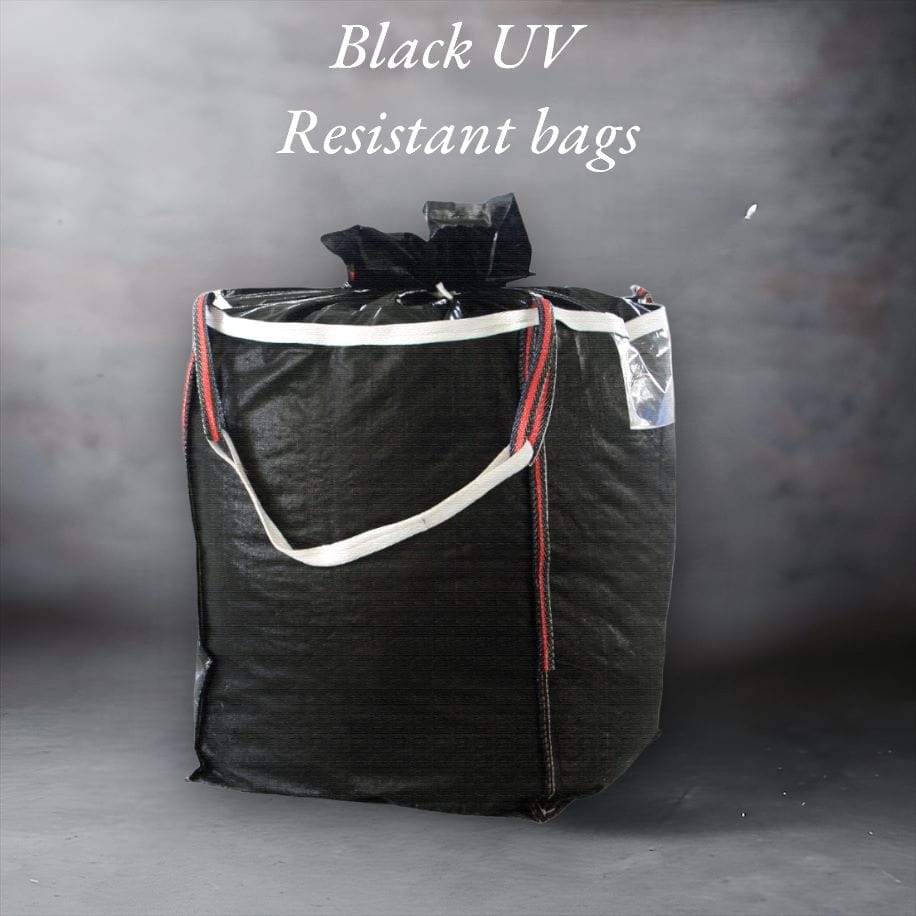 | FIBC Section Black Bags Black FIBC Bags – Enhanced UV Resistance & Extended Shelf Life UV exposure is one of the major challenges faced by the FIBC industry, as prolonged... |
Frequently asked questions
What materials can you pack in an FIBC jumbo bag?
Use FIBCs for dry, flowable solids such as powders, granules, pellets, resins, pigments and fertilizers. Do not use a standard woven-polypropylene FIBC as a liquid container.
How do you choose the right FIBC capacity?
Match the bag’s working capacity to the material’s bulk density, required fill weight, handling equipment and available storage space. Check the safe working load before ordering.
Which FIBC loop design should you choose?
Choose loops that match your lifting equipment, including forklift tines, crane hooks or automated handling systems. Confirm the equipment’s spacing, hook shape and lifting method with the supplier.
What FIBC specifications should chemical manufacturers confirm?
Confirm the woven fabric, seam construction, liner material, filling method and discharge outlet. These details control containment, contamination risk and how quickly the material can be emptied.
When does an FIBC need static control or dangerous-goods approval?
Specify static-control construction when handling combustible powders, flammable atmospheres or processes sensitive to electrostatic discharge. Confirm the required FIBC type and UN approval before transporting regulated dangerous goods.
Related products
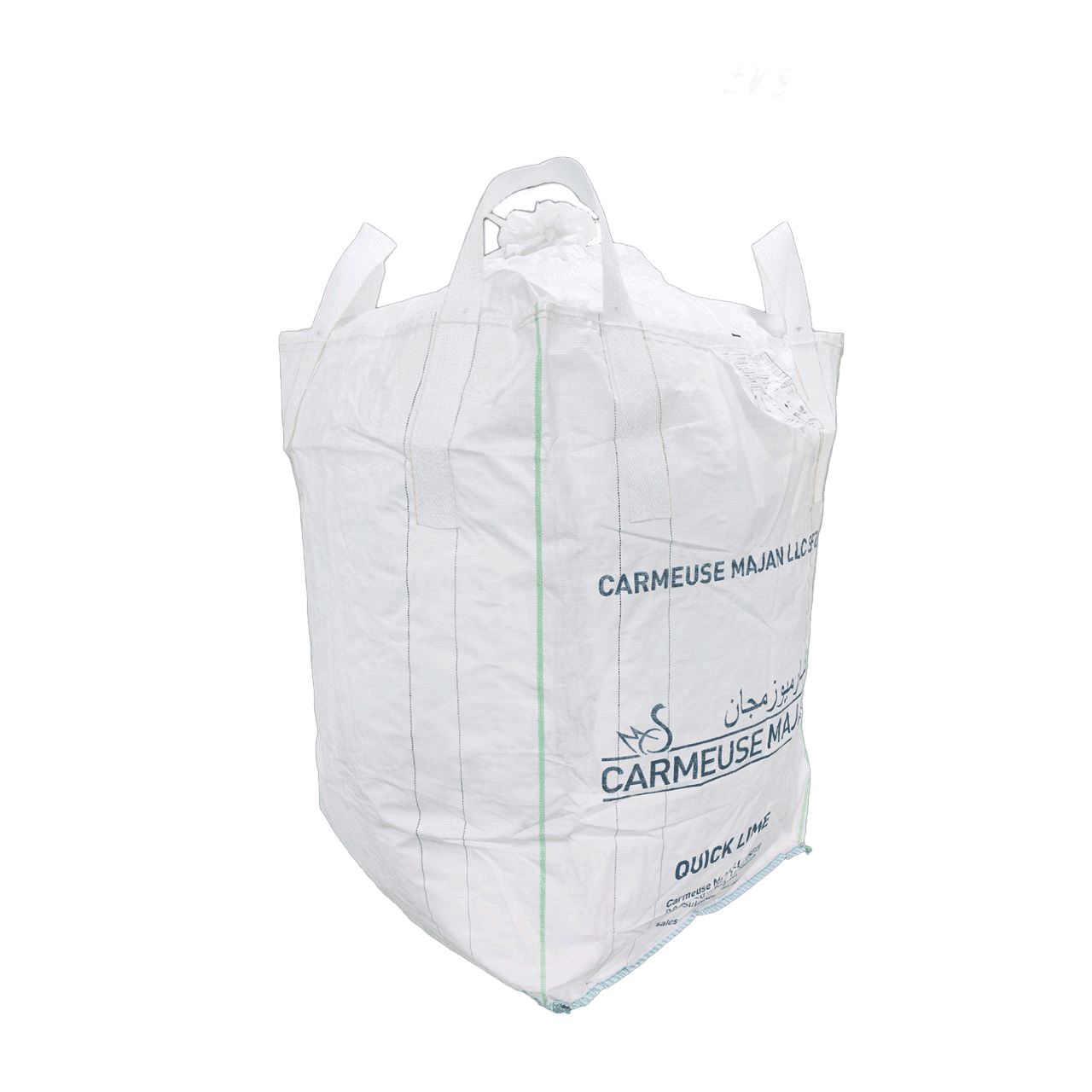 | FIBC Section Bags With Liners FIBC Liners – Bulk Bag Liners Deccan Cans & Printers Pvt. Ltd. |
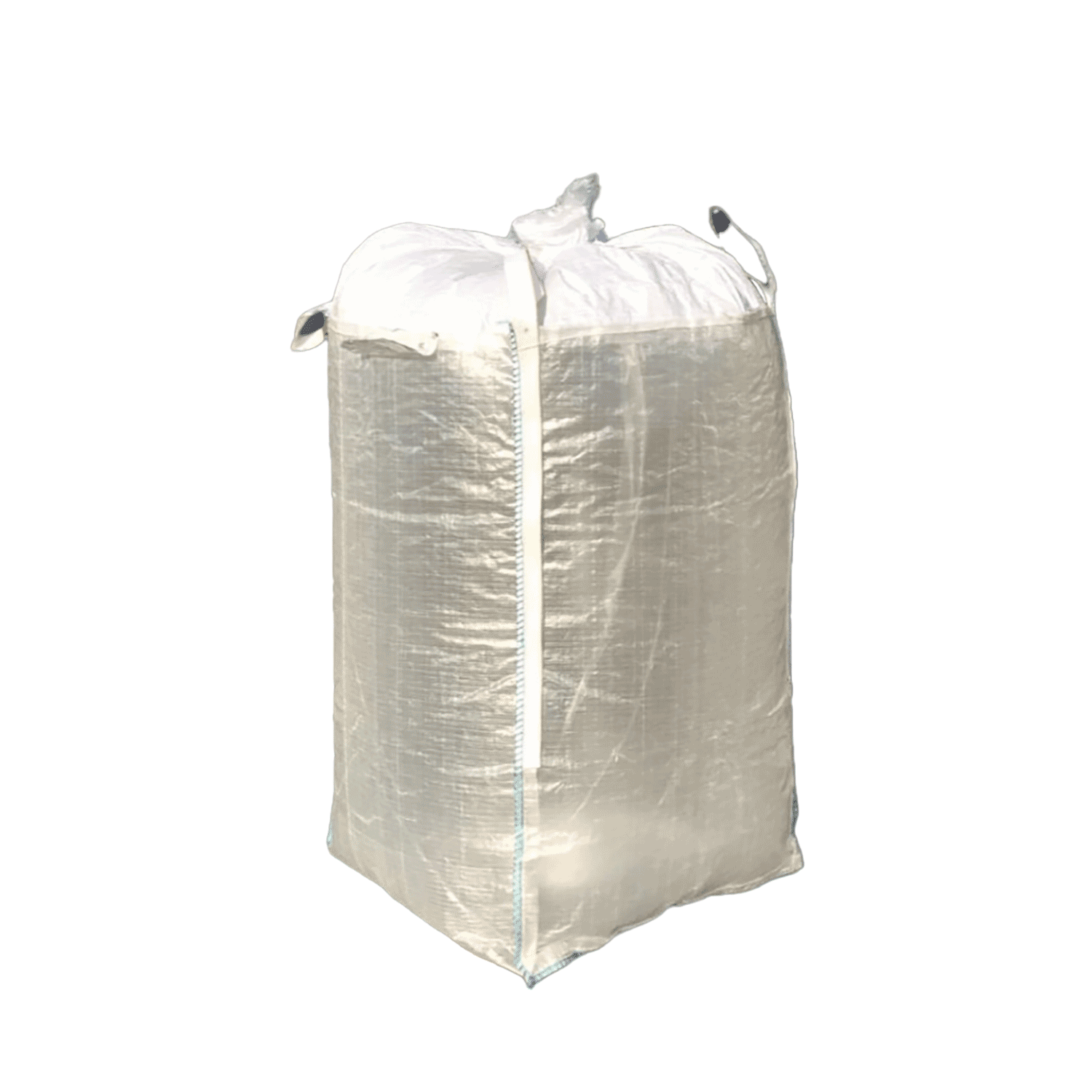 | FIBC Section Transparent Bags Transparent FIBCs – See-Through Bulk Bags Deccan Cans & Printers Pvt. Ltd. |
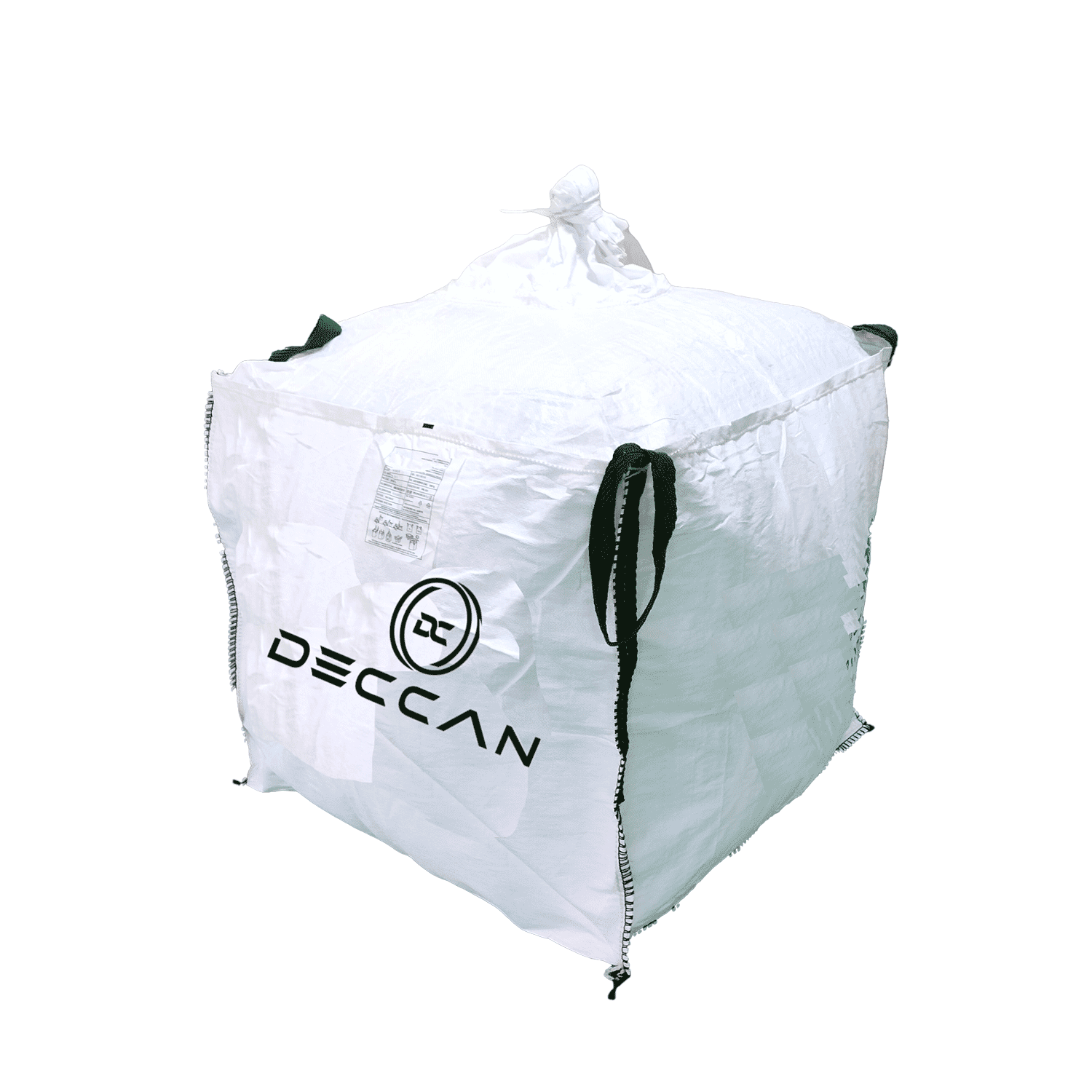 | FIBC Section Polyester Loop Bags/Multifilament Loops Polyester / Multifilament Loop FIBC Bags Deccan Cans & Printers Pvt. Ltd. |
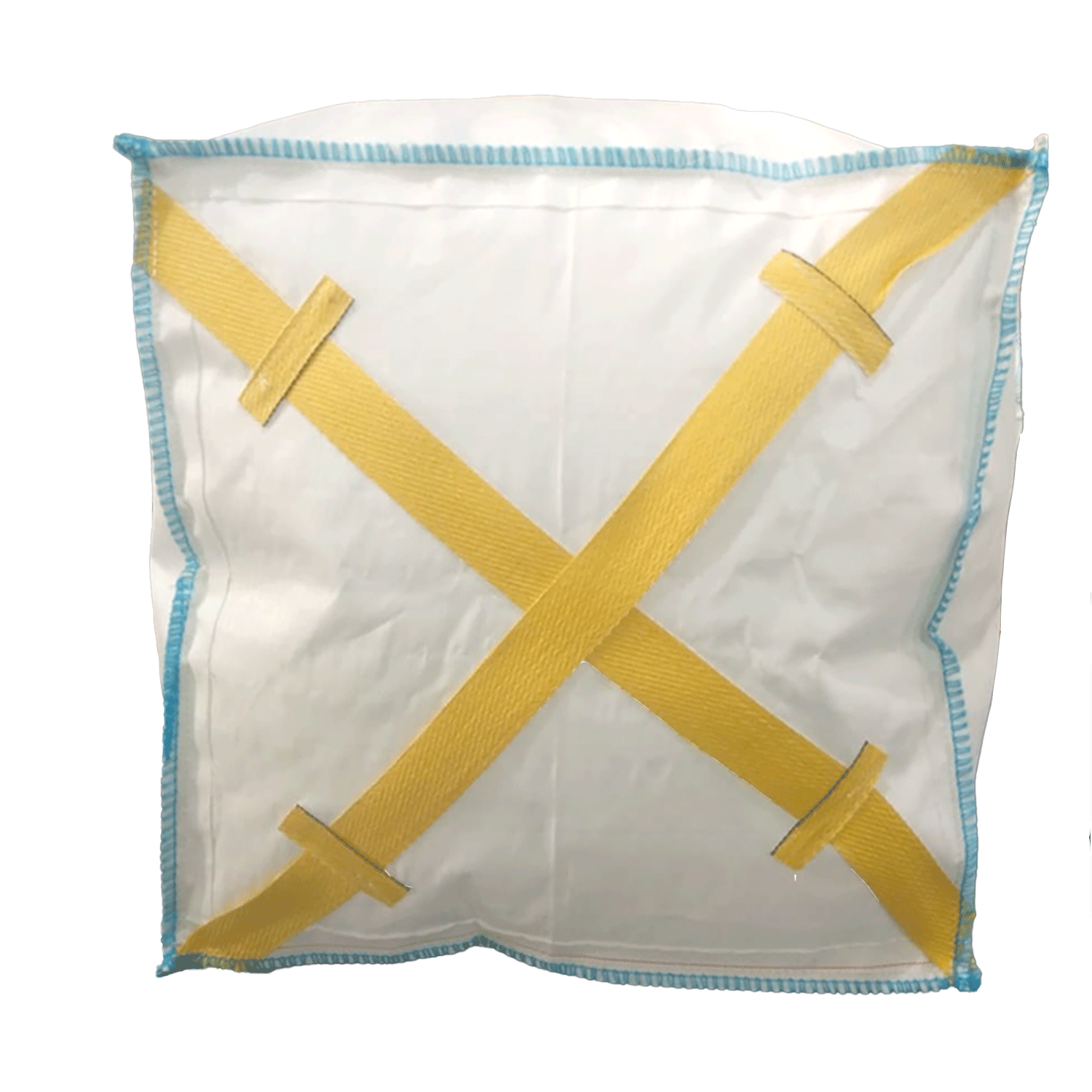 | FIBC Section Cross Bottom Sling Bags Cross Bottom Sling FIBCs – Bulk Bags Deccan Cans & Printers Pvt. Ltd. |